30 Best Shrubs That Grow in Shade (Bushes Identification, With Pictures)
I used to think a shady yard was a lost cause. My own backyard sits under a row of mature oaks, and for two years, nothing but weeds seemed happy there. Then I discovered that shade is not a limitation — it is a design opportunity.
According to Iowa State University Extension, shady sites are often unfairly labeled as problem areas, when in fact wise plant selection can turn them into some of the most attractive parts of a landscape.
A number of trees and shrubs can be successfully grown in partial shade, which receives roughly 3 to 4 hours of direct sun each day.
This guide lists 30 shrubs that thrive without full sun, organized by growing condition, so you can match the right plant to your specific spot.
Why Shade Gardening Deserves More Credit
Shady areas are not simply dim corners of a yard. They are microclimates with their own temperature, moisture, and wind patterns. The University of Minnesota Extension notes that shade gardens vary widely depending on nearby structures, trees, and rainfall exposure.
Here is something worth remembering: healthy trees can raise property values by 3 to 15 percent, according to UMN Extension. That means the shade they cast is not a design problem — it is an asset tied to real financial value.
Shade generally falls into three categories:
- Full shade – no direct sunlight reaches the ground
- Filtered shade – dappled light passes through tree branches
- Partial shade – 3 to 4 hours of direct sun, shade the rest of the day
Colorado State University’s PlantTalk program explains this well. If an area gets no direct light at all, that counts as deep shade, the kind you would find on the north side of a building or beneath a dense evergreen. When light filters through gaps in branches and leaves instead, that is considered filtered shade.
Knowing which category your garden falls into is the first real step. It saves you money, time, and disappointment.
I made this mistake myself early on. I planted a sun-loving shrub in what I assumed was “partial shade,” only to watch it stretch, thin out, and eventually fail to flower. A ten-minute light assessment would have saved me a full growing season.
It also helps to track shade across seasons, not just one afternoon. A spot that looks fully shaded in July, when trees are leafed out, might receive plenty of sun in early April before the canopy fills in.
This seasonal shift matters most for spring-blooming shrubs, since many depend on that early light window to set flower buds.
Shrubs for Partial and Filtered Shade
These shrubs tolerate a few hours of morning or afternoon sun, paired with shade the rest of the day. Most home landscapes actually fall into this category, since few yards sit in total darkness all day long.
This group tends to be the most forgiving for beginners. If you are unsure exactly how much shade your yard gets, start here first.
1. Serviceberry (Amelanchier spp.)

Serviceberry is a native favorite across much of North America, and it is one of the easiest shrubs to recommend to a beginner. Iowa State University Extension notes that it grows naturally in the open pockets of woodlands, which explains why it settles so comfortably into a partially shaded yard. Depending on region, you might hear it called Juneberry, shadbush, or sarvis-tree.
In spring, it opens into a cloud of white flowers before most other shrubs have even budded. By early summer, those flowers turn into small, blueberry-like fruit that birds descend on almost overnight.
I planted one near my patio mainly for the berries, but the birds usually beat me to them every June. It is a small price to pay for such an easy, adaptable shrub, and the fall color more than makes up for it, turning shades of orange and red that rival any maple.
Serviceberry tolerates both wet and fairly dry soil once established, and it handles anything from partial shade to fuller sun. Give it room to grow, since larger types can eventually reach 15 to 25 feet.
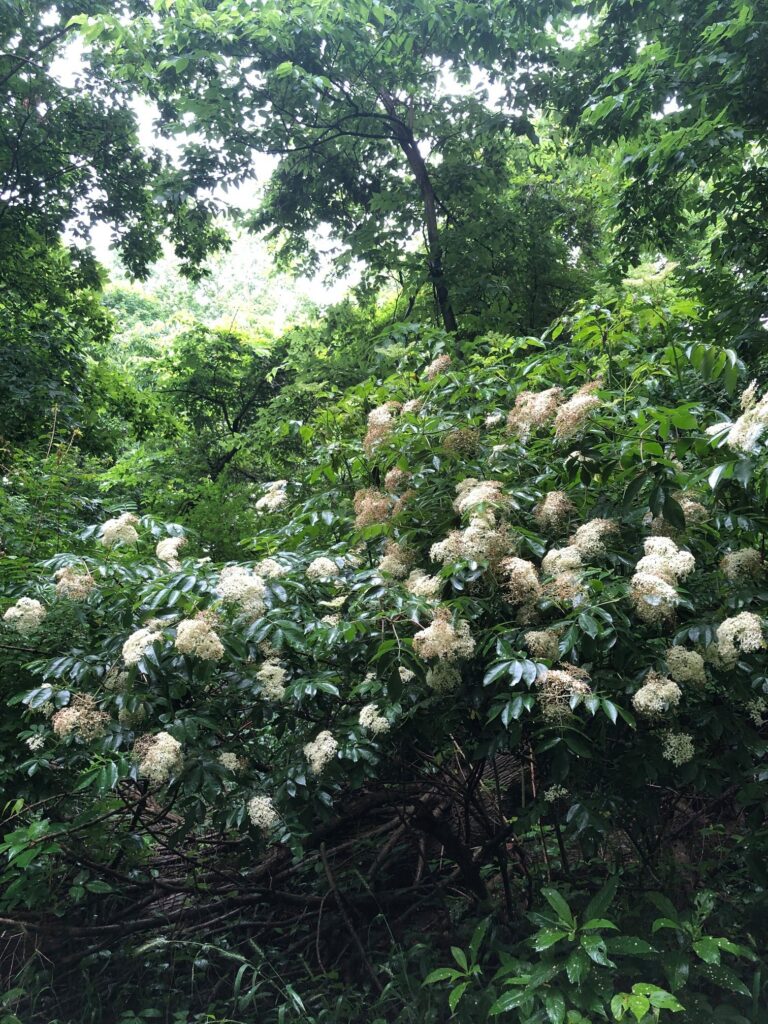
2. Arrowwood Viburnum (Viburnum dentatum)
Arrowwood viburnum is one of those shrubs that quietly does its job without asking for much in return. Iowa State Extension describes it as an adaptable plant that grows well in sun or shade and tolerates most soil types, which is exactly why landscapers reach for it so often.
It typically reaches 6 to 8 feet tall and wide, forming a dense, rounded shape that works well as an informal hedge or screen. In late spring, it produces flat clusters of creamy white flowers.
Those flowers give way to blue-black berries by autumn, which songbirds tend to favor heavily. The dark green summer foliage shifts into deep red-purple tones as the weather cools, giving the shrub genuine three-season appeal.
Because it tolerates both clay and average garden soil, arrowwood viburnum is forgiving of less-than-perfect planting conditions, which makes it a safe choice if you are still learning your yard’s quirks.
3. Gray Dogwood (Cornus racemosa)
Gray dogwood is a tough, wildlife-friendly shrub that does not seem to care much whether it is planted in wet clay or dry, sandy soil. Iowa State Extension confirms it tolerates both extremes, along with full shade or full sun, which is a rare combination of flexibility.
Mature plants reach 8 to 10 feet, producing whitish spring flowers followed by small white berries that birds rely on heavily in late summer. The reddish stems add a bit of winter interest once the leaves drop.
Its only real drawback is a suckering habit, meaning it spreads through underground shoots over time. Give it room to colonize, or plan on occasional pruning if you want to keep it contained to one spot.
I would recommend this one for naturalized borders and wildlife gardens rather than a tightly manicured front bed, where the spreading habit is more asset than nuisance.
4. Alpine Currant (Ribes alpinum)
Alpine currant is about as low-maintenance as shrubs come, and it happens to be extremely cold-hardy on top of that. Iowa State Extension notes it matures at just 3 to 6 feet, making it a manageable size for smaller yards or foundation plantings.
It is also one of the very first shrubs to leaf out each spring, giving your garden a welcome sign of life while everything else is still dormant. The small yellow-green flowers are subtle and easy to miss.
What makes alpine currant genuinely useful is how well it tolerates pruning. Gardeners often shape it into tight, formal hedges, and it responds to shearing without sulking or thinning out.
If you want a neat, rule-following shrub for a shaded border, this is a dependable, low-drama choice.
5. Yew (Taxus spp.)
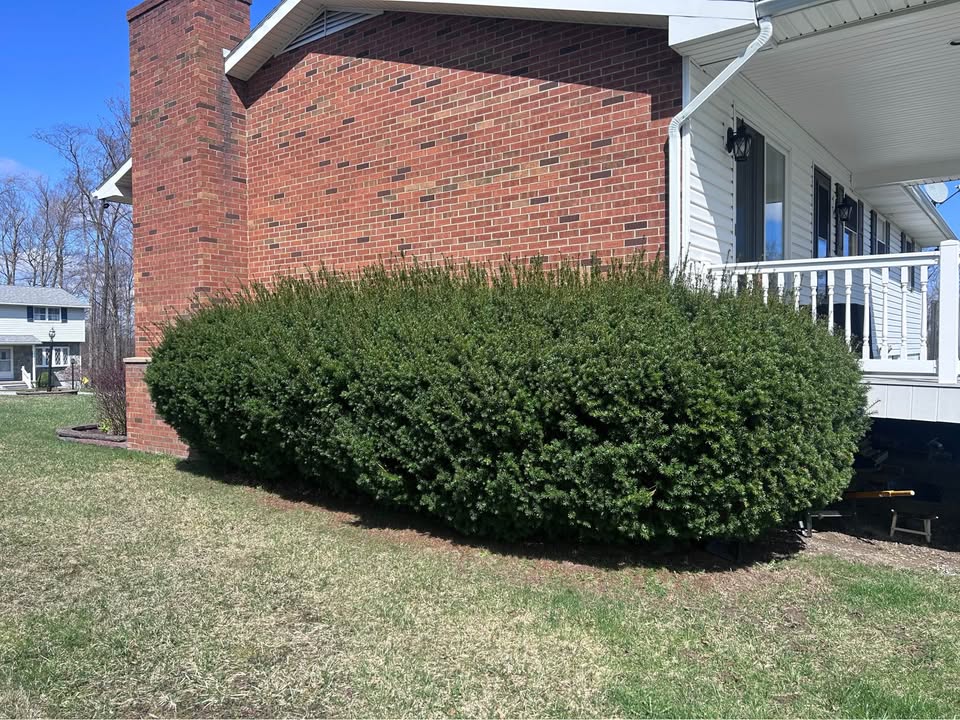
Yew is one of the few true evergreens that genuinely handles shade well, which is why it shows up in so many older, established landscapes. Iowa State Extension points out that yews perform in both sun and shade, though they absolutely require well-drained soil.
Wet, poorly drained sites are their biggest enemy, and yews planted in soggy ground tend to decline and die within a few seasons. Windy, exposed locations also cause winter injury, so a somewhat protected spot suits them best.
On the upside, yews tolerate heavy, repeated pruning better than almost any other evergreen shrub. This is exactly why they turn up so often as clipped hedges, foundation plantings, and even topiary shapes along shaded property lines.
Slow growth means you will wait a while for a mature look, but the payoff is a dense, dark green backdrop that holds its shape year-round.
6. Rhododendron (Rhododendron spp.)
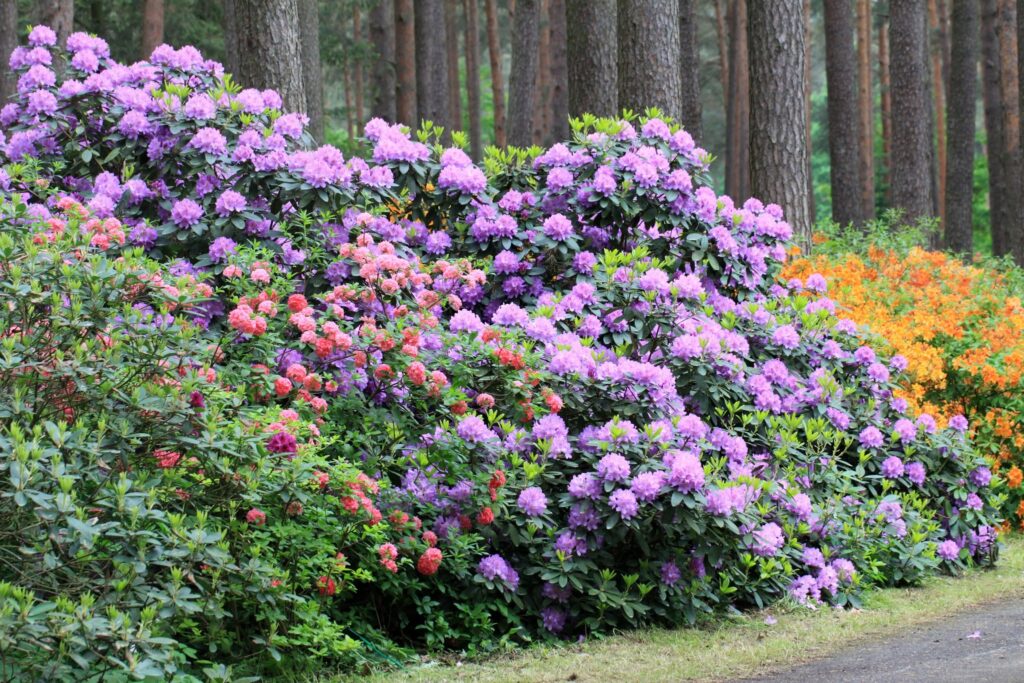
Rhododendron is the classic shade-garden showpiece, and for good reason. Iowa State Extension advises that rhododendrons perform best in protected sites with partial shade, ideally somewhere that offers morning sun and afternoon shade.
Soil matters enormously here. Rhododendrons demand well-drained, distinctly acidic soil, and they sulk quickly in heavy clay or alkaline conditions. A soil test before planting saves a great deal of disappointment later.
Not every cultivar survives harsh winters, so choosing a cold-hardy variety for your zone genuinely matters. Varieties like PJM, Aglo, and Olga Mezitt are known for tolerating colder climates better than many showier hybrids.
When rhododendrons are happy, they reward you with enormous, rounded flower clusters in shades of pink, purple, red, and white, often blooming so heavily that the foliage nearly disappears underneath.
7. Canadian Hemlock (Tsuga canadensis)
Canadian hemlock is technically classified as a tree, but it is grown so often as a large shrub or clipped hedge that it earns a spot on this list. It prefers cool, moist, well-drained sites, and it genuinely struggles in hot, dry, or heavily exposed spots.
Its graceful, drooping branches give it a softer look than most evergreens, which is why many gardeners choose it for privacy screening along the shaded edges of a property. Regular watering during dry spells keeps the shallow root system healthy.
Hemlocks can eventually reach impressive heights when left unpruned, though most home gardeners keep them clipped to a manageable, hedge-like form. Avoid planting them where road salt or heavy foot traffic might disturb the roots.
8. American Cranberrybush Viburnum (Viburnum trilobum)
American cranberrybush viburnum is a cold-hardy native confirmed by Iowa State Extension as suitable for partial shade. It is closely related to arrowwood viburnum but tends to have a slightly more open, arching growth habit.
White, lacy flower clusters appear in late spring, followed by bright red berries that persist well into winter if birds do not claim them first. Those berries make excellent cold-weather forage for cardinals, robins, and waxwings.
Fall color is genuinely reliable here, shifting into deep red and burgundy tones that hold their color longer than many other shrubs. It handles both clay soil and periodic wet spots without much fuss.
9. Redtwig Dogwood (Cornus sericea)
Redtwig dogwood earns its keep mostly in winter, when its bright red stems glow against snow or bare ground. Colorado State University lists this shrub as an excellent choice for moist shade areas, since it naturally grows along streambanks and low-lying woodland edges.
Small white flower clusters appear in late spring, followed by white or pale blue berries that birds enjoy. The real payoff, though, is that winter stem color, which few other shrubs can match.
To keep the red coloring vibrant, prune out about a third of the oldest stems each year. New growth carries the brightest color, so this rejuvenation pruning genuinely pays off.
10. Buckthorn (Rhamnus spp.)
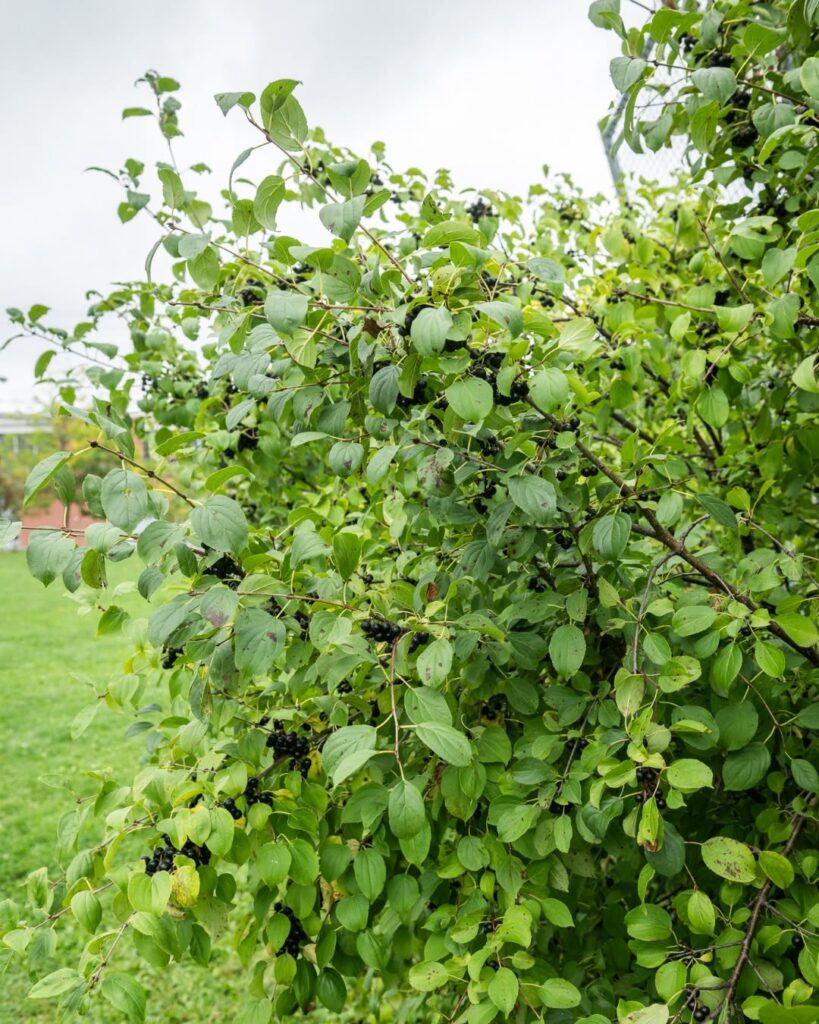
Buckthorn is recommended by Colorado State Extension for dry shade, and it is genuinely tough enough to handle poor soil, drought, and neglect. That resilience, however, comes with a caveat worth taking seriously.
Certain buckthorn species have become invasive in parts of the Midwest and Northeast, crowding out native understory plants in wooded areas. Before planting, check your state’s invasive species list, since some varieties are restricted or discouraged entirely.
If your region permits it, buckthorn works well as a dense, low-maintenance hedge in difficult dry shade where little else survives. Just keep an eye on any unwanted seedlings popping up nearby, since birds spread the berries widely.
Flowering Shrubs for Shade Gardens
If you assume shade means no flowers, think again. These shrubs bloom generously with limited sun.
11. Daphne (Daphne × burkwoodii)
Daphne is often grown under the cultivar name Carol Mackie, and it has earned a loyal following despite being somewhat short-lived. The University of Vermont Extension describes it as brightening part shade with creamy-margined leaves, and its sweetly scented flowers work beautifully near patios and windows where you can enjoy the fragrance.
Most plants top out around 2 to 3 feet high and wide, making daphne an excellent choice for smaller shade gardens or mixed borders. It typically lives only five to ten years, so treat it as a wonderful medium-term investment rather than a permanent fixture.
Daphne needs consistently moist but well-drained soil, and it dislikes having its roots disturbed once established. Plant it and then leave it alone as much as possible.
12. Dwarf Fothergilla (Fothergilla gardenii)
Dwarf fothergilla is a compact, three-season performer that deserves far more attention than it usually gets. The University of Vermont Extension notes this multi-stemmed shrub grows just 2 to 3 feet high, with deep green summer leaves that shift into fiery reds and yellows come fall.
In spring, slightly fragrant, bottlebrush-shaped white flowers appear before the leaves even emerge, creating a striking display against bare branches. Plant several together in a moist, well-drained bed, and they form an attractive, informal thicket.
This shrub handles USDA zone 5 and warmer reliably, and shorter cultivars like Appalachia work especially well in tighter spaces near a shaded walkway or entrance.
13. Witch Hazel (Hamamelis spp.)
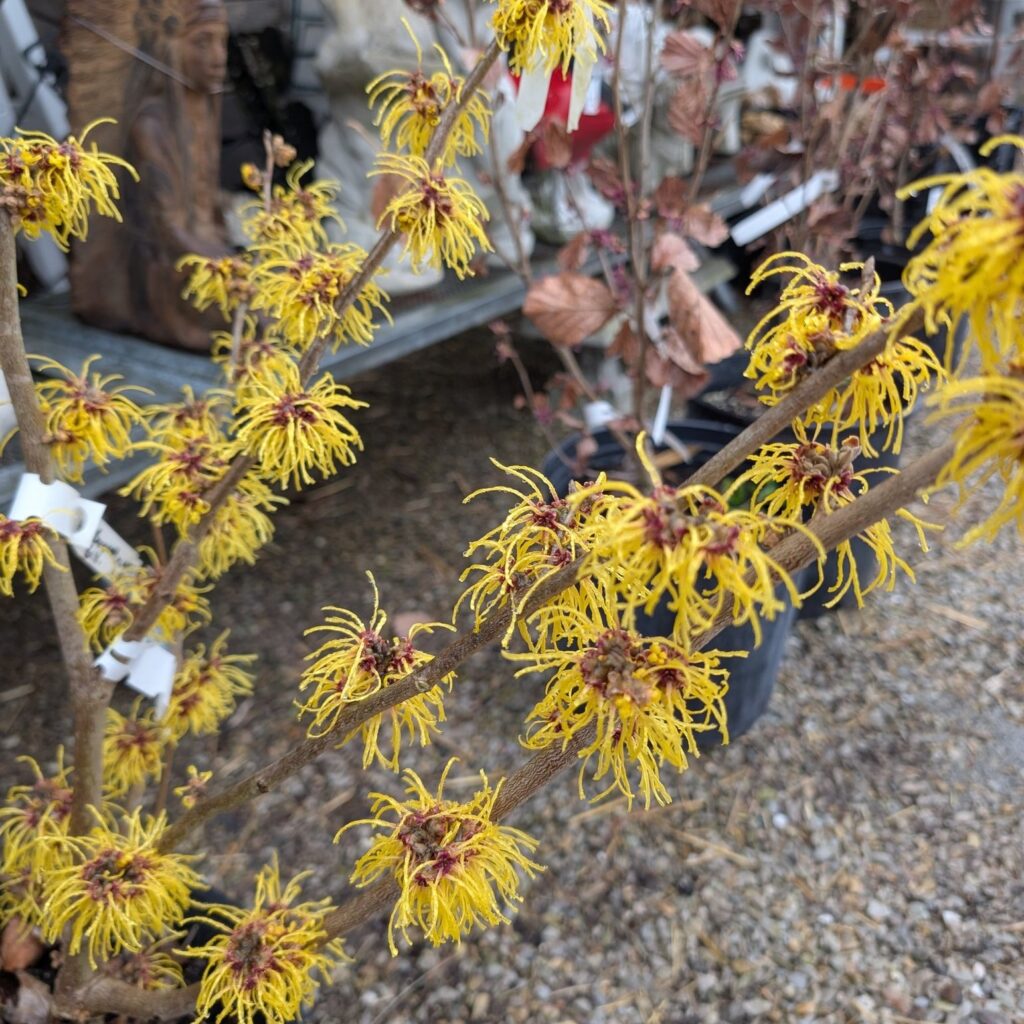
Witch hazel is known for blooming when almost nothing else does. The University of Vermont Extension notes its late-winter flowers, strap-like and richly scented, appear well before spring officially arrives, often opening in January or February depending on climate.
Seeing its yellow, gold, or copper-toned flowers open against snow is one of the more underrated moments in a winter garden. Fall color is a bonus, turning warm yellow before the leaves drop.
It prefers moist, acidic, well-drained soil but tolerates poorer conditions reasonably well. Cultivars vary in bloom color: Arnold Promise offers gold flowers, Diane leans toward russet red, and Jelena brings coppery tones, with most reaching 6 to 10 feet tall.
14. Virginia Sweetspire (Itea virginica)
Virginia sweetspire is a southeastern native with a graceful, arching habit that softens the edges of any shaded bed. Its long spires of sweetly scented white flowers appear in late spring to early summer, hanging like small tassels from the branch tips.
Interestingly, this shrub tolerates periodic flooding despite generally preferring well-drained soil, which makes it useful near low spots or rain gardens that collect runoff after storms.
Fall color intensifies with more sun exposure, but even in fuller shade, you will still see decent burgundy and wine-red tones. Cultivars like Henry’s Garnet and Morton tend to hold their color a bit longer into the season.
15. Mountain Laurel (Kalmia latifolia)
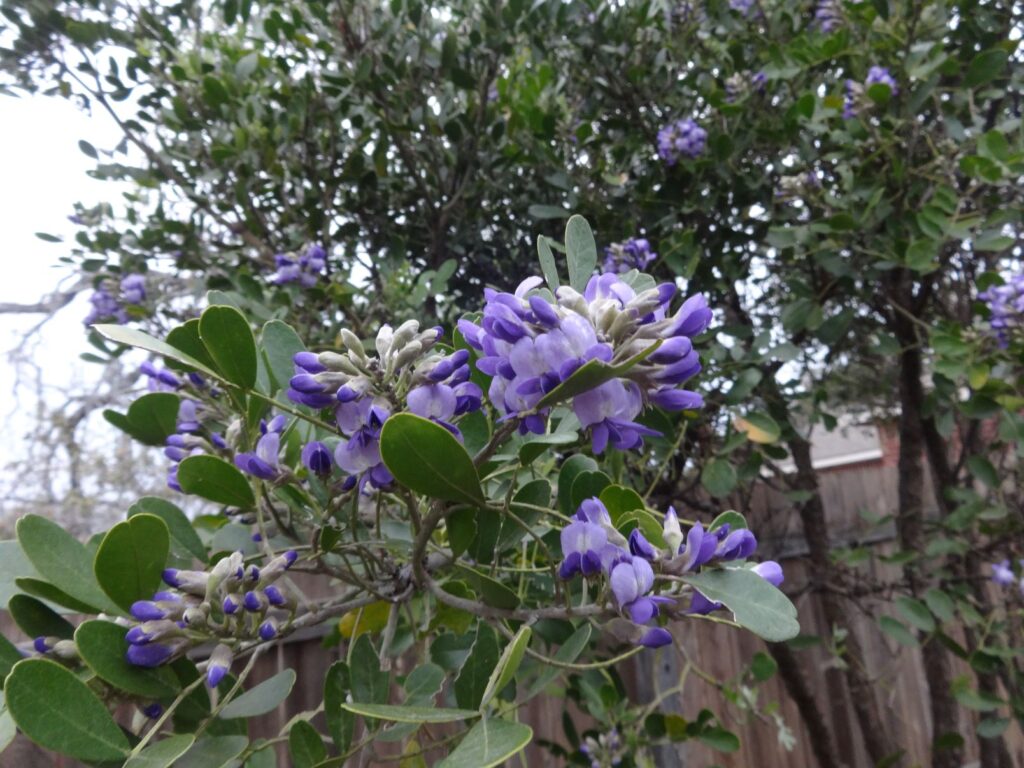
Mountain laurel is an evergreen showstopper native to the eastern United States, capable of reaching 8 to 15 feet high and wide under good conditions, though most garden specimens stay considerably smaller. Its glossy, leathery leaves provide handsome year-round structure even without flowers.
Depending on cultivar and location, blooms appear anywhere from late spring into mid-summer, opening in clusters of intricate, cup-shaped flowers that range from white to deep pink. Each individual bloom looks almost architectural up close.
Like rhododendrons, mountain laurel demands acidic, well-drained soil and benefits from a spot protected from harsh winter winds. Give it room to mature, since crowding stunts its naturally rounded shape.
16. Redvein Enkianthus (Enkianthus campanulatus)
Redvein enkianthus is a lesser-known gem that deserves wider planting. It gets its name from the fine red veins running through its urn-shaped, creamy flowers, which hang in delicate clusters from the branch tips each spring.
Mature plants typically reach 6 to 10 feet tall and slightly less wide, forming a tidy, upright shape without much pruning. The cultivar Red Bells intensifies both the flower color and the fall foliage display.
Fall brings a genuinely spectacular show, with leaves turning bright red to orange, rivaling burning bush without the invasive tendencies that plant carries in many states.
17. Caroline Allspice (Calycanthus floridus)
Caroline allspice, also called sweetshrub, is a fragrant southeastern native that tolerates full sun to part shade and adapts to moist soils as well as some drought once established. Reddish-brown flowers open in late spring, carrying a scent often compared to ripe strawberries or old-fashioned bubblegum.
It typically reaches about 8 feet high and wide, forming a rounded, dense shape that works nicely as an informal screen. The yellow fall color is a pleasant bonus most gardeners do not expect from this shrub.
Because the flower scent varies between individual plants, it is worth seeking it out in bloom before buying, if you can, to find a fragrance you personally enjoy.
18. Native Azalea (Rhododendron spp., deciduous types)
Native azaleas are often confused with the common evergreen azaleas found in southern landscapes, but they are a genuinely different experience. Mississippi State University Extension highlights their honeysuckle-like appearance and notably strong fragrance, which evergreen types simply cannot match.
These deciduous shrubs drop their leaves in winter, then burst into fragrant, trumpet-shaped blooms in spring, ranging from white and pink to vivid orange depending on species. Planting is best done in late fall or early spring, according to extension guidance.
They prefer moist, acidic, well-drained soil, much like their evergreen relatives, and they perform best with dappled light rather than deep, unbroken shade.
19. Camellia (Camellia japonica)
Camellia is a dependable source of color when the rest of the garden looks bare. Mississippi State University Extension notes that camellias add a major pop of color and recommends fall planting to ensure proper moisture, though spring works fine too.
Depending on variety, blooms can appear anywhere from late fall through early spring, filling a gap in the garden calendar that few other shrubs can cover. Flowers range from simple, single blooms to elaborate, rose-like doubles in white, pink, and red.
Camellias generally prefer partial shade, since intense afternoon sun can scorch their glossy evergreen leaves. Well-drained, slightly acidic soil keeps them at their healthiest.
20. Mountain Pieris (Pieris floribunda)
Mountain pieris is an evergreen shrub with drooping clusters of small, white, bell-shaped flowers that open in early spring, often before many neighboring plants have even woken up. It pairs beautifully with rhododendrons and azaleas, since it shares the same acidic, moist soil preference.
New growth sometimes emerges in a soft bronze or reddish tint before maturing to deep green, adding visual interest even outside of bloom season. Mature plants stay relatively compact, usually under 6 feet, which suits smaller shaded beds.
Give it protection from harsh winter winds and strong afternoon sun, both of which can damage the foliage and stress the plant over time.
Shrubs for Dry, Difficult Shade
Dry shade is often the hardest gardening challenge there is. Tree roots pull away moisture, and rain rarely reaches the soil beneath a dense canopy. These shrubs are proven survivors in exactly those difficult conditions.
The University of Minnesota Extension points out that growing plants under large trees or building overhangs is genuinely difficult, since these structures block even heavy rainfall from reaching the soil below.
Choosing tough, drought-tolerant shrubs is not optional in these spots. It is really the only realistic path to success, and supplemental watering during the first year or two makes a significant difference while roots establish.
21. Oregon Grape Holly (Mahonia aquifolium)
Oregon grape holly is a rugged, spiny-leaved evergreen that holds up remarkably well in tough conditions. Colorado State Extension notes it performs best with a bit of filtered light rather than deep, total shade, so a spot beneath high tree canopy suits it better than a windowless corner.
Bright yellow flower clusters open in early spring, followed by dusty blue berries that resemble small grapes, which is exactly where the common name comes from. Birds appreciate the fruit even if it is generally too tart for people.
Its leathery, holly-like foliage takes on a purplish tint in cold weather, adding subtle seasonal interest. It tolerates poor, dry soil far better than most broadleaf evergreens.
22. Wax Myrtle (Morella cerifera)
Wax myrtle is recommended by Smithsonian Gardens as a versatile choice for hedges, slopes, and formal garden borders alike, alongside other tough natives like bayberry and fragrant sumac. It handles dry, shaded ground with ease once established.
This semi-evergreen shrub produces small, waxy gray berries that were traditionally used to make bayberry candles, and it still carries a pleasant aromatic scent when the leaves are crushed. Wildlife, particularly songbirds, rely on those berries through the leaner winter months.
It tolerates poor, sandy soil and even some salt exposure, making it a strong pick for coastal properties as well as inland dry shade.
23. Bayberry (Myrica pensylvanica)
Bayberry is tough, salt-tolerant, and remarkably adaptable to poor soil, which makes it one of the more forgiving shrubs on this entire list. It handles both dry shade and harsh coastal conditions without much complaint.
Small, waxy gray berries cling to the branches through winter, providing food for birds when little else is available. The aromatic foliage releases a pleasant, spicy scent when brushed or crushed.
Because bayberry fixes nitrogen in the soil through root nodules, it actually improves the growing conditions around it over time, which is a rare bonus among shrubs suited to difficult sites.
24. Fragrant Sumac (Rhus aromatica)
Fragrant sumac is a low, spreading native shrub that tolerates dry, shaded slopes and controls erosion effectively thanks to its dense root system. Unlike some sumac relatives, it stays well-behaved and does not aggressively colonize a yard.
In spring, small yellow flower clusters appear before the leaves, followed later by fuzzy red berries that persist into winter. Fall color is a genuine highlight, turning shades of orange, red, and purple that brighten an otherwise dull, shaded slope.
Its spreading, mounding habit makes it particularly useful for stabilizing banks or covering ground beneath larger shade trees where mowing is impractical.
25. Silky Dogwood (Cornus amomum)
Silky dogwood is recommended by Smithsonian Gardens specifically for gardeners dealing with a combination of heavy shade and consistently wet ground, a pairing that eliminates many other shrub options entirely. It naturally grows along streambanks and pond edges in the wild.
Clusters of small white flowers appear in late spring, followed by blue-tinted berries that attract a wide range of songbirds. Reddish-purple stems add color once the leaves drop in fall.
If you have a low, soggy corner of the yard shaded by nearby trees, silky dogwood is one of the few shrubs genuinely built for that exact combination of challenges.
26. Chokeberry (Aronia spp.)
Chokeberry, also known as Aronia, is a hardworking, multi-stemmed shrub with white spring flowers followed by glossy red or black berries that offer real three-season interest, particularly in shady, wet sites according to Smithsonian Gardens.
The berries themselves are intensely tart and rarely eaten fresh, but they are increasingly popular for jams, juices, and health-focused products thanks to their high antioxidant content. Birds will eat them once they soften later in the season.
Fall color rounds out the display nicely, turning deep red to purple. This shrub works particularly well in naturalized plantings or rain gardens where moisture tends to collect.
27. Curl-leaf Mountain Mahogany (Cercocarpus ledifolius)
Curl-leaf mountain mahogany is confirmed by Utah State University Extension as a strong performer in dry, low-water landscapes, described as a marvelous large shrub to small tree that suits especially arid, western-style plantings.
Its narrow, leathery evergreen leaves curl slightly at the edges, an adaptation that helps the plant conserve moisture during long dry spells. Feathery, twisted seed tails follow the small flowers, catching light beautifully in late summer and fall.
This shrub can eventually grow quite large, so give it space, and expect slow, steady growth rather than a quick fill-in solution. It suits rugged, naturalistic landscapes far better than a tidy suburban foundation bed.
28. Privet (Ligustrum spp.)
Privet is listed by Colorado State Extension among reliable dry-shade shrubs, and it is genuinely hard to kill once established, which explains its long history as a hedging plant. It tolerates poor soil, pollution, and heavy pruning without much complaint.
Small white flower clusters appear in early summer, carrying a scent some gardeners find pleasant and others find overpowering. Dark berries follow in fall, which birds spread readily.
That seed dispersal is exactly why some privet species have become invasive in various regions. Check regional invasive plant guidance before planting, and consider a non-invasive cultivar if your area restricts the species.
29. Japanese Barberry (Berberis thunbergii)
Japanese barberry is another dry-shade performer noted by Colorado State Extension, valued historically for its dense, thorny growth and colorful foliage options ranging from deep burgundy to bright gold depending on cultivar.
Small yellow spring flowers give way to bright red berries that persist well into winter, adding welcome color to an otherwise bare landscape. The thorny branches also make it useful as a deterrent hedge along property lines.
Some states now restrict this species due to invasiveness, since it spreads into wooded areas and has been linked to increased tick populations in certain studies. Always check local regulations before planting, and ask your nursery about sterile, non-invasive cultivars if available.
30. Boxwood (Buxus spp.)
Boxwood is a dense, formal evergreen shrub that has been a staple of structured garden design for centuries, prized for how well it tolerates shade and heavy pruning. Its fine-textured, small leaves shear into crisp, clean lines better than almost any other shrub.
It grows slowly but steadily, which actually works in its favor for formal hedging, since it holds a shape for a long time between trims. Most garden varieties stay compact, typically ranging from 2 to 6 feet depending on cultivar.
Boxwood prefers protection from harsh winter winds and intense afternoon sun in colder zones, both of which can cause unsightly leaf bronzing. A slightly sheltered, shaded spot often produces the healthiest, glossiest foliage.
How to Choose the Right Shrub for Your Shade Garden
Before buying anything, take a walk around your yard at different times of day. Light patterns change more than most people expect.
University of Maryland Extension recommends identifying your exact shade type first. Ask whether it is full shade cast by the north side of a building, filtered light passing through tree branches, or a mix of morning shade with afternoon sun, since each of these conditions favors a different set of plants.
A few practical rules I have learned the hard way:
- Test your soil before planting, especially for acid-loving shrubs like rhododendrons and azaleas
- Water new shrubs regularly for the first two seasons, since dry shade rarely gets rainfall support
- Match hardiness zones carefully — a shrub rated for zone 6 will likely struggle in zone 4
- Avoid windy, exposed shade for evergreens like yews and hemlocks
The University of Minnesota Extension backs this up directly. Selecting plants suited for dry shade helps reduce, though never fully eliminate, the need for supplemental watering. A drip hose, irrigation line, or simple hand watering should be enough to saturate the top 3 to 4 inches of soil whenever it feels dry to the touch.
Caring for Shrubs in Shade: Quick Reference
- Watering: Deep, infrequent watering beats frequent shallow watering, especially near competing tree roots.
- Mulching: A 2 to 3 inch mulch layer conserves moisture and moderates soil temperature.
- Pruning: Prune spring bloomers right after flowering, since many set next year’s buds on old wood.
- Fertilizing: Shady soils often run low in nutrients. A yearly soil test helps you fertilize with purpose, not guesswork.
- Pest checks: Shade can trap humidity, so watch for fungal issues on crowded plantings.
Common Mistakes Gardeners Make in Shade
Ignoring soil compaction. Shady areas near buildings and mature trees often have compacted soil. Loosening it before planting improves root establishment significantly.
Overcrowding new shrubs. It is tempting to plant densely for instant impact, but shrubs need airflow in shade. Poor circulation encourages fungal disease, especially in humid climates.
Skipping the soil test. Many shade-loving shrubs, particularly rhododendrons and azaleas, demand specific pH ranges. Guessing here usually leads to yellowing leaves and stunted growth.
Choosing based on looks alone. A shrub that looks stunning in a nursery photo may not suit your exact hardiness zone or shade type. Always cross-check zone and light requirements first.
Forgetting seasonal light changes. As mentioned earlier, deciduous tree canopies change light levels dramatically between April and August. Plant with the full year in mind, not just the current season.
Frequently Asked Questions
Do any shrubs bloom in full, deep shade? Yes, though options narrow considerably. Mountain laurel, drooping leucothoe, and some azalea varieties still flower in fairly deep shade, though blooms are usually lighter than in partial shade.
What is the fastest-growing shrub for shade? Gray dogwood and redtwig dogwood tend to establish and spread quickly, often reaching mature size within three to four growing seasons under good conditions.
Can shrubs grow under pine trees? Yes, but soil acidity and dry conditions are common under pines. Acid-loving shrubs like rhododendrons, azaleas, and mountain laurel usually perform well there.
How much sun counts as “shade” for these shrubs? Most shade-tolerant shrubs handle up to 3 to 4 hours of direct sun daily. Beyond that, they are typically classified as sun or part-sun plants rather than true shade plants.
Do shade shrubs need less water than sun-loving shrubs? Not necessarily. Dry shade under trees often needs more attentive watering, since tree roots and canopy cover intercept both rain and irrigation before it reaches new plantings.
Final Thoughts
Shade gardening rewards patience more than perfection. I learned this slowly, shrub by shrub, mistake by mistake, in my own backyard. The right shrub in the right shady spot will outperform any sun-loving plant forced into the wrong place.
Start small. Pick two or three shrubs suited to your exact shade type, and build outward from there. Within a few seasons, that “dead zone” under your trees can become the most peaceful, layered part of your entire garden.
References
- Iowa State University Extension and Outreach — Trees and Shrubs Suitable for Partial Shade https://yardandgarden.extension.iastate.edu/how-to/trees-and-shrubs-suitable-partial-shade
- Iowa State University Extension and Outreach — Which Shrubs Will Grow in Shade? https://yardandgarden.extension.iastate.edu/faq/which-shrubs-will-grow-shade
- University of Minnesota Extension — Gardening in the Shade https://extension.umn.edu/planting-and-growing-guides/gardening-shade
- Colorado State University Extension (PlantTalk Colorado) — Trees & Shrubs for Shady Areas https://planttalk.colostate.edu/topics/trees-shrubs-vines/1718-trees-shrubs-shady-areas/
- Mississippi State University Extension Service — Top Six Plants for Shade https://extension.msstate.edu/blog/top-six-plants-for-shade
- Smithsonian Gardens — Top 20 Native Shrubs for Sun and Shade https://gardens.si.edu/learn/lets-talk-gardens-video-library/top-20-native-shrubs-for-sun-and-shade/
- Utah State University Extension — Landscaping in Dry Shade: 15 Great Landscape Plants for Dry Shady Areas https://extension.usu.edu/cwel/research/landscaping-in-dry-shade
- University of Vermont Extension — Shrubs for Shade, Dr. Leonard Perry https://www.uvm.edu/pss/ppp/articles/shadeshrub.html
- University of Maryland Extension — Native Plants for Shade https://www.extension.umd.edu/resource/native-plants-shade

Tim M Dave is a gardening expert with a passion for houseplants, particularly cacti and succulents. With a degree in plant biology from the University of California, Berkeley, he has vast experience in gardening. Over the years, he has cultivated a vast collection of desert plants and learned a great deal about how to grow and care for these unique companions.