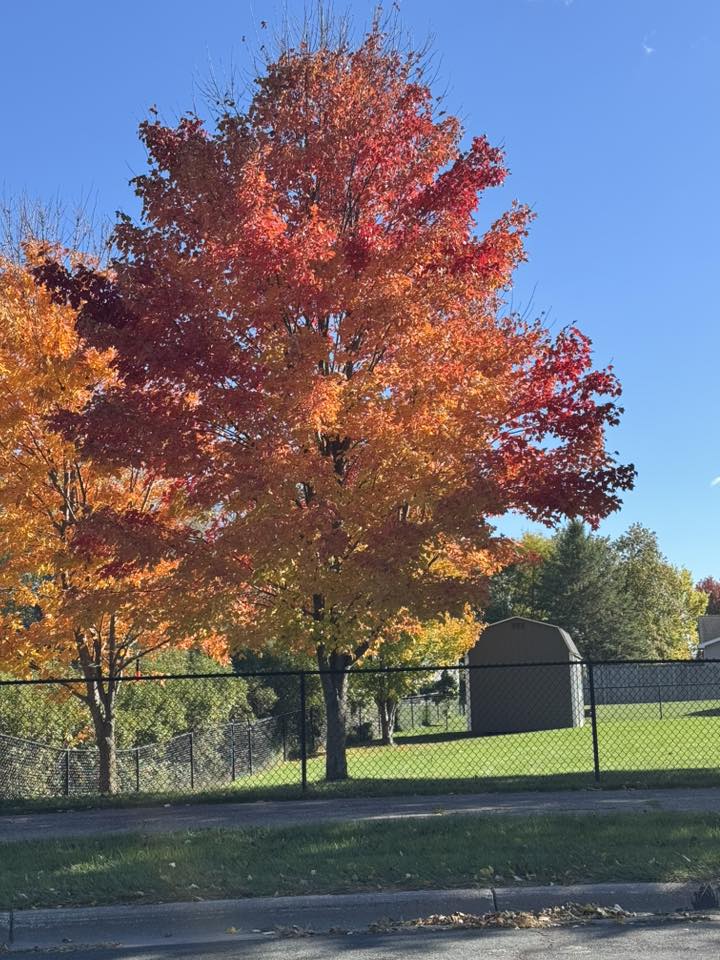
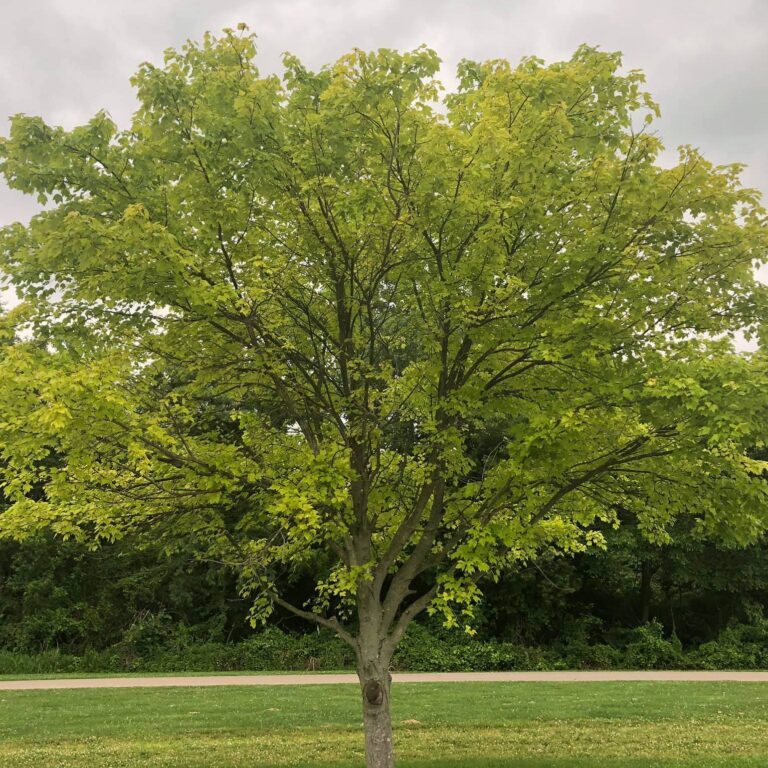
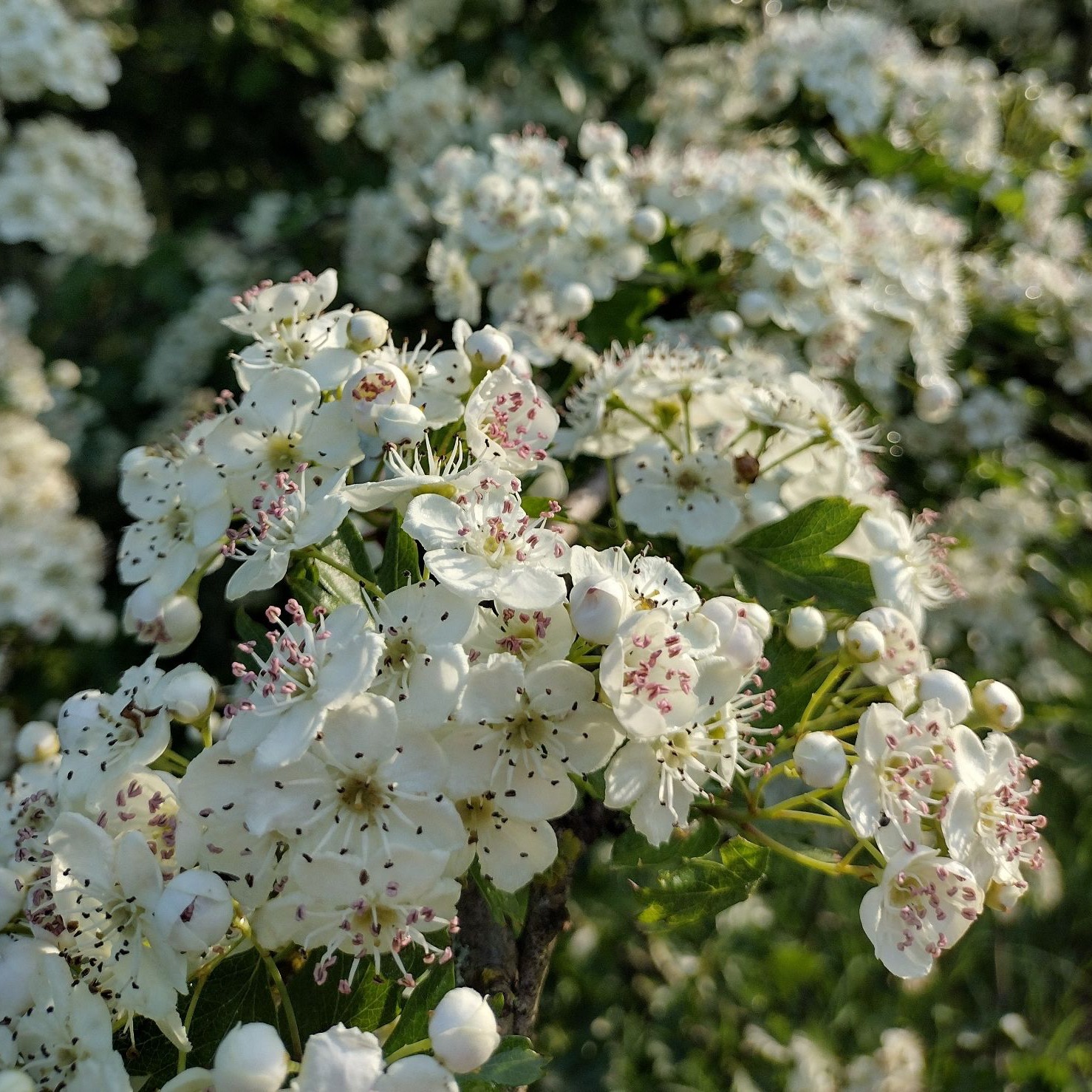
10 Trees That Smell Like Fish (Rotten): Varieties That Stinks, With Pictures
I still remember the first time it happened to me. I stepped outside on a warm April morning, expecting fresh spring air, and got a wall of rotting fish instead. There was no river nearby. No dead animal in sight. Just a tree, blooming beautifully, and smelling absolutely awful.
If this has happened to you, you are not imagining things, and you are definitely not alone. Several common landscape trees genuinely smell like fish when they flower, and there is real science behind it.
This guide walks through 10 trees known for this exact problem. I have also included the biology behind the smell, since understanding it makes the whole thing far less mysterious and a lot less alarming.
Why Do Some Trees Smell Like Fish?
The short answer is a chemical called trimethylamine, often shortened to TMA. It is one of the very first compounds released when animal tissue starts to decompose, which is exactly why it smells the way it does.
Trimethylamine is also the compound responsible for the smell of spoiling fish, since fish flesh breaks down and releases it rapidly after death. Plants did not evolve this compound by accident. It serves a real reproductive purpose.
Certain trees, particularly those in the rose family, produce trimethylamine and related amines in their flowers specifically to attract flies and other carrion-loving insects. Bees and butterflies prefer sweet scents, but flies are drawn to smells associated with decay.
This single chemical explanation ties together most of the trees on this list. Many of them belong to the same plant family, which explains why the “fishy tree” complaint shows up across so many different species every spring.
I found this oddly comforting once I understood it. The smell is not a sign that something is wrong with the tree. It is simply doing exactly what evolution designed it to do.
Let’s now dive into the list of trees that stink.
1. Bradford Pear (Pyrus calleryana ‘Bradford’)
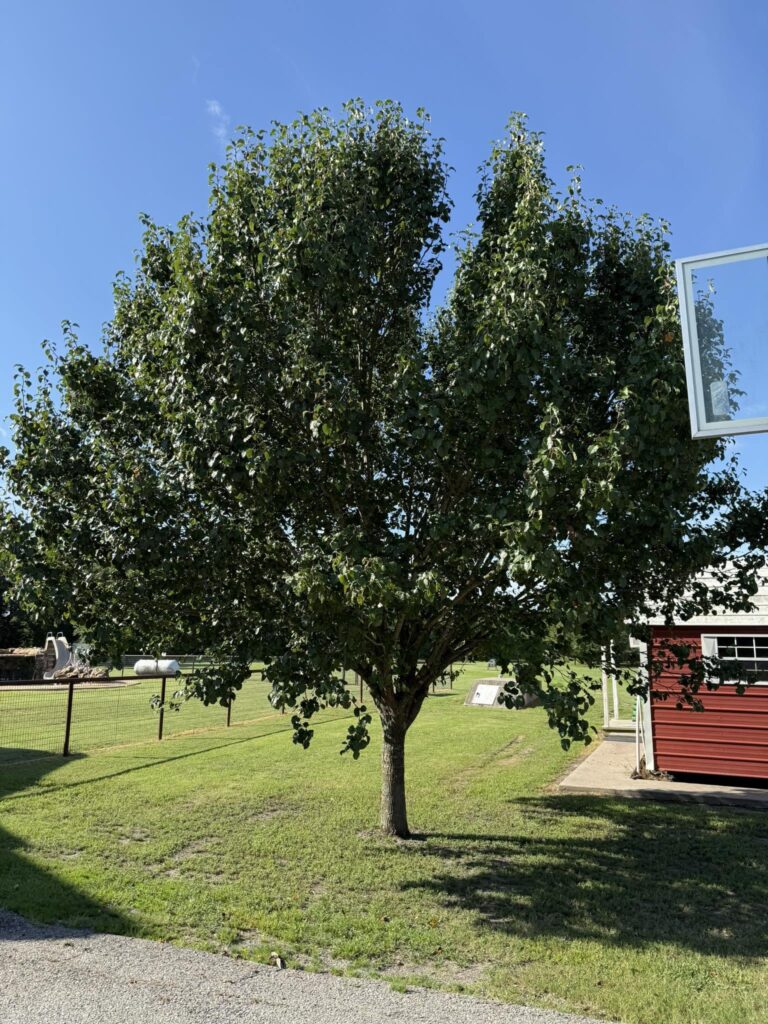
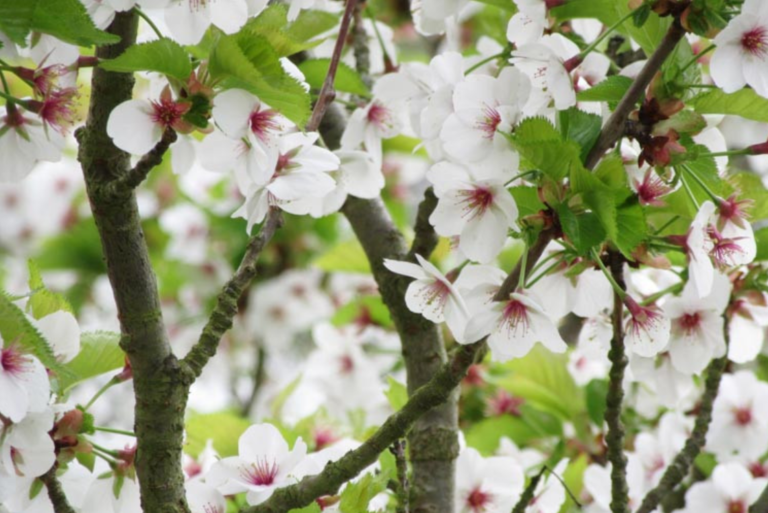
Bradford pear is easily the most notorious tree on this entire list, and for good reason. Mississippi State University Extension confirms that homeowners with this tree are quite familiar with the smell it releases each spring, describing the odor as reminiscent of rotting fish.
The tree produces a spectacular flush of white flowers in early spring, often before the leaves even open, which is exactly why it became so popular with city planners decades ago. Unfortunately, the fragrance behind those pretty blooms does not match the visual display.
University of Illinois Extension notes that the fragrance has been described as smelling like dead fish, vomit, and urine, depending on who you ask. The compound responsible is largely butyric acid working alongside trimethylamine and dimethylamine.
Beyond the smell, Bradford pear carries serious structural and ecological baggage. NC State Extension explains that the tree’s weak branching structure causes frequent breakage, and its aggressive spread now displaces native plants across much of the eastern United States.
If you already have one in your yard, there is no urgent need to remove it purely for the smell, since the odor lasts only a couple of weeks each spring. Many extension offices do, however, recommend replacing it over time with sturdier native alternatives.
2. Callery Pear Cultivars (Pyrus calleryana, all varieties)
Bradford is simply the original cultivar of a much larger group of trees, and nearly every Callery pear variety shares the same fishy floral scent. Popular alternatives like Chanticleer, Cleveland Select, Autumn Blaze, and Aristocrat were all bred to fix Bradford’s weak branching.
Unfortunately, breeding out the structural problems did nothing to remove the smell. Since all these cultivars share the same fundamental flower chemistry, University of Illinois Extension notes they produce the same undesirable fragrance during bloom.
There is a deeper problem here too. NC State Extension warns that these different cultivars readily cross-pollinate with one another, producing viable seed even though each individual cultivar was originally sold as sterile.
That cross-pollination is exactly how Callery pear escaped cultivation and became invasive. Birds eat the small fruit and spread the seeds widely, which is why you now see thickets of white-flowering pear trees crowding roadsides and forest edges each spring.
I genuinely did not realize how many “different” ornamental pear trees were essentially the same smelly species until I looked into this. If you are shopping for a flowering ornamental tree, it may be worth skipping this group entirely.
3. Common Hawthorn (Crataegus species)
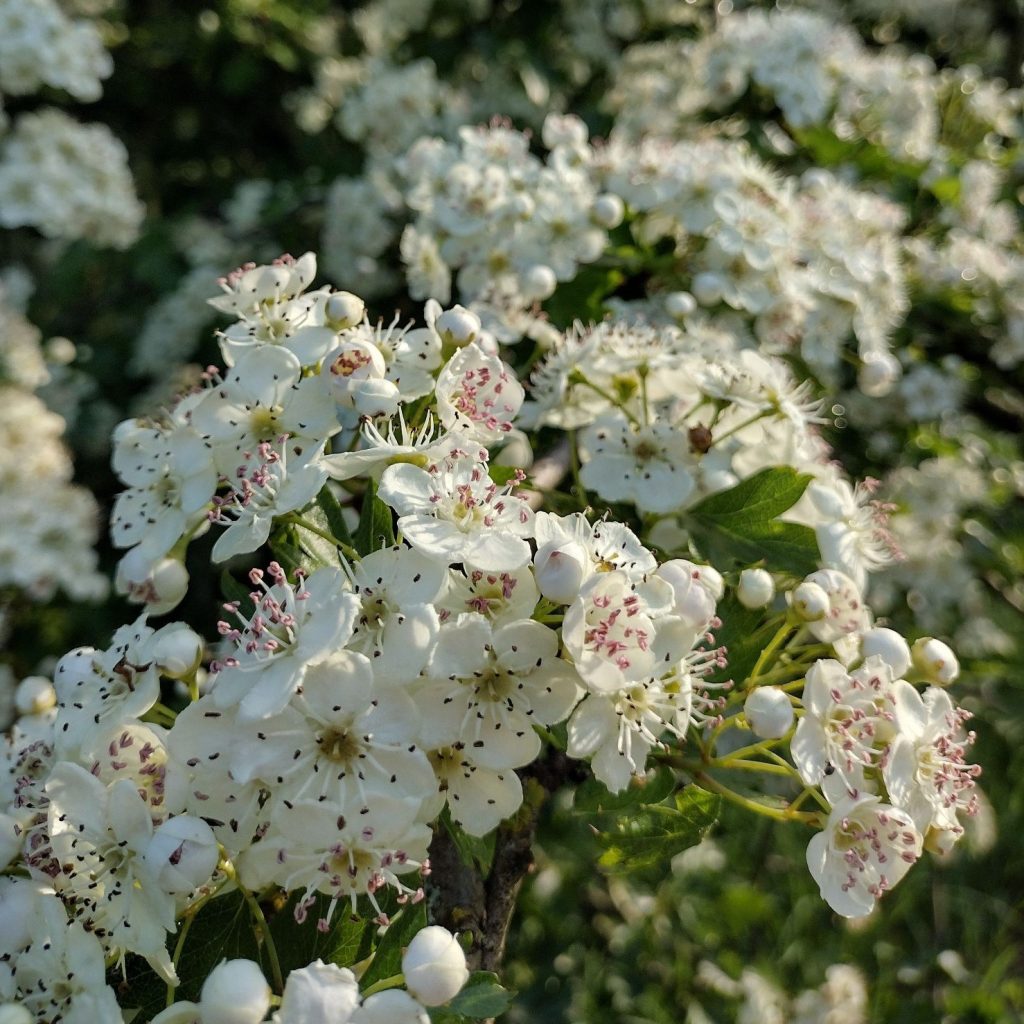
Hawthorn has one of the most polarizing scents of any tree in the plant world, and it has held that reputation for centuries. Its flowers are undeniably beautiful, appearing in dense white clusters each spring, but the smell tells a very different story.
The scientific explanation ties directly back to trimethylamine, the same compound found in decomposing flesh. According to research summarized in academic plant science literature, hawthorn flowers commonly produce this exact compound, giving them their characteristic fishy or musky undertone.
Historically, this scent carried a darker meaning. Medieval Europeans in parts of Britain associated the smell of hawthorn blossom with death and decay, partly because trimethylamine is genuinely one of the first chemicals released by a decomposing body.
Not every hawthorn smells equally strong. Some species, such as the common hawthorn, produce a milder, sweetly musky scent, while others, including the Midland hawthorn, are known for a notably stronger odor closer to rotting flesh.
Despite the smell, hawthorn remains hugely valuable for wildlife. Its dense branches provide excellent nesting cover for birds, and its fall berries are an important food source through the winter months.
4. American Mountain Ash (Sorbus americana)
American mountain ash is a small, cold-hardy native tree valued for its clusters of bright orange-red berries in autumn. Its springtime flowers, however, are a different story entirely. Multiple university and botanical sources describe the blossoms as carrying an odor close to rotting fish or corpse-like decay.
This tree belongs to the same broad plant family as hawthorn and pear, which explains the shared chemistry behind the smell. All three produce amine compounds in their flowers as part of the same fly-pollination strategy.
Mountain ash tends to grow best in cooler climates, often at higher elevations where summer heat is less intense. It typically reaches 15 to 30 feet at maturity, making it a manageable size for most home landscapes.
Birds rely heavily on the berries once they ripen, and it is common to see flocks of robins, waxwings, and grosbeaks stripping a mountain ash bare within just a few days in late fall or winter.
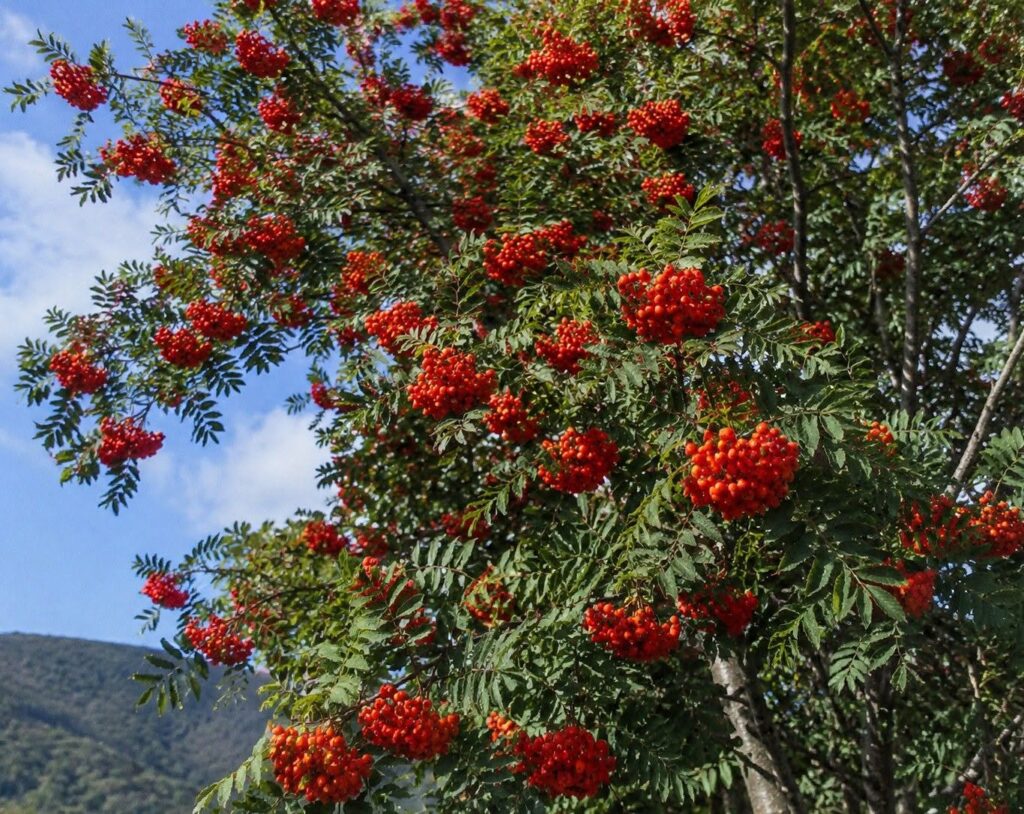
5. European Mountain Ash, also called Rowan (Sorbus aucuparia)
Rowan is the European cousin of American mountain ash, and it carries an even more widely documented reputation for its springtime smell. The Morton Arboretum, a respected botanical research institution, describes its white flower clusters as having a slightly unpleasant odor.
Gardeners in the United Kingdom have discussed this smell for years, often describing it as musky, meaty, or simply unpleasant depending on the individual tree and the weather conditions during bloom. Warm, still days tend to intensify the scent noticeably.
Interestingly, the same trimethylamine compound responsible for hawthorn’s smell is widely cited as the cause here too. This is a strong example of how closely related trees within the same plant family tend to share the exact same floral chemistry.
Despite its brief smelly period, rowan is treasured across Europe for its brilliant red autumn berries, which have long been used in folk medicine, jams, and even traditional protective charms planted near homes.
The tree typically grows 20 to 40 feet tall, prefers cooler climates, and often struggles in hot, humid summers, which is why it remains somewhat uncommon in warmer parts of the United States.
6. Female Ginkgo Biloba
Ginkgo is one of the most ancient tree species alive today, with a lineage stretching back roughly 270 million years according to botanical researchers, making it a genuine living fossil. Unfortunately, only half the species carries the reputation for smelling bad.
Ginkgo trees are dioecious, meaning individual trees are either male or female, and only female trees produce the fleshy seed coating responsible for the notorious odor. As that coating decomposes on the ground each fall, it releases butyric acid, which many people compare to rancid butter, vomit, or rotten eggs, with a distinctly fishy edge.
Because of this, most modern nurseries and city planting programs specifically choose male ginkgo cultivars, propagated from cuttings of known male trees to guarantee the odor problem never develops.
The irony is that ginkgo is otherwise a nearly perfect urban tree. It tolerates pollution, resists most pests and diseases, and can live for well over a thousand years in the right conditions, making it enormously valuable wherever it is planted correctly.
If you already have a female ginkgo dropping smelly fruit each autumn, raking promptly and disposing of the fallen seeds quickly is really the only practical solution, since the smell intensifies the longer the fruit sits and breaks down on the ground.
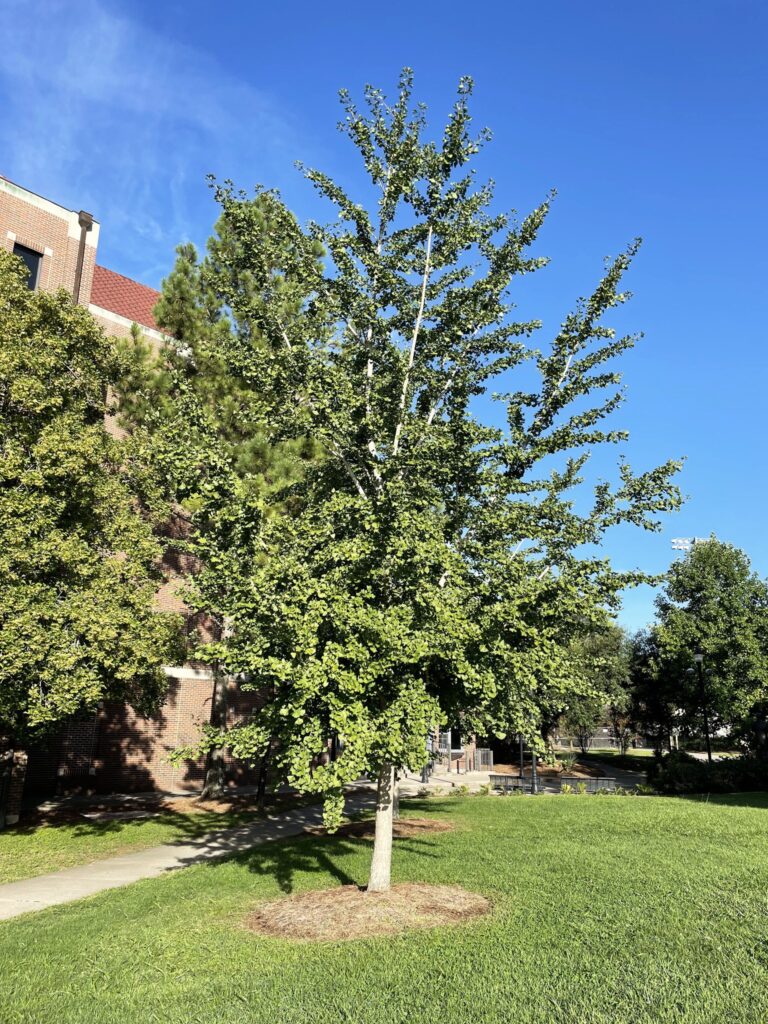
7. Privet (Ligustrum species)
Privet is best known as a hedging plant, but many varieties grow into small, tree-like forms if left unpruned, and its clustered white flowers carry a scent that divides people sharply. Washington State University Extension notes that both the flowers and leaves can produce a strong, unpleasant odor.
Descriptions of the smell vary enormously depending on who you ask. Some gardeners describe it as sweet and honey-like, while others describe the exact same plant as smelling distinctly fishy or like wet dog, which suggests real chemical variation between cultivars and even individual plants.
The fragrance is powerful enough to notice from a moving vehicle, according to University of Georgia Extension research, which found the scent detectable from inside a car traveling at highway speed past a blooming privet hedge.
Beyond the smell, certain privet species have become seriously invasive in parts of the southeastern United States. Birds spread the berries widely, and dense privet thickets can crowd out native understory plants in forested areas.
If you already have privet on your property, regular pruning right after flowering helps limit both the smell and the seed production, keeping the plant more contained and considerably less likely to spread into surrounding natural areas.
ALSO READ: 10 Bushes That Smell Like Cat Urine (Names, With Pictures)
8. Firethorn (Pyracantha species)
Firethorn, more formally called Pyracantha, is a dense, thorny evergreen shrub often trained into small tree forms along fences and walls. Clemson Cooperative Extension’s Home and Garden Information Center notes plainly that its small white spring flowers carry an unpleasant smell.
As a member of the rose family, firethorn shares the same underlying floral chemistry as hawthorn and Callery pear. The flowering period is thankfully brief, typically lasting only about two weeks in late spring or early summer before the smell fades entirely.
Firethorn more than makes up for its brief smelly phase with an extraordinary autumn and winter berry display. Clusters of bright orange or red berries can persist on the branches well into January, providing crucial food for birds during the leanest part of winter.
Because of its dense, thorny growth habit, firethorn is frequently planted as a natural security barrier beneath windows or along property lines, where its spring odor is a small tradeoff for months of berry color and effective, low-maintenance screening.
9. Cotoneaster (Tree-Form Varieties)
Cotoneaster is closely related to both firethorn and hawthorn, and several of its larger, tree-like varieties share the same unpleasant floral scent. Oregon State University’s landscape plant database describes the flowers of showy cotoneaster as carrying a distinctly unpleasant scent.
The Morton Arboretum offers a similar description for related cotoneaster species, noting a slightly unpleasant smell accompanying the small white spring flower clusters. Some gardening references go further, comparing the scent directly to decaying fish.
Cotoneaster varieties range enormously in size, from low, ground-hugging groundcovers to substantial upright shrubs and small trees reaching 10 to 15 feet tall. The tree-form varieties are the ones most likely to produce a noticeable scent at head height.
Birds are drawn heavily to the bright red autumn berries, and cotoneaster plantings near parking lots or open areas sometimes attract dramatic flocks of waxwings during migration season, stripping the branches bare within days.
10. Wayfaring Tree (Viburnum lantana)
Wayfaring tree is a large, multi-stemmed shrub, often grown as a small ornamental tree, that produces flat clusters of creamy white flowers each May. According to a university extension horticulture response documented through the national Ask Extension network, these flowers can carry a distinctly unpleasant fishy odor.
Opinions on the smell vary considerably, much like several other trees on this list. Some describe the scent as pleasantly lily-like, while others find it genuinely unpleasant, which suggests the compound concentration may vary between individual plants and growing conditions.
This tree originally earned its common name because it was frequently found growing wild along footpaths and trails across Europe, serving as an informal marker that travelers were on or near a walking route.
Its bright red berries, which gradually darken to black as they ripen, provide valuable food for birds through late summer and early fall, and the flexible young branches were historically used for tying hay bales and bundles.
Like most of the trees on this list, wayfaring tree’s smell is a brief seasonal event rather than a year-round problem, typically lasting only through its two to three week flowering window in mid-spring.
Honorable Mention: Tree of Heaven (Ailanthus altissima)
Tree of heaven deserves a mention here, even though extension sources more precisely describe its distinctive smell as resembling burnt or rancid peanut butter rather than fish specifically. University of Maryland Extension confirms that all plant parts release an unpleasant odor when crushed.
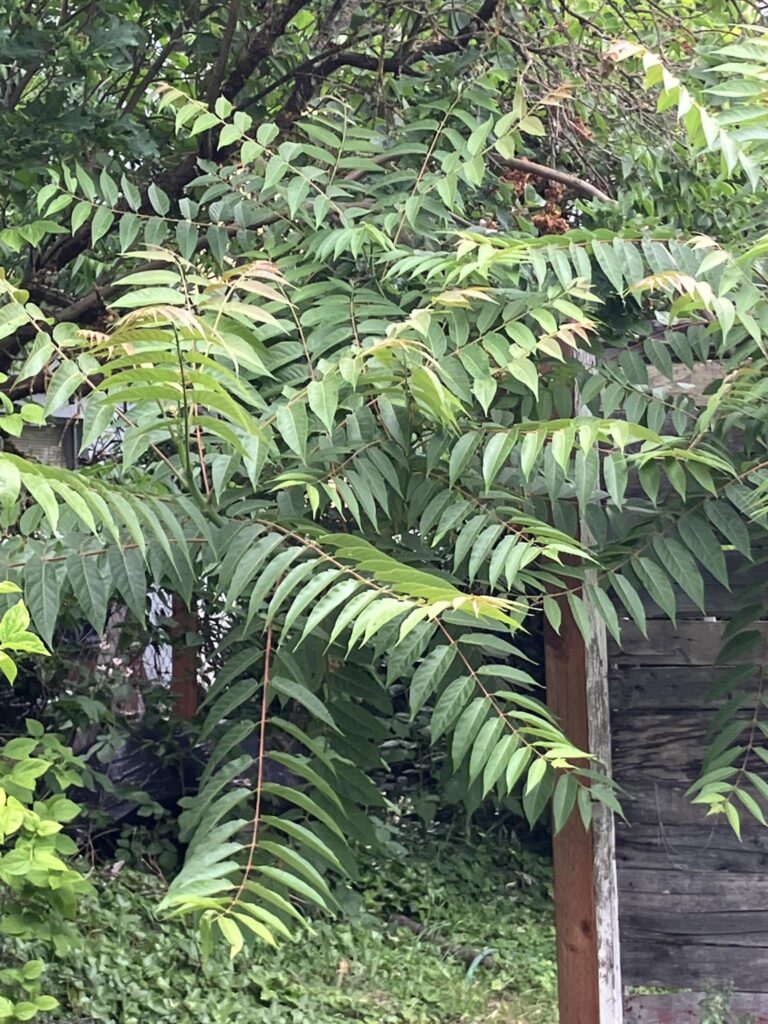
This invasive species is dioecious like ginkgo, and only male trees produce the strongly scented flowers responsible for the smell. Female trees can produce over 300,000 seeds annually, according to conservation researchers, making this tree a serious ecological problem well beyond its odor.
Some general gardening sources do group tree of heaven alongside genuinely fishy-smelling trees, since both odors fall into the broad category of unpleasant amine-based scents that most people find equally off-putting.
I am including it here with that honest caveat, since accuracy matters more than padding out a list with a tree that does not quite fit the theme.
The Science Behind the Smell, Explained Simply
Nearly every genuinely fishy-smelling tree on this list belongs to the rose family, known scientifically as Rosaceae. This is not a coincidence.
Within that family, a large subgroup called Maloideae, which includes pears, hawthorns, mountain ash, cotoneaster, and firethorn, shares a common evolutionary strategy. These plants rely heavily on flies for pollination rather than bees.
Flies are drawn to smells associated with decay, since their natural food sources and egg-laying sites often involve decomposing organic matter. Producing trimethylamine is simply an efficient way to attract exactly the right pollinator.
Interestingly, the same chemical shows up in an entirely unrelated species: female ginkgo, which is not part of the rose family at all. In this case, the compound serves a different function, likely deterring animals from eating the seeds before they are ready.
Weather plays a real role in intensity too. Warm, still, humid days tend to trap volatile compounds close to the ground, making the smell far more noticeable than on cool, breezy days when the same compounds disperse quickly into the air.
ALSO READ: 25 Bushes That Attract Butterflies (With Pictures, and Care Tips)
How Long Does the Smell Actually Last?
This is the question I get asked most often, and thankfully the answer is reassuring. Most fishy tree odors last only two to three weeks at most, coinciding directly with the peak flowering period.
Once pollination occurs and the petals begin to fall, chemical production drops sharply within days. By the time fruit starts forming, the smell has typically disappeared entirely, sometimes for the rest of the year.
Ginkgo is the one clear exception on this list, since its odor comes from decomposing fruit in autumn rather than spring flowers. That smell can persist for several weeks in October and November until the fallen fruit is cleaned up or fully decomposes.
If the smell from a spring-flowering tree seems unusually long-lasting, it may simply mean you have several different trees from this list blooming in overlapping waves nearby, extending the overall smelly season in your yard or neighborhood.
What to Do If You Already Have One of These Trees
You do not necessarily need to remove a smelly tree, especially if it is otherwise healthy and provides real value through shade, wildlife habitat, or fall color.
Timing matters if you want to avoid the worst of it. Simply plan outdoor gatherings, open windows, and patio time around the two to three week flowering window each spring, and the rest of the year the tree behaves completely normally.
For ginkgo specifically, prompt fall cleanup of fallen fruit genuinely helps, since a few days of decomposition on the ground is what produces the worst of that particular smell.
If a tree is invasive, structurally weak, or causing genuine problems beyond the smell, such as Bradford pear or tree of heaven, most extension offices recommend gradual replacement with a sturdier native alternative suited to your specific region and climate.
ALSO READ: 10 Fragrant Trees with Sweet Scents to Elevate Your Landscape
Frequently Asked Questions
Are these smells harmful to breathe? No. The compounds responsible, mainly trimethylamine and related amines, are unpleasant but not toxic at the concentrations produced by a flowering tree. The smell is unpleasant, not dangerous.
Why do only some years seem smellier than others? Warm, humid, and still weather during peak bloom concentrates the scent near ground level. Cooler, breezier springs tend to disperse the same compounds much faster, making the smell far less noticeable.
Can I prevent a tree from smelling without removing it? For dioecious trees like ginkgo, choosing a male cultivar prevents the issue entirely. For flowering trees like hawthorn or pear, there is unfortunately no way to stop flowering without also losing the ornamental display.
Do all pear trees smell like fish? Only ornamental Callery pear varieties, including Bradford and its many related cultivars. Edible fruiting pear trees, such as Bartlett or Anjou, generally produce a much milder floral scent.
Is the smell worse right after rain? Yes, in many cases. Moisture on the flowers can intensify volatile compound release temporarily, though the effect usually fades again once the flowers dry out.
Final Thoughts
Learning why these trees smell the way they do genuinely changed how I feel about that one memorable spring morning years ago. It was not a mystery or a problem with my yard. It was simply biology doing exactly what it evolved to do.
If you are planning a new landscape and want to avoid this issue entirely, steering clear of ornamental Callery pear and choosing male ginkgo cultivars solves most of the problem before it starts.
For everything else on this list, the smell is a brief, two to three week inconvenience in exchange for genuine wildlife value, striking berry displays, and in some cases, centuries of garden history behind the tree itself.
References
- Mississippi State University Extension Service — The Fishy Truth about Bradford Pear Trees https://extension.msstate.edu/blogs/extension-for-real-life/the-fishy-truth-about-bradford-pear-trees
- NC State Extension Publications — Callery Pear: Bradford Pear, Other Varieties, and Their Invasive Offspring https://content.ces.ncsu.edu/callery-pear-bradford-pear-other-varieties-and-their-invasive-offspring
- Penn State Extension — Four Really Stinky Flowers https://extension.psu.edu/four-really-stinky-flowers
- University of Illinois Extension — Callery Pear: Ornamental Favorite or Invasive Menace? https://extension.illinois.edu/blogs/good-growing/2024-04-05-callery-pear-ornamental-favorite-or-invasive-menace
- Clemson Cooperative Extension, Home and Garden Information Center — Pyracantha (Firethorn) Care Guide https://hgic.clemson.edu/factsheet/pyracantha-firethorn-care-guide-growing-pruning-and-landscape-uses/
- Oregon State University, Landscape Plants Database — Cotoneaster multiflorus https://landscapeplants.oregonstate.edu/plants/cotoneaster-multiflorus
- University of Maryland Extension — Tree-of-Heaven https://extension.umd.edu/resource/tree-heaven

Tim M Dave is a gardening expert with a passion for houseplants, particularly cacti and succulents. With a degree in plant biology from the University of California, Berkeley, he has vast experience in gardening. Over the years, he has cultivated a vast collection of desert plants and learned a great deal about how to grow and care for these unique companions.