25 Major Types of Rhododendron (With Pictures and Care Tips)
My neighbor has a rhododendron hedge that turns her entire front yard into a wall of pink every May. I remember stopping mid-walk the first time I saw it in full bloom. It looked almost too vivid to be real.
That reaction is fairly common. Few flowering shrubs put on a show quite like a mature rhododendron in bloom.
The tricky part is that “rhododendron” covers an enormous amount of ground, botanically speaking. This guide walks through 25 types of rhododendron, including native species, hardy hybrids, dwarf cultivars, and the azaleas that technically belong to the same genus.
A Quick Look at the Rhododendron Genus
Rhododendron belongs to the heath family, Ericaceae, alongside blueberries, cranberries, and mountain laurel. It is one of the largest genera of woody plants in the world.
Some verified numbers worth knowing:
- The genus contains an estimated 1,000 to 1,100 species, with some counts reaching as high as 1,024 depending on the classification system used.
- The Ericaceae family as a whole includes more than 4,400 species, making Rhododendron just one large branch of a much bigger plant family.
- Taxonomists divide the genus into eight subgenera, further split into 15 sections and 71 subsections.
- The International Rhododendron Registry lists over 28,000 recorded cultivars, though only a few thousand remain widely available commercially.
- Of the roughly 25 native rhododendron species found in North America, only four are evergreen. The rest are deciduous shrubs known as azaleas.
These numbers explain why “types of rhododendron” searches turn up such a wide mix of plants. Between wild species, registered hybrids, and azalea cultivars, this genus offers more variety than almost any other flowering shrub.
Rhododendron or Azalea? A Quick Clarification
This distinction trips up a lot of new gardeners, so it is worth settling early. According to the American Rhododendron Society, all azaleas are rhododendrons, but not all rhododendrons are azaleas.
Azaleas generally lack the tiny scales found on the underside of true rhododendron leaves. Most azaleas are deciduous, while most rhododendrons stay evergreen, though there are exceptions on both sides.
Flower structure offers another clue. Azaleas typically have five stamens per flower, while rhododendrons usually have ten or more.
Now, let’s dive into popular rhododendron varieties.
Native North American Rhododendron Species
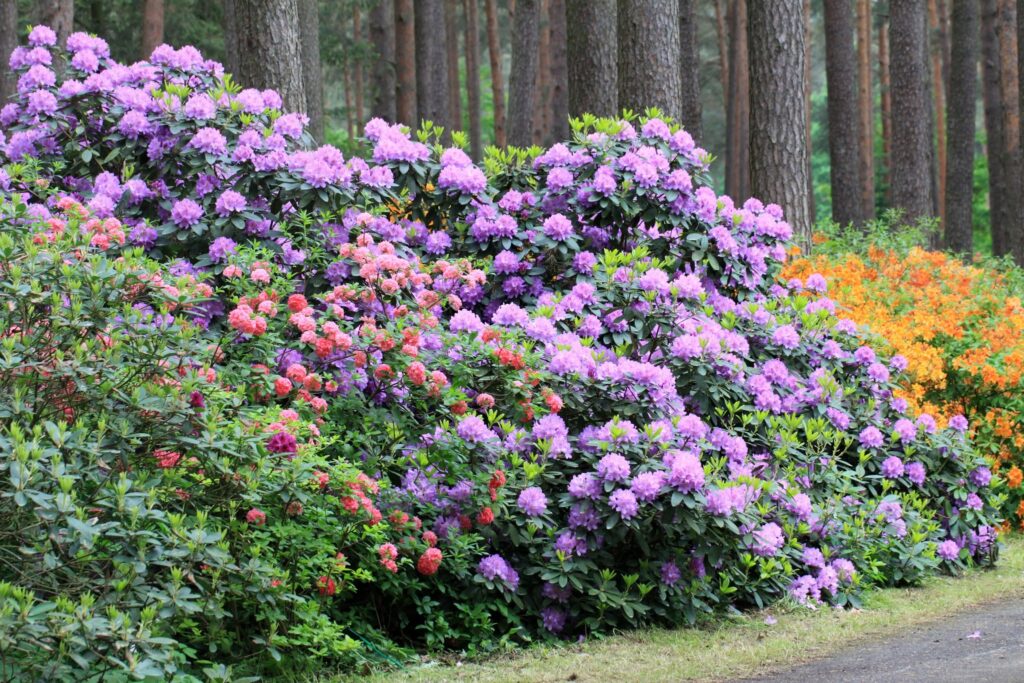
These species form the backbone of wild rhododendron populations across the eastern and western United States, and many modern hybrids trace their hardiness directly back to them.
1. Rhododendron catawbiense (Catawba Rhododendron)
Native to the Appalachian Mountains, this species produces rounded clusters of lilac-purple flowers each late spring. It is one of the most cold-hardy rhododendron species available.
Because of that hardiness, it became the parent species behind the “Ironclad” hybrid group, which remains the standard recommendation for gardeners in harsh northern climates.
2. Rhododendron maximum (Rosebay Rhododendron)
Also called the great laurel, this is one of the largest native rhododendrons, capable of reaching 20 feet or more in ideal conditions. It produces white to pale pink flowers in mid to late summer.
It thrives in the shaded understory of Appalachian forests and remains especially abundant in Great Smoky Mountains National Park, where dense thickets form along stream banks and slopes.
3. Rhododendron macrophyllum (Pacific Rhododendron)
Native to the Pacific Northwest, from northern California through Washington into British Columbia, this species produces large clusters of pink to rose-purple flowers. It is the official state flower of Washington.
It grows well in the cool, moist coastal climates of its native range and tends to struggle in hotter, drier inland conditions.
4. Rhododendron minus (Carolina Rhododendron)
This shorter species tops out around five to six feet, making it more manageable than many of its native relatives. It produces pink to rose-colored blooms in late spring.
Its compact size makes it a practical choice for smaller native plant gardens, particularly in the southeastern United States where it occurs naturally.
5. Rhododendron canadense (Rhodora)
A deciduous native species found from Virginia to Newfoundland, this shrub produces distinctive rose-purple flowers that open before the leaves fully emerge. Its blooming style sets it apart from evergreen relatives.
It tolerates boggy, acidic soils better than most rhododendrons, making it a good fit for wetter garden sites that other species would struggle with.
Asian and Himalayan Rhododendron Species
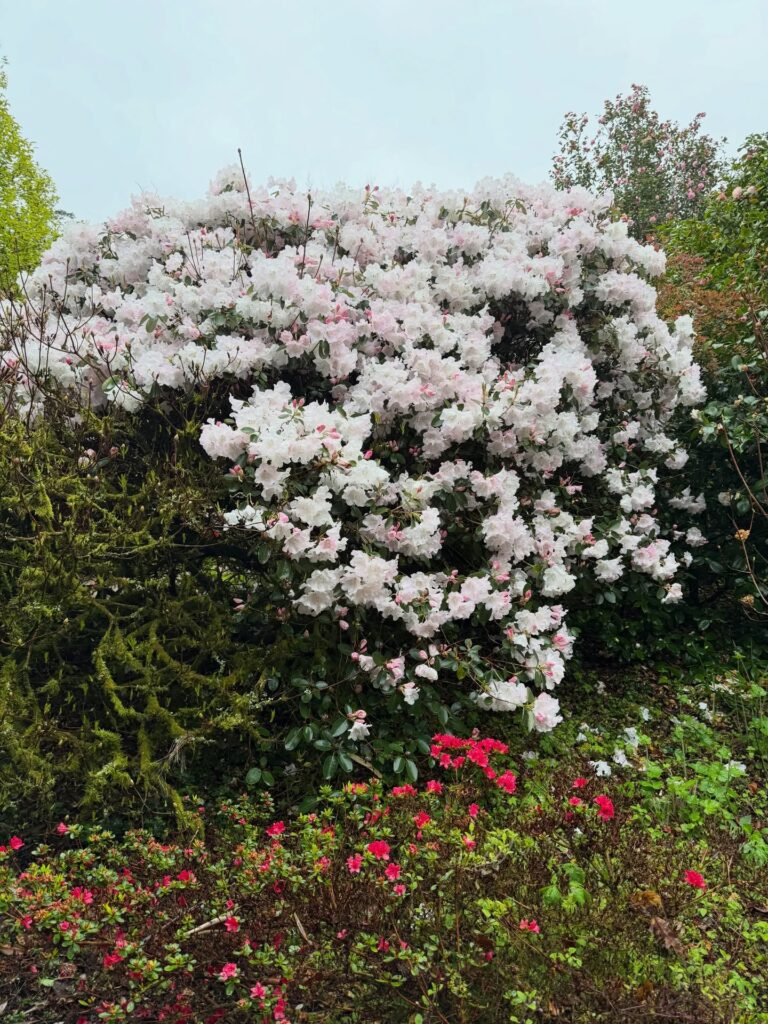
The Himalaya-Hengduan Mountain region holds the highest concentration of rhododendron diversity on the planet, and these species represent some of the most horticulturally significant finds from that region.
6. Rhododendron arboreum (Tree Rhododendron)
This is the national flower of Nepal, and for good reason. It can grow into a genuine tree, occasionally reaching heights that dwarf most other rhododendron species, with vivid red flowers.
Its widespread native range across the Himalayas has made it an important parent species in early hybridization work, contributing bold flower color to countless modern cultivars.
7. Rhododendron ponticum (Common Rhododendron)
Native to parts of Spain, Portugal, and Turkey, this species produces lavender-purple blooms and adapts to a wide range of conditions. That adaptability has become a double-edged sword.
Introduced to the British Isles as an ornamental, it has since become classified as invasive there, forming dense thickets that crowd out native understory plants.
8. Rhododendron simsii (Sim’s Azalea)
Widely known simply as the florist’s azalea, this evergreen species produces compact clusters of red, pink, or white flowers. It is the parent of many indoor azalea cultivars sold around the world.
It is more tender than most garden rhododendrons, which is why it is typically grown as a houseplant or forced into bloom for holiday sales rather than planted outdoors in cold regions.
9. Rhododendron schlippenbachii (Royal Azalea)
This deciduous species produces large, fragrant pink flowers before its leaves fully unfurl in spring, followed by foliage that turns a striking bronze-red in autumn. Few azaleas offer this much seasonal interest.
Native to Korea, Japan, and parts of China, it tolerates cooler climates well and is often considered one of the most ornamental deciduous azalea species available.
10. Rhododendron degronianum (Japanese Rhododendron)
Native to Japan, this compact evergreen species features rose-pink flowers and leaves with a distinctive fuzzy, tan-colored indumentum on the underside. That woolly texture makes it easy to identify.
It stays relatively low-growing compared to many Asian species, which makes it a popular choice for smaller garden beds and foundation plantings.
ALSO READ: 15 Fragrant Shrubs and Bushes That Will Fill Your Garden With Scent
Ironclad and Classic Hardy Hybrids
These hybrids, mostly derived from Rhododendron catawbiense, earned the nickname “Ironclads” for their reliable performance through harsh winters. They remain the go-to recommendation for beginners in cold climates.
11. ‘Nova Zembla’
Bright red flowers and a dense, upright growth habit make this one of the most recognizable hardy hybrids. It performs reliably from USDA zones 4 through 8.
Its tolerance for both cold winters and reasonably warm summers has made it a long-standing favorite for hedges and mass plantings.
12. ‘Roseum Elegans’
Lilac-pink flowers cover this vigorous, adaptable hybrid each late spring. It ranks among the most widely planted Ironclad varieties in North America.
Its exceptional cold tolerance and general resistance to pests make it a dependable choice, even for gardeners who are new to growing rhododendrons.
13. ‘Boule de Neige’
White flowers with a faint lavender tinge bloom early in the season on this slow-growing, compact hybrid. It has remained popular since the late 1800s.
Its dense, rounded habit makes it useful for foundation plantings, and its slower growth means less frequent pruning compared to more vigorous hybrids.
14. ‘Cunningham’s White’
This hardy hybrid produces white flowers with a faint purple blotch and is valued as much for its toughness as for its blooms. It tolerates a wider pH range than many rhododendrons.
Because of its resilience, it is frequently used as grafting rootstock for less hardy rhododendron cultivars in commercial nursery production.
15. ‘PJM’
Named for plant breeder Peter J. Mezitt, this hybrid produces lavender-pink flowers earlier in spring than most rhododendrons, often before many other shrubs have even budded. Its small leaves also turn a deep mahogany in winter.
Exceptional cold hardiness, down to roughly USDA zone 4, has made this one of the most widely recommended rhododendrons for northern gardens.
Dwarf and Compact Rhododendron Cultivars
These smaller cultivars suit modern gardens where space is limited. Most stay under three feet tall, making them well suited to borders, rock gardens, and container growing.
16. ‘Ramapo’
Blue-lavender flowers cover this low, spreading dwarf hybrid each spring. It rarely exceeds two feet in height, making it one of the more compact options available.
Its small, dense foliage also holds a bluish-gray tone through the growing season, adding visual interest even when the plant is not in bloom.
17. ‘Elviira’
Cherry-red, trumpet-shaped flowers bloom on this low-maintenance dwarf variety, which typically reaches only about two feet tall and wide. Its evergreen foliage stays attractive through winter.
It requires the same well-drained, acidic soil as larger rhododendrons, despite its smaller stature, and works well for borders or mass plantings in tight spaces.
18. ‘Black Satin’
Pinkish-purple flowers with dark purple foliage give this dwarf variety a moodier, more dramatic look than most rhododendrons. The foliage color intensifies with more sun exposure.
Its compact size and unusual coloring make it a standout choice for gardeners looking for something visually different from the typical rhododendron palette.
19. ‘Purple Gem’
Deep purple flowers bloom generously on this tiny, mounding dwarf variety, which stays under two feet tall even at full maturity. Its small leaves suit rock gardens especially well.
It tolerates more sun than many larger rhododendrons, provided the soil stays consistently moist and well-drained.
20. ‘Ginny Gee’
Pink and white bicolor flowers cover this popular dwarf cultivar in generous quantities each spring. Its small, neat foliage stays tidy without much pruning.
It has become one of the most award-winning dwarf rhododendrons in cultivation, prized for its reliable, heavy flowering even on a compact frame.
ALSO READ: 25 Cold Hardy Evergreen Shrubs That Keep Your Garden Alive All Winter (Identification With Pictures)
Popular Azalea-Type Rhododendrons
Since all azaleas technically belong to the Rhododendron genus, no list of rhododendron types would be complete without them. These groups represent some of the most widely planted azalea types worldwide.
21. Rhododendron periclymenoides (Pinxterbloom Azalea)
This native deciduous azalea produces fragrant pink flowers in mid-spring, often before its leaves fully emerge. It is found naturally across much of the eastern United States.
Its adaptability to woodland conditions makes it a strong choice for naturalized plantings, particularly in native plant or pollinator gardens.
22. Encore® Azaleas
This modern hybrid series was specifically bred to rebloom, flowering in spring and again later in summer or fall, unlike most traditional azaleas that bloom only once. That extended color window is the series’ main selling point.
Individual varieties within the series vary in size and color, but all share the same reblooming trait, along with generally good heat tolerance for warmer climates.
23. Kurume Azaleas
Originating in Japan, this evergreen azalea group produces small but abundant flowers on compact, twiggy shrubs. Dense spring bloom coverage is their defining trait.
Their small size and tidy habit have made them a long-standing favorite for foundation plantings and formal garden borders throughout mild climate regions.
24. Southern Indica Azaleas
Popular throughout the southeastern United States, this evergreen azalea group produces large flowers on correspondingly large, vigorous shrubs. Some mature specimens can reach eight feet or more.
Their heat tolerance and generous bloom size have made them a staple of historic Southern gardens, particularly across Georgia and the Carolinas.
25. Vireya Rhododendrons
Unlike the cold-hardy species covered elsewhere on this list, Vireya rhododendrons are tropical, often growing as epiphytes in their native Southeast Asian and Pacific island habitats. Some produce flowers reaching several inches across.
They require warm, humid, frost-free conditions, which makes them a greenhouse or houseplant specialty in most temperate climates rather than an outdoor garden shrub.
A Brief History of the Rhododendron
Carl Linnaeus formally established the genus Rhododendron in 1753, combining the Greek words for “rose” and “tree.” Cultivation of the plant, however, began even earlier, tracing back to around 1656 in Europe.
Large-scale plant collecting expeditions to southern Asia in the early 1900s, led by botanists such as Forrest, Rock, and Kingdon-Ward, dramatically expanded the number of known species. That wave of discovery reshaped how rhododendrons were classified for decades afterward.
Today, the genus holds real cultural weight as well. It is the national flower of Nepal and the official state flower of both Washington and West Virginia in the United States.
How I Grouped These 25 Rhododendron Types
To make this list practical, I split it into five categories. The first two focus on true wild species, the middle two cover hardy garden hybrids, and the final category rounds out the well-known azalea types that belong to the same genus.
Each entry includes the plant’s defining trait, hardiness notes, and any care details worth knowing before adding it to your garden.
How to Choose the Right Rhododendron for Your Space
Before jumping into the list, think about your actual growing conditions. Rhododendrons are far less forgiving of the wrong site than their reputation suggests.
- If you live in a cold climate, native species and Catawba-derived hybrids, often called Ironclads, handle harsh winters with minimal damage.
- If you have limited space, dwarf cultivars stay compact for years without aggressive pruning.
- If you want repeat blooms, certain reblooming azalea series flower more than once per season, unlike most true rhododendrons.
- If you live somewhere warm and humid, tropical Vireya rhododendrons or heat-tolerant azalea types will perform far better than cold-hardy species bred for northern gardens.
Basic Care Tips for Rhododendrons
Most rhododendrons and azaleas share similar core requirements, even across such a large and varied genus.
Light: Dappled shade suits most rhododendrons best. Direct afternoon sun can scorch the leaves, particularly in hot climates.
Soil: Moist, well-drained, acidic soil is essential. Heavy clay soil should be amended with organic matter before planting.
Watering: Roots rarely grow deeper than 12 inches, so consistent moisture matters more than deep, infrequent watering.
Planting depth: Set the root ball slightly high rather than deep, since poor drainage around the roots is one of the most common causes of decline.
Pruning: Remove spent flower clusters as soon as blooming finishes, taking care not to damage the new buds forming just beneath them.
Common Problems to Watch For
Rhododendrons are generally low-maintenance, but a handful of recurring issues are worth knowing before you plant one.
Phytophthora root rot remains one of the most serious threats, especially in poorly drained soil. Once established, it is difficult to reverse, so prevention through proper drainage matters far more than treatment.
Lace bugs cause a stippled, speckled look on leaves and are among the most common pest issues, particularly on plants grown in full sun with little surrounding vegetation.
Winter injury from sun and drying wind can damage evergreen types in exposed locations. Selecting well-adapted, cold-hardy cultivars for your zone reduces this risk considerably.
Toxicity is an important safety note. Rhododendron leaves, flowers, and nectar contain grayanotoxins, which are poisonous to humans, pets, and grazing livestock if ingested in sufficient quantity.
Frequently Asked Questions
How many types of rhododendron exist? The genus contains an estimated 1,000 to 1,100 wild species, plus more than 28,000 registered cultivars, though only a fraction of either group is commonly available commercially.
What is the difference between a rhododendron and an azalea? Azaleas are a group within the Rhododendron genus. They generally lack leaf scales, are more often deciduous, and typically have five stamens per flower, compared to ten or more in most true rhododendrons.
Are rhododendrons poisonous? Yes. All parts of the plant, including the nectar, contain grayanotoxins that are toxic to humans and animals if ingested. Even honey made primarily from rhododendron nectar can cause illness in rare cases.
Which rhododendron is the most cold-hardy? Ironclad hybrids derived from Rhododendron catawbiense, along with cultivars like ‘PJM,’ are generally considered the most reliable choices for USDA zones 4 and 5.
Can rhododendrons grow in full sun? Most prefer dappled shade and can scorch in intense afternoon sun, though some hardier hybrids tolerate more light in cooler climates. Checking a specific cultivar’s sun tolerance before planting is worthwhile.
Do all rhododendrons bloom at the same time? No. Bloom times vary significantly by species and cultivar, ranging from very early spring, as with ‘PJM,’ to mid-summer for species like Rhododendron maximum.
Final Thoughts
Twenty-five types is really just a small sample of what this genus has to offer. Between wild species, registered hybrids, and the enormous world of azaleas, rhododendrons offer more variety than almost any other flowering shrub you could plant.
Start by matching a variety to your actual climate and soil conditions, rather than choosing based on flower color alone. A well-matched rhododendron rewards that extra planning with decades of reliable spring color.
Whether you end up with a single dwarf cultivar in a container or a full native rhododendron thicket along a shaded slope, this genus has a place for nearly every garden style and every level of gardening experience.
References
- North Carolina State University Extension – Rhododendron Plant Toolbox. https://plants.ces.ncsu.edu/plants/rhododendron/
- Clemson University Home & Garden Information Center – How to Grow Rhododendrons in South Carolina. https://hgic.clemson.edu/factsheet/how-to-grow-rhododendrons-in-south-carolina/
- Oregon State University, Landscape Plants – Rhododendron. https://landscapeplants.oregonstate.edu/rhododendron-1
- University of Missouri Extension – Growing Azaleas and Rhododendrons. https://extension.missouri.edu/publications/g6825
- University of Maryland Extension – Azaleas and Rhododendrons: Identify and Manage Problems. https://extension.umd.edu/resource/azaleas-and-rhododendrons-identify-and-manage-problems
- National Institutes of Health, National Center for Biotechnology Information – The Rhododendron Genome and Chromosomal Organization Provide Insight into Shared Whole-Genome Duplications across the Heath Family. https://pmc.ncbi.nlm.nih.gov/articles/PMC6907397/
- U.S. National Park Service, New River Gorge National Park & Preserve – Rhododendrons. https://www.nps.gov/neri/learn/nature/rhododendrons.htm

Tim M Dave is a gardening expert with a passion for houseplants, particularly cacti and succulents. With a degree in plant biology from the University of California, Berkeley, he has vast experience in gardening. Over the years, he has cultivated a vast collection of desert plants and learned a great deal about how to grow and care for these unique companions.