15 Types of Ninebark Shrubs (With Pictures, and Care Tips)
The first ninebark I ever planted was a small ‘Diablo’ cutting, barely a foot tall. Within three seasons, it had become the darkest, most eye-catching shrub in the whole yard. That’s the kind of transformation this plant delivers.
Ninebark belongs to the genus Physocarpus, part of the rose family, and it’s native to North America. The name comes from its exfoliating bark, which peels away in thin layers, sometimes as many as nine, giving the plant its unusual common name.
This shrub has exploded in popularity over the last two decades thanks to breeding programs that introduced dramatic new foliage colors. What was once a plain, green streamside shrub is now available in gold, copper, burgundy, and even bicolor forms.
This guide covers 15 types of ninebark shrubs, including the original wild species and the cultivars that built its modern reputation. By the end, you’ll know exactly which one fits your garden style and space.
A Quick Word on Ninebark’s Natural History
Before getting into the list, a little background helps explain why this shrub behaves the way it does. Ninebark is genuinely tough, and that toughness comes from its origins.
It grows wild along streambanks and rocky slopes across much of North America. This native habitat explains why the plant tolerates both wet and dry conditions so well.
The genus includes around 8 to 10 species, and all but one are native to North America, according to plant identification resources that track the Physocarpus genus closely. Only one species occurs naturally in northeastern Asia.
Native Americans historically used ninebark’s inner bark to prepare medicinal extracts, including analgesics and laxatives, based on ethnobotanical records maintained by Clemson University’s Home & Garden Information Center.
Now let’s get into the 15 types.
1. Common Ninebark (Physocarpus opulifolius)
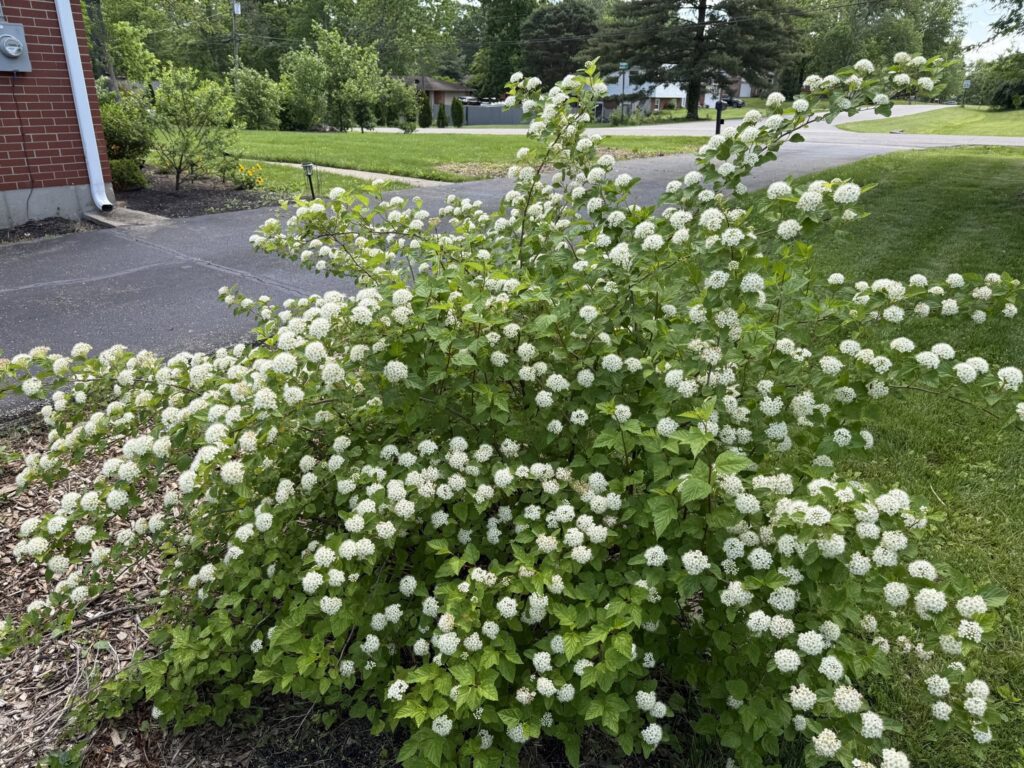
This is the wild, straight species behind every cultivar on this list. It grows naturally along streams, rocky banks, and moist thickets across the eastern and central United States.
The shrub reaches 5 to 9 feet tall, occasionally up to 10 feet, according to the Missouri Botanical Garden’s Plant Finder database. Small pink or white flowers appear in rounded clusters during late spring.
Its exfoliating bark is the real star of the show once the leaves drop in autumn. Reddish to light brown layers peel back in strips, adding genuine winter interest to an otherwise quiet garden bed.
I always recommend the straight species to anyone building a native pollinator garden. It supports local wildlife just as well as any fancy cultivar, without the higher price tag.
2. Pacific Ninebark (Physocarpus capitatus)
This West Coast native looks similar to common ninebark but carries its own distinct personality. It ranges naturally from southern Alaska down to central California, and east into Montana and Utah.
Oregon State University’s Landscape Plants database describes it as a deciduous shrub reaching 5 to 20 feet tall, with an open, somewhat straggly branching pattern and long strips of exfoliating bark.
Its leaves resemble small maple leaves, and its fall color ranges from intense red to a softer rose-brown, depending on site conditions. It thrives near streams and tolerates wet, boggy soil far better than many other shrubs.
Birds rely on this shrub too. Its dense branching structure provides excellent nesting cover, and its seeds feed songbirds through the winter months.
3. Mallow-Leaved Ninebark (Physocarpus malvaceus)
Less commonly grown in home gardens, this species is native to the interior mountain regions of the Pacific Northwest and northern Rockies. Its leaves resemble those of mallow plants, which explains the common name.
This species tends to grow in drier, rockier conditions than its eastern and coastal relatives. It forms dense colonies through root suckering, making it useful for erosion control on slopes.
While it isn’t as showy as modern cultivars, its toughness and adaptability make it valuable in restoration plantings and naturalized landscape designs.
4. Diablo® Ninebark (‘Monlo’)
This is the cultivar that changed everything for ninebark’s popularity. Its foliage emerges a deep, near-black purple and holds that color through the growing season better than most competitors.
According to University of Illinois Extension’s Hort Answers database, ‘Monlo’ produces reddish purple foliage along with fruit that complements the dark leaf color beautifully. It remains one of the most requested ninebark cultivars at nurseries today.
Full sun brings out the darkest color. In shade, Diablo’s foliage tends to fade toward a duller green-purple, which disappoints gardeners expecting that dramatic near-black effect.
5. Coppertina™ Ninebark (‘Mindia’)
Coppertina brings a warmer color story to the ninebark lineup. New foliage emerges a vivid copper-orange before settling into a reddish-bronze tone through summer.
This cultivar grows 6 to 8 feet tall with an upright, spreading habit, based on regional extension plant records. It pairs beautifully with golden or silver-leaved companions in a mixed border.
I find Coppertina especially useful for adding warmth to a planting scheme that otherwise leans heavily on cool purples and greens.
6. Amber Jubilee™ Ninebark (‘Jefam’)
Amber Jubilee is known for its shifting, multicolored foliage display. New growth opens in yellow to orange tones, gradually transitioning to lime green as the season progresses.
This rounded cultivar reaches 5 to 6 feet high and 3 to 4 feet wide, according to plant records from the University of Minnesota’s tree and shrub selection resources. Fall brings a final shift toward purple tones before leaf drop.
Its compact, tidy shape makes it a strong choice for smaller yards where a full-sized ninebark simply wouldn’t fit comfortably.
7. Summer Wine® Ninebark (‘Seward’)
Summer Wine earned a 2007 Theodore Klein Plant Award, recognized by the University of Kentucky’s Nursery Crop Extension Research program for its outstanding garden performance.
Its mahogany foliage holds its color more consistently through the summer heat than many older cultivars. The plant grows 4 to 6 feet tall and wide, with a notably uniform, compact growth habit.
Propagation is remarkably easy too. According to the same university research notes, cuttings root readily without needing rooting hormone, which explains its wide availability in nurseries.
8. Dart’s Gold Ninebark
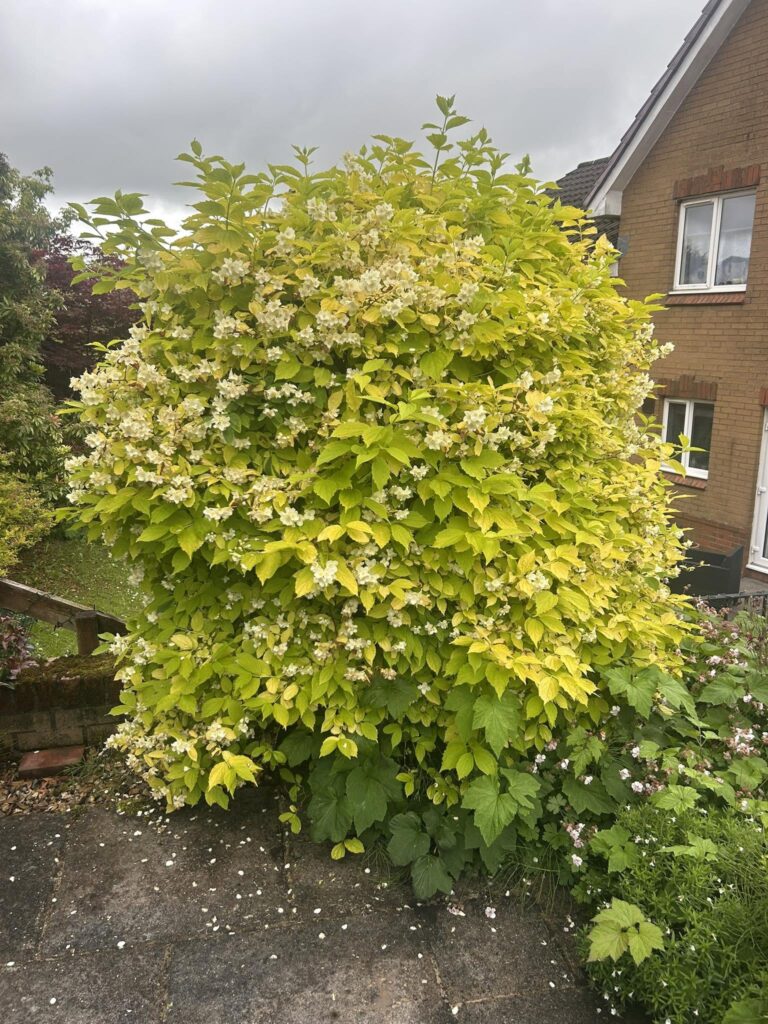
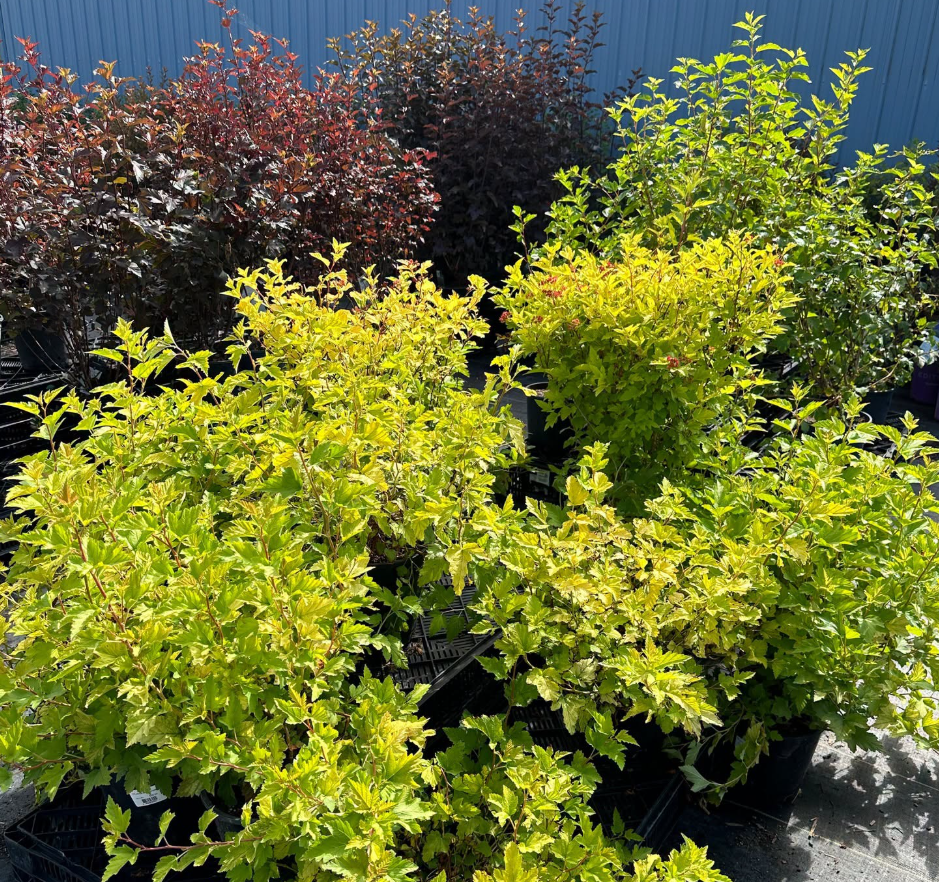
This compact cultivar brings bright, cheerful color to the opposite end of the spectrum from Diablo. Its foliage opens yellow and gradually shifts to yellow-green as the season continues.
University of Illinois Extension lists Dart’s Gold as reaching 4 to 5 feet tall, making it one of the more manageable cultivars for smaller garden beds or foundation plantings.
Placing it near darker-leaved shrubs like Diablo creates striking contrast, something landscape designers use often to add visual depth to mixed shrub borders.
9. Luteus Ninebark
Luteus is one of the older golden-leaved cultivars still found in cultivation today. Its foliage opens a bright yellow, later mellowing into a softer yellow-green tone through summer.
It grows larger than Dart’s Gold, closer to the size of the straight species, which makes it a better fit for larger properties needing a substantial golden accent shrub.
Like most ninebark cultivars, full sun exposure keeps its color vibrant. Shaded plantings tend to produce duller, greener foliage that loses much of the visual impact.
10. Center Glow Ninebark
Center Glow stands out for its unusual bicolor leaf pattern. Each leaf shows a golden-yellow to lime-green center, framed by deep purple-red along the margins.
This creates a glowing effect that becomes especially noticeable in partial shade, where the yellow centers seem to catch and hold available light. The shrub grows to 6 to 8 feet tall with a graceful, arching form.
Garden designers frequently cite this cultivar as one of the more sophisticated foliage options in the ninebark family, since no single-toned variety can quite replicate its layered color effect.
11. Little Devil™ Ninebark (‘Donna May’)
Little Devil answers the demand for a compact, dark-leaved ninebark that fits smaller spaces. It carries deep purple foliage similar to Diablo, but on a noticeably smaller frame.
The University of Minnesota’s tree selection database lists this cultivar among its recommended small shrubs, prized for maintaining strong color intensity despite its reduced size. It typically stays under 4 feet tall.
This makes Little Devil an excellent option for foundation plantings, small borders, or anywhere a full-sized Diablo would simply overwhelm the space available.
12. Little Joker Ninebark
Little Joker offers a warmer take on the compact, dark-leaved ninebark trend. Its foliage carries a rich, burgundy-purple tone with visible red undertones, giving it a slightly more vibrant character than the coldest, near-black cultivars.
It grows to 4 to 5 feet tall with a neat, mounding habit that needs minimal pruning to maintain its shape. White flowers with a warm pink flush appear in late spring.
This cultivar works particularly well alongside gold and silver companion plants, where the warm purple-red tone creates strong, complementary contrast.
13. Tiny Wine® Ninebark
Tiny Wine answers a simple market demand: a true dwarf version of the popular wine-colored ninebark cultivars. It maintains dark reddish-purple foliage on a noticeably compact frame.
Most sources list mature size at around 3 to 4 feet tall and wide, making it suitable for small yards, containers, and tight foundation spaces where larger cultivars simply won’t fit.
Its flowering habit mirrors its larger relatives, producing pink-white clusters in late spring that stand out nicely against the dark foliage backdrop.
14. Tiny Wine® Gold Ninebark (‘SMNPOTWG’)
This cultivar pairs the compact Tiny Wine frame with bright golden new growth instead of the typical burgundy tone. NC State Extension’s Plant Toolbox describes it as producing bright yellow leaves on new growth, along with showy pink-white flower clusters in late spring.
The same source recommends leaving its habit largely unpruned for the best natural shape, only trimming after flowering if shaping becomes necessary.
It suits foundation plantings, low hedges, containers, and shrub borders equally well, according to the same extension listing, making it one of the more versatile compact cultivars available.
15. Ginger Wine® Ninebark
Rounding out this list is Ginger Wine, a newer cultivar bred for improved color retention through hot summer weather. Its foliage carries a warm, reddish tone that many gardeners find holds up better than older wine-colored cultivars during peak summer heat.
It typically grows in the mid-size range, comparable to Summer Wine, making it a solid substitute where that cultivar has struggled with fungal leaf spot in humid climates.
Breeders selected this cultivar specifically to address disease resistance concerns that have affected some older reddish-leaved ninebark varieties over the years.
ALSO READ: 25 Stunning Bushes That Attract Butterflies (With Pictures, and Care Tips)
Quick Comparison Table
| Ninebark Type | Foliage Color | Typical Height | Best Use |
| Common Ninebark | Green | 5–9 ft | Native gardens |
| Pacific Ninebark | Green | 5–20 ft | Streamside, wet soil |
| Mallow-Leaved Ninebark | Green | Variable | Erosion control |
| Diablo® | Deep purple | 8–10 ft | Bold accent |
| Coppertina™ | Copper-bronze | 6–8 ft | Warm color schemes |
| Amber Jubilee™ | Multicolor | 5–6 ft | Small yards |
| Summer Wine® | Mahogany | 4–6 ft | Compact borders |
| Dart’s Gold | Yellow-green | 4–5 ft | Contrast planting |
| Luteus | Yellow | Larger shrub | Golden accent |
| Center Glow | Bicolor gold/purple | 6–8 ft | Partial shade |
| Little Devil™ | Deep purple | Under 4 ft | Foundation plantings |
| Little Joker | Warm burgundy | 4–5 ft | Mixed borders |
| Tiny Wine® | Reddish-purple | 3–4 ft | Containers |
| Tiny Wine® Gold | Golden new growth | 3–4 ft | Hedging, borders |
| Ginger Wine® | Warm reddish | Mid-size | Humid climates |
How to Choose the Right Ninebark for Your Garden
Consider your available space first. Full-sized species like Pacific ninebark need room to spread, while Tiny Wine and Little Devil suit smaller beds comfortably.
Match foliage color to your existing design. Dark purple cultivars create bold contrast, while golden types brighten shaded corners or muted color schemes.
Think about soil moisture. Native species handle wet, streamside conditions especially well, which makes them strong choices for rain gardens or low-lying yard areas.
Check your climate’s humidity levels. Newer cultivars like Ginger Wine were bred partly to resist the fungal leaf spot issues that affect older varieties in humid regions.
Basic Care Tips for Ninebark Shrubs
Sunlight: Full sun produces the richest foliage color across nearly every cultivar. Shaded plants tend to fade toward duller green tones.
Watering: Established ninebark tolerates both wet and dry conditions, making it forgiving for gardeners who sometimes forget to water.
Pruning: Cutting the shrub back close to the ground in late winter encourages vigorous new growth and the best foliage color the following season.
Soil: Most ninebark types tolerate alkaline soil well, along with a wide range of other soil conditions, according to regional extension plant guides.
ALSO READ: 15 Flowering Shrubs for Zone 5: The Best Choices for Cold-Climate Gardens
Quick Facts Worth Noting
The genus Physocarpus contains roughly 8 to 10 species, with all but one native to North America and the remaining species found in northeastern Asia.
Common ninebark’s common name refers to its bark, which peels away in as many as nine visible layers, according to Clemson University’s Home & Garden Information Center.
Summer Wine ninebark received the 2007 Theodore Klein Plant Award, a recognition tracked by the University of Kentucky’s nursery crop research program for standout landscape performance.
Pacific ninebark’s native range stretches from southern Alaska to central California, based on distribution records maintained by Oregon State University’s Landscape Plants database.
Common Questions About Ninebark Shrubs
Is ninebark deer resistant? Ninebark generally holds up well against deer browsing compared to many other flowering shrubs. This resistance, combined with its tolerance for poor soil, explains why it shows up so often in low-maintenance landscape designs.
Why did my ninebark lose its dark purple color? Purple-leaved cultivars like Diablo need consistent full sun to hold their darkest tones. Shaded plantings often shift toward a duller green-purple, so relocating the shrub or thinning nearby trees usually restores better color.
Can ninebark grow in wet, poorly drained soil? Yes, particularly the native species. Both common ninebark and Pacific ninebark evolved along streambanks and tolerate wet, boggy conditions far better than most ornamental shrubs sold at garden centers today.
How often should I prune ninebark? A hard prune close to the ground every few winters keeps the shrub vigorous and encourages the best foliage color the following season. Light shaping after flowering also works well for cultivars grown mainly for their compact form.
Do all ninebark cultivars flower the same way? Most produce similar clusters of small white or pink flowers in late spring, regardless of foliage color. The real differences between cultivars show up in leaf color, mature size, and growth habit rather than bloom style.
Is ninebark susceptible to any diseases? Some older wine-colored cultivars can develop fungal leaf spot in humid climates, particularly during wet summers. Newer introductions bred with disease resistance in mind, along with good air circulation around the plant, reduce this risk considerably.
Where Ninebark Fits in a Landscape Design
As a specimen plant, dark-leaved cultivars like Diablo or Center Glow work beautifully on their own, drawing the eye without needing much supporting plant material nearby.
In mixed shrub borders, contrasting foliage colors create depth. Pairing a golden cultivar like Dart’s Gold next to a purple one like Little Devil produces a striking visual break.
For erosion control, native species such as Pacific ninebark and mallow-leaved ninebark hold slopes and streambanks effectively, thanks to their naturally dense, suckering root systems.
In rain gardens, common ninebark handles periodic flooding without complaint, making it one of the more dependable shrub choices for stormwater management plantings recommended by extension programs.
Final Thoughts
Ninebark offers something for nearly every garden, whether you want a native pollinator shrub, a dramatic purple accent, or a compact golden highlight for a small bed. I hope this list helps narrow down the right choice for your space.
Whichever type you pick, give it full sun, decent airflow, and an occasional hard prune. The color payoff, especially with the modern cultivars, is genuinely worth the small effort involved.
References
- Clemson University Home & Garden Information Center – Rain Garden Plants: Physocarpus opulifolius (Ninebark): https://hgic.clemson.edu/factsheet/rain-garden-plantsphysocarpus-opulifolius-ninebark/
- University of Illinois Extension – Common Ninebark (Hort Answers): https://web.extension.illinois.edu/hortanswers/PlantDetail.cfm?PlantID=354&PlantTypeID=8
- University of Illinois Extension – Selecting Shrubs for Your Home: Common Ninebark: https://web.extension.illinois.edu/shrubselector/detail_plant.cfm?PlantID=354
- NC State Extension Plant Toolbox – Physocarpus opulifolius Tiny Wine Gold: https://plants.ces.ncsu.edu/plants/physocarpus-opulifolius-tiny-wine-smnpotwg
- University of Kentucky Nursery Crop Extension Research – Summer Wine Ninebark: https://nursery-crop-extension.ca.uky.edu/content/physocarpus-opulifolius
- University of Minnesota Extension – Little Devil Ninebark: https://trees.umn.edu/little-devil-ninebark-physocarpus-opulifolius-donna-may
- Oregon State University Landscape Plants – Physocarpus capitatus: https://landscapeplants.oregonstate.edu/plants/physocarpus-capitatus

Tim M Dave is a gardening expert with a passion for houseplants, particularly cacti and succulents. With a degree in plant biology from the University of California, Berkeley, he has vast experience in gardening. Over the years, he has cultivated a vast collection of desert plants and learned a great deal about how to grow and care for these unique companions.