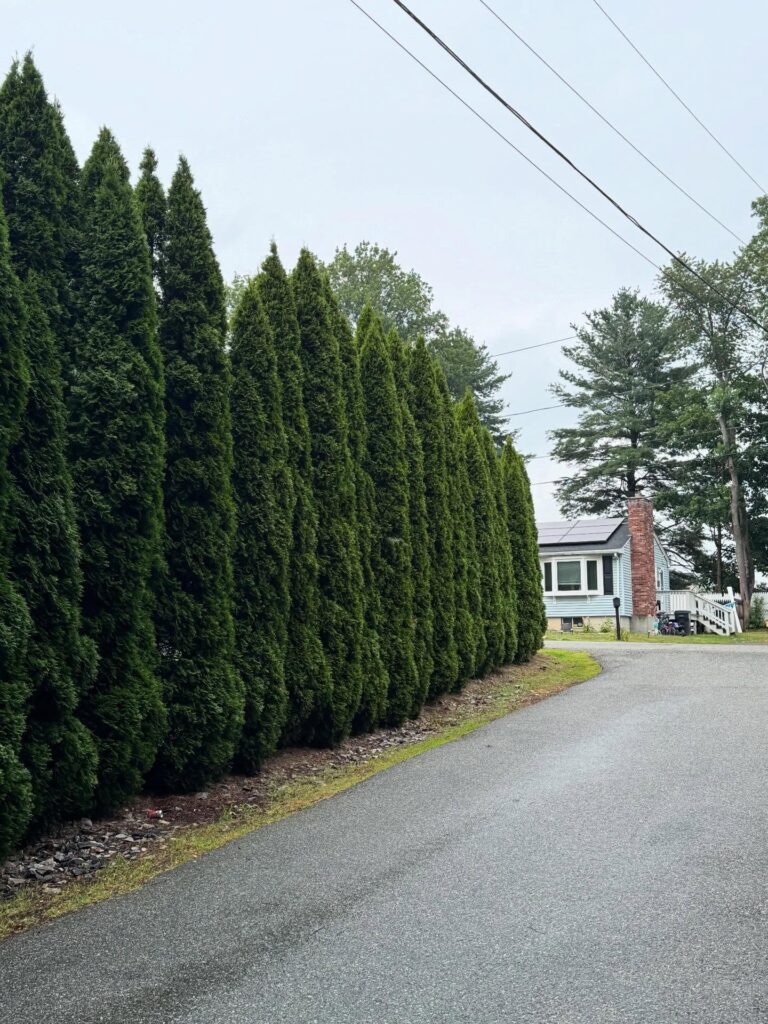
10 Bushes That Smell Like Cat Urine (Names, With Pictures)
I once spent twenty minutes searching my own front yard for a stray cat that did not exist. The smell was unmistakable, sharp, and clearly coming from somewhere near the porch.
It turned out to be the boxwood hedge my previous homeowner had planted years earlier. I was not imagining things, and neither are you.
Several common garden shrubs genuinely produce a scent that mimics feline urine. This is not a myth, a joke, or a sign that your yard needs cleaning.
Real plant chemistry explains it. Sulfur-containing compounds called thiols, along with certain volatile oils, create odors that our noses register as distinctly “catty.”
Below are 10 bushes known for this exact problem, along with the science behind the smell and what you can do about it.
Why Some Bushes Smell Like Cat Urine
The short answer is chemistry, not cats. Certain shrubs release volatile organic compounds, and a handful of these compounds happen to overlap with the ones found in actual feline urine.
Boxwood is the most famous example. According to a Virginia Tech horticulture publication, the English boxwood cultivar ‘Suffruticosa’ carries a strong aroma that has been directly compared to cat urine by plant specialists themselves.
Blackcurrant offers an even more precise case study. Researchers have identified a specific compound called p-menthan-8-thiol-3-one, nicknamed “cat ketone,” that is chemically identical to a compound found in feline urine.
Heat and humidity tend to intensify these smells. Warm, still air lets volatile compounds build up near the plant, while a breeze usually disperses them quickly.
Not every nose detects these odors equally. Individual sensitivity to sulfur compounds varies significantly from person to person, which is why some gardeners never notice a thing.
This variation is well documented in flavor and fragrance science. The same thiol compounds that give some people a strong cat-urine impression from blackcurrant or boxwood can register as barely detectable, or even pleasantly green and fruity, to others standing right beside them.
Genetics plays a real role in this difference. Certain smell receptors are more or less sensitive depending on small variations in a person’s genetic code, a phenomenon researchers have studied extensively in relation to compounds found in foods like cilantro and asparagus.
That means two neighbors smelling the exact same hedge on the exact same afternoon can walk away with genuinely different impressions, and both of them would be right.
1. Boxwood (Buxus sempervirens)
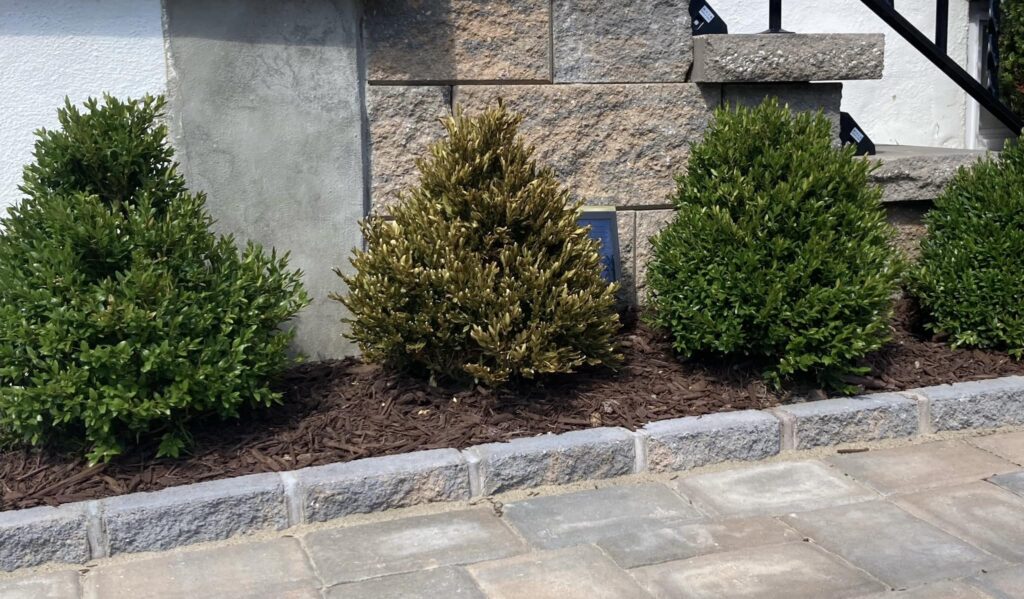
Boxwood tops nearly every list of “cat pee bushes,” and for good reason. Its dense, rounded form makes it one of the most widely planted evergreen hedges in the country.
English boxwood, specifically the cultivar ‘Suffruticosa,’ is the main offender. The scent grows stronger on warm days and after rainfall, when volatile oils release more readily from the leaves.
The smell tends to come from small, easily overlooked flowers that bloom in late spring, not the foliage itself. Brushing against the plant or pruning it can also release a noticeable burst of odor.
Not every boxwood shares this trait. Japanese boxwood (Buxus microphylla) and littleleaf boxwood (Buxus sinica var. insularis) are commonly recommended as low-odor alternatives with a similar compact form.
Good air circulation and drip irrigation instead of overhead watering can reduce stress on the plant, which in turn seems to lessen the smell for many gardeners.
2. Blackcurrant (Ribes nigrum)
This one surprises people. Blackcurrant is grown for its tart, vitamin-rich berries, yet its buds and leaves carry a genuinely feline note that perfumers have documented for decades.
The compound responsible has a name: cat ketone. Chemists have confirmed it is structurally identical to a compound found in actual cat urine, alongside another thiol called 4-methoxy-2-methylbutane-2-thiol.
At very low concentrations, this chemistry reads as a pleasant, green, fruity smell. At higher concentrations, especially when leaves are crushed or bruised, the odor shifts distinctly toward something animalic.
Blackcurrant remains a popular home garden fruit shrub across the United Kingdom and parts of Europe. Its cultivation was historically restricted in some American states over concerns about white pine blister rust, though many disease-resistant cultivars are now approved.
Gardeners who enjoy the fruit but dislike the smell often plant blackcurrant bushes farther from windows, patios, and walkways where the scent would otherwise linger.
3. Flowering Currant (Ribes sanguineum)
A close relative of blackcurrant, this ornamental shrub is grown purely for its spring flower display rather than fruit production. Clusters of pink or red blooms appear before the leaves fully emerge.
Its foliage shares some of the same sulfur-compound chemistry found in blackcurrant, though generally at a milder intensity. Crushing or brushing against the leaves is usually what triggers the smell most noticeably.
Flowering currant thrives in full sun to partial shade and adapts to a range of soil types. It tolerates cooler climates particularly well, making it a staple of Pacific Northwest gardens.
Because the odor is tied mainly to disturbed foliage, placing this shrub away from high-traffic paths reduces the chance of an unpleasant surprise.
Pruning right after flowering, rather than during peak growth, also limits how often the leaves get bruised or crushed by garden tools.
4. Lantana (Lantana camara)
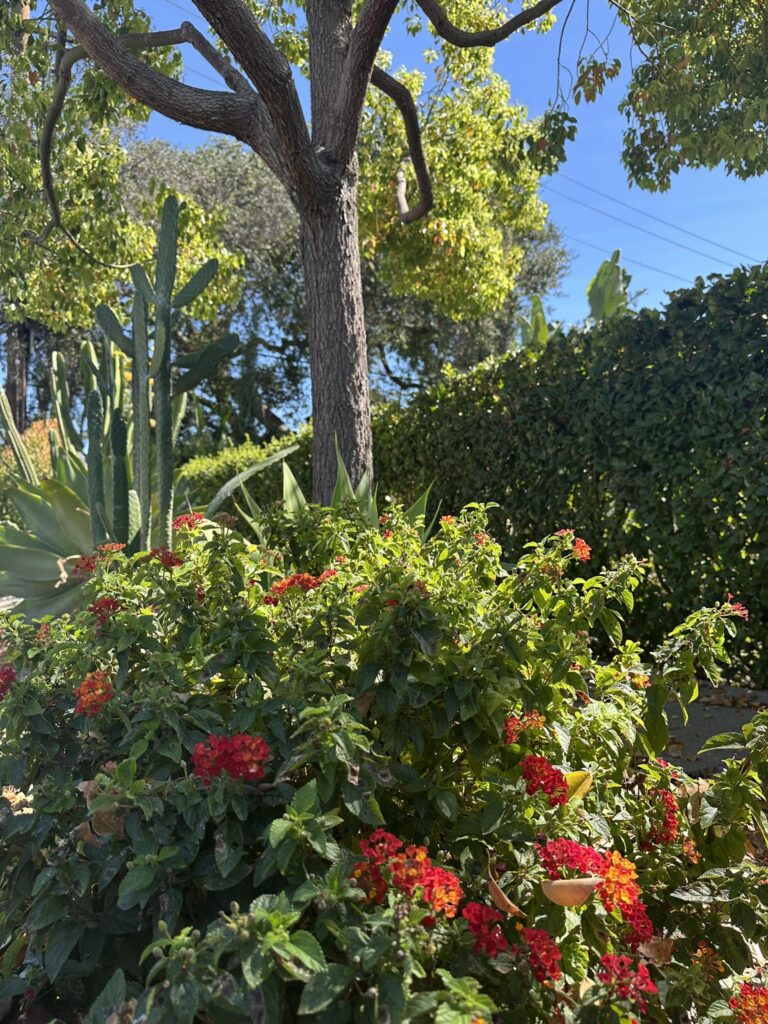
Lantana earns its spot on this list for its foliage rather than its cheerful, multicolored flower clusters. Crush or brush against the leaves, and the smell that follows has been compared to cat urine, gasoline, and fermented citrus all at once.
This distinctive odor actually serves a purpose. It appears to help deter deer and rabbits, making lantana a popular choice in gardens plagued by browsing wildlife.
The plant thrives in full sun and tolerates heat, drought, and poor soil with remarkable ease. It blooms continuously from late spring through fall in warmer climates.
In frost-free regions, lantana can become invasive, so checking local guidance before planting is worthwhile. Many state extension offices track its spread in natural areas.
Because the smell only appears when leaves are disturbed, lantana rarely causes complaints unless it is planted directly along a frequently brushed walkway.
5. Privet (Ligustrum species)
Privet is beloved for dense, easily clipped hedges, but its small white flower clusters carry a scent that University of Maryland Extension describes as usually considered malodorous.
The flowers bloom heavily in late spring to early summer, producing a strong fragrance some liken to cat urine and others compare to rotting fish or ammonia. Either way, it is rarely described as pleasant.
Beyond the smell, privet is considered invasive across much of the eastern United States. Several state extension services actively recommend controlling or removing established plantings.
If hedge structure is the goal, native alternatives like inkberry holly or arrowwood viburnum provide similar density without the invasive spread or the seasonal odor burst.
Where privet already exists, pruning off spent flower clusters promptly can shorten the window during which the smell is most noticeable.
6. Yellow Alyssum (Aurinia saxatilis)
Often sold as “basket of gold,” this low, spreading subshrub covers itself in bright yellow flowers each spring. Its cheerful appearance masks a surprisingly unpleasant secret.
The blooms are frequently described as smelling like cat urine or aged cheese, a stark contrast to its sweet-smelling cousin, sweet alyssum. The two are easy to confuse by name alone.
This drought-tolerant perennial thrives in rock gardens, dry slopes, and border edges where little else survives. Full sun and sharp drainage keep it healthiest and most floriferous.
Because the smell comes specifically from the flowers, deadheading spent blooms can noticeably reduce the odor during peak bloom season.
Gardeners who want the golden color without the scent often substitute sweet alyssum instead, which offers a honey-like fragrance rather than an unpleasant one.
7. Juniper (Juniperus species)
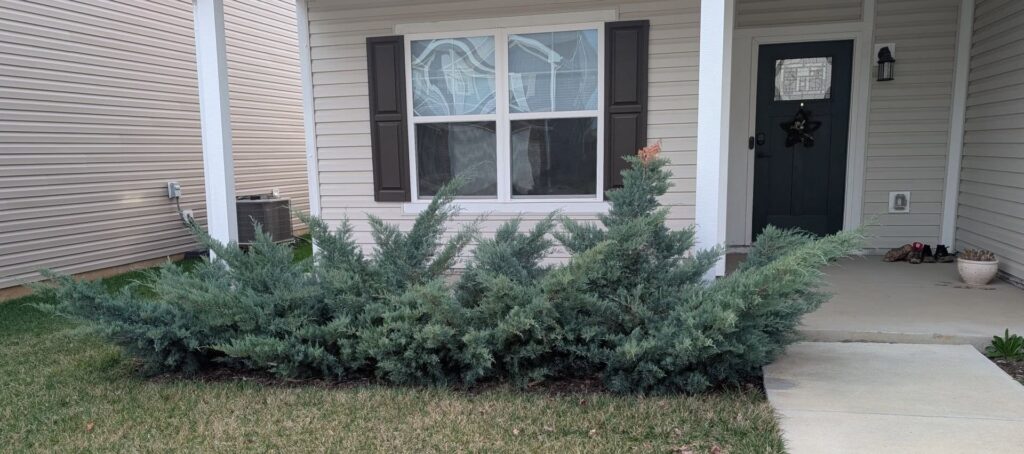
Junipers are a frequent subject of online gardening forums, where confused homeowners describe a persistent cat-urine smell near their evergreen foundation plantings. The culprit is often a nearby juniper rather than an actual animal.
The evidence here is largely anecdotal rather than chemically confirmed in the same way as boxwood or blackcurrant. Still, enough gardeners report the association that it consistently appears on lists of suspicious-smelling shrubs.
Junipers release resinous, piney compounds that some people find pleasant and others find sharp or unpleasant, depending on individual scent sensitivity. Crushed foliage tends to release the strongest smell.
These tough, drought-tolerant evergreens handle poor soil and neglect better than almost any other landscape shrub. That resilience is a major reason they remain so widely planted despite the occasional complaint.
If the smell bothers you, choosing a different evergreen groundcover, such as creeping phlox or dwarf mugo pine, avoids the issue entirely.
8. Skunkbush Sumac (Rhus trilobata)
The name alone offers a fair warning. Utah State University Extension notes that this native shrub’s leaves are “skunky to somewhat sweet-smelling when crushed,” a description that lands surprisingly close to cat urine for many noses.
Oregon State University’s Landscape Plants database describes the crushed foliage as “ill-scented,” while acknowledging that reactions vary considerably from person to person. Some gardeners find the smell barely noticeable, while others avoid the plant entirely.
Despite its reputation, skunkbush sumac is a valuable native shrub across much of the western United States. It tolerates extreme drought, poor soil, and harsh sun better than nearly any ornamental alternative.
Its tart, red berries have long been used to make a lemonade-like beverage, and the plant provides food and cover for birds throughout the winter months.
Because the odor only appears when leaves or stems are bruised, planting it away from paths where people regularly brush against it minimizes any unwanted surprise.
9. Formosa Azalea (Rhododendron species)
Azaleas are beloved for their spectacular spring flower displays, but certain older Southern Indica cultivars, including Formosa types, have developed a reputation among gardeners for an unusual scent.
Reports describe the smell as somewhere between skunk and cat urine, particularly on warm, humid days when volatile compounds build up around the dense foliage. This reputation is largely anecdotal rather than formally studied.
Not all azaleas share this trait, and many popular modern cultivars show no noticeable odor at all. The issue appears concentrated in a handful of older varieties rather than the species broadly.
Azaleas still rank among the most popular flowering shrubs in the southeastern United States, prized for vivid spring color in shades of pink, red, purple, and white.
Choosing a newer, well-reviewed cultivar from a reputable local nursery generally avoids any odor concerns while still delivering the classic azalea flower show.
10. Common American Boxwood (Buxus sempervirens, broader cultivars)
Beyond the notorious English cultivar, broader American boxwood plantings occasionally draw the same complaint, though usually with less intensity. The species as a whole contains the same volatile oil compounds responsible for the smell.
Growing conditions play a real role here. Stressed plants, whether from drought, poor drainage, or insect pressure, tend to release stronger volatile compounds than healthy, well-maintained shrubs.
Regular but moderate watering, along with occasional thinning to improve airflow through the canopy, appears to reduce the intensity of the smell for many gardeners over time.
Because more than 200 boxwood cultivars exist, gardeners troubled by the odor have considerable room to experiment. Asking a local nursery specifically about low-odor selections is often the fastest path to a solution.
Boxwood remains genuinely valuable for formal hedging, topiary, and foundation planting, so most gardeners choose to manage the smell rather than abandon the plant entirely.
ALSO READ: 10 Trees That Smell Like Fish (Rotten): Varieties That Stinks, With Pictures
The Science Behind the Smell, Explained Simply
Plants do not produce odor compounds to annoy gardeners. These chemicals typically serve as natural defenses against insects, browsing animals, or fungal pathogens.
Thiols, the sulfur-based compounds behind much of this smell, are among the most potent odorants known to chemistry. Human noses can detect some thiols at concentrations measured in parts per trillion.
That extreme sensitivity explains why even a small amount of a thiol compound in blackcurrant or boxwood can dominate the overall scent of an entire hedge or border.
Other shrubs, like privet, rely more on a different compound called trimethylamine, which is also associated with the smell of decaying fish and, at certain concentrations, ammonia.
Understanding which chemical family is involved helps explain why some remedies work better for one shrub than another. Reducing plant stress helps with boxwood, while prompt deadheading helps more with privet and yellow alyssum.
Where to Place (Or Avoid Placing) These Bushes
- Near front doors and porches, skip boxwood, privet, and yellow alyssum, since foot traffic and close proximity make the smell hardest to ignore.
- Along frequently brushed walkways, avoid lantana and skunkbush sumac, both of which release their strongest odor only when foliage is physically disturbed.
- Near open windows, be cautious with any shrub on this list during its peak bloom or high-heat period, since warm air currents can carry scent indoors.
- In back corners or side yards, most of these shrubs cause few complaints, since distance alone reduces how often anyone actually notices the smell.
- Near vegetable gardens or patios used for dining, stronger-smelling shrubs like privet and blackcurrant are best kept at a reasonable distance to avoid competing with food aromas.
- Choose low-odor cultivars from the start. Japanese boxwood and littleleaf boxwood offer similar structure to English boxwood without the strongest version of the scent.
- Water at the base, not overhead. Drip irrigation keeps foliage drier and appears to reduce the release of volatile compounds compared to sprinklers that wet the leaves directly.
- Prune at the right time. Removing spent flowers promptly on shrubs like privet and yellow alyssum shortens the window when odor is strongest.
- Improve air circulation. Thinning dense interior growth, rather than only shearing the surface, lets stagnant, humid air escape from the center of the shrub.
- Plant scented shrubs away from high-traffic areas. Keeping potentially smelly bushes away from doorways, patios, and walking paths limits how often people brush against them.
Common Mistakes When Dealing with Smelly Bushes
- Assuming a cat has actually sprayed the area. Many homeowners spend considerable time and money on cat deterrents before realizing the smell comes from the plant itself.
- Removing a valuable shrub unnecessarily. Boxwood, skunkbush sumac, and similar plants offer genuine landscape value, and the odor is often manageable rather than a reason for outright removal.
- Overwatering in an attempt to “wash away” the smell. Excess moisture can stress the plant further and may worsen, rather than reduce, the odor over time.
- Planting the same species again without checking cultivars. Not every variety within a genus produces the same intensity of smell, so a repeat planting can bring the same complaint back.
- Ignoring invasive status. Privet, in particular, is both smelly and invasive in many regions, making replacement a better long-term solution than management.
Frequently Asked Questions About Smelly Bushes
Is the smell a sign that my shrub is diseased or dying?
No. The odor is a natural characteristic of certain species and cultivars, not a symptom of disease, pest damage, or plant stress in most cases.
Can I get rid of the smell completely?
Often not entirely, but pruning, proper watering, and improved airflow can noticeably reduce its intensity. Choosing a low-odor cultivar from the start remains the most reliable fix.
Why do only some people notice the smell?
Sensitivity to sulfur-containing compounds varies significantly between individuals. Some people are essentially unable to detect certain thiols at typical outdoor concentrations.
Is the smell harmful to my health?
No. These compounds are unpleasant to smell but are not associated with any known health risk at the concentrations found in a home garden.
Are there truly odor-free alternatives to boxwood?
Inkberry holly and Japanese holly offer similar evergreen structure and formal hedging potential without the characteristic boxwood scent.
Seasonal Notes on Bush Odor
Spring brings the strongest smells for flowering culprits like privet, yellow alyssum, and azalea, since their blooms are the primary odor source.
Summer heat intensifies boxwood and blackcurrant odor, as higher temperatures speed the release of volatile oils from leaves and stems.
Fall generally brings relief, as cooler temperatures slow volatile compound release across nearly every shrub on this list.
Winter dormancy essentially eliminates the smell for deciduous shrubs like blackcurrant and flowering currant, though evergreen boxwood can still carry a faint scent on unusually warm days.
Final Thoughts
I eventually learned to live with my boxwood hedge, mostly by pruning it properly and planting roses a good distance away from the porch. The smell never fully disappeared, but it stopped being a daily surprise.
If a genuinely odor-free hedge matters more to you than tradition, inkberry holly and Japanese boxwood both deliver a similar look without the feline association.
Either way, the next time a neighbor asks whether a stray cat has been marking your yard, you can now answer with real botanical confidence instead of a shrug.
References
- University of California Agriculture and Natural Resources – Stinky Plants: https://ucanr.edu/blog/under-solano-sun/article/stinky-plants
- University of Maryland Extension – Privet: https://extension.umd.edu/resource/privet
- Oregon State University Landscape Plants – Rhus trilobata: https://landscapeplants.oregonstate.edu/plants/rhus-trilobata
- Utah State University Extension – Skunkbush Sumac: https://extension.usu.edu/rangeplants/shrubs-and-trees/skunkbush-sumac
- Clemson Cooperative Extension, Home & Garden Information Center – Boxwood Diseases and Insect Pests: https://hgic.clemson.edu/factsheet/boxwood-diseases-insect-pests/
- NC State Extension Publications – Boxwood Mite: https://content.ces.ncsu.edu/boxwood-mite
- National Institutes of Health, National Center for Biotechnology Information – Chilling or Chemical Induction of Dormancy Release in Blackcurrant (Ribes nigrum) Buds: https://www.ncbi.nlm.nih.gov/pmc/articles/PMC11346427/

Tim M Dave is a gardening expert with a passion for houseplants, particularly cacti and succulents. With a degree in plant biology from the University of California, Berkeley, he has vast experience in gardening. Over the years, he has cultivated a vast collection of desert plants and learned a great deal about how to grow and care for these unique companions.