30 Types Of Juniper Shrubs And Trees: Identification, With Pictures
Junipers might be the most underrated plant in the landscaping world. I say that because so many people walk past them without a second glance.
There are between 50 and 75 recognized juniper species worldwide, and they grow in more climates than almost any other conifer group.
Junipers belong to the cypress family, making them close relatives of cedars, cypresses, and redwoods, even though the common names can be confusing.
Some hug the ground as a dense mat barely a few inches tall. Others rise as full-sized trees reaching well over 100 feet.
This guide walks through 30 of the most common and useful junipers, covering trees, upright shrubs, and low groundcover forms.
I’ll flag the practical details that matter most: size, growth habit, and where each one performs best.
Whether you’re trying to identify a mystery shrub in your yard or planning a new planting, this list should cover nearly everything you’ll come across.
What Makes A Juniper A Juniper?
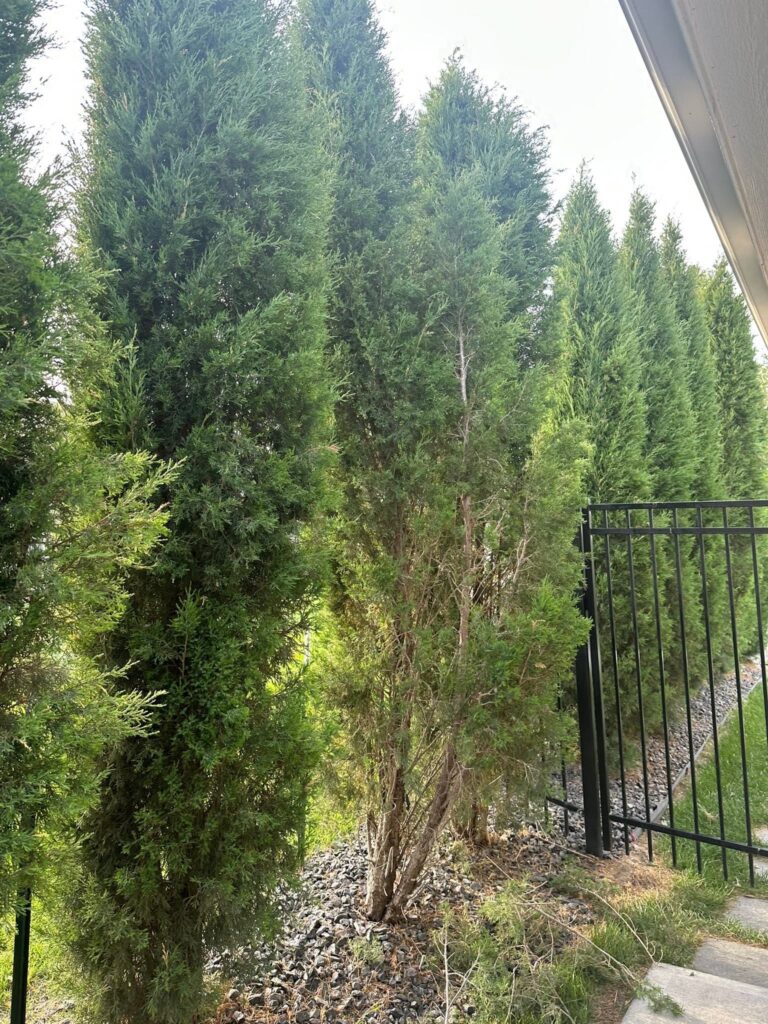
Junipers belong to the cypress family and produce two distinct leaf types over their lifetime. Young growth carries sharp, prickly, needle-like foliage, while mature growth softens into flattened, scale-like leaves pressed close to the stem.
Some species keep the prickly juvenile foliage their whole life, while others switch entirely to the softer, scale-like form as they mature. A few cultivars even display both leaf types on the same plant at once.
Junipers are also dioecious, meaning individual plants are either male or female. Female plants produce the small, round, berry-like cones that give many species their blue or purple color.
Male trees produce small, tan or yellowish pollen cones instead, which release visible clouds of pollen each spring.
Only 13 juniper species are native to North America, though dozens more have been introduced and cultivated for landscaping over the past century.
Juniper wood and foliage carry a strong, resinous scent that many people find pleasant. That fragrance is also the reason juniper has long been used in cabinetry, closet linings, and even gin production.
Large Juniper Trees
Tree-form junipers make up some of the toughest, longest-lived specimens in this entire group. Many tolerate conditions that would kill a typical ornamental tree within a season.
1. Eastern Red Cedar
Despite its name, this is a true juniper rather than a cedar. It’s one of the toughest, most widespread needled evergreens across the eastern half of the United States.
This species often acts as a pioneer plant, quickly colonizing abandoned fields and disturbed ground. Its dark blue-green foliage and gray to reddish bark make it easy to recognize from a distance.
Male trees produce abundant yellow-brown pollen cones each spring, while female trees carry the frosty blue berries prized by overwintering birds.
Mature Eastern red cedar can reach 40 to 60 feet tall, and its fragrant, rot-resistant heartwood has long been used for cedar chests, fence posts, and closet linings.
2. Southern Red Cedar
This close relative of Eastern red cedar grows natively from coastal North Carolina down through Florida and along the Gulf Coast to Louisiana.
It typically develops an oval to pyramidal shape when young, later maturing into a broad, flat-topped crown. Mature specimens can reach 50 feet tall with a similarly wide spread.
Its salt tolerance makes it a strong choice for coastal landscaping where many other conifers struggle, including in exposed dune and beachfront plantings.
3. Rocky Mountain Juniper
Native to the western United States, this species handles dry, rocky slopes that would kill most other trees outright. It has become one of the most widely planted juniper species for cold, arid climates.
Unlike Eastern red cedar, Rocky Mountain juniper struggles in humid, wet conditions and is more prone to disease in those settings, so gardeners in the Southeast typically get better results from other species.
Several popular narrow, columnar cultivars, discussed further below, originate from this species, and its naturally variable form has made it a favorite among plant breeders.
4. Western Juniper
Found across the high deserts of Oregon, California, and Nevada, western juniper often grows in harsh, exposed conditions with minimal rainfall. Some ancient individuals are estimated to be over 1,000 years old.
Its twisted, weathered trunks have become iconic features of the American high desert landscape, often photographed against dramatic volcanic rock formations.
Because it grows so slowly and tolerates extreme drought, western juniper is rarely used in typical residential landscaping, though it remains ecologically important across its native range.
5. Utah Juniper
This medium-sized tree dominates dry, rocky soil across Utah and Arizona, often forming extensive pinyon-juniper woodlands alongside pinyon pine.
Young foliage is needle-like, while mature leaves shrink down to tiny scales barely a couple of millimeters long. Its gray-brown bark peels away in long, thin strips.
The bluish-brown, waxy-coated berries are a critical food source for desert wildlife through the winter months, particularly for birds and small mammals when other food sources become scarce.
6. California Juniper
This drought-tolerant tree thrives in the dry hills and deserts of the southwestern United States. Its scale-like blue-gray leaves and reddish-brown cones give it a distinctive silvery appearance.
Because it tolerates alkaline soil and extreme drought so well, it has become a favorite subject for bonsai artists, who prize its naturally gnarled, weathered trunk shapes.
It typically grows 10 to 15 feet tall in cultivation, though wild specimens in harsh conditions often stay considerably smaller and more twisted.
7. Alligator Juniper
Named for its thick, checkered bark that resembles alligator hide, this southwestern species is one of the most visually distinctive junipers in North America.
It grows slowly, often reaching considerable age, and its rugged, textured trunk makes it a standout even among other juniper species.
8. Oneseed Juniper
Common across the Four Corners region of the American Southwest, oneseed juniper typically grows as a multi-trunked, shrubby tree rather than a single straight trunk.
As the name suggests, each berry-like cone usually contains a single seed, a helpful detail for distinguishing it from other regional juniper species.
9. Chinese Juniper (Tree Form)
Native to China, Japan, Korea, and Myanmar, Chinese juniper has given rise to dozens of cultivars used in landscapes worldwide. The straight species can reach 50 to 60 feet tall.
It tolerates drought, heat, cold, and poor soil remarkably well, struggling only in dense shade or consistently soggy ground.
10. Mexican Juniper
Also called the weeping or drooping juniper, this species is immediately recognizable by its pendulous branches and flattened, cascading foliage sprays.
Native to Mexico and parts of the southwestern United States, it typically grows between 16 and 33 feet tall, with thin, cinnamon-brown bark that peels in narrow strips.
11. Syrian Juniper
This Mediterranean species produces some of the largest cones of any juniper, occasionally over an inch across. It grows as a substantial tree in its native range across the eastern Mediterranean and Middle East.
Its needle-like foliage, arranged in whorls of three, stays sharp and prickly throughout the plant’s life, unlike many other tree-form junipers.
12. Phoenician Juniper
Native to the Mediterranean basin, this hardy, drought-tolerant species grows on rocky coastal slopes and cliffs where soil is thin and rainfall is limited.
It typically develops a dense, rounded crown and produces reddish-brown, berry-like cones that ripen over roughly two years.
Common Species Used As Shrubs
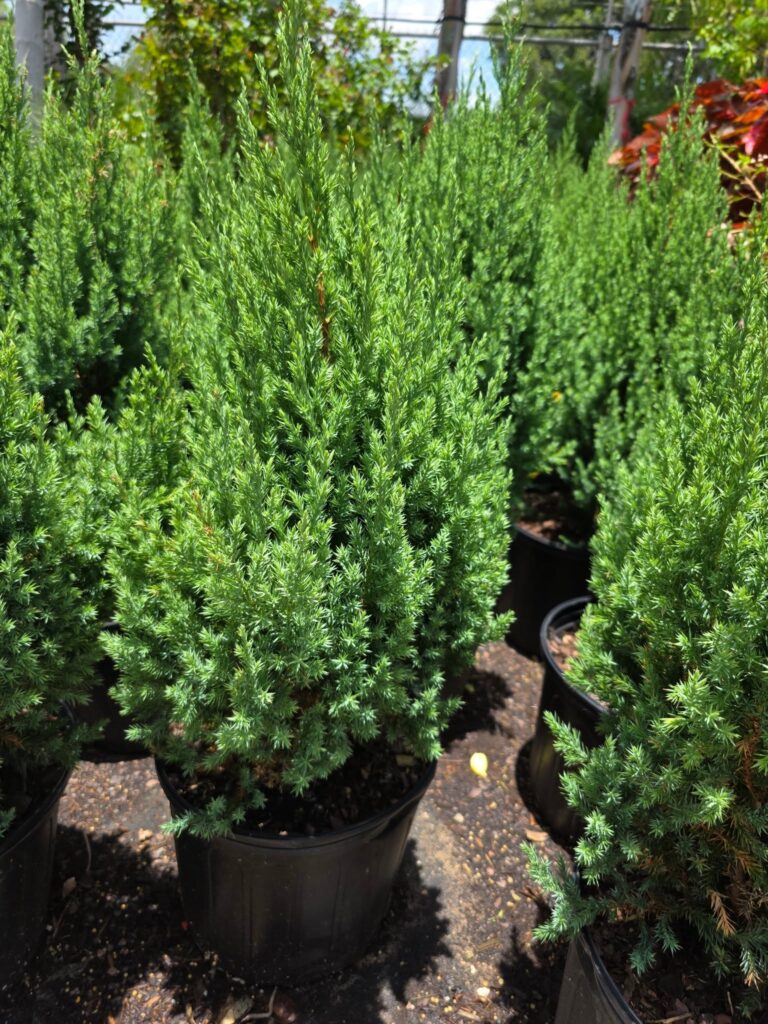
While tree-form junipers dominate forests and open woodlands, several species have earned their place as reliable, adaptable shrubs in home landscapes.
13. Common Juniper
Common juniper holds the record for the largest natural geographic range of any woody plant on Earth, stretching across the entire Northern Hemisphere from the Arctic Circle south through mountainous regions of Asia, Europe, and North America.
Unlike most junipers, its leaves stay needle-like and prickly throughout the plant’s life rather than transitioning to scales.
Individual plants can live for more than 170 years, and the small, whorled needles grow in groups of three around the stem.
Its berries are the source of the flavor in gin, a use that dates back centuries in parts of Europe, and they’re also used to season cooked meats and dishes like braised red cabbage.
14. Creeping Juniper
This low, spreading North American native species grows naturally across much of Canada and the northern United States. It forms a dense mat rarely more than a foot tall, but capable of spreading many feet wide.
Countless popular groundcover cultivars, covered later in this guide, are derived from this adaptable species, which handles poor soil and harsh winters with ease.
15. Shore Juniper
Native to the coastlines of Japan, shore juniper handles sandy, salty conditions better than almost any other landscape conifer. It’s a common choice for seaside gardens and dune stabilization projects.
Its yellowish-green foliage and low, spreading habit make it a practical, tough groundcover option in harsh coastal environments, typically staying under 15 inches tall.
16. Savin Juniper
This spreading, shrubby species is native to the mountains of central and southern Europe. It has a strong, somewhat unpleasant odor when the foliage is crushed, a trait that has earned it a reputation among gardeners.
Savin juniper is notably more resistant to certain fungal blights than several other landscape juniper species, making it a durable, low-maintenance option for tricky sites.
Historically, the plant carried medicinal folklore in parts of Europe, though modern gardeners grow it purely for its tough, adaptable landscape performance.
17. Singleseed Juniper
This is a broad group of low, spreading juniper types valued for erosion control and groundcover use on slopes. Their spreading root systems help stabilize loose soil on banks and hillsides.
Foliage color ranges widely across cultivars, from deep green to silvery blue, depending on the specific selection planted, and most tolerate foot traffic better than more delicate groundcover plants.
Popular Groundcover Cultivars
Groundcover junipers are some of the hardest-working plants in the landscaping world, covering ground that would otherwise need constant weeding or mowing.
18. Blue Star Juniper
A compact, mounding cultivar of Juniperus squamata, Blue Star rarely exceeds 2 feet in height while spreading 3 to 4 feet wide. Its intense silvery-blue foliage makes it a standout accent plant.
It works particularly well in rock gardens, where its slow growth and tidy shape require very little maintenance, and it rarely needs pruning to keep its neat form.
19. Meyer Juniper
Also a Juniperus squamata selection, Meyer juniper has an irregular, somewhat twisted growth habit with striking steel-blue needles.
It tends to grow more upright than Blue Star, eventually reaching several feet tall if left unpruned, and it responds well to light shaping if a more compact form is desired.
20. Parson’s Juniper
This spreading cultivar shows a clear contrast between its young, prickly juvenile needles and its older, flattened, scale-like foliage on the same plant.
It typically grows into a broad, low mound, making it a popular foundation planting in warmer regions of the United States, where it tolerates heat and humidity reasonably well.
21. Blue Rug Juniper
One of the flattest groundcover junipers available, Blue Rug hugs the soil so tightly it rarely exceeds 6 inches in height, while spreading 6 to 8 feet or more.
Its silvery-blue foliage turns a purplish tone in cold winter weather, adding seasonal interest to an otherwise low-key plant, and it’s a dependable choice for covering large, sunny slopes.
22. Andorra Juniper
This groundcover selection has a slightly mounded, feathery texture that sets it apart from flatter creeping types. Foliage shifts from soft green in summer to a plum-purple shade in winter.
It grows about 1 to 1.5 feet tall and spreads readily, making it a popular choice for erosion control on slopes, and its layered, textured look adds more visual depth than flatter cultivars.
23. Bar Harbor Juniper
Named for its origin on the coast of Maine, this extremely low, ground-hugging cultivar tolerates salt spray and sandy soil exceptionally well.
Its blue-green summer foliage takes on a purplish cast during colder months, similar to several other creeping juniper cultivars, and it handles coastal wind exposure with ease.
Upright And Columnar Landscape Cultivars
For vertical accents, screening, and formal hedging, upright junipers offer structure that groundcover types simply can’t provide.
24. Hollywood Juniper
Also known by its cultivar name ‘Kaizuka,’ this striking Chinese juniper selection has irregular, twisted branches and vivid green, soft-textured foliage.
It can be trained as either a large shrub or a small tree, often reaching 20 feet or more with a distinctly sculptural, artistic form that fits well in Asian-inspired garden designs.
25. Blue Point Juniper
This dense, pyramidal Chinese juniper cultivar holds its rich blue-green color throughout the year, making it a dependable choice for formal hedging and privacy screens.
It typically grows into a neat, cone-shaped form without requiring heavy pruning, which cuts down significantly on maintenance, and it performs well in a wide range of soil types.
26. Spartan Juniper
Another upright Chinese juniper selection, Spartan grows in a narrow, dense column that holds its shape well without much intervention. It’s frequently used for privacy screening in tighter side-yard spaces.
Its deep green color stays consistent across the growing season, unlike some cultivars that shift tone in winter, and it can reach 15 to 20 feet given enough time.
27. Skyrocket Juniper
Among the narrowest columnar junipers available, Skyrocket grows as tall as 20 feet while spreading only 3 to 12 feet, depending on age and growing conditions.
Its shedding, reddish-brown bark and soft, scaly, silvery-blue foliage make it a favorite vertical accent in smaller garden spaces where width is limited but height is welcome.
28. Wichita Blue Juniper
This Rocky Mountain juniper cultivar produces some of the most vivid silvery-blue foliage available in a columnar form. It’s considered less humidity-tolerant than similarly colored Eastern red cedar cultivars, so site selection matters.
It grows into a dense, pyramidal shape, typically reaching 15 feet tall with a spread of about 8 feet, and works well as a focal specimen or an informal screen.
29. Gold Coast Juniper
A compact, spreading hybrid selection, Gold Coast is prized for its bright golden-yellow foliage, which holds its color best in full sun.
It usually stays under 3 feet tall while spreading considerably wider, making it a popular low hedge or accent shrub, and the bright color offers a nice contrast against darker green plantings.
30. Sargent’s Juniper
This low, spreading Chinese juniper variety forms dense, ground-hugging mats of blue-green foliage, often used to stabilize banks and cover large open areas.
It tolerates a wide range of soils and handles both heat and cold with relative ease, which explains its long-standing popularity in temperate landscapes across much of the United States.
Choosing The Right Juniper For Your Yard
Before planting any juniper, matching the mature size to your available space is essential. Depending on species and cultivar, junipers range from just 6 inches tall to well over 100 feet, so checking the plant tag really does matter.
Sunlight is non-negotiable for most junipers. Nearly all species and cultivars need at least six hours of direct sun daily to maintain dense, healthy, colorful foliage.
Drainage matters just as much as sunlight. Junipers tolerate poor, sandy, or rocky soil far better than they tolerate consistently wet feet, and root rot is a common problem in heavy clay.
For screening and privacy, upright cultivars like Spartan or Blue Point create dense, formal hedges within a few growing seasons. For slopes and erosion control, spreading types like Blue Rug or Andorra spread quickly with minimal upkeep.
Gardeners in humid, rainy climates should lean toward Eastern red cedar selections rather than Rocky Mountain juniper cultivars, since the latter group is considerably more prone to fungal disease in damp conditions.
Common Problems To Watch For
Junipers are generally low-maintenance, but a few recurring issues are worth knowing about.
Twig and tip blight, caused by fungal pathogens, tends to appear during warm, wet weather and browns the tips of branches. Pruning out and destroying affected growth promptly usually keeps it in check.
Cedar-apple rust can affect junipers growing near apple or crabapple trees, since the fungus needs both plant types to complete its life cycle.
Spider mites, scale insects, and bagworms occasionally trouble stressed or poorly placed junipers, though healthy, well-sited plants typically shrug off minor infestations without lasting damage.
Because junipers rarely regenerate from bare, leafless wood, it’s best to prune lightly and often rather than cutting back hard into old growth.
A Few Final Thoughts
What strikes me most about junipers is their sheer adaptability. Few other plants thrive equally well on a windswept Arctic hillside and a sun-scorched desert slope.
Whether you need a small accent for a rock garden, a tough groundcover for a difficult slope, or a stately tree for a large property, there’s very likely a juniper suited to the job.
Take the time to match species and cultivar to your specific site conditions, and a juniper planting can remain attractive and low-maintenance for decades.
References
- Clemson University Cooperative Extension, Home & Garden Information Center – Growing And Using Juniper (Juniperus spp.): Large Shrubs And Trees https://hgic.clemson.edu/factsheet/juniper/
- Clemson University Cooperative Extension, Home & Garden Information Center – Growing And Using Juniper Groundcovers And Small Shrubs https://hgic.clemson.edu/factsheet/growing-and-using-juniper-juniperus-spp-groundcovers-and-small-shrubs-2/
- University of Georgia Cooperative Extension, CAES Field Report – Junipers https://fieldreport.caes.uga.edu/publications/C956/junipers/
- Montana State University Extension – Juniper https://www.montana.edu/extension/Full_HTML_Pubs/a-guide-to-pests-problems-and-identification-of-ornamental-shrubs-and-trees-in-montana/plant-id/juniper.html
- USDA Forest Service, Research and Development – Juniperus communis, Common Juniper https://research.fs.usda.gov/feis/species-reviews/juncom
- North Carolina State Extension Gardener Plant Toolbox – Juniperus communis var. communis (Common Juniper) https://plants.ces.ncsu.edu/plants/juniperus-communis-var-communis/
- Oregon State University, Landscape Plants – Juniperus communis https://landscapeplants.oregonstate.edu/plants/juniperus-communis

Tim M Dave is a gardening expert with a passion for houseplants, particularly cacti and succulents. With a degree in plant biology from the University of California, Berkeley, he has vast experience in gardening. Over the years, he has cultivated a vast collection of desert plants and learned a great deal about how to grow and care for these unique companions.