25 Major Types Of Conifers (Varieties With Pictures)
I’ve always found conifers a little humbling. Some of them were already centuries old before your great-grandparents were born.
There are roughly 615 conifer species worldwide, spread across several distinct families. That’s a lot of trees to sort through.
Conifers are the group of plants that produce seeds inside cones rather than flowers. Most, though not all, keep their needles or scale-like leaves year-round.
They dominate huge stretches of the Northern Hemisphere, from the boreal forests of Canada and Russia down through temperate mountain ranges in Europe, Asia, and North America.
Some conifers barely reach knee height, spreading low across rocky ground. Others rank among the tallest and oldest living things on the planet.
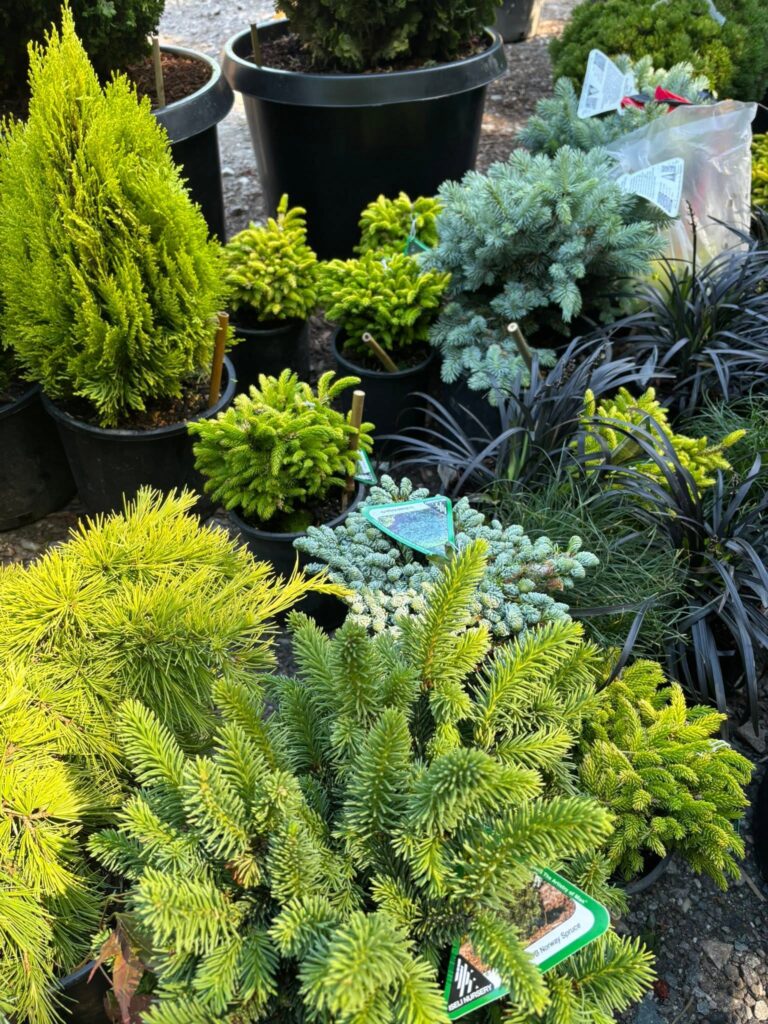
This guide breaks down 25 of the most recognizable conifers, grouped by family, so you can identify what’s growing in your yard, your local park, or the forest behind your house.
I’ve tried to keep the descriptions practical rather than purely academic. My goal is that you could stand in front of one of these trees and confirm what it is within a minute or two.
Let’s walk through them one by one.
Understanding Conifer Families First
Before jumping into individual species, it helps to know the broad groups. Most conifers fall under a few key families: Pinaceae (pines, firs, spruces), Cupressaceae (cedars, junipers, redwoods), and Taxaceae (yews).
The genera within the Pinaceae family are typically sorted by how their needles cluster on the stem. Single needles usually mean spruce or Douglas fir, while bundled needles point to pine.
Cupressaceae members like juniper and arborvitae carry scale-like or awl-shaped leaves instead of true needles. Once you notice that difference, identification gets much easier.
The Pines (Genus Pinus)
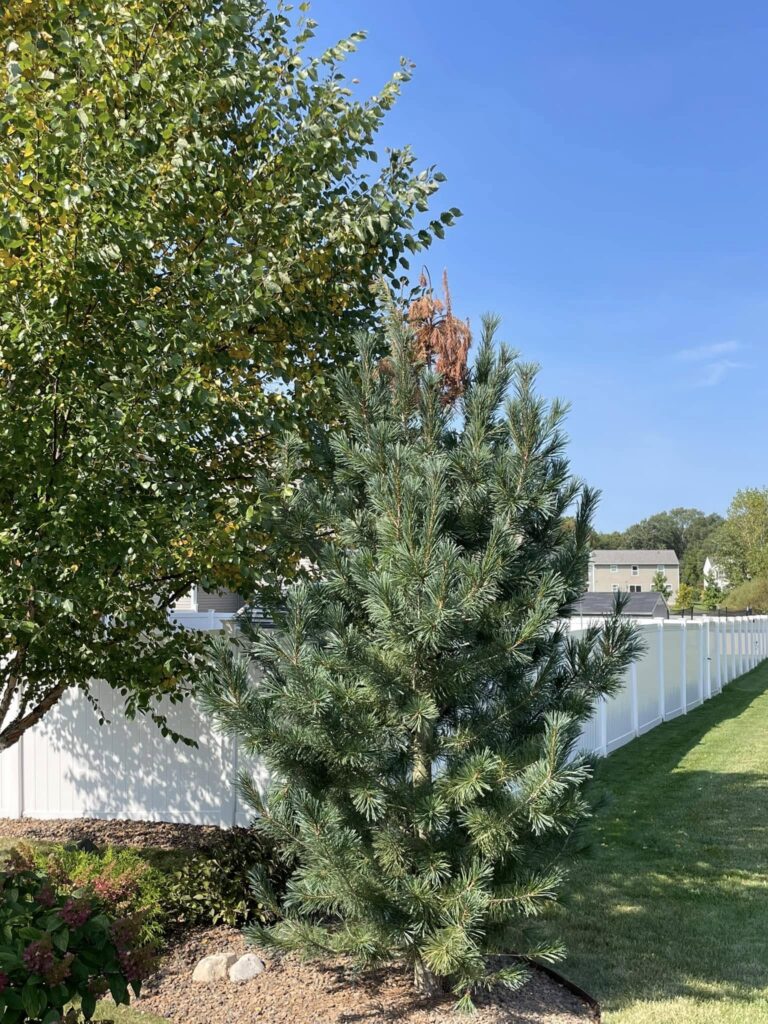
Pines are, by far, the largest genus of conifers, with roughly 120 species recognized worldwide. Almost all of them share one identifying trait: needles bundled together in groups called fascicles.
Counting the needles in a bundle is often the fastest way to narrow down which pine you’re looking at, long before you check bark or cone shape.
1. Eastern White Pine
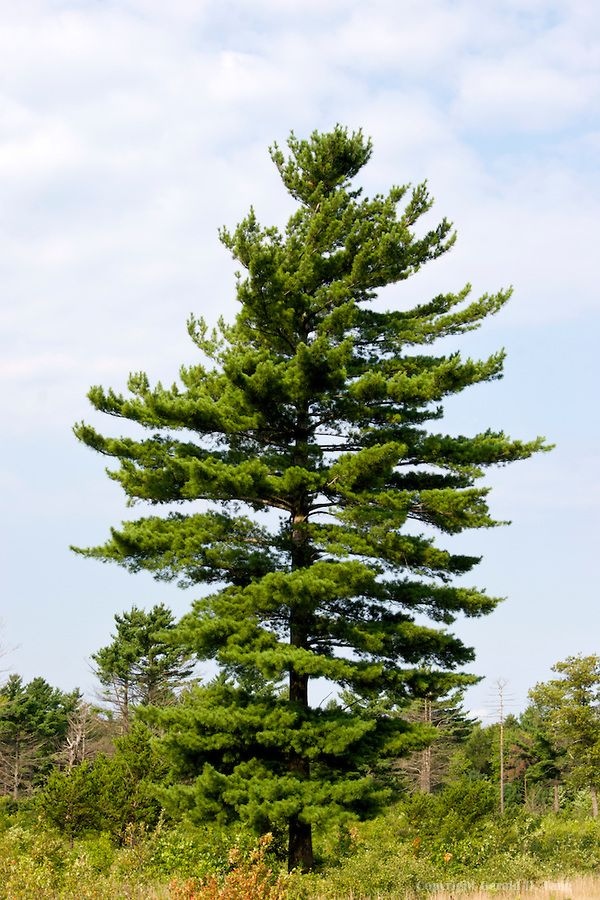
This is one of the tallest native pines in eastern North America, often reaching over 150 feet in old-growth stands.
White pine carries five soft needles per bundle, a feature that makes it easy to tell apart from red or jack pine, which both carry only two.
The bark is smooth and gray-green when young, turning deeply furrowed with age. Mature trees develop a distinctive irregular, wind-swept silhouette that sets them apart from more symmetrical conifers.
Colonial shipbuilders once prized tall, straight white pines for ship masts, and some were reserved specifically for the British Royal Navy.
2. Ponderosa Pine
Common across the western United States, ponderosa pine has a distinctive vanilla or butterscotch scent when you press your nose to the bark.
Needles grow in bundles of three, and the puzzle-piece bark pattern is a reliable identifier once the tree matures. Young trees have darker, almost black bark, which lightens to a warm orange-brown as they age.
Ponderosa pine forests are adapted to frequent, low-intensity fire, and thick bark helps mature trees survive burns that would kill less fire-tolerant species.
3. Scots Pine
Originally from Europe, Scots pine has spread widely in North American landscaping and reforestation projects. The upper bark has a striking orange-red color that peels in thin flakes.
Needles are twisted and blue-green, growing in pairs. Younger trees often have a fairly conical shape, while older specimens develop a flat-topped, almost umbrella-like crown.
Because it grows fast and tolerates poor soil, Scots pine has long been a popular choice for Christmas tree farms across the eastern United States.
4. Loblolly Pine
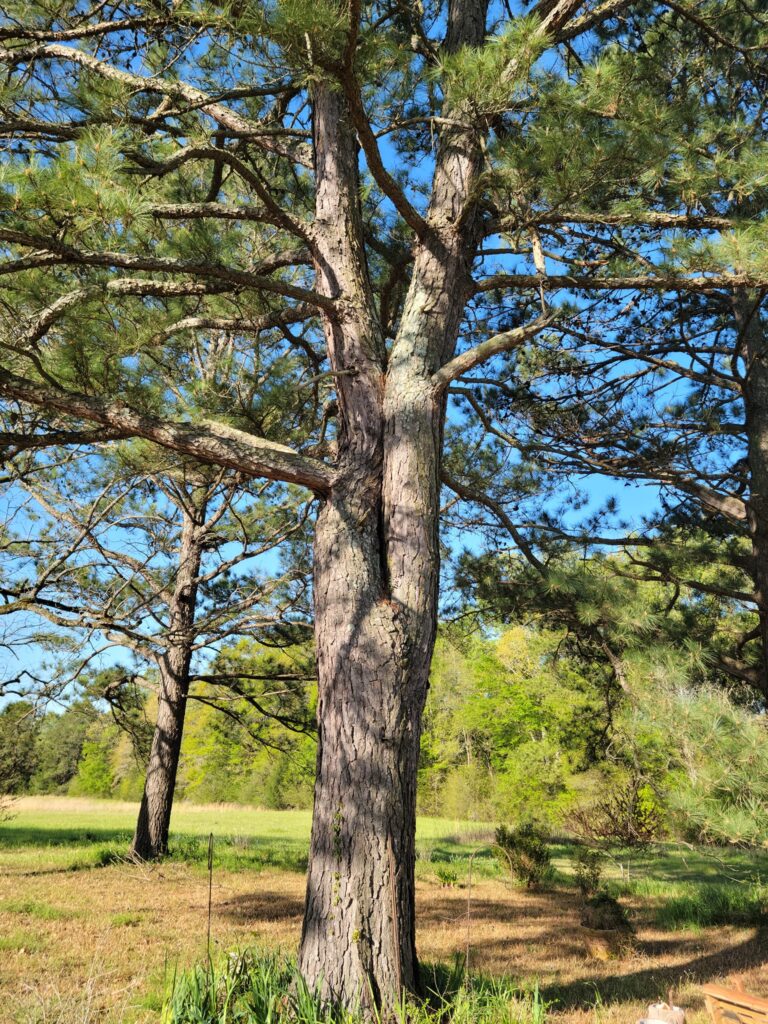
This fast-growing pine dominates much of the southeastern United States and is a major source of commercial timber. Needles come in bundles of three and can reach up to 9 inches long.
Loblolly pine tolerates wet soil better than most other pines, which explains its popularity on poorly drained sites. It’s also one of the most heavily planted timber species in the country, supplying a significant share of the South’s pulpwood and lumber industry.
5. Lodgepole Pine
Found throughout the Rocky Mountains, lodgepole pine has short, twisted needles in bundles of two. Its cones can remain closed for years, only opening when exposed to intense heat from wildfire.
That trait, called serotiny, allows the species to regenerate quickly after a burn. Entire hillsides can fill in with dense stands of young lodgepole pine within a few short years of a major fire.
The name comes from its historical use by Indigenous peoples, who favored its long, straight trunks as poles for teepee construction.
The Spruces (Genus Picea)
Spruces belong to the genus Picea, and roughly 35 species exist worldwide. Their needles attach singly and directly to small woody pegs on the twig, which stay behind even after a needle drops.
That rough, peg-covered twig texture is a helpful clue on its own, even without checking the needles.
6. Colorado Blue Spruce
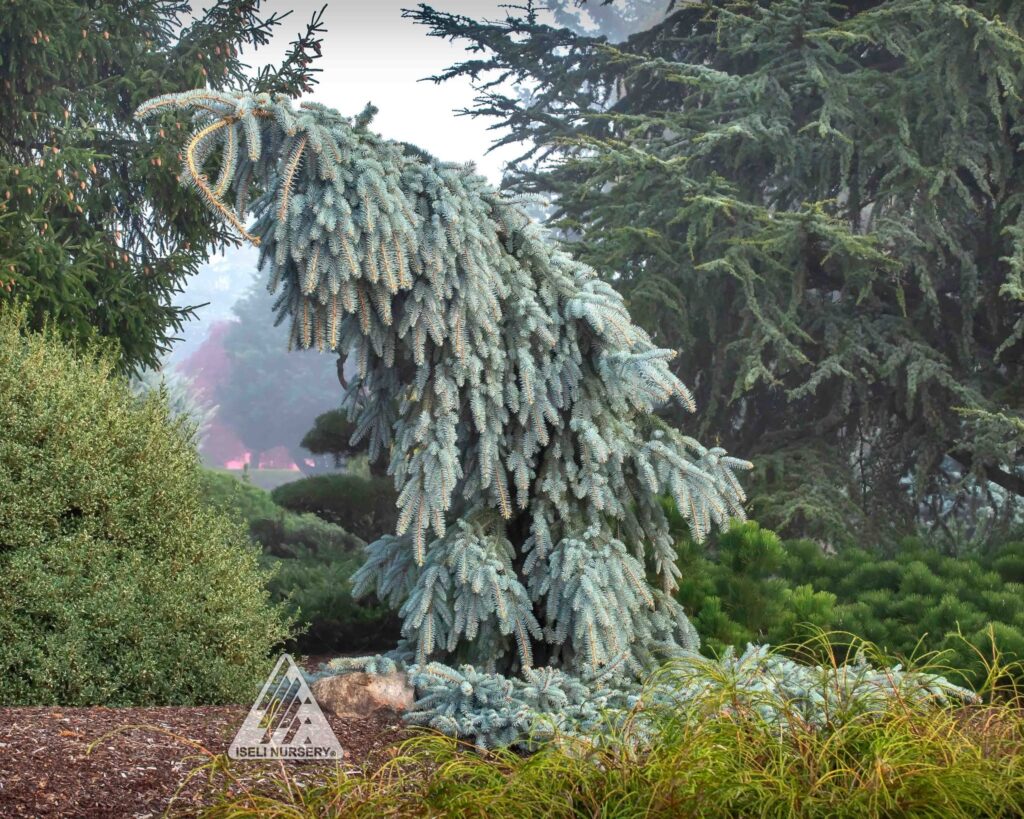
Prized for its striking silvery-blue foliage, this spruce is a favorite for ornamental planting. A quick way to confirm you’re looking at a spruce is to roll a single needle between your fingers; spruce needles roll easily, while fir needles do not.
Needles are sharp and stiff, arranged individually around the branch. The stiff, four-sided needles can feel almost painful if you grab a branch carelessly, which is a fair warning to newer gardeners.
Native to the central Rocky Mountains, this species has become one of the most widely planted ornamental conifers across temperate climates worldwide.
7. Norway Spruce
This European species grows fast and tall, sometimes exceeding 150 feet. Long, drooping branchlets give mature trees a distinctly weeping appearance, especially noticeable on older specimens with heavy, cascading side branches.
Its cones are the longest of any spruce, often stretching 6 inches or more. Norway spruce is also widely used in the timber and paper industry across Europe, where it has been cultivated for centuries.
8. White Spruce
Widespread across Canada and the northern United States, white spruce has a noticeable, somewhat unpleasant odor when the needles are crushed. Some people describe it as similar to cat urine, which is an easy way to remember it.
The tree tolerates cold and poor soil remarkably well, making it one of the dominant species across the North American boreal forest. It’s also a common choice for shelterbelts on farms, thanks to its dense, wind-blocking growth habit.
9. Black Spruce
This is a smaller, slower-growing spruce common in boreal bogs and wetlands. Its narrow, spire-like crown and short needles help distinguish it from other spruce species.
Black spruce cones are among the smallest in the genus, rarely exceeding an inch in length. The tree often reproduces through layering, where low branches touching wet, mossy ground can take root and form new stems.
The Firs (Genus Abies)
True firs, genus Abies, include around 48 to 55 recognized species depending on the classification used. Like spruce, their needles attach singly, but firs leave behind a smooth, round scar rather than a woody peg once a needle falls.
Fir cones also behave differently from every other conifer on this list. They stand upright on the branch and disintegrate scale by scale while still attached, rather than falling to the ground intact.
10. Balsam Fir
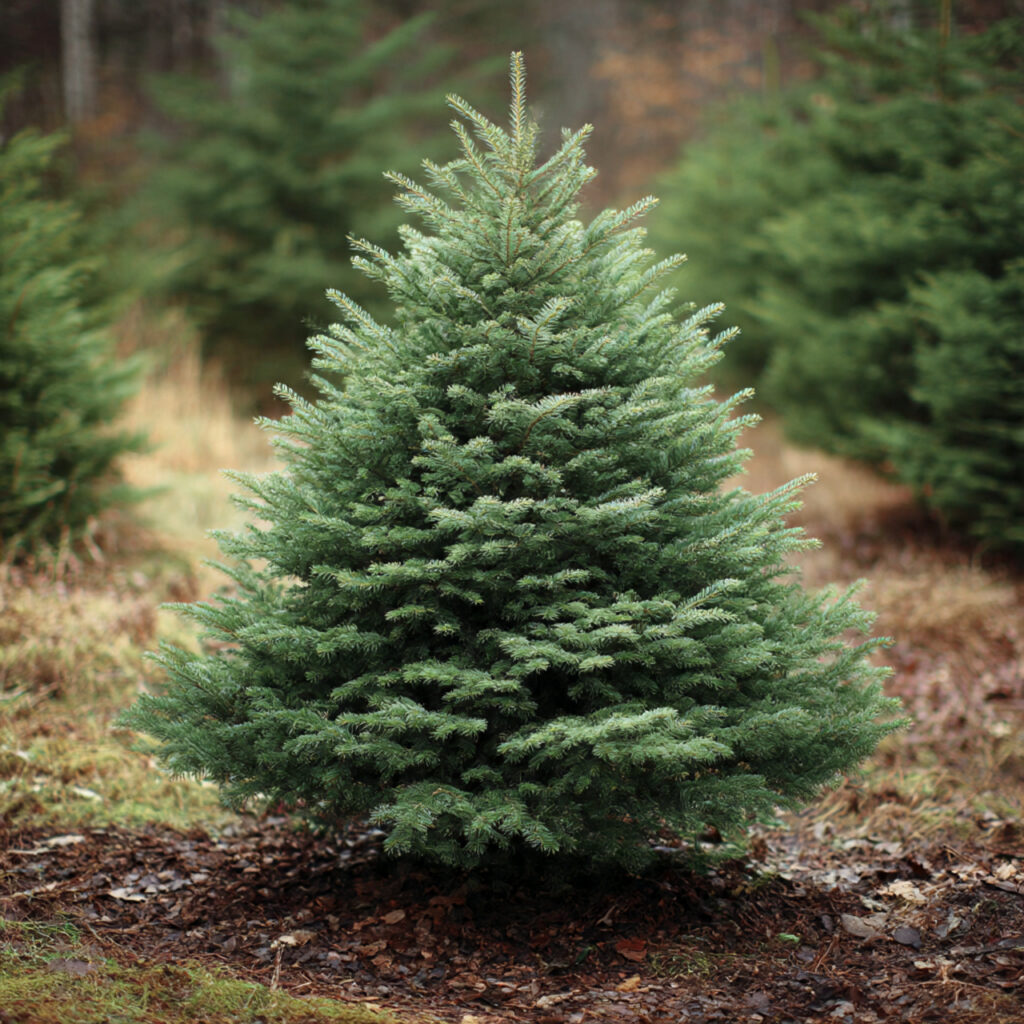
Famous as a classic Christmas tree species, balsam fir has flat, fragrant needles with two white lines on the underside. Unlike spruce, its needles feel soft rather than sharp.
The tree’s resin blisters, found on the trunk, were traditionally used to make balsam pitch, valued historically for waterproofing canoes and sealing wood joints.
Balsam fir’s strong, pleasant scent is one reason it remains a favorite choice for cut trees during the holiday season, even though it doesn’t hold needles quite as long as some competing species.
11. Fraser Fir
Native to the Appalachian Mountains, Fraser fir is another top pick for holiday trees thanks to its strong branches and needle retention. It closely resembles balsam fir but has a slightly more compact form.
Cone bracts curve downward, giving mature cones a slightly shaggy look compared to the neater cones of balsam fir.
Fraser fir’s naturally narrow range, limited to high elevations in North Carolina, Virginia, and Tennessee, makes wild populations somewhat vulnerable to disease and changing climate conditions.
12. Grand Fir
Grand fir belongs to a genus where needles attach singly to the stem rather than in bundles. It’s one of the tallest fir species, capable of reaching over 250 feet in ideal Pacific Northwest conditions.
Needles are arranged in two flat rows, giving branches a distinctly flattened appearance that’s easy to spot even from a distance.
Crushed foliage releases a citrusy, almost orange-peel scent, which is one of the more pleasant ways to confirm an identification in the field.
13. Noble Fir
Noble fir is valued both as an ornamental tree and for its strong branches, which make it a popular choice for wreaths and garlands. Needles curve upward, covering the top of each branch.
Its cones are among the largest of any true fir, often exceeding 6 inches, with distinctive papery bracts that peek out between the scales.
Because its branches hold heavy ornaments well without sagging, noble fir has become one of the most commercially valuable Christmas tree species in the Pacific Northwest.
The Hemlocks (Genus Tsuga)
Hemlocks belong to the genus Tsuga, distinct from the poisonous herb of the same common name. Only around 10 species exist worldwide, but they play an outsized role in shaping cool, moist forest ecosystems.
14. Eastern Hemlock
This shade-tolerant tree grows in cool, moist forests across the eastern United States. Needles are short, flat, and unevenly spaced along the twig, giving the foliage a delicate, feathery texture.
Eastern hemlock populations have declined sharply in parts of the Appalachians due to the invasive hemlock woolly adelgid, a tiny insect that can kill mature trees within just a few years of infestation.
Because it tolerates dense shade better than almost any other North American conifer, eastern hemlock often dominates the understory of old, mixed forests.
15. Western Hemlock
Washington’s state tree, western hemlock, has a distinctive drooping leader at the very top of the crown. The needles vary noticeably in length along the same branch, which is one of the clearest identification clues in the genus.
It thrives in the deep shade of old-growth Pacific Northwest forests, often germinating directly on old, decaying logs known as nurse logs.
Western hemlock wood is an important source of pulp for the paper industry, and its bark was historically used as a source of tannin for leather processing.
The Giants: Redwoods And Sequoias
Few conifers capture the imagination quite like the redwood family. These trees represent some of the tallest, oldest, and most massive living organisms found anywhere on Earth.
16. Coast Redwood
Coast redwood holds the record as the tallest tree species on Earth, with the tallest known individual measuring over 380 feet.
The bark is thick, fibrous, and reddish brown, offering natural resistance to fire and insect damage. Some mature trees carry bark more than a foot thick at the base.
Coast redwood is remarkably good at regenerating from stumps and roots, sending up vigorous new sprouts even after the original trunk has been cut or damaged by fire.
17. Giant Sequoia
While not the tallest, giant sequoia is the most massive tree species by total volume. With an average diameter of 15 to 20 feet at maturity, giant sequoia has more biomass than any other tree species, including coast redwood.
The oldest known giant sequoia, logged in the 1870s, was measured at 3,266 years old at the time it was cut. That is an astonishing amount of history stored in a single trunk.
The largest living specimen is the General Sherman tree, found in Sequoia National Park, and it remains a major draw for visitors every year.
Giant sequoia’s native range is limited to roughly 75 groves scattered along a narrow, 260-mile belt on the western slope of California’s Sierra Nevada. Fire plays a central role in the species’ natural regeneration, since heat helps open the cones and clears competing vegetation from the forest floor.
18. Dawn Redwood
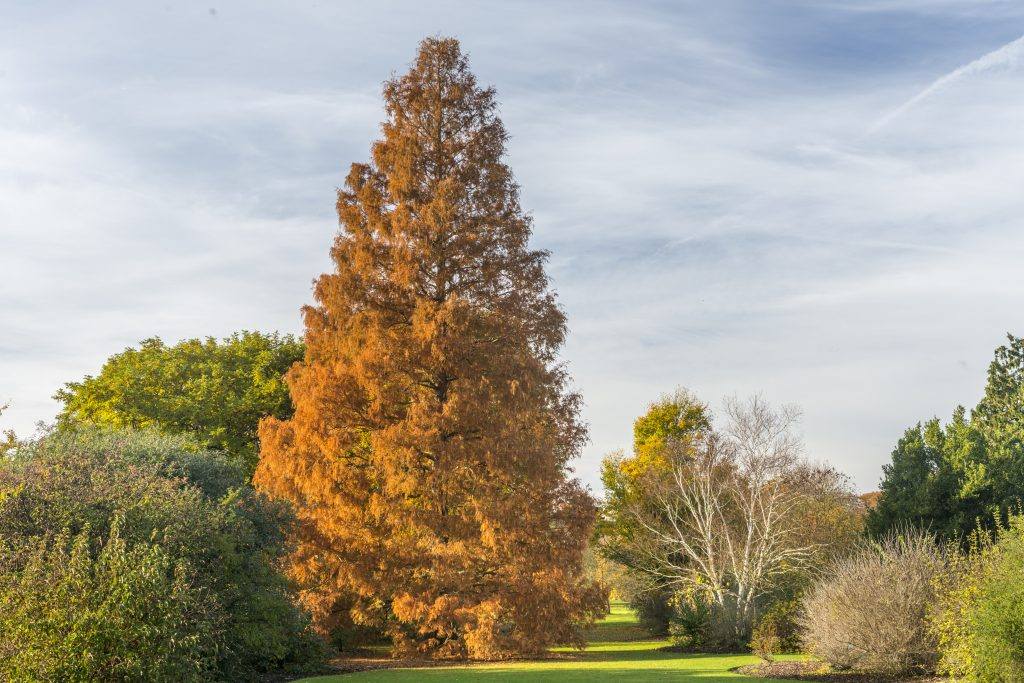
Unlike most conifers, dawn redwood is deciduous, dropping its soft, feathery needles every autumn. It was known only from fossil records until living trees were discovered in China in the 1940s, making it something of a botanical miracle.
The trunk often develops a fluted, buttressed base as it matures, and the foliage turns a warm coppery-orange before dropping each fall, unusual behavior for a conifer.
Cypress Family Standouts
The Cupressaceae family is enormous and varied, covering true cypresses, false cypresses, cedars, redwoods, and junipers. Most members share small, scale-like or awl-shaped leaves pressed tightly against the twig.
19. Bald Cypress
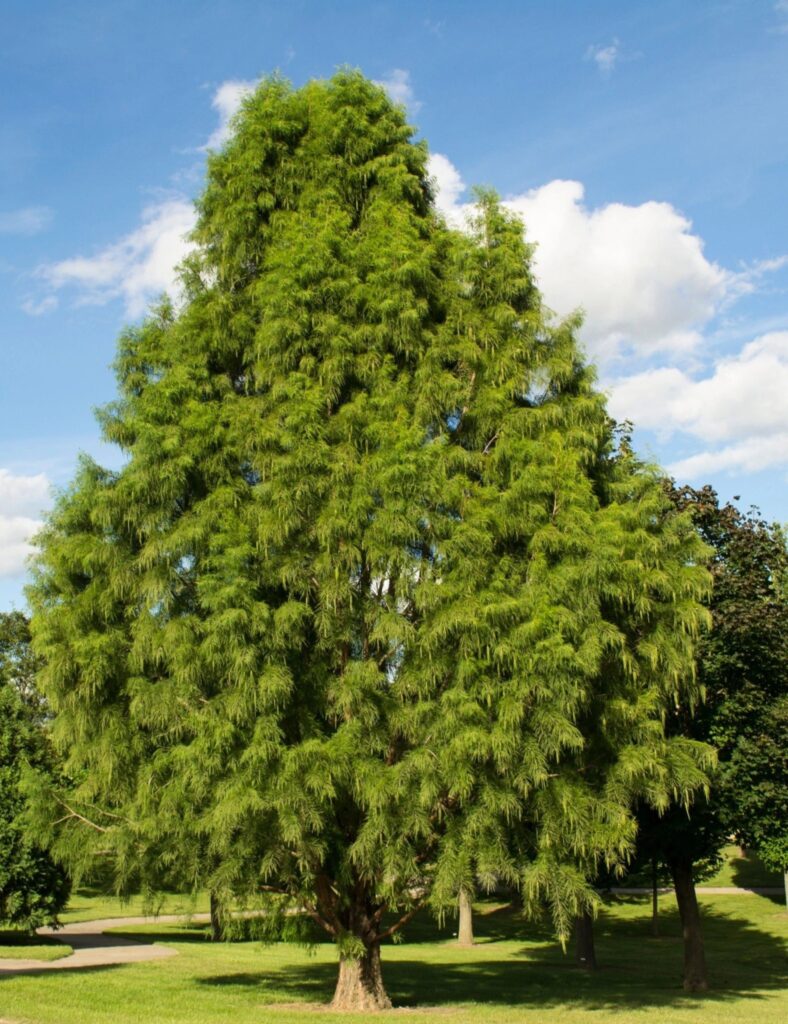
Another deciduous conifer, bald cypress grows naturally in southern swamps and wetlands. It’s known for its distinctive “knees,” woody projections that rise from the roots above water level, though botanists still debate their exact function.
Fall color turns a warm rust-orange before the needles drop, giving southern wetlands a surprising, temporary burst of autumn color.
Despite growing in standing water for much of the year, bald cypress produces exceptionally rot-resistant wood, historically prized for building docks, boats, and outdoor furniture.
20. Eastern Red Cedar
Technically a juniper rather than a true cedar, this tree is one of the most widespread conifers in the eastern United States. Its scale-like leaves and small, bluish berry-like cones make it easy to spot along fence lines and old fields.
Birds spread the seeds widely, which explains its habit of popping up almost anywhere, often as one of the first woody plants to colonize abandoned farmland.
Its aromatic, reddish heartwood has long been used for cedar chests and closet linings, since the scent naturally deters moths.
21. Western Red Cedar
This is a member of the cypress family and one of the most important timber trees of the Pacific Northwest. Its fragrant, rot-resistant wood has long been used by Indigenous peoples for canoes and totem poles.
Flattened, scale-like foliage sprays droop gracefully from the branches, and mature trees often develop a wide, buttressed base.
Some individual western red cedars are believed to be over a thousand years old, standing as living witnesses to centuries of Pacific Northwest history.
22. Northern White Cedar (Arborvitae)
Also called arborvitae, this ornamental conifer has soft, feathery, dense foliage that makes it a common choice for hedges and privacy screens.
It’s slower growing than western red cedar and stays more compact in most landscapes, rarely exceeding 40 feet even at full maturity.
The name arborvitae, meaning “tree of life” in Latin, reportedly dates back to French explorers who learned of its vitamin C-rich foliage from Indigenous communities during a harsh winter.
23. Port Orford Cedar
This majestic conifer has long, straight trunks, feathery foliage, and scale-like leaves, and can reach heights of nearly 200 feet at maturity.
It belongs to the false cypress group, and its small, globe-shaped cones distinguish it from true cedars.
Unfortunately, this species faces serious pressure from an introduced root disease, which has significantly reduced healthy populations across parts of its native range in Oregon and California.
Junipers And Other Notable Conifers
24. Rocky Mountain Juniper
This hardy, drought-tolerant conifer grows across the western United States, often on dry, rocky slopes where few other trees survive. Its awl-shaped leaves and bluish, berry-like cones are typical of the juniper genus.
Wildlife rely heavily on its cones as a winter food source, and several bird species depend on juniper stands for both food and shelter during harsh months.
Rocky Mountain juniper can survive on remarkably little water, and some gnarled, wind-sculpted specimens growing on exposed cliffs are estimated to be several centuries old.
25. Common Yew
Yew stands apart from nearly every other conifer on this list because of its flat, dark green needles arranged featherlike along the stem, and its bright red, fleshy seed cups instead of woody cones.
Nearly every part of the yew plant is toxic if ingested, with the notable exception of the fleshy red aril surrounding the seed, which birds eat and help disperse.
Despite its toxicity, yew has an important modern medical use. Compounds extracted from its bark and needles are used in certain cancer treatments, giving this ancient, slow-growing tree a surprisingly modern role.
Quick Comparison: Needles, Cones, And Family
Here’s a simple way to remember the differences as you walk through a forest or garden center.
- Single, flat needles that don’t roll easily: likely a fir.
- Single needles that roll between your fingers: likely a spruce.
- Needles in bundles of two, three, or five: almost certainly a pine.
- Scale-like or awl-shaped leaves: cedar, juniper, or arborvitae.
- Flat, feather-like needles with red seed cups, no cones: yew.
This simple checklist covers the majority of conifers you’ll encounter in North America and Europe.
Choosing The Right Conifer For Your Garden
If you’re planting rather than simply identifying, a few practical factors matter more than looks alone.
Mature size is the first thing I always check before falling in love with a young tree at the nursery. A noble fir or Norway spruce that looks modest in a pot can dwarf a small yard within a couple of decades.
Soil drainage matters just as much. Bald cypress and loblolly pine tolerate wet feet, while junipers and Rocky Mountain juniper prefer dry, well-drained ground.
Sun exposure varies by species too. Eastern hemlock and western hemlock handle deep shade far better than pines, which generally need full sun to stay dense and healthy.
For smaller properties, arborvitae, dwarf Colorado blue spruce cultivars, or compact junipers usually make better long-term choices than full-size forest species.
If privacy is the goal, a row of northern white cedar or western red cedar planted a few feet apart creates a dense, year-round screen within several growing seasons.
Why Conifer Diversity Matters
Conifers cover roughly one-third of the world’s forested land, making them one of the most ecologically important plant groups on the planet.
They provide timber, shelter wildlife, stabilize soil on steep slopes, and, in the case of ancient giants like the sequoia, store carbon for thousands of years.
I find it remarkable that a single family of trees can range from a low, spreading juniper to a sequoia taller than a twenty-story building. That range is part of what makes conifers endlessly interesting to study.
Whether you’re planting a hedge, decorating for the holidays, or hiking through an old-growth forest, knowing these 25 conifers will help you recognize what you’re looking at, and appreciate it a little more.
References
- Michigan State University Extension – How To Properly Identify Common Conifer Trees https://www.canr.msu.edu/news/how_to_properly_identify_common_conifer_trees
- Purdue University Extension, Forestry and Natural Resources – ID That Tree: Learn To Identify Conifer Leaf Types https://www.purdue.edu/fnr/extension/id-that-tree-learn-to-identify-conifer-leaf-types/
- Colorado State University Extension – Identifying Conifers: Arborvitae, Douglas Fir, Fir, Juniper, Pine (CMG GardenNotes #172) https://cmg.extension.colostate.edu/Gardennotes/172.pdf
- Maryland Department of Natural Resources – Identification Key For Coniferous Trees In Maryland https://dnr.maryland.gov/wildlife/documents/basic_conifer_key.pdf
- Oregon State University Extension Service – Growing Redwood And Giant Sequoia In Oregon https://extension.oregonstate.edu/catalog/em-9475-growing-redwood-giant-sequoia-oregon
- USDA Forest Service, Research and Development – Sequoiadendron giganteum, Giant Sequoia https://research.fs.usda.gov/feis/species-reviews/seqgig
- North Carolina State Extension Gardener Plant Toolbox – Sequoiadendron giganteum https://plants.ces.ncsu.edu/plants/sequoiadendron-giganteum/

Tim M Dave is a gardening expert with a passion for houseplants, particularly cacti and succulents. With a degree in plant biology from the University of California, Berkeley, he has vast experience in gardening. Over the years, he has cultivated a vast collection of desert plants and learned a great deal about how to grow and care for these unique companions.