25 Best Bushes for Privacy in Florida (With Pictures, and Growing Details)
Florida yards face a strange mix of challenges. Blazing sun, sandy soil, salt air near the coast, and the occasional hard freeze up north. Not every privacy shrub can handle all of that.
I’ve seen too many homeowners plant something pretty from a big-box store, only to watch it struggle within a year because it wasn’t suited to Florida’s climate. Picking the right bush from the start saves years of frustration.
This guide covers 25 of the best bushes for privacy in Florida, chosen for their toughness, screening density, and adaptability across the state’s different regions.
Before jumping in, a quick fact worth knowing: the University of Florida’s IFAS Extension notes that a well-designed hedge does more than block a view. It also acts as a windbreak, muffles outside noise, and creates habitat for birds and pollinators.
That’s a lot of value from a single row of plants. Let’s look at which ones actually deliver.
1. Podocarpus (Podocarpus macrophyllus)
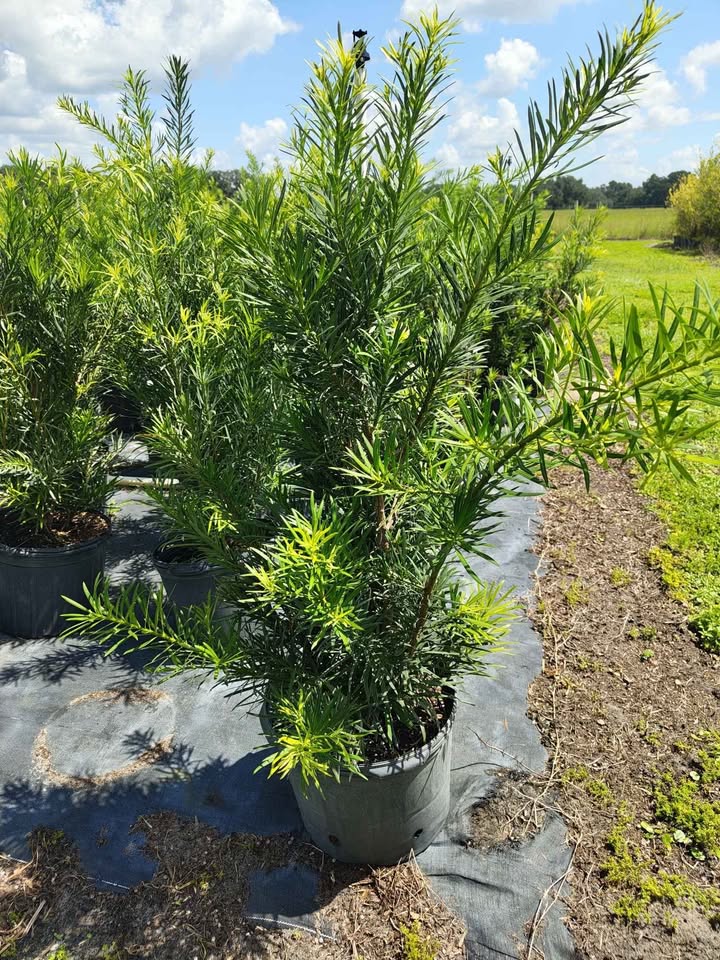
Podocarpus is one of the most popular privacy hedges in Florida, and once you see a mature specimen, it’s easy to understand why. Its dense, dark green foliage reaches the ground naturally, creating a solid wall of privacy without gaps.
According to UF/IFAS Extension, this shrub can reach 35 to 50 feet tall if left unpruned, though most homeowners keep it sheared to a manageable hedge height of 6 to 15 feet. Its narrow, needle-like leaves give it a refined, tidy texture.
Podocarpus tolerates both sun and partial shade, and it handles Florida’s sandy soil reasonably well once established. It grows at a moderate pace, so patience during the first couple of years pays off with a dense, long-lasting screen.
2. Clusia (Clusia guttifera and Clusia rosea)
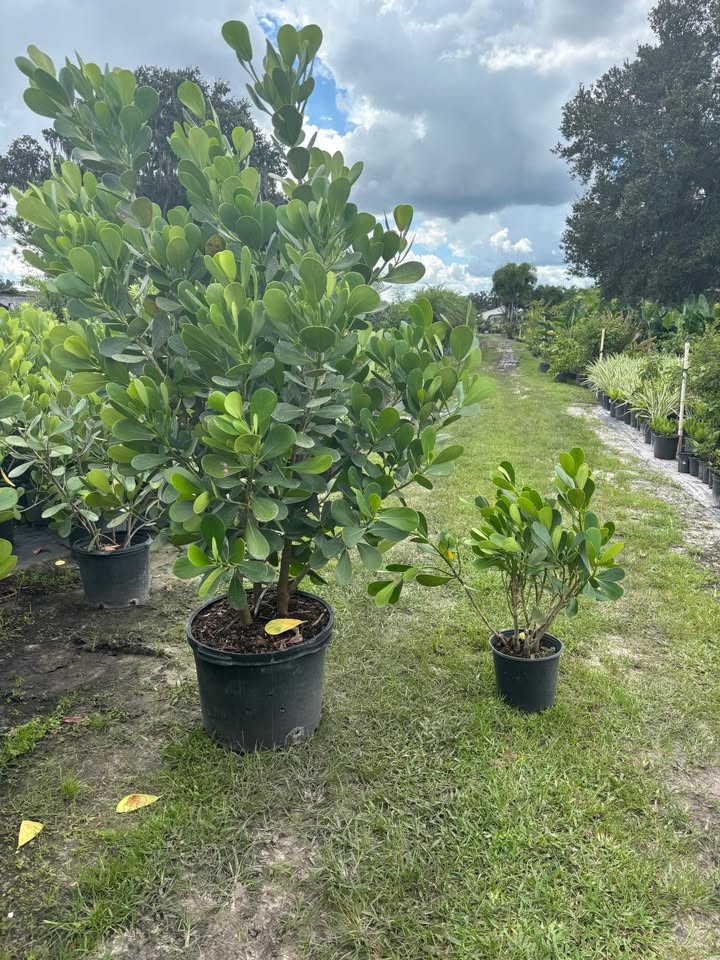
Clusia has become a go-to hedge choice in South Florida, prized for its thick, glossy, rounded leaves that create an almost tropical, sculptural look. It forms a dense screen quickly, even in coastal conditions.
This shrub is remarkably salt tolerant, making it a favorite for beachfront and waterfront properties where many other plants struggle. It typically grows 10 to 20 feet tall, depending on the species and how often it’s pruned.
Clusia thrives in full sun and well-drained soil, and it handles Florida’s heat and humidity without complaint. It’s not the most cold-hardy option, though, so gardeners in North Florida should consider a different species for reliable winter performance.
3. Ligustrum (Ligustrum japonicum and Ligustrum lucidum)
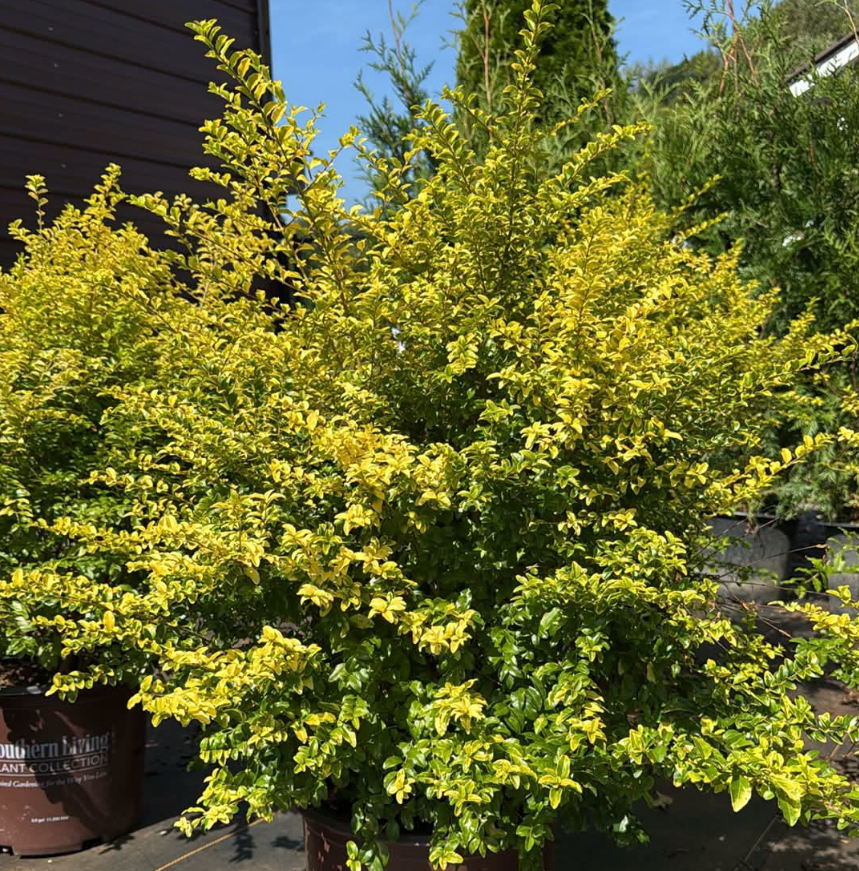
Ligustrum, often called Privet, is a classic hedge plant known for its fast growth and dense branching. It responds extremely well to shearing, which makes it easy to shape into a tight, formal privacy wall.
UF/IFAS fact sheets note that Ligustrum lucidum can reach 25 to 40 feet if left unpruned, though it’s usually maintained much shorter as a hedge. Its glossy, deep green leaves stay attractive throughout the year across most of the state.
This shrub tolerates a wide range of soil types and light conditions, from full sun to partial shade. One caution worth mentioning: Ligustrum has some invasive potential in natural areas, so it’s best kept well-maintained and away from wild spaces.
4. Sweet Viburnum (Viburnum odoratissimum)
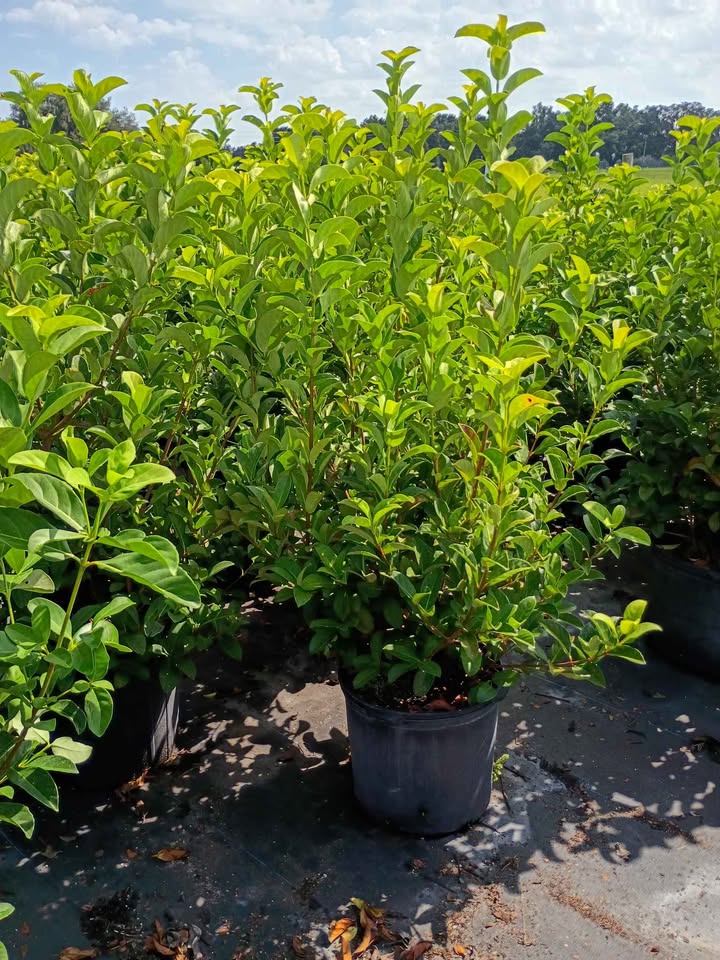
Sweet Viburnum is a longtime Florida landscape favorite, featuring large, leathery, glossy leaves and clusters of fragrant white flowers in spring. Its dense, spreading habit makes it one of the most reliable screening plants in the state.
This shrub can reach 25 to 30 feet tall and wide at maturity, according to UF/IFAS, though regular pruning easily keeps it at hedge height. Small, dark berries follow the flowers, adding a bit of seasonal interest and wildlife value.
Sweet Viburnum grows well in full sun to partial shade and tolerates a variety of soil conditions. It’s a workhorse plant across most of Florida, valued for consistent performance rather than flashy, high-maintenance beauty.
5. Sandankwa Viburnum (Viburnum suspensum)
Sandankwa Viburnum is a smaller relative of Sweet Viburnum, better suited to compact spaces and tighter hedges. Its leathery, deep green leaves have a slightly coarse texture that still reads as dense and full.
This shrub typically reaches 8 to 12 feet tall, making it a good middle-ground option between low foundation plants and towering screen trees. It grows at a moderate pace and responds well to regular shearing for a formal look.
Sandankwa Viburnum handles both sun and partial shade, and it’s more tolerant of poor drainage than some other viburnums. For a mid-height privacy screen along a fence line or patio, it’s a dependable, low-drama choice.
ALSO READ: 25 Florida Native Shrubs (With Growing Details)
6. Walter’s Viburnum (Viburnum obovatum)
Walter’s Viburnum stands out as one of the few native Florida viburnums, making it an excellent choice for gardeners who want privacy without sacrificing ecological value. Its small, glossy leaves and fine texture give it a softer look than larger shrubs.
This species grows 6 to 20 feet tall depending on the cultivar, with dwarf varieties available for smaller yards. Clusters of small white flowers appear in early spring, followed by berries that attract songbirds throughout the year.
Walter’s Viburnum is naturally adapted to Florida’s climate, handling both drought and periodic wet conditions well. Because it’s native, it generally requires less fertilizer and fewer pesticides than non-native alternatives, a real plus for low-maintenance landscaping.
7. Southern Wax Myrtle (Morella cerifera)
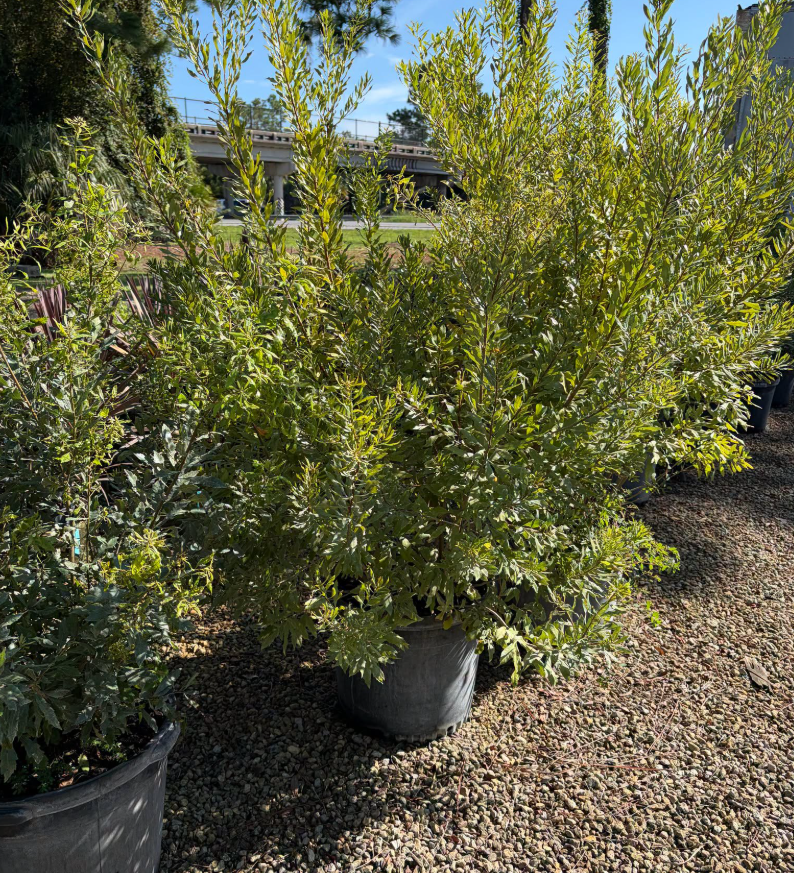
Wax Myrtle is a fast-growing native shrub with narrow, aromatic, olive-green leaves that release a pleasant scent when crushed. It fills in quickly, making it one of the fastest routes to a full privacy screen in Florida.
This plant tolerates coastal conditions exceptionally well, including salt spray and sandy soil, which explains its popularity along Florida’s beaches and barrier islands. It typically reaches 15 to 25 feet, though regular pruning keeps it shorter.
Wax Myrtle also supports wildlife, with its waxy, gray berries providing winter food for birds. As a low-maintenance, native option for fast privacy, it’s hard to beat, especially in coastal or difficult-soil situations.
8. Simpson’s Stopper (Myrcianthes fragrans)
Simpson’s Stopper is a native Florida shrub valued for its attractive, peeling bark and small, glossy leaves that release a spicy fragrance when crushed. It can be grown as a dense hedge or trained into a small multi-trunked tree.
This shrub typically reaches 10 to 20 feet tall, with a naturally full, rounded habit that requires minimal shaping to look tidy. Small white flowers appear intermittently through the year, followed by orange-red berries that birds find irresistible.
Simpson’s Stopper tolerates drought, salt, and a range of soil types once established, making it versatile across Florida’s different regions. For a native screen that also draws in birds and pollinators, it’s one of the better all-around choices.
9. Dahoon Holly (Ilex cassine)
Dahoon Holly is a native evergreen valued for its smooth, light green leaves, a softer contrast to the prickly foliage of many other holly species. UF/IFAS describes it as tolerant of wet, shady sites while also handling full sun well.
This shrub or small tree can reach 25 to 30 feet tall with an 8 to 12 foot spread, growing at a moderate rate. Female plants produce bright red berries in fall and winter, which become an important food source for migrating birds.
Dahoon Holly shows some salt tolerance, making it suitable for coastal plantings as well as inland yards. Its adaptability to both wet and dry conditions makes it one of the more flexible native screening options in Florida.
ALSO READ: 30 Native Florida Trees (With Pictures, And Growing Details)
10. East Palatka Holly (Ilex x attenuata ‘East Palatka’)
East Palatka Holly is a hybrid holly prized for its upright, pyramidal shape and relatively sparse spines, making it easier to handle during maintenance than some prickly holly varieties. It naturally grows in a neat, formal outline.
This hardy hybrid can reach 20 to 30 feet tall, with a moderate growth rate that rewards patience with a long-lasting, attractive screen. Bright red berries appear in fall on female plants, adding festive color through the winter months.
East Palatka Holly tolerates a range of soil conditions and handles Florida heat well. It’s a common choice for both residential privacy hedges and commercial landscaping because of its reliable, low-fuss performance across most of the state.
11. Yaupon Holly (Ilex vomitoria)
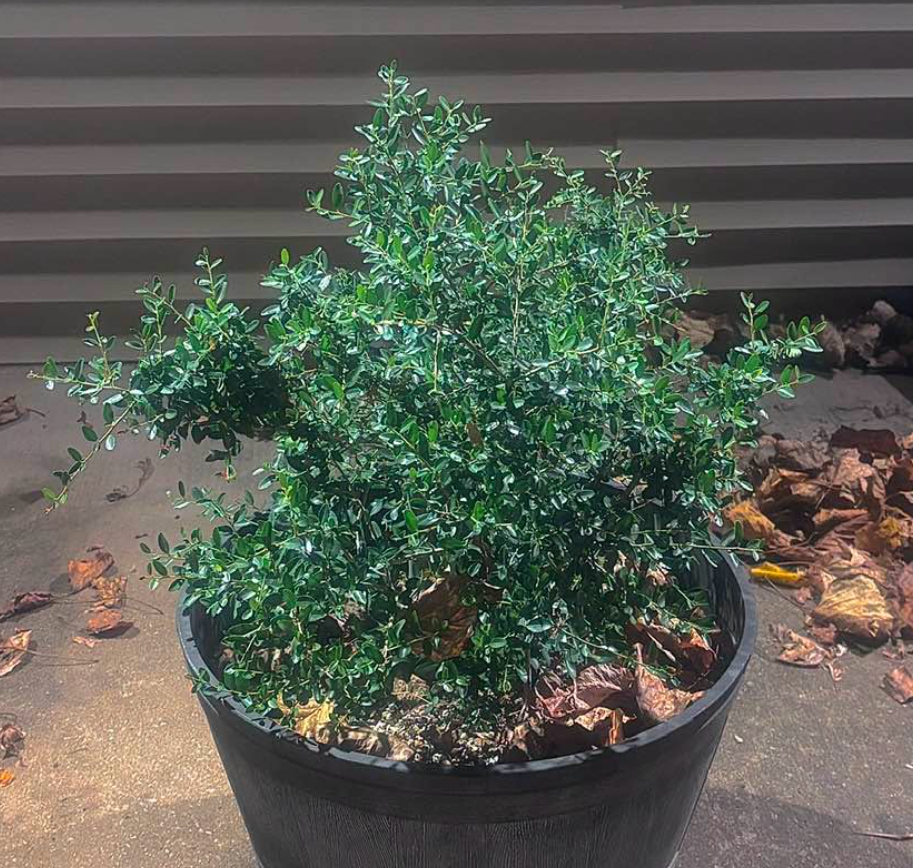
Yaupon Holly is one of the most drought-tolerant native shrubs available in Florida, with small, fine-textured, deep green leaves that create a dense, twiggy screen. Dwarf and weeping cultivars are also widely available for different landscape needs.
This shrub typically grows 10 to 20 feet tall in its standard form, though compact cultivars stay much smaller. It handles poor, sandy soil and periods of drought better than most broadleaf evergreens, a real advantage during Florida’s dry season.
Yaupon Holly tolerates salt spray reasonably well, making it useful near coastal properties. Female plants produce small red berries that attract birds. For a tough, adaptable native hedge, this species consistently performs across the entire state.
12. Pittosporum (Pittosporum tobira)
Pittosporum is known for its rounded, leathery leaves arranged in attractive whorls, along with clusters of sweetly fragrant white flowers in spring that some compare to orange blossom scent. It creates a soft, mounded screening effect.
This shrub typically grows 8 to 15 feet tall and wide, though dwarf varieties stay considerably smaller for foundation plantings. It grows at a moderate pace and responds well to shaping, whether kept loose and natural or clipped formally.
Pittosporum tolerates salt air and coastal conditions well, making it a common choice in beach communities. It prefers full sun to partial shade and well-drained soil, and generally proves easy to maintain once established.
13. Green Giant Arborvitae (Thuja ‘Green Giant’)
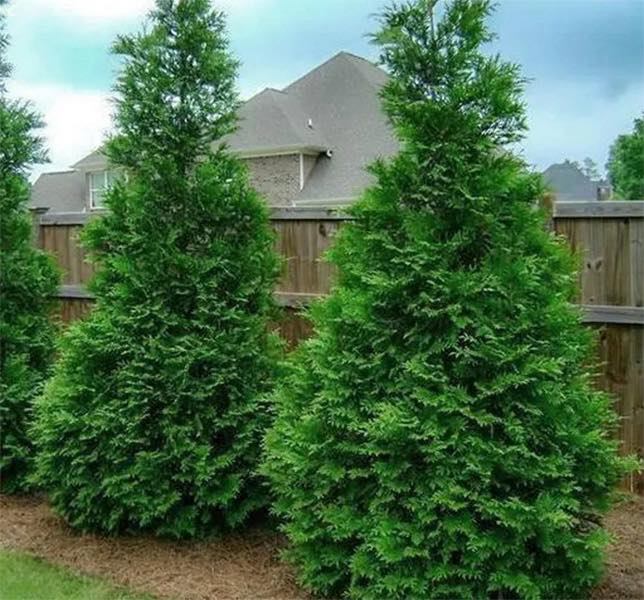
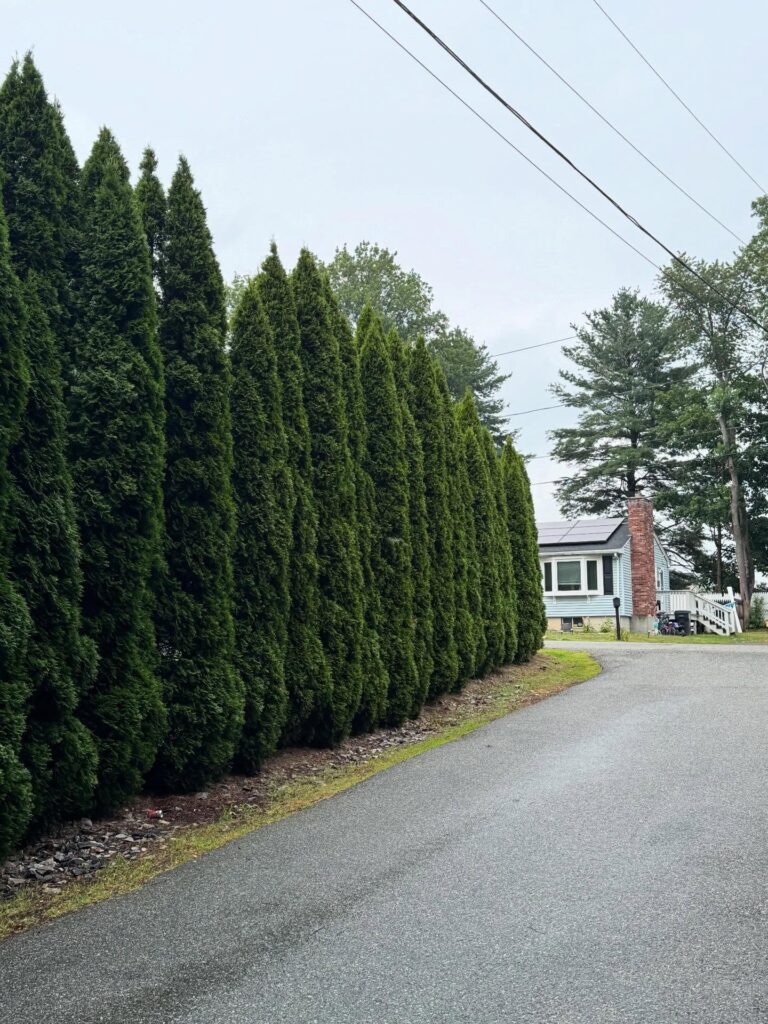
Green Giant Arborvitae has become popular in North Florida for homeowners wanting a tall, fast-growing evergreen screen with a more traditional conifer look. Its soft, scale-like foliage forms a dense, narrow column.
This hybrid grows quickly, often 3 feet per year, eventually reaching 30 to 50 feet if left unpruned. That speed makes it one of the fastest ways to establish serious height and privacy along a property line.
Green Giant performs best in the cooler winters of North and Central Florida, since it’s less heat and humidity tolerant than true native or subtropical shrubs. For homeowners in the right zone, though, it delivers impressive results quickly.
14. Ixora (Ixora coccinea)
Ixora brings color into the privacy hedge conversation, with clusters of vivid red, orange, pink, or yellow flowers that bloom nearly year-round in Florida’s warm climate. Its dense, glossy foliage still provides solid screening value.
This shrub typically grows 4 to 8 feet tall depending on the cultivar, making it better suited to shorter privacy needs like patio screening rather than tall property-line hedges. It grows at a moderate pace and enjoys frequent light pruning.
Ixora needs consistent moisture and acidic, well-drained soil to bloom its best. It’s sensitive to cold, so it performs most reliably in Central and South Florida. For a flowering hedge that doubles as privacy, it’s a standout choice.
ALSO READ: 55 Florida Native Flowers (With Growing Details)
15. Firebush (Hamelia patens)
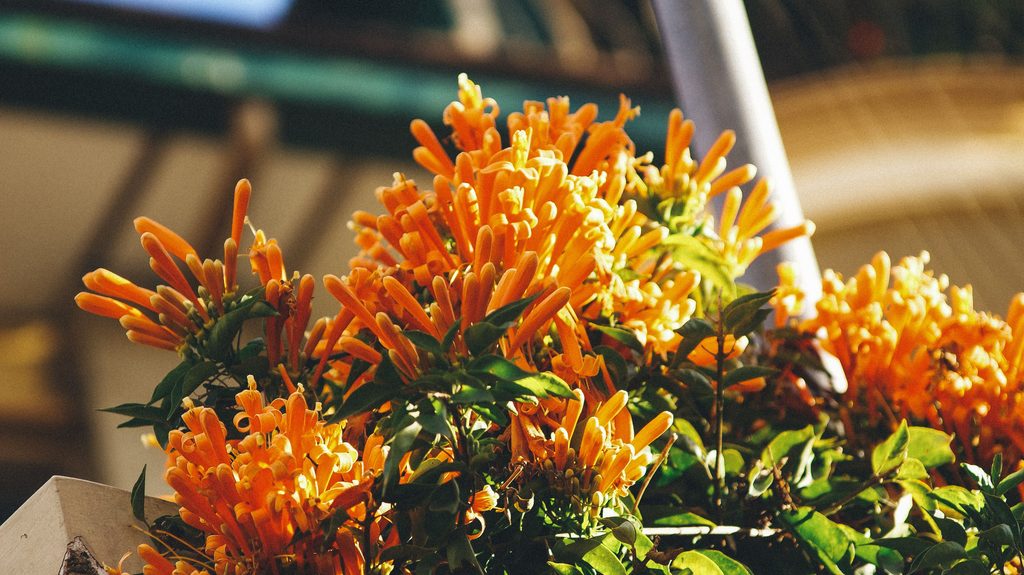
Firebush is a native Florida shrub known for its tubular orange-red flowers that bloom from spring through fall, attracting hummingbirds and butterflies in impressive numbers. Its rounded, bushy habit provides good mid-height screening.
This shrub grows quickly, often reaching 6 to 12 feet in a single growing season under good conditions. It dies back in a hard freeze in North Florida but typically resprouts vigorously from the roots once warm weather returns.
Firebush tolerates heat, drought, and poor soil remarkably well, requiring little supplemental care once established. For a fast, wildlife-friendly privacy screen with nonstop color, few native shrubs in Florida work as hard as this one.
16. Cocoplum (Chrysobalanus icaco)
Cocoplum is a versatile native shrub with rounded, glossy leaves that often show a reddish tint on new growth. It’s widely used in South Florida for both formal hedges and informal, natural-looking screens.
This shrub’s size varies considerably by variety, from low, spreading ground cover forms to upright types reaching 15 to 20 feet. That range makes it adaptable to nearly any privacy height requirement in a South Florida landscape.
Cocoplum tolerates a wide range of conditions, including some salt exposure and both wet and dry soil. Its edible purple fruit is a bonus for wildlife and adventurous gardeners alike, adding practical value beyond simple screening.
17. Silver Buttonwood (Conocarpus erectus var. sericeus)
Silver Buttonwood stands out visually thanks to its soft, silvery-gray foliage, a striking contrast to the typical dark green of most Florida hedges. It’s a coastal native, naturally adapted to harsh, salty environments.
This shrub can be maintained as a dense hedge from 6 to 15 feet tall, or allowed to grow into a small multi-trunked tree reaching 20 to 30 feet. Its texture adds visual interest that breaks up an otherwise uniform green landscape.
Silver Buttonwood tolerates salt spray, drought, and poor sandy soil better than almost any other privacy shrub on this list. For beachfront or waterfront properties in South Florida, it remains one of the most dependable, low-maintenance choices.
18. Indian Hawthorn (Rhaphiolepis indica)
Indian Hawthorn is a compact, rounded shrub valued for its clusters of pink or white spring flowers and small, leathery, dark green leaves. It works well for lower privacy screens or layered plantings in front of taller hedges.
This shrub typically grows 3 to 6 feet tall and wide, making it suitable for smaller spaces or foundation plantings that still need reasonable screening. It grows at a slow to moderate pace, forming a naturally tidy, mounded shape.
Indian Hawthorn tolerates coastal conditions and poor soil reasonably well. It can be susceptible to leaf spot disease in humid conditions, so good air circulation and spacing between plants helps keep it healthy throughout the year.
19. Loropetalum (Loropetalum chinense)
Loropetalum, sometimes called Chinese Fringe Flower, brings striking color to a privacy planting with burgundy to deep purple foliage on many popular cultivars, alongside fringe-like pink or red spring flowers.
This shrub’s size varies widely by cultivar, ranging from low, spreading dwarf forms under 3 feet to larger varieties reaching 10 to 15 feet. That range makes it flexible for layered hedge designs at different heights.
Loropetalum prefers full sun for the best foliage color and tolerates Florida’s heat and humidity well. It grows at a moderate to fast pace and responds nicely to pruning, making it easy to shape into a colorful, informal screen.
ALSO READ: 35 Best Flowers to Grow in Florida (With Care Details)
20. Bottlebrush (Callistemon species)
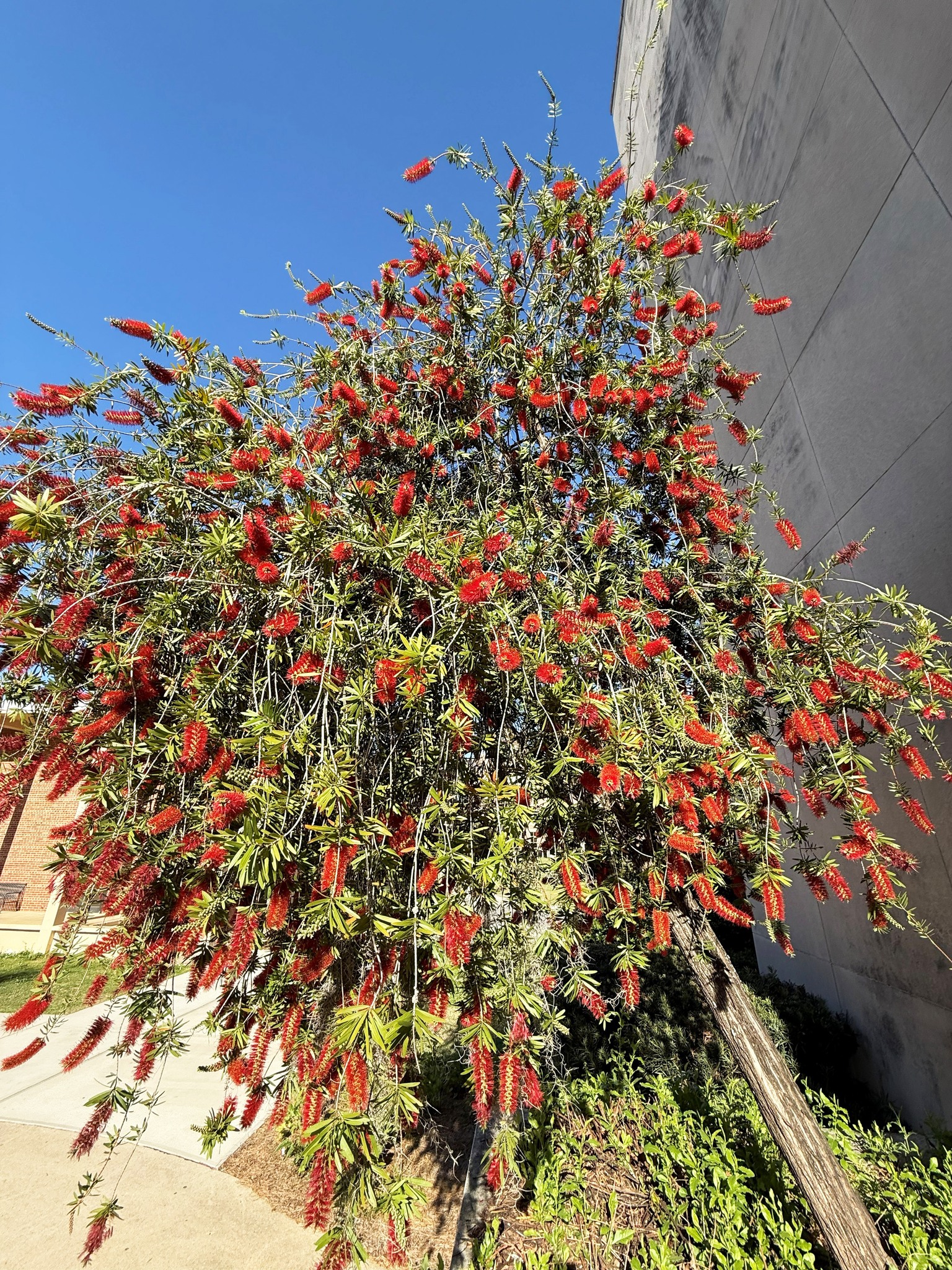
Bottlebrush is instantly recognizable by its bright red, brush-shaped flower spikes, which bloom heavily in spring and sporadically through the rest of the year, drawing hummingbirds and bees in large numbers.
This shrub or small tree typically reaches 10 to 15 feet, with narrow, willowy leaves that create a looser, more informal screening effect than denser hedge plants. It grows at a moderate to fast pace once established.
Bottlebrush tolerates drought, poor soil, and coastal conditions well, making it a low-maintenance option across much of Florida. For privacy planting that also functions as a pollinator magnet, it adds real ecological value to a landscape.
21. Pineapple Guava (Acca sellowiana)
Pineapple Guava is a large shrub gaining popularity in Florida landscapes, valued for its leathery green leaves with silvery undersides that shimmer attractively in the wind. UF/IFAS notes it adapts well even to the cooler Florida Panhandle.
This shrub typically reaches 10 to 15 feet tall with an equal spread, growing at a moderate pace. Its unusual, edible flowers and fruit add a practical bonus that few other privacy shrubs on this list can match.
Pineapple Guava shows moderate salt tolerance, making it a reasonable option for coastal landscapes as well as inland yards. For a screening shrub that doubles as a food source, it offers something genuinely different from standard hedge plants.
22. Crepe Jasmine (Tabernaemontana divaricata)
Crepe Jasmine is prized for its glossy, deep green leaves and clusters of pinwheel-shaped white flowers that bloom throughout Florida’s warm months, filling the air with a light, pleasant fragrance near patios and walkways.
This shrub typically grows 4 to 8 feet tall, making it well suited to smaller privacy needs around patios, pools, or garden beds rather than tall property-line screening. It grows at a moderate pace and tolerates regular shaping.
Crepe Jasmine prefers partial shade to full sun and consistent moisture. It’s sensitive to hard frost, so it performs best in Central and South Florida. Every part of the plant contains a milky sap, so gloves are wise during pruning.
23. Clumping Bamboo (Bambusa multiplex)
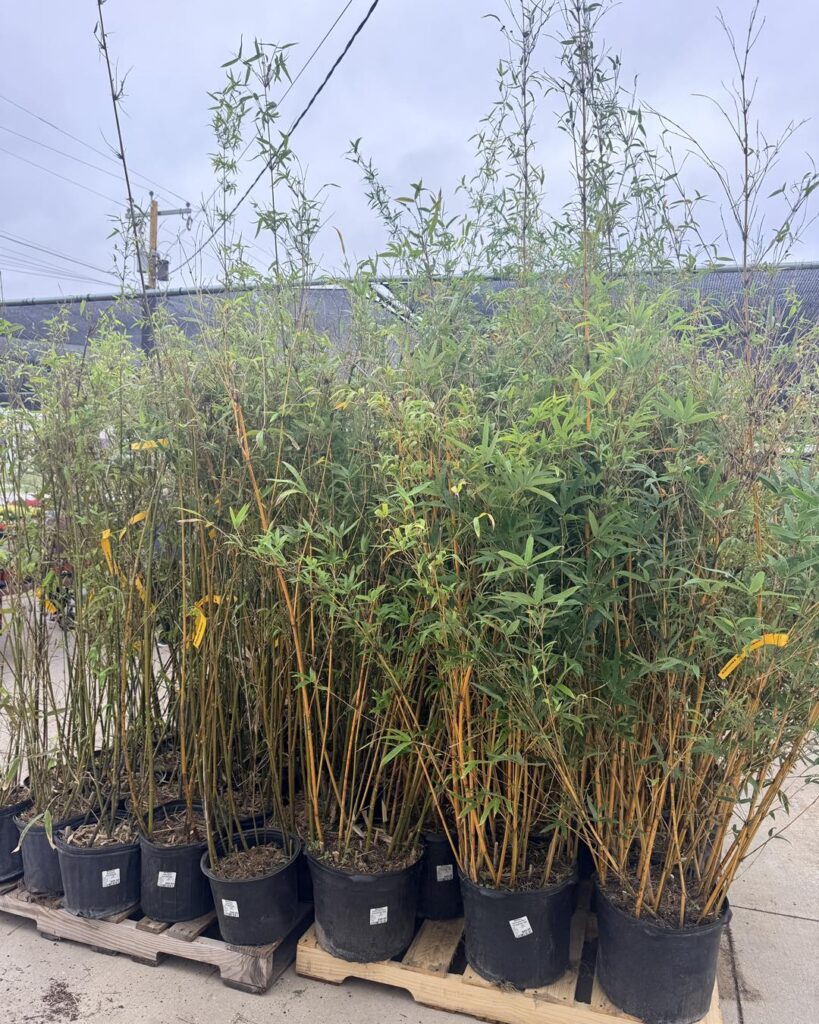
Clumping Bamboo offers a completely different texture from typical broadleaf hedges, with tall, slender canes and fine, feathery foliage that sway gently in the wind, creating movement most other privacy plants lack.
This species can reach 15 to 25 feet tall under good conditions, forming a dense screen relatively quickly. Unlike running bamboo species, clumping types stay contained in a tight cluster rather than spreading aggressively through the yard.
Clumping Bamboo tolerates Florida’s heat and humidity extremely well and prefers full sun with regular moisture. For a fast, dramatic, tropical-feeling privacy screen, it’s one of the most visually distinctive choices on this list.
24. Thryallis (Galphimia gracilis)
Thryallis is a compact, sun-loving shrub known for its bright yellow flowers that bloom almost continuously through Florida’s warm season, adding cheerful color to what might otherwise be a purely green privacy planting.
This shrub typically grows 4 to 6 feet tall and wide, making it a good fit for lower screening needs or layered plantings in front of taller hedge species. It grows quickly and responds well to regular light trimming.
Thryallis tolerates heat, drought, and poor soil once established, requiring minimal supplemental watering. It’s sensitive to frost, so it performs most reliably in Central and South Florida rather than the colder northern counties.
25. Golden Dewdrop (Duranta erecta)
Golden Dewdrop is a fast-growing shrub known for its clusters of small purple or blue flowers, followed by golden-yellow berries that give the plant its common name and add ornamental interest through fall and winter.
This shrub typically reaches 6 to 18 feet depending on the variety and pruning regimen, making it adaptable to both mid-height and taller privacy needs. It grows quickly, filling in a screen faster than many slower shrubs on this list.
Golden Dewdrop tolerates heat, drought, and a range of soil types, thriving across most of Florida. Note that its berries are toxic if ingested in quantity, so placement away from curious pets or small children is a sensible precaution.
ALSO READ: 25 Best Shade Trees for Backyard (With Pictures)
How to Choose the Right Privacy Bush for Your Yard
Start with your region. What thrives in Miami won’t necessarily survive a North Florida frost, so match your plant choice to your local hardiness zone before falling in love with a particular look.
Growth speed matters too. Fast growers like Wax Myrtle or Clumping Bamboo deliver quick results, while slower, denser shrubs like Podocarpus reward patience with a longer-lasting, more solid screen over time.
Salt tolerance is essential for coastal properties. According to UF/IFAS Extension guidance, species like Silver Buttonwood, Clusia, and Wax Myrtle handle salt spray far better than many inland favorites, making them smarter choices near the coast.
Planting and Spacing Tips
Proper spacing determines how quickly a hedge fills in without wasting money on excess plants. Most privacy shrubs are spaced 2 to 4 feet apart, depending on their mature spread and how quickly you want full coverage.
Mixing two or three compatible species can also add resilience. If one plant type faces a pest or disease issue, a mixed hedge won’t lose its entire screening function at once, unlike a single-species row planted end to end.
Regular watering during the establishment period, typically the first year, makes a significant difference in how quickly roots take hold in Florida’s sandy soil. After that, most of these species need only moderate ongoing care.
Final Thoughts
Privacy shouldn’t come at the cost of a plant that constantly fights against Florida’s climate. Choosing species genuinely suited to your region, sun exposure, and soil type saves both money and frustration down the road.
Whether you want the fast coverage of Wax Myrtle, the tropical texture of Clumping Bamboo, or the tidy formality of Podocarpus, there’s a bush on this list built to thrive in Florida’s demanding but rewarding growing conditions.
References
- University of Florida IFAS Gardening Solutions — Florida-Friendly Shrubs for Landscape Beds and Screening
- University of Florida IFAS Northwest District Extension — Screen Trees for Privacy and Noise Reduction
- University of Florida IFAS Miami-Dade Extension — Shrubs for Your Miami-Dade Hedge
- University of Florida IFAS EDIS — Podocarpus macrophyllus Fact Sheet
- University of Florida IFAS Environmental Horticulture — Viburnum tinus (Laurestinus) Fact Sheet
- University of Florida IFAS Environmental Horticulture — Florida Privet Fact Sheet
- University of Florida IFAS EDIS — Ligustrum lucidum Fact Sheet

Tim M Dave is a gardening expert with a passion for houseplants, particularly cacti and succulents. With a degree in plant biology from the University of California, Berkeley, he has vast experience in gardening. Over the years, he has cultivated a vast collection of desert plants and learned a great deal about how to grow and care for these unique companions.