35 Best Flowers to Grow in Florida (With Care Details)
Florida’s climate rewards a specific kind of flower — one that can handle intense sun, sudden downpours, and winters that barely dip below 40°F in the south. I learned that the hard way after watching a “guaranteed hardy” perennial wilt within a week of our July humidity.
The state stretches across seven USDA hardiness zones, from 8a in the Panhandle to 11b in the Florida Keys, according to the USDA’s updated 2023 Plant Hardiness Zone Map. That range means what thrives in Pensacola might struggle in Miami, and vice versa.
This guide lists 35 flowers that genuinely perform well in Florida conditions — heat, humidity, sandy soil, and all.
Let’s dig in.
Understanding Florida’s Growing Conditions First
Before jumping into the list, it helps to know why so many “normal” garden flowers fail here. Florida soil is often sandy and drains too fast, holding little nutrition. Summer humidity above 70% also invites fungal disease that many temperate flowers simply cannot resist.
The state also gets roughly 50 to 60 inches of rain per year in many regions, concentrated heavily between June and October. That means your flower choices need to tolerate both flooding rains and dry spring stretches without missing a beat.
With that context, here are the 35 flowers worth planting.
1. Zinnia
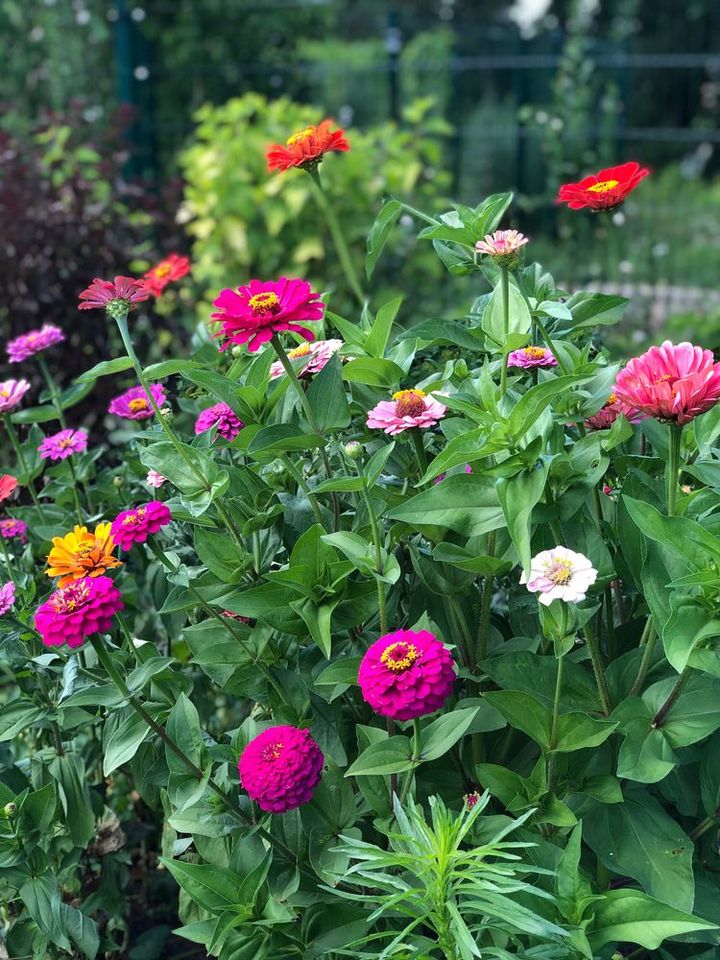
Zinnias are about as close to foolproof as flowers get in Florida. They germinate fast, bloom within eight weeks, and shrug off the summer heat that many other annuals can’t handle. I’ve never had a bad zinnia season, honestly.
They come in nearly every color except true blue, which makes them a favorite for cutting gardens. Butterflies and hummingbirds flock to them, adding movement and life to any bed.
Use zinnias as border plants or in cutting gardens near the kitchen or patio. They pair beautifully with marigolds and cosmos for a wildflower-meadow effect that looks intentional, not messy.
Care Requirements
Plant zinnias in full sun with well-drained soil. Space them properly to allow airflow, since powdery mildew is their one real weakness in humid conditions. Water at the base rather than overhead to keep foliage dry.
2. Marigold
Marigolds bring cheerful orange and gold tones that seem made for Florida’s sunny disposition. They’re also natural pest deterrents, helping repel nematodes and certain garden insects. This dual purpose makes them a smart, practical choice.
UF/IFAS research specifically recommends marigolds for nematode management in vegetable and flower beds, a benefit most gardeners overlook. That’s a rare case where beauty and utility line up perfectly.
Care Requirements
Marigolds need full sun and moderate watering. They’re not fussy about soil but do best when it drains well. Deadhead spent blooms regularly to keep new flowers coming through the season.
Plant marigolds along vegetable garden borders to protect tomatoes and peppers naturally. They also work well in containers on balconies where space is tight but sunlight is abundant.
3. Vinca (Madagascar Periwinkle)
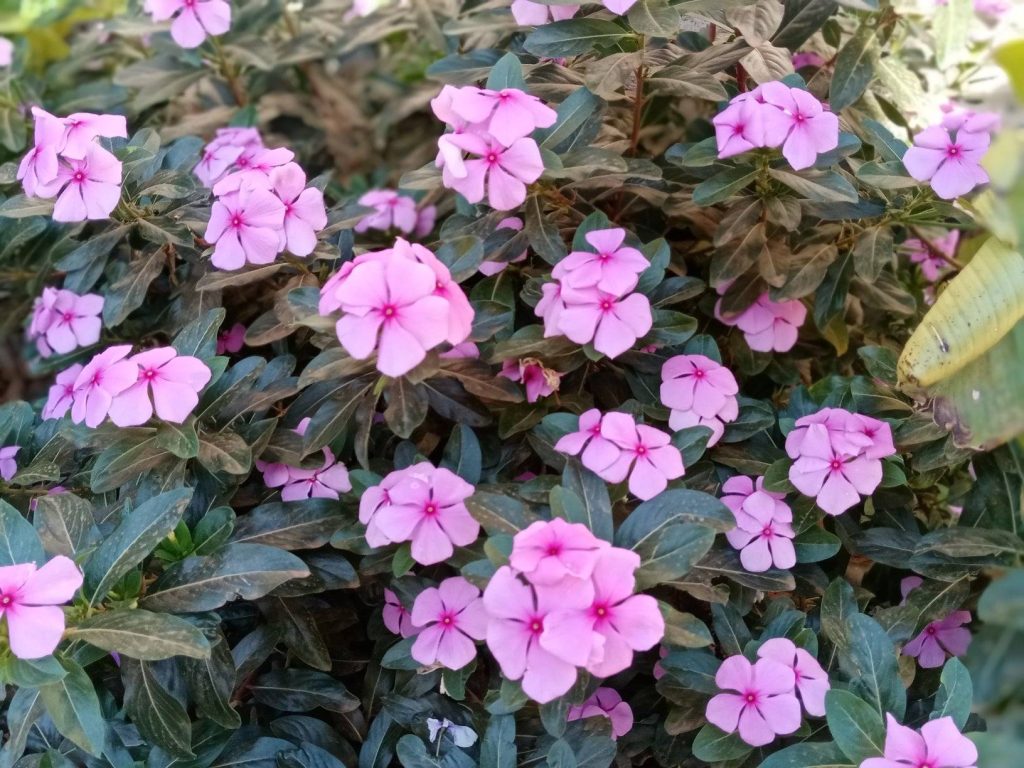
Vinca, technically Catharanthus roseus, might be the single most heat-tolerant flowering annual sold in Florida nurseries. It laughs at summer temperatures that wilt other plants by noon. I’ve seen vinca bloom continuously through the worst of August.
It’s drought-tolerant too, once established, which matters during Florida’s dry spring months before the rainy season kicks in.
Care Requirements
Vinca prefers full sun and sandy, well-drained soil. Overwatering is actually its biggest threat, since root rot develops quickly in soggy conditions. Let the soil dry between waterings.
Use vinca as ground cover in beds that get reflected heat from driveways or sidewalks. Its low, spreading habit fills gaps quickly without demanding constant attention.
4. Pentas
Pentas are a pollinator magnet, drawing butterflies and hummingbirds like almost nothing else in the Florida landscape. Their star-shaped clusters bloom nearly year-round in South Florida’s warmer zones. I planted a single pentas bush once and watched it outperform an entire flower bed.
They tolerate both heat and light salt exposure, making them a solid pick for coastal properties too.
Care Requirements
Give pentas full sun to partial shade and consistent moisture without waterlogging. They benefit from occasional fertilizing during peak growing months. Pruning lightly encourages bushier growth and more blooms.
Plant pentas near patios or windows where you’ll actually see the pollinator activity. They also work well massed together for a bold color statement in front yards.
ALSO READ: 55 Florida Native Flowers (With Growing Details)
5. Firebush
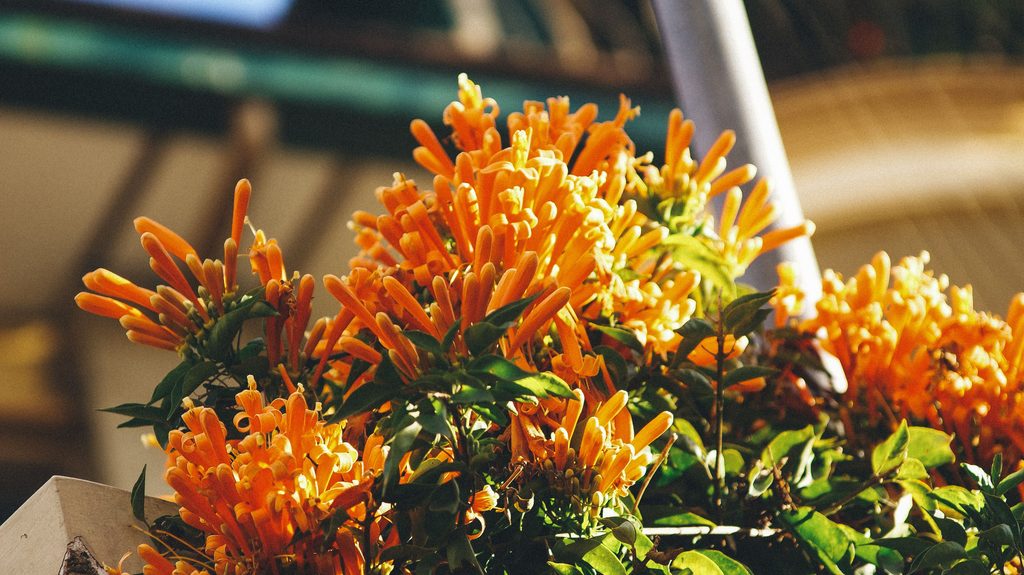
Firebush is a Florida native shrub with tubular orange-red flowers that hummingbirds genuinely cannot resist. Because it’s native, it’s naturally adapted to our soil, rainfall patterns, and pest pressures. That adaptation shows in how little maintenance it truly needs.
It can die back in a hard freeze in northern zones but rebounds vigorously by late spring, often reaching four feet tall within one season.
Care Requirements
Firebush wants full sun and tolerates both drought and periodic flooding well. Prune dead stems after winter cold snaps to encourage fresh, vigorous growth. Fertilize lightly, if at all.
Use firebush as an informal hedge or focal shrub in wildlife gardens. It pairs naturally with milkweed and coneflower for a native pollinator corridor.
6. Coreopsis
Coreopsis holds a special place here — it’s officially Florida’s state wildflower, designated in 1991. This cheerful yellow bloomer grows wild along highways and thrives in home gardens with almost no coaxing.
It reseeds readily, meaning one planting can turn into a self-sustaining patch within a couple of seasons. That’s a rare kind of low-effort reward.
Care Requirements
Coreopsis prefers full sun and tolerates poor, sandy soil exceptionally well. Avoid over-fertilizing, since rich soil actually produces fewer blooms and more leafy growth. Let seed heads mature if you want natural reseeding.
Scatter coreopsis in meadow-style plantings or naturalized roadside areas. It’s ideal for gardeners who want a low-maintenance, native-inspired look.
7. Black-Eyed Susan

This golden-petaled classic with its dark central cone handles Florida’s heat and humidity without complaint. It’s technically native to much of the eastern United States, including Florida, so it’s well suited to our growing conditions.
Bees and butterflies visit regularly, and the flowers hold up remarkably well as cut stems too.
Care Requirements
Plant in full sun with well-drained soil for best results. Black-eyed Susans tolerate short dry spells but appreciate regular watering during establishment. Deadhead to extend the blooming period into fall.
Combine with coreopsis and gaillardia for a wildflower border that blooms in waves throughout the growing season. It’s a reliable middle-height filler in mixed beds.
8. Blanketflower (Gaillardia)
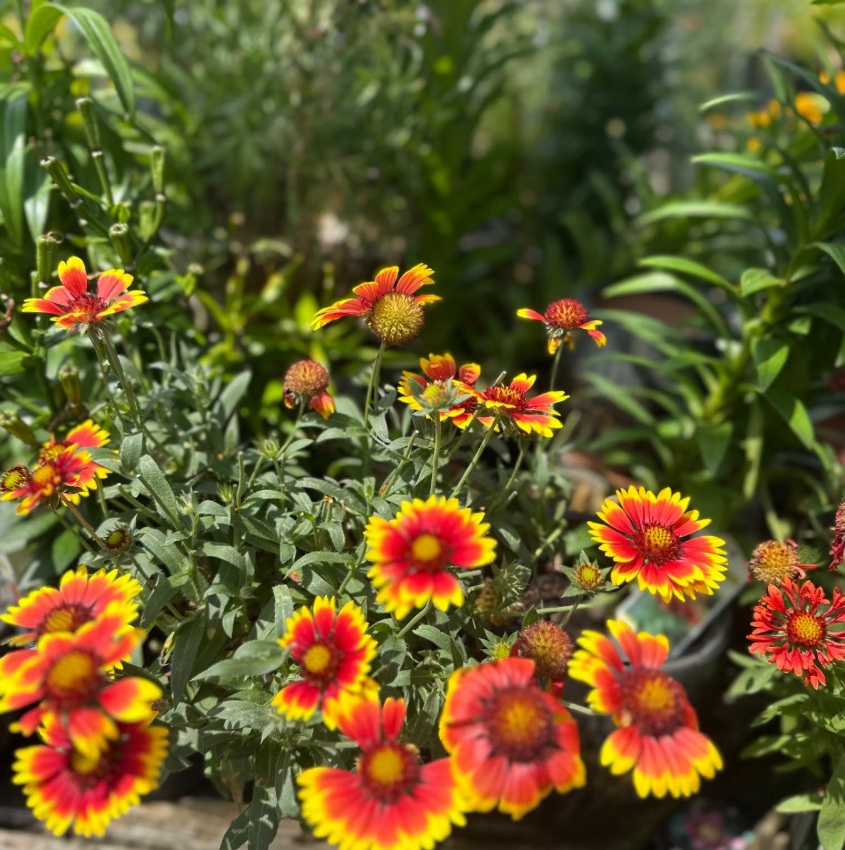
Blanketflower’s fiery red-and-yellow petals bring genuine drama to sandy, coastal gardens where other flowers struggle. It’s naturally salt-tolerant and thrives in the loose, well-drained soils common along Florida’s beaches.
I’ve seen it growing wild in dune areas, which tells you everything about its toughness.
Care Requirements
Give gaillardia full sun and avoid rich, moisture-retentive soil, which shortens its lifespan. It’s genuinely drought-tolerant once roots establish. Deadheading keeps the plant blooming longer into the year.
Perfect for coastal landscaping, xeriscapes, or anywhere soil is sandy and irrigation is limited. It pairs naturally with sea oats and other beach-adjacent plantings.
9. Lantana
Lantana is nearly indestructible in Florida heat, producing clusters of multicolored flowers from spring through the first frost. It’s a butterfly favorite, and I’ve personally counted more species visiting lantana than almost any other plant in my yard.
Note that some varieties are considered invasive in Florida, so choosing native or sterile cultivars matters here.
Care Requirements
Lantana thrives in full sun with minimal water once established. It tolerates poor soil and salt spray, making it useful near coastal properties. Prune periodically to control its spreading habit.
Use native lantana cultivars as a low hedge or ground cover in pollinator gardens. Check with your local UF/IFAS Extension office before planting to confirm you’re choosing a non-invasive variety.
ALSO READ: 25 Flowering Shrubs for Full Sun: Identification and Pictures
10. Hibiscus
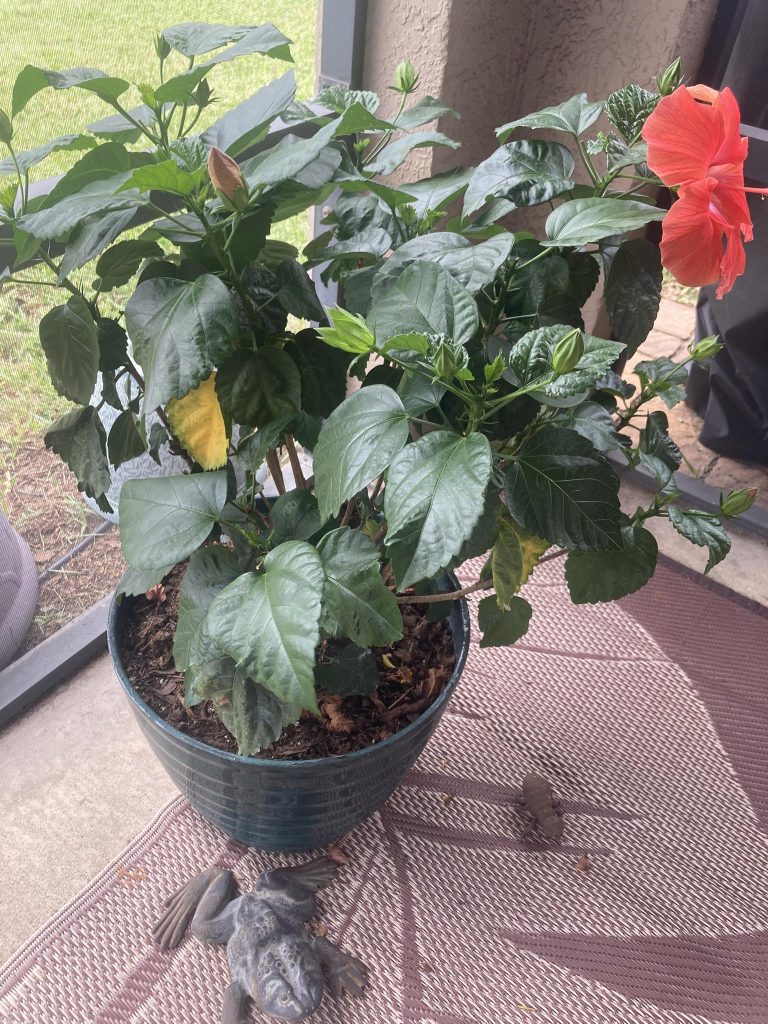
Few flowers say “Florida” quite like a tropical hibiscus in full bloom. Its large, dramatic flowers open for just a day but appear continuously through warm months, giving a constant show. It’s practically the unofficial mascot of Florida landscaping.
Hibiscus varieties range from cold-hardy types for northern Florida to true tropicals for the Keys and South Florida.
Care Requirements
Plant hibiscus in full sun with rich, well-drained soil and regular watering. Fertilize monthly during the growing season for the best bloom production. Protect tropical varieties from frost in northern zones.
Use hibiscus as a specimen shrub near entryways or patios where its blooms can be appreciated daily. It also works beautifully in large containers on balconies.
11. Bougainvillea
Bougainvillea’s papery bracts in magenta, orange, and purple create some of the boldest color displays in South and Central Florida landscapes. It genuinely loves heat and thrives on a bit of neglect, which surprised me the first time I grew it.
It’s drought-tolerant and actually blooms more reliably under mildly stressed, drier conditions.
Care Requirements
Give bougainvillea full sun and well-drained soil, and avoid overwatering or over-fertilizing. Too much kindness produces lush leaves but fewer flowers. Prune after major bloom cycles to shape growth.
Train bougainvillea on trellises, fences, or archways for vertical color. It also works well cascading from raised planters or hanging baskets.
12. Plumbago
Plumbago produces soft powder-blue flower clusters that bloom almost continuously in warmer Florida zones. It’s a genuinely low-maintenance shrub that fills space quickly while attracting butterflies, especially the cassius blue.
I appreciate that it doesn’t demand the fussy attention some flowering shrubs require.
Care Requirements
Plumbago tolerates full sun to partial shade and needs only moderate watering once established. It’s fairly drought-tolerant and rarely bothered by pests. Prune to control its somewhat sprawling growth habit.
Use plumbago as an informal hedge or filler shrub in mixed borders. Its cool blue tone balances brighter colors like hibiscus or firebush nicely.
ALSO READ: 35 Good Flowers to Grow in Pots (With Pictures)
13. Ixora
Ixora produces dense clusters of star-shaped flowers in red, orange, pink, or yellow, and it blooms nearly year-round in South Florida. It’s a staple of tropical landscaping throughout the state’s warmer regions.
The compact varieties work especially well for gardeners with smaller yards or foundation plantings.
Care Requirements
Ixora prefers full sun to partial shade and consistently moist, acidic soil. It can develop yellowing leaves if soil pH is too alkaline, so occasional soil testing helps. Fertilize with a formula suited for acid-loving plants.
Plant ixora as a foundation shrub or low hedge along walkways. Its dense blooms create strong structure without requiring frequent pruning.
14. Crossandra
Crossandra’s orange, salmon, or yellow flowers bring an unusual, tropical texture to Florida beds. It handles humidity well, unlike many bright-colored bloomers that mildew in our thick summer air.
It’s a lesser-known choice, but I think it deserves far more attention from Florida gardeners.
Care Requirements
Give crossandra partial shade to full sun, avoiding harsh afternoon exposure in the hottest zones. It needs consistently moist, well-drained soil. Protect it from frost, since it’s sensitive to cold in northern Florida.
Use crossandra in shaded courtyards or as understory planting beneath taller shrubs. It also performs beautifully in containers on covered patios.
15. Angelonia
Angelonia, often called summer snapdragon, handles Florida’s punishing heat better than actual snapdragons ever could. Its spiky purple, white, or pink blooms stay attractive through the entire summer without fading.
It’s become a go-to bedding plant for Florida landscapers precisely because it performs when so many others fail.
Care Requirements
Plant angelonia in full sun with well-drained soil and moderate watering. It’s fairly drought-tolerant once established and resists most common pests. Deadheading isn’t strictly necessary but encourages fuller growth.
Use angelonia in mass plantings along walkways or in mixed containers for consistent summer-long color. It pairs nicely with vinca for a low-maintenance bed.
16. Salvia
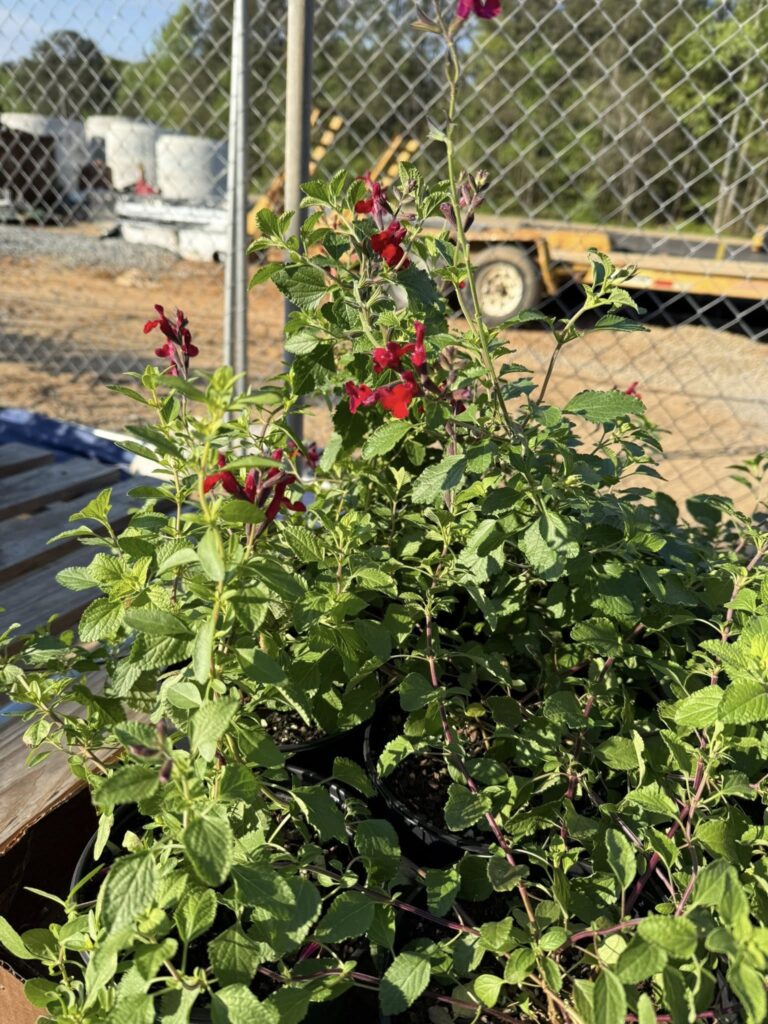
Salvia, particularly the tropical and native Florida species, brings vivid red and purple spikes that hummingbirds seek out constantly. Some varieties bloom almost continuously in Florida’s mild winters, unlike in colder states where they die back.
I’ve watched hummingbirds return to the same salvia patch daily during migration season.
Care Requirements
Salvia prefers full sun and well-drained soil, tolerating both heat and moderate drought. Prune spent flower spikes to encourage continuous blooming. Watch for occasional whitefly issues in humid conditions.
Plant salvia near windows or seating areas to enjoy hummingbird visits up close. It also works as a colorful backdrop in layered perennial borders.
17. Wax Begonia
Wax begonias handle Florida’s humidity and partial shade better than almost any other bedding flower. Their glossy leaves and constant pink, red, or white blooms make them a dependable choice for shaded courtyards.
They’re also relatively pest-resistant, which is a genuine relief in a state where pests thrive year-round.
Care Requirements
Give wax begonias partial shade to filtered sun and well-drained, organically rich soil. They have low drought tolerance, so consistent watering matters. Avoid overhead watering to prevent leaf spot disease.
Use wax begonias to brighten shaded entryways or beneath tree canopies where sun-loving flowers struggle. They also do well in window boxes on covered porches.
18. Torenia (Wishbone Flower)
Torenia is one of the few true shade-lovers that still produces abundant, colorful flowers in Florida’s humid climate. Its purple, blue, or pink blooms resemble tiny snapdragons and hold up remarkably well through summer storms.
It’s become a favorite recommendation from UF/IFAS Extension programs for shaded Florida beds.
Care Requirements
Plant torenia in partial to full shade with consistently moist, well-drained soil. It’s not particularly drought-tolerant, so regular watering is essential. Light fertilizing during peak growth supports continuous blooming.
Use torenia beneath oak canopies or on the shaded side of a home where little else flowers well. It also thrives in hanging baskets on covered patios.
ALSO READ: 30 Flowers That Don’t Attract Bees (Names, With Pictures)
19. Caladium
Caladiums are grown mainly for their dramatic heart-shaped leaves, but Florida gardeners plant them by the millions for color that rivals any flower bed. Florida actually grows the majority of the world’s caladium bulbs, centered around Lake Placid.
The leaf patterns in red, pink, white, and green create a flowering-bed effect without needing actual blooms.
Care Requirements
Caladiums need partial to full shade and consistently moist, well-drained soil. They go dormant in cooler months and regrow from tubers each warm season. Avoid planting until soil temperatures stay reliably above 65°F.
Mass caladiums beneath trees or along shaded walkways for bold, low-maintenance color. They’re especially popular in southern and central Florida shade gardens.
20. Amaryllis
Amaryllis bulbs produce enormous trumpet-shaped flowers in red, pink, or white that feel almost tropical in scale. In Florida’s mild winters, amaryllis can be left in the ground year-round, unlike in colder states where it must be dug up.
Watching those massive blooms unfurl each spring is genuinely one of gardening’s small joys.
Care Requirements
Plant amaryllis bulbs in partial shade with well-drained, fertile soil. Water regularly during active growth but reduce watering during dormancy. Fertilize lightly after blooming to support next season’s flowers.
Naturalize amaryllis bulbs under trees or along garden borders where they can multiply undisturbed over the years. They also make striking container specimens near entryways.
21. Daylily
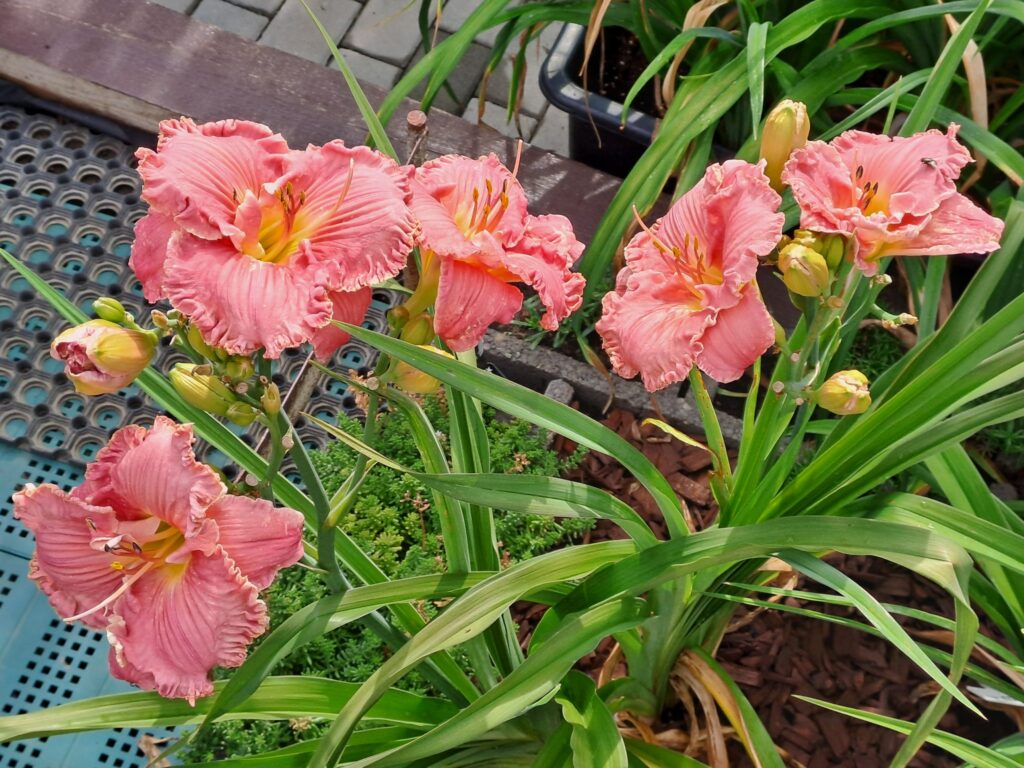
Daylilies earn their reputation as nearly indestructible perennials, and Florida’s warm climate lets many varieties bloom for extended periods. Each flower lasts just one day, but a mature clump produces new blooms continuously for weeks.
They tolerate Florida’s soil variability better than true lilies, which often struggle here.
Care Requirements
Plant daylilies in full sun to light shade with well-drained soil. They’re drought-tolerant once established and require minimal fertilizing. Divide clumps every few years to maintain vigorous blooming.
Use daylilies as a durable border plant along driveways or fence lines. Their grass-like foliage stays attractive even between bloom cycles.
22. Society Garlic
Society garlic produces clusters of lavender star-shaped flowers atop slender, grass-like foliage that smells faintly of garlic when crushed. It’s remarkably pest-resistant, since most insects and even deer avoid it entirely.
That pest resistance alone makes it worth including in any Florida flower bed plan.
Care Requirements
Give society garlic full sun and well-drained soil, and expect strong drought tolerance once roots establish. It needs minimal fertilizing and rarely suffers disease issues. Divide clumps occasionally to control spread.
Use society garlic as an edging plant along walkways or flower bed borders. Its upright form also works well mixed into rock gardens or xeriscape designs.
23. Milkweed
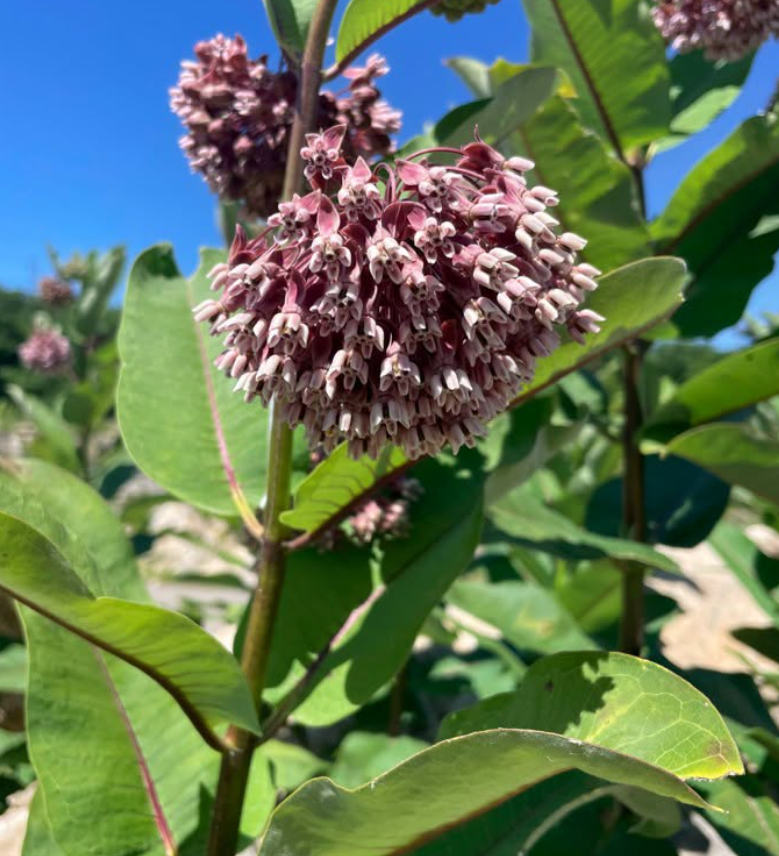
Milkweed is essential for monarch butterflies, serving as the only plant their caterpillars can eat. Native tropical and swamp milkweed varieties handle Florida’s climate exceptionally well and provide vivid orange, pink, or white blooms.
Given documented pollinator population declines, the EPA specifically encourages homeowners to plant native flowering species like milkweed to support struggling pollinator communities.
Care Requirements
Plant milkweed in full sun with moist to well-drained soil, depending on variety. Native species handle Florida’s rainfall patterns better than some ornamental hybrids. Avoid pesticides near milkweed to protect monarch caterpillars.
Group milkweed with pentas and firebush to create a dedicated pollinator garden section. It’s a meaningful addition for anyone hoping to support monarch migration.
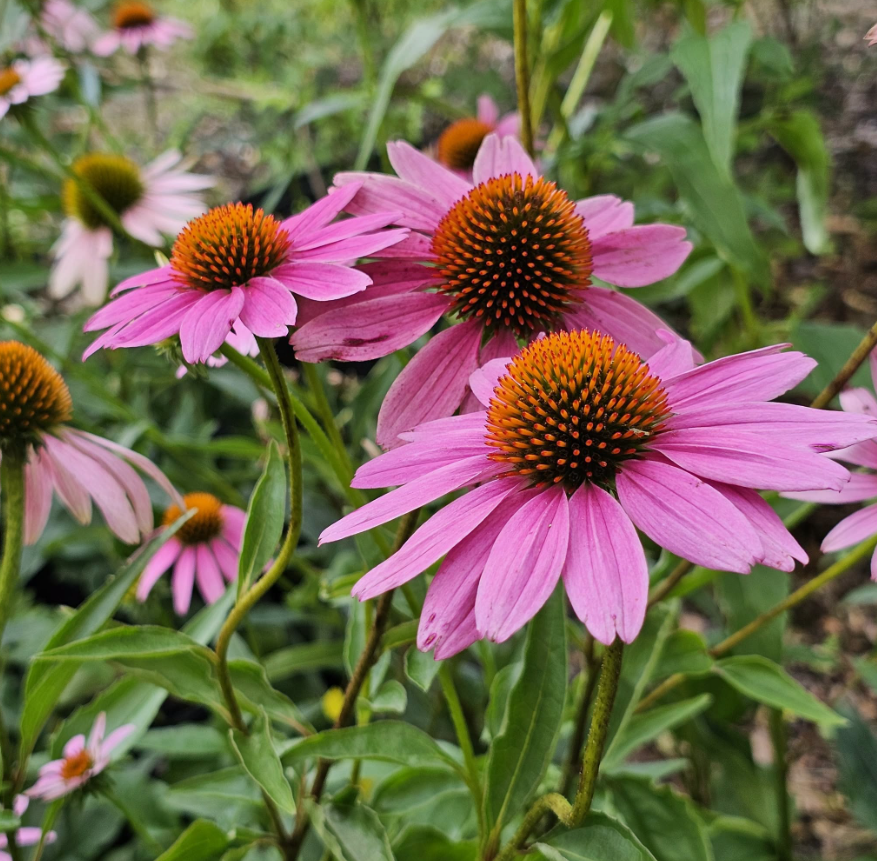
24. Purple Coneflower
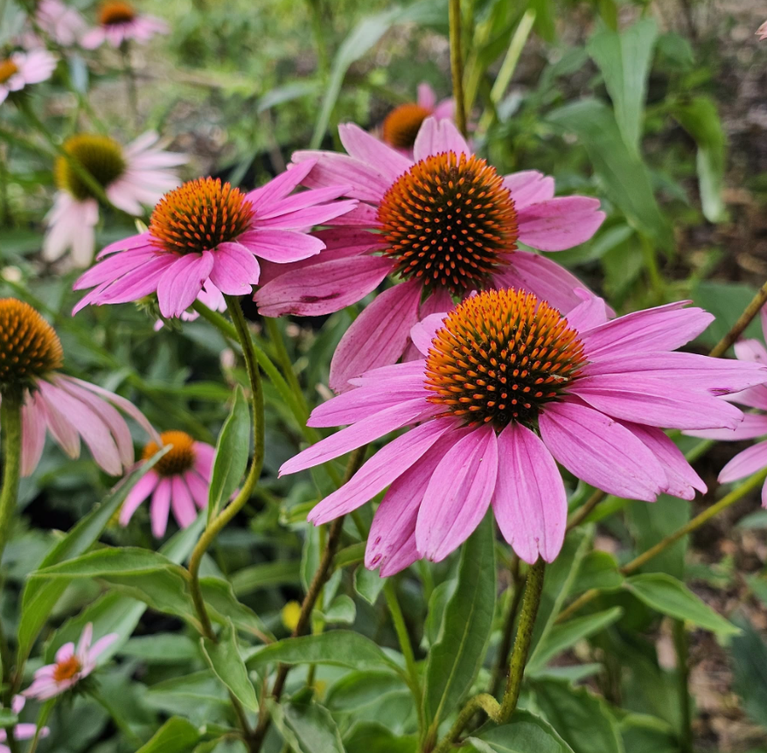
Purple coneflower, or Echinacea, brings a wildflower charm with its drooping purple petals and spiky orange center. It performs better in northern and central Florida than in the extreme heat of the Keys, but many gardeners still get good results statewide.
Bees and butterflies visit frequently, and the seed heads later attract goldfinches in winter.
Care Requirements
Plant coneflower in full sun with well-drained soil, avoiding overly wet conditions that cause root rot. It’s drought-tolerant once established and needs little fertilizing. Leave spent flower heads through fall for birds to feed on the seeds.
Use coneflower in naturalized meadow gardens or mixed perennial borders. It combines well with black-eyed Susan for a classic prairie-style look.
25. Verbena
Verbena spreads low and wide, covering ground quickly with clusters of purple, pink, or red flowers. It handles Florida heat admirably and tolerates the salt exposure common in coastal gardens.
I find it especially useful for filling awkward gaps between larger shrubs.
Care Requirements
Give verbena full sun and well-drained soil, since it’s prone to fungal issues in consistently wet conditions. It’s drought-tolerant and benefits from occasional trimming to prevent legginess. Avoid overhead watering to reduce disease risk.
Use verbena as a spreading ground cover in sunny borders or spilling over retaining walls. It also performs well in hanging baskets and window boxes.
ALSO READ: 35 Flowers That Attract Bees (With Pictures, And Growing Tips)
26. Petunia
Petunias bring reliable color in cooler Florida months, though they struggle once summer humidity peaks. Planting them in fall and winter gives Florida gardeners a flowering option when many summer annuals have finished.
Newer heat-tolerant hybrids have extended their usable season somewhat, which is a welcome improvement.
Care Requirements
Plant petunias in full sun with well-drained, fertile soil. Water at the base and avoid wetting foliage to prevent fungal disease. Fertilize regularly since petunias are relatively heavy feeders.
Use petunias in fall and winter container displays or hanging baskets near entryways. They pair beautifully with pansies for a cool-season color combination.
27. Geranium
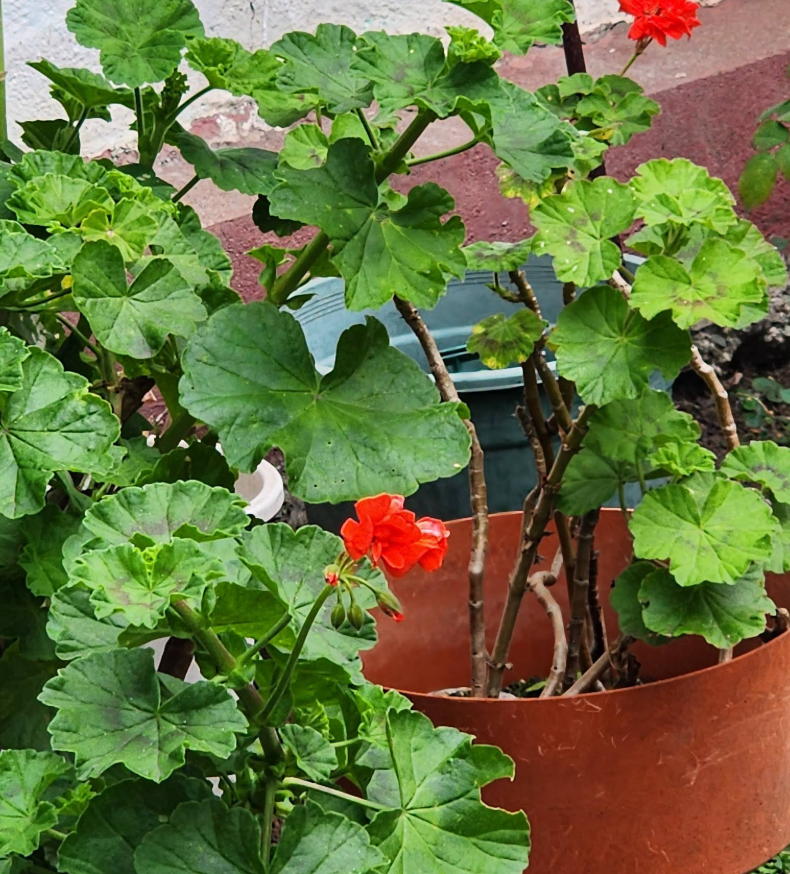
Geraniums perform best in Florida during the cooler months, offering rich red, pink, and white blooms when planted from fall through early spring. Summer heat and humidity tend to cause them to decline, so timing matters here.
UF/IFAS Extension specifically lists geraniums among the cool-season annuals recommended for Florida flower beds.
Care Requirements
Plant geraniums in full sun during cooler months and provide well-drained soil. Avoid overwatering, since root rot develops quickly in soggy conditions. Deadhead regularly to maintain continuous blooming through the season.
Use geraniums in containers that can be moved to shadier spots as temperatures rise. They also work well massed in beds during Florida’s mild winter season.
28. Gerbera Daisy

Gerbera daisies bring bold, oversized blooms in nearly every warm color imaginable. They handle Florida’s sun well and make exceptional cut flowers that last remarkably long in a vase.
I’ve always found their cheerful, symmetrical shape adds a polished look to otherwise informal beds.
Care Requirements
Plant gerbera daisies in full sun to light afternoon shade with well-drained soil. They’re prone to crown rot if planted too deep or watered excessively. Space plants generously to encourage air circulation.
Use gerbera daisies in cutting gardens or as a colorful border accent near patios. They also perform well in raised beds with excellent drainage.
29. Cosmos
Cosmos produces airy, delicate blooms on tall, wispy stems that sway attractively in Florida’s frequent breezes. It grows quickly from seed and tolerates poor soil better than most flowering annuals.
Its light, feathery foliage also adds welcome texture contrast against broader-leafed Florida plants.
Care Requirements
Plant cosmos in full sun with well-drained, even sandy, soil. It’s genuinely drought-tolerant and needs little fertilizing, since rich soil produces excess foliage over flowers. Stake taller varieties in windy or exposed areas.
Use cosmos toward the back of mixed borders where its height adds vertical interest. It also self-seeds readily for informal, cottage-style Florida gardens.
30. Sunflower
Sunflowers grow remarkably fast in Florida’s warm soil, often reaching full height within two months of planting. Their large, sun-tracking blooms bring an unmistakable cheerfulness, and they double as a food source for birds later in the season.
I plant a row every spring mostly because watching them grow feels like a small daily victory.
Care Requirements
Plant sunflowers in full sun with well-drained soil and consistent watering during establishment. They tolerate heat well but need staking in taller varieties exposed to Florida’s summer storms. Avoid overly wet soil, which weakens root systems.
Use sunflowers along fence lines or as a temporary privacy screen during summer months. They also work well in children’s gardens due to their fast, visible growth.
ALSO READ: 35 Flowers That Attract Hummingbirds (And Keep Them Coming Back)
31. Confederate Rose
Confederate rose, technically a hibiscus relative, produces large double blooms that famously change color from white to pink to deep red within a single day. It’s a striking, almost theatrical addition to Florida landscapes.
Despite the name, it’s not a true rose, but the visual impact rivals anything in a traditional rose garden.
Care Requirements
Plant confederate rose in full sun to partial shade with rich, well-drained soil. It can die back in a hard freeze but typically regrows vigorously by summer. Prune in late winter to shape and encourage fuller blooming.
Use confederate rose as a specimen shrub or small tree near patios where its color-changing display can be admired daily. It also works as an informal privacy screen.
32. Bromeliad
Bromeliads produce striking, long-lasting flower spikes in pink, red, orange, or purple, often surrounded by equally colorful foliage rosettes. Florida’s humid, warm climate mirrors their native tropical habitats closely, making them exceptionally well suited here.
Many varieties tolerate both ground planting and mounting on trees, giving landscapers creative flexibility.
Care Requirements
Give bromeliads partial shade to filtered sun and well-drained, loose soil or mounting medium. They need minimal fertilizing and tolerate short dry spells well. Protect sensitive varieties from frost in northern Florida.
Use bromeliads as understory accents beneath larger trees or as focal points in tropical-themed beds. They also work beautifully in decorative containers on shaded patios.
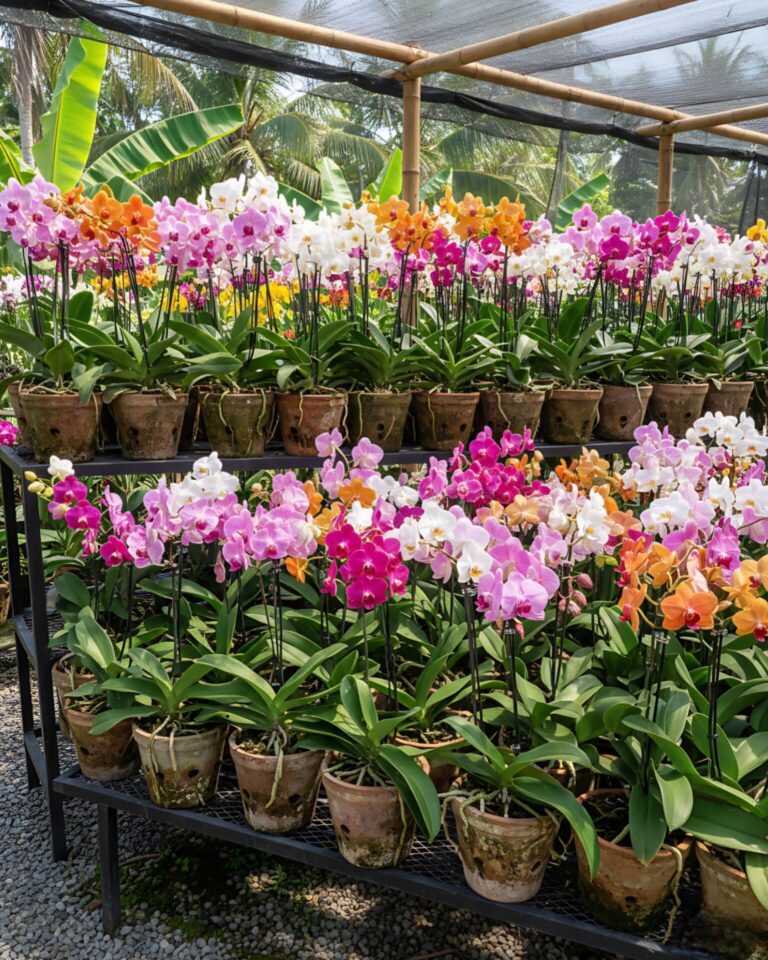
33. Vanda Orchid
Florida’s warm, humid climate makes it one of the few places in the continental United States where vanda orchids can be grown outdoors successfully. Their vivid, long-lasting blooms in purple, blue, and multicolor patterns are genuinely showstopping.
South Florida orchid growers have built an entire industry around this tolerance, which says a lot about the plant’s suitability here.
Care Requirements
Vandas need bright, filtered light and excellent air circulation, typically grown in hanging baskets rather than soil. Water frequently, since their exposed roots dry out quickly. Fertilize regularly during active growth for the best flowering.
Hang vanda orchids from covered patios, lanais, or under tree canopies where they get bright light without direct scorching sun. They make a spectacular, low-footprint vertical display.
34. Butterfly Ginger
Butterfly ginger produces fragrant, white or yellow flowers that release a scent many compare to jasmine, filling Florida gardens with perfume on warm evenings. It spreads readily in moist, shaded areas where other flowers hesitate to grow.
Its tropical texture and strong fragrance make it a sensory addition, not just a visual one.
Care Requirements
Plant butterfly ginger in partial shade with consistently moist, rich soil. It thrives near ponds, drainage areas, or irrigated garden beds. Divide clumps every few years to prevent overcrowding.
Use butterfly ginger near patios, walkways, or bedroom windows where its evening fragrance can be enjoyed. It also works well along the edges of water features.
35. Crinum Lily
Crinum lilies are among the toughest bulb flowers available to Florida gardeners, producing tall, trumpet-shaped blooms in white or pink. Many established plantings have survived decades of Florida heat, storms, and neglect with little intervention.
Their sheer resilience makes them a favorite for gardeners who want dramatic flowers without constant upkeep.
Care Requirements
Plant crinum lily bulbs in full sun to partial shade with well-drained soil. They’re highly drought-tolerant once established and rarely need fertilizing. Avoid disturbing the bulbs once planted, since they prefer to be left undisturbed for years.
Use crinum lilies as anchor plants in perennial borders or near home foundations where their height provides structure. They also perform well as standalone specimens in open lawn areas.
ALSO READ: 35 Flowers That Attract Butterflies (With Pictures)
Choosing the Right Flowers for Your Florida Zone
Not every flower on this list works equally well statewide. North Florida gardeners in zones 8a-9a should lean toward coneflower, black-eyed Susan, and coreopsis, which tolerate the occasional frost better than tropical varieties.
Central Florida gardeners in zones 9b-10a have the widest flexibility, able to grow nearly everything on this list with minor seasonal adjustments. This region sits in something of a sweet spot climate-wise.
South Florida and the Keys, zones 10b-11b, favor true tropicals like hibiscus, ixora, bougainvillea, and vanda orchids, which rarely if ever experience damaging cold.
Checking your specific zone through the official USDA Plant Hardiness Zone Map before planting saves both money and disappointment down the road.
Final Thoughts
Growing flowers in Florida takes a bit of local knowledge, but once you match the right plant to the right conditions, the results genuinely rival any garden in the country. I’ve killed my fair share of “easy” plants that simply weren’t suited to our heat and humidity, so trust me when I say starting with Florida-proven flowers saves real frustration.
Whether you’re building a pollinator garden, a cutting garden, or simply want color near your front door, this list of 35 flowers gives you a solid, tested starting point for nearly any part of the state.
References
- USDA Agricultural Research Service — Plant Hardiness Zone Map: https://planthardiness.ars.usda.gov/
- University of Florida IFAS Extension — Gardening Solutions: https://gardeningsolutions.ifas.ufl.edu/
- UF/IFAS EDIS — “Gardening with Annuals in Florida” (MG319): https://edis.ifas.ufl.edu/publication/MG319
- UF/IFAS EDIS — “Gardening with Perennials in Florida” (MG035): https://edis.ifas.ufl.edu/publication/MG035
- UF/IFAS Florida-Friendly Landscaping™ Program: https://ffl.ifas.ufl.edu/
- USDA Natural Resources Conservation Service — PLANTS Database: https://plants.usda.gov/
- U.S. Environmental Protection Agency — Pollinator Protection: https://www.epa.gov/greeningepa/pollinator-protection-epa

Tim M Dave is a gardening expert with a passion for houseplants, particularly cacti and succulents. With a degree in plant biology from the University of California, Berkeley, he has vast experience in gardening. Over the years, he has cultivated a vast collection of desert plants and learned a great deal about how to grow and care for these unique companions.