55 Florida Native Flowers (With Growing Details)
Native flowers support Florida’s pollinators, including hundreds of native bee species and the monarch butterflies that pass through the state twice a year during migration. Non-native ornamentals rarely offer the same nutritional value.
They are also built for Florida’s climate. Native species handle hurricanes, drought, flooding, and sandy soil far better than imported garden plants, which often need constant care to survive here.
I have walked coastal dunes in July and found beach sunflowers blazing away in full heat, then hiked a shaded hammock in January and still spotted color underfoot. Florida’s growing season simply never fully stops.
This guide covers 55 Florida native flowers, so you can identify them by sight, understand where they grow, and know when to expect their blooms.
Now, on to the flowers themselves.
55 Florida Native Flowers
1. Coreopsis (Coreopsis leavenworthii)
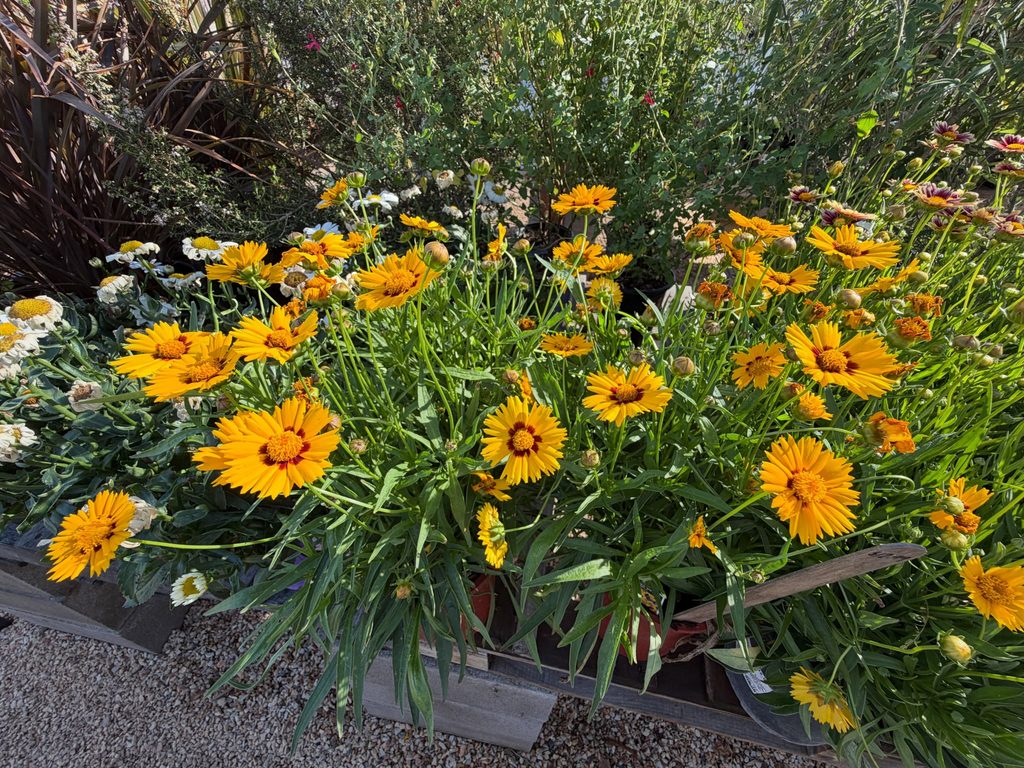
Coreopsis is Florida’s official state wildflower, chosen for its cheerful yellow blooms that line highways across the state each spring. You will see it in nearly every county, often in massive roadside drifts.
This flower typically blooms from March through July, though warmer regions may see blooms nearly year-round. It thrives in full sun and tolerates both wet and dry soil conditions.
2. Blanketflower (Gaillardia pulchella)
Blanketflower produces striking red-and-yellow petals that look almost hand-painted, ringing a dark central disk. It grows naturally along beaches and sandy coastal areas throughout the state.
This drought-tolerant flower blooms nearly continuously in warm weather and handles salt spray better than most native flowers, making it a favorite for coastal landscaping.
3. Black-Eyed Susan (Rudbeckia hirta)
This classic yellow flower, with its dark brown central cone, is one of the most recognizable wildflowers in North America. It grows across Florida in fields, roadsides, and open woodlands.
Black-eyed Susans typically bloom from late spring through fall, attracting a wide range of native bees and butterflies throughout their extended flowering period.
4. Spotted Beebalm (Monarda punctata)
Spotted beebalm has an unusual layered appearance, with pale, dotted flowers stacked beneath tiers of pink-tinged bracts. It grows in sandy, well-drained soils across much of the state.
This aromatic plant is a strong pollinator magnet, particularly attractive to native bees, and it blooms heavily through summer and into early fall.
5. Scarlet Sage (Salvia coccinea)
Scarlet sage produces bright red, tubular flowers on tall spikes, making it one of the best native plants for attracting hummingbirds. It grows in sun or partial shade across most of Florida.
This species can bloom nearly year-round in frost-free areas, giving hummingbirds and butterflies a reliable nectar source across most seasons.
6. Lyreleaf Sage (Salvia lyrata)
Named for its lyre-shaped basal leaves, this low-growing sage produces pale blue-violet flowers on slender stalks each spring. It thrives in lawns, open woods, and disturbed soil.
Lyreleaf sage typically blooms from March to June and is often mistaken for a weed, despite being a valuable early-season nectar source for pollinators.
7. Firebush (Hamelia patens)
Firebush produces clusters of tubular orange-red flowers that seem to glow against its reddish foliage, especially in late afternoon light. It grows throughout Central and South Florida.
This shrub-like flower blooms continuously in warm months and is considered one of the top hummingbird and butterfly plants native to the state.
ALSO READ: 25 Florida Native Shrubs (With Growing Details)
8. Scarlet Hibiscus (Hibiscus coccineus)
Also called swamp hibiscus, this striking flower produces deep red, star-shaped blooms that can reach 6 inches across. It grows naturally in marshes and wetland edges statewide.
Scarlet hibiscus flowers only last a single day each, but the plant produces a steady succession of new blooms throughout summer, keeping color constant.
9. Swamp Rose Mallow (Hibiscus grandiflorus)
This wetland hibiscus produces enormous pale pink flowers with a deep red center, some of the largest native blooms in Florida. It grows in marshes, ditches, and pond edges.
Individual flowers can measure up to 8 inches in diameter, making this one of the showiest native wildflowers found in the state’s freshwater wetlands.
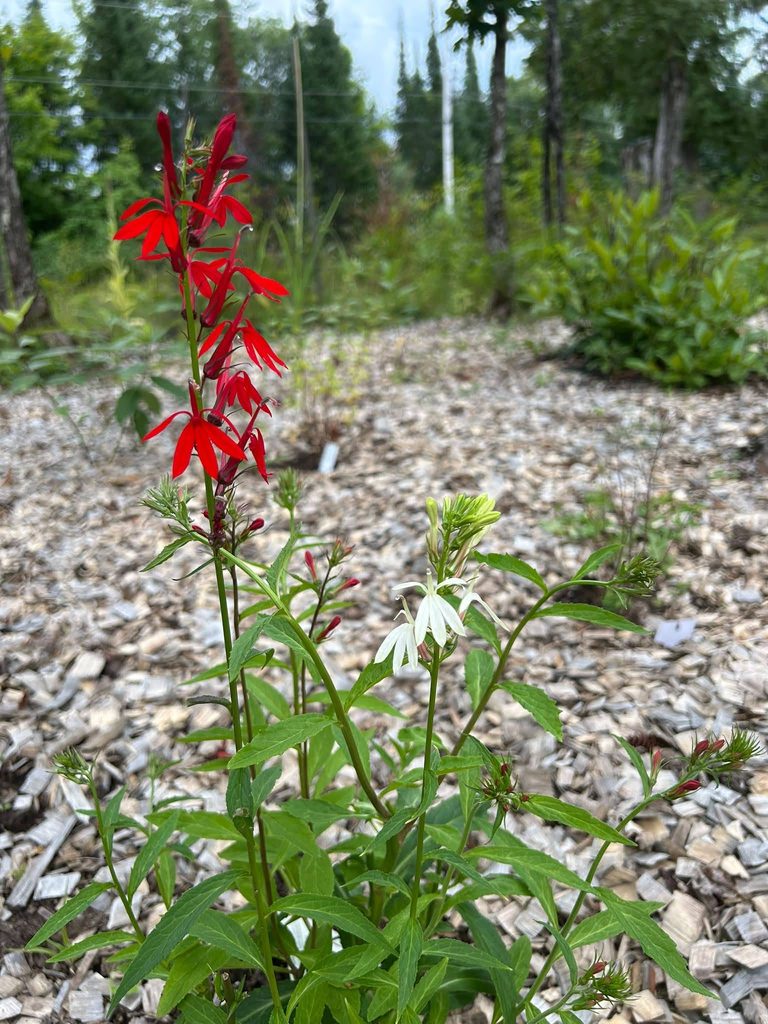
10. Cardinal Flower (Lobelia cardinalis)
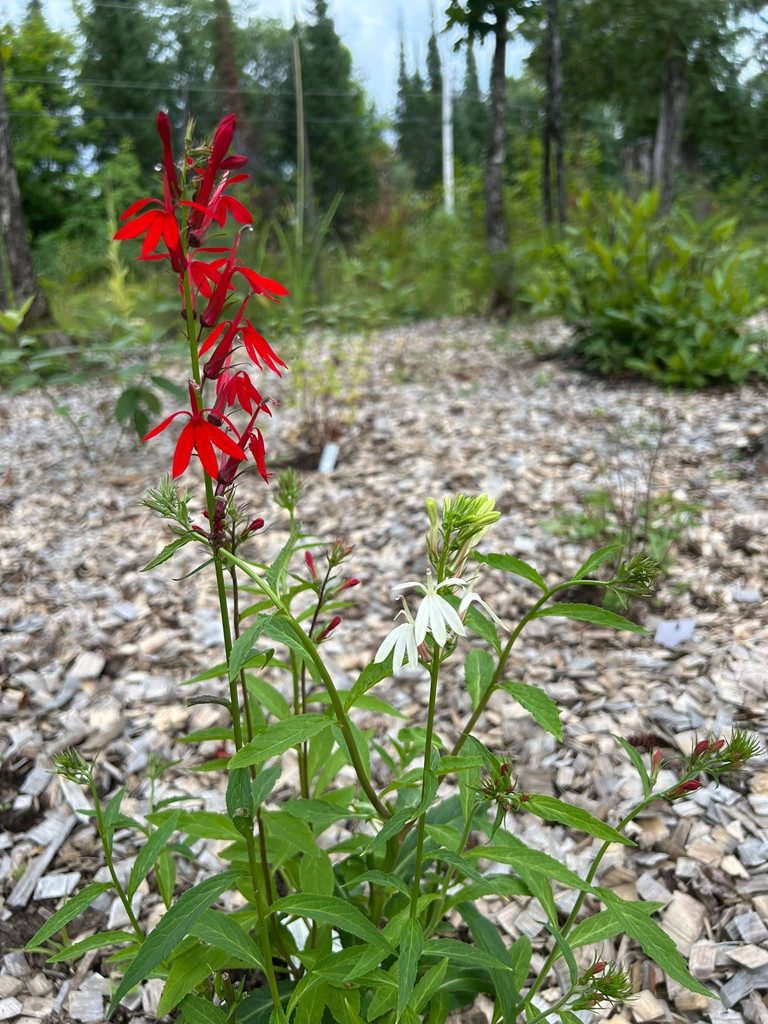
Cardinal flower produces tall spikes of intensely red, tubular blooms that stand out sharply against green wetland vegetation. It grows along streambanks and moist woodland edges.
This flower is almost exclusively pollinated by hummingbirds, whose long bills are perfectly suited to its deep, narrow flower tubes.
11. Butterfly Milkweed (Asclepias tuberosa)
This bright orange-flowered milkweed is a critical host plant for monarch butterfly caterpillars during their migration through Florida. It grows in dry, sandy soils across the state.
Butterfly milkweed blooms from late spring through summer and is considered one of the most drought-tolerant milkweed species native to Florida.
12. Swamp Milkweed (Asclepias incarnata)
Unlike its drought-loving cousin, swamp milkweed thrives in consistently moist soil, producing clusters of soft pink flowers through summer. It grows naturally in wetlands and pond margins.
This species is another important monarch host plant, and its flowers also attract large numbers of native bees and other butterfly species.
13. Whorled Milkweed (Asclepias verticillata)
This delicate milkweed species has narrow, needle-like leaves arranged in whorls around thin stems, topped with small clusters of white flowers. It grows in dry, open habitats statewide.
Though smaller and less showy than other milkweeds, it remains an important larval host plant for monarch butterflies passing through the region.
14. Purple Passionflower (Passiflora incarnata)
Also called maypop, this vine produces one of the most intricate flowers in North America, with a fringed purple crown surrounding a complex central structure. It grows across most of Florida.
The flower blooms from spring through fall and later produces an edible, egg-shaped fruit, which is where the common name “maypop” originates.
15. Yellow Passionflower (Passiflora lutea)
This smaller, less flashy relative of the purple passionflower produces pale yellow-green blooms only about an inch wide. It grows in shaded woodlands and forest edges throughout the state.
Despite its subtle appearance, yellow passionflower serves as a host plant for several native butterfly species, including the Gulf fritillary.
ALSO READ: 30 Native Florida Trees (With Pictures, And Growing Details)
16. Blazing Star (Liatris spicata)
Blazing star sends up tall, dense spikes of purple flowers that bloom from the top downward, an unusual pattern among native wildflowers. It grows in moist meadows and pine flatwoods.
This species is a major late-summer nectar source for migrating monarch butterflies, which rely on it heavily as they pass through Florida each fall.
17. Standing Cypress (Ipomopsis rubra)
This tall, narrow plant produces a single spike covered in bright red, trumpet-shaped flowers, sometimes reaching 6 feet in height. It grows in sandy, well-drained soils across North Florida.
Standing cypress is a biennial, meaning it grows foliage the first year and flowers the second, before setting seed and dying back.
18. Beach Sunflower (Helianthus debilis)
Beach sunflower forms low, sprawling mats covered in small yellow blooms, thriving in pure sand along the coastline. It tolerates salt spray better than nearly any other native flower.
This species blooms nearly year-round in South Florida, providing a continuous nectar source for coastal pollinators regardless of season.
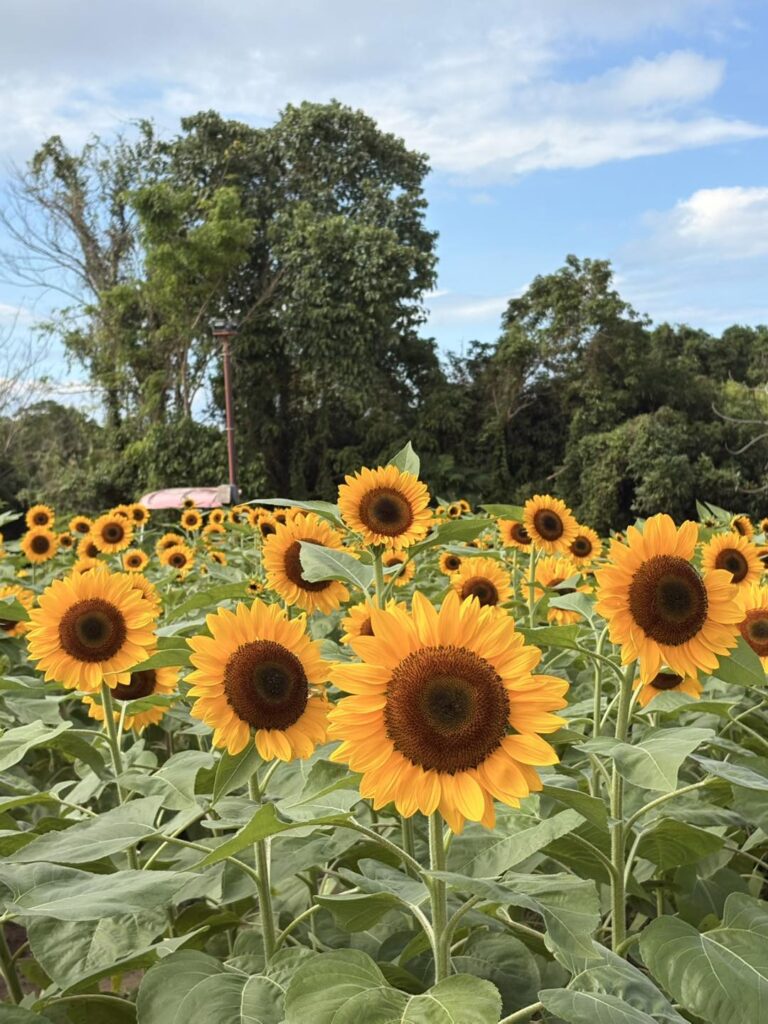
19. Swamp Sunflower (Helianthus angustifolius)
This tall, narrow-leaved sunflower produces a spectacular fall display of golden-yellow blooms, often reaching 6 to 8 feet tall. It grows in wet ditches, marshes, and pond edges.
Swamp sunflower is one of the most important late-season nectar sources for native bees and butterflies preparing for winter.
20. Elephant’s Foot (Elephantopus elatus)
This unusual wildflower produces small, pale purple blooms clustered just above a rosette of large, textured leaves resembling an elephant’s foot. It grows in dry, open woodlands.
Elephant’s foot typically blooms in late summer and fall, offering a modest but reliable nectar source during a period when many other flowers have finished.
21. Wild Petunia (Ruellia caroliniensis)
Wild petunia produces trumpet-shaped, lavender-blue flowers that open fresh each morning and typically wilt by afternoon. It grows in woodlands, fields, and disturbed soils statewide.
Despite each flower’s short lifespan, the plant produces new blooms continuously through summer, keeping color present for months.
22. Atamasco Lily (Zephyranthes atamasca)
Also called rain lily, this flower produces elegant, pure white blooms that often emerge suddenly after rainfall, giving the plant its common name. It grows in moist woodlands and meadows.
Atamasco lily typically blooms in early spring, sometimes carpeting entire sections of forest floor with white flowers for a brief but memorable period.
23. Ohio Spiderwort (Tradescantia ohiensis)
This wildflower produces three-petaled, deep blue-purple flowers that open in the morning and close by early afternoon. It grows in fields, roadsides, and open woods across the state.
Each flower lasts only a single day, but Ohio spiderwort produces a steady succession of new blooms throughout spring and early summer.
24. Blue Porterweed (Stachytarpheta jamaicensis)
Blue porterweed produces small, deep blue flowers along a slender, snake-like flower spike, opening a few at a time. It grows naturally in South Florida’s coastal hammocks.
This species is considered one of the best native butterfly plants in the state, blooming almost continuously in frost-free areas throughout the year.
25. Golden Aster (Chrysopsis mariana)
Golden aster produces bright yellow, daisy-like flowers atop hairy, silvery-green foliage. It grows in dry, sandy soils and open pine woodlands across much of Florida.
This late-season bloomer flowers from late summer into fall, providing important nectar as many spring and summer wildflowers begin to fade.
26. Seaside Goldenrod (Solidago sempervirens)
This tall, salt-tolerant goldenrod produces dense, plume-like clusters of small yellow flowers along coastal dunes and marsh edges. It can grow over 6 feet tall in favorable conditions.
Seaside goldenrod blooms in fall and is a critical nectar source for monarch butterflies fueling up before continuing their migration south.
ALSO READ: 55 Flowers That Grow in Shade (With Growing Details)
27. Tall Ironweed (Vernonia gigantea)
Ironweed produces clusters of deep purple flowers atop tall, sturdy stems, often towering over surrounding vegetation in wet meadows and roadside ditches. It can reach 7 feet in height.
This late-summer bloomer is highly attractive to butterflies, particularly swallowtails and monarchs passing through the region during fall migration.
28. Rosegentian (Sabatia stellaris)
Rosegentian produces delicate, star-shaped pink flowers with a yellow center, growing in salt marshes and moist coastal habitats. Each bloom rarely exceeds an inch across.
This species typically flowers from summer through early fall, adding soft color to otherwise subdued marsh and wetland landscapes.
29. Pine Lily (Lilium catesbaei)
Pine lily produces one of the most dramatic native flowers in Florida, with bright orange-red, upward-facing petals marked with dark spots near the base. It grows in moist pine flatwoods.
This striking flower blooms in late summer and early fall and has become increasingly uncommon due to habitat loss, making sightings especially memorable.
30. Swamp Lily (Crinum americanum)
Swamp lily produces large, fragrant white flowers with long, spidery petals, often growing directly out of shallow water. It thrives in marshes, ditches, and pond margins statewide.
This flower can bloom nearly year-round in South Florida, filling wetland edges with a sweet, noticeable fragrance, particularly in the evening.
31. Southern Blue Flag Iris (Iris virginica)
This native iris produces large, deep blue-purple flowers with yellow and white markings near the throat. It grows in shallow water, marshes, and wet ditches across the state.
Southern blue flag typically blooms in spring, and its striking color makes it one of the most sought-after native flowers for wetland garden restoration projects.
32. Rattlesnake Master (Eryngium yuccifolium)
Despite its yucca-like, spiky foliage, this plant belongs to the carrot family and produces round, spherical white flower heads atop tall stems. It grows in pine flatwoods and prairies.
Rattlesnake master blooms in summer and attracts an unusually wide variety of pollinators, including numerous wasp and beetle species alongside typical bees and butterflies.
33. Partridge Pea (Chamaecrista fasciculata)
Partridge pea produces bright yellow, five-petaled flowers with a reddish center, growing along roadsides and disturbed sandy soils throughout Florida. It typically blooms from summer through fall.
This plant is an important larval host for several native butterfly species, including the cloudless sulphur, and its seeds provide food for quail and other ground birds.
34. Coral Bean (Erythrina herbacea)
Coral bean produces tall spikes of tubular, bright red flowers each spring, appearing before the plant’s leaves fully emerge. It grows in sandy soils and coastal hammocks statewide.
This species is a favorite of hummingbirds arriving from their spring migration, timed almost perfectly with the coral bean’s early blooming period.
35. Railroad Vine (Ipomoea pes-caprae)
This sprawling coastal vine produces large, funnel-shaped pink-purple flowers directly on beach dunes, one of the most important dune-stabilizing native plants in Florida. It blooms nearly year-round.
Railroad vine can spread over 30 feet along the sand, its extensive root system helping prevent beach erosion during storms and high tides.
36. Moonflower (Ipomoea alba)
Moonflower produces large, pure white blooms that open only at night, closing again by mid-morning. It grows as a climbing vine in coastal hammocks and disturbed soils.
This flower is pollinated primarily by sphinx moths, and its strong, sweet fragrance becomes most noticeable after sunset during its brief nighttime bloom.
37. Climbing Aster (Symphyotrichum carolinianum)
This vigorous vine produces masses of small, pale pink to lavender flowers in fall, often climbing over shrubs and fences in wetland edges. It can reach 10 feet or more in length.
Climbing aster is an important late-season nectar source, blooming heavily just as many other native wildflowers begin to fade for the year.
38. Florida Paintbrush (Carphephorus corymbosus)
Florida paintbrush produces flat-topped clusters of lavender-purple flowers atop tall, leafless stems, growing in dry pine flatwoods and sandhills. It typically blooms in fall.
This species is a significant nectar source for migrating monarch butterflies, often found growing alongside blazing star and goldenrod in the same habitats.
ALSO READ: 25 Reblooming Perennial Flowers (Varieties Identification, With Pictures)
39. Vanillaleaf (Carphephorus odoratissimus)
Also called deer’s tongue, this plant produces clusters of small purple flowers above broad, vanilla-scented leaves once dried. It grows in moist pine flatwoods across North and Central Florida.
This species blooms in fall and has historically been harvested for its fragrant leaves, once used in the tobacco and perfume industries.
40. Meadow Beauty (Rhexia mariana)
Meadow beauty produces delicate, four-petaled pink flowers with distinctive curved yellow stamens, growing in moist, sandy soils and wetland edges. It typically blooms through summer.
This wildflower is easily identified by its unusual stamens, which curve outward in a way unlike most other native Florida flowers.
41. Yellow Colicroot (Aletris lutea)
This wetland wildflower sends up a single tall spike covered in small, tubular yellow flowers with a rough, granular texture. It grows in wet pine flatwoods and bog edges.
Yellow colicroot typically blooms in spring and is considered increasingly uncommon due to the loss of the wetland habitats it depends on.
42. Rosinweed (Silphium asteriscus)
Rosinweed produces large, bright yellow, sunflower-like blooms atop coarse, sturdy stems, growing in dry woodlands and roadside edges statewide. It typically reaches 3 to 5 feet tall.
This species blooms through summer and is named for the sticky, resin-like sap that seeps from its stems when cut or damaged.
43. Climbing Hempvine (Mikania scandens)
This fast-growing vine produces clusters of small, pale pink to white flowers, often covering entire shrubs in wetland edges and disturbed areas. It blooms mainly in fall.
Climbing hempvine is a significant nectar source for a wide range of butterflies, particularly during the fall migration period when nectar sources become scarce.
44. Sunshine Mimosa (Mimosa strigillosa)
This low, spreading groundcover produces small, round, pink pom-pom flowers atop fern-like foliage. It grows in sunny, sandy areas throughout much of the state.
Sunshine mimosa blooms nearly continuously in warm weather and is increasingly used as a native, low-mow lawn alternative in Florida landscaping.
45. Blue Curls (Trichostema dichotomum)
Blue curls produces small, unusual purple-blue flowers with dramatically curved stamens that arch outward like antennae. It grows in dry, sandy soils and disturbed fields.
This flower typically blooms in fall and has a distinctive, slightly resinous scent when its foliage is crushed or brushed against.
46. Florida Betony (Stachys floridana)
Florida betony produces small, pale pink-and-white flowers on square stems, characteristic of the mint family it belongs to. It grows widely in lawns, gardens, and disturbed soils.
This plant produces edible, segmented white tubers that resemble tiny rattlesnake rattles, historically foraged by early Florida settlers as a root vegetable.
47. Frostweed (Verbesina virginica)
Frostweed produces clusters of small white flowers atop tall, winged stems, blooming in fall across shaded woodlands and forest edges. It can reach 6 feet tall in good conditions.
This species is named for the unusual ice formations that curl out from its stem base during the first hard frosts of the year in northern Florida.
48. St. John’s Wort (Hypericum reductum)
This low shrub produces bright yellow flowers with prominent, brush-like stamens, growing in dry, sandy scrub habitats across much of the state. It typically blooms in spring and summer.
St. John’s Wort species have a long history of traditional medicinal use, though wild harvesting is discouraged given the habitat pressures many populations face.
49. Yellow Jessamine (Gelsemium sempervirens)
Florida’s official state flower, yellow jessamine produces fragrant, trumpet-shaped yellow blooms that cover this climbing vine each late winter and early spring. It grows throughout the state.
Every part of this plant is toxic if ingested, a fact worth noting despite its popularity as an ornamental and its status as the state flower since 1919.
50. Coral Honeysuckle (Lonicera sempervirens)
Unlike invasive Japanese honeysuckle, this native vine produces non-invasive clusters of tubular, coral-red flowers that bloom heavily in spring. It grows in woodland edges statewide.
Coral honeysuckle is a top hummingbird plant, and unlike its invasive relative, it does not aggressively smother surrounding native vegetation.
51. Cross Vine (Bignonia capreolata)
Cross vine produces large, trumpet-shaped orange-red flowers each spring, climbing trees and fences throughout wooded areas of Florida. Cutting its stem reveals a distinctive cross-shaped pattern, giving the plant its name.
This vigorous vine blooms heavily for several weeks each spring, drawing hummingbirds just as they arrive from their long migration north.
52. Florida Flame Azalea (Rhododendron austrinum)
This native azalea produces clusters of fragrant, bright orange-yellow flowers each spring, standing out sharply against surrounding green woodland. It grows primarily in the Florida Panhandle.
Florida flame azalea is considered one of the showiest native shrubs in the state, though its range is naturally limited to cooler northern regions.
53. Silkgrass (Pityopsis graminifolia)
Silkgrass produces small, bright yellow, daisy-like flowers atop narrow, silvery, grass-like foliage. It grows in dry, sandy soils and open pine woodlands throughout Florida.
This plant typically blooms in fall, its silvery leaves adding textural contrast to native gardens even outside of its flowering period.
54. Fragrant Water Lily (Nymphaea odorata)
This aquatic flower produces large, pure white blooms floating directly on the water’s surface, opening each morning and closing by early afternoon. It grows in ponds and slow-moving waterways statewide.
Fragrant water lily blooms release a sweet, noticeable scent, and each flower typically lasts three to four days before closing permanently.
55. Pickerelweed (Pontederia cordata)
Pickerelweed produces tall spikes of violet-blue flowers rising directly out of shallow water, a common sight along Florida’s lakes and slow rivers. It typically blooms from spring through fall.
This wetland plant is an important food source for native wildlife, and its extended bloom period makes it one of the most reliable nectar sources in freshwater habitats.
Final Thoughts
Florida’s native flowers reflect the state itself: resilient, varied, and rarely resting. From beach dunes to cypress swamps, something is blooming in nearly every habitat, in nearly every month of the year.
If you are building a native garden, match your flower choices to your specific conditions. A dune-adapted species like railroad vine will struggle in shaded soil, while a wetland flower like pickerelweed needs consistent standing water to thrive.
I have never left a Florida trail without spotting at least one bloom I did not expect. That, more than anything, is what makes this state’s native flora worth learning.

Tim M Dave is a gardening expert with a passion for houseplants, particularly cacti and succulents. With a degree in plant biology from the University of California, Berkeley, he has vast experience in gardening. Over the years, he has cultivated a vast collection of desert plants and learned a great deal about how to grow and care for these unique companions.