35 Missouri Native Flowers (With Growing Details)
Missouri does not do subtlety when it comes to wildflowers. One month the glades glow gold with puccoon, the next the prairies turn purple with blazing star. I have walked enough of these trails to say it plainly: few states pack this much floral variety into one landscape.
That variety is not an accident. Missouri sits at the meeting point of eastern woodland, western prairie, and southern Ozark habitats. More than 2,000 species of plants call the Show-Me State home, and a large share of those are wildflowers suited to gardens, roadsides, and restoration projects alike.
This guide covers 35 Missouri native flowers, where you will find them, the bloom season, the habitat, and why the plant earns its place in the ground.
One more thing before we start. Native plants are not just pretty. Missouri prairies alone support more than 800 plant species, and that density of plant life is what feeds the bees, moths, and birds the state depends on. Planting even a few of these species helps rebuild habitat that has almost disappeared.
35 Missouri Native Flowers
Native flowers are the fastest, cheapest way to claw back some of that lost habitat. They need no fertilizer, little water once established, and they feed pollinators that non-native plants simply cannot support. Grow Native!, a program run through the Missouri Prairie Foundation, now profiles more than 200 species suited to home landscapes across the state.
With that context in mind, here are 35 native flowers worth knowing — and possibly planting.
Prairie and Glade Wildflowers
Missouri’s prairies and rocky glades bake in full sun and drain fast. The flowers here are tough, drought-resistant, and often the showiest in the state.
1. Purple Coneflower (Echinacea purpurea)
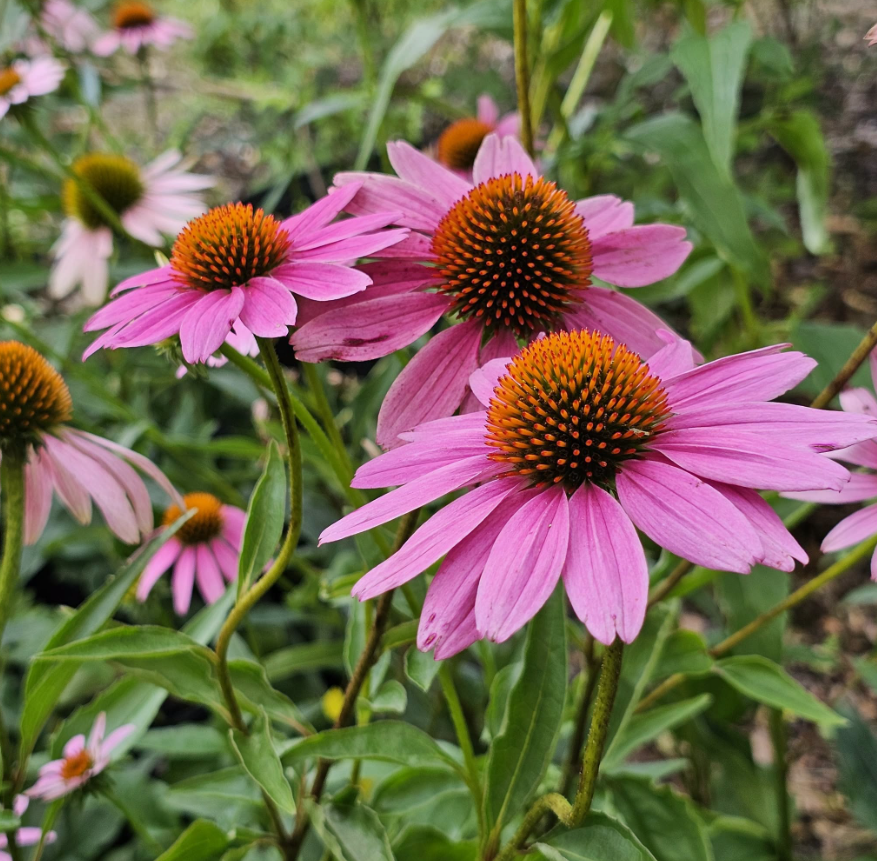
This is the flower most people picture when they hear “Missouri wildflower.” Its pink-purple petals droop gently around a spiky orange-brown cone, blooming from June through August. It thrives in heavy, clay-rich soils that give other plants trouble.
Purple coneflower is also a magnet for goldfinches, which strip the seed heads in fall. I always leave mine standing through winter rather than cutting them back — the birds make it worth the untidy look.
2. Black-Eyed Susan (Rudbeckia hirta)
Bright yellow petals and a dark chocolate-brown center make black-eyed Susan instantly recognizable. It blooms from June to October, one of the longest flowering windows on this list. It handles poor soil, drought, and full sun without complaint.
This is a biennial or short-lived perennial, so it reseeds itself readily. Once established in a garden bed, expect volunteers to pop up in nearby gaps for years to come.
3. Butterfly Weed (Asclepias tuberosa)
Butterfly weed produces clusters of vivid orange flowers atop stiff stems, blooming June through August. Unlike its milkweed cousins, its sap is not milky, but it still serves as a host plant for monarch caterpillars.
It is one of the most drought-tolerant plants on this list, thriving in dry, rocky, or sandy soil where richer plants struggle. Give it full sun and leave it alone; it resents being moved once its taproot settles in.
4. Common Milkweed (Asclepias syriaca)
Common milkweed is the plant most closely tied to monarch butterfly survival, since its leaves are the only food monarch caterpillars will eat. Its dusty pink, ball-shaped flower clusters bloom in June and July, releasing a sweet fragrance on warm evenings.
It spreads by rhizome, so give it room in a naturalized bed rather than a tight border. Once the seed pods split open in fall, silky-haired seeds drift on the wind, which is part of its charm and part of why it colonizes so easily.
5. Missouri Evening Primrose (Oenothera macrocarpa)
Also called the glade lily, this Ozark native produces lemon-yellow flowers up to four inches across — enormous for a plant that trails along the ground. The blooms open in late afternoon for night pollination by moths and wither by the next day.
It grows naturally on glades, bluffs, and rocky prairies, but gardeners across the state cultivate it successfully. Watching the buds unfurl at dusk is genuinely one of the more satisfying garden rituals I know.
ALSO READ: 26 Native Missouri Trees (With Growing Details)
6. Wild Bergamot (Monarda fistulosa)
Wild bergamot produces shaggy, lavender-pink flower heads that look almost like fireworks frozen mid-burst. It blooms from July through September and carries a minty fragrance when the leaves are crushed.
Bees and hummingbird moths visit it constantly, and it tolerates both dry and average soil. It spreads by rhizome as well, so it is best suited to informal prairie-style plantings rather than tidy borders.
7. Prairie Blazing Star (Liatris pycnostachya)
Tall spikes of magenta-purple flowers open from the top down, an unusual pattern among prairie plants. It blooms in July and August, standing three to five feet tall in full sun.
Blazing star is a favorite nectar source for migrating monarchs in fall, alongside the asters that bloom at the same time. It handles both moist and average soils, making it more flexible than many other prairie natives.
8. New England Aster (Symphyotrichum novae-angliae)
New England aster grows in moist sites in prairies and low areas along streams throughout much of Missouri, providing nectar for migrating monarch butterflies each fall. Its deep purple, daisy-like flowers appear from September into October, right when most other flowers have finished.
It can reach a height of six feet in full sun to light shade, though pinching back the stems early in the growing season produces a shorter, bushier plant. This makes it one of the more adaptable natives for garden design.
9. Lanceleaf Coreopsis (Coreopsis lanceolata)
This cheerful yellow flower blooms from May through July, forming low mats of narrow leaves topped with bright, daisy-shaped blooms. It handles poor, rocky soil with ease, which is exactly why it is a staple in Missouri glade restorations.
Coreopsis reseeds generously, so a single planting often becomes a colony within two or three seasons. Deadheading extends the bloom period if you prefer a tidier look.
10. Purple Prairie Clover (Dalea purpurea)
Purple prairie clover produces tight, thimble-shaped flower spikes wrapped in tiny magenta blooms that open in a slow spiral. It flowers from June through August and fixes nitrogen in the soil, improving conditions for neighboring plants.
It is a legume, so it thrives in the same lean, well-drained soils that support other prairie species. Butterflies and native bees both use it heavily for nectar.
11. Indian Paintbrush (Castilleja coccinea)
Indian paintbrush is a spring-blooming wildflower that thrives on rocky terrain, producing brush-like clusters of red-orange bracts from April through June. What looks like petals is actually colored leaf tissue surrounding small, inconspicuous flowers.
This species is hemiparasitic, meaning it draws some nutrients from the roots of nearby grasses. That makes it tricky to establish in isolation, but stunning when it appears naturally in a native prairie planting.
12. Rose Verbena (Glandularia canadensis)
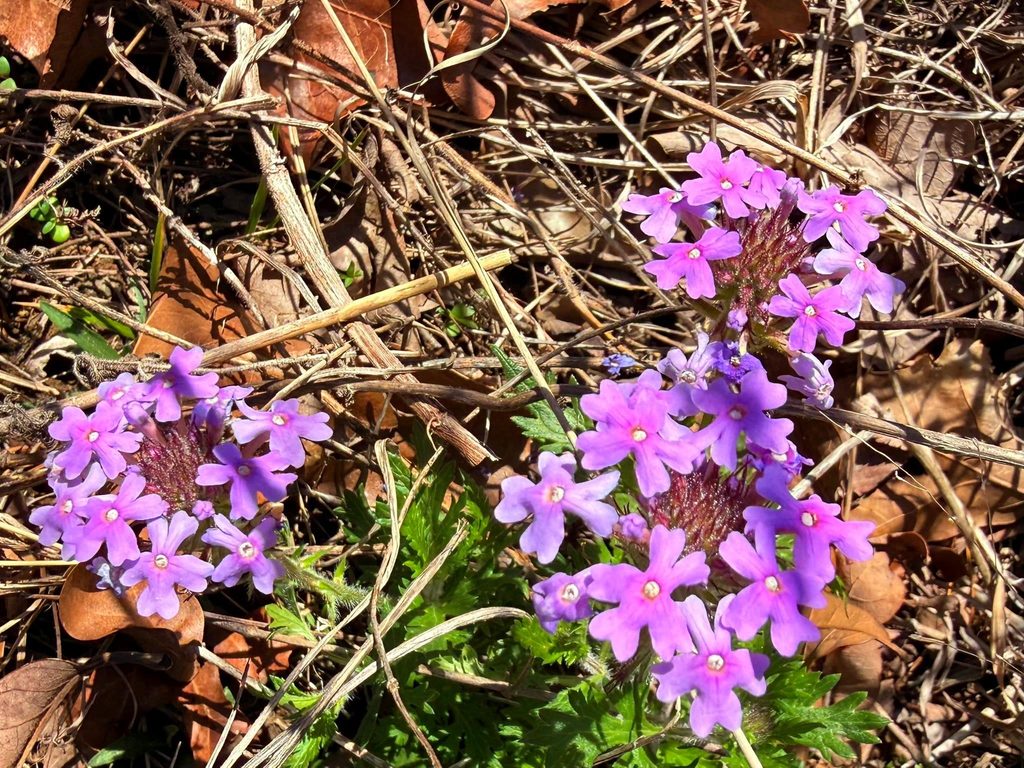
Rose verbena is a spring-blooming plant that thrives on rocky terrain, spreading low mats of rose-pink flower clusters from April through September. Few natives bloom this long or this reliably.
It tolerates heat and drought exceptionally well, making it ideal for glade gardens or rock walls. Its sprawling habit works nicely cascading over stone edges.
13. Hoary Puccoon (Lithospermum canescens)
Puccoon produces clusters of tubular, orange-yellow flowers in April and May, one of the earliest bloomers on rocky glades and dry prairies. Its silvery, hairy foliage gives the plant its “hoary” name.
Historically, Native American communities used its roots to produce a red-orange dye, which is where the common name “puccoon” originates. It remains a niche but rewarding choice for glade restoration.
14. Grayhead Coneflower (Ratibida pinnata)
Grayhead coneflower grows well in full sun to light shade, reaching heights of three to five feet, with clumps of basal leaves that stay green late into fall and reappear early each spring. Its drooping yellow petals surround a tall, gray-brown central cone.
It blooms from June through August and handles both prairies and roadside conditions well. The crushed foliage carries a faint anise scent, a small detail that surprises first-time growers.
15. Missouri Coneflower (Rudbeckia missouriensis)
Also called the Missouri black-eyed Susan, this species produces many yellow flowers with ray-like petals surrounding a dark brown cone. It blooms from July through September on dry, rocky glades across the Ozarks.
It is more compact than common black-eyed Susan, usually staying under two feet tall, which makes it a good fit for smaller garden beds. Full sun and lean soil suit it best.
16. Stiff Goldenrod (Solidago rigida)
Goldenrod gets unfairly blamed for hay fever, which is actually caused by ragweed pollen carried on the wind. Stiff goldenrod produces flat-topped clusters of gold flowers from August through October, feeding late-season pollinators before frost.
It grows upright and sturdy on dry prairies and glades, resisting the flopping habit some goldenrod species show. Paired with purple asters, it creates the classic gold-and-violet color scheme of a Missouri autumn prairie.
ALSO READ: 25 Major Types of Rhododendron (With Pictures and Care Tips)
17. Western Ironweed (Vernonia baldwinii)
Ironweed produces dense, deep purple flower clusters atop tall, sturdy stems from July through September. The name refers to its tough, wiry stalks, which resist wind and rain damage.
It grows well in average to moist soil and tolerates both prairie and roadside conditions. Butterflies, particularly swallowtails, visit it heavily through late summer.
18. Compass Plant (Silphium laciniatum)
Compass plant can grow up to nine feet tall, with large yellow sunflower-like blooms from July through September. Its deeply cut leaves famously orient north-south, a trait early pioneers reportedly used for rough navigation across open prairie.
Its taproot can extend more than ten feet into the soil, which explains its extraordinary drought tolerance. This is a plant for open spaces; it needs room to reach its full, dramatic size.
19. Prairie Dock (Silphium terebinthinaceum)
Prairie dock produces enormous, paddle-shaped basal leaves and tall flower stalks topped with yellow blooms in July and August. The leaves alone can measure over a foot long, giving the plant real structural presence in a garden.
Like compass plant, it sends roots deep underground, making it nearly indestructible once established. It is slow to establish from seed, so patience pays off with this one.
20. Rattlesnake Master (Eryngium yuccifolium)
Despite the name, this plant has nothing to do with snakes beyond its historical use in folk remedies. Its spiky, yucca-like leaves and round, greenish-white flower heads bloom from June through August, giving it an almost alien look among softer prairie flowers.
It is a favorite of native bees and wasps, which cover the flower heads on warm afternoons. Full sun and well-drained soil keep it happy.
Woodland Wildflowers
Missouri’s oak-hickory forests host an entirely different set of native flowers, most of which bloom early to catch sunlight before the tree canopy closes in.
21. Wild Columbine (Aquilegia canadensis)
Wild columbine produces nodding, red-and-yellow flowers shaped like little lanterns, blooming from April through June. It grows naturally on rocky, wooded slopes and bluffs throughout Missouri.
Hummingbirds arrive early each spring specifically for columbine nectar, timing their migration around its bloom. It self-seeds readily in dappled shade, forming loose colonies over a few seasons.
22. Virginia Bluebells (Mertensia virginica)
Few spring displays match a hillside of Virginia bluebells in full bloom. Clusters of pink buds open into sky-blue, bell-shaped flowers from March through May, carpeting moist woodland floors before trees leaf out.
St. Francois State Park is considered one of the most popular spots in the state for viewing bluebells, thanks to the moist, sheltered conditions along its streams. The whole display fades by early summer as the plant goes dormant.
ALSO READ: 30 Types of Monstera Plants With Names and Pictures
23. Blue Phlox (Phlox divaricata)
Blue phlox is one of the exceptional showy choices for a shady woodland habitat display, producing fragrant, lavender-blue flowers from April through June. It spreads gently across moist, humus-rich forest floors.
It pairs beautifully with wild geranium and columbine in a woodland garden, since all three bloom around the same time. Once established, it requires almost no maintenance beyond occasional division.
24. Wild Geranium (Geranium maculatum)
Wild geranium is another exceptional showy choice for a shady woodland habitat display, with soft pink-lavender flowers appearing from April through June. Its deeply lobed leaves add texture even after the blooms fade.
It tolerates a range of light conditions from partial shade to filtered sun, unlike some woodland natives that demand deep shade. Deer tend to leave it alone, a small but real advantage in wooded suburban yards.
25. Celandine Poppy (Stylophorum diphyllum)
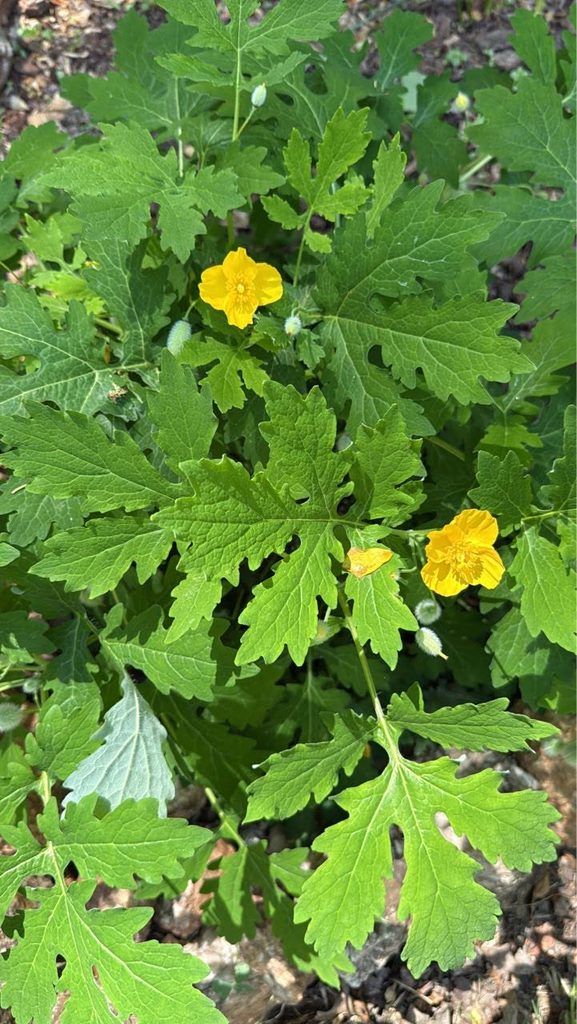
The celandine poppy features bright yellow flowers and works well for shaded gardens or planting along a shady path, blooming from March through May. It is most commonly found in central and southeast Missouri, though its popularity has spread it statewide in cultivation.
A word of caution: every part of this plant is poisonous, so keep that in mind around pets or small children. It also needs regular watering or it will go dormant early, so it is not the lowest-maintenance choice on this list.
26. Dutchman’s Breeches (Dicentra cucullaria)
This oddly charming spring ephemeral produces white flowers shaped exactly like tiny pairs of pantaloons hanging upside down. It blooms from March through May, then vanishes underground by early summer once the tree canopy fills in.
It relies on early-emerging bumblebee queens for pollination, one of the few insects strong enough to pry open its unusually shaped flowers. Rich, moist, well-drained soil in deep shade suits it best.
27. Crested Iris (Iris cristata)
Crested iris forms low, spreading colonies topped with pale lavender-blue flowers marked by a yellow-and-white crest, blooming from April through May. It thrives in the dappled light of woodland edges and rocky slopes.
Its rhizomes creep just below the soil surface, forming dense mats that suppress weeds over time. It rarely exceeds six inches in height, making it a good choice for shaded rock gardens.
28. Ozark Bluestar (Amsonia illustris)
Also called the shining blue star, this plant is common to the Mississippi Valley and found throughout the Ozark Mountains, as well as in marshes, savannas, pastures, prairies, and plains. It produces clusters of pale blue, star-shaped flowers in April and May.
Its glossy foliage turns golden yellow in fall, giving it two seasons of visual interest rather than just one. It handles both woodland edges and open sun with equal ease.
29. Prairie Trillium (Trillium recurvatum)
Prairie trillium produces deep maroon, three-petaled flowers held above mottled leaves in April and May. True to its name, everything about the plant comes in threes — three leaves, three petals, three sepals.
It grows slowly, often taking several years from seed to first bloom, so mature colonies represent real patience. Rich, moist woodland soil and dappled shade give it the best chance to thrive.
30. Wild Sweet William (Phlox pilosa)
Not to be confused with garden phlox, this native species produces fragrant, pink to lavender-pink flower clusters from April through June. It grows in open woods, prairies, and glades, bridging the gap between woodland and prairie habitats.
It tolerates more sun than blue phlox, making it useful where a garden transitions from shade to open ground. Butterflies and moths visit it frequently for nectar.
Wetland and Streamside Wildflowers
Low, moist ground along Missouri’s rivers, ponds, and fens supports another distinct set of native species, several of which double as garden standouts.
31. Cardinal Flower (Lobelia cardinalis)
Cardinal flower produces spikes of intensely scarlet, tubular flowers from July through September, making it one of the most vivid natives on this entire list. It grows along streambanks, in wet meadows, and in rain gardens with consistently moist soil.
Its color and shape evolved specifically to attract hummingbirds, which are its primary pollinator. I have never seen a hummingbird pass one by once it starts blooming.
32. Great Blue Lobelia (Lobelia siphilitica)
A close relative of cardinal flower, great blue lobelia produces spikes of deep blue-violet flowers from August through October. It shares the same moist-soil preference but tolerates slightly more shade than its scarlet cousin.
Bumblebees are its main pollinators, forcing their way into the tightly closed flower tubes. It pairs beautifully with cardinal flower along a pond edge or rain garden.
33. American Lotus (Nelumbo lutea)
American lotus produces enormous pale yellow flowers, sometimes ten inches across, rising above round, bluish-green leaves on ponds and slow rivers. It blooms from June through September and is one of the largest native flowers found anywhere in Missouri.
Its seed pods, shaped like showerheads, are a popular addition to dried flower arrangements once the petals drop. It needs standing water to establish, so it suits ponds rather than typical garden beds.
34. Ohio Spiderwort (Tradescantia ohiensis)
Spiderwort produces three-petaled, violet-blue flowers that open in the morning and close by early afternoon, a pattern that repeats daily from May through July. It grows in prairies, open woods, and along roadsides throughout the state.
Each flower lasts only a single day, but the plant produces a steady stream of new blooms across its flowering season. It tolerates both moist and average soil, giving it more flexibility than many wetland natives.
35. Smooth Beardtongue (Penstemon digitalis)
Smooth beardtongue can be found in a variety of open habitats, including moist meadows, streambanks, and roadside ditches. It is the most widespread Penstemon species east of the Mississippi, producing white, tubular flowers from May through July.
Its slender flowering stems can reach nearly a third of the plant’s total height, giving it a graceful, airy appearance in a border planting. Bees favor it heavily, and its extended bloom period makes it reliable ground cover for pollinator gardens.
How to Start Growing Missouri Native Flowers
Planting native flowers is not complicated, but a few habits improve success rates significantly.
Match the plant to its habitat. A glade species like Missouri evening primrose will rot in wet clay, while cardinal flower will wilt on a dry slope. Check each plant’s natural habitat before placing it in your yard.
Buy from nursery-propagated stock. Never dig plants from the wild. Missouri nurseries that grow from Missouri seed produce plants already adapted to local soils and climate, which improves survival rates dramatically.
Be patient in year one. Many native perennials put energy into root growth before top growth, a pattern gardeners often call “sleep, creep, leap.” Expect modest results the first season and much stronger blooms by year two or three.
Final Thoughts
Thirty-five species barely scratches the surface of what grows wild across Missouri, but this list covers the flowers most likely to reward a gardener or hiker with color, fragrance, and pollinator activity through every season. From the deep-rooted compass plant on the open prairie to the fleeting bluebells of a spring woodland, each one carries a small piece of the state’s original landscape.
Plant a few, and you are not just decorating a yard. You are rebuilding, acre by small acre, something Missouri came very close to losing entirely.

Tim M Dave is a gardening expert with a passion for houseplants, particularly cacti and succulents. With a degree in plant biology from the University of California, Berkeley, he has vast experience in gardening. Over the years, he has cultivated a vast collection of desert plants and learned a great deal about how to grow and care for these unique companions.