25 Flowers That Look Like Birds (With Details Explained)
Nature has a strange sense of humor sometimes. Just when you think you’ve seen every kind of flower, you stumble upon one that looks exactly like a bird in mid-flight. I remember the first time I saw a photo of a Flying Duck Orchid — I genuinely thought someone had photoshopped a tiny mallard onto a plant stem.
That’s the magic of bird-mimicking flowers. Through millions of years of evolution, certain plants developed shapes that resemble beaks, wings, feathers, and even entire bird bodies. Most of the time, this isn’t a coincidence. It’s a survival strategy.
Some flowers mimic birds to attract real pollinators. Others evolved this shape purely by chance, and gardeners simply noticed the resemblance later. Either way, the result is a collection of blooms that feel almost too imaginative to be real.
In this guide, I’ll walk you through 25 flowers that look like birds, covering their names, native habitats, growing conditions, and the specific reason each one earned its bird-like nickname.
1. Bird of Paradise (Strelitzia reginae)

The Bird of Paradise is probably the most famous flower on this entire list. Its orange and blue petals emerge from a beak-shaped bract, creating the unmistakable silhouette of a crane’s head and crest.
This plant is a clumping tropical plant native to South Africa, known for its large unusual inflorescence that resembles a bird’s head. It grows from underground rhizomes and blooms intermittently throughout the year, which means you get bird-shaped surprises more than once a season.
I find it fascinating that this flower isn’t just admired for looks. It has genuine ecological importance, since nectar-feeding sunbirds use its structure as a landing perch while feeding. The flower literally works like a bird feeder built by nature itself.
Bird of Paradise thrives indoors in bright, sunny spots with well-drained soil. It’s also drought-tolerant once established, making it a forgiving choice for beginner gardeners who still want something dramatic on their windowsill.
2. Giant White Bird of Paradise (Strelitzia nicolai)
If the classic Bird of Paradise is striking, its giant cousin is jaw-dropping. This species can grow over 20 feet tall in the right conditions, towering like a small tree rather than a garden perennial.
Its flowers are white and deep blue, shaped almost identically to the orange version but on a much larger scale. From a distance, the flower head looks like a heron standing perfectly still, beak pointed skyward.
This plant is often used in landscaping projects across Florida, California, and other warm regions because of its architectural, tropical appeal. It adds instant visual drama to any yard or resort-style pool area.
Unlike its smaller relative, Strelitzia nicolai prefers a bit more space and shelter from strong winds, since its large paddle-shaped leaves can tear easily. Give it room, and it rewards you generously.
3. White Egret Orchid (Habenaria radiata)
This orchid genuinely looks like a tiny white egret caught mid-flight, wings fully spread. The fringed edges of its petals create a feathery texture that mimics real bird plumage with astonishing accuracy.
Native to Japan, Korea, and China, this orchid grows in wet meadows and bogs. It has become a beloved ornamental plant worldwide precisely because of how convincingly bird-like its bloom appears.
I think what makes this flower special is the sheer delicacy of its design. Each fringe on the petal looks hand-cut, like something a paper artist would spend hours perfecting rather than something that grew naturally from soil.
Growing this orchid at home requires consistently moist, boggy conditions and partial shade. It’s not the easiest orchid for beginners, but the payoff, when it blooms, is absolutely worth the effort.
ALSO READ: 35 Flowers That Attract Hummingbirds (And Keep Them Coming Back)
4. Flying Duck Orchid (Caleana major)
This is arguably the most literal entry on this list. The Flying Duck Orchid doesn’t just resemble a bird loosely; it looks like someone sculpted a tiny duck and glued it onto a stem.
Native to Australia, this orchid uses its shape specifically to trick sawflies into pollinating it. The “duck head” part of the flower is hinged, and when an insect lands on it, the mechanism flips the insect against the pollen-bearing structures.
This is a textbook example of pseudocopulation and deceptive pollination, a strategy orchids are famous for. The flower isn’t trying to look pretty for humans; it’s tricking insects for survival.
Unfortunately, this orchid is notoriously difficult to cultivate outside its native habitat because it depends on a specific fungal partnership in the soil. Most people only get to see it in the wild or in botanical photography.
5. Dove Orchid / Holy Ghost Orchid (Peristeria elata)
Also called the Holy Ghost Orchid, this flower contains a tiny structure inside its bloom that looks remarkably like a dove with spread wings. It’s considered the national flower of Panama.
The “dove” shape comes from the flower’s column and lip, which form a delicate white bird-like figure nestled inside waxy, fragrant petals. Many people describe the moment they first notice the dove shape as genuinely magical.
This orchid has deep cultural and religious symbolism in Latin America, often associated with peace and purity because of its dove-like center. It’s frequently referenced in local folklore and religious art.
Growing conditions require warm, humid environments similar to tropical rainforests. It’s a slow grower, but collectors consider it a prized addition because of its rarity and symbolism.
6. Parrot Flower (Impatiens psittacina)
This flower looks like a small parrot in flight, complete with what appears to be a curved beak, wings, and even a tail. It’s native to Thailand, Myanmar, and parts of Southeast Asia.
The resemblance is so convincing that early botanists reportedly struggled to describe it without comparing it directly to a bird. The petals twist and fold in a way that mimics feathered wings almost perfectly.
Sadly, this species is quite rare and hard to cultivate outside its native tropical climate. It requires specific humidity, shade, and soil conditions that are difficult to replicate artificially.
Because of its rarity, genuine Parrot Flower photos online are often mistaken for digitally edited images. If you ever see one in person, consider yourself lucky.
7. Swan Orchid (Cycnoches)
The Swan Orchid gets its name from the long, curved column of the flower, which genuinely resembles a swan’s graceful neck. Native to Central and South America, this orchid is a favorite among serious collectors.
One unusual trait of this genus is that individual plants can produce either male or female flowers depending on environmental conditions like light intensity. That’s a rare and fascinating biological trait among orchids.
The overall flower shape, paired with its drooping habit, makes it look like a swan gently bowing its head toward water. It’s subtle compared to some entries on this list, but elegant nonetheless.
These orchids need a distinct dry rest period after blooming, mimicking their natural dry season. Skipping this step is a common mistake that prevents future flowering.
8. Pelican Flower (Aristolochia grandiflora)
This flower has a long, pouch-like structure that resembles a pelican’s beak and throat pouch. It’s part of the Dutchman’s Pipe family, known for unusual and often strange-looking blooms.
Native to Central America and the Caribbean, this plant relies on a foul odor to attract flies, which become temporarily trapped inside the pouch to ensure pollination. It’s beautiful, but it doesn’t smell pleasant at all.
I always find it interesting how flowers can be visually stunning while using such unappealing tactics for survival. Nature doesn’t care about our aesthetic preferences; it only cares about reproduction.
This plant grows as a vigorous vine and needs warm, tropical conditions. Gardeners in temperate zones typically grow it in greenhouses rather than outdoors.
9. Cockatoo Orchid (Caladenia)
Native to Australia, this orchid features thin, curling petals that resemble the crest feathers of a cockatoo. The overall effect is spiky, wild, and undeniably bird-like.
Many species within this genus are also called “spider orchids” because of their long, thread-like petals. Depending on the angle, the same flower can look like a bird crest or a delicate insect.
This orchid grows from underground tubers and is highly sensitive to soil disturbance. In the wild, many species depend entirely on specific native fungi to germinate at all.
Because of habitat loss in parts of Australia, several Caladenia species are now protected or endangered, making wild sightings increasingly special and rare.
ALSO READ: 35 Flowers That Attract Bees (With Pictures, And Growing Tips)
10. Toucan Heliconia (Heliconia rostrata)
Also called the Lobster Claw, this flower’s bright red and yellow bracts curve downward like a toucan’s colorful beak. It’s a favorite in tropical gardens across the world.
Native to Central and South America, this plant is actually a member of the banana family, though its flowers look nothing like a typical banana bloom. The bracts hold small true flowers inside them.
Hummingbirds are the primary pollinators of this plant, which creates a fitting irony: a flower shaped like one bird attracting an entirely different species of bird for survival.
This heliconia grows best in warm, humid climates with rich soil and partial shade. It’s commonly used in tropical floral arrangements because of its long vase life.
11. Parakeet Heliconia (Heliconia psittacorum)
Smaller and more delicate than its Toucan Heliconia cousin, this variety has narrow, pointed bracts in orange, red, or yellow that resemble a parakeet’s slender beak and head.
It’s widely cultivated in Florida, the Caribbean, and Central America, both as a garden plant and a cut flower. Its compact size makes it more practical for home gardens than larger heliconia species.
This flower blooms almost continuously in warm climates, providing months of color rather than a single short blooming period. That reliability makes it popular with landscapers.
Parakeet Heliconia prefers full sun and consistently moist, well-drained soil. It also tolerates coastal conditions reasonably well, which adds to its popularity in tropical resort landscaping.
12. Yellow Bird of Paradise (Caesalpinia gilliesii)
Despite sharing a common name with Strelitzia, this plant is botanically unrelated. Its flowers have long, dramatic red stamens that curve outward like thin bird legs beneath yellow petals.
Native to Argentina and Uruguay, this shrub has adapted well to hot, arid climates, including the American Southwest. It’s often planted specifically for its drought tolerance and striking appearance.
The flower’s stamens are so long and delicate that they sway visibly in the slightest breeze, adding a sense of movement that enhances the bird-like illusion even further.
This plant is relatively low-maintenance once established, tolerating poor soil and minimal watering. It’s a favorite among xeriscaping enthusiasts who want beauty without high water bills.
13. Red Bird of Paradise (Caesalpinia pulcherrima)
This close relative of the yellow variety features vibrant red and orange petals with the same long, wispy stamens. It’s sometimes called the Peacock Flower because of its fan-like blooming pattern.
Native to the tropical Americas, this shrub is now widely naturalized across warm regions worldwide, including parts of Asia and Africa. Its adaptability has made it a global ornamental favorite.
In several Caribbean and Southeast Asian cultures, this flower carries symbolic meaning related to protection and vibrancy, often planted near homes for both beauty and tradition.
It thrives in full sun and tolerates heat exceptionally well, making it a reliable choice for tropical and subtropical gardens where many other flowering shrubs struggle.
ALSO READ: 15 Flowers That Smell Like Vanilla (With Pictures, And Growing Details)
14. Columbine (Aquilegia vulgaris)

Columbine flowers have backward-curving spurs that many people compare to a cluster of doves huddled together, which is actually the origin of the flower’s common name.
The genus name Aquilegia comes from the Latin word for eagle, since the spurs at the back of the flower petals resemble an eagle’s claw. Interestingly, the common name “columbine” comes from the Latin word for dove, giving this single flower two completely different bird associations.
This dual symbolism fascinates me. Depending on which part of the flower you focus on, it can look either fierce, like a bird of prey, or gentle, like a group of resting doves.
Columbine grows well in partial shade with moist, well-drained soil, and it self-seeds readily. It’s also a favorite among hummingbirds and butterflies, adding another bird connection to its story.
15. Larkspur (Consolida ajacis)
Larkspur flowers get their name from the spur-shaped petal at the back of each bloom, which resembles the long back claw, or spur, found on a lark’s foot.
According to USDA research, tall larkspur species produce spurred blue flowers similar to those seen in garden delphinium varieties, with broad, deeply lobed leaves that distinguish them from similar-looking plants.
While beautiful, it’s worth noting that larkspur is toxic if ingested, particularly to livestock, so it should be planted with caution around grazing animals or curious pets.
This flower prefers cool weather, full sun, and well-drained soil. It’s commonly used in cut flower arrangements because of its tall, elegant spikes and long vase life.
16. Cockscomb (Celosia cristata)
Cockscomb flowers have a wavy, velvety texture that closely resembles a rooster’s red comb, which is exactly where the plant’s common name originates.
Before modern breeding produced larger, more elaborate blooms, the crested celosia flowers looked very much like a rooster’s comb, which is precisely how the plant earned its popular nickname.
I’ve touched these flowers before, and their texture genuinely surprises people. They feel soft and almost fuzzy, quite unlike what you’d expect from something shaped like a stiff rooster’s crest.
Cockscomb grows easily as an annual in most climates, tolerating heat well and requiring full sun. It’s also popular as a dried flower, retaining its color and shape for months.
17. Bird’s Foot Trefoil (Lotus corniculatus)
This low-growing wildflower produces yellow blooms followed by seed pods that spread outward in a cluster resembling a bird’s foot, which is exactly how it earned its name.
According to USDA plant fact sheets, the seed pods are long, cylindrical structures that extend outward from the stalk, appearing like a bird’s foot once mature. This is one of the clearest examples of a flower named after its fruiting structure rather than the bloom itself.
This plant is widely used for erosion control and livestock forage across North America and Europe, since it’s hardy, nitrogen-fixing, and tolerant of poor soil conditions.
Despite its practical agricultural uses, it’s also grown ornamentally in wildflower gardens, where its cheerful yellow blooms attract bees and other pollinating insects throughout summer.
18. Parrot’s Beak (Lotus berthelotii)
This trailing plant produces bright red-orange flowers shaped almost exactly like a curved parrot’s beak, complete with a pointed tip and elongated shape.
Native to the Canary Islands, this plant is now critically endangered in the wild, largely due to habitat loss and the disappearance of its natural pollinators over time.
Ironically, while it’s endangered in nature, it remains extremely popular in cultivation, especially in hanging baskets and container gardens where its trailing silver foliage complements the striking blooms.
Parrot’s Beak prefers full sun, well-drained soil, and moderate watering. It’s often grown as an annual in cooler climates since it doesn’t tolerate frost well at all.
19. Pigeon Orchid (Dendrobium crumenatum)
This orchid produces small white flowers that, upon close inspection, reveal a shape reminiscent of a pigeon’s head and rounded body, giving the plant its common name.
Native to Southeast Asia, this orchid has a fascinating blooming pattern triggered by sudden temperature drops, usually after rainfall following a hot, dry period. All flowers on a plant tend to open simultaneously.
I find this synchronized blooming behavior almost as interesting as the bird-shaped petals themselves. It creates a dramatic, short-lived spectacle since the flowers typically last only a single day.
This orchid grows epiphytically, meaning it attaches to trees rather than growing in soil. It’s commonly found in urban tropical areas, often thriving on street trees without any human cultivation at all.
ALSO READ: 35 Good Flowers to Grow in Pots (With Pictures)
20. Owl’s Clover (Castilleja exserta)
This wildflower produces dense, feathery purple-pink spikes with pale tips that resemble tiny owl faces peeking out from the foliage, especially when viewed up close.
Native to the western United States, particularly California, this plant is a hemiparasite, meaning it draws some nutrients from the roots of neighboring grasses while still photosynthesizing on its own.
During spring wildflower super-blooms in California deserts and grasslands, Owl’s Clover often appears in massive carpets alongside poppies and lupines, creating striking color contrasts across hillsides.
This plant is difficult to cultivate intentionally because of its parasitic relationship with host grasses, so most people experience it through wild landscapes rather than home gardens.
21. Stork’s Bill (Erodium cicutarium)
This small wildflower produces a distinctive seed pod shaped like a long, pointed beak, closely resembling a stork’s bill both in shape and proportion.
Originally native to Europe and parts of Asia, this plant has since spread widely across North America, where it’s often considered a common roadside or lawn weed despite its interesting structure.
What makes this plant particularly clever is that its seed pod actually twists and drills itself into the soil as it dries, using a mechanism inspired by its bird-like beak shape.
While often overlooked as a weed, Stork’s Bill has edible young leaves and has historically been used in folk herbal remedies across several cultures.
22. Peacock Orchid (Gladiolus murielae)
Despite the “orchid” nickname, this flower actually belongs to the gladiolus family. Its white petals feature a dark reddish-purple center that resembles a peacock’s eye-like feather pattern.
Native to parts of eastern Africa, this fragrant bulb plant has become a favorite in cutting gardens worldwide, prized both for its unique appearance and its sweet, jasmine-like scent.
I think the “peacock” comparison comes less from the overall bird shape and more from that single striking marking, which mimics the eye pattern found on peacock tail feathers so precisely.
This plant grows from bulbs and prefers full sun with well-drained soil. In colder climates, gardeners typically dig up and store the bulbs indoors before the first frost arrives.
23. Crane’s-Bill Geranium (Geranium maculatum)
Also called Wild Geranium, this native woodland flower produces a seed capsule shaped like a crane’s long, pointed beak once pollination occurs, which explains its common name.
According to university extension research, the common name crane’s bill comes directly from the appearance of the plant’s mature seed capsule, which forms a narrow, beak-like point as it develops after flowering.
This flower blooms in soft pink to purple shades during late spring, thriving in woodland edges and shaded gardens across eastern North America, from Canada down to Georgia.
It requires minimal maintenance once established, tolerating both light shade and partial sun. It’s a favorite among native plant gardeners for supporting local bees and pollinators.
24. Bird’s Nest Orchid (Neottia nidus-avis)
This unusual orchid doesn’t resemble a bird itself, but rather its root system resembles a tangled bird’s nest, which is exactly where its scientific and common names originate.
Unlike most orchids, this species lacks chlorophyll entirely and survives by drawing nutrients from fungi in the soil rather than through photosynthesis, making it a rare mycoheterotrophic plant.
Native to Europe and parts of Asia, this orchid grows in deep forest shade where sunlight rarely reaches the ground, which explains why it evolved away from relying on light at all.
Because it depends entirely on specific fungal networks, this orchid is nearly impossible to cultivate artificially, existing almost exclusively in undisturbed, mature woodland ecosystems.
25. Cardinal Flower (Lobelia cardinalis)
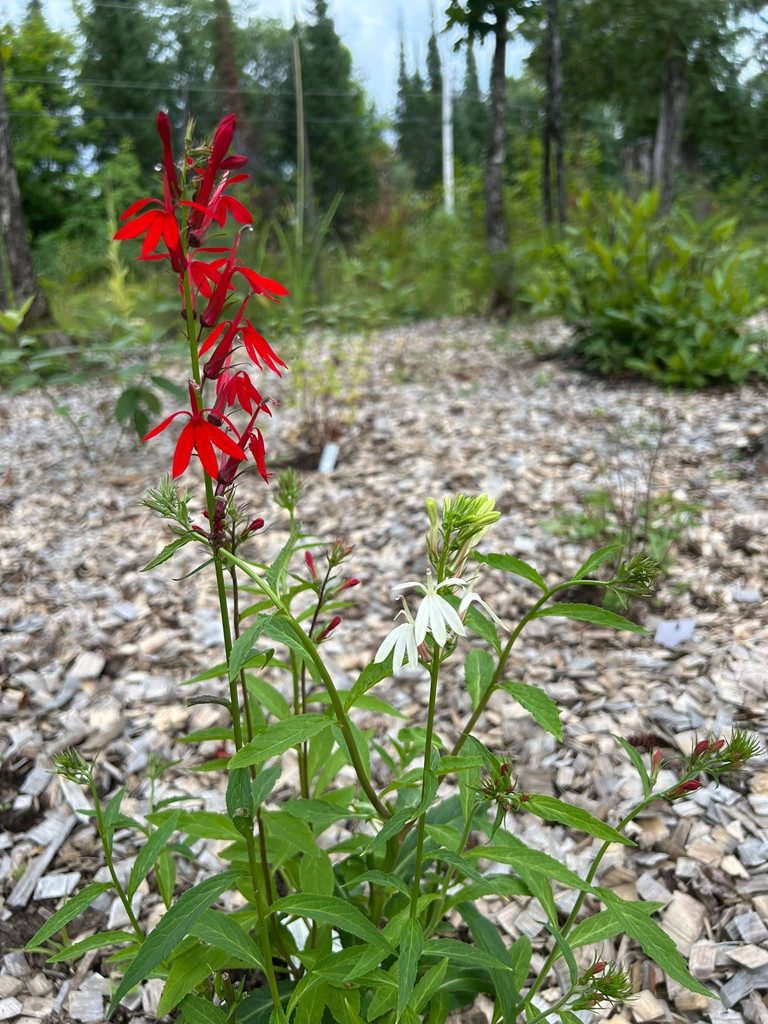
This vibrant red wildflower produces tall spikes of tubular blooms that, from certain angles, resemble a cardinal bird in flight, both in color and general silhouette.
Native to North America, this plant thrives near streams, ponds, and wetlands, where its bright red color creates a striking contrast against green foliage and blue water.
Hummingbirds are its primary pollinators, drawn specifically to its tubular shape and vivid red coloring, creating yet another example on this list where a bird-shaped flower attracts real birds.
This plant prefers consistently moist soil and partial to full sun. It’s an excellent choice for rain gardens or pond edges where standard flowers often struggle to survive.
Why Do So Many Flowers Look Like Birds?
This resemblance usually isn’t random. Many of these flowers evolved bird-like or beak-like shapes specifically to attract pollinators, whether that’s actual birds, insects, or specialized pollinating mechanisms.
Orchids, in particular, are famous for this kind of mimicry. Scientists have documented over 25,000 wild orchid species, making orchids the largest plant family on Earth, accounting for roughly 10 percent of all known plant species. With that much diversity, unusual and bird-like shapes naturally emerge as evolutionary experiments. si
Other flowers, like Larkspur and Columbine, get their names from smaller structural details, such as spurs or claws, rather than an overall bird silhouette. It’s less about visual mimicry and more about naming tradition.
Either way, this collection proves that nature doesn’t need instruction manuals to create astonishing designs. Sometimes, the most convincing bird you’ll ever see isn’t feathered at all.
Final Thoughts
I’ve always believed that flowers are one of nature’s quietest forms of storytelling, and this list confirms it. Each bird-shaped bloom carries its own history, whether that’s clever pollination tricks, cultural symbolism, or simple coincidence.
If you’re a gardener, consider adding a few of these to your own space. Not only will you get beautiful blooms, but you’ll also have a genuinely fascinating conversation starter for anyone who visits.
And if you’re simply a curious reader, I hope this list gave you a new appreciation for how creative evolution can be, even in something as seemingly simple as a flower.
References
- NC State Extension – Strelitzia reginae (Bird of Paradise): https://plants.ces.ncsu.edu/plants/all/strelitzia-reginae/
- NC State Extension – Aquilegia canadensis (Columbine): https://plants.ces.ncsu.edu/plants/aquilegia-canadensis/common-name/jack-in-trousers/
- University of Missouri Extension – Wild Geranium (Crane’s-bill): https://extension.missouri.edu/publications/mp903/58
- USDA Natural Resources Conservation Service – Birdsfoot Trefoil Plant Fact Sheet: https://www.nrcs.usda.gov/plantmaterials/wapmcpg14988.pdf
- USDA Agricultural Research Service – Larkspur (Delphinium spp.): https://www.ars.usda.gov/Services/docs.htm?docid=9943
- Smithsonian Institution – Bizarre Orchid Facts: https://si.edu/es/node/640963
- Mississippi State University Extension – Cockscomb (Celosia argentea var. cristata): https://extension.msstate.edu/publications/cockscomb-celosia-argentea-var-cristata-for-the-farmer-florist

Tim M Dave is a gardening expert with a passion for houseplants, particularly cacti and succulents. With a degree in plant biology from the University of California, Berkeley, he has vast experience in gardening. Over the years, he has cultivated a vast collection of desert plants and learned a great deal about how to grow and care for these unique companions.