35 Flowers That Attract Hummingbirds (And Keep Them Coming Back)
There’s a small thrill in spotting a hummingbird hover outside your window. I still stop whatever I’m doing when one zips past. These birds aren’t visiting by accident, though. They’re chasing nectar, color, and shape, and the right flowers can turn any yard into a regular stop on their daily rounds.
Hummingbirds have an incredibly demanding metabolism. Their hearts can beat over 1,200 times per minute during flight, and their wings flutter at roughly 50 to 80 beats per second, according to horticulture and extension research from Mississippi State University and the University of Kentucky. That kind of engine needs constant fuel, and nectar is the fuel of choice.
Tubular, brightly colored blooms in red, orange, and pink tend to win their attention first. Hummingbirds have a poor sense of smell but excellent color vision, so fragrance matters far less to them than shape and shade. That’s exactly why this list leans heavily on tube-shaped, vividly colored flowers.
Below are 35 flowers that consistently draw hummingbirds, and actually keep them coming back.
35 Best Flowers That Attract Hummingbirds
1. Bee Balm (Monarda didyma)
Bee balm is often the first plant extension experts mention when hummingbirds come up. Its shaggy, tubular red or pink blooms are practically built for a hummingbird’s bill. It’s a native perennial in much of the eastern United States, which makes it an easy, low-maintenance choice.
I like recommending bee balm to new gardeners because it’s forgiving. It tolerates average soil, spreads readily, and blooms through summer when hummingbirds need steady fuel. The scent, while pleasant to us, barely registers with the birds, so don’t worry about placement near a patio.
Give it full sun and moist soil for the best bloom count. Divide clumps every few years to keep mildew from creeping in. Pair it with taller plants behind it, since bee balm rarely exceeds three feet.
2. Cardinal Flower (Lobelia cardinalis)
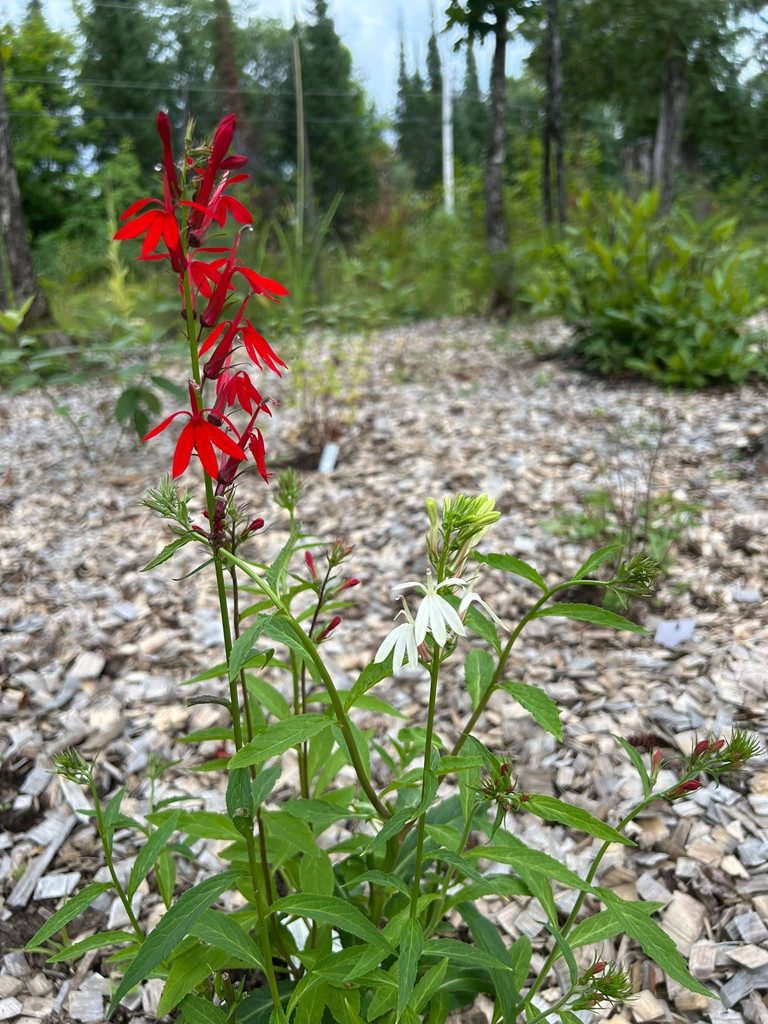
Cardinal flower produces some of the most intensely red blooms in any hummingbird garden. University of Illinois Extension lists it among the top native plants specifically because the color and tube shape match a hummingbird’s feeding preference almost perfectly.
This plant likes wetter conditions than most people expect. It thrives near ponds, rain gardens, or low spots that stay slightly damp. In drier gardens, it simply needs more frequent watering to perform well.
Cardinal flower blooms in late summer, which fills a nectar gap right before fall migration. That timing alone makes it valuable, since migrating hummingbirds need extra calories to cross long distances.
3. Trumpet Vine (Campsis radicans)
Trumpet vine, also called trumpet creeper, is a vigorous climber with large orange-red tubular flowers. Extension sources consistently rank it among the most reliable hummingbird magnets in North America.
I’ll be honest about the trade-off here: this vine spreads aggressively. It’s not a plant for small garden beds unless you’re prepared to prune hard every year. A sturdy trellis, fence, or arbor gives it room without letting it take over.
The payoff is worth it for many gardeners. Blooms appear from midsummer into fall, and the sheer volume of flowers on a mature vine can attract multiple hummingbirds at once.
ALSO READ: 35 Flowers That Attract Butterflies (With Pictures)
4. Columbine (Aquilegia)
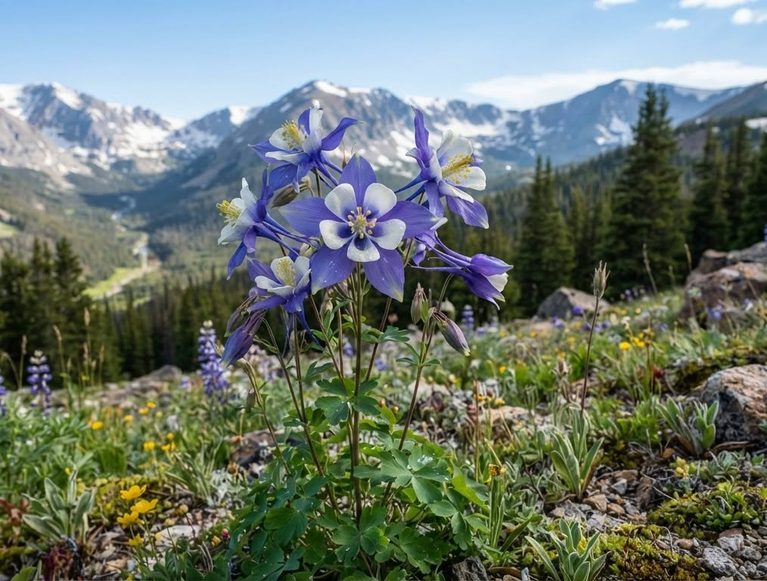
Columbine’s nodding, spurred flowers hold nectar deep inside their curved petals, which suits a hummingbird’s long bill perfectly. Red and yellow varieties are the most attractive to them, though pink and purple types also get visits.
This is a spring bloomer, arriving just as many ruby-throated hummingbirds return from Mexico in April. Extension research from the University of Kentucky notes that early migrators need flowers ready and waiting the moment they arrive.
Columbine prefers partial shade and well-drained soil. It self-seeds readily, so a small planting today often turns into a small colony within a couple of seasons.
5. Scarlet Sage (Salvia splendens)
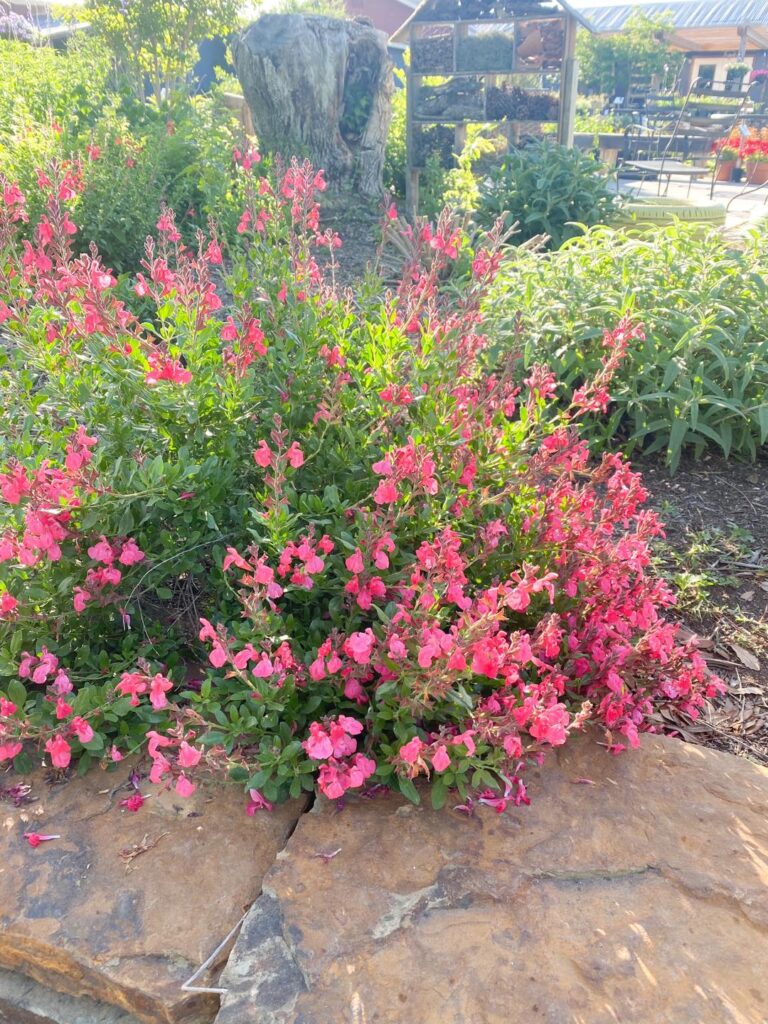
Salvia, in its many red and pink cultivars, is a staple recommendation across almost every extension office list I’ve come across. Oklahoma State University Extension specifically names salvia as a proven hummingbird plant for home gardens.
Its long flower spikes bloom continuously from early summer to frost if deadheaded regularly. That long bloom window means a steady nectar supply through the entire hummingbird season, not just a short burst.
Salvia handles heat well and needs relatively little water once established. It’s an easy annual for gardeners who want quick, reliable results in the first year.
6. Fuchsia
Fuchsia flowers hang downward, which happens to be an ideal shape for a hovering hummingbird. Mississippi State University Extension specifically highlights fuchsia’s cascading blooms as tailor-made for these birds’ feeding style.
The pink, red, and purple bicolor blooms are dramatic and showy, which is probably why fuchsia baskets are so common on porches in hummingbird-heavy regions like the Pacific Northwest.
Fuchsia prefers cooler temperatures and partial shade, especially in hot climates. In containers, it needs consistent moisture, since it wilts fast when the soil dries out.
7. Petunia
Petunias are an easy annual that punches above its weight for hummingbird visits, particularly the red and dark pink varieties. The Old Farmer’s Almanac and multiple extension sources list petunias among top annual choices.
They’re inexpensive, widely available, and bloom nonstop from planting until the first frost. For gardeners who want fast results without much planning, petunias are close to foolproof.
Deadheading spent blooms keeps petunias flowering longer and helps maintain a steady nectar supply. Hanging baskets work especially well since they let the trailing blooms catch a hummingbird’s eye from a distance.
8. Butterfly Bush (Buddleja davidii)
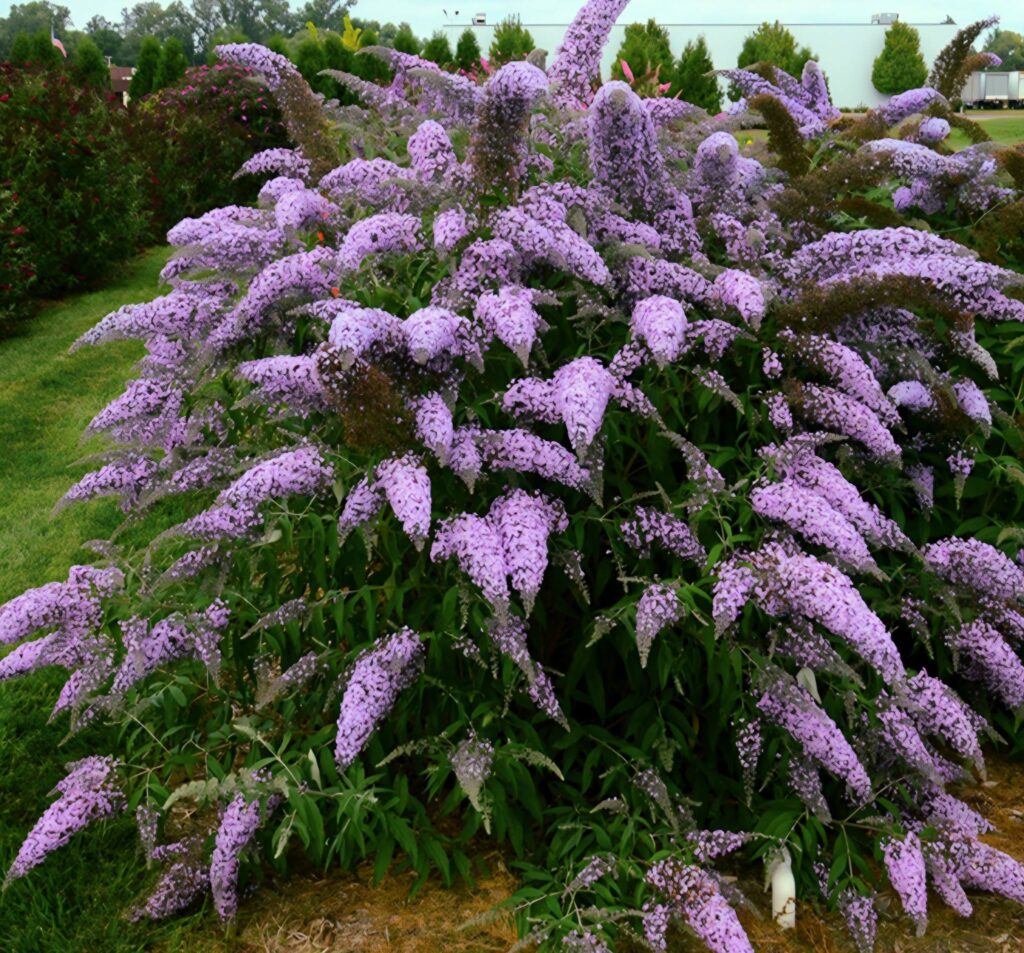
Butterfly bush is named for its main pollinator, but hummingbirds visit it just as eagerly. Its long, cone-shaped flower clusters hold plenty of nectar, and Mississippi State University Extension lists it directly alongside bee balm and cardinal flower.
This shrub grows fast and large, often reaching six feet or more in a single season. It needs room to spread, so plant it where it won’t crowd smaller perennials nearby.
Some regions now regulate butterfly bush because of its invasive tendencies. Check local guidance before planting, and consider sterile cultivars where available.
9. Trumpet Honeysuckle (Lonicera sempervirens)
Unlike the invasive Japanese honeysuckle, trumpet honeysuckle is a native vine with tubular red-orange flowers that hummingbirds find hard to resist. It’s frequently recommended by extension offices as a safer, non-invasive alternative.
This vine climbs trellises, fences, and arbors gracefully without the aggressive spread of trumpet vine. It blooms in flushes through spring and summer, giving hummingbirds a reliable, repeated food source.
Full sun brings out the best flower production. It also tolerates a wide range of soil types, making it a flexible choice for different garden conditions.
10. Foxglove (Digitalis)
Foxglove’s tall spikes of tubular, spotted flowers are a favorite among hummingbirds and bees alike. The Old Farmer’s Almanac lists it among classic biennials that reliably draw hummingbird activity.
It’s technically a biennial, meaning it grows foliage the first year and blooms the second. Once established, though, it often self-seeds enough to bloom every year in the same bed.
All parts of foxglove are toxic if ingested, so keep this in mind around pets and small children. It’s best planted toward the back of a border, away from paths where curious hands might reach it.
11. Hollyhock (Alcea rosea)
Hollyhocks tower over most garden beds, sometimes reaching six to eight feet tall, with wide, open blooms in red, pink, and deep maroon. Their height alone makes them visible to hummingbirds from a distance.
They work well against fences or walls where their tall stalks can lean on support. This also protects them from wind damage, which can otherwise topple the heaviest bloom spikes.
Hollyhocks bloom from early summer into fall, offering a long season of nectar. Rust disease is a common issue, so give plants good air circulation and avoid overhead watering.
12. Zinnia
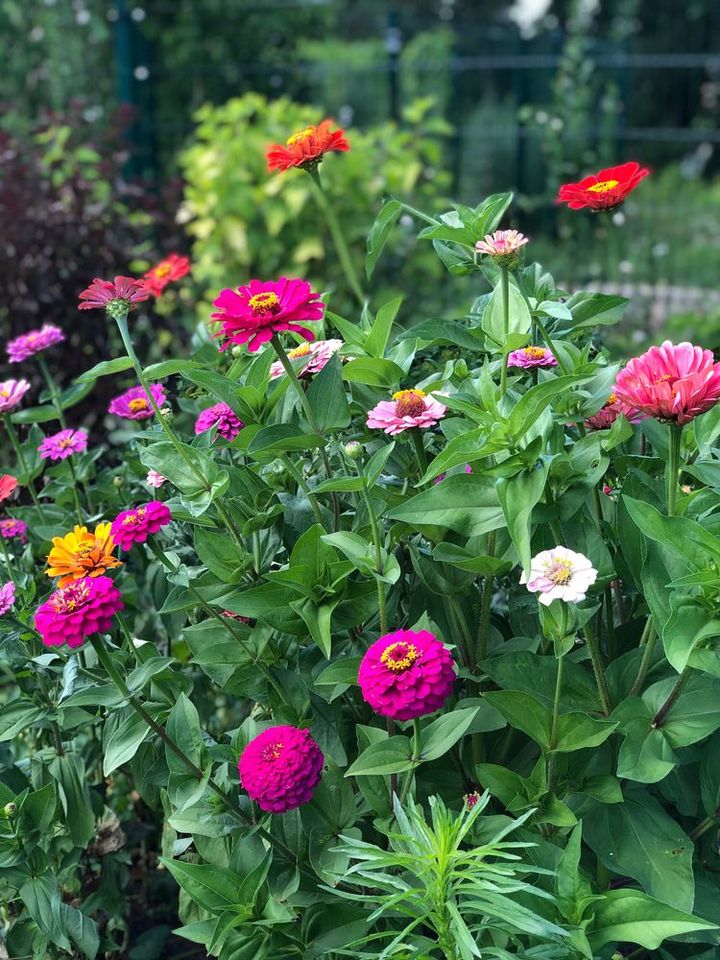
Zinnias are one of the easiest annuals to grow from seed, and their bright red and orange varieties are particularly appealing to hummingbirds. Oklahoma State University Extension includes zinnia on its list of hummingbird-friendly options.
They bloom fast, often within eight weeks of sowing, and keep flowering steadily through summer heat. Regular deadheading extends the bloom period even further into fall.
Plant zinnias in full sun with good spacing to reduce powdery mildew risk. A mixed bed of red and orange zinnias creates a strong visual signal that draws hummingbirds from farther away.
13. Impatiens
Impatiens thrive in the shady corners where many other hummingbird flowers struggle. Their compact, colorful blooms in red, pink, and orange still catch a hummingbird’s eye even without direct sun.
This makes impatiens a smart choice for gardeners with wooded lots or north-facing beds. They fill in quickly, forming a dense carpet of color within a few weeks of planting.
They need consistently moist soil and don’t tolerate drought well. Container plantings under porches or trees often perform best, since they get some protection from harsh afternoon sun.
14. Daylily (Hemerocallis)
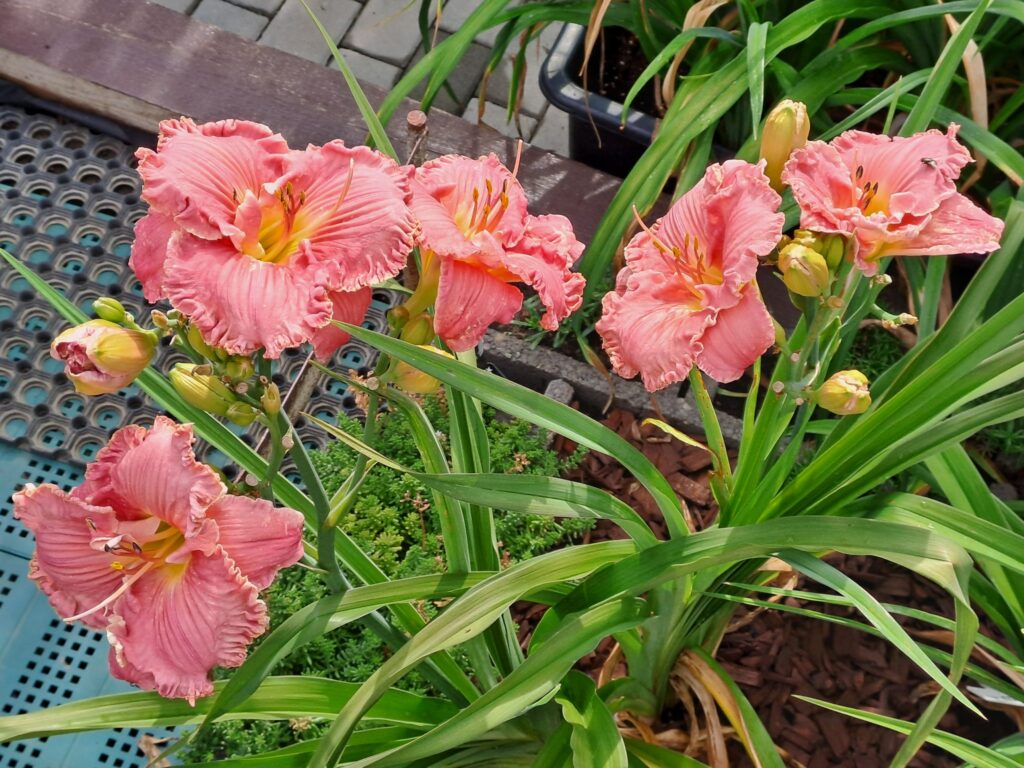
Daylilies produce large, open, trumpet-shaped blooms that hold nectar at their base, right where a hummingbird’s bill can reach. Red and orange cultivars attract the most attention, according to gardening references compiled from extension sources.
Each individual flower lasts only a day, but a mature clump produces new blooms continuously for weeks. This staggered blooming keeps a steady, if modest, nectar supply available.
Daylilies are famously low-maintenance and drought-tolerant once established. They’re a good anchor plant for gardeners who want reliable color with minimal upkeep.
15. Lupine (Lupinus)
Lupine’s tall spires of pea-like flowers come in vivid blues, pinks, and purples, with the reddish-pink varieties drawing the most hummingbird interest. The Old Farmer’s Almanac lists lupine among reliable perennial choices.
It prefers cooler climates and can struggle in hot, humid summers. Gardeners in the northern United States and parts of the Pacific Northwest tend to have the most success with it.
Lupine fixes nitrogen in the soil, which makes it a genuinely useful companion plant. Plant it in well-drained soil, since soggy roots are its main vulnerability.
16. Penstemon (Beardtongue)
Penstemon, commonly called beardtongue, has narrow tubular flowers shaped almost exactly like a hummingbird feeder port. It’s a native perennial across much of North America and appears on nearly every extension hummingbird list I found.
Red and pink cultivars, such as ‘Firebird’ and ‘Rubicunda,’ are especially effective. The narrow tube shape also happens to exclude bees somewhat, which means less competition at the flower.
Penstemon likes well-drained, even sandy soil and full sun. It tolerates drought impressively well once its roots are established, which makes it a smart pick for water-conscious gardens.
17. Red-Hot Poker (Kniphofia)
Red-hot poker earns its name from tall, torch-shaped flower spikes that shift from red at the top to orange and yellow toward the base. This gradient of hot colors is essentially a flashing sign for hummingbirds.
The individual florets are small and tubular, packed densely along the spike. A single bloom stalk can offer dozens of feeding points for one visiting bird.
It thrives in full sun and tolerates poor soil better than most flowering perennials. Established clumps are quite drought-hardy, needing little supplemental water in most climates.
18. Four O’Clocks (Mirabilis jalapa)
Four o’clocks get their name from their habit of opening in late afternoon, which happens to line up with peak hummingbird feeding activity before dusk. Mississippi State University Extension specifically names them among strong perennial choices.
Their trumpet-shaped flowers come in red, pink, yellow, and even multicolor patterns on the same plant. The fragrance is noticeable to humans in the evening, even though hummingbirds respond mainly to the color and shape.
They grow easily from seed and often self-sow generously. In warmer zones, the tuberous roots survive winter and regrow larger plants the following year.
19. Canna Lily
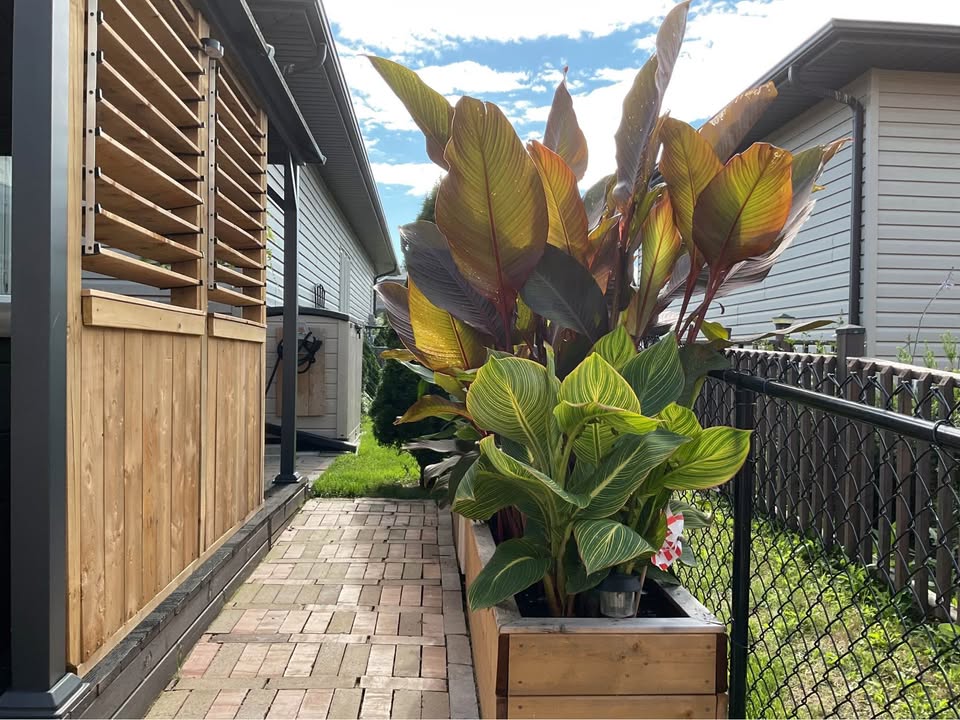
Canna lilies bring bold, tropical-looking blooms in red, orange, and yellow, paired with broad, dramatic foliage. Mississippi State University Extension lists canna among the perennials that reliably attract hummingbirds to Southern gardens.
The large flowers sit atop tall stalks, often three to six feet high, making them easy for hummingbirds to spot from a distance. They also make a strong architectural statement in any border.
Cannas prefer full sun and consistently moist soil, thriving even near pond edges. In colder climates, the rhizomes need to be dug up and stored indoors over winter.
20. Hosta
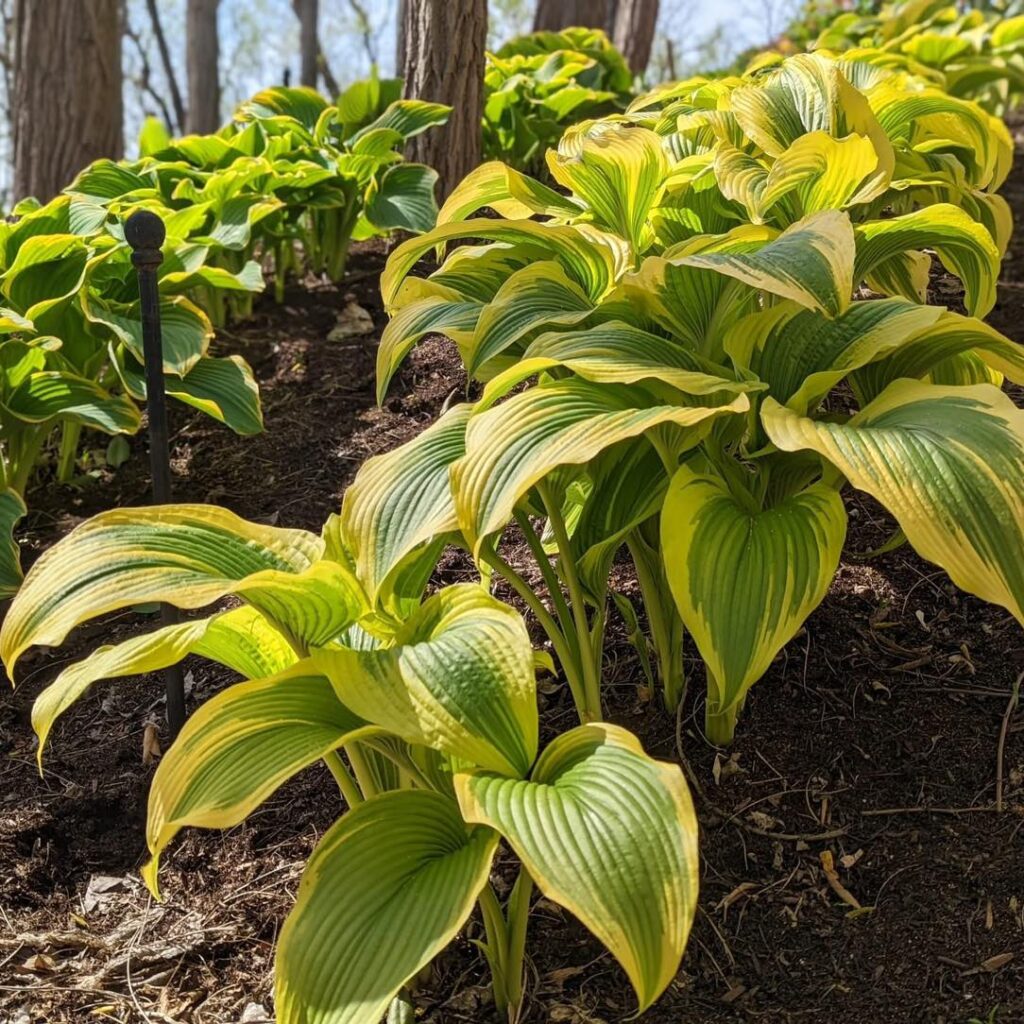
Hosta is usually grown for its foliage, but its pale purple or white tubular flower spikes are a genuine hummingbird draw, especially in shaded gardens. Mississippi State University Extension includes it directly on its recommended perennial list.
This makes hosta valuable for gardeners who assumed shade meant no hummingbird activity. It proves that dense tree cover doesn’t have to rule out attracting these birds.
Hostas need moist, well-drained soil and protection from slugs, which are their most persistent pest. Choose varieties with taller flower scapes for the best visibility to passing hummingbirds.
21. Weigela
Weigela is a flowering shrub with funnel-shaped pink or red blooms that appear in a heavy flush during late spring. It’s a classic recommendation on hummingbird flower lists compiled from garden references and extension sources.
Its shrub form makes it useful for filling larger garden spaces or forming an informal hedge. The dense branching also gives hummingbirds a place to perch between feeding bouts.
Weigela tolerates a wide range of soils and needs only moderate watering once established. Pruning right after the spring bloom encourages healthy new growth for next year’s flowers.
22. Azalea
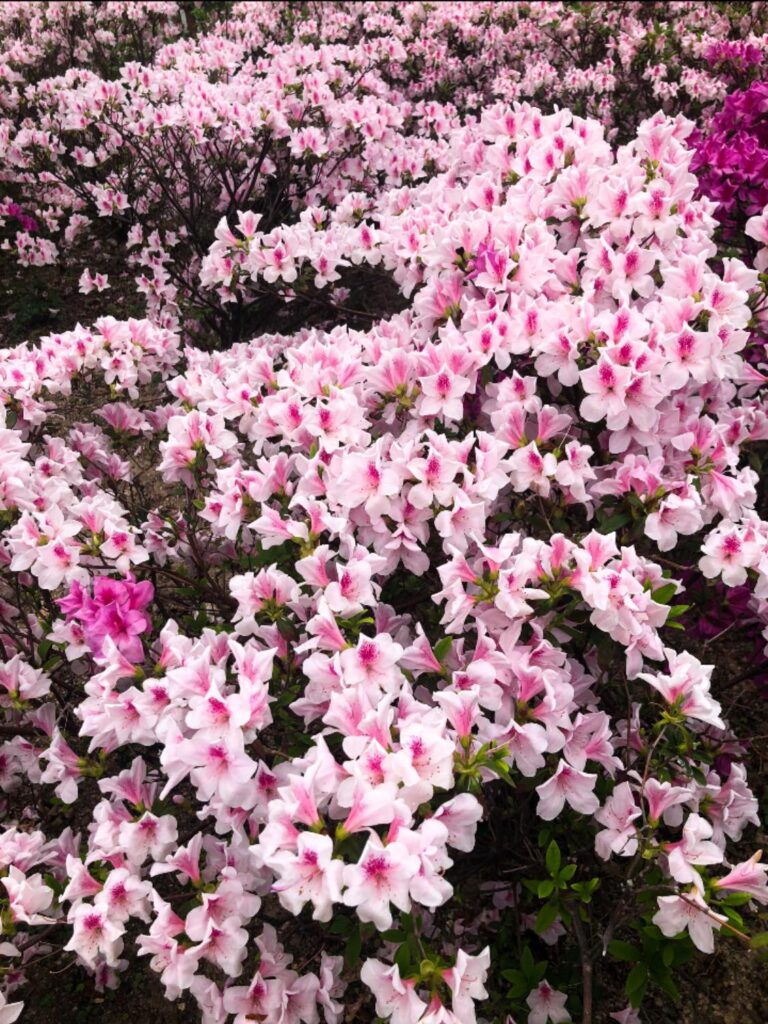
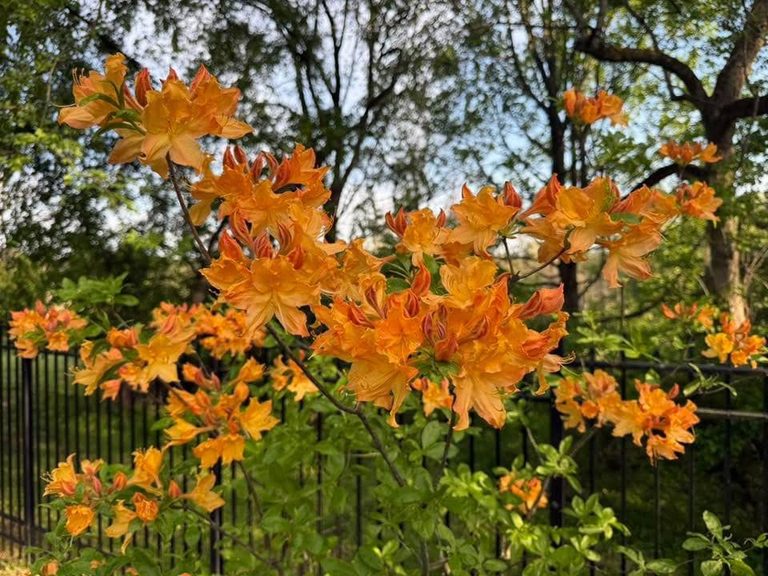
Native azalea species are particularly effective at attracting hummingbirds, more so than many hybrid varieties, according to Clemson University’s Home & Garden Information Center. Their tubular, often fragrant flowers bloom heavily in spring.
That spring timing matters because it coincides with hummingbird migration, when nectar sources are still relatively scarce. A mature native azalea in full bloom can be one of the busiest spots in a spring garden.
Azaleas prefer acidic, well-drained soil and partial shade, especially in hotter regions. Mulching helps retain the moisture their shallow root systems need.
23. Verbena
Verbena produces clusters of small, tubular flowers in vivid red, purple, and pink shades, and it’s frequently listed among strong hummingbird annuals and perennials. Its low, spreading habit makes it a good edging or container plant.
It blooms almost continuously from late spring through fall frost, which gives it one of the longest flowering windows on this list. That consistency matters more to hummingbirds than a single showy bloom period.
Verbena tolerates heat and drought exceptionally well once established. It’s a strong choice for hot climates where other flowering plants tend to struggle by midsummer.
24. Summer Phlox (Phlox paniculata)
Summer phlox produces large, rounded flower clusters made up of many small tubular blooms. The Old Farmer’s Almanac lists phlox as a proven hummingbird attractor, particularly the red and pink cultivars.
Its clustered structure means a hummingbird can feed from multiple flowers without moving far, which makes it an efficient stop compared to plants with more scattered blooms.
Phlox needs good air circulation to avoid powdery mildew, a common issue in humid climates. Watering at the soil level rather than overhead helps keep foliage healthier through the season.
25. Iris
Bearded and Siberian iris varieties, especially in red, orange, and deep pink tones, draw hummingbird visits during their spring bloom. Extension-compiled plant lists include iris among recommended hummingbird flowers.
The flower’s broad falls and narrow throat work reasonably well for a hummingbird’s bill, even though iris isn’t a classic tubular shape. Bloom timing in spring makes it useful during early migration.
Iris prefers full sun and well-drained soil, and it resents being planted too deep. Dividing crowded clumps every three to four years keeps blooms strong from year to year.
26. Coral Bells (Heuchera)
Coral bells send up thin, wiry flower stalks lined with tiny, bell-shaped blooms in red, pink, or coral tones. Despite their small size, these flowers are a recognized hummingbird draw on multiple extension and gardening reference lists.
The plant’s compact foliage mound makes it a popular border or container plant, while the taller flower stalks rise above it to catch a hummingbird’s attention.
Coral bells tolerate partial shade well, making them useful in spots where full-sun plants won’t thrive. Well-drained soil is essential, since soggy conditions can rot the crown.
27. Lantana
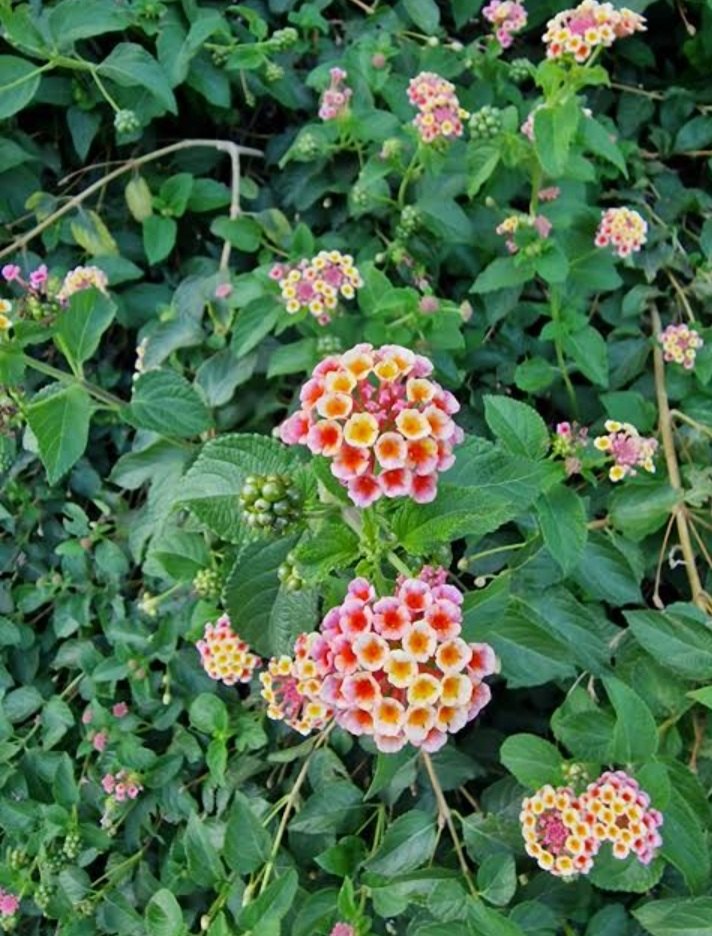
Lantana produces dense clusters of small flowers that often shift color as they age, creating a multicolored effect in reds, oranges, and yellows. This color variation seems to make it especially eye-catching to hummingbirds.
It blooms nonstop through hot summer months when many other flowers slow down. In warm climates, lantana can flower almost year-round, offering an unusually long nectar season.
Lantana is highly drought-tolerant and thrives in poor soil, which makes it a low-maintenance option. In frost-free regions, it can become a small shrub rather than a seasonal annual.
28. Flowering Tobacco (Nicotiana alata)
Flowering tobacco has long, trumpet-shaped blooms that open in the evening, matching a peak hummingbird feeding window. Its inclusion on Almanac and extension-derived hummingbird lists reflects how reliably it draws visits.
Red and pink cultivars perform noticeably better with hummingbirds than the white or pale green varieties, which are bred more for human fragrance appreciation than bird visibility.
It grows easily from seed or nursery starts and prefers full sun to partial shade. Regular deadheading keeps the plant blooming steadily through the growing season.
29. Pentas
Pentas form dense, star-shaped flower clusters in red, pink, and lavender that create a bold visual target for hummingbirds. It’s commonly recommended alongside salvia and lantana as a heat-tolerant summer annual.
The clustered bloom structure means a hummingbird can feed efficiently, moving between dozens of small tubular flowers within a single cluster before moving on.
Pentas handles heat and humidity exceptionally well, making it a strong performer in southern gardens through the hottest months. Full sun and regular watering keep blooms coming steadily.
30. Cleome (Spider Flower)
Cleome, sometimes called spider flower, produces tall, airy flower clusters in pink, purple, and white with long, spidery stamens. The Old Farmer’s Almanac lists it among annuals that reliably attract hummingbirds.
Its height, often three to five feet, makes it visible from a distance, while the loosely arranged blooms allow easy access for a hovering bird.
Cleome self-seeds readily and tolerates heat well. Give it space at the back of a border, since its size and slightly sticky foliage can crowd smaller neighboring plants.
31. Cypress Vine (Ipomoea quamoclit)
Cypress vine is a delicate climbing plant with small, star-shaped red flowers and finely divided, feathery foliage. University of Illinois Extension specifically lists it as a recommended hummingbird plant alongside bee balm and cardinal flower.
Its twining habit makes it well-suited for trellises, mailboxes, or fences where it can climb without overwhelming nearby plants, unlike more aggressive vines.
Cypress vine grows quickly from seed once soil warms in late spring. It blooms from midsummer through fall, offering a long window of steady red flowers for passing hummingbirds.
32. Hibiscus
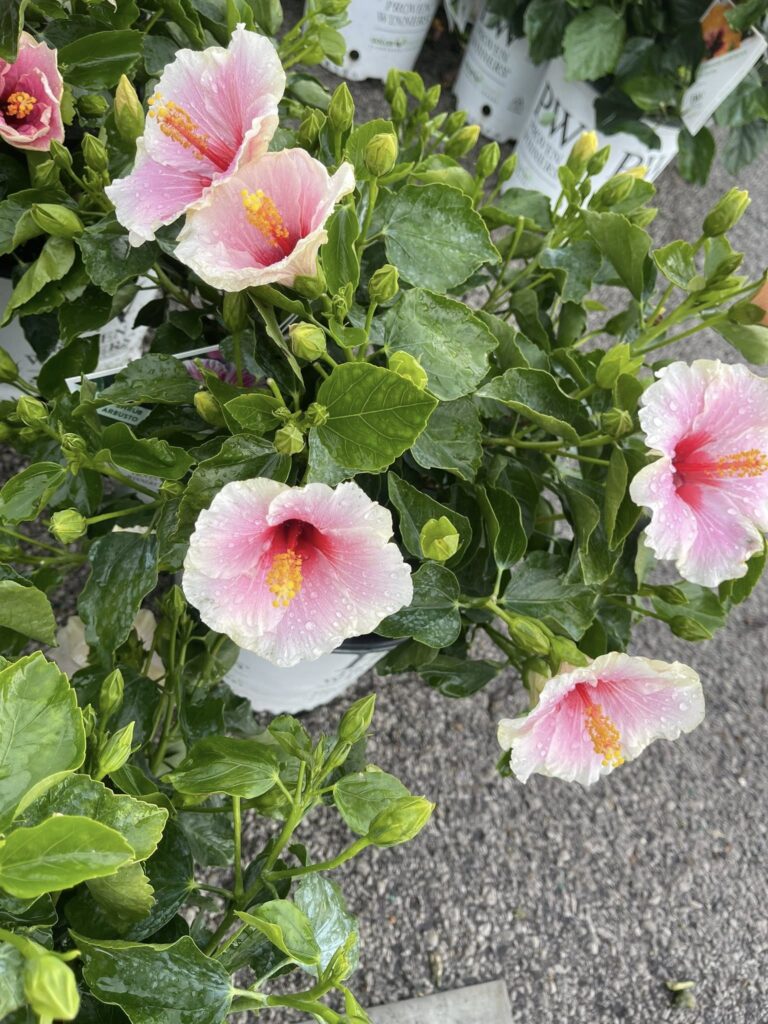
Hibiscus flowers are large, open, and often deep red, with a prominent central stamen that hummingbirds use as a landing guide toward the nectar source. Tropical and hardy varieties both attract visits, though red cultivars perform best.
The sheer size of hibiscus blooms, sometimes six inches or more across, makes them one of the most visible flowers in this entire list from a distance.
Hibiscus needs full sun and consistent moisture to bloom well. In cooler climates, hardy hibiscus varieties die back in winter but return reliably each spring from the root.
33. Agastache (Hummingbird Mint)
Agastache, often nicknamed hummingbird mint or anise hyssop, has narrow flower spikes packed with small tubular blooms in orange, pink, and red-purple shades. Its name alone reflects how strongly it’s associated with hummingbird activity.
The plant releases a mild licorice-like scent when brushed, though as with most hummingbird flowers, the birds respond to color and shape rather than fragrance.
Agastache is remarkably drought-tolerant and thrives in poor, well-drained soil. It blooms from midsummer into fall, filling a valuable nectar gap before migration season begins.
34. Larkspur (Delphinium)
Larkspur and delphinium send up tall spikes of tubular flowers, most commonly in blue and purple, though pink and red cultivars also draw hummingbird visits. Extension-compiled reference lists include this genus among common attractors.
The spurred flower shape holds nectar deep inside, similar to columbine, which suits a hummingbird’s long, narrow bill particularly well.
These plants prefer cool summers and struggle in intense heat and humidity, making them better suited to northern gardens. Staking tall varieties helps prevent wind and rain damage to the flower spikes.
35. Rhododendron
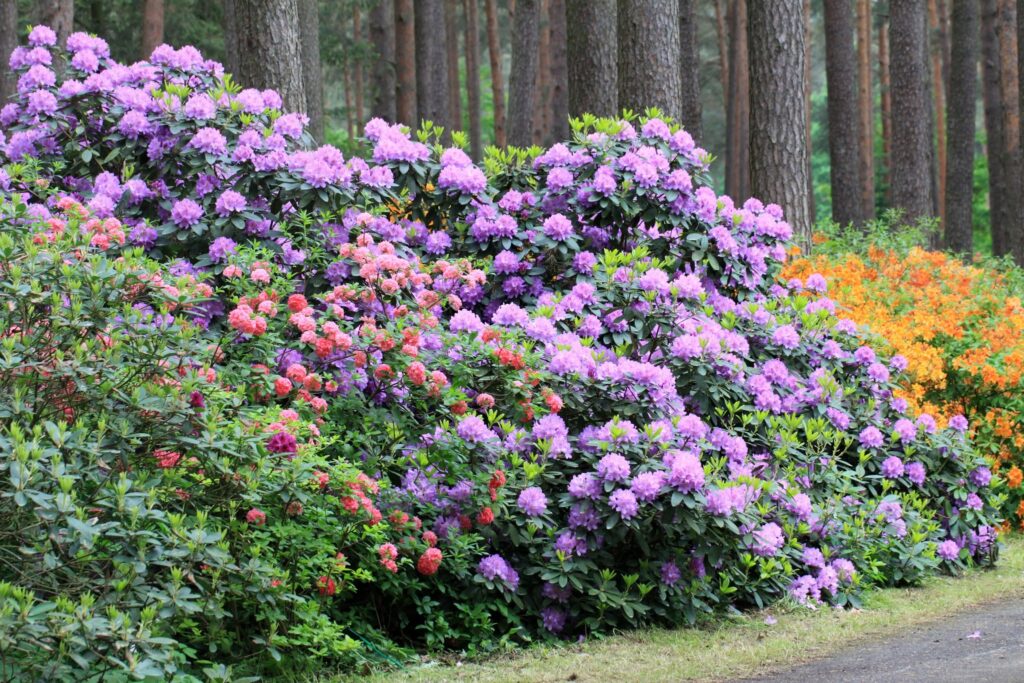
Rhododendrons produce large clusters of trumpet-shaped flowers in spring, with red and pink varieties drawing the most consistent hummingbird activity. Like their azalea relatives, they bloom right as spring migration is underway.
A mature rhododendron in full bloom can hold dozens of open flower clusters at once, effectively turning a single shrub into a small feeding station for visiting birds.
They require acidic, well-drained soil and benefit from partial shade in hot climates. Mulching around the shallow root system helps them handle dry spells between waterings.
A Few Final Notes on Building a Hummingbird Garden
Stagger your bloom times. Hummingbirds need food from early spring through fall migration, so mix early bloomers like columbine and azalea with late-season plants like cardinal flower and agastache.
Skip the pesticides. Extension horticulturists warn that pesticide residue on nectar plants can sicken or kill hummingbirds directly, and it also wipes out the small insects they rely on for protein.
Plant in groups, not singles. A cluster of red or orange blooms reads as a stronger signal than one isolated flower scattered among green foliage.
Add height variation. Layering low, medium, and tall plants, almost like stadium seating, lets hummingbirds access blooms at every level without competing for the same space.
A well-planned hummingbird garden doesn’t need to be large. Even a few pots of salvia and petunias on a balcony can bring in regular visitors within a season, and once they find a reliable food source, they tend to keep coming back.
References
- Mississippi State University Extension – Hummingbird Flower Power: https://extension.msstate.edu/node/45795
- University of Illinois Extension – Hummingbirds Fact Sheet (PDF): https://extension.illinois.edu/sites/default/files/hummingbirds_0.pdf
- Oklahoma State University Extension – Attracting Hummingbirds: https://extension.okstate.edu/articles/2022/hummingbirds
- University of Kentucky Cooperative Extension (Daviess County) – Preparing for Hummingbirds to Visit Your Garden (PDF): https://daviess.ca.uky.edu/sites/daviess.ca.uky.edu/files/20230401%20Preparing%20for%20Hummingbirds.pdf
- Clemson University Home & Garden Information Center – Native Azaleas: https://hgic.clemson.edu/factsheet/native-azaleas-natural-color-in-the-shade-garden/
- University of Washington – Attracting Hummingbirds (Horticulture Library): https://depts.washington.edu/hortlib/keyword/hummingbirds
- University of Mississippi – Hummingbird Fun Facts: https://home.olemiss.edu/~larryago/hummingbirds/funfacts2.html

Tim M Dave is a gardening expert with a passion for houseplants, particularly cacti and succulents. With a degree in plant biology from the University of California, Berkeley, he has vast experience in gardening. Over the years, he has cultivated a vast collection of desert plants and learned a great deal about how to grow and care for these unique companions.