50 Stunning Types of Philodendron (Varieties With Pictures)
If you have ever stood in a nursery aisle, overwhelmed by dozens of glossy green leaves labeled “Philodendron,” you are not alone. I have been there too, and honestly, it took me years to tell one variety from another with confidence.
This guide sorts out the confusion. Below, you will find 50 popular philodendron types, grouped by growth habit, so you can pick the right one for your space and skill level.
Why Philodendron Is One of the World’s Most Loved Houseplants
Philodendron belongs to the arum family, Araceae, and it includes roughly 450 known species, according to Britannica. That number keeps growing as botanists describe new plants from South American rainforests.
The name itself comes from Greek. “Philo” means love, and “dendron” means tree, a nod to how many species climb tree trunks in the wild.
Interest in this genus has exploded in recent years. Extension horticulturists at NC State note that houseplant pages, including philodendron, rank among the most-visited content on their Plant Toolbox website.
Part of the appeal is simple. Philodendrons tolerate low light, irregular watering, and general neglect far better than most houseplants, according to Iowa State University Extension and Outreach.
Two Main Growth Types You Should Know First
Before diving into the list, it helps to understand the basic split. NC State Extension divides the genus into two broad groups: climbing (vining) types and non-climbing (self-heading) types.
Climbing types grow aerial roots that cling to poles, bark, or trellises. Think of Heartleaf Philodendron and its many cousins.
Self-heading types grow upright from a central rosette instead. Tree Philodendron and hybrids like ‘Birkin’ fall into this category.
A third informal group exists too: rare, collector-grade species prized for unusual leaf texture, color, or shape. I have included these separately below.
Now, let’s get into the full list.
Vining and Climbing Philodendron Types
These are the trailing, climbing varieties most people picture first. They work beautifully in hanging baskets or trained up a moss pole, and most of them are forgiving enough for a first-time plant owner.
1. Heartleaf Philodendron (Philodendron hederaceum)
This is the variety most of us meet first, and for good reason. Its solid green, heart-shaped leaves trail gracefully from any shelf or basket, and UF/IFAS Gardening Solutions calls it a near foolproof houseplant for beginners.
It tolerates low light, missed waterings, and cramped pots without much complaint. If you only buy one philodendron in your life, this is the safe, satisfying place to start.
2. Brasil Philodendron
Brasil is a variegated sport of the Heartleaf type, and it is arguably the most photographed philodendron on social media today. Each leaf carries a broad, lime-green streak down its center, framed by darker green edges.
I love how the variegation shifts slightly with light exposure, giving every leaf a slightly different pattern. It grows just as easily as plain Heartleaf, so beginners need not worry about extra fuss.
3. Micans Philodendron
Micans stands out through texture rather than color. Its heart-shaped leaves have a soft, velvety surface that catches light in a way plain green leaves simply cannot.
New leaves often emerge with a coppery-bronze tint before settling into a deeper green. Give it bright indirect light to keep that velvet sheen looking its richest.
4. Lemon Lime Philodendron
If your space needs a jolt of color, Lemon Lime delivers it instantly. Its chartreuse, almost neon-green leaves brighten dim corners better than most variegated varieties.
Keep in mind that brighter, lighter foliage usually needs a bit more light than solid green types to avoid reverting to a duller shade. A few hours of gentle morning sun works well.
5. Silver Philodendron (P. brandtianum)
Also called Brandi Philodendron, this compact vine carries heart-shaped leaves brushed with silvery-gray patches between the veins. The contrast against its darker green background is genuinely striking up close.
It stays fairly modest in size compared to other vining types, which makes it a smart pick for small apartments or crowded plant shelves.
6. Black Gold Philodendron (P. melanochrysum)
NC State Extension describes this rare, vining plant as having deep green, velvet-like leaves with striking yellow veins. Mature leaves can grow remarkably long, giving the plant a dramatic, almost jungle-like presence.
Patience matters here. Young plants look modest, but the leaves lengthen considerably as the vine matures and climbs.
7. Ecuador Philodendron (P. verrucosum)
Another velvet-leaf species, Ecuador Philodendron shows off light green veins on a deep green backdrop, with a rich burgundy underside, as noted by NC State’s Plant Toolbox. Fine hairs along the stem give it a slightly fuzzy texture.
This species prefers steadier humidity than most, so a bathroom shelf or humidifier setup suits it well. It rewards a little extra attention with truly show-stopping foliage.
8. Gloriosum Philodendron
Gloriosum grows more like a crawling ground vine than a climber, spreading along the soil surface rather than up a pole. Its heart-shaped leaves feature pale, contrasting veins that seem almost hand-painted.
Collectors prize it for that unusual growth habit as much as its looks. A wide, shallow pot suits its spreading rhizome better than a tall, narrow one.
9. Pastazanum Philodendron
Large, quilted leaves with silvery venation make Pastazanum a genuine showpiece once it matures. The leaf surface has a slightly puckered texture that catches light beautifully.
Give this one plenty of room, since the leaves can grow quite large indoors with consistent warmth and humidity. It rewards larger pots and sturdy support.
10. Silver Sword Philodendron (P. hastatum)
Narrow, arrow-shaped leaves in silvery-blue tones give this climber a sleek, modern look that suits minimalist interiors. The color deepens slightly as each leaf matures.
It climbs steadily with support and handles average home humidity better than some of the more delicate velvet-leaf types.
11. Hairy Philodendron (P. squamiferum)
Named for the fuzzy, reddish hairs running along its stems, this variety also carries deeply lobed, almost hand-shaped leaves. The texture alone makes it a conversation piece.
It climbs well with a moss pole and tends to produce larger, more deeply cut leaves as it matures and gains vertical support.
12. Fiddleleaf Philodendron (P. bipennifolium)
Also called Horsehead Philodendron, UF/IFAS describes its leaves as shaped like a violin or a horse’s head, growing roughly 18 inches long. The glossy, olive-green foliage has a distinctly sculptural silhouette.
It climbs readily up totem poles or tree bark, and its shape becomes more pronounced as the plant matures from its juvenile form.
13. Spade-leaf Philodendron (P. domesticum)
Sometimes called Elephant Ear Philodendron, this variety produces large, triangular leaves that can reach two feet long. The sheer scale of the foliage makes it a bold statement piece for climbing displays.
Give it a sturdy support structure early, since the weight of mature leaves can bend a weak or thin moss pole over time.
14. Red-leaf Philodendron (P. erubescens)
Also known as Blushing Philodendron, this species shows off reddish new growth and burgundy-tinted stems against otherwise green, glossy foliage. NC State’s Plant Toolbox notes the red tint often carries through to the underside of each leaf.
It is also the parent species behind several popular hybrids, including Pink Princess and Prince of Orange, which appear later in this list.
15. Birdsnest Philodendron (P. imbe)
A lesser-known climbing species, Birdsnest Philodendron carries glossy, elongated leaves that thicken nicely as the plant matures. It is not as widely stocked as other varieties, so patience helps when hunting for one.
Once established, it climbs steadily and tolerates typical indoor conditions without much fuss.
16. Ferning Philodendron (P. tortum)
Deeply dissected, feathery leaves make this variety look almost fern-like rather than typically philodendron-shaped. The narrow, finger-like lobes give it an airy, delicate appearance.
Despite its delicate looks, it is a sturdy climber once given a support pole, and it tends to produce fuller foliage with brighter, indirect light.
17. Oak Leaf Philodendron (P. pedatum)
Named for its lobed leaves that resemble oak foliage, this species has a subtler charm than some flashier varieties on this list. The lobing becomes more pronounced as the plant matures past its juvenile stage.
It is a solid mid-collection choice for anyone who wants variety in leaf shape without chasing rare, expensive specimens.
18. Mayoi Philodendron
Mayoi is a vining species with narrow, deeply cut leaves and a slightly wavy texture, and NC State lists it among its featured philodendron species. The foliage has an almost palm-frond-like quality that sets it apart from broader-leaved cousins.
It climbs well with support and adapts comfortably to typical indoor light and humidity levels.
Rare and Collector-Grade Philodendron Types
If you enjoy the thrill of the hunt, these species are harder to find but worth seeking out. Many are traded among specialty growers and online plant communities rather than big-box garden centers.
19. Mamei Philodendron
Large, heart-shaped leaves carry a silvery, mottled pattern across a quilted, slightly puckered surface. The overall effect looks almost hand-painted under bright indirect light.
It grows more slowly than common vining types, so expect patience to be part of the deal with this one.
20. Plowmanii Philodendron
Long, undulating leaves ripple gently along their edges, with pale green venation running across a matte, almost velvety finish. The wavy leaf margin is what most collectors notice first.
It appreciates consistent humidity and steady warmth, so keep it away from cold drafts or air-conditioning vents.
21. Sodiroi Silver Philodendron
Heart-shaped leaves carry fine silver speckling scattered across a deep green base, giving the plant a frosted, almost dusted appearance. Young leaves often show the most vivid silvering.
As with many rare aroids, bright but indirect light helps preserve that silver contrast rather than letting it fade toward plain green.
22. Warszewiczii Philodendron
Deeply lobed, dark green leaves create a dramatic, almost tropical-fern silhouette unlike typical heart-shaped philodendron foliage. It stands out immediately in a mixed plant collection.
This species tends to reward growers who provide a moss pole early, since the lobing becomes more pronounced with vertical support.
23. Rugosum Philodendron
Nicknamed Pigskin Philodendron, this variety carries thick, textured, leathery leaves with a bumpy surface that genuinely resembles animal hide. The texture is unlike almost anything else in the genus.
It is a slow grower, so collectors often pay a premium for larger, more established specimens.
24. Atabapoense Philodendron
Elongated leaves show a subtly rippled edge, and this species has become increasingly popular among rare-aroid collectors chasing unusual leaf shapes. Its narrow silhouette contrasts nicely with broader-leaved neighbors.
Consistent moisture and warmth help it settle in well after being shipped or repotted, which can otherwise stress the plant.
25. Luxurians Philodendron
Corrugated, ribbed leaves give Luxurians a distinctive, sculpted appearance that photographs beautifully. The deep grooves running along each leaf catch shadow and light in an eye-catching way.
Give it steady humidity, and avoid letting the soil dry out completely between waterings, since it is less drought-tolerant than common hybrids.
26. Joepii Philodendron
This species stands apart through unusual, ruffled leaf lobes unlike most other philodendrons on this list. Some growers describe the shape as almost antler-like once the plant matures.
It remains relatively rare in general cultivation, so expect to search specialty growers or online marketplaces rather than local nurseries.
27. Giant Philodendron (P. giganteum)
Listed in the USDA Plants Database, this species produces some of the largest leaves in the entire genus, easily rivaling small trays in size at maturity. It needs serious floor space to reach its full potential.
If you have a bright sunroom or greenhouse corner, this is the specimen plant that will make the biggest visual impact.
28. Billietiae Philodendron
Long, narrow, arrow-shaped leaves sit atop an orange-red petiole that stands out sharply against the green foliage. That colorful stem is the plant’s signature feature.
It climbs well with support and tends to color up most vividly under bright, indirect light rather than deep shade.
ALSO READ: 25 Best Plants for a North-Facing Window (Low Light, High Reward)
Hybrid and Cultivar Philodendron Varieties
Breeders have produced dozens of eye-catching hybrids over the decades. These varieties are popular precisely because they combine reasonably easy care with genuinely dramatic looks.
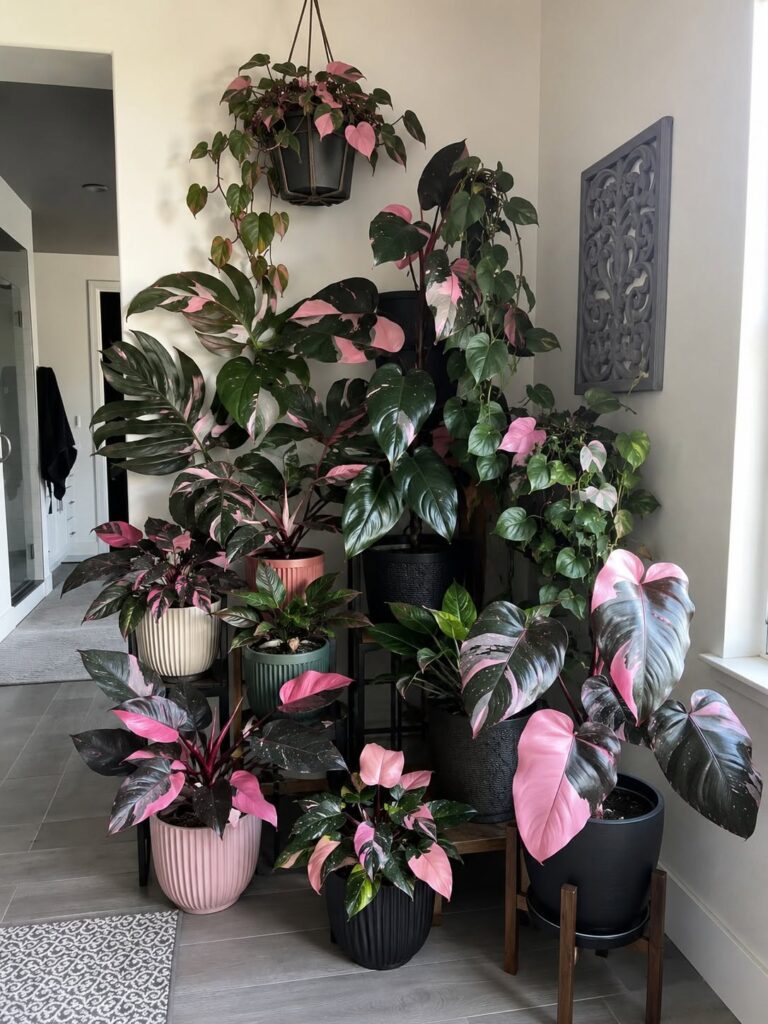
29. Pink Princess Philodendron
A hybrid of P. erubescens, this plant is prized for its dark leaves splashed with bright pink variegation, and Iowa State Extension lists it among today’s most sought-after compact hybrids. No two leaves look quite the same, which keeps collectors coming back for more.
The pink patches are genetically unstable, so pruning to encourage more variegated growth is a common, ongoing task for owners.
30. Black Cardinal Philodendron
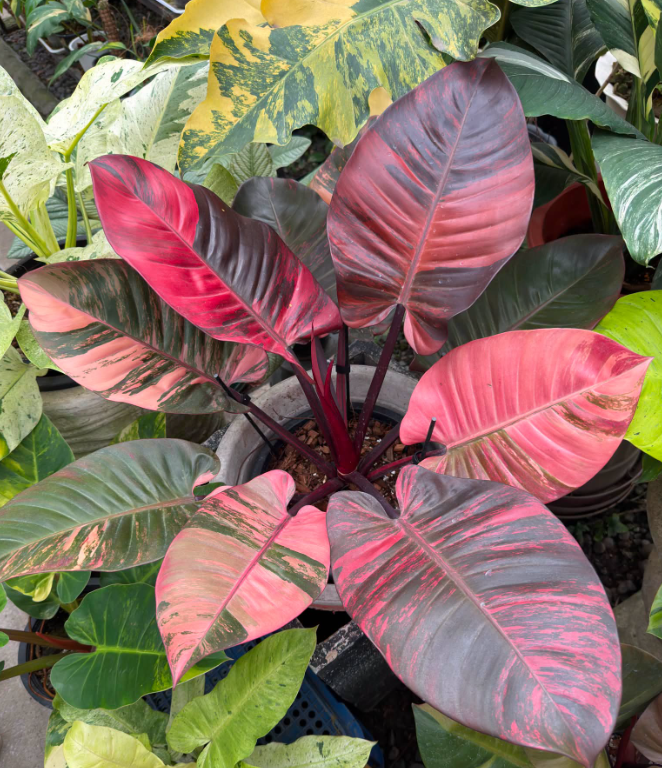
New leaves emerge in a rich burgundy shade before darkening further into near-black as the plant matures. The glossy finish makes the color look almost lacquered under bright light.
It stays fairly compact compared to other erubescens hybrids, which suits smaller shelves and desks well.
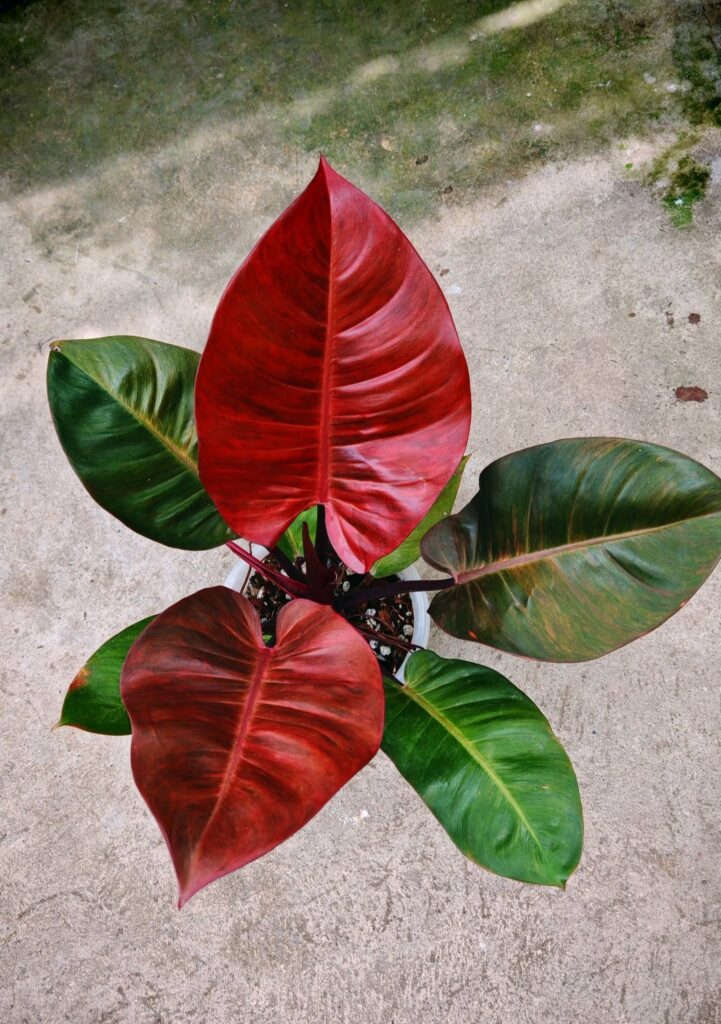
31. Prince of Orange Philodendron
New leaves emerge in a vivid, almost fiery orange before gradually shifting to green with age. Watching a single plant display several colors at once, from young orange growth to mature green leaves, is part of the appeal.
It stays relatively compact and self-heading, so it does not need a moss pole or trellis to look its best.
32. White Knight Philodendron
Dark green leaves marked with crisp white variegation sit atop near-black stems, creating striking contrast throughout the plant. It is one of the more expensive hybrids due to steady demand and slower propagation rates.
Bright, indirect light helps maintain the white sections rather than letting the plant revert toward solid green.
33. White Princess Philodendron
Similar in concept to White Knight, this hybrid carries narrower leaves and noticeably lighter green stems. The variegation pattern tends to appear in larger, cleaner blocks rather than fine speckling.
Like most variegated hybrids, it benefits from occasional pruning to remove fully green shoots and encourage more patterned growth.
34. Florida Beauty Philodendron
A variegated cultivar with speckled cream and green patterns scattered unevenly across each leaf. No two plants display quite the same pattern, which is part of its charm for collectors.
It grows a bit slower than solid green varieties, a common trade-off with heavily variegated foliage.
35. Florida Ghost Philodendron
Leaves emerge pale, almost white, before gradually maturing into green with light variegation retained along the edges. That transformation from ghostly pale to leafy green is a distinctive, ongoing show.
Give new growth a little shade while it is still pale, since young, unpigmented leaves can scorch more easily in direct sun.
36. Painted Lady Philodendron
Bright yellow-green leaves are marked with irregular dark green splashes, giving each leaf a hand-painted look. The color contrast tends to be most vivid on younger growth.
It prefers slightly brighter light than solid green types to keep its yellow tones from fading toward a duller green.
37. Jose Buono Philodendron
This variegated hybrid produces large, glossy, marbled leaves with patches of yellow, cream, and green blending together. Mature leaves can grow impressively large given consistent care.
It appreciates warmth and steady humidity, and it rewards larger pots as the plant fills out with age.
38. McColley’s Finale Philodendron
New leaves unfurl in warm shades of copper and burgundy before gradually turning a deep, glossy green. The unfurling process itself is worth watching, since each new leaf briefly stands out from the rest of the plant.
It stays relatively compact, making it a good fit for tabletop or desk display rather than floor space.
39. Silver Stripe Philodendron
Narrow leaves carry a bold, silvery central stripe running the full length of each leaf, set against darker green surrounding tissue. The effect is subtle from a distance but striking up close.
It tends to grow at a moderate pace and adapts well to typical indoor humidity levels.
40. Congo Green Philodendron
A robust, upright hybrid with large, glossy, deep green leaves that form a full, bushy rosette over time. It reads as a classic, no-fuss statement plant rather than a delicate collector’s item.
Because it is self-heading, it needs floor space rather than vertical support to look its best.
41. Congo Rojo Philodendron
Similar in form and size to Congo Green, but new growth emerges in a rich burgundy-red before maturing to green. The contrast between fresh red leaves and older green ones gives the plant constant visual interest.
It shares the same sturdy, low-maintenance nature as Congo Green, making it a popular substitute for shoppers who want more color.
42. Autumn Philodendron
New leaves open in warm copper and orange tones, echoing autumn foliage, before gradually settling into a deeper green as they mature. That seasonal color shift is where the name comes from.
It is a self-heading hybrid, so it works well as a mid-size floor plant that does not require climbing support.
ALSO READ: 15 Best Plants for Your Office Desk (And Why They Actually Help You Work Better)
Self-Heading and Non-Climbing Philodendron Types
These upright varieties skip the vining habit entirely, growing instead from a central rosette. They make ideal floor plants or statement pieces in larger rooms that have space to spare.
43. Tree Philodendron (P. bipinnatifidum)
Also called Split-leaf or Selloum Philodendron, this species can reach 4 to 10 feet tall indoors, according to NC State Extension’s Plant Toolbox. Its huge, deeply lobed leaves give any room an instant tropical feel.
Low light and overwatering cause the leaves to grow smaller with fewer lobes, so bright, indirect light is worth prioritizing here.
44. Xanadu Philodendron
A dense, mounding variety that grows 3 to 5 feet tall and wide, per NC State’s plant profile, Xanadu is a common landscape choice in warm climates as well as a houseplant. Its deeply dissected, glossy leaves stay more compact than full-size Tree Philodendron.
It tolerates full sun to partial shade outdoors, which makes it unusually flexible compared to most philodendrons on this list.
45. Dwarf Selloum Philodendron
A more compact relative of Tree Philodendron, this cultivar still reaches up to six feet tall and wide, as described by Clemson’s Home & Garden Information Center. It offers that same dramatic, deeply lobed leaf shape in a somewhat smaller footprint.
It suits medium to large rooms that want the tree philodendron look without committing to a truly enormous specimen.
46. Birkin Philodendron
Dark green leaves are marked with fine, creamy-white pinstripes that radiate outward from the center vein. NC State’s Plant Toolbox lists it among the genus’s most popular upright hybrids.
Each new leaf can show slightly different striping, which keeps the plant visually interesting as it grows and matures.
47. Moonlight Philodendron
This hybrid produces bright, lime-green, elongated leaves that gradually mature into a softer, deeper green shade. The color shift between new and old growth creates a naturally layered, two-tone look.
It stays compact and upright, making it a popular choice for desks, shelves, and smaller tabletop displays.
48. Fat Boy Philodendron (P. martianum)
Recognized instantly by its swollen, bulbous petioles, this species also carries thick, leathery leaves that store water efficiently. That unusual stem shape is where the playful nickname comes from.
Because it stores water in those thickened stems, it tolerates missed waterings a bit better than most self-heading types.
49. Golden Goddess Philodendron
An upright hybrid with bright, golden-green foliage, this variety brightens shaded corners better than most solid green self-headers. The color stays vivid with consistent bright, indirect light.
It grows into a full, bushy shape over time, making it a strong choice for filling out an empty floor corner.
50. Rio Philodendron
A wavy-leaved, self-heading hybrid with narrow, ruffled green foliage, Rio brings texture rather than color to a plant collection. The undulating leaf margins catch light in a way flat-leaved varieties cannot.
It stays relatively compact, so it works well in mixed plant groupings alongside larger, more dominant floor specimens.
Essential Care Tips
Regardless of type, most philodendrons share similar care needs. Getting these basics right prevents the majority of houseplant problems.
Light: Bright, indirect light works best indoors. Direct sun can scorch leaves, while very low light slows growth, based on guidance from NC State Extension.
Temperature: Keep plants between 65 and 85 degrees Fahrenheit. Philodendrons are sensitive to cold drafts, so keep them away from doors and windows in winter, per NC State’s Plant Toolbox.
Watering: Water when the top inch of soil feels dry. Overwatering, not underwatering, causes most philodendron deaths through root rot.
Humidity: These plants prefer high humidity but adapt well to typical indoor conditions, according to UF/IFAS Extension. A pebble tray or humidifier helps in dry climates.
Soil and repotting: Use a well-drained, organic-rich potting mix. Repot every one to two years, ideally in spring, when roots become crowded.
Fertilizing: Feed with a diluted, water-soluble houseplant fertilizer during the growing season. Commercial growers often use a 3:1:2 nitrogen-phosphorus-potassium ratio, based on University of Florida IFAS production guidelines.
Propagation: Most vining types root easily from stem cuttings placed in water or moist potting mix, a method confirmed by Iowa State University Extension research.
A Word on Safety Around Pets and Children
Every part of a philodendron plant contains calcium oxalate crystals. If chewed or swallowed, these crystals cause mouth burning, drooling, and throat irritation, according to Clemson’s Home & Garden Information Center.
I always recommend placing these plants out of reach in homes with curious pets or small children. The sap can also irritate skin, so gloves help during pruning or propagation.
Do Philodendrons Really Purify Indoor Air?
You may have heard that philodendrons clean the air. This claim traces back to early NASA research on removing toxic gases like benzene and formaldehyde from enclosed spaces, as referenced by Clemson Extension’s classroom houseplant resources.
That said, most experts agree a few potted plants will not meaningfully change air quality in a full-size room. Still, the psychological and aesthetic benefits of greenery are well documented and worth the effort on their own.
Common Problems and How to Fix Them
Even easy-care plants run into occasional trouble. Here are the issues extension specialists see most often.
- Yellow leaves usually signal overwatering or poor drainage. Let the soil dry out more between waterings.
- Leggy, sparse growth points to insufficient light. Move the plant closer to a bright window, avoiding direct afternoon sun.
- Brown, crispy leaf edges often mean low humidity or fertilizer burn. Flush the soil and increase ambient moisture.
- Pests like mealybugs, aphids, scale, and spider mites occasionally appear, according to NC State Extension. Wipe leaves regularly and treat early with insecticidal soap.
Philodendron vs. Similar Houseplants: Avoiding Confusion
Shoppers frequently mix up philodendron with two close relatives: pothos and Monstera. Knowing the difference helps you buy exactly what you want.
Philodendron vs. Pothos. Both have heart-shaped, vining leaves, but philodendron petioles feel smooth, while pothos petioles have a visible groove. Philodendron leaves also tend to feel thinner and softer. Read more
Philodendron vs. Monstera. Monstera deliciosa develops large natural holes, called fenestrations, in mature leaves. Most philodendron species do not develop true holes, though some have deep lobes that look similar at a glance.
Getting this distinction right matters most when buying online, where photos of juvenile plants can look nearly identical across genera.
Frequently Asked Questions About Philodendron
How many philodendron species exist? Estimates place the genus at roughly 450 species, according to Encyclopaedia Britannica, with new species still being described from tropical regions of Central and South America.
Which philodendron is easiest for beginners? Heartleaf Philodendron is widely considered the most forgiving option. It tolerates low light, irregular watering, and general neglect better than most houseplants.
Why is Pink Princess Philodendron so expensive? Its dramatic pink variegation is genetically unstable, meaning growers cannot guarantee consistent patterning from cutting to cutting. That unpredictability drives demand and price.
Can philodendrons grow outdoors? Yes, in warm climates. Types like Xanadu and Tree Philodendron thrive outdoors in USDA hardiness zones 9b through 11, based on NC State Extension’s plant profiles.
How fast do philodendrons grow? Growth rate varies by type and conditions, but most vining varieties can add several inches of new growth per month during the active growing season with adequate light and warmth.
Are philodendrons safe for pets? No. All parts of the plant contain calcium oxalate crystals that irritate the mouth and throat if chewed, per Clemson Extension. Keep plants away from curious cats and dogs.
Do philodendrons need a moss pole? Vining types benefit from one, since it mimics the tree trunks they naturally climb. A support encourages larger, more mature leaf growth compared to trailing unsupported vines.
Final Thoughts
I hope this list saves you the confusion I once felt in that nursery aisle. Fifty types is a lot to take in, so bookmark this guide and return to it as your collection grows.
Start simple if you are new to philodendrons. A Heartleaf or Brasil variety will build your confidence before you move on to rarer, pricier specimens.
Whatever you choose, remember the basics: bright indirect light, consistent moisture, and warm, draft-free air. Follow those three rules, and your philodendron should thrive for years.
References
- North Carolina State University Extension Gardener Plant Toolbox — Philodendron: https://plants.ces.ncsu.edu/plants/philodendron/
- North Carolina State University Extension Gardener Plant Toolbox — Philodendron bipinnatifidum: https://plants.ces.ncsu.edu/plants/philodendron-bipinnatifidum/
- University of Florida IFAS Gardening Solutions — Philodendrons: https://gardeningsolutions.ifas.ufl.edu/plants/ornamentals/philodendrons/
- University of Florida IFAS Extension — Cultural Guidelines for Commercial Production of Interiorscape Philodendron: https://ask.ifas.ufl.edu/publication/ep150
- Clemson Cooperative Extension Home & Garden Information Center — Philodendron: https://hgic.clemson.edu/factsheet/philodendron-pothos-monstera/
- Iowa State University Extension and Outreach — Growing Philodendrons at Home: https://yardandgarden.extension.iastate.edu/how-to/growing-philodendrons-home
- USDA Plants Database — Philodendron Schott: https://plants.sc.egov.usda.gov/plant-profile/PHILO

Tim M Dave is a gardening expert with a passion for houseplants, particularly cacti and succulents. With a degree in plant biology from the University of California, Berkeley, he has vast experience in gardening. Over the years, he has cultivated a vast collection of desert plants and learned a great deal about how to grow and care for these unique companions.