25 Flowers Native to New Jersey (With Growing Details)
New Jersey packs an astonishing variety of habitats into one small state. Pine Barrens, coastal wetlands, hardwood forests, and Piedmont meadows all sit within a few hours’ drive of each other. I have walked through more than one of these landscapes myself, and each time, a different flower catches my eye.
This diversity is not just a nice feeling. The Native Plant Society of New Jersey has identified over 2,000 native plant species growing across the state. That is a remarkable number for a state ranked among the smallest by land area.
This guide covers 25 flowers that are truly native to New Jersey, not simply naturalized or commonly planted here.
Why Native Flowers Matter in New Jersey
Before the list, it helps to understand why native flowers deserve attention. Native plants co-evolved with local insects, birds, and soil systems over thousands of years. They are not just decorative additions to a landscape.
Rutgers Cooperative Extension notes that the Carolina chickadee, a common backyard bird, needs an area with more than 70% native plant coverage just to successfully raise its young. Non-native yards simply cannot support that same food web.
Pollinators depend on these plants too. The USDA’s Natural Resources Conservation Service reports that about 30% of bees in this region are pollen specialists, meaning they can only reproduce using pollen from specific native plant species. Remove the plant, and the bee disappears with it.
I find that fact sobering. A single missing wildflower species can ripple through an entire local ecosystem. That is the quiet importance behind every flower on this list.
Common Meadow and Garden Natives
1. Common Blue Violet (Viola sororia)
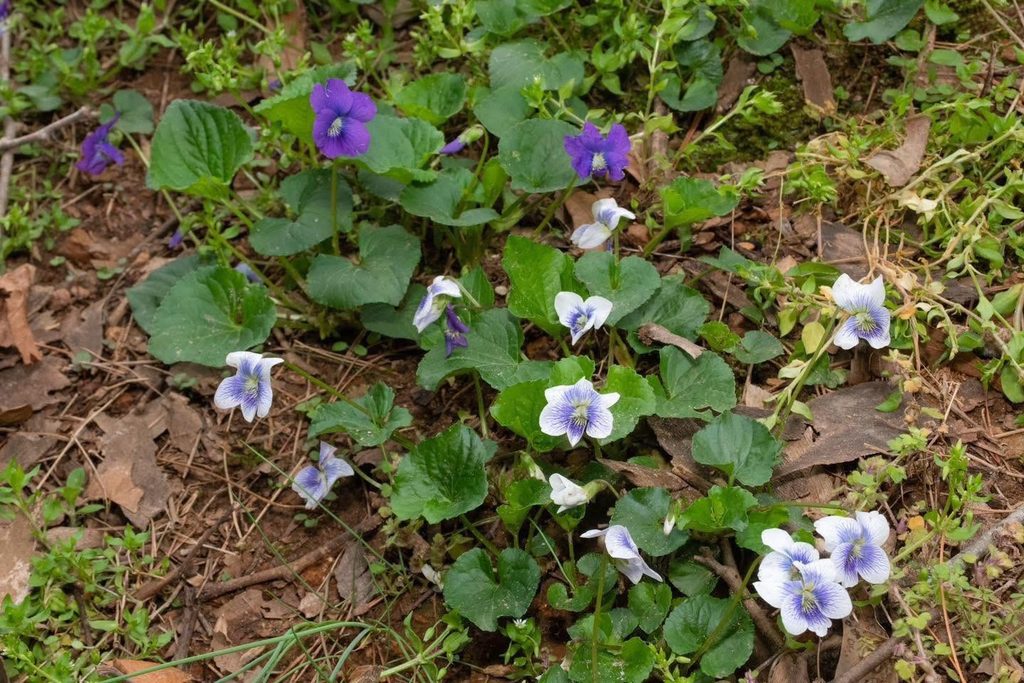
This is New Jersey’s official state flower, adopted in 1971. You will find it blooming low to the ground in early spring, often in lawns, woodland edges, and shaded gardens across the state.
The flowers range from deep purple to pale lavender, and occasionally pure white with purple veining. Each bloom sits on its own thin stalk, separate from the heart-shaped leaves below it.
I like this flower because it asks for nothing. It thrives in poor soil, tolerates some foot traffic, and still produces a cheerful carpet of color every April. Its petals are also edible and were historically used as a mild vitamin C source.
Confederate violet, a white variant with purple streaks, is a close relative sometimes spotted in southern parts of the state.
2. Black-Eyed Susan (Rudbeckia hirta)
Black-eyed Susan is probably the most recognized wildflower in New Jersey roadside meadows. Its golden-yellow petals surround a dark, dome-shaped center, blooming from June through October.
This flower tolerates drought, poor soil, and full summer heat without complaint. That resilience explains why it shows up in highway medians, farm edges, and restoration plantings throughout the state.
Bees and butterflies visit constantly during its long bloom window. Goldfinches also return later in the season to eat the seed heads once the petals fade.
If you want one low-maintenance native for a sunny spot, this is often the first recommendation from local extension offices.
3. Butterfly Weed (Asclepias tuberosa)
Butterfly weed produces clusters of bright orange flowers, a color rarely seen elsewhere in North American wildflowers. It blooms from early summer into fall and reaches about two to three feet tall.
This plant is a milkweed species, which means it serves as a host plant for monarch butterfly caterpillars. Its deep taproot also makes it remarkably drought tolerant once it becomes established.
Unlike some milkweeds, butterfly weed has clear sap rather than milky sap, which is an easy way to identify it in the field. Deer tend to avoid it, making it a practical choice for home gardens.
I have watched monarchs linger on this flower for long stretches, clearly drawn to its nectar. It earns its name honestly.
4. Common Milkweed (Asclepias syriaca)
Common milkweed grows taller and coarser than its butterfly weed cousin, often reaching four to five feet. Its dusty pink, globe-shaped flower clusters release a sweet fragrance that carries on summer air.
This species is the primary host plant for monarch butterflies across the eastern United States. Without it, monarch populations in New Jersey would have nowhere to lay their eggs.
The plant spreads through underground rhizomes, so it can form dense colonies along field edges and roadsides. Its seed pods split open in fall, releasing silky-tufted seeds that drift on the wind.
Conservation groups across New Jersey actively encourage homeowners to plant milkweed, given the well-documented decline in monarch numbers over recent decades.
5. Swamp Milkweed (Asclepias incarnata)
As the name suggests, swamp milkweed prefers consistently moist soil, unlike its drought-tolerant relatives. It grows well along pond edges, rain gardens, and low-lying meadows throughout New Jersey.
Its flowers appear in soft pink to mauve clusters from midsummer onward. Like other milkweeds, it supports monarch caterpillars and attracts a wide range of pollinating insects.
This species handles occasional flooding without difficulty, which makes it a smart choice for rain gardens designed to manage stormwater runoff. It also tends to stay more upright and tidy than common milkweed.
Gardeners looking to combine beauty with function in a wet spot often turn to this reliable native.
6. New England Aster (Symphyotrichum novae-angliae)
New England aster provides one of the last big bursts of color before winter arrives. Its purple to violet daisy-like flowers with yellow centers bloom from September into October.
This late timing matters enormously for pollinators. Bees and butterflies preparing for winter or migration rely on late-blooming natives like this one for a final source of nectar.
The plant grows three to six feet tall and thrives in full sun with average to moist soil. It pairs naturally with goldenrod, creating the classic purple-and-gold autumn meadow look seen across New Jersey fields.
I always notice how busy this flower gets with bumblebees on a warm fall afternoon, right up until the first frost.
7. Wild Bergamot (Monarda fistulosa)
Wild bergamot, also called bee balm, produces shaggy, lavender-pink flower heads that look almost like fireworks frozen in bloom. It flowers through July and August in sunny meadows and open woodland edges.
Crushing the leaves releases a strong minty, oregano-like scent, since this plant belongs to the mint family. That fragrance also seems to deter deer and rabbits from browsing it.
Hummingbirds, bees, and a wide variety of butterflies visit this flower regularly. It has a long history of use in Native American herbal traditions as well.
This is one of those plants that rewards you the moment you brush past it on a trail, releasing its scent into the air.
ALSO READ: 25 Reblooming Perennial Flowers (Varieties Identification, With Pictures)
Woodland and Shade-Loving Wildflowers
8. Wild Columbine (Aquilegia canadensis)
Wild columbine produces distinctive red and yellow nodding flowers with backward-pointing spurs. It blooms in April and May, favoring rocky slopes, woodland edges, and dry open areas.
Hummingbirds returning north in spring depend heavily on this early nectar source. The flower’s spurs are specifically shaped to accommodate a hummingbird’s long bill and tongue.
This plant tolerates poor, rocky soil far better than most garden perennials. It often self-seeds gently, filling gaps without becoming aggressive or invasive.
I find its nodding shape almost whimsical compared to the stiff, upright posture of many other spring wildflowers.
9. Jack-in-the-Pulpit (Arisaema triphyllum)
Jack-in-the-pulpit has one of the most unusual flower structures among New Jersey natives. A hooded, striped spathe curves over a central spadix, resembling a preacher standing at a pulpit.
It blooms in April and May in moist, shaded woodlands with rich soil. By late summer, a cluster of bright red berries replaces the flower structure, standing out sharply against the forest floor.
Interestingly, this plant can change sex from year to year depending on the energy reserves stored in its underground corm. Small plants tend to produce male flowers, while larger, well-fed plants produce female flowers.
Every part of this plant contains calcium oxalate crystals and should never be eaten raw, despite its use as a cooked food by some Indigenous communities historically.
10. Mayapple (Podophyllum peltatum)
Mayapple forms wide colonies of umbrella-like leaves across forest floors in spring. A single white flower hides beneath the leaves of mature plants, often missed entirely unless you crouch down to look.
This flower blooms in April and May, followed by a green fruit that ripens to yellow by midsummer. The ripe fruit is edible in small amounts, though every other part of the plant is toxic.
Mayapple colonies often spread through rhizomes, creating dramatic green carpets in hardwood forests throughout northern and central New Jersey. A single colony may actually be one genetically identical plant system.
I always think of mayapple as one of the forest’s best-kept secrets, since its flower hides in plain sight beneath a canopy of leaves.
11. Bloodroot (Sanguinaria canadensis)
Bloodroot produces a single, delicate white flower with a golden center, emerging directly from the ground before its leaf fully unfurls. It blooms very early, often in March or April.
The name comes from its red-orange sap, which stains skin and was historically used as a dye and medicine by Indigenous peoples. This sap contains compounds that are toxic if ingested in quantity.
Each flower lasts only a few days before petals drop, so timing a visit to see it requires attention to early spring weather. The plant favors rich, moist woodland soil with dappled shade.
Seeing a patch of bloodroot in bloom always feels like the first real confirmation that spring has arrived in New Jersey’s forests.
12. Trout Lily (Erythronium americanum)
Trout lily gets its name from its mottled brown and green leaves, which resemble the markings of a brook trout. Its nodding yellow flowers appear briefly in April, often carpeting forest floors in large colonies.
This plant is a true spring ephemeral, completing its entire flowering cycle before deciduous trees fully leaf out and block sunlight. Individual plants can take years to mature enough to flower at all.
Ants play a role in seed dispersal, carrying trout lily seeds back to their nests after being attracted by a fatty structure attached to each seed. This relationship is called myrmecochory.
Large trout lily colonies in northern New Jersey woodlands can represent decades, sometimes longer, of slow, steady colony growth.
13. Virginia Bluebells (Mertensia virginica)
Virginia bluebells produce clusters of trumpet-shaped flowers that open pink and mature into a soft, true blue. This color transition happens gradually, so a single plant often displays both shades at once.
Blooming in April, this species favors moist, rich floodplain soils along streams and rivers. It is considered native to New Jersey’s Piedmont and Delaware Valley regions specifically.
Like other spring ephemerals, Virginia bluebells disappear entirely by early summer, going dormant underground until the following spring. This makes early spring the only window to spot them.
The blue shade of the mature flowers is genuinely rare among native wildflowers, which is part of why gardeners prize this species so highly.
14. Wild Bleeding Heart (Dicentra eximia)
Wild bleeding heart produces rows of pink, heart-shaped flowers dangling from arching stems above delicate, fern-like foliage. It blooms from late spring through much of summer, longer than most woodland ephemerals.
This species favors rocky, well-drained woodland soil and partial shade, often found on slopes and ledges in the state’s Highlands and Ridge and Valley regions. It is a parent species to many cultivated garden bleeding hearts.
Unlike the Asian bleeding heart commonly sold at nurseries, this native version keeps blooming steadily rather than fading after a single spring flush. That extended bloom period makes it valuable for pollinators over more months.
Hummingbirds and long-tongued bees are the main visitors, drawn to the tubular shape of each flower.
Wetland and Bog-Loving Flowers
15. Cardinal Flower (Lobelia cardinalis)
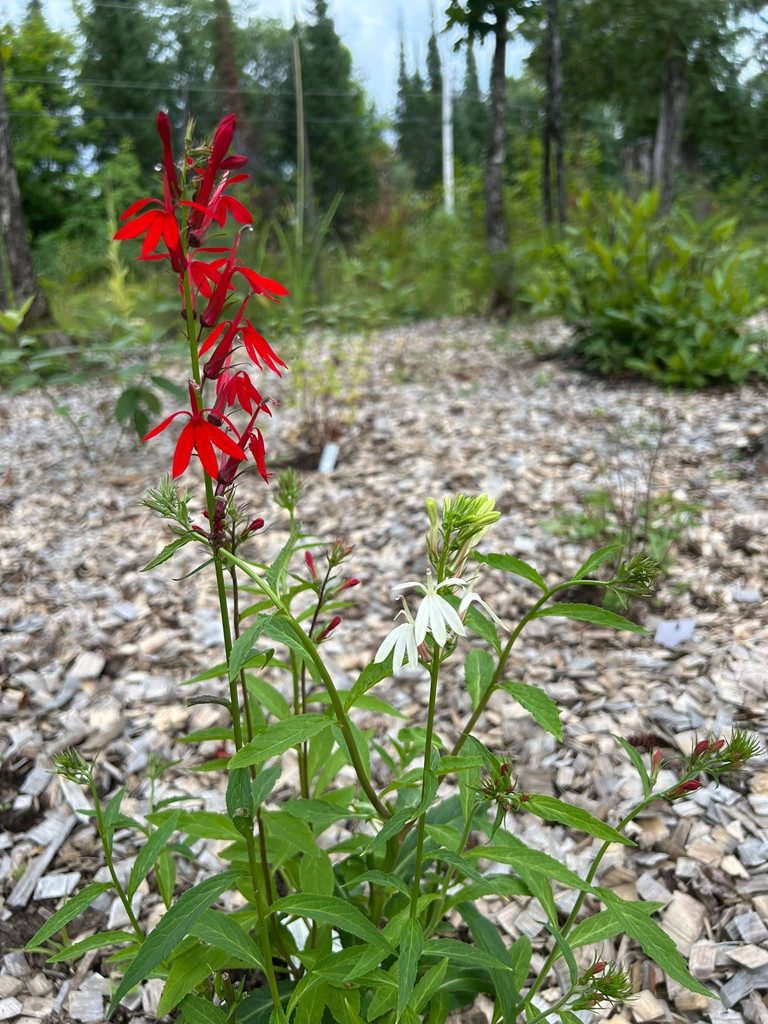
Cardinal flower produces tall spikes of brilliant scarlet red blooms, one of the most vivid colors found in any New Jersey wildflower. It flowers from midsummer into early fall along streambanks and wet meadows.
This intense red color evolved specifically to attract hummingbirds, which see red exceptionally well and can access the flower’s deep nectar tube with their long bills. Bees, by contrast, struggle to pollinate it effectively.
The plant needs consistently moist to wet soil and partial sun, making it a strong choice for rain gardens or pond edges. It can reach three to four feet tall in ideal conditions.
I have rarely seen a native flower stop passersby the way cardinal flower does. Its color simply demands attention against green summer foliage.
ALSO READ: 25 Trees Native to New Jersey (With Growing Details)
16. Blue Flag Iris (Iris versicolor)
Blue flag iris grows in shallow water, marshes, and wet meadows, producing violet-blue flowers with yellow and white veining at their base. It blooms in late spring, typically May and June.
This iris spreads through thick underground rhizomes, forming dense clumps that help stabilize wet soil and shoreline edges. That root system also makes it valuable for erosion control in restoration projects.
Every part of this plant is toxic if ingested, though it poses no danger simply by being present in a garden or wetland. Historically, its root was used cautiously in small medicinal preparations.
Wetland restoration projects across New Jersey frequently include this iris because of its dual value: striking color and genuine ecological function.
17. Joe-Pye Weed (Eutrochium purpureum)
Joe-Pye weed towers over most other wildflowers, often reaching five to seven feet tall in ideal wet meadow conditions. Its dusty mauve-pink flower clusters bloom from midsummer through early fall.
Despite the word “weed” in its name, this plant is a valuable native, not an invasive nuisance. Rutgers Cooperative Extension specifically notes that plants like Joe-Pye weed remain essential for pollinators despite their common name.
Butterflies, particularly swallowtails, gather on Joe-Pye weed in impressive numbers during late summer. Its height also provides useful vertical structure at the back of a native wetland garden bed.
This plant handles occasional flooding well, making it suitable for rain garden basins and low-lying areas that stay damp after storms.
18. Turtlehead (Chelone glabra)
Turtlehead earns its name from white to pale pink flowers shaped remarkably like a turtle’s head with its mouth slightly open. It blooms from late summer into early fall in wet woodlands and streambanks.
This plant serves as the primary host for the Baltimore checkerspot butterfly, a species increasingly uncommon due to wetland habitat loss across the Northeast. Without turtlehead, this butterfly cannot complete its life cycle locally.
Bumblebees are strong enough to force open the closed flower shape and access the nectar inside, while smaller insects generally cannot. This creates a fairly exclusive pollination relationship.
Turtlehead tolerates shade better than many wetland flowers, making it useful for shaded rain gardens or streambank plantings under a partial tree canopy.
19. Swamp Rose Mallow (Hibiscus moscheutos)
Swamp rose mallow produces enormous flowers, sometimes six to eight inches across, in shades of white, pink, or red with a deep maroon center. It blooms from July through September in coastal marshes and wet meadows.
This is one of the largest native flowers found anywhere in New Jersey, rivaling tropical hibiscus varieties in sheer size. Despite its exotic appearance, it is fully native to Atlantic coastal wetlands.
The plant tolerates brackish, slightly salty conditions, which explains its strong presence in tidal marsh edges along the Jersey Shore and Delaware Bay. It reaches four to seven feet in height at maturity.
Seeing this flower bloom feels almost tropical, which surprises many visitors who assume such large blooms could not possibly be native this far north.
ALSO READ: 55 Flowers That Grow in Shade (With Growing Details)
Rare and Pine Barrens Specialties
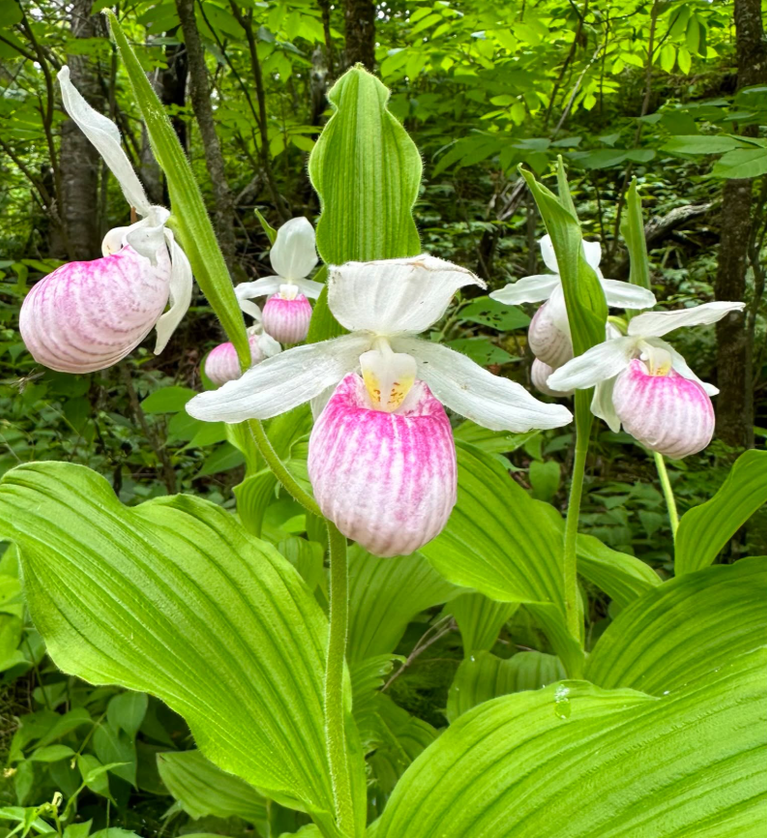
20. Pink Lady’s Slipper (Cypripedium acaule)
Pink lady’s slipper is a striking native orchid with a large, pouch-shaped magenta to pink flower atop a leafless stalk. It blooms between May and July in acidic, well-drained woodland soil under pine and oak canopy.
This orchid depends entirely on a specific soil fungus from the Rhizoctonia genus to germinate and grow, according to the U.S. Forest Service. Plants dug up and transplanted almost always fail without that exact fungal partner present.
Bumblebees pollinate this flower, entering through a slit at the front of the pouch. Curiously, fewer than 10 percent of plants produce fruit in any given year, even though each successful pod holds thousands of seeds.
Never dig up a wild lady’s slipper. It will not survive transplanting, and removing it damages a slow-growing population that may take decades to recover.
21. Pine Barrens Gentian (Gentiana autumnalis)
Pine Barrens gentian produces deep blue, trumpet-shaped flowers that bloom in late summer and early fall, one of the last wildflowers of the season in the Pinelands. It grows in damp, sandy soil in open wetland habitats.
This species is protected under the Pinelands Comprehensive Management Plan due to its rarity and narrow habitat range. The New Jersey Pinelands Commission specifically lists it among plants requiring development safeguards.
The Pinelands National Reserve, where this flower is concentrated, spans 1.1 million acres and covers 22 percent of New Jersey’s land area, according to the National Park Service. That scale is what allows such a fragile species to persist at all.
Finding this gentian in bloom requires visiting the right bog at exactly the right week in September, which makes every sighting feel like a small reward for patience.
22. Bog Asphodel (Narthecium americanum)
Bog asphodel produces small, star-shaped yellow flowers on slender stalks rising from wet, sandy Pine Barrens soil. It blooms in early to midsummer, typically June and July.
This species is now believed to survive almost exclusively within the New Jersey Pine Barrens, according to conservation groups tracking its range. That makes it one of the rarest native wildflowers found anywhere in the state.
Its extreme habitat specificity, requiring consistently saturated, nutrient-poor, acidic soil, explains why it cannot simply be relocated or replicated elsewhere. Any disturbance to its bog habitat threatens the entire remaining population.
This flower is a genuine reminder that New Jersey, despite its dense population and industry, still shelters globally significant rarities within its borders.
23. Rose Pogonia (Pogonia ophioglossoides)
Rose pogonia is a native orchid with a single fringed pink flower and a distinctive bearded, crested lip petal. It blooms in June and July along Pine Barrens streams, bogs, and wet meadows.
This species is described by regional conservation groups as one of the more abundant orchids within Pinelands habitat, unlike many of its rarer orchid relatives. It often grows alongside sphagnum moss in acidic, saturated soil.
Its fragrance, often compared to raspberries, helps attract small bee pollinators despite offering little nectar reward. This is a common strategy among orchids that rely more on visual and scent deception than food rewards.
Spotting a cluster of rose pogonia blooming together along a Pine Barrens streambank is one of the more accessible orchid experiences the region offers hikers.
24. Grass Pink Orchid (Calopogon tuberosus)
Grass pink orchid produces vivid pink to magenta flowers, unusual among orchids because the flower’s lip petal points upward rather than downward. This upside-down structure helps trick bees into pollination.
It blooms in June and July in the same wet, acidic meadows and bog edges favored by rose pogonia. The two species frequently grow within sight of one another across the Pinelands.
When a bee lands on the hinged, weighted lip, the structure tips downward under the insect’s weight, pressing it against the flower’s pollen-bearing column. This clever mechanical trick has no nectar reward attached to it at all.
Regional plant groups list this orchid as fairly abundant within true Pine Barrens habitat, making it one of the more reliably spotted wild orchids for patient hikers.
25. Swamp Pink (Helonias bullata)
Swamp pink produces a dense, rounded cluster of small, fragrant pink flowers dotted with pale blue anthers atop a tall flowering stalk. According to the U.S. Fish and Wildlife Service, the stalk can grow over three feet tall, with a flower cluster one to three inches long.
This species has been federally listed as threatened since 1988, primarily due to wetland habitat loss from development and drainage. Its historical range includes New Jersey, along with several other Atlantic coastal states from New York to Georgia.
Swamp pink requires an obligate wetland habitat, meaning it can only survive in consistently saturated, non-flooded soil such as Atlantic white cedar swamps. New Jersey refuges, including Edwin B. Forsythe National Wildlife Refuge, actively monitor and protect known populations.
Local conservation groups run volunteer “Adopt-a-Swamp-Pink” monitoring programs, sharing survey data with state and federal wildlife agencies. This flower stands as one of New Jersey’s clearest conservation success stories still in progress.
Bringing Native Flowers Into Your Own Garden
If this list has inspired you, starting small is completely fine. I would suggest picking just three or four species suited to your yard’s sun and soil conditions rather than attempting everything at once.
Choose plants that bloom across different seasons, so pollinators always have a nectar source available. A spring ephemeral, a summer bloomer, and a fall aster together create a steady food supply from April through October.
Avoid digging up wild plants, especially rare orchids and Pine Barrens specialties. Reputable native plant nurseries across New Jersey propagate these species responsibly for home gardens.
Once established, native plants genuinely need less water, less fertilizer, and less pest treatment than most ornamental alternatives. That is a practical benefit alongside the ecological one.
Final Thoughts
New Jersey earns the nickname “Garden State” honestly, and its wildflowers are a big part of that story. From a modest violet in a suburban lawn to a rare orchid tucked deep in the Pine Barrens, these 25 flowers represent millions of years of adaptation to this specific patch of land.
I hope this guide helps you notice a few more of them on your next walk, whether that is through a state forest or simply your own backyard.

Tim M Dave is a gardening expert with a passion for houseplants, particularly cacti and succulents. With a degree in plant biology from the University of California, Berkeley, he has vast experience in gardening. Over the years, he has cultivated a vast collection of desert plants and learned a great deal about how to grow and care for these unique companions.