25 Arkansas Native Flowers (With Growing Details)
I still remember pulling over on a back road near the Ozarks, camera in hand, because a roadside ditch looked more colorful than most gardens I had seen. That ditch was just doing what Arkansas does naturally.
Arkansas earns its “Natural State” nickname honestly. Few people expect this much floral variety from a state better known for rivers and mountains.
The numbers support that reputation. Arkansas is home to more than 600 native wildflower species, according to the Encyclopedia of Arkansas, spread from the Delta lowlands to the Ozark and Ouachita highlands.
The state has also invested heavily in keeping these flowers visible. Arkansas has designated nearly 1,000 miles of highway as official wildflower routes, seeded and maintained specifically to support native blooms.
That is a genuinely large commitment for a mid-sized state. It reflects how much identity Arkansas draws from its wild landscapes and roadside color.
This guide covers 25 native flowers you can find across Arkansas’s forests, prairies, and wetlands.
25 Arkansas Native Flowers
1. Tickseed (Coreopsis spp.)
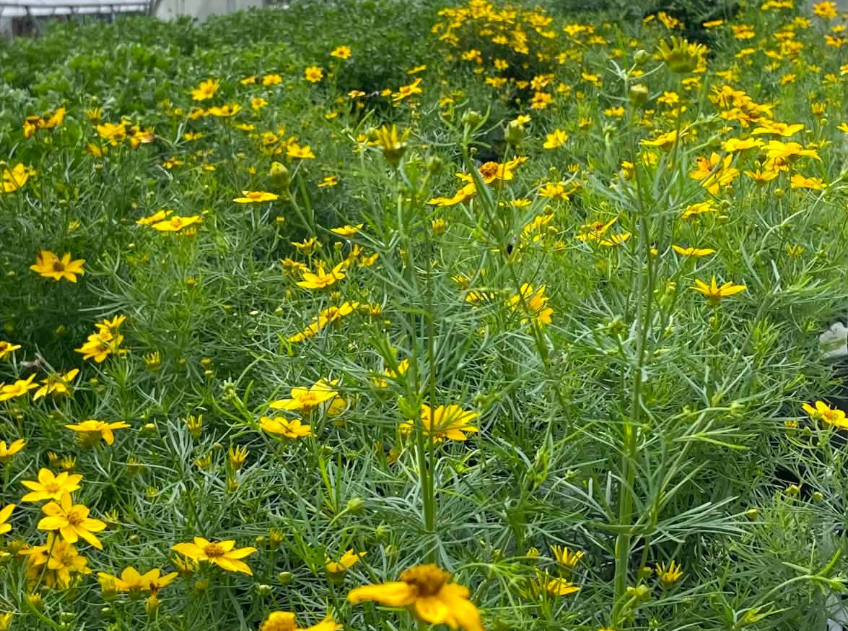
Tickseed represented Arkansas in the U.S. Postal Service’s 1992 Wildflowers of the 50 States stamp series. Its bright yellow, daisy-like flowers bloom in dense clusters atop slender stems.
This plant tolerates poor, rocky soil remarkably well, which explains why it shows up so often along Arkansas roadsides. It is genuinely drought-resistant, requiring little care once established.
Bloom season runs from May through October across most of the state. Bees, butterflies, and beetles all visit tickseed readily for nectar and pollen.
2. Cardinal Flower (Lobelia cardinalis)
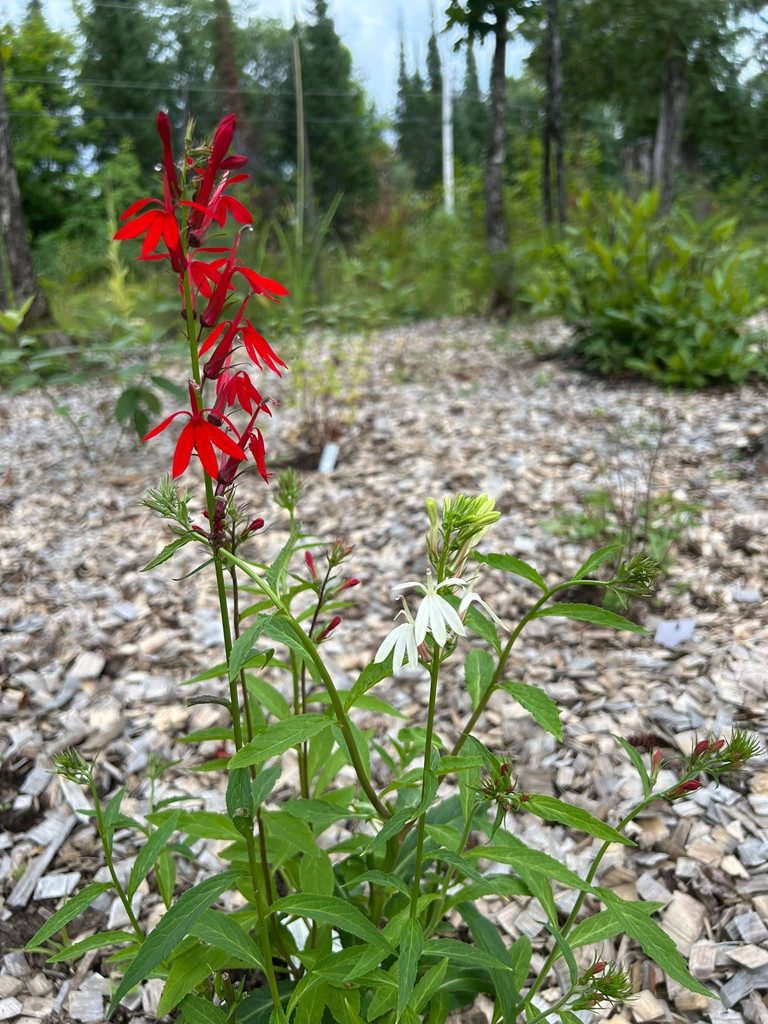
Cardinal flower produces brilliant red blooms in tall spikes, sometimes reaching two to four feet in height. It grows in clumps near streambanks and moist woodland edges statewide.
I have never found a more vivid red in any wild plant I have photographed in Arkansas. The shape is distinctive, with three spreading lower lobes and two slender upper ones.
Ruby-throated hummingbirds favor this flower intensely, drawn by both the color and the tubular shape. Expect blooms from midsummer into early fall.
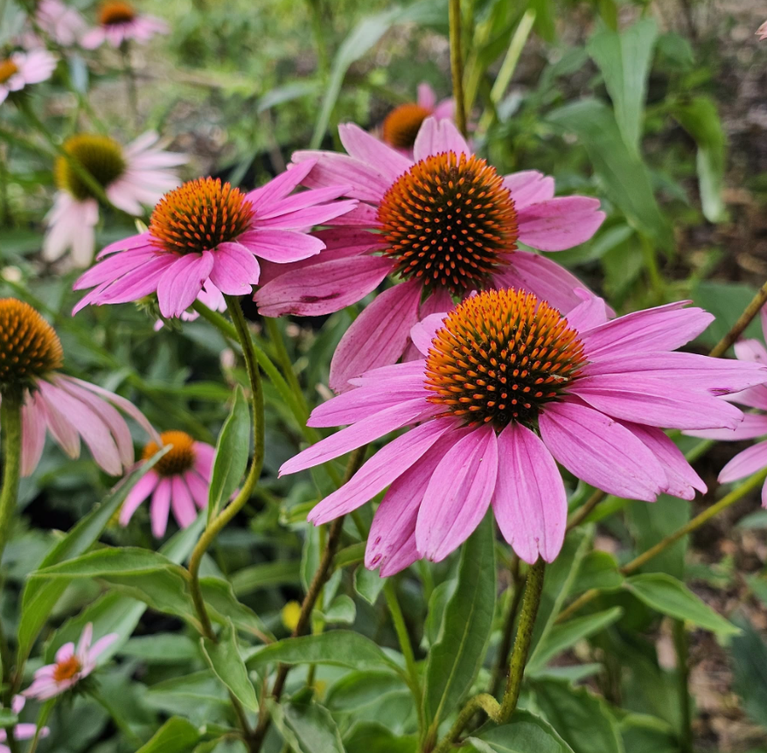
3. Purple Coneflower (Echinacea purpurea)
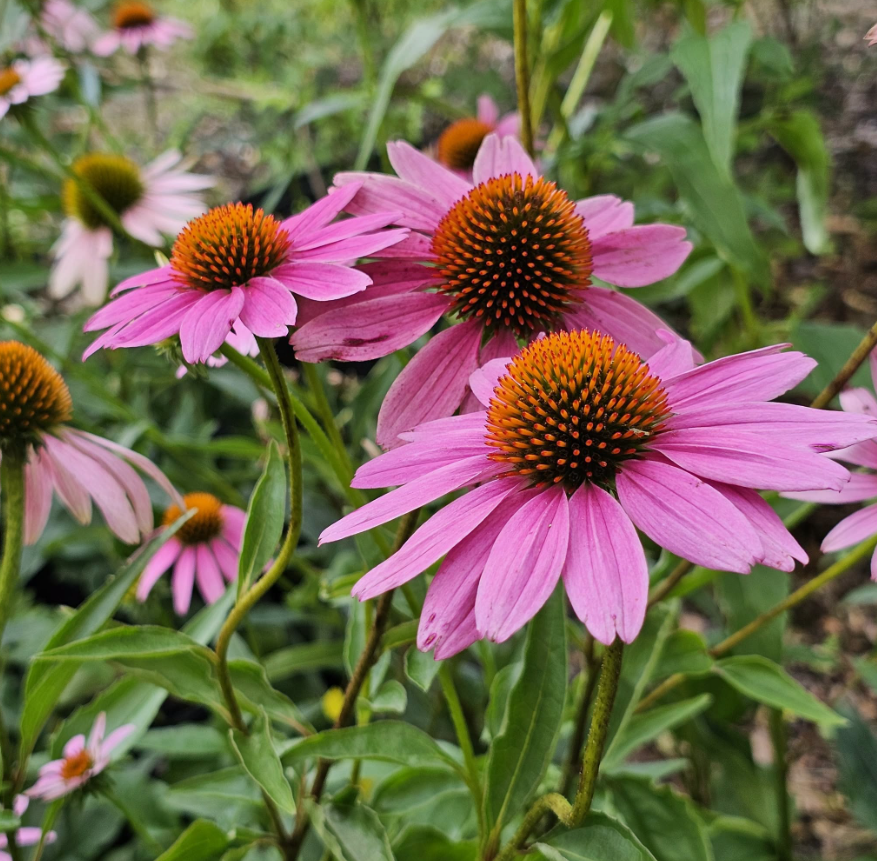
Purple coneflower produces pink-to-purple petals surrounding a raised, spiky orange-brown center. It grows across prairies, open woods, and roadsides throughout Arkansas.
This plant has a long history in traditional medicine, particularly among Indigenous communities who used its roots for various remedies. Modern herbal supplements still draw heavily on this species.
Butterflies and native bees visit purple coneflower constantly during its bloom window. Look for it flowering from June through August in sunny, well-drained locations.
4. Black-Eyed Susan (Rudbeckia hirta)
Black-eyed Susan is one of the most recognizable wildflowers in the eastern United States, and Arkansas hosts it abundantly. Golden-yellow petals surround a dark brown, dome-shaped center.
This flower belongs to the same broader family as sunflowers, which explains the shared golden coloring and sturdy growth habit. It tolerates both drought and poor soil with ease.
You will find it blooming from May through October, one of the longest bloom windows of any Arkansas native. It thrives especially well along disturbed roadsides.
ALSO READ: 25 Best Zone 7 Perennial Flowers (With Growing Details)
5. Spider Lily (Hymenocallis spp.)
Spider lily produces an intricate white flower with long, thin, spidery petals extending outward from a central cup. A single bloom sits atop each tall stem.
This plant favors wet, sandy soil near riverbanks and floodplain forests, particularly in the Delta region. Its unusual structure makes it easy to identify even from a distance.
I find spider lily strikingly delicate compared to most Arkansas wildflowers. Bloom time generally runs from late spring into midsummer.
6. Beardtongue (Penstemon spp.)
Beardtongue gets its curious name from a fifth stamen that lacks pollen, protruding from the flower like a small, fuzzy tongue. Several Penstemon species grow natively across Arkansas.
The flowers themselves are tubular, typically white, pink, or lavender, clustered along an upright stem. This bloom period lasts about a month, usually falling between late spring and early summer.
Bees are the primary pollinators, drawn by the tubular shape that fits their body well. You will find beardtongue in open woods, glades, and prairie remnants statewide.
7. Showy Evening Primrose (Oenothera speciosa)
Showy evening primrose produces large, pale pink, cup-shaped flowers that open in the evening and often remain through the following morning. It spreads readily across open fields and roadsides.
A close relative, common evening primrose, shares similar traits but differs slightly in color and growth pattern. Both are common enough that many Arkansans see them without realizing they are native.
This plant handles difficult growing conditions with ease. Look for blooms from April through July across most of the state.
8. Wild Blue Phlox (Phlox divaricata)
Wild blue phlox produces clusters of pale blue-to-lavender flowers with five notched petals, blooming low across Arkansas’s forest floors each spring. It often carpets shaded woodland areas in dense patches.
This flower is one of the earliest signs of spring in Ozark forests, typically appearing in April before the tree canopy fully leafs out. That timing lets it capture sunlight before shade sets in.
Its sweet fragrance attracts a range of early-season pollinators, including butterflies and moths. Bloom time generally wraps up by late May.
ALSO READ: 25 Best Perennial Flowers for Zone 8 (With Details)
9. Trillium (Trillium spp.)
Trillium produces a distinctive three-petaled flower above three broad leaves, a pattern reflected in its very name. Several species grow across Arkansas’s shaded, moist forest floors.
This plant is notoriously slow to mature, sometimes taking seven years or more to produce its first bloom from seed. That patience makes established trillium patches genuinely valuable to protect.
Ants play a surprising role in trillium’s life cycle, dispersing its seeds in exchange for a fatty seed attachment. You will find blooms from March through May in Ozark and Ouachita woodlands.
10. Wild Columbine (Aquilegia canadensis)

Wild columbine produces nodding, red-and-yellow flowers with distinctive backward-pointing spurs. It grows on rocky bluffs, ledges, and open woodland edges across Arkansas’s highland regions.
The spurs store nectar that only long-tongued pollinators, particularly hummingbirds, can reach efficiently. I always find columbine’s engineered-looking shape more striking up close than in photographs.
This plant favors well-drained, rocky soil over rich bottomland. Bloom season typically runs from April through June.
11. Butterfly Weed (Asclepias tuberosa)
Butterfly weed produces vivid orange flower clusters atop sturdy stems, standing out sharply against green summer foliage. It is one of the showiest members of the milkweed family.
This plant matters far beyond its color. Milkweed species serve as the only host plants for monarch butterfly caterpillars, making butterfly weed essential to monarch survival across its range.
Arkansas populations support monarchs during their long migration through the central United States. Look for blooms from May through September in dry, sunny fields.
12. Spiderwort (Tradescantia spp.)
Spiderwort produces three-petaled, deep blue-to-purple flowers that typically close by early afternoon. Its long, grass-like leaves give the plant an almost tropical appearance.
This flower blooms early in the day and often only lasts a single morning per bloom, though the plant continuously produces new flowers over several weeks. That short individual lifespan surprises many first-time observers.
Bees are its primary pollinators, visiting heavily during the morning bloom window. You will find spiderwort across prairies, open woods, and roadsides from April through June.
ALSO READ: 35 Shade Hardy Perennials (With Growing Details)
13. Indian Paintbrush (Castilleja coccinea)
Indian paintbrush produces vivid red-orange bracts surrounding small, inconspicuous true flowers. This coloring does the attracting, not the actual bloom structure itself.
This species is hemiparasitic, drawing supplemental nutrients from nearby grass roots. That relationship helps explain its intense color even in relatively poor prairie soil.
You will find it scattered across Arkansas’s remaining prairie remnants and open glades. Bloom time generally runs from April through June.
14. Prairie Blazing Star (Liatris pycnostachya)
Prairie blazing star produces tall, dense spikes of small, feathery purple flowers, often reaching four feet in height. Unusually, the spike blooms from the top downward rather than the reverse.
This plant favors Arkansas’s remaining tallgrass prairie remnants, which have shrunk dramatically since European settlement. Less than 1% of the state’s original prairie survives today, making sightings genuinely special.
Butterflies, including migrating monarchs, favor this flower heavily in late summer. Bloom time typically runs from July through September.
15. Rattlesnake Master (Eryngium yuccifolium)
Rattlesnake master produces unusual, spiky, globe-shaped white flower heads atop tall stems. Its stiff, yucca-like leaves give the plant an almost desert appearance despite growing in humid prairie conditions.
This species earned its name from historical, though scientifically unproven, beliefs that it could treat snakebites. Indigenous communities also used its fibrous leaves for cordage and sandals.
You will find it in prairie remnants and open glades across the state. Bloom season generally runs from June through September.
16. Prairie Verbena (Glandularia bipinnatifida)
Prairie verbena forms a low, spreading groundcover studded with dense clusters of small purple-pink flowers. It blooms prolifically across open, sunny sites throughout the growing season.
This plant tolerates heat and drought exceptionally well, making it one of the more resilient native groundcovers in Arkansas. It spreads readily without becoming aggressively invasive.
Butterflies and bees visit prairie verbena constantly during its long bloom window. Expect flowering from April clear through October in favorable years.
17. Blazing Star (Liatris squarrosa)
A shorter relative of prairie blazing star, this species produces dense, rounded purple flower heads along a compact stalk. It favors dry, rocky glades rather than moist prairie soil.
This flower is especially common across Arkansas’s Ozark and Ouachita glade habitats, where thin soil over exposed bedrock limits competition from taller plants. It has adapted well to those harsh conditions.
Look for blooms from July through September. Pollinating insects, particularly bees and butterflies, rely on it heavily in late summer glade habitats.
18. Green-and-Gold (Chrysogonum virginianum)
Green-and-gold produces bright yellow, star-shaped flowers close to the ground, spreading slowly to form a low groundcover in shaded woodland settings. Its common name describes its coloring precisely.
This plant thrives in the dappled light of Arkansas’s hardwood forests, particularly in the Ozark uplands. It tolerates a range of soil types as long as moisture stays consistent.
Gardeners increasingly plant it as a native alternative to non-native groundcovers. Bloom time runs from March through June, with occasional repeat flowering into fall.
19. Wild Sweet William (Phlox maculata)
Wild sweet William produces dense clusters of pink-to-purple flowers along tall, upright stems, often growing in moist meadows and low woodland edges. It resembles garden phlox closely.
This species favors consistently damp soil, often appearing near streams or seasonally wet fields across the state. Its fragrance draws a steady stream of pollinators during peak bloom.
Butterflies and moths visit this flower heavily throughout summer. Expect blooms from May through August in favorable, moisture-retentive sites.
20. Downy Wood Mint (Blephilia ciliata)
Downy wood mint produces whorled clusters of pale blue-purple flowers stacked along a square stem, a signature trait of the mint family. Its leaves carry a distinct minty fragrance when crushed.
This plant favors partial shade and well-drained soil, often appearing along woodland edges and open glades. It handles Arkansas’s humid summers better than many true mints.
Bees are drawn strongly to its flowers throughout the bloom period. Look for it flowering from late spring into midsummer across much of the state.
21. Firewheel (Gaillardia pulchella)
Firewheel produces bold, two-inch daisy-like flowers with red centers fading outward to yellow tips. The overall pattern resembles a spinning pinwheel, which inspired its common name.
This annual thrives in sandy or well-drained soil, often appearing along roadsides and disturbed fields throughout the state. It reseeds readily, forming reliable colonies year after year.
Its long bloom season makes it a pollinator favorite well into the hotter months. Expect flowers from spring through the first frost in most years.
22. Dotted Blazing Star (Liatris punctata)
Dotted blazing star produces dense, rose-lavender flower spikes atop a compact, sturdy stalk. Tiny dots visible on its narrow leaves give the plant its distinguishing common name.
This species handles drought better than most Liatris relatives, favoring dry prairie remnants and rocky glades. Its deep taproot allows it to access moisture well below the surface.
Bees and butterflies rely on it heavily during late-season bloom. Look for flowering from August through October, later than most Arkansas prairie natives.
23. Lemon Bee Balm (Monarda citriodora)
Lemon bee balm produces tiered, lavender-pink flower whorls stacked along a single stem, creating a layered, tower-like appearance. Crushed leaves release a strong citrus scent.
This short-lived perennial often behaves like an annual, reseeding itself reliably each year across sunny fields and roadsides. It tolerates Arkansas’s heat and humidity with ease.
Bees, in particular, favor this plant intensely, giving rise to its common name. Bloom season typically runs from May through August.
24. Aromatic Aster (Symphyotrichum oblongifolium)
Aromatic aster produces abundant lavender-blue, daisy-like flowers on a compact, bushy plant, often blooming later in the season than most Arkansas wildflowers. Crushed foliage releases a mild, pleasant fragrance.
This species provides crucial late-season nectar just as many pollinators prepare for winter. It thrives in dry, sunny prairie and glade settings across the state.
I appreciate how this flower extends Arkansas’s wildflower season well past summer’s peak. Expect blooms from September through November, right up to the first hard frost.
25. Prairie Spiderwort (Tradescantia occidentalis)
Prairie spiderwort is a drought-tolerant relative of common spiderwort, distinguished by narrower, grass-like leaves and slightly smaller purple-blue flowers. It favors drier, sandier soil than its woodland cousin.
This plant thrives particularly well in the Arkansas River Valley and remaining prairie remnants to the west. Its resilience against heat makes it a dependable summer bloomer.
Bees visit heavily during its short morning bloom window each day. Look for flowering from April through July across suitable open habitats.
Why Arkansas’s Native Flowers Deserve Attention
Arkansas sits at a genuine crossroads of ecosystems. The Ozark Plateau, Ouachita Mountains, Arkansas River Valley, and Mississippi Delta all meet within one state’s borders.
That overlap creates unusually diverse growing conditions in a relatively small geographic footprint. A flower thriving in the Delta’s rich bottomland soil may never take root in the Ozarks’ rocky uplands.
Native flowers also carry practical benefits beyond good looks. They typically need less irrigation than imported ornamentals, and many support pollinators that regional wildlife relies on directly.
One detail is worth knowing upfront. Arkansas’s official state flower, the apple blossom, is not actually native to North America. It was chosen in 1901 to honor the state’s booming apple industry, not its wild flora.
Where to See the Best Wildflower Displays in Arkansas
A few locations consistently deliver the best shows. The Ozark National Forest offers excellent spring displays of trillium, wild blue phlox, and columbine along shaded hiking trails from March through May.
Remaining prairie remnants near Rich Mountain and the Ouachita Mountains provide some of the best chances to see blazing star, rattlesnake master, and coneflower in something close to their historic natural setting.
Arkansas’s designated wildflower highway routes, spanning nearly 1,000 miles statewide, offer accessible roadside viewing of tickseed, black-eyed Susan, and firewheel from late spring through fall.
Frequently Asked Questions
What is Arkansas’s official state flower? The apple blossom has held this title since 1901, chosen to honor the state’s historic apple-growing industry rather than its native wild flora.
How many native wildflower species does Arkansas have? Arkansas hosts more than 600 documented native wildflower species, spread across the Delta, Ozark, Ouachita, and River Valley regions.
When is the best time to see Arkansas wildflowers? Spring, from April through June, offers the widest variety, though many prairie and glade species peak later, from midsummer into fall.
Are Arkansas native flowers good for home gardens? Yes. Species like purple coneflower, black-eyed Susan, and butterfly weed need far less water than non-native ornamentals and support local pollinators effectively.
Final Thoughts
Twenty-five flowers only begin to cover what Arkansas offers. With more than 600 native wildflower species spread across four distinct regions, there is always something new to spot.
What strikes me most is how much of this beauty survives along ordinary roadsides, not just in remote wilderness. Arkansas has made real efforts to protect that accessibility.
Next time you’re driving a rural Arkansas highway, slow down for a moment. There is likely a flower nearby with a story far richer than the ditch it grows in.

Tim M Dave is a gardening expert with a passion for houseplants, particularly cacti and succulents. With a degree in plant biology from the University of California, Berkeley, he has vast experience in gardening. Over the years, he has cultivated a vast collection of desert plants and learned a great deal about how to grow and care for these unique companions.