20 Types of Jasmine Plants: True and Look-Alike Varieties Explained
The genus Jasminum alone holds more than 200 recognized species of shrubs and climbing vines, according to botanical records from the University of Florida’s Center for Aquatic and Invasive Plants and the University of South Florida’s Plant Atlas.
Jasmine belongs to the olive family, Oleaceae, and most species are native to the warmer regions of Asia, Africa, and Australia. The name itself comes from the Persian word yasmin, meaning “gift from God.”
Most jasmines are climbing vines or arching shrubs. They produce small, star-shaped, often white or yellow flowers with an intense fragrance, usually strongest in the evening or early morning.
Not every plant with “jasmine” in its name is a true Jasminum. Star jasmine, night-blooming jasmine, and Cape jasmine all belong to completely different genera.
This guide sorts through the confusion. I have grouped 20 well-known jasmine types, both true Jasminum species and their popular look-alikes, so you can pick the right one for your climate, your nose, and your garden space.
True Jasminum Species
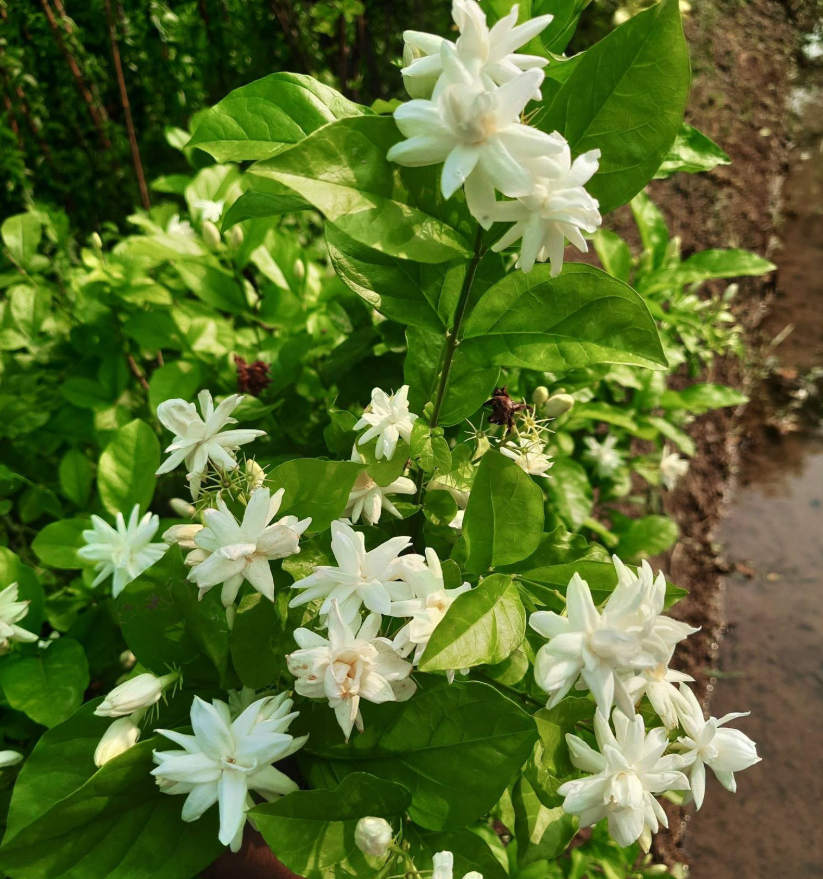
These 16 plants belong to the genuine jasmine genus. If you want the classic jasmine scent and growth habit, start here.
1. Common Jasmine (Jasminum officinale)
This is the jasmine most people picture first. It is a deciduous or semi-evergreen twining vine that can climb 15 to 20 feet with support.
The flowers are pure white, star-shaped, and appear in clusters from summer into early autumn. Its scent is the classic sweet jasmine fragrance used in perfumery for centuries.
Common jasmine is native to the Caucasus and parts of Asia. It tolerates USDA hardiness zones 7 through 10, making it one of the hardier true jasmines.
2. Arabian Jasmine (Jasminum sambac)
Arabian jasmine is the national flower of the Philippines and Indonesia, where it holds deep cultural meaning. It is a compact, bushy evergreen shrub rather than a rampant climber.
The double or single white flowers turn a soft purple as they age, which I always find beautiful and slightly melancholic. This species is the primary source of jasmine tea flavoring worldwide.
It thrives in warm, humid climates, roughly USDA zones 9 through 11, and does well in containers if you live somewhere colder.
ALSO READ: 15 Best Types of Jasmine Ground Cover Plants: Fragrant, Spreading, and Stunning Varieties
3. Spanish Jasmine (Jasminum grandiflorum)
Also called Royal jasmine, this species produces larger flowers than common jasmine, often tinged pink on the outer petals before opening white. It is widely cultivated in India and Egypt for the perfume industry.
A single acre of Spanish jasmine can require hand-picking flowers at dawn, since the blooms release most of their fragrant oils in early morning hours. This labor-intensive harvest is part of why jasmine absolute oil remains expensive.
It grows as a semi-climbing shrub and suits zones 9 through 11.
4. Winter Jasmine (Jasminum nudiflorum)
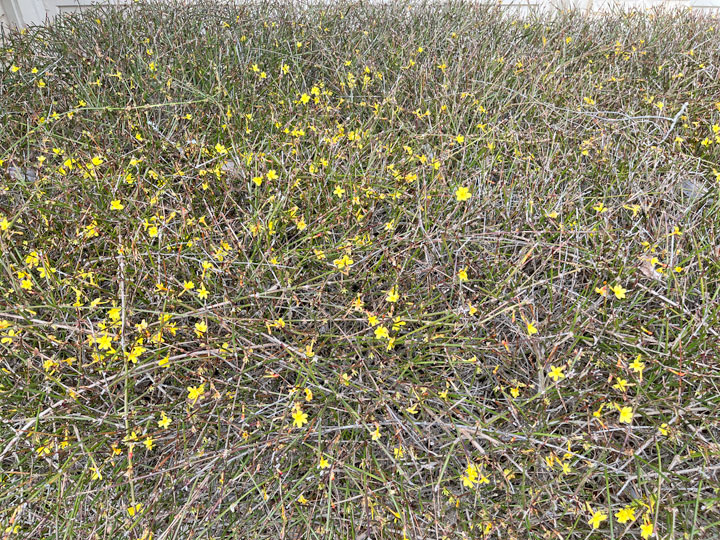
Winter jasmine breaks the mold completely. It is one of the only jasmines with no fragrance, and it blooms in the dead of winter when almost nothing else flowers.
According to North Carolina State University’s Extension Gardener Plant Toolbox, this deciduous shrub or vine reaches 10 to 15 feet tall when trained upward, with bright yellow, funnel-shaped flowers appearing before the leaves. It blooms three to four weeks earlier than forsythia, based on observations from Clemson’s Home & Garden Information Center.
Native to China, it is remarkably cold hardy, surviving down to zone 6.
5. Primrose Jasmine (Jasminum mesnyi)
Primrose jasmine looks a lot like its winter-blooming cousin but grows larger and blooms slightly later, from late winter into spring. Its semi-double, pale yellow flowers are showier than winter jasmine’s simple blooms.
It forms an arching, sprawling shrub that works beautifully cascading over retaining walls. Like winter jasmine, it carries little to no scent.
Native to southwestern China, it suits zones 8 through 10.
6. Pink Jasmine (Jasminum polyanthum)
Pink jasmine is one of the most fragrant and fastest-growing vines you can plant. The flower buds are a rich pink, opening into white, star-shaped blooms in dense clusters.
I once planted this near a bedroom window, and by spring the scent was almost overwhelming in the best possible way. It flowers heavily in late winter through spring.
Native to China, it grows in zones 8 through 10 and can become invasive in mild coastal climates if left unchecked.
ALSO READ: 25 Best Plants for a West-Facing Window (Afternoon Sun Lovers)
7. Italian Jasmine (Jasminum humile)
Also known as yellow jasmine, this species stands apart because it flowers in bright yellow rather than white, and it carries a light, pleasant fragrance rather than an intense one.
It grows as a rounded, semi-evergreen shrub reaching 4 to 10 feet, useful for hedging or informal borders. Unlike vining jasmines, it does not need a trellis.
Native to the Himalayas and China, it handles zones 7 through 10.
8. Angelwing Jasmine (Jasminum nitidum)
Angelwing jasmine gets its name from the shape of its narrow, pointed petals, which twist slightly as they open, resembling small wings. The pinwheel-shaped white flowers bloom nearly year-round in warm climates.
It grows as a twining evergreen vine or sprawling shrub with glossy, dark green leaves. The fragrance is strong and sweet, especially at night.
Native to the Admiralty Islands near Papua New Guinea, it suits zones 9b through 11.
9. Grand Duke of Tuscany Jasmine (Jasminum sambac ‘Grand Duke of Tuscany’)
This cultivar of Arabian jasmine produces fully double flowers that resemble tiny white roses, which is why some growers call it rose jasmine. The blooms are heavier and more ornate than typical Jasminum sambac flowers.
It is a slow, compact grower reaching 3 to 4 feet, ideal for pots on a sunny patio. The fragrance is powerful, often compared to a blend of jasmine and orange blossom.
It suits zones 9 through 11 and is commonly grown as a houseplant elsewhere.
10. Maid of Orleans Jasmine (Jasminum sambac ‘Maid of Orleans’)
Another Arabian jasmine cultivar, this one produces single, five-petaled white flowers that are simpler than the Grand Duke variety but bloom more prolifically. It is the cultivar most often used for making jasmine tea and Hawaiian leis.
The shrub stays relatively compact, usually under 4 feet, and flowers continuously through warm months. Gardeners in humid, tropical regions favor it for its reliability.
It grows best in zones 9 through 11.
11. Gold Coast Jasmine (Jasminum dichotomum)
Gold Coast jasmine is a vigorous, evergreen climbing vine native to West Africa, first introduced to Florida in the early 1920s through horticulture, according to the University of Florida IFAS plant directory. It has since escaped cultivation and naturalized in parts of South Florida.
The flowers open white and fade to pink, blooming almost continuously in warm climates. Because of its aggressive growth, several southern U.S. states now list it as an invasive species.
It suits zones 9b through 11, but I would think twice before planting it near natural woodland.
12. Brazilian Jasmine (Jasminum fluminense)
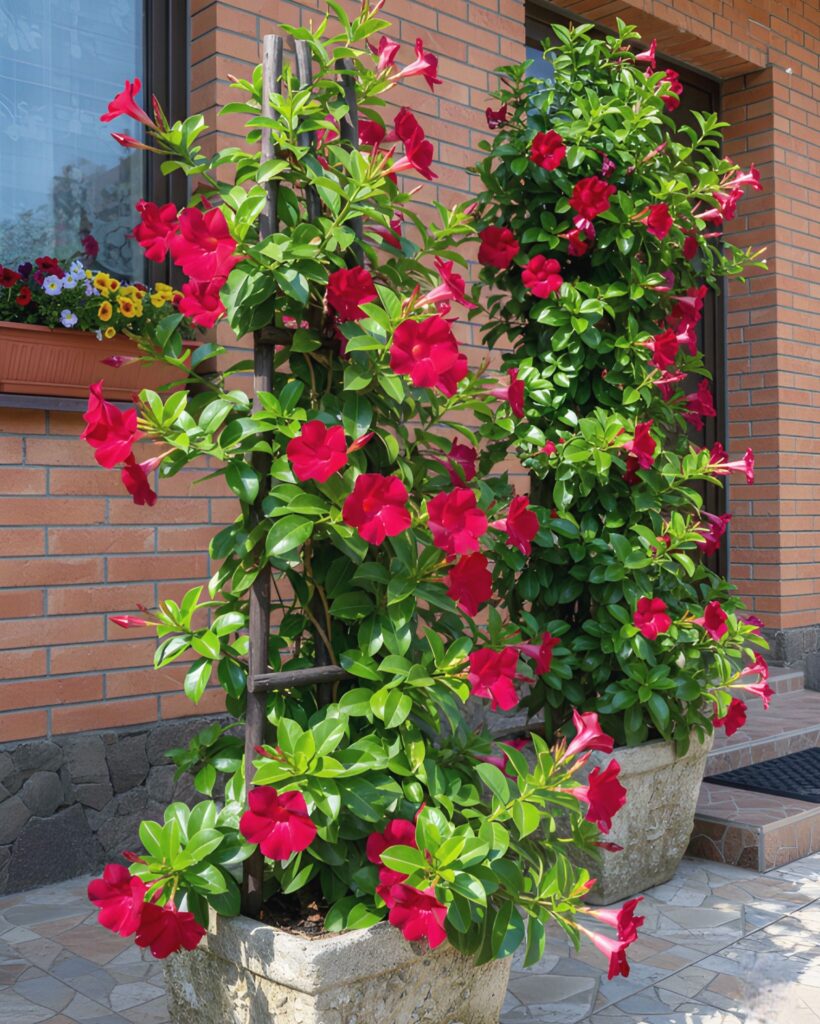
Despite the name, Brazilian jasmine is also native to Africa; it earned its common name after naturalizing widely in Brazil. Like Gold Coast jasmine, it was introduced to Florida in the early 1920s and has since spread into natural areas, per University of Florida IFAS records.
It can be told apart from Gold Coast jasmine by its trifoliate, hairless leaves and larger flower clusters. The white, fragrant flowers bloom heavily in summer.
It is considered invasive in parts of the southeastern United States, so check local guidance before planting.
13. Downy Jasmine (Jasminum multiflorum)
Downy jasmine, sometimes called star jasmine (adding to the naming confusion), is covered in soft, fuzzy hairs on its stems and leaves, which is where its common name comes from. The star-shaped white flowers bloom in clusters nearly all year in tropical climates.
It grows as a sprawling shrub or loose climber, reaching 4 to 10 feet. It has a lighter fragrance than Arabian or Spanish jasmine.
Native to India, it thrives in zones 9 through 11.
14. Forest Jasmine (Jasminum abyssinicum)
Forest jasmine is a strong, woody climber native to high-altitude montane forests across East and Southern Africa, from Ethiopia down to South Africa’s KwaZulu-Natal region. Its stems can grow robust enough to reach 13 centimeters in diameter as it climbs into the forest canopy.
The white flowers, tinged pink on the outside, are sweetly scented, and the fruit forms as small, glossy black berries. Traditionally, Kenya’s Maasai community has used parts of this plant as a medicinal remedy.
It is less common in ornamental cultivation but valued in its native range for both fragrance and traditional use.
15. Stephan’s Jasmine (Jasminum × stephanense)
This is a hybrid jasmine, a cross between common jasmine and Jasminum beesianum, prized for its pale pink flowers rather than the usual white. According to NC State Extension’s Plant Toolbox, it is a deciduous, twining vine that is non-toxic to cats, dogs, and horses.
It tolerates full sun well and works nicely trained against garden walls. The blooms carry a moderate, pleasant fragrance.
Hardy in zones 6 through 9, it handles cooler climates better than most tropical jasmines.
16. Azores Jasmine (Jasminum azoricum)
Azores jasmine, sometimes called Turkish jasmine, is a compact, evergreen twining vine with glossy, trifoliate leaves and pure white, fragrant flowers. Despite the name, it is not actually native to the Azores; the origin trail is a bit murky, though it is often linked to Madeira.
It flowers most heavily in summer and can be grown in containers where winters turn cold. The scent is sweet but noticeably softer than common jasmine.
It suits zones 9 through 11 outdoors.
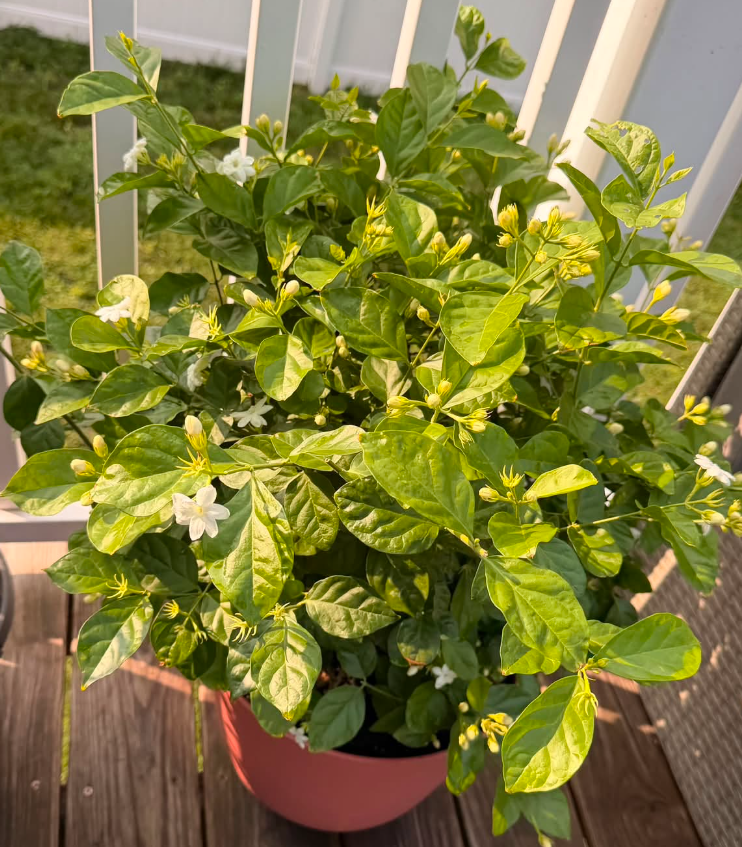
Popular “Jasmine” Look-Alikes (Not True Jasminum)
These four plants share the jasmine name and, often, a similar fragrance, but they belong to entirely different plant families. I think it is worth knowing the difference before you buy.
17. Star Jasmine / Confederate Jasmine (Trachelospermum jasminoides)
This is easily the most commonly planted “jasmine” in American gardens, yet it is not part of the Jasminum genus at all. It belongs to the dogbane family, Apocynaceae, as confirmed by NC State Extension’s Plant Toolbox.
The creamy white, pinwheel-shaped flowers are intensely fragrant and bloom in late spring into summer. As a vine, it can climb up to 20 feet given a support structure, and it has earned the Royal Horticultural Society’s Award of Garden Merit.
It is non-toxic to cats, dogs, and horses, and it tolerates drought once established.
18. Madagascar Jasmine (Stephanotis floribunda)
Madagascar jasmine belongs to the milkweed family, Apocynaceae, and is native to the island nation of Madagascar, not the Jasminum genus despite the name. Its waxy, tubular white flowers are a favorite for bridal bouquets because of their heady, sweet fragrance and long vase life.
It grows as a twining vine and is typically kept as a houseplant in temperate climates, since it only tolerates zones 10 and 11 outdoors. Unlike true jasmines, its sap can irritate skin, so I would suggest gloves when pruning it.
19. Cape Jasmine (Gardenia jasminoides)
Cape jasmine is simply the common name for the classic gardenia, a member of the coffee family, Rubiaceae, according to Clemson’s Home & Garden Information Center. The waxy white flowers, single or double depending on cultivar, range from 2 to 4 inches across.
Older gardenia cultivars are cold hardy to USDA zone 8, while many newer, smaller cultivars tolerate zone 7a. Gardenias are considered deer resistant, which makes them a practical border shrub in areas with heavy deer pressure.
20. Night-Blooming Jasmine (Cestrum nocturnum)
Night-blooming jasmine belongs to the nightshade family, Solanaceae, and it is worth noting that all parts of this plant are toxic if ingested, unlike most true jasmines. Its small, tubular, greenish-white flowers release a powerful, almost overwhelming fragrance after dark.
It grows as a fast, sprawling evergreen shrub reaching 10 feet or more in frost-free climates. Because of its toxicity, I would keep it away from homes with curious pets or small children.
It suits zones 9 through 11 and is best planted at a distance from windows and patios, since the nighttime scent can be intense in enclosed spaces.
Jasmine by the Numbers
A few facts help put this genus in perspective. Jasminum contains over 200 accepted species, according to both the University of Florida IFAS plant directory and the University of South Florida Plant Atlas.
Most species originate from the warmer parts of the Old World, spanning tropical and subtropical Africa, Asia, and Australia, as confirmed by NC State Extension’s Plant Toolbox. Only a small fraction, such as winter jasmine and Stephan’s jasmine, tolerate temperatures as cold as USDA zone 6.
Container-grown jasmines typically stay compact at 4 to 5 feet tall, while vining types with proper support can climb up to 20 feet. That is roughly a fourfold difference in size, depending entirely on how the plant is grown and pruned.
Two of the species covered here, Gold Coast jasmine and Brazilian jasmine, were both introduced to Florida in the early 1920s through the horticulture trade and have since naturalized outside cultivation. That is a reminder that even fragrant, ornamental plants can carry ecological consequences once they leave the garden bed.
How to Choose the Right Jasmine for Your Garden
Check your USDA hardiness zone first. True jasmines range from cold-tolerant winter jasmine in zone 6 to strictly tropical species that need zone 10 or warmer.
Decide if you want fragrance or just flowers. Winter and primrose jasmine offer color with little scent, while Arabian, common, and Spanish jasmine deliver the classic perfume.
Think about growth habit. Vining types need a trellis, arbor, or wall to climb. Shrub types like Arabian jasmine and Italian jasmine work well in containers or borders.
Watch for invasive tendencies. Gold Coast jasmine and Brazilian jasmine have naturalized aggressively in parts of the southeastern United States, so I would check local extension guidance before planting either one outdoors.
Quick Care Tips That Apply to Most True Jasmines
Jasmines generally need full sun for the best flowering, though a few tolerate partial shade. Most prefer moist, well-drained soil, though some species handle drier conditions once established, according to NC State Extension.
Container-grown jasmines usually stay at 4 to 5 feet tall and are easy to prune to size, while some garden specimens can reach 20 feet given the right support. Since flowers form on old growth, prune right after flowering to protect next season’s buds.
Most vining jasmines benefit from a trellis, arbor, or wall from the start, since retrofitting support onto an established vine is far harder than planning ahead.
Frequently Asked Questions
Is every fragrant white flower called jasmine actually a Jasminum species? No. Star jasmine, Madagascar jasmine, Cape jasmine, and night-blooming jasmine all share the name but belong to different plant families entirely.
Which jasmine smells the strongest? Arabian jasmine (Jasminum sambac) and pink jasmine (Jasminum polyanthum) are widely considered among the most fragrant true species, while night-blooming jasmine is the strongest overall, though it is not a true jasmine.
Can jasmine survive a cold winter? Winter jasmine and Stephan’s jasmine are the hardiest options, tolerating temperatures down to roughly USDA zone 6, while most other species need warmer zone 9 or higher conditions.
Are jasmine plants safe around pets? True jasmines and star jasmine are generally considered non-toxic to cats, dogs, and horses, based on NC State Extension records, but night-blooming jasmine (Cestrum nocturnum) is toxic and should be avoided around pets.
Final Thoughts
Twenty types barely scratch the surface of a genus with over 200 recorded species, but they cover the varieties you are most likely to find at a nursery or come across in someone else’s garden. I still think the real joy of jasmine is not in memorizing the names, but in that first warm evening when the scent drifts through an open window.
Whichever type you choose, match it to your climate first, and let the fragrance be the reward that follows.
References
- University of Florida, IFAS – Center for Aquatic and Invasive Plants, Jasminum dichotomum (Gold Coast Jasmine): https://plant-directory.ifas.ufl.edu/plant-directory/jasminum-dichotomum/
- University of Florida, IFAS – Center for Aquatic and Invasive Plants, Jasminum fluminense (Brazilian Jasmine): https://plant-directory.ifas.ufl.edu/plant-directory/jasminum-fluminense/
- University of South Florida, Plant Atlas – Genus Jasminum: https://florida.plantatlas.usf.edu/genus/651
- North Carolina State University Extension, Plant Toolbox – Jasminum: https://plants.ces.ncsu.edu/plants/jasminum
- North Carolina State University Extension, Plant Toolbox – Jasminum nudiflorum (Winter Jasmine): https://plants.ces.ncsu.edu/plants/jasminum-nudiflorum/
- North Carolina State University Extension, Plant Toolbox – Trachelospermum jasminoides (Star/Confederate Jasmine): https://plants.ces.ncsu.edu/plants/trachelospermum-jasminoides/
- Clemson Cooperative Extension, Home & Garden Information Center – Jasmine Factsheet: https://hgic.clemson.edu/factsheet/jasmine/
- Clemson HGIC, Winter Jasmine (https://hgic.clemson.edu/winter-jasmine/)
- Clemson HGIC, Gardenia (https://hgic.clemson.edu/factsheet/gardenia/)
- NC State Extension, Jasminum × stephanense (https://plants.ces.ncsu.edu/plants/jasminum-x-stephanense/)
- Wikipedia, Jasminum abyssinicum (https://en.wikipedia.org/wiki/Jasminum_abyssinicum)
- USDA PLANTS Database, Jasminum sambac classification (https://plants.usda.gov/home/classification/49817).

Tim M Dave is a gardening expert with a passion for houseplants, particularly cacti and succulents. With a degree in plant biology from the University of California, Berkeley, he has vast experience in gardening. Over the years, he has cultivated a vast collection of desert plants and learned a great deal about how to grow and care for these unique companions.