25 Florida Native Shrubs (With Growing Details)
Florida’s soil is unforgiving. Sandy, low in nutrients, and split between drought and downpour within the same week. I learned this the hard way after losing a rack of nursery-bought azaleas one August. Native shrubs never gave me that trouble.
They evolved here. That single fact solves most of the problems Florida gardeners fight against every season.
This guide walks through 25 Florida native shrubs worth planting, whether you’re building a wildlife hedge, filling a shady corner, or replacing a thirsty exotic.
Florida is home to nearly 3,000 native plant species, according to the Atlas of Florida Vascular Plants, and the state ranks 7th among all 50 states for plant biodiversity. That’s a huge pool of shrubs to pick from, and most homeowners only know four or five of them.
Let’s fix that.
Why Choose Native Shrubs for Florida Landscapes
Native shrubs settle into Florida’s climate because they never left it. They tolerate our nutrient-poor sandy soils, brief cold snaps, and long dry stretches without extra irrigation once established.
They also cost less to keep alive. Established native plantings typically need less fertilizer, less supplemental water, and fewer pesticide treatments than non-native ornamentals, based on UF/IFAS Extension research on Florida-Friendly Landscaping.
Wildlife depends on them too. Native shrubs provide food and shelter that co-evolved with local birds, butterflies, and pollinators, something imported ornamentals rarely offer in the same way.
With that in mind, here are the 25 shrubs I’d recommend first.
Native Shrubs for Full Sun
1. Firebush (Hamelia patens)
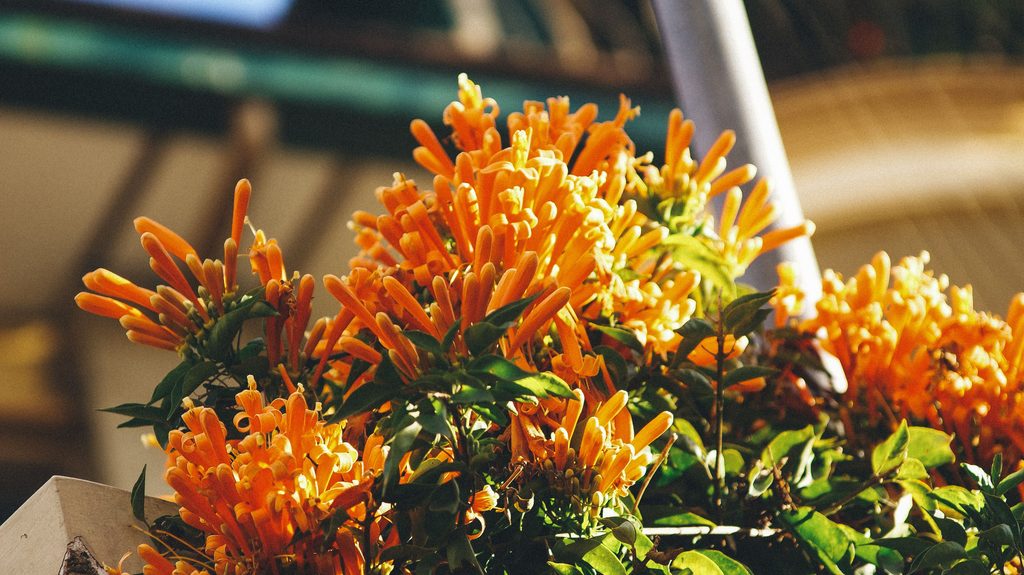
Firebush earns its name from clusters of tubular orange-red flowers that seem to glow at dusk. It blooms nearly year-round in South and Central Florida, pausing only after a hard freeze.
Hummingbirds and butterflies treat this shrub like a buffet. I’ve watched zebra longwings circle a single firebush for a full afternoon without leaving.
It grows fast, reaching 6 to 12 feet if left unpruned, though regular trimming keeps it hedge-sized. Give it full sun and well-drained soil, and it asks for little else.
Cold can knock it back to the ground in North Florida, but the roots usually recover by late spring.
2. Beautyberry (Callicarpa americana)
Beautyberry puts on a show every autumn. Clusters of vivid purple berries wrap tightly around the stems, looking almost artificial against the green foliage.
Birds strip the berries clean within weeks, so if you want fruit for fall arrangements, harvest early. Mockingbirds, cardinals, and towhees all rely on this shrub as a food source.
It handles part shade as easily as full sun, growing 4 to 8 feet tall with an open, arching form. Prune it hard in late winter and it responds with denser new growth.
This is one of the most forgiving shrubs on this list. It tolerates poor soil, drought, and neglect better than almost anything else native to the state.
3. Wax Myrtle (Morella cerifera)
Wax myrtle works as a privacy screen, a windbreak, or a background planting, doing the job of three different shrubs. Its aromatic gray-green leaves release a spicy scent when crushed.
It grows quickly, often 3 feet or more per year, reaching 15 to 20 feet at maturity if not pruned. That speed makes it a favorite for homeowners who want fast coverage.
Female plants produce small waxy berries that historically were boiled down for candle wax, hence the common name. Birds eat these berries through winter when other food sources run thin.
Wax myrtle tolerates wet feet and salt spray equally well, which makes it a reliable choice near coastal properties.
ALSO READ: 25 Shrubs That Stay Small (Dwarf Varieties, With Pictures)
4. Simpson’s Stopper (Myrcianthes fragrans)
Simpson’s stopper stays compact and dense, which makes it a strong hedge or foundation plant. Small white flowers with a citrusy scent appear in flushes throughout the warmer months.
Orange-red berries follow the blooms and draw songbirds consistently. I’ve had catbirds nest inside a mature stopper hedge two years running.
It handles full sun to light shade and adapts to both dry and occasionally wet soil. Left unpruned, it can reach 15 feet, but most homeowners keep it clipped to 6 or 8 feet.
Its dense branching also makes it a natural noise buffer along busy streets or property lines.
5. Coontie (Zamia integrifolia)
Coontie isn’t technically a flowering shrub, it’s Florida’s only native cycad, but it fills the same landscape role and deserves a spot here. Its stiff, feathery fronds give a tropical, textured look.
This plant is the sole host for the Atala butterfly, a species once thought extinct in Florida. Planting coontie directly supports Atala recovery efforts documented by state wildlife agencies.
It grows slowly, staying under 3 feet, and tolerates deep shade or full sun equally well. Drought tolerance is exceptional once roots establish.
Every part of the raw plant is toxic if ingested, so keep that in mind around pets and small children.
6. Saw Palmetto (Serenoa repens)
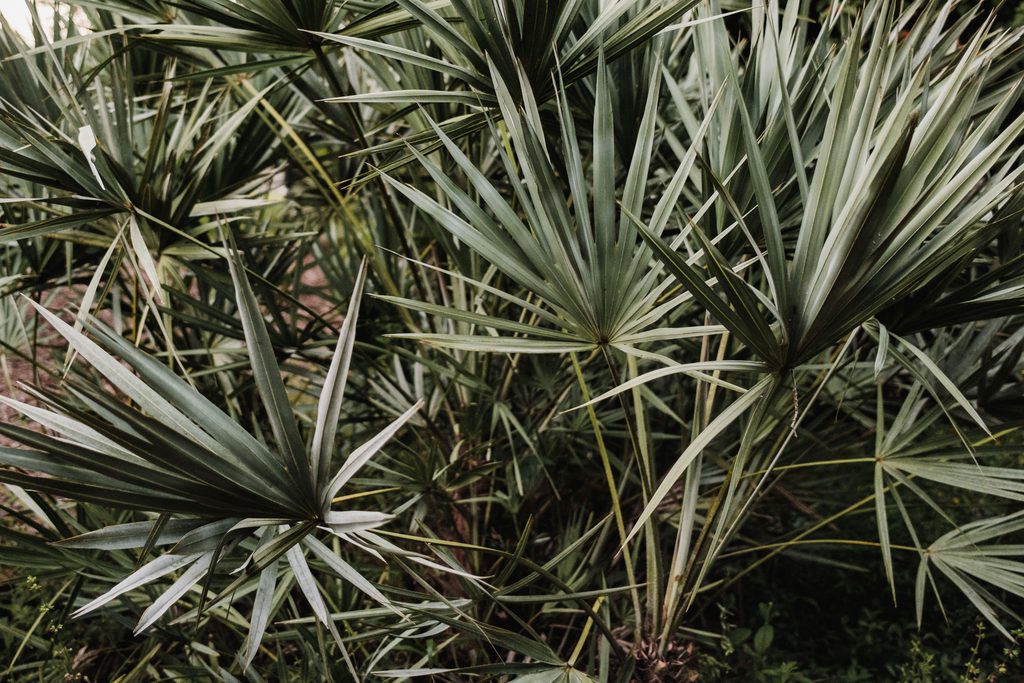
Saw palmetto dominates Florida’s scrub and flatwoods, and for good reason. It survives fire, drought, salt air, and poor soil better than nearly any other native plant.
Fan-shaped fronds range from green to silvery-blue depending on the population, giving landscapers a decorative option beyond pure function. Small white flowers appear in spring and feed native bees heavily.
It grows slowly but lives for decades, sometimes over a century, according to fire ecology research from Florida land management agencies. Mature clumps can spread 6 to 10 feet wide.
This is a plant that rewards patience. Once it’s established, it needs essentially nothing from you.
7. Yaupon Holly (Ilex vomitoria)
Yaupon holly tolerates nearly every condition Florida throws at it: drought, flooding, salt, shade, and full sun. Female plants produce bright red berries that persist through winter.
Dwarf cultivars like ‘Schillings’ stay compact for foundation plantings, while the straight species can reach 15 to 20 feet as a small tree or tall screen. Both forms take pruning well.
Native Americans historically brewed the leaves into a caffeinated tea called “black drink,” making yaupon one of the few caffeine-producing plants native to North America.
Its dense evergreen form makes it one of the most reliable privacy hedges available in Florida.
ALSO READ: 30 Best Shrubs That Grow in Shade (Bushes Identification, With Pictures)
8. Gopher Apple (Licania michauxii)
Gopher apple stays low, usually under 12 inches, which makes it a strong native groundcover alternative to turfgrass in sunny beds. Glossy leaves and a spreading habit fill space quickly.
It gets its name from gopher tortoises, which readily eat the small fruit and use the plant as forage in scrub habitat. That connection makes it valuable in gopher tortoise conservation plantings.
Full sun and sandy, well-drained soil suit it best. Once established, it needs virtually no irrigation.
This is an underused option for anyone tired of mowing marginal turf areas.
Native Shrubs for Shade and Part Shade
9. Oakleaf Hydrangea (Hydrangea quercifolia)
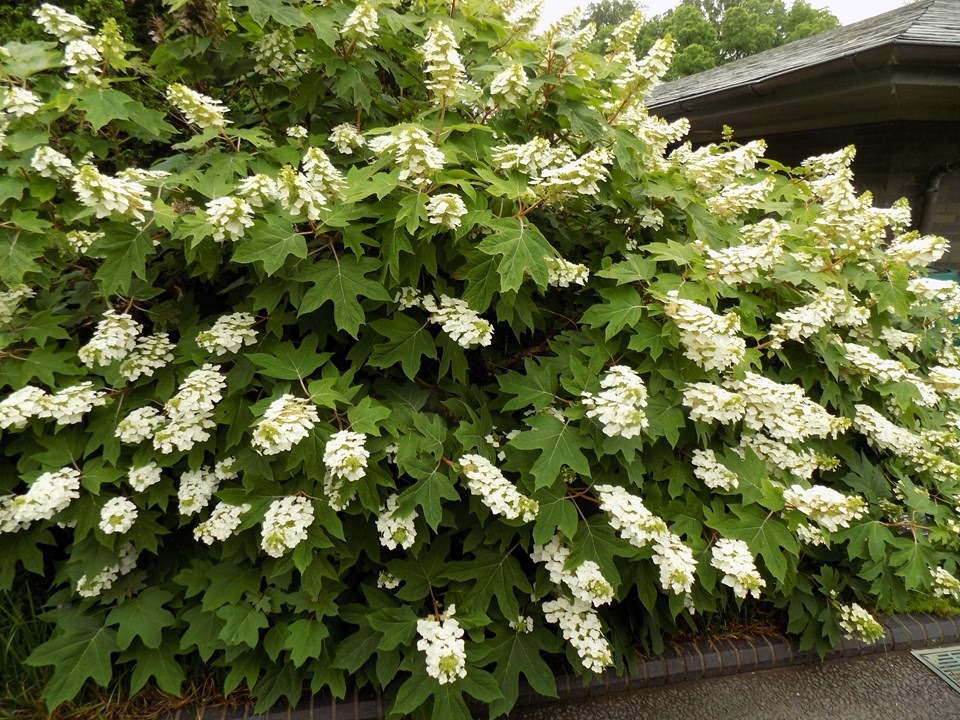
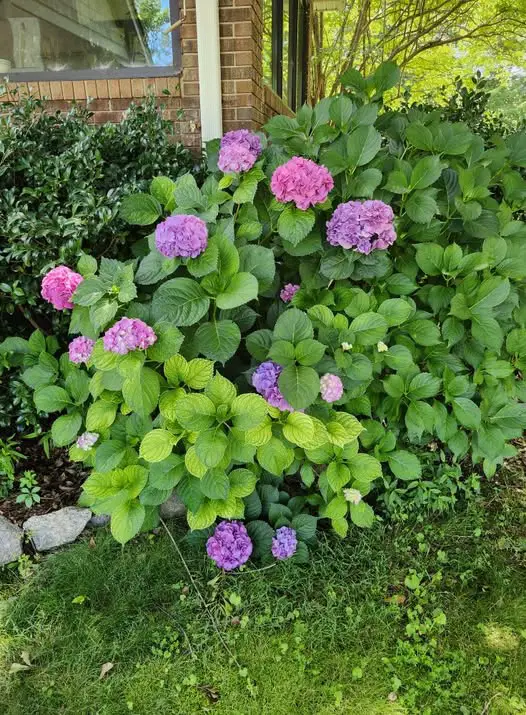
Oakleaf hydrangea brings cone-shaped white blooms in late spring that slowly fade to pink and tan through summer. The oak-shaped leaves turn deep burgundy in fall, a rare feature among Florida natives.
It prefers part shade and moist, well-drained soil, making it a good match for the north or east side of a house. Full Florida sun can scorch the leaves badly.
Mature size runs 6 to 8 feet, with an equal spread. It naturalizes through suckering, so give it room or plan to manage the spread.
I planted one under a live oak canopy and it’s been the most complimented shrub in my yard every spring since.
10. Wild Coffee (Psychotria nudata)
Wild coffee has glossy, deeply veined leaves that stay attractive year-round, even without flowers. Small white blooms appear in warm months, followed by bright red berries.
It thrives in shaded, hammock-like conditions and rarely needs pruning to hold a neat, rounded form. Mature height reaches about 4 to 8 feet.
Despite the name, the berries aren’t used commercially for coffee, though they resemble true coffee beans closely. Birds eat them readily.
This shrub fills the gap under tree canopies where turf and sun-loving plants struggle to survive.
11. Necklace Pod (Sophora tomentosa)
Necklace pod produces bright yellow flower spikes almost continuously in South Florida’s warm months, drawing sulphur butterflies as both nectar source and larval host. Silvery-green leaves add contrast against darker foliage.
It tolerates salt spray and coastal winds exceptionally well, making it a strong choice for beachside properties. Full sun to light shade both work.
Seed pods that follow the flowers look like strings of beads, hence the common name. They’re mildly toxic, so site this plant away from areas where kids play unsupervised.
Growth stays compact, usually 4 to 6 feet, with minimal pruning needed to maintain shape.
12. Marlberry (Ardisia escallonioides)
Marlberry produces fragrant white flower clusters that bloom on and off through the year, followed by berries that shift from red to black as they ripen. Both stages often appear on the plant simultaneously.
It handles deep shade better than most flowering shrubs on this list, making it valuable for densely wooded lots. Growth reaches 8 to 12 feet if left unpruned.
Its dense, glossy foliage also works well as a natural privacy screen in hammock or woodland-style gardens.
Birds favor the berries heavily, and the plant reseeds readily in favorable conditions, so expect volunteer seedlings nearby.
13. Florida Anise (Illicium floridanum)
Florida anise produces unusual star-shaped maroon flowers in spring, with a scent some describe as spicy and others find unpleasant up close. Either way, it’s a conversation piece.
It prefers consistently moist, shaded sites, closer to its natural habitat along shaded stream banks in the Panhandle. It struggles in dry, sunny conditions.
Mature shrubs reach 6 to 10 feet with dense evergreen foliage, making it a solid screening plant for shaded fence lines.
All parts of the plant are toxic if eaten, so, again, plant with pet and child safety in mind.
14. Walter’s Viburnum (Viburnum obovatum)
Walter’s viburnum offers small white flower clusters in early spring, followed by small dark fruit that birds clear out fast. Fine-textured leaves give it a soft, refined look compared to coarser natives.
Dwarf cultivars like ‘Densa’ stay under 4 feet and make excellent low hedges, while the straight species can reach 15 to 20 feet as a small tree form.
It adapts to full sun or part shade and tolerates both moist and moderately dry soils once established.
This is one of the most versatile native shrubs available at Florida nurseries, and it takes shearing into formal shapes better than most.
Native Shrubs for Wet or Poorly Drained Soil
15. Buttonbush (Cephalanthus occidentalis)
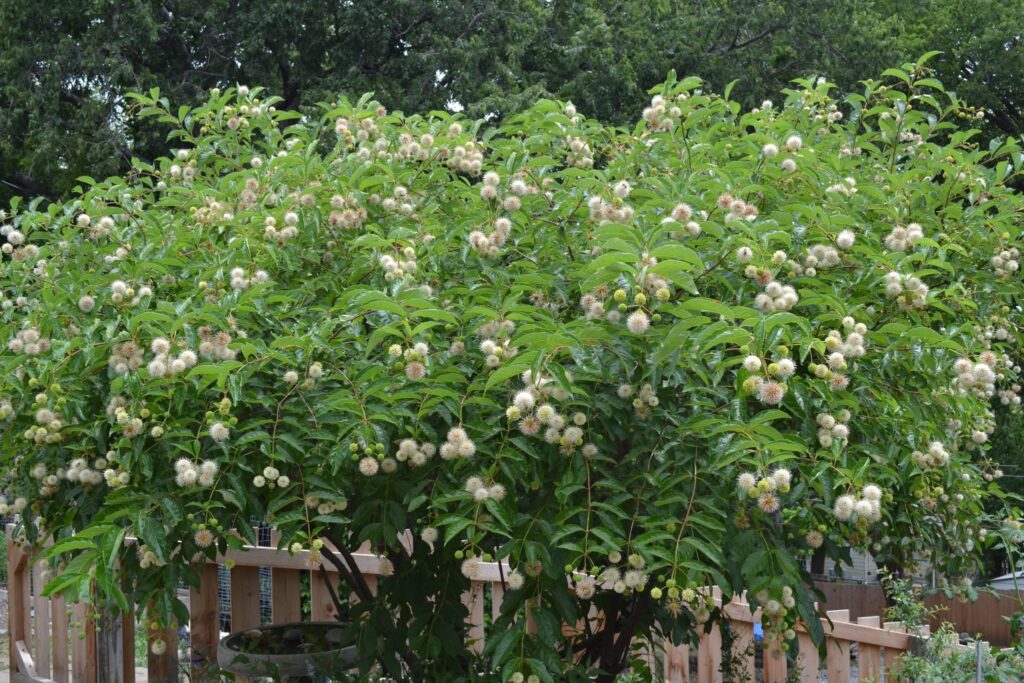
Buttonbush produces round, pincushion-shaped white flowers that pollinators can’t resist. I’ve counted six different butterfly species on one blooming shrub within a single hour.
It grows naturally along pond edges, ditches, and swamp margins, so it’s an ideal pick for low spots where other shrubs rot out. Standing water for short periods doesn’t bother it.
Mature height reaches 6 to 12 feet with an open, rounded form. Ducks and other waterfowl eat the seed heads that follow the flowers.
If you have a rain garden or retention pond edge that needs planting, buttonbush should be near the top of your list.
16. Swamp Dogwood (Cornus foemina)
Swamp dogwood produces flat clusters of small white flowers in spring, followed by blue-black berries that migratory birds rely on heavily during fall movement.
It tolerates wet, poorly drained soil far better than the more ornamental flowering dogwood, making it the practical choice for low-lying yards.
Growth reaches 10 to 20 feet, functioning more like a small multi-trunked tree than a compact shrub. Regular pruning can keep it smaller if needed.
Fall color runs toward burgundy and purple, adding seasonal interest that many evergreen natives lack.
17. Virginia Willow (Itea virginica)
Virginia willow produces drooping spikes of fragrant white flowers in late spring, resembling small bottlebrushes. Fall foliage turns shades of red and orange, a standout feature for a wetland native.
It handles standing water, occasional flooding, and heavy clay soils with ease, while also adapting to average garden conditions once established.
Mature size stays modest, typically 3 to 6 feet, making it appropriate for smaller residential landscapes near retention areas.
Bees and other pollinators visit the flower spikes constantly during bloom season, adding movement and life to a rain garden design.
ALSO READ: 25 Edible Shrubs You Can Grow for Food and Beauty
18. Swamp Hibiscus (Hibiscus coccineus)
Swamp hibiscus produces dramatic scarlet flowers up to 6 inches across, resembling a tropical star more than a typical shrub bloom. Each flower lasts only a day, but new ones open constantly through summer.
It’s technically a woody perennial rather than a true shrub, but it fills that landscape role in wet, sunny areas where few other flowering plants perform as well.
Height can reach 6 to 8 feet in a single growing season, dying back in winter and returning from the roots each spring.
Hummingbirds treat this plant as a primary nectar source, often visiting dozens of times per day during peak bloom.
Coastal and Salt-Tolerant Native Shrubs
19. Sea Grape (Coccoloba uvifera)
Sea grape handles direct salt spray, sandy soil, and hurricane-force wind better than nearly any other coastal plant available in Florida. Large, round, leathery leaves give it a bold tropical texture.
Female plants produce grape-like fruit clusters that ripen purple in late summer and are edible, often used locally for jelly. Wildlife eats them too.
Left unpruned, sea grape grows into a small tree reaching 20 feet or more, though regular trimming keeps it shrub-sized for hedges near the coast.
State regulations protect sea grape in some dune areas, so check local rules before removing established plants near the beach.
20. Bay Cedar (Suriana maritima)
Bay cedar grows directly in beach dune conditions, tolerating salt spray, blowing sand, and drought that would kill most other shrubs outright. Small yellow flowers appear nearly year-round.
Its soft, silvery-green foliage gives coastal gardens a cohesive, natural texture that pairs well with sea oats and other dune grasses.
Mature height reaches 6 to 10 feet, with a naturally rounded, dense form that rarely needs pruning to look tidy.
This shrub plays a real role in dune stabilization, helping hold sand in place against erosion from wind and storm surge.
21. Seagrape’s Cousin: Beach Elder (Iva imbricata)
Beach elder is a low, spreading dune plant that stabilizes sand ahead of taller shrubs like sea grape and bay cedar, acting almost like a pioneer species on fresh dunes.
It tolerates burial by shifting sand, a trait almost no ornamental plant shares, resprouting from buried stems when conditions allow.
Height stays under 3 feet typically, with silvery, fleshy leaves suited to intense sun and salt exposure along the immediate coastline.
Coastal restoration projects frequently use beach elder alongside sea oats for dune rebuilding after storm damage.
22. Spanish Bayonet (Yucca aloifolia)
Spanish bayonet brings architectural, sculptural form to coastal and xeriscape gardens with its stiff, sword-shaped leaves and tall flower spikes of white blooms in summer.
It tolerates salt, drought, and poor sandy soil without hesitation, thriving in conditions that would stress nearly any other landscape plant.
Mature height can reach 10 feet including the flower stalk, with sharp leaf tips that make it useful as a natural security barrier under windows.
Handle with care during planting and pruning. The leaf tips are genuinely sharp enough to break skin.
Compact and Foundation Native Shrubs
23. Dwarf Walter’s Viburnum
Worth a separate mention from its taller relative, the dwarf form of Walter’s viburnum stays under 4 feet with dense, fine-textured foliage that takes shearing exceptionally well.
It works as a low hedge, foundation planting, or border edge, filling roles that non-native boxwood traditionally handled in Florida landscapes.
Small white flowers appear in spring, though the compact cultivar blooms less heavily than the species form.
Full sun to part shade both work, and once established it needs minimal irrigation beyond normal rainfall.
24. Dwarf Yaupon Holly
Dwarf yaupon holly, particularly the ‘Schillings’ or ‘Nana’ cultivars, gives Florida gardeners a native, drought-tolerant substitute for non-native boxwood and Indian hawthorn hedges.
It stays naturally compact, usually 2 to 4 feet, without regular shearing, though it responds well to pruning if a formal shape is preferred.
This is a male selection, so it won’t produce the red berries seen on straight-species yaupon, but it makes up for that with dense, tidy year-round structure.
Full sun brings out the tightest growth habit, though it tolerates considerable shade without significant dieback.
25. Blueberry, Native Species (Vaccinium species)
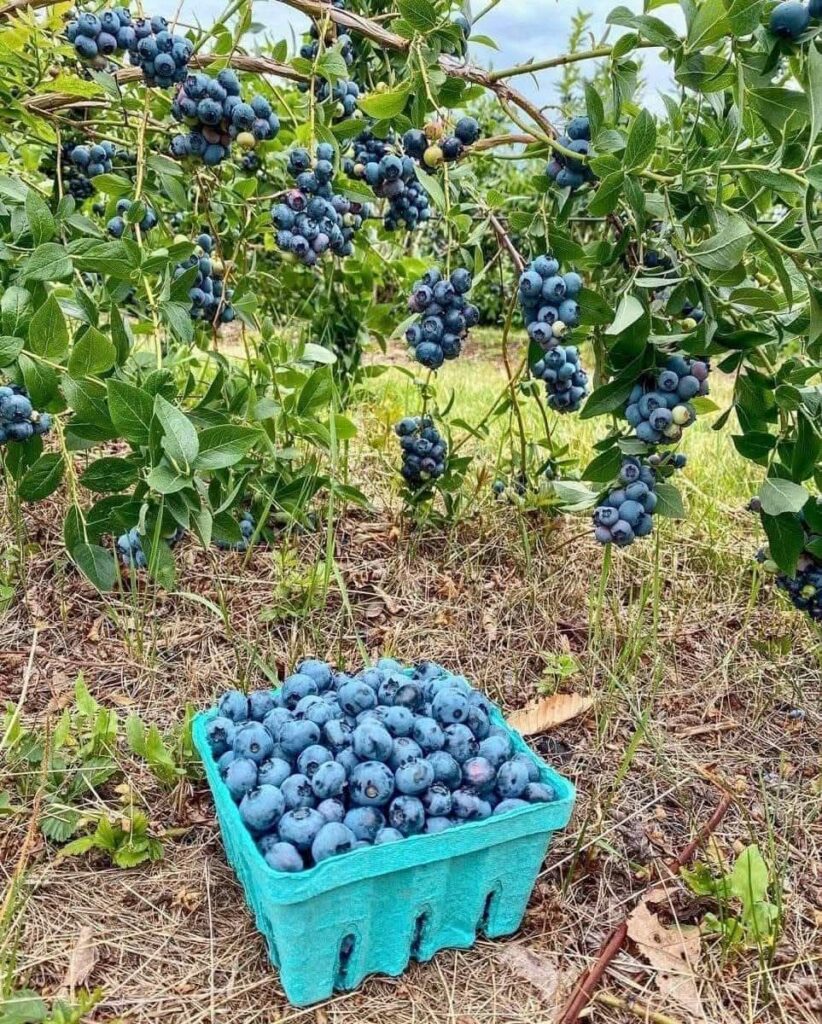
Florida hosts several native blueberry species, including highbush and shiny blueberry, both of which produce genuine edible fruit alongside strong ornamental value.
Delicate bell-shaped white or pink flowers appear in early spring, feeding native bees before most other shrubs on this list begin blooming.
These shrubs need acidic, well-drained soil, similar to the pine flatwoods and scrub habitat where they grow naturally across the state.
Beyond the fruit for people, songbirds and small mammals rely on native blueberries as a genuine food source through late spring and early summer.
How to Choose the Right Shrub for Your Yard
Match the plant to your actual site conditions, not the other way around. A shrub built for dune sand will struggle in heavy, wet clay, no matter how well you care for it.
Start with these three questions:
- How much direct sun does the spot get daily?
- Does water pool there after heavy rain?
- Is the site exposed to salt spray or coastal wind?
Once you know the answers, cross-reference them against the growing conditions listed for each shrub above. That single step prevents most of the plant losses homeowners run into.
Planting and Care Tips for Florida Native Shrubs
Plant during the cooler months, from October through February, when root establishment happens without heat stress pulling water from the plant.
Water deeply but infrequently for the first few months. Frequent shallow watering trains roots to stay near the surface, which works against the drought tolerance these plants are known for.
Skip the heavy fertilizer. Most Florida natives evolved in nutrient-poor soil and can suffer weak, leggy growth if pushed too hard with fertilizer meant for exotic ornamentals.
Mulch around the base, but keep it a few inches back from the stem to avoid rot. A 2 to 3 inch layer conserves moisture and suppresses competing weeds effectively.
Final Thoughts
Twenty-five shrubs is a long list, but Florida’s native flora runs far deeper than that. What I’ve included here covers the range most homeowners actually need: sun, shade, wet ground, salt air, and tight foundation spaces.
Start with two or three that match your yard’s real conditions. Watch how little they ask of you compared to what you’re used to, and the case for going native tends to make itself from there.
References
- UF/IFAS Extension – Native Trees, Shrubs and Vines: https://sfyl.ifas.ufl.edu/lawn-and-garden/native-trees-shrubs-and-vines/
- UF/IFAS Extension Okaloosa County – Native Plants and Wildlife: https://blogs.ifas.ufl.edu/okaloosaco/2016/06/03/native-plants-and-wildlife/
- Atlas of Florida Plants, University of South Florida – Introduction and Species Statistics: https://florida.plantatlas.usf.edu/about
- Florida Natural Areas Inventory – Plant Field Guide Introduction: https://www.fnai.org/species-communities/species-guides/plant-intro
- UF/IFAS EDIS – Low-Maintenance Landscape Plants for South Florida: https://journals.flvc.org/edis/article/view/135830
- UF/IFAS Extension Hillsborough County – Gardening with Florida Native Plants: https://blogs.ifas.ufl.edu/hillsboroughco/2023/04/13/gardening-with-florida-native-plants/
- UF/IFAS Extension – Living Green, Using Native Plants: https://livinggreen.ifas.ufl.edu/topics/landscaping/using-native-plants/

Tim M Dave is a gardening expert with a passion for houseplants, particularly cacti and succulents. With a degree in plant biology from the University of California, Berkeley, he has vast experience in gardening. Over the years, he has cultivated a vast collection of desert plants and learned a great deal about how to grow and care for these unique companions.