15 Shrubs That Look Like Christmas Trees (With Growing Details)
Every December, millions of families bring a tree indoors. According to the USDA Economic Research Service, U.S. farms cut more than 14.5 million Christmas trees in 2022, and those trees came from about 16,000 farms. Yet the tree is gone by January, and the needles are still on the floor in February.
A living shrub with a cone shape solves that problem. It gives you the same neat, triangular outline in the garden every day of the year. In winter, you can wrap it in lights and enjoy a “tree” that never needs to be thrown away.
I have tested this idea in my own yard, and the results were better than I expected. This guide covers 15 shrubs with a true Christmas tree shape. For each one, you will find the zone, the expected size, and the weak point you should know about before buying.
Size Guide: Which Shrub Fits Your Space?
The 15 plants below are grouped by mature size. This matters because a “shrub” like Nellie R. Stevens holly can grow taller than your house. A tabletop-sized plant, on the other hand, may suit a porch pot better than a garden bed.
Small shrubs, up to about 6 feet, work well in containers and near doorways. Medium shrubs, roughly 8 to 15 feet, suit foundation plantings and screens. Large shrubs, above 15 feet, need open space and patience.
Small Christmas Tree Shrubs (Under 6 Feet, Ideal for Pots and Doorways)
1. Dwarf Alberta Spruce (Picea glauca ‘Conica’)
Zones: 3–6 | Size: Slow-growing; about 12 feet after many years | Light: Full sun
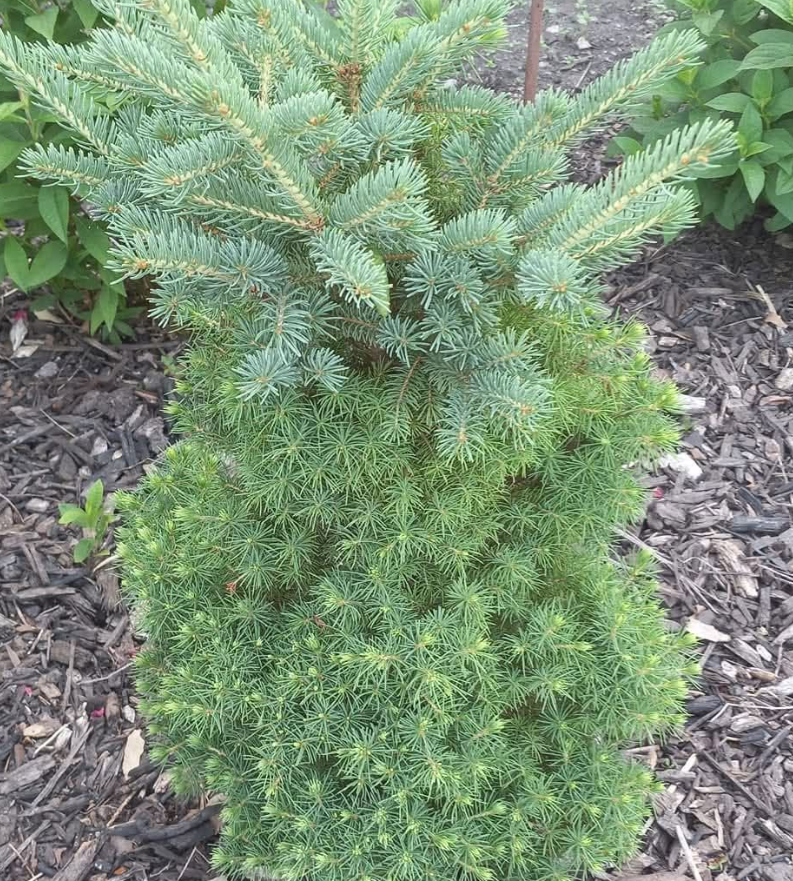
If you want the most convincing Christmas tree shape in shrub form, this is it. Virginia Cooperative Extension describes it as a slow-growing, dense, compact conifer with a formal look and a symmetrical cone shape. It grows only about 3 inches a year.
That is exactly why it is sold as a tabletop holiday tree each winter. A University of Arkansas extension horticulturist notes that mass merchants sell thousands of foot-tall living Christmas trees of this type. After the holidays, you can plant it outside and let it grow.
Its main weakness is spider mites. Ohio State University’s plant database says mites will infest the plant sooner or later, especially in spots that stay damp. Choose a site with good airflow and check the needles in summer. Prune out any shoot that grows faster than the rest, as it may be reverting to a full-size spruce.
2. Baby Blueyes Colorado Blue Spruce (Picea pungens ‘Baby Blueyes’)
Zones: Roughly 3–7 | Size: Semi-dwarf | Light: Full sun
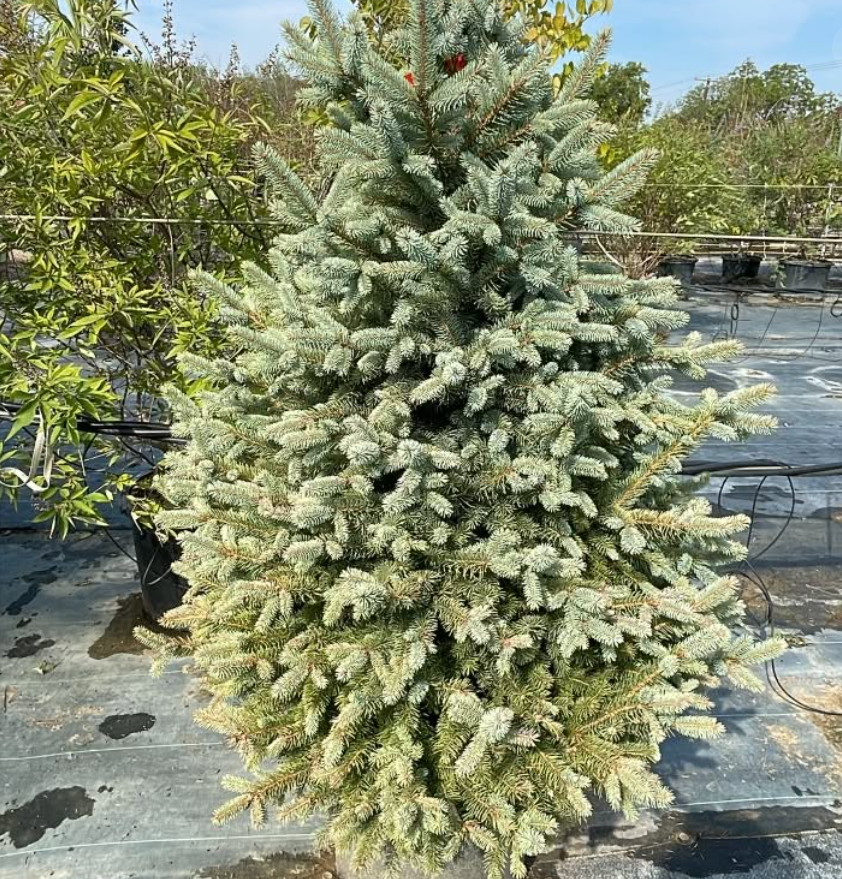
Baby Blueyes is a smaller, tidier cousin of the famous blue spruce. The Purdue Arboretum describes it as a pyramidal, semi-dwarf cultivar with densely set, bluish-gray needles. Unlike the species, it will not grow into a 50-foot giant.
The silver-blue color is what sets it apart. Against a dark green backdrop or a stone path, the needles almost seem frosted. In winter, snow settles on the branches and gives the plant a classic holiday look without any decoration at all.
Give it full sun and well-drained soil. It tolerates cold well but dislikes hot, humid summers. Water young plants during dry spells, and keep mulch a few inches back from the trunk.
3. Hinoki Cypress ‘Nana Gracilis’ (Chamaecyparis obtusa)
Zones: 4–8 | Size: Slow-growing; often under 6 feet for years | Light: Full sun to light shade
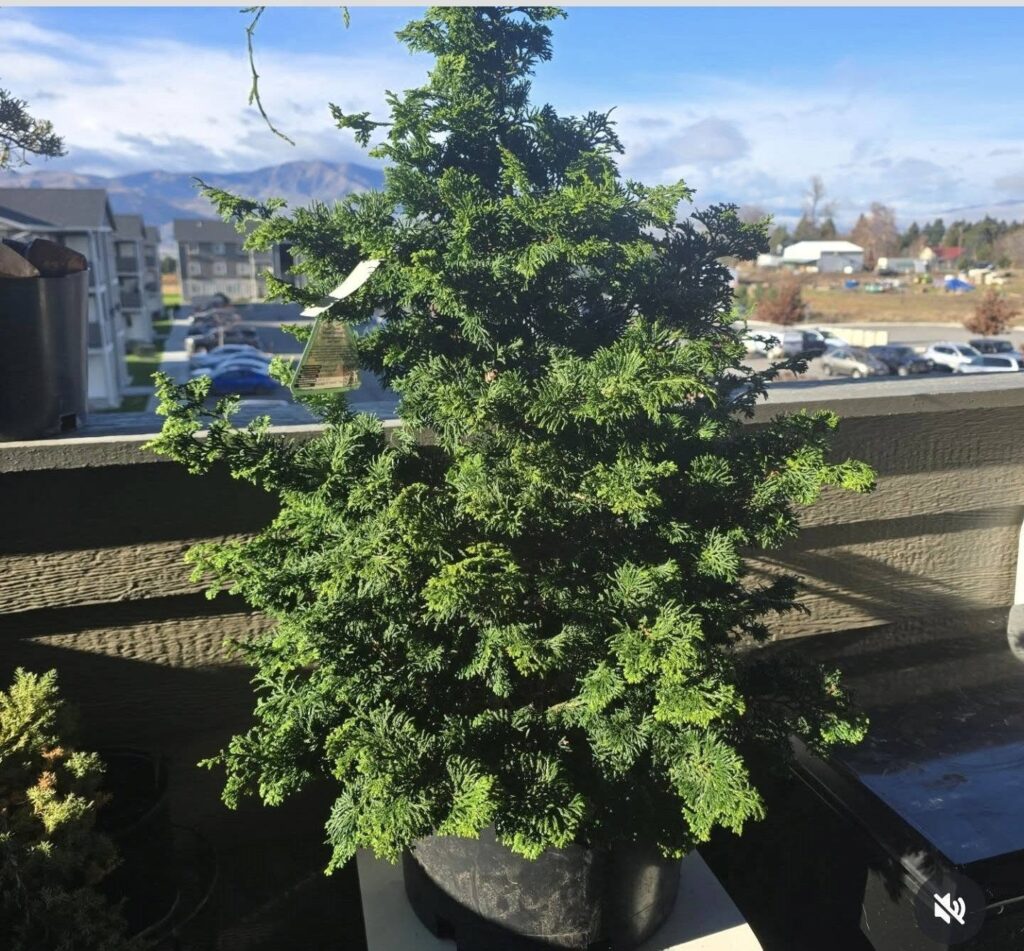
Hinoki cypress is the plant I recommend to gardeners who prefer soft over spiky. The foliage grows in flat, shell-like fans of deep green. Layered branches create a pyramid that looks almost sculpted, like a miniature evergreen from a Japanese garden.
It grows very slowly, which makes it useful for containers and small beds. Because it stays compact, you can dress it for the holidays with a few small ornaments and lights. The branches are sturdy but should not carry heavy decorations.
This shrub needs even moisture and shelter from harsh, drying winter wind. Plant it where it gets morning sun and some afternoon relief in hot regions. Avoid sites with poor drainage, since wet roots can kill it.
4. Green Mountain Boxwood (Buxus ‘Green Mountain’)
Zones: 4–9 | Size: About 5 feet tall and 3 feet wide | Light: Full sun to part shade
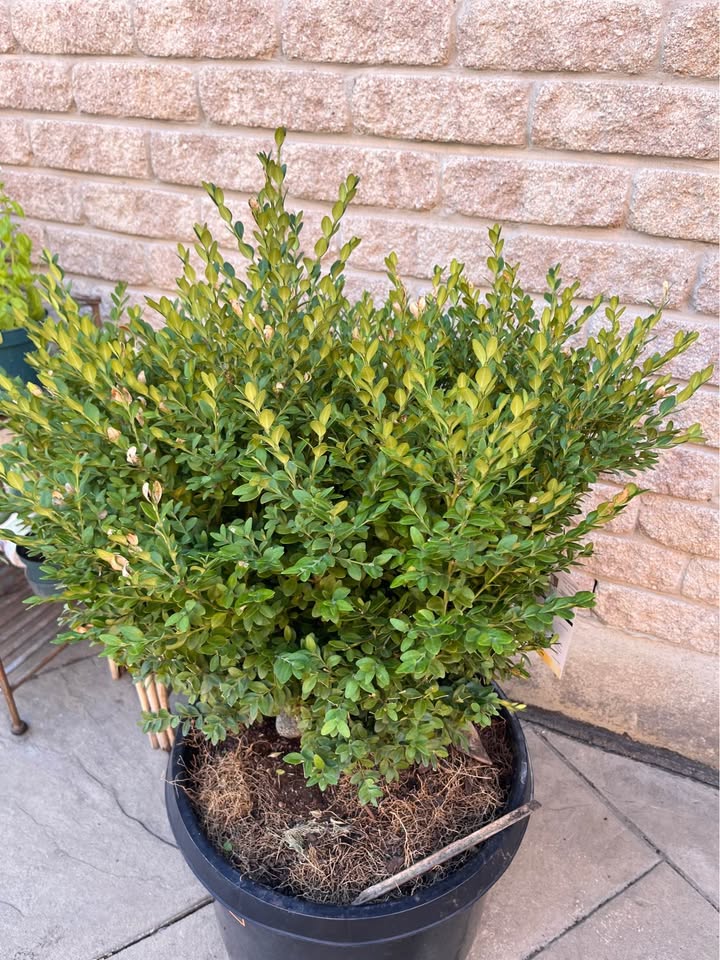
Most boxwoods are round, but Green Mountain grows into a natural cone. Its small, glossy leaves keep a deep green color through winter. Because it holds its shape with little pruning, it is a favorite for formal entryways.
Small boxwood leaves also make holiday decorating easy. Simple garlands and mini lights look sharp against the dense foliage. In pairs, one on each side of a door, they create a welcoming, symmetrical look.
Boxwood does have real pest concerns. Boxwood blight and the box tree moth have spread in parts of North America, so buy from a reputable grower. Also keep in mind that all parts of the plant are toxic if eaten.
5. Rheingold Arborvitae (Thuja occidentalis ‘Rheingold’)
Zones: 3–7 | Size: About 3–5 feet | Light: Full sun
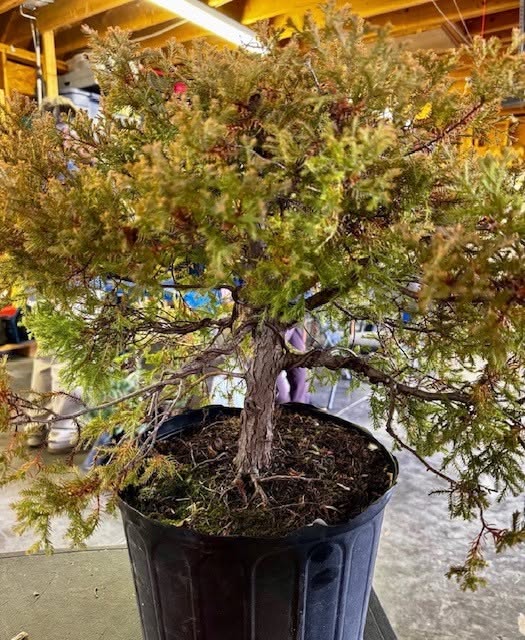
Rheingold is the golden option on this list. In summer, the foliage glows yellow-gold. As temperatures fall, it deepens to a warm coppery bronze, which makes an unusual and cheerful winter color.
The shape is a broad, soft cone. It is not as sharp as spruce, but it has a charm of its own. Planted beside blue or dark green conifers, it brings welcome contrast to a winter bed.
Choose a sunny spot for the best color. In too much shade, the gold fades to plain green. Water regularly in the first two years, and protect the plant from heavy snow slides off roofs.
ALSO READ: 25 Different Types of Christmas Trees (Popular Varieties, With Pictures)
Medium Christmas Tree Shrubs (8–15 Feet, Ideal for Foundations and Screens)
6. Boulevard Sawara Cypress (Chamaecyparis pisifera ‘Boulevard’)
Zones: 4–8 | Size: Roughly 8–12 feet | Light: Full sun to part shade
Boulevard has some of the softest foliage of any conifer. The needles feel feathery and look silvery blue. In cold weather, the color may take on a subtle plum tint, which adds interest during the darkest months.
It grows in a pyramid, with slightly nodding branch tips. That gives it a relaxed, natural look compared with the stiff formality of spruce. It works well as a specimen at the corner of a house.
The main requirement is steady moisture. It dislikes drought and dry winds, and browning is a common complaint in hot, dry sites. Plant it where the soil stays cool, and mulch well.
7. Blue Point Juniper (Juniperus chinensis ‘Blue Point’)
Zones: 4–9 | Size: About 10–12 feet tall, 5–6 feet wide | Light: Full sun
Blue Point is a classic cone-shaped juniper. It grows dense and upright, with blue-green foliage that stays attractive through winter. The clean outline is what most people picture when they imagine an evergreen “tree.”
It is tough and forgiving. Once established, it handles heat, drought, and poor soil better than most spruces or firs. That makes it a good option in the South and West, where dwarf Alberta spruce struggles.
Junipers can carry cedar-apple rust, a fungus that also affects apples and crabapples. If you grow those fruit trees nearby, check with your local extension office before planting. Otherwise, this is an easy and rewarding shrub.
8. Wichita Blue Juniper (Juniperus scopulorum ‘Wichita Blue’)
Zones: 4–9 | Size: About 10–15 feet tall, 5–8 feet wide | Light: Full sun
Wichita Blue has one of the brightest silver-blue colors of any juniper. The foliage holds that tone year-round, so it looks fresh even in midwinter. Its pyramidal shape is a little looser than Blue Point.
The color makes it a good contrast plant. Set it next to green arborvitae or yellow-leaved shrubs, and the difference becomes striking. It also looks lovely with a light dusting of snow.
It prefers dry to average soil and full sun. Wet, heavy ground can cause root problems. Give it plenty of airflow, and avoid planting it too close to other shrubs.
9. Spartan Juniper (Juniperus chinensis ‘Spartan’)
Zones: 4–9 | Size: About 12–15 feet tall, 3–5 feet wide | Light: Full sun
Spartan is a bright green juniper with a narrow, upright spire. It is not as broad as some others here, but it still reads as a slender Christmas tree. The foliage is fine and soft, with a rich color that holds in winter.
It grows faster than many conifers, so it works well when you want height without a long wait. Planted in a row, Spartan makes a neat evergreen screen. As a single accent, it acts as a punctuation mark in the garden.
This juniper needs sun and drainage. It handles heat well, and once established, it needs little water. Prune lightly if needed, and avoid cutting into bare inner wood.
10. Emerald Green Arborvitae (Thuja occidentalis ‘Smaragd’)
Zones: 3–7 | Size: About 10–15 feet tall, 3–4 feet wide | Light: Full sun to part shade
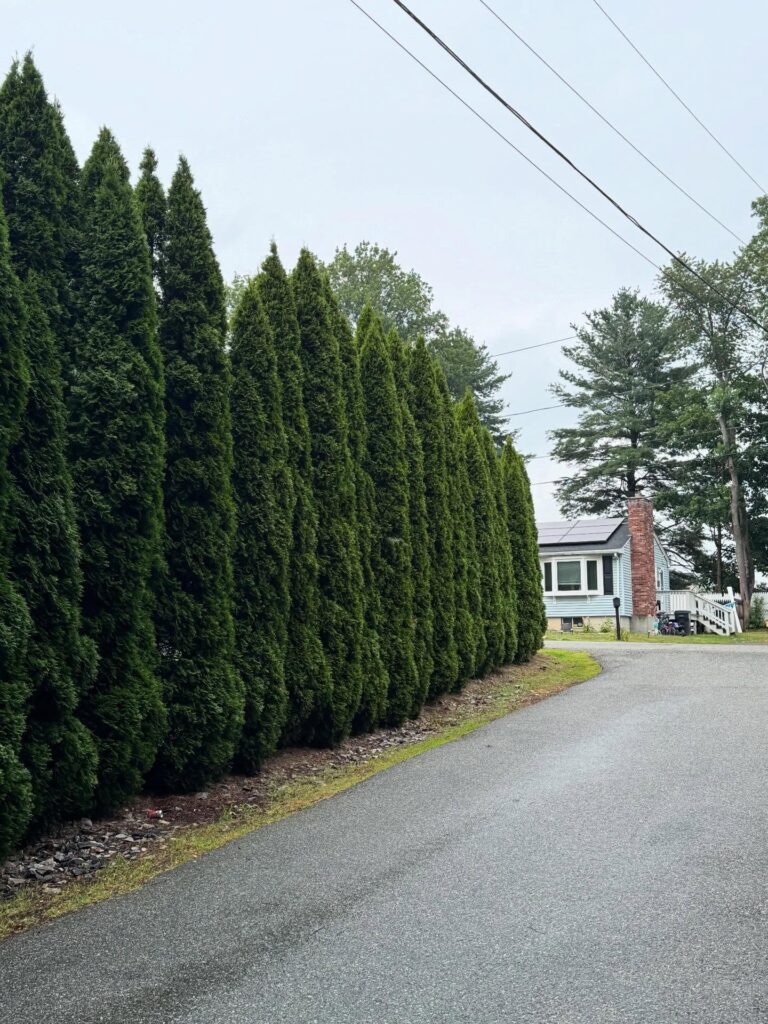
Emerald Green is probably the most widely planted narrow evergreen in North America. Its flat sprays of scale-like foliage stay a clear, bright green all winter, when many arborvitaes turn brown. The form is a tight, pyramidal spire.
It makes an excellent living Christmas tree for a small yard because it is so slim. Two or three planted in a group create a small “forest” effect. Strings of lights show up well against its dense growth.
Deer love arborvitae, so protect young plants with netting where deer are common. Also water deeply in fall before the ground freezes. Winter burn from dry wind is the most common cause of browning.
11. Hicks Yew (Taxus × media ‘Hicksii’)
Zones: 4–7 | Size: About 10–12 feet tall, 4 feet wide | Light: Part shade to full sun
Yews are among the few evergreens that thrive in shade. Hicks yew has dark green, flat needles and a dense, upright habit. It looks somewhat like a slim Christmas tree, especially when young.
This is a good pick for the north side of a house, where spruce and juniper would struggle. It also takes pruning well, so you can shape it into a neater cone. Female plants bear red, berry-like arils that look festive.
There is one serious warning. All parts of yew are poisonous except the red aril flesh, and the seeds inside are toxic. Keep this plant away from pets, livestock, and small children. It also needs well-drained soil.
12. Steeds Japanese Holly (Ilex crenata ‘Steeds’)
Zones: 6–8 | Size: About 8–10 feet tall | Light: Full sun to part shade
Japanese holly looks more like boxwood than the spiky holly on holiday cards. ‘Steeds’ has small, glossy, dark green leaves and a narrow, upright, pyramidal form. It looks refined and stays neat with little effort.
It suits foundation plantings and shady corners where you want an evergreen with structure. In pairs, it makes an elegant frame for a front door. Because the leaves are small and dense, it also takes light shearing well.
It prefers acidic, well-drained soil and consistent moisture. Chalky, alkaline soil can turn the leaves yellow. In colder zones, choose a sheltered site away from strong winter wind.
ALSO READ: 50 Types of Christmas Flowers and Plants: Identification With Pictures
Large Christmas Tree Shrubs (15 Feet and Taller, Ideal for Big Yards)
13. Nellie R. Stevens Holly (Ilex ‘Nellie R. Stevens’)
Zones: 6–9 | Size: 15–30 feet tall, 8–25 feet wide | Light: Full sun to part shade
Nellie R. Stevens may be the most “Christmas” shrub of all. NC State Extension describes it as a broadleaf evergreen with a conical to pyramidal form and abundant, bright red berries about a third of an inch across. Deep green, spiny leaves complete the holiday look.
It grows fast, which is a big advantage if you want a screen or focal point quickly. The same source notes that the plant can produce some fruit even without a male pollinator nearby. Planting a male holly will give a heavier berry display.
Be honest about its size. It can reach 30 feet, so it needs a large space. Birds also love the berries, and they add a splash of color and life in winter.
14. Foster’s Holly (Ilex × attenuata ‘Fosteri’)
Zones: 6–9 | Size: About 20–30 feet tall, 8–10 feet wide | Light: Full sun to part shade
Foster’s holly is a narrower, more slender pyramid than Nellie Stevens. The leaves are small and dark, and the plant carries red berries in fall and winter. From a distance, it looks like a formal evergreen spire.
Its slim shape suits narrower spaces, such as beside a driveway or at the edge of a property line. It also works as a tall privacy screen. Because it is dense, it shelters birds through cold weather.
Plant it in acidic, well-drained soil with regular water in the early years. Pruning is rarely required. If you want more berries, plant a compatible male holly nearby.
15. Yoshino Japanese Cedar (Cryptomeria japonica ‘Yoshino’)
Zones: 6–9 | Size: About 30–40 feet tall, 15–20 feet wide | Light: Full sun
Yoshino Japanese cedar starts life as a modest shrub and then keeps on growing. It forms a broad, tidy pyramid with soft, bright green foliage. The texture is fine, and the color deepens to a bronze tint in cold weather.
Of all the plants here, it comes closest to a full-size Christmas tree. It grows quickly, often two or three feet a year in good conditions. That makes it a strong choice for a large yard where you want something dramatic.
It needs rich, moist, well-drained soil and shelter from harsh, drying wind. Give it plenty of room, because it will not stay small. Think of it as a tree with shrub-like beginnings.
ALSO READ: 10 Types of Christmas Cactus: Identification With Pictures
What Makes a Shrub Look Like a Christmas Tree?
Three features do most of the work. The first is a conical outline, wide at the base and narrow at the top. The second is dense evergreen foliage, which holds its color through winter. The third is a strong central leader, the main upright stem that gives the plant a clean point.
Most shrubs on this list are conifers, meaning they carry needles or scale-like leaves. A few are broadleaf evergreens, such as holly and boxwood. These trade needles for glossy leaves, and some add red berries that look a lot like ornaments.
Check Your Hardiness Zone Before You Buy
A shrub that dies in its first winter is a poor investment. The USDA Plant Hardiness Zone Map is the standard tool gardeners use to judge which perennial plants are most likely to thrive in a given location. It is based on average annual extreme minimum winter temperatures, so it tells you how cold your winters get.
Enter your zip code on the USDA website and note your zone. Then compare it with the range listed for each plant below. If your zone sits at the edge of a plant’s range, choose a sheltered planting spot.
How to Decorate a Living Christmas Tree Shrub Safely
Decorating a living plant is different from decorating a cut tree. Use LED lights, which stay cool and use little electricity. Choose outdoor-rated strings and test them before you wrap the plant.
Keep ornaments light and few. Heavy decorations can bend branches, especially on soft-wooded plants like arborvitae. Wrap lights loosely, and remove them by late winter so they do not damage growing shoots.
For potted plants, water them before the first hard freeze and move them to a sheltered spot. Containers dry out quickly in winter wind. A layer of mulch on top helps protect the roots.
Planting Tips That Apply to Every Shrub on This List
Plant in fall or early spring, when temperatures are mild and roots can establish. Dig a hole twice as wide as the root ball, but no deeper. The top of the root ball should sit level with, or slightly above, the surrounding soil.
Water deeply and regularly during the first two years. Spread 2–3 inches of mulch around the plant, keeping it away from the stem. Skip heavy fertilizer, since it can cause weak, sappy growth.
Finally, leave enough space. Check the mature width, not just the height, before you dig. A shrub that has room to breathe stays healthier and looks better.
Common Mistakes to Avoid
The most common error is choosing the wrong size. A cute garden-center plant may grow into a 30-foot giant. Always read the tag for mature dimensions.
Another mistake is planting in the wrong light. Spruces and junipers want sun, while yews and Japanese hollies accept shade. Finally, do not overprune. Conifers rarely regrow from bare, leafless wood.
Frequently Asked Questions
Which shrub looks most like a Christmas tree?
Dwarf Alberta spruce has the most classic cone shape and is sold as a tabletop tree every December.
What is the best Christmas tree shrub for shade?
Hicks yew and Japanese holly tolerate shade better than most conifers.
Which of these shrubs produces red berries like ornaments?
Nellie R. Stevens holly and Foster’s holly both carry red berries in winter.
Can I keep a living Christmas tree in a pot?
Yes, dwarf Alberta spruce, Hinoki cypress, and Green Mountain boxwood do well in containers. Water them regularly and protect the roots in winter.
Final Thoughts
A shrub shaped like a Christmas tree gives you something lovely in every season. It frames your door, screens a view, and feeds the winter garden with green when little else is growing. Then, in December, it becomes the tree you never have to buy.
My advice is simple. Choose a plant that fits your zone and your space, and be realistic about its final size. If you do, you will enjoy that festive silhouette for many winters to come.
References
- USDA Economic Research Service. 2022 Census of Agriculture: U.S. Tree Farms Cut More Than 14.5 Million Christmas Trees in 2022. https://ers.usda.gov/data-products/charts-of-note/chart-detail?chartId=110530
- USDA Agricultural Research Service. USDA Plant Hardiness Zone Map. https://planthardiness.ars.usda.gov/
- Virginia Cooperative Extension, Virginia Tech. Dwarf Alberta Spruce, Picea glauca ‘Conica’. https://www.pubs.ext.vt.edu/3010/3010-1475/3010-1475.html
- The Ohio State University. Picea glauca ‘Conica’ – PlantFacts. https://plantfacts.osu.edu/tmi/Plantlist/pi_lauca.html
- University of Arkansas Division of Agriculture. Plant of the Week: Dwarf Alberta Spruce. https://www.uaex.uada.edu/yard-garden/resource-library/plant-week/dwarf-alberta-spruce.aspx
- North Carolina State Extension. Ilex ‘Nellie R. Stevens’ – Extension Gardener Plant Toolbox. https://plants.ces.ncsu.edu/plants/ilex-nellie-r-stevens/
- Purdue University Arboretum. Plant Explorer: Conifers (Picea). https://www.arboretum.purdue.edu/explorer/plant_growth_form/co/page/3

Tim M Dave is a gardening expert with a passion for houseplants, particularly cacti and succulents. With a degree in plant biology from the University of California, Berkeley, he has vast experience in gardening. Over the years, he has cultivated a vast collection of desert plants and learned a great deal about how to grow and care for these unique companions.