25 Shrubs With Yellow Leaves (With Pictures)
Color theory matters more in gardens than most people admit. Yellow foliage reflects more light than green, which makes it read as brighter even on overcast days.
Landscape designers often use gold-leaved shrubs the way painters use highlights. A single golden shrub against dark green hedging draws the eye instantly.
There’s also a more practical reason. Many gold cultivars are simply color-mutated versions of common green shrubs, so they need the same care. You’re not adding maintenance, just adding impact.
One study from the University of Vermont Extension noted that foliage color influences perceived garden temperature and mood, with warm tones like yellow and gold rated as more inviting in outdoor spaces. That’s not just decoration; it’s psychology.
Shrubs With Golden Or Chartreuse Foliage
These shrubs hold their yellow color from spring through fall, sometimes deepening or softening slightly with the seasons.
1. Golden Spirea (‘Goldflame’ and ‘Gold Mound’)
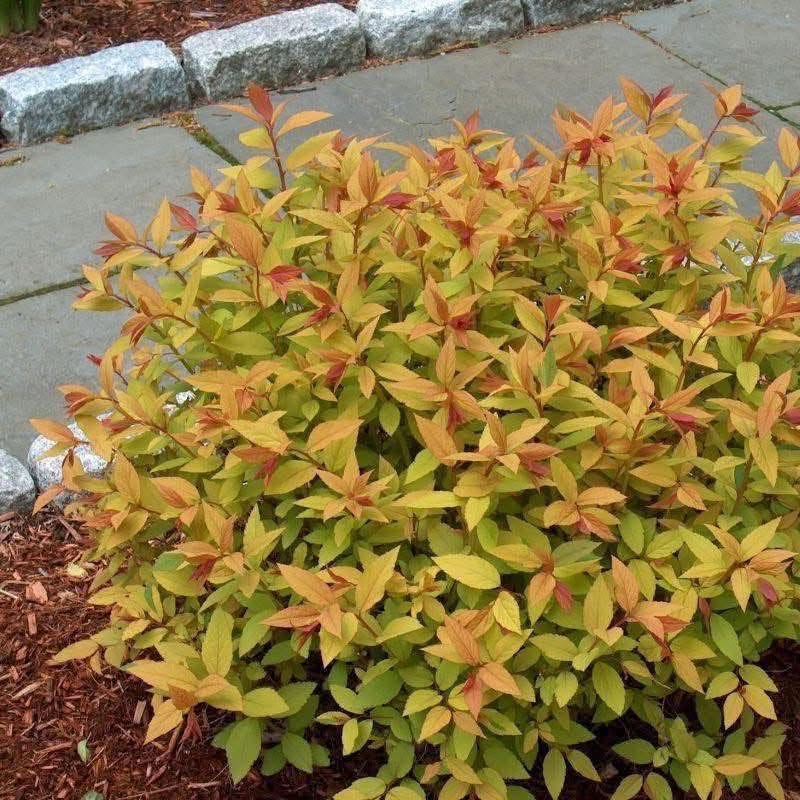
Golden spirea is often the first shrub gardeners try when they want yellow foliage without fuss. New growth on ‘Goldflame’ emerges copper-orange, then matures to bright yellow-green through summer.
It’s compact, usually staying 2 to 4 feet tall and wide, which makes it perfect for small beds or foundation planting. Spring brings small pink flower clusters that pair beautifully with the gold leaves.
I like recommending this one to beginners because it’s genuinely hard to kill. It tolerates poor soil, handles USDA zones 4 through 8, and responds well to a hard prune if it ever looks leggy.
Full sun gives the best color. In shade, the leaves tend to fade toward plain green, which defeats the purpose of planting it.
2. Golden Mock Orange (Philadelphus coronarius ‘Aureus’)
This shrub carries soft, buttery-yellow leaves that stay bright from spring until the heat of midsummer. It also produces intensely fragrant white flowers in late spring, a bonus most golden shrubs don’t offer.
Mature size runs 6 to 8 feet tall, so it works better as a specimen or informal hedge than a small accent plant. Give it room, because it doesn’t like heavy pruning to control size.
Hardy in zones 4 to 8, golden mock orange prefers a spot with morning sun and afternoon shade in hotter climates. Too much intense afternoon sun can scorch the delicate gold leaves.
I’ve noticed this shrub photographs beautifully against dark brick or stone walls. The contrast makes the yellow practically glow.
ALSO READ: 25 Brilliant Flowering Shrubs With Yellow Flowers: Pictures and Identification
3. Golden Elder (Sambucus ‘Sutherland Gold’ or nigra ‘Aurea’)
Golden elder brings deeply cut, fern-like foliage in a rich, sunny yellow. It’s one of the more dramatic textures on this list, standing apart from the rounder-leaved shrubs nearby.
It grows fast, often reaching 6 to 10 feet in a single season if left unpruned. Many gardeners cut it back hard each spring to keep a tighter, more colorful shape, since young growth holds the brightest gold.
This shrub tolerates zones 4 through 7 and actually prefers some afternoon shade in warmer regions. Full, blazing sun can bleach the color rather than enhance it.
Birds love the berries that follow the flowers, so expect visitors if you let it fruit. That’s a small trade-off for such striking foliage.
4. Golden Ninebark (‘Dart’s Gold’)
Golden ninebark is a workhorse shrub with peeling bark and rounded, gold-yellow leaves that hold their color remarkably well through summer heat. It’s native to North America, which means excellent cold tolerance down to zone 3.
Mature plants reach 5 feet tall and wide, forming a rounded, informal shape. Clusters of white spring flowers add a second layer of interest before the foliage takes over as the star.
I appreciate how low-maintenance this shrub is. It shrugs off drought once established and rarely needs spraying for pests or disease.
Full sun brings out the deepest gold. In part shade, leaves shift toward chartreuse-green, which some gardeners actually prefer for a softer look.
5. Golden Full Moon Maple (Acer shirasawanum ‘Aureum’)
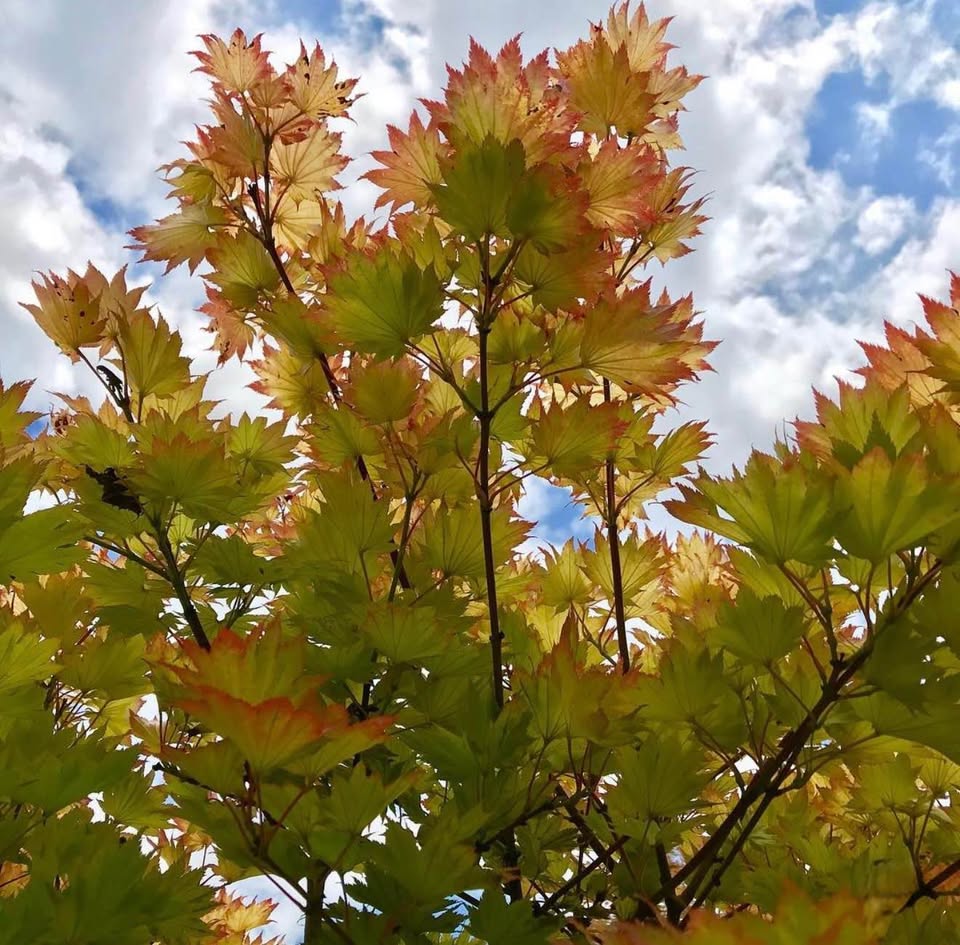
Though technically a small tree, this plant is frequently grown and pruned as a large shrub, especially in Japanese-style gardens. Its palmate leaves emerge bright gold in spring and hold that color through summer in the right conditions.
Growth is slow, typically reaching 10 to 15 feet over many years, so it fits well in spaces where you want a lasting focal point rather than fast coverage.
Hardy in zones 5 through 7, afternoon shade is essential in hot climates. Direct summer sun can scorch the thin gold leaves, turning edges brown almost overnight.
This is one of the more expensive shrubs on this list, but the visual payoff is significant. A well-placed specimen becomes the anchor of an entire garden view.
6. Golden Barberry (Berberis thunbergii ‘Aurea’)
Golden barberry offers small, rounded leaves in a consistent bright yellow, holding color better in full sun than almost any other shrub here. It forms a dense, tidy mound reaching 3 to 4 feet.
Thorny stems make it a natural barrier plant, useful along property lines or under windows where you want a deterrent.
A note worth mentioning: some regions restrict planting Japanese barberry due to invasive concerns in certain states. It’s worth checking local guidance before planting, since this varies by location.
Hardy in zones 4 to 8, it’s remarkably low-maintenance. Additionally, it is drought tolerant, deer resistant, and rarely troubled by pests once established.
7. Golden Privet (Ligustrum ovalifolium ‘Aureum’)
Golden privet is a classic hedging shrub, valued for its bright yellow-green leaves edged in gold. It responds extremely well to shearing, which makes it popular for formal hedges and topiary work.
Left unpruned, it can reach 10 to 12 feet, but most gardeners keep it trimmed to 4 or 5 feet as a hedge. It’s hardy in zones 5 through 8 and tolerates urban pollution better than many shrubs.
Fast growth is both a benefit and a chore. Expect to prune two or three times a season if you want a crisp, formal shape.
Full sun keeps the gold vivid. In shade, privet tends to green up considerably, losing much of its visual appeal.
ALSO READ: 25 Shrubs With Orange Berries (Details Explained)
8. Golden Euonymus (Euonymus japonicus ‘Aureomarginatus’)
This evergreen shrub features glossy green leaves edged in bright gold, creating a variegated effect rather than solid color. It holds interest year-round, which sets it apart from deciduous options on this list.
Mature size stays compact at 4 to 6 feet, making it a reliable choice for foundation planting or low hedges. Hardy in zones 6 through 9, it prefers milder winter climates.
One caution: euonymus scale insects can be a real problem in humid regions. Regular inspection helps catch infestations before they spread.
I find this shrub especially useful in winter gardens, where its gold-edged leaves provide color when most other plants have gone dormant.
9. Golden Smoke Bush (‘Golden Spirit’)
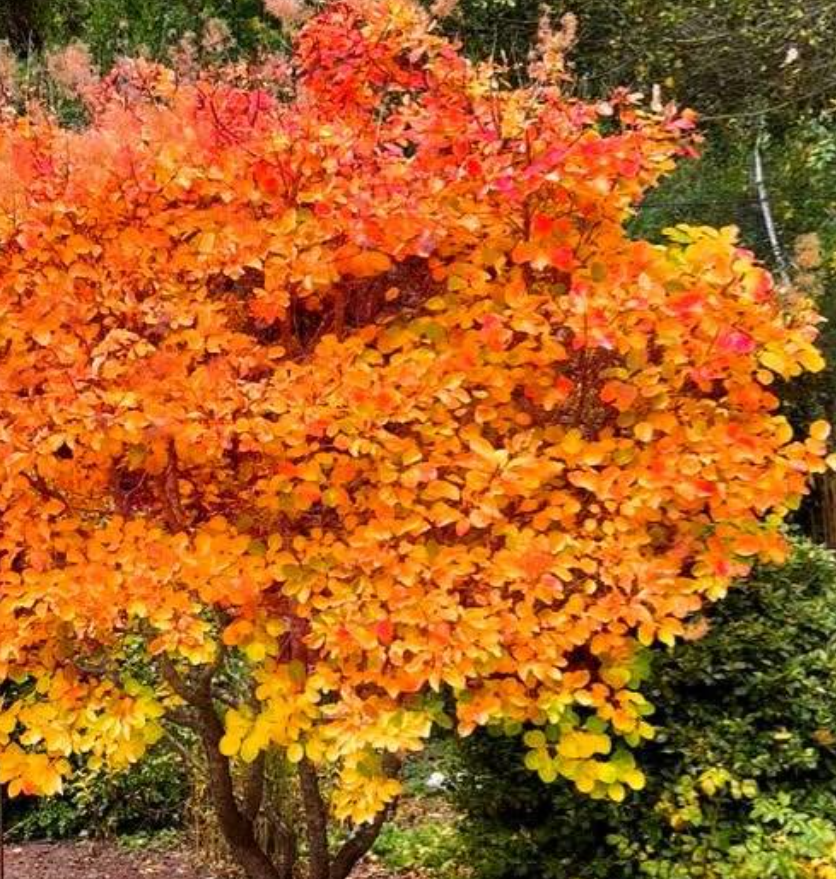
Golden Spirit is a striking cultivar with rounded, chartreuse-to-gold leaves that turn orange-red in fall, giving it a genuine two-season show. It’s a favorite among designers for its bold color against darker plants.
Growth reaches 8 to 10 feet, though regular pruning keeps it smaller and bushier. Hardy in zones 4 through 8, it handles heat and drought better than most gold-leaved shrubs.
The airy, smoke-like flower plumes in summer add texture without competing with the foliage color. It’s a plant that looks good from every angle.
Full sun is essential here too. I’ve seen shaded specimens turn a dull green that loses the entire appeal of the cultivar.
10. Golden Threadleaf Cypress (‘Filifera Aurea’)
This conifer shrub brings something different: fine, thread-like gold foliage that drapes in soft, weeping strands. It reads more as texture than typical leaf shape, which makes it a striking accent among broadleaf shrubs.
Mature size varies from 4 to 6 feet, growing slowly over many years. Hardy in zones 4 through 8, it holds its gold color through winter, unlike deciduous shrubs on this list.
Good drainage is critical. Wet, heavy soil is the most common cause of decline in this species.
I’d recommend this one near water features or Japanese-style gardens, where its flowing form feels right at home.
11. Golden Hinoki Cypress (‘Crippsii’)
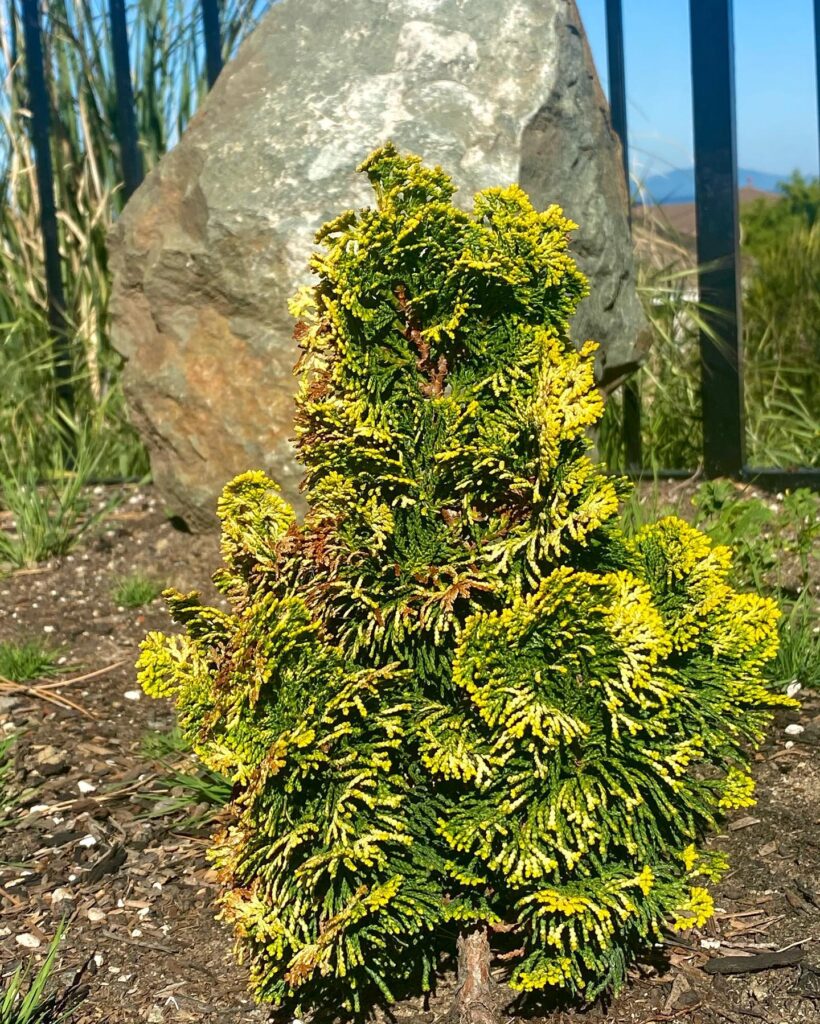
Golden Hinoki cypress is prized for its fan-shaped, golden-yellow sprays of foliage arranged in irregular, sculptural layers. It’s a slow grower, often reaching just 6 to 10 feet after a decade or more.
Hardy in zones 4 through 8, it performs best with some afternoon shade in hot summer regions, where intense sun can bronze the tips unattractively.
This shrub carries real weight as a specimen plant. Its structural form works beautifully as a focal point rather than blending into a mixed border.
Patience is required. Unlike fast growers like golden elder, this cypress rewards gardeners who plant for the long term.
12. Golden Weigela (‘Rubidor’)
Golden weigela combines chartreuse-yellow foliage with clusters of red-pink trumpet flowers in late spring, creating a color combination that’s hard to ignore. The contrast is genuinely striking in person.
It grows to about 4 to 5 feet tall and wide, staying compact enough for smaller gardens. Hardy in zones 4 through 8, it’s a reliable performer across a wide range of climates.
Hummingbirds are frequent visitors when the flowers open, adding movement and life to the display. That’s a nice bonus most gold-leaved shrubs don’t offer.
Prune right after flowering rather than in fall or winter, since it blooms on old wood. Late pruning removes next year’s flower buds.
13. Golden Boxwood (‘Aureovariegata’)
This variegated boxwood offers small, glossy leaves splashed with gold and cream, giving classic boxwood structure a brighter twist. It’s evergreen, so the color holds through winter.
Growth is slow and dense, typically reaching 3 to 4 feet over many years. Hardy in zones 6 through 9, it works well for low hedges, edging, or formal shapes.
Boxwood blight has become a serious concern in recent years, so proper spacing and airflow around plants matter more than ever.
I still recommend it for gardeners who want traditional structure with a bit more visual interest than plain green boxwood provides.
READ MORE ON: 25 Types of Boxwood Shrubs: Variety Identification, Hardiness, and How to Grow Them
14. Golden Juniper (‘Gold Star’ and similar cultivars)
Golden juniper offers low, spreading gold foliage that stays bright through all four seasons, including winter when many other yellow shrubs have gone dormant or dropped their leaves. It’s one of the most reliably evergreen options here.
Mature size stays low, often 1 to 2 feet tall but spreading 4 to 6 feet wide, making it excellent groundcover for slopes or large open beds.
Hardy in zones 3 through 9, it is extremely drought tolerant once established. This shrub thrives in poor, sandy soil where many other plants struggle. It’s a genuinely low-water landscaping option.
Full sun is non-negotiable here. Even light shade causes the color to fade and the growth to become sparse and leggy.
15. Golden Arborvitae (‘Rheingold’)
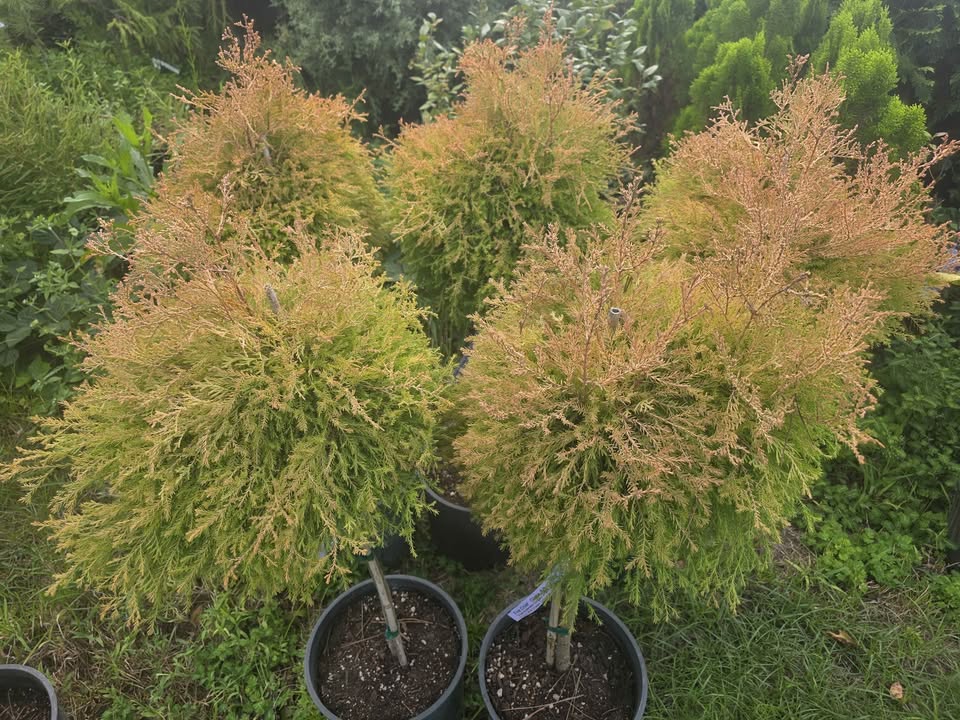
Rheingold arborvitae is beloved for its soft, feathery gold-to-bronze foliage that deepens in color through winter, adding real seasonal interest. The texture is notably softer than typical arborvitae varieties.
It grows slowly to about 3 to 5 feet tall, forming a rounded, informal shape rather than the tall columns of standard arborvitae.
Hardy in zones 3 through 8, this shrub tolerates a wide range of soils and handles cold winters exceptionally well, which explains its popularity in northern gardens.
I find it works beautifully as a specimen in rock gardens, where its unusual color and texture have room to stand out.
16. Golden Choisya (‘Sundance’)
Golden Choisya, also called Mexican orange blossom, offers glossy, bright gold leaves along with fragrant white flowers in spring and occasionally again in fall. It’s evergreen, giving year-round interest.
Mature size reaches 4 to 5 feet tall and wide, forming a neat, rounded mound. Hardy in zones 7 through 10, it suits milder climates better than harsh winter regions.
Afternoon shade helps prevent leaf scorch in hot summer areas, though morning sun is important for maintaining strong gold color.
The citrus-scented foliage is a lovely detail. Brushing past it releases a fresh, sharp fragrance that most visitors notice immediately.
17. Golden Deutzia (‘Chardonnay Pearls’)
This compact shrub offers bright chartreuse-gold foliage paired with small white, pearl-like flower buds that open into fragrant blooms in late spring. The color combination feels genuinely fresh and modern.
It stays small, typically 2 to 3 feet tall and wide, making it ideal for containers, small gardens, or mass planting along borders.
Hardy in zones 5 through 8, deutzia tolerates both sun and partial shade better than many gold-leaved shrubs, though full sun still produces the most vivid color.
I like pairing this one with dark purple companions like ninebark ‘Diabolo’ for a bold, high-contrast planting scheme.
18. Golden Box-Leaf Honeysuckle (‘Baggesen’s Gold’)
This dense, small-leaved shrub carries bright gold foliage year-round in mild climates, semi-evergreen in colder regions. It’s often used as a low hedge or topiary subject thanks to its fine texture.
Mature size reaches 3 to 4 feet, though regular shearing keeps it smaller and denser.
Hardy in zones 6 through 9, full sun brings out the richest gold color, while shaded plants tend toward a softer lime-green shade.
Unlike climbing honeysuckle varieties, this is a true shrub form, growing as a compact mound rather than a vine. It’s easy to confuse the two by name alone.
19. Golden St. John’s Wort (‘Hidcote Gold’ or similar)
This shrub combines blue-green to yellow-tinted foliage with bright yellow, cup-shaped flowers through summer, creating a doubled dose of yellow in the garden. It’s a reliable summer bloomer.
Growth reaches 2 to 3 feet tall, forming a low, spreading mound suited to border fronts or informal groupings.
Hardy in zones 5 through 8, it tolerates poor soil and some drought once established, though it appreciates regular water during its first growing season.
Bees are drawn to the flowers in large numbers, making this a genuinely useful choice for pollinator-friendly gardens.
20. Golden Yew (‘Standishii’ or ‘Aurea’)
Golden yew offers dense, upright growth with needles that emerge bright gold and mature to a softer yellow-green. Hardy in zones 4 through 7, it’s one of the few conifers that holds noticeable color contrast between new and old growth simultaneously.
Mature size stays narrow, often 3 to 4 feet tall and much narrower in width, which makes it excellent for tight spaces or formal accents.
Note that yew berries and foliage are toxic if ingested, so it’s worth keeping this in mind around pets and young children.
Slow, steady growth means minimal pruning is needed to maintain its naturally tidy, columnar shape.
ALSO READ: 15 Trees With Orange Leaves (Fall Foliage, With Pictures)
Shrubs Known For Brilliant Yellow Fall Foliage
These shrubs stay green through the growing season, then transform into striking yellow displays as temperatures drop.
21. Burning Bush (Euonymus alatus)
Burning bush is famous for fiery red fall color, but many specimens, especially in partial shade, turn a rich, glowing yellow instead. It’s a dramatic transformation from plain green summer leaves.
Mature size can reach 8 to 10 feet, though dwarf cultivars like ‘Compactus’ stay closer to 4 to 6 feet.
Hardy in zones 4 through 8, this shrub is considered invasive in parts of the northeastern and midwestern United States. It’s worth checking regional invasive species lists before planting, since restrictions vary by state.
Where permitted, it’s low-maintenance and tolerant of a wide range of soils, which explains its long history of popularity in home landscapes.
22. Fothergilla (Fothergilla gardenii and major)
Fothergilla puts on one of the most reliable fall shows among native shrubs, with leaves shifting through yellow, orange, and red, often on the same branch at once. Fragrant, bottlebrush-like flowers appear in spring before leaves emerge.
Dwarf fothergilla stays around 2 to 3 feet, while large fothergilla reaches 6 to 10 feet. Both are hardy in zones 4 through 8.
This shrub is native to the southeastern United States, which makes it an excellent choice for gardeners prioritizing native plantings and pollinator support.
I genuinely think fothergilla is underused. Its multi-season interest rivals shrubs that cost twice as much and demand far more care.
23. Witch Hazel (Hamamelis virginiana)
Witch hazel offers bright yellow fall foliage followed by an unusual bonus: fragrant, spidery yellow flowers that bloom in late fall or even winter, after the leaves have dropped. Few shrubs flower this late in the season.
Mature size runs large, typically 15 to 20 feet, so it functions more like a large shrub or small tree. Hardy in zones 3 through 8, witch hazel has a long history of use in herbal astringents, adding a layer of practical history to its ornamental value.
It performs well in partial shade, which makes it a valuable option for woodland gardens where full sun is hard to come by.
24. Spicebush (Lindera benzoin)
Spicebush turns a clear, bright yellow in fall, standing out against darker evergreens nearby. Crushing a leaf releases a spicy, citrus-like fragrance that gives the plant its common name.
It grows to about 6 to 12 feet, forming an open, rounded shape. Hardy in zones 4 through 9, it’s native to much of the eastern United States.
This shrub is a host plant for spicebush swallowtail butterflies, making it a genuinely valuable addition for anyone interested in supporting local wildlife.
It tolerates shade better than most shrubs on this list, thriving as an understory plant beneath larger trees.
25. Virginia Sweetspire (Itea virginica)
Virginia sweetspire closes out this list with fall foliage that shifts through yellow, orange, and deep burgundy, often all present at once for a layered, multicolor effect. Drooping white flower spikes in early summer add fragrance and texture.
Mature size reaches 3 to 4 feet, though it spreads readily by suckering, making it useful for mass plantings or erosion control on slopes.
Hardy in zones 5 through 9, it tolerates wet soil better than almost any shrub on this list, making it an excellent choice for rain gardens or low, poorly drained areas.
I’ve found this shrub performs beautifully in both sun and partial shade, which gives it more placement flexibility than most fall-color specimens.
Quick Comparison: Choosing The Right Yellow Shrub
- For year-round color: golden juniper, golden boxwood, or golden Hinoki cypress hold their gold through winter.
- For fast impact: golden elder and golden privet grow quickly and fill space within a season or two.
- For small gardens: golden deutzia, golden St. John’s wort, and dwarf fothergilla all stay under 3 feet.
- For native plant gardens: fothergilla, spicebush, witch hazel, and Virginia sweetspire are all native to North America.
Common Questions About Yellow-Leaved Shrubs
Does a shrub with yellow leaves mean it’s dying?
Not necessarily. Many cultivars are bred specifically for gold or chartreuse foliage. However, if a normally green shrub suddenly turns yellow outside of fall, it can signal nutrient deficiency, overwatering, or root stress, so it’s worth checking growing conditions.
Do gold-leaved shrubs need more sun than green shrubs?
Generally, yes. Most golden cultivars need full sun to maintain their brightest color. Shade often causes them to revert toward green.
Can I mix golden shrubs with purple-leaved plants?
Absolutely. Gold and purple sit opposite each other on the color wheel, which is exactly why they create such strong, intentional contrast in garden design.
Final Thoughts
Twenty-five shrubs, and still only a fraction of what’s out there. Yellow foliage genuinely changes how a garden feels, adding warmth even on gray days.
Whichever shrub you choose, matching it to your light conditions and hardiness zone matters more than any design trend. Get that right, and the color takes care of itself.

Tim M Dave is a gardening expert with a passion for houseplants, particularly cacti and succulents. With a degree in plant biology from the University of California, Berkeley, he has vast experience in gardening. Over the years, he has cultivated a vast collection of desert plants and learned a great deal about how to grow and care for these unique companions.