Understanding Actaea Plant (Baneberry and Black Cohosh)
If you have a shady corner that never seems to come alive, Actaea may be the answer. This woodland perennial brings height, texture, and quiet drama to places where many plants struggle.
I still remember the first time I saw black cohosh in bloom. Its tall white spires rose out of the shade like candles. It looked graceful and a little wild.
This guide covers everything you need to know. You will learn what Actaea is, which species to choose, how to grow it, and how to stay safe around it.
Actaea at a Glance
Two species cover most of what gardeners search for under this name. The table below compares them side by side.
| Feature | Black Cohosh (Actaea racemosa) | White Baneberry (Actaea pachypoda) |
| Family | Ranunculaceae (buttercup family) | Ranunculaceae (buttercup family) |
| Other names | Bugbane, fairy candles, black snakeroot | Doll’s eyes, white cohosh |
| Plant type | Herbaceous perennial | Herbaceous perennial |
| Mature height | 4–7 ft (1.2–2.1 m) with flower spikes | About 1–3 ft (30–90 cm) |
| Spread | 2–4 ft (60–120 cm) | About 1–2 ft (30–60 cm) |
| Hardiness zones | USDA 3–8 | USDA 3–8 |
| Light | Part shade to full shade | Part shade to full shade |
| Soil | Rich, moist, well-drained, slightly acidic | Rich, moist, well-drained woodland soil |
| Bloom time | Late spring to mid-summer | Spring (April–May) |
| Showy feature | Tall white flower spikes | White berries with black “pupils” |
| Native range | Eastern North America | Eastern North America |
| Wildlife value | Pollinators; host for azure butterflies | Woodland habitat plant |
| Toxicity | Handle with care; rhizome used in supplements | Highly poisonous, especially berries and roots |
| Propagation | Rhizome division, seed | Seed, root division |
| Maintenance | Low | Low |
What Is Actaea?
Plant Family and Name Change
Actaea is a genus of perennial plants in the buttercup family (Ranunculaceae). It includes plants commonly called baneberry, bugbane, and cohosh. Together they make up a group of roughly two to three dozen species across the Northern Hemisphere.
Botanists once placed bugbanes and black cohosh in a separate genus called Cimicifuga. Modern classification has merged them into Actaea. You will still see the old name on plant tags and in older books.
This overlap confuses many buyers. If a nursery lists Cimicifuga racemosa, it is the same plant as Actaea racemosa. NC State Extension, for example, lists Cimicifuga racemosa as the previous name of black cohosh.
Main Species Gardeners Grow
Three types appear most often in gardens. Black cohosh (Actaea racemosa) is the tall, spire-flowering classic. White baneberry (Actaea pachypoda) is known for its odd white fruit. Red baneberry (Actaea rubra) produces glossy red berries.
Garden centers also sell bugbane cultivars with dark purple-bronze leaves. These are often grouped under Actaea simplex. NC State lists a burgundy-leaved selection called ‘Atropurpurea’, which has burgundy leaves and stems.
For the rest of this guide, I focus on black cohosh and white baneberry. Their needs are similar, so most advice applies to both. I will point out the differences where they matter.
READ MORE: 25 Types of Actaea Plant (Identification, With Pictures)
Appearance and Size
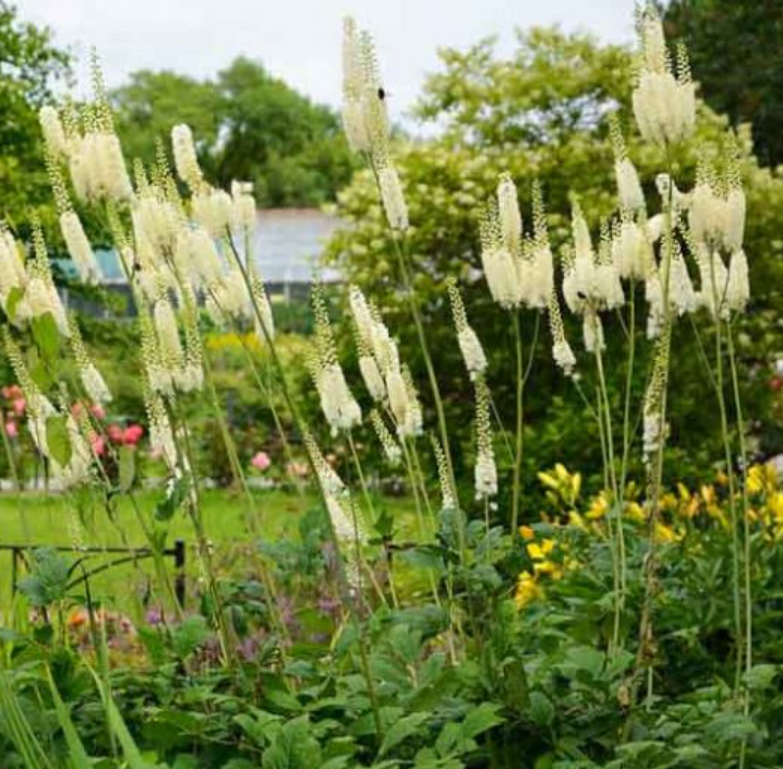
Black cohosh is the showpiece. NC State reports a mature height of 4 to 7 feet and a width of 2 to 4 feet. The leaves are large, deeply divided, and fern-like. In summer, long white flower wands rise well above the foliage.
White baneberry stays much smaller. It forms a low, bushy clump with toothed leaflets. Its small white flower clusters appear in spring and are pleasant but modest.
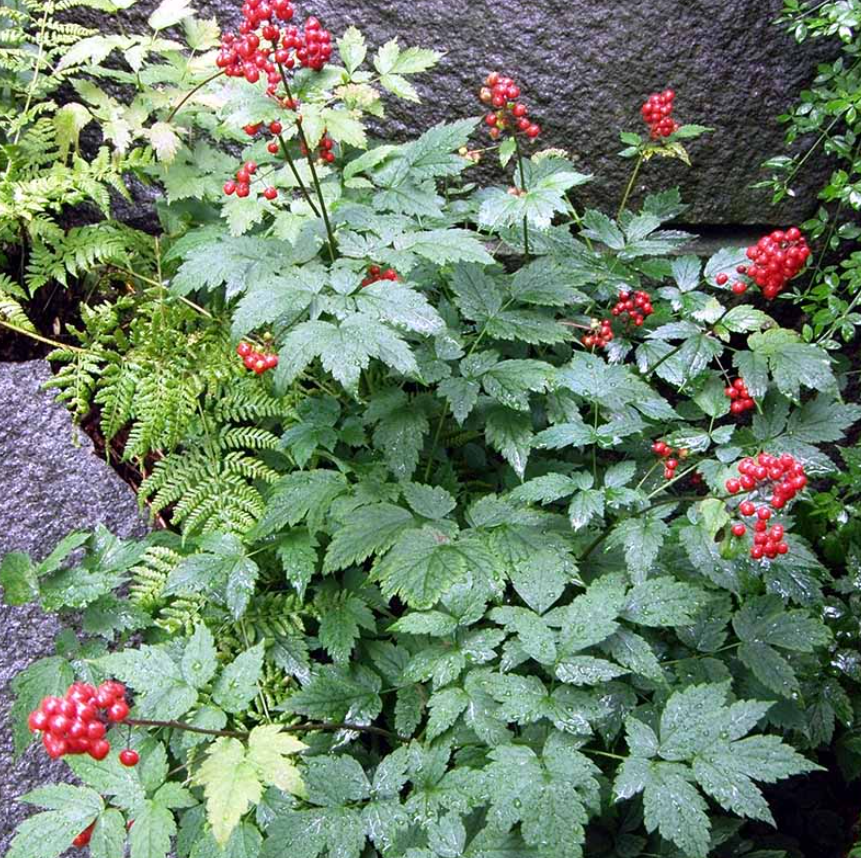
The real show comes later. White baneberry’s fruit is its signature feature. The berries are about 1 cm in diameter, white, with a black spot that looks like a doll’s eye. The stalks turn bright red as the fruit matures.
Native Range and Habitat
Both plants are native to eastern North America. They grow naturally in rich, shaded forests. Black cohosh, for instance, is found in woodland settings from Maine south to Georgia and west to Missouri and Arkansas.
Knowing the habitat helps you grow them well. Picture a forest floor with cool air, filtered light, and soil full of fallen leaves. If you can copy those conditions, Actaea will reward you.
Why Gardeners Love Actaea
Shade Garden Value
Shade is hard to design. Many flowering plants fade without sun. Actaea does the opposite. It brings vertical structure to the back of a shady border.
NC State describes black cohosh as a vertical accent for the back of a shady cottage garden or woodland setting. I agree with that. Planted in groups, the tall spires create rhythm and movement.
The foliage also earns its place. Even before flowering, the finely cut leaves add texture beside bold plants like hostas. Dark-leaved varieties add contrast that few shade plants can match.
Wildlife and Pollinator Benefits
Black cohosh supports local wildlife. According to NC State, it serves as a host plant for Spring Azure, Holly Blue, and Appalachian Azure butterflies. Small bees and other insects also visit the flowers.
This matters because shade gardens often offer little for pollinators. A few Actaea plants can change that. They provide late-spring and summer nectar and pollen when many woodland plants have finished.
For native-plant gardeners, this is a strong selling point. You get beauty and ecological value in the same plant. That combination is rare in deep shade.
Deer Resistance
Deer are a common problem in woodland gardens. They eat hostas, lilies, and many other shade favorites. Actaea is rarely on the menu.
NC State notes that black cohosh is highly resistant to damage from deer. In my experience, this holds up well in the field, though a very hungry herd may still sample anything.
White baneberry is toxic, which also discourages grazing. Still, I would not call any plant “deer-proof.” Treat resistance as a strong advantage, not a guarantee.
How to Grow Actaea
Climate and Hardiness
Actaea is a cold-tolerant perennial. Both species do well across USDA zones 3 to 8, which covers much of the northern and central United States, southern Canada, and cooler parts of Europe. NC State lists black cohosh as hardy in zones 3a through 8b.
It struggles in very hot, dry climates. Long summer heat without moisture will scorch the leaves. In warmer regions, give it deeper shade and steady water.
Gardeners in tropical or arid areas should be cautious. If your winters are mild and short, the plant may not get the cold rest it needs. I would test one plant first before buying several.
Light Requirements
Part shade to full shade is ideal. Morning sun with afternoon shade works well. Dappled light under tall trees is even better.
The North Carolina Native Plant Society lists black cohosh as suited to part shade, with 2 to 6 hours of sun per day, or less than 2 hours. That is a useful rule of thumb.
Too much sun causes leaf scorch and weak growth. Too little light, on the other hand, reduces flowering. If your plant has lush leaves but no spikes, try thinning nearby branches to let in more light.
Soil Needs
Soil is where many gardeners go wrong. Actaea wants rich, moist, well-drained soil with plenty of organic matter. Think of a forest floor, not a dry flower bed.
NC State advises that black cohosh prefers a rich, moist soil that is high in organic matter, and raised beds suit clay soils or wet areas. A slightly acidic range is best. The same source notes that a soil pH of 5 to 6 is ideal.
Before planting, mix in compost or leaf mold. This improves drainage and moisture balance at once. If your soil is heavy clay, build a low mound or raised bed to prevent root rot.
Planting Step by Step
The best planting times are spring and early fall. Cool weather helps the roots settle without stress. Avoid planting during summer heat.
Follow these simple steps:
- Choose a shaded, sheltered site. Wind can damage tall stems, and NC State recommends a spot protected from strong winds.
- Dig a wide hole and loosen the soil below it.
- Set the crown at soil level. Planting too deep can cause rot.
- Space plants 2 to 3 feet apart for black cohosh, closer for baneberry.
- Water well and add 2 to 3 inches of mulch.
Be patient after planting. Actaea often spends its first year building roots. Flower spikes may be modest at first, then improve each season.
Watering
Young plants need consistent moisture. Water deeply once or twice a week during the first season, depending on rain. The goal is damp soil, never soggy soil.
Established plants cope better with dry spells. Still, long drought will brown the leaf edges. A thick mulch layer helps hold moisture and keeps roots cool.
Use a simple test. Push a finger two inches into the soil. If it feels dry, water. If it feels damp, wait a day or two.
Fertilizing and Mulching
Actaea is not a heavy feeder. In rich soil, it needs little extra food. Too much fertilizer can cause floppy growth.
I recommend one yearly top-dressing of compost in early spring. Add a layer of shredded leaves or bark mulch as well. This mimics the natural leaf fall of a forest.
Over time, the mulch breaks down and feeds the soil. It also protects shallow roots from temperature swings. For most gardens, that is all the fertilizer this plant needs.
Propagation
The easiest method is division of the rhizomes. NC State explains that black cohosh is most easily propagated by dividing the rhizomes in spring or fall. The same source notes that one plant can carry up to 15 buds on its rhizome.
Cut sections so each piece has at least one bud. Keep any fibrous roots attached. Replant right away at the same depth and water well.
Seed is possible, but slow. Black cohosh seed needs a warm, cold, then warm cycle before it will germinate. Plan for patience. Seedlings may take two to three years to flower, so division is faster for most home gardeners.
Care and Maintenance
Seasonal Care
Actaea is low maintenance once settled. Most of the work happens in spring and fall.
In early spring, remove old stems and top-dress with compost. In summer, check moisture and stake tall flower spikes if they lean. Black cohosh can grow fast, and NC State notes it can grow 18 to 22 inches per month during the growing season.
In late fall, cut back dead foliage after frost. Leave white baneberry fruits in place until then if you enjoy the display. Resist the urge to divide plants too often, since clumps improve with age.
Pests and Diseases
Actaea has few serious pests. Leaf diseases are the most common concern. NC State lists rust and leaf spot as occasional problems.
Good air flow and clean beds reduce risk. Remove spotted leaves early and avoid watering from above late in the day. Poor drainage can also lead to root problems. Extension research describes several leaf spots and root rots, including Rhizoctonia.
If rot appears, check drainage first. Most disease issues start with wet soil and crowded plants. Moving or dividing the clump often solves the problem.
Common Problems and Quick Fixes
Here are the issues I see most often:
- Brown, crispy leaf edges: Usually too much sun or too little water.
- No flowers: Often caused by deep shade, a young plant, or recent division.
- Floppy stems: Caused by wind, rich feeding, or heavy shade. Stake or relocate.
- Yellow leaves in summer: Check for waterlogged soil.
Most problems fix themselves once the site is right. I have found that moving a struggling plant to a better spot works better than any product.
Safety: What Every Gardener Should Know
Toxicity of Baneberry
This section matters most. White and red baneberry are poisonous. NC State rates white baneberry as having high severity poison characteristics. Penn State Extension adds that all parts of the plant are poisonous if eaten, especially the roots and berries.
The berries look attractive, and that is the danger. Never eat them, and never let children handle them. I would avoid planting baneberry where small children or pets play.
If someone swallows any part of the plant, seek medical help right away. Wear gloves when handling the plant and wash your hands afterward. Treat it with respect, and it is a safe garden neighbor.
Black Cohosh as a Supplement
Black cohosh is also sold as a herbal supplement, mainly for menopause symptoms. This is a medical topic, so please read carefully. I am a writer, not a doctor, and this is not medical advice.
The evidence is mixed but notable. The U.S. National Center for Complementary and Integrative Health reports that a 2023 review of 22 studies found products with black cohosh extracts potentially beneficial for overall menopause symptoms.
Safety questions remain. A National Library of Medicine resource notes that products labeled as black cohosh have been linked to more than fifty instances of clinically apparent liver injury. The same source says that clinical trials of more than 1,200 patients showed no serious liver effects.
Product quality may play a role. Chemical analysis has found that some black cohosh products are mislabeled and contain Chinese Actaea species instead. If you consider a supplement, talk to your doctor first, especially if you have liver problems.
Conservation and Wild Harvest
Why Growing Your Own Helps
Black cohosh has real commercial value. The U.S. Forest Service reports that retail sales rose more than 500 percent in the one-year period ending in 1998. It also states that nearly 100 percent of black cohosh raw material is wild harvested.
That is a concern for wild populations. Heavy digging can thin out forest stands. Buying nursery-grown plants protects native woodlands.
If you want black cohosh in your garden, choose a reputable grower. Avoid collecting from the wild, even if the plant looks common. Cultivated plants are healthier, cleaner, and more ethical.
Companion Plants for Actaea
Best Partners in the Shade
Good companions share the same needs: shade, moisture, and rich soil. Ferns, hostas, and astilbe are natural partners. Their textures contrast well with Actaea’s tall spikes.
Native woodland plants work beautifully too. Trillium, bloodroot, and mayapple blend with baneberry in a naturalistic planting. NC State even suggests looking for sites where other woodland plants grow, such as mayapple, trillium, bloodroot, or ginseng.
For colour, try pairing dark-leaved bugbane with pale foliage like silver-leaved brunnera. Contrast makes shade gardens feel bright. Keep tall plants at the back and low plants in front for a layered look.
Frequently Asked Questions
Is Actaea the same as black cohosh? Black cohosh is one species within the Actaea genus. The genus also includes baneberries and bugbanes.
Is Actaea easy to grow? Yes, in the right place. Give it shade, moisture, and rich soil, and it needs very little care.
Is Actaea toxic to dogs and children? Baneberry species are poisonous, especially the berries and roots. Keep them out of reach and plant them with caution.
How long does Actaea take to flower? Plants from division may bloom within one or two seasons. Seed-grown plants often take longer.
Does Actaea come back every year? Yes. It is a hardy perennial that dies back in winter and regrows from its rhizome in spring.
Final Thoughts
Actaea is a reliable, elegant, low-effort perennial for shady gardens. Black cohosh brings height and summer flowers. White baneberry adds quirky fruit and woodland charm.
Success comes down to three things: shade, moisture, and rich soil. Add some mulch, give it time, and avoid the wild-harvest trap. Remember the safety rules around baneberry, and you will enjoy it for many years.
I hope this guide helps you plant with confidence. A shady corner can become the most beautiful part of your garden.
References
- NC State Extension. Actaea racemosa (Black Cohosh), Plant Toolbox. https://plants.ces.ncsu.edu/plants/actaea-racemosa/
- NC State Extension. Actaea pachypoda (White Baneberry), Plant Toolbox. https://plants.ces.ncsu.edu/plants/all/actaea-pachypoda/
- NC State Extension Publications. Black Cohosh (Actaea racemosa L.). https://content.ces.ncsu.edu/black-cohosh-actaea-racemosa-l
- Penn State Extension. Not-So-Nice Native Plants. https://extension.psu.edu/not-so-nice-native-plants
- National Center for Complementary and Integrative Health (NIH). Black Cohosh. https://www.nccih.nih.gov/health/black-cohosh
- National Library of Medicine (NCBI Bookshelf). LiverTox: Black Cohosh. https://www.ncbi.nlm.nih.gov/books/NBK547990/
- U.S. Forest Service, Research & Development. Black Cohosh (Actaea racemosa): An Annotated Bibliography. https://research.fs.usda.gov/treesearch/26166

Tim M Dave is a gardening expert with a passion for houseplants, particularly cacti and succulents. With a degree in plant biology from the University of California, Berkeley, he has vast experience in gardening. Over the years, he has cultivated a vast collection of desert plants and learned a great deal about how to grow and care for these unique companions.