60 California Native Flowers (With Growing Details)
California does not just have wildflowers. It has entire mountains, deserts, and coastlines that turn into color overnight when conditions align. I have chased a few of these blooms myself, and the scale of it still catches me off guard every time.
This is not an accident of good weather alone. California is home to more than 6,500 native plant species, subspecies, and varieties, according to the Jepson Flora Project. That makes it the most botanically diverse state in the country.
An even more striking detail is how much of that diversity belongs to California alone. About 35% of the state’s native plants are endemic, meaning they grow nowhere else on Earth, based on figures from the California Native Plant Society and related research.
This guide walks through 60 flowers native to California, including the state flower, coastal and chaparral blooms, desert wildflowers, Sierra Nevada and mountain natives, woodland flowers, and rare regional species.
Let’s start with the one everyone already knows.
The State Flower
1. California Poppy (Eschscholzia californica)
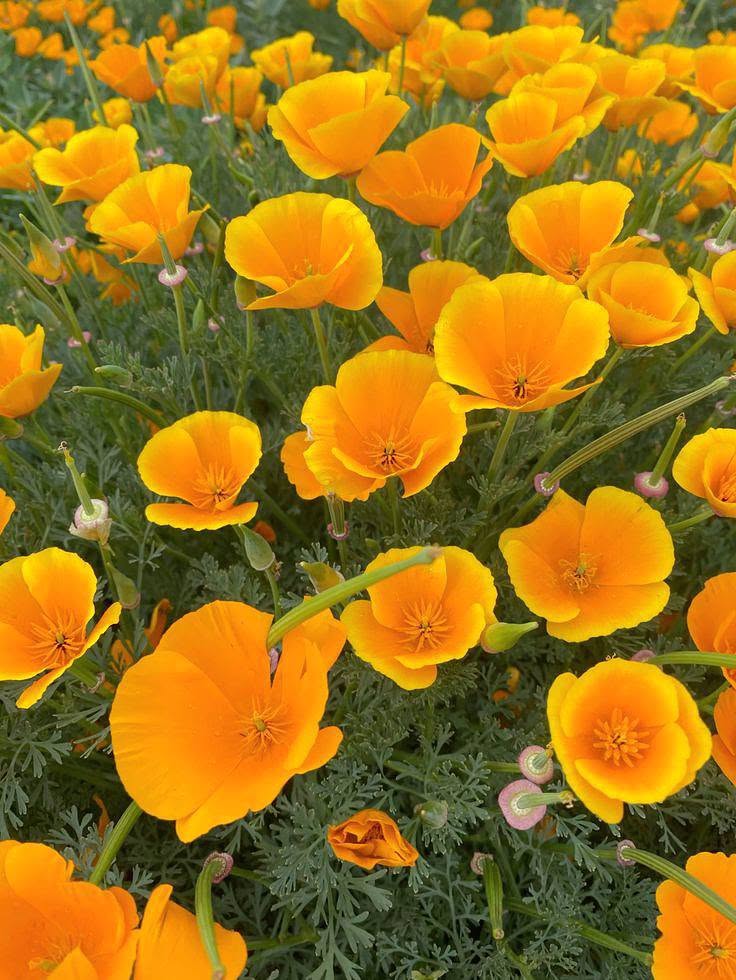
California poppy is the official state flower, chosen in 1903 for its brilliant orange, silky petals. It blooms from February through September, though peak displays usually happen between March and May.
The Antelope Valley California Poppy Reserve, dedicated in 1976, protects nearly 1,800 acres of the most consistent poppy-bearing land in the state. This reserve remains the most reliable place to see large-scale blooms nearly every year.
Poppies are phototropic, meaning their petals open in response to sunlight and warmth and close during cold, wind, or clouds. That behavior explains why a field can look completely different depending on the hour you visit.
I always tell first-time visitors to plan for a sunny late morning. Cloudy afternoons genuinely mean closed petals and a very different photo than you were hoping for.
Iconic Coastal and Grassland Wildflowers
2. California Lupine (Lupinus nanus)
Sky lupine produces dense spikes of deep blue-purple flowers, often blooming alongside California poppies in the same fields. It flowers from March through May across coastal ranges and inland valleys.
This species belongs to the pea family, and like many of its relatives, it fixes nitrogen in the soil through its root system. That trait helps enrich the ground for surrounding plants throughout the season.
Sky lupine tends to grow low and dense, forming solid mats of blue that contrast beautifully against orange poppies during peak bloom. Bees are the primary pollinators, visiting the flower spikes in large numbers.
This pairing of blue lupine and orange poppy is one of the most photographed wildflower combinations in the entire state.
3. Goldfields (Lasthenia californica)
Goldfields produce small, bright yellow daisy-like flowers that carpet entire hillsides in dense, solid color. They bloom from March through May, often appearing alongside poppies and lupine in classic superbloom displays.
This annual wildflower germinates quickly after winter rain, completing its entire life cycle within just a few months. Its rapid growth cycle is part of why it appears so suddenly after a wet season.
Goldfields tolerate a wide range of soil types, from clay to sandy loam, which explains their presence across coastal, valley, and desert regions alike. Bees visit heavily during peak bloom.
I find this flower’s uniform golden carpet almost more striking from a distance than up close, where individual blooms are actually quite small.
4. Owl’s Clover (Castilleja exserta)
Owl’s clover produces dense spikes of pink-purple flowers with a distinctive white or yellow tip, resembling a small owl’s face up close. It blooms from March through May across grasslands and coastal areas.
This plant is partially parasitic, tapping into the roots of nearby grasses for additional nutrients. That relationship allows it to grow in surprisingly nutrient-poor soil where few other flowers thrive.
Owl’s clover frequently blooms in dense mixed stands alongside poppies, lupine, and goldfields, contributing to the layered color patterns seen in strong wildflower years. Bees are its main pollinators.
This is one of the flowers responsible for the pink-purple streaks often visible running through classic orange-and-gold superbloom photographs.
5. Baby Blue Eyes (Nemophila menziesii)
Baby blue eyes produces delicate, sky-blue flowers with a pale white center, blooming from February through May across grasslands and open woodlands. It favors partial shade more than many of its wildflower neighbors.
This annual species tends to grow in looser, scattered patches rather than dense carpets, giving fields a softer, speckled appearance compared to solid stands of poppies or goldfields. It typically stays low to the ground.
Bees are strongly attracted to its pale blue color and open flower shape. The plant tolerates a range of soil moisture levels, from seasonally wet meadows to drier upland slopes.
I find this flower’s soft coloring provides a gentle contrast against the bolder oranges and yellows dominating most spring wildflower fields.
6. Chinese Houses (Collinsia heterophylla)
Chinese houses produce tiered, bicolor flowers in shades of purple and white, stacked in whorls along a central stem. It blooms from March through May in shaded woodlands and coastal canyons.
This unusual tiered structure resembles a small pagoda, which explains the plant’s common name. Each whorl of flowers opens in sequence up the stem over several weeks.
Bees and small butterflies visit this flower regularly, drawn to its distinct two-tone coloring. It favors partial shade, often found beneath oak canopies rather than in open sun.
This is a flower that rewards patience. Watching a single stem bloom gradually upward over multiple weeks reveals a structure most people miss on a quick glance.
7. Five Spot (Nemophila maculata)
Five spot produces white, bowl-shaped flowers with five distinct purple spots at the tip of each petal. It blooms from March through May in grasslands and open meadows, mostly in Central and Southern California.
The plant’s name comes directly from this five-spot pattern, which makes it one of the easiest native wildflowers to identify at a glance. It typically grows low and close to the ground.
Bees visit this flower reliably, though it tends to bloom in smaller, scattered patches rather than dense colonies. It favors moist soil during its short spring growing season.
I always point this flower out to first-time wildflower spotters, since the pattern is so distinctive that it becomes easy to recognize immediately afterward.
8. California Buttercup (Ranunculus californicus)
California buttercup produces glossy, bright yellow flowers with a waxy sheen, blooming from February through May across grasslands and open woodlands statewide. Its shiny petals reflect sunlight in a way few other native flowers manage.
This species tolerates both full sun and partial shade, adapting to a wide range of elevations from coastal bluffs to foothill meadows. It typically grows one to two feet tall.
Bees are the primary pollinators, drawn to its bright color and open, accessible flower shape. The plant’s glossy petal surface is actually caused by a specialized reflective cell layer unique to buttercups.
This flower’s shine is genuinely noticeable in person, catching light in a way that photographs rarely capture accurately.
Chaparral and Foothill Natives
9. California Fuchsia (Epilobium canum)
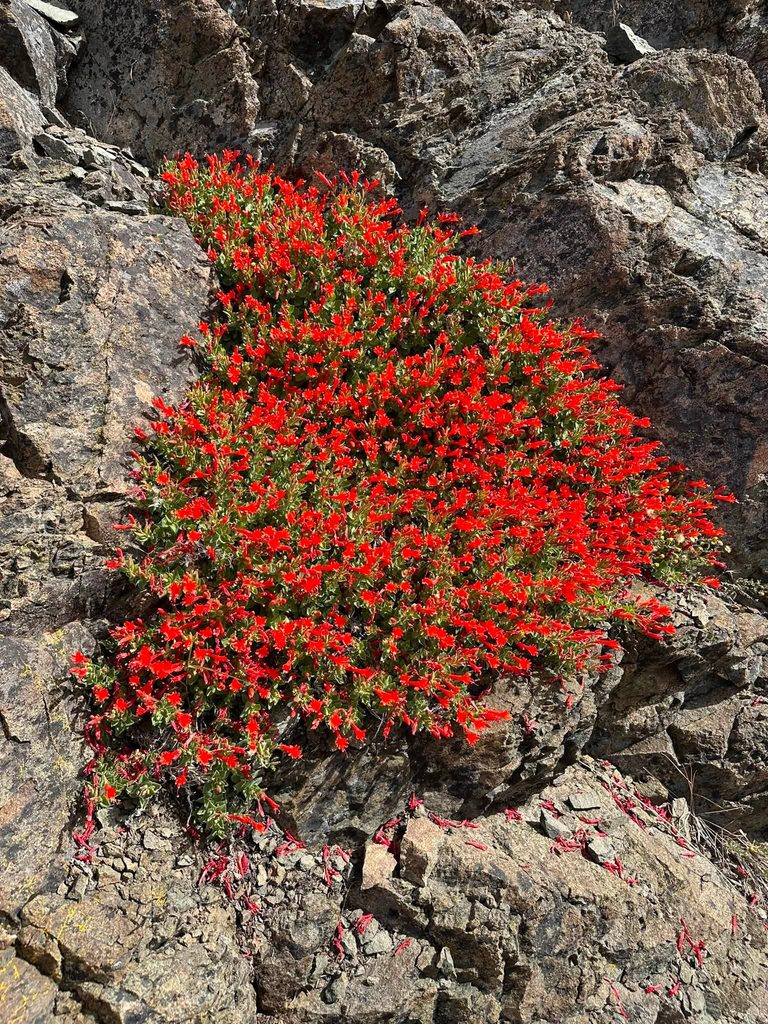
California fuchsia produces bright scarlet, tubular flowers, blooming from late summer into fall when most other wildflowers have finished for the year. It grows across chaparral and foothill regions throughout the state.
This late bloom timing makes the plant an essential nectar source for hummingbirds preparing for fall migration. Its color and shape are specifically suited to attract these birds over other pollinators.
The plant reseeds readily and tolerates drought exceptionally well once established, making it a popular choice for low-water native gardens. It typically grows one to two feet tall.
I think of this flower as summer’s last real gift to hummingbirds, blooming reliably through the driest stretch of the California year.
10. Bush Poppy (Dendromecon rigida)
Bush poppy produces bright yellow, four-petaled flowers on a woody shrub, blooming from March through June across chaparral slopes statewide. Unlike its low-growing poppy relative, this species grows as a substantial shrub.
This plant can reach six to twelve feet tall, forming a significant woody presence in chaparral plant communities. Its blue-green leaves stay attractive even outside the bloom period.
Bees visit this flower heavily during peak bloom season. The plant also plays an important role in post-fire chaparral recovery, often among the first shrubs to reestablish after a wildfire.
This is one of the flowers I associate most closely with chaparral recovery, appearing reliably in the years following a burn.
11. Chaparral Mallow (Malacothamnus fasciculatus)
Chaparral mallow produces clusters of pale pink, hibiscus-like flowers on a tall, woody shrub. It blooms from April through July across chaparral and coastal sage scrub regions in Southern and Central California.
This species can grow six to ten feet tall, forming dense thickets that provide valuable cover for birds and small mammals. Its felted, gray-green leaves help it retain moisture during dry summer months.
Bees and butterflies visit this flower’s open, accessible shape regularly throughout its extended bloom period. The plant tolerates poor, rocky soil with ease.
This shrub often blends into the surrounding chaparral until its pink flowers appear, at which point it becomes one of the more noticeable blooms along a hillside trail.
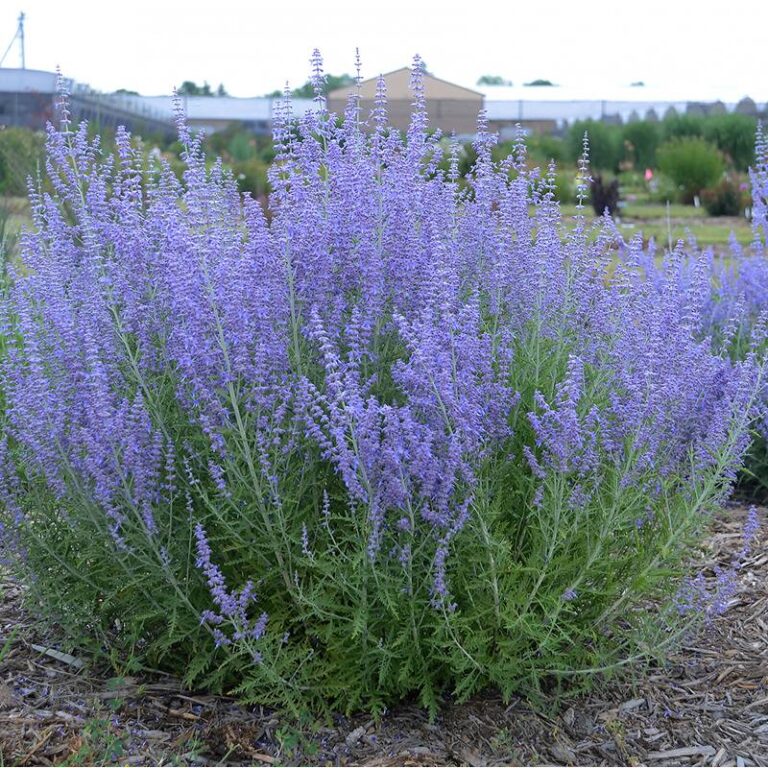
12. Purple Sage (Salvia leucophylla)
Purple sage produces whorled clusters of pale lavender-pink flowers on a silvery-leaved shrub. It blooms from April through June across coastal sage scrub habitats in Southern and Central California.
This species is highly aromatic, releasing a strong sage fragrance when its leaves are brushed or crushed. That scent is a defining characteristic of coastal sage scrub habitat throughout the region.
Bees are strongly attracted to this flower, and the plant also plays a role in traditional herbal use among Indigenous communities in the region. It tolerates drought exceptionally well once established.
I find the fragrance of this plant almost as memorable as its flowers, filling the air along entire hillside trails during peak bloom.
13. Black Sage (Salvia mellifera)
Black sage produces small, pale blue-white flowers in whorled clusters along tall flowering stalks. It blooms from April through July across coastal sage scrub and chaparral regions statewide.
This species is a major source of nectar for native bees, and its name directly references honey production, since bees foraging on black sage produce a distinctly flavored honey. Beekeepers in the region specifically value this plant.
The plant tolerates poor, rocky soil and drought with ease, forming an important structural component of coastal sage scrub ecosystems. It typically grows three to six feet tall.
This is a flower with genuine economic value beyond its ecological role, thanks to the specific honey variety tied directly to its bloom.
14. Bladderpod (Peritoma arborea)
Bladderpod produces clusters of bright yellow flowers followed by distinctive inflated seed pods that give the plant its common name. It blooms nearly year-round across desert and coastal scrub regions in Southern California.
This extended bloom period makes bladderpod an unusually reliable nectar source compared to most native flowers with a narrow seasonal window. Its resilience comes from a deep taproot system.
Bees and butterflies visit this flower steadily throughout the year. The plant tolerates extreme heat, drought, and poor soil, making it one of the toughest native shrubs in the state.
I appreciate this plant for blooming even during months when almost nothing else in the landscape shows any color at all.
ALSO READ: 55 Flowers That Grow in Shade (With Growing Details)
Desert Wildflowers
15. Desert Sand Verbena (Abronia villosa)
Desert sand verbena produces dense, fragrant clusters of magenta-pink flowers low to the ground. It blooms from February through May across the Mojave and Colorado Desert regions, particularly after wet winters.
This species thrives in loose, sandy soil, often growing directly on open dunes where few other plants can establish themselves. Its sticky, hairy stems help trap sand and moisture close to the plant.
Moths are important nighttime pollinators for this fragrant flower, which releases a stronger scent after sunset. Bees also visit during daylight hours.
This is one of the flowers most associated with true desert superblooms, carpeting sandy valleys in vivid pink during exceptional rain years.
16. Desert Dandelion (Malacothrix glabrata)
Desert dandelion produces pale yellow, dandelion-like flowers on slender stems, blooming from February through May across desert regions statewide. It often appears in massive numbers following good winter rainfall.
This annual species completes its entire life cycle quickly, taking advantage of brief windows of desert moisture before setting seed and dying back. Its seeds can remain dormant in soil for years, waiting for the right conditions.
Bees visit this flower reliably during its bloom period, and it often grows in dense mixed stands alongside desert sand verbena and other spring annuals. It tolerates extremely poor, sandy soil.
This flower’s sudden mass appearance after rain is a genuine highlight of desert wildflower season, transforming bare ground almost overnight.
17. Desert Marigold (Baileya multiradiata)
Desert marigold produces bright yellow, papery flowers on silvery-gray foliage, blooming from spring through fall across the Mojave and Colorado Desert regions. Its silvery leaves reflect sunlight, helping conserve moisture.
This species tolerates extreme heat and drought better than almost any other California desert native, continuing to bloom through summer stretches that would wilt less hardy flowers.
Bees and butterflies visit this flower reliably throughout its long bloom season. Its cheerful color stands out sharply against the muted tans and browns of the surrounding desert landscape.
I associate this flower with long drives through the Mojave, appearing steadily along roadsides even during the driest months of the year.
18. Desert Globemallow (Sphaeralcea ambigua)
Desert globemallow produces cup-shaped, orange-red flowers on a medium-sized shrub, blooming from February through May across desert regions statewide. Its felted, gray-green leaves help it survive intense heat.
This species can bloom again after summer monsoon rains in some years, giving it two distinct flowering periods rather than a single spring window. That flexibility helps it take advantage of unpredictable desert rainfall.
Bees are the primary pollinators, visiting this flower’s open, accessible shape regularly. The plant tolerates poor, rocky soil and extreme drought with ease.
This flower’s orange color often blends into wider fields of desert marigold and globemallow, creating warm color bands across desert hillsides in strong bloom years.
19. Desert Lily (Hesperocallis undulata)
Desert lily produces elegant, trumpet-shaped white flowers with a subtle fragrance, blooming from February through April across the Mojave and Colorado Desert regions. Its wavy-edged leaves give the plant its species name.
This species grows from a deep underground bulb, allowing it to survive long dry periods completely dormant until conditions favor growth. It can take years between blooms if rainfall is insufficient.
Moths are important pollinators, particularly at night when the flower’s fragrance is strongest. The plant’s white color also reflects available moonlight, helping nocturnal pollinators locate it.
This is one of the more elegant desert wildflowers, standing taller and more refined than many of the low, sprawling annuals blooming around it.
20. Desert Five Spot (Eremalche rotundifolia)
Desert five spot produces cup-shaped, pink flowers with a distinctive maroon spot at the base of each petal. It blooms from March through May across the Mojave and Colorado Desert regions, often after wet winters.
This annual species favors sandy washes and disturbed desert soil, frequently appearing in areas where water has recently flowed. Its pattern closely echoes the unrelated five spot found in grassland habitats elsewhere in the state.
Bees visit this flower reliably during its brief bloom window. The plant’s cup shape and distinctive spotting make it one of the more visually striking desert annuals.
I find this flower’s similarity to the grassland five spot a nice reminder of how convergent patterns appear across very different California habitats.
21. Ghost Flower (Mohavea confertiflora)
Ghost flower produces pale, translucent cream-colored blooms with faint purple speckling, blooming from March through April across the Mojave and Colorado Desert regions. Its papery, almost see-through petals give the plant its name.
This species mimics the appearance of certain bee-pollinated flowers closely enough to attract pollinators without offering a full nectar reward, a strategy called mimicry. That deception increases its chances of successful pollination.
Bees are drawn in by the flower’s markings and shape, even though the reward inside is comparatively modest. The plant typically grows low and close to sandy desert soil.
This is one of the more unusual desert wildflowers, both in its ghostly coloring and in the clever pollination trick it plays on visiting bees.
22. Desert Chicory (Rafinesquia neomexicana)
Desert chicory produces white, dandelion-like flowers with fine purple striping on the underside of each petal. It blooms from March through May across desert regions statewide, often in shaded spots beneath larger shrubs.
This annual species favors slightly protected microhabitats, growing in the shade of creosote bush or other larger desert plants rather than fully open ground. That positioning helps it avoid the most intense midday heat.
Bees visit this flower during its bloom period, drawn to its bright white color against the surrounding desert soil. The plant tolerates poor, rocky ground with ease.
I always enjoy spotting this flower tucked beneath a larger shrub, a small reminder that desert plants often rely on each other for shelter.
ALSO READ: 50 Types of Christmas Flowers and Plants: Identification With Pictures
23. Brittlebush (Encelia farinosa)
Brittlebush produces bright yellow, daisy-like flowers atop silvery-gray foliage, blooming from November through May depending on rainfall timing. It grows across desert regions throughout Southern California.
This shrub’s silvery leaves reflect sunlight and reduce water loss, a critical adaptation for surviving intense desert heat. Its resin has also been used historically as incense and traditional medicine.
Bees visit this flower heavily during peak bloom, and its extended flowering window makes it a reliable nectar source across much of the desert calendar. The plant typically grows two to five feet tall.
This is one of the first flowers I notice on any desert hike, its bright yellow blooms standing out sharply against pale gray foliage and tan desert soil.
Sierra Nevada and Mountain Wildflowers
24. Sierra Shooting Star (Primula jeffreyi)
Sierra shooting star produces distinctive, backward-swept pink petals surrounding a dark yellow center, resembling a small comet or shooting star. It blooms from May through July in wet mountain meadows across the Sierra Nevada.
This species favors consistently moist soil, often found near snowmelt streams and seasonal wetlands at mid to high elevations. Its unusual flower shape makes it easy to identify even from a distance.
Bumblebees are the primary pollinators, using a specialized buzz-pollination technique to release pollen from the flower’s tightly packed anthers. Smaller insects generally cannot access the pollen this way.
This flower’s shape genuinely does resemble its name, and spotting a meadow full of them feels like walking through a small field of falling stars.
25. Sierra Columbine (Aquilegia pubescens)
Sierra columbine produces pale yellow to cream-colored flowers with long, elegant spurs, blooming from July through August at high elevations across the Sierra Nevada. It favors rocky slopes and talus fields near the treeline.
This species tolerates the short growing season and harsh conditions of alpine and subalpine environments better than most flowering plants at similar elevations. Its spurs are specifically adapted for pollination by long-tongued insects.
Hawkmoths and bumblebees are the primary pollinators, drawn to the flower’s pale color and deep nectar spurs. The plant typically grows low and close to sheltering rocks.
I find this flower a genuine reward for high-elevation hiking, often appearing in some of the most remote and rugged terrain the Sierra Nevada has to offer.
26. Mountain Pride (Penstemon newberryi)
Mountain pride produces vivid magenta-pink, tubular flowers on a low, mat-forming shrub. It blooms from June through August on rocky slopes across the Sierra Nevada and southern Cascades.
This species tolerates thin, rocky soil and cold mountain temperatures exceptionally well, often growing directly out of granite crevices at elevation. Its low, spreading habit helps it withstand strong mountain winds.
Hummingbirds are strongly attracted to this flower’s tubular shape and vivid color, making it an important high-elevation nectar source during summer months. Bees also visit regularly.
This is a flower I associate with granite boulders and switchback trails, often the brightest spot of color on an otherwise gray, rocky mountainside.
27. Sierra Wallflower (Erysimum perenne)
Sierra wallflower produces clusters of bright orange-yellow flowers on a compact, sturdy stem. It blooms from June through August in rocky alpine and subalpine areas across the Sierra Nevada.
This species tolerates extreme cold, wind, and thin soil found at high elevation, often growing in areas with only a short few weeks of suitable growing conditions each year. Its compact form helps it withstand harsh mountain weather.
Bees and butterflies visit this flower during its short bloom window, taking advantage of one of the few nectar sources available at such extreme elevation. The plant typically grows less than a foot tall.
I find this flower’s persistence remarkable, thriving in conditions that would challenge almost any lowland wildflower species.
28. Alpine Gold (Hulsea algida)
Alpine gold produces bright yellow, daisy-like flowers on a low, aromatic plant covered in fine, sticky hairs. It blooms from July through September in rocky alpine areas above treeline across the Sierra Nevada.
This species tolerates some of the highest, harshest growing conditions found anywhere in California, often blooming in areas still surrounded by patches of late-season snow. Its sticky hairs help protect it from intense high-altitude sunlight.
Bees and flies visit this flower during its short summer bloom window. The plant typically grows in scattered rocky patches rather than dense colonies.
This flower always feels like a small miracle to me, blooming steadily in terrain that looks almost too harsh to support anything green at all.
29. Crimson Columbine (Aquilegia formosa)
Crimson columbine produces nodding red and yellow flowers with backward-pointing spurs, blooming from May through August across mountain meadows and forest edges statewide. It favors partial shade and moist soil.
Hummingbirds depend heavily on this flower’s tubular red spurs, which are specifically shaped to match their long bills and tongues. This relationship makes crimson columbine an important early to midsummer nectar source at elevation.
The plant tolerates a range of elevations, from foothill woodlands to subalpine meadows, adapting its bloom timing to match local snowmelt patterns. It typically grows one to three feet tall.
I find its nodding shape almost delicate compared to the sturdier, upright wildflowers often blooming alongside it in mountain meadows.
ALSO READ: 25 Stunning Trees With Pink Flowers (Identification With Pictures)
30. Leopard Lily (Lilium pardalinum)
Leopard lily produces striking orange flowers with dark maroon spots, resembling the pattern that gives the plant its name. It blooms from June through August along streambanks and wet meadows across the Sierra Nevada and coastal ranges.
This species can grow several feet tall, with multiple nodding flowers per stem in ideal growing conditions. It favors consistently moist soil, often found directly alongside mountain streams.
Hummingbirds and swallowtail butterflies are both drawn to this flower’s bright color and abundant nectar. The plant spreads slowly through underground bulbs, forming small colonies over many years.
This is one of the more dramatic native lilies in the state, and finding a healthy stand along a mountain stream feels like a genuine highlight of any summer hike.
Woodland and Forest Understory Flowers
31. California Fawn Lily (Erythronium californicum)
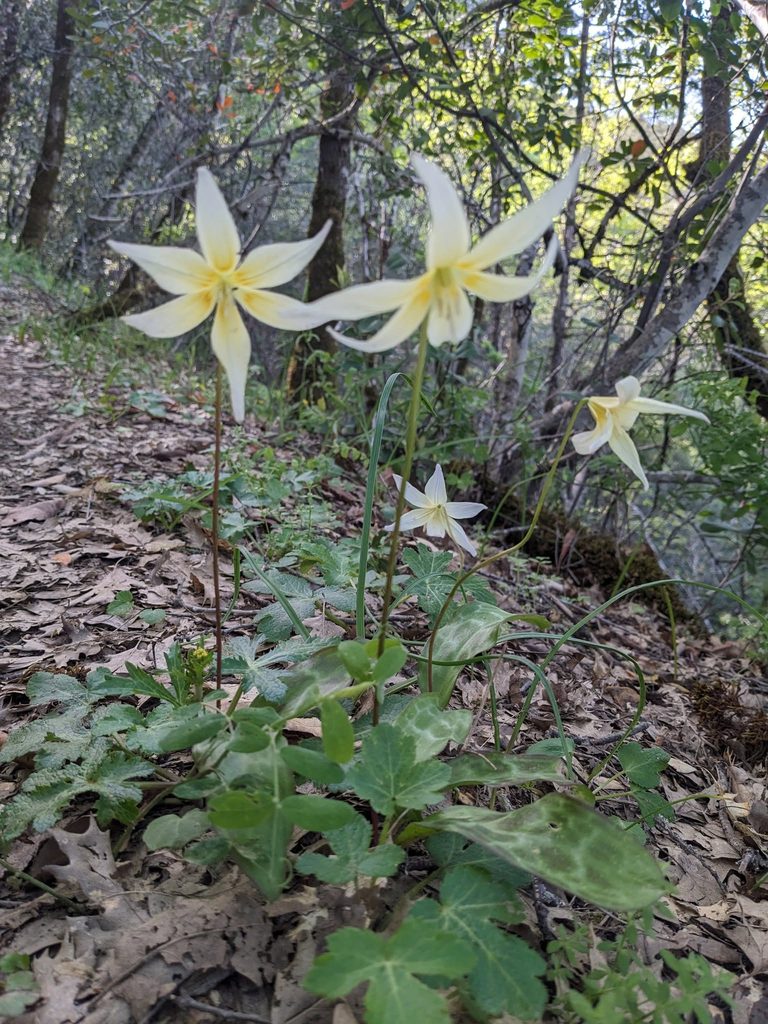
California fawn lily produces nodding white flowers with a yellow center, blooming from February through April in shaded woodlands across Northern California. Its mottled leaves resemble the spotted coat of a young deer, giving the plant its name.
This species is a true spring ephemeral, completing its flowering cycle before deciduous trees fully leaf out and block available sunlight. Individual plants can take years to mature enough to flower.
Bees are the primary pollinators, visiting this flower during its brief spring bloom window. The plant favors rich, moist forest soil beneath oak and conifer canopy.
Large colonies of this flower can represent decades of slow, steady growth, making an established patch a genuinely rare find in the wild.
32. Redwood Sorrel (Oxalis oregana)
Redwood sorrel produces delicate pink to white, five-petaled flowers close to the ground beneath dense redwood forest canopy. It blooms from March through May across Northern California’s coastal redwood forests.
This species tolerates deep shade better than almost any other native flowering plant, thriving in the dim light found beneath mature redwood groves. Its clover-like leaves fold shut during intense light or heavy rain.
Small native bees visit this flower during its bloom period, though pollination in such deep shade remains limited compared to sunnier habitats. The plant spreads through rhizomes, forming dense groundcover mats.
This flower always signals to me that I have reached the true heart of an old-growth redwood forest, where almost nothing else manages to bloom.
33. Trillium (Trillium ovatum)
Trillium produces a single white flower with three petals, blooming from February through May in shaded, moist woodlands across Northern California. Its flowers gradually turn pink as they age before fading.
This species grows from an underground rhizome and can take several years to reach flowering maturity after initial germination. Disturbing or picking the flower can significantly set back the plant’s ability to bloom again.
Ants play a role in seed dispersal, carrying trillium seeds back to their nests after being attracted by a fatty structure attached to each seed. This relationship is shared with several other native woodland spring flowers.
Finding a patch of blooming trillium always feels like one of the clearer signs that a Northern California forest is genuinely healthy and undisturbed.
34. Western Wood Anemone (Anemone oregana)
Western wood anemone produces delicate lavender to white flowers, blooming from March through May in shaded woodlands and forest edges across Northern and Central California. Its deeply lobed leaves help distinguish it from similar spring flowers.
This species favors consistently moist, rich soil, often found in seasonally damp forest understory areas. It typically grows low to the ground, rarely exceeding a foot in height.
Small native bees and flies visit this flower during its brief spring bloom period. The plant spreads slowly through underground rhizomes, forming loose colonies over time.
I find this flower easy to overlook next to bolder spring blooms, though its soft coloring rewards a closer look on a quiet forest walk.
35. Redbud (Cercis occidentalis)
Western redbud produces clusters of small, magenta-pink flowers directly along bare branches before leaves emerge each spring. It blooms in March and April across foothill woodlands and canyon slopes statewide.
This deciduous shrub or small tree typically grows ten to twenty feet tall, favoring the rocky, well-drained soil common to foothill regions. Its heart-shaped leaves turn yellow to orange in fall.
Bees are drawn heavily to its early spring blooms, which provide one of the first significant nectar sources of the season after winter. The tree also produces flat seed pods later in the year.
Seeing this tree bloom against bare gray hillsides in early spring always feels like the true starting signal for California’s wildflower season.
36. Pacific Bleeding Heart (Dicentra formosa)
Pacific bleeding heart produces rows of pink, heart-shaped flowers dangling from arching stems above delicate, fern-like foliage. It blooms from March through July in shaded, moist forests across Northern and Central California.
This species favors rich, consistently moist woodland soil, often found near streams or seasonal seeps beneath redwood or mixed conifer canopy. Its extended bloom period sets it apart from many shorter-flowering woodland natives.
Bumblebees are the primary pollinators, strong enough to access nectar hidden inside the flower’s curved petal structure. The plant spreads slowly through rhizomes, forming loose woodland colonies.
I appreciate how long this flower keeps blooming compared to many spring ephemerals, often still flowering well into the early days of summer.
ALSO READ: 25 Stunning Shrubs With Pink Flowers: Identification and Pictures
Rare and Regional Specialties
37. Matilija Poppy (Romneya coulteri)
Matilija poppy produces enormous white flowers, sometimes six to nine inches across, with a bright yellow, crepe-paper-like center. It blooms from May through July across chaparral and canyon slopes in Southern California.
This species is sometimes called the “fried egg flower” due to its striking white-and-yellow coloring and unusually large size. It can grow six to eight feet tall, forming substantial woody colonies over time.
Bees are strongly attracted to its abundant pollen, though the flower produces no nectar reward at all. The plant spreads through underground rhizomes, often persisting for decades once established.
I have never met anyone unfamiliar with this flower who did not stop to comment on its size. It genuinely looks larger than a native wildflower has any right to be.
38. Humboldt Lily (Lilium humboldtii)
Humboldt lily produces striking orange flowers with dark maroon spots, resembling a more compact relative of the Sierra leopard lily. It blooms from May through July in shaded canyons and woodlands across Central and Southern California.
This species favors partial shade and well-drained soil, often found on north-facing slopes and canyon bottoms where moisture lingers longer into the dry season. It can grow several feet tall with multiple flowers per stem.
Swallowtail butterflies and hummingbirds both visit this flower regularly, drawn to its bright color and abundant nectar. The plant spreads slowly through underground bulbs.
Finding this lily in bloom along a shaded Southern California canyon trail is a genuine highlight, given how much rarer it has become due to habitat loss.
39. Catalina Mariposa Lily (Calochortus catalinae)
Catalina mariposa lily produces delicate white to pale lavender, tulip-like flowers with a distinctive dark eye spot at the base of each petal. It blooms from March through May on grassy slopes across Southern California and the Channel Islands.
This species faces genuine conservation concern due to habitat loss from development, and researchers have specifically modeled how climate change threatens its future range across coastal Southern California.
Bees visit this flower during its narrow spring bloom window, drawn to its distinctive petal markings. The plant grows from an underground bulb, allowing it to survive dry summers completely dormant.
This flower’s uncertain future makes each sighting feel more significant, a reminder that even common-looking blooms can carry real conservation weight.
40. Channel Islands Live-Forever (Dudleya nesiotica)
Channel Islands live-forever produces small, star-shaped yellow flowers atop a rosette of thick, succulent leaves. It blooms in spring, found only on Santa Cruz Island off the Southern California coast.
This species is endemic to a single Channel Island, meaning it grows naturally nowhere else in the world. Its extremely limited range makes it one of the rarest native flowering plants in the entire state.
The plant’s succulent leaves store water, allowing it to survive the dry, exposed coastal bluffs where it typically grows. Small native insects serve as its primary pollinators.
This flower represents just how narrow California’s endemism can get, existing on a single island rather than merely a single region of the mainland.
41. Franciscan Wallflower (Erysimum franciscanum)
Franciscan wallflower produces clusters of pale yellow to cream flowers, blooming from March through June on coastal bluffs and grasslands around the San Francisco Bay Area specifically. It favors sandy, well-drained soil.
This species is considered rare due to significant habitat loss from urban development around the Bay Area over the past century. Conservation groups actively monitor remaining populations.
Bees visit this flower during its spring bloom period, though remaining habitat patches have become increasingly fragmented and isolated. The plant typically grows one to two feet tall.
This flower is a reminder that even wildflowers native to one of California’s most visited regions can quietly become genuinely rare.
42. Tiburon Mariposa Lily (Calochortus tiburonensis)
Tiburon mariposa lily produces unusual greenish-brown, mottled flowers, blooming in May and June exclusively on serpentine soil outcrops on the Tiburon Peninsula north of San Francisco. Its muted coloring sets it apart from showier mariposa lily relatives.
This species is federally listed as threatened, with its entire known population restricted to a single small area of serpentine grassland. Serpentine soil’s unusual mineral content limits which plants can grow there at all.
Small native bees serve as pollinators, adapted specifically to the flower’s unusual coloring and structure. Conservation efforts focus heavily on protecting the limited remaining serpentine habitat.
This flower exists in one of the narrowest native ranges found anywhere in the state, tied entirely to a single unusual soil type in a single location.
43. Cobra Lily (Darlingtonia californica)
Cobra lily, also called California pitcher plant, produces an unusual hooded, mottled flower above a carnivorous, tubular leaf structure resembling a rearing cobra. It blooms from April through June in boggy seeps across Northern California and southern Oregon.
This species traps insects inside its tubular leaves, using downward-pointing hairs and a false-exit strategy to prevent escape once an insect enters. Digested insects supplement the nutrient-poor boggy soil where the plant grows.
The flower itself hangs separately below the trap structure, preventing pollinating insects from accidentally becoming prey. This separation allows successful pollination despite the plant’s carnivorous nature.
I find this flower’s carnivorous strategy genuinely fascinating, a rare case where a California native solves nutrient scarcity through trapping insects rather than simply tolerating poor soil.
44. Snow Plant (Sarcodes sanguinea)
Snow plant produces a striking, bright red flowering stalk that emerges directly from forest soil, often pushing up through late-season snow. It blooms from April through July in coniferous forests across the Sierra Nevada.
This species contains no chlorophyll at all, meaning it cannot photosynthesize like a typical plant. Instead, it derives nutrients through a parasitic relationship with underground fungi connected to nearby tree roots.
Bees occasionally visit this flower, though its unusual nutritional strategy makes successful reproduction less dependent on pollinator visits than most flowering plants. Its vivid red color stands out sharply against forest duff and residual snow.
This is one of the most genuinely strange native flowers in California, appearing almost supernatural against a backdrop of pine needles and melting snow.
45. Fringed Indian Pink (Silene laciniata)
Fringed Indian pink produces vivid scarlet-red flowers with deeply fringed petal tips, blooming from April through August across chaparral and woodland edges in Southern and Central California. Its fringed shape sets it apart from most tubular red wildflowers.
This species favors partial shade and rocky, well-drained soil, often found along canyon trails and foothill woodland edges. It typically grows one to two feet tall.
Hummingbirds are strongly attracted to this flower’s vivid red color and tubular base, despite the unusual fringed petal tips. Its extended bloom season provides a reliable summer nectar source.
I find the fringed petal edges genuinely unusual up close, a small detail that sets this flower apart from other red hummingbird-pollinated natives.
ALSO READ: 25 Stunning Shrubs With Red Flowers: Identification and Pictures
Additional Statewide Favorites
46. Blue Dicks (Dipterostemon capitatus)
Blue dicks produce clusters of small, purple-blue, star-shaped flowers atop a tall, slender stem. It blooms from February through May across grasslands and open woodlands statewide, often among the earliest spring wildflowers to appear.
This species grows from an underground corm, historically used as a food source by Indigenous communities across California. Its early bloom timing makes it an important first nectar source for emerging spring pollinators.
Bees visit this flower reliably during its bloom period. The plant tolerates a wide range of soil types and often appears in dense clusters alongside poppies and lupine.
I always look for this flower first each spring, since its early appearance genuinely signals that wildflower season has officially begun.
47. Wind Poppy (Papaver californicum)
Wind poppy produces delicate, deep orange-red flowers with a darker center, blooming from April through May across grasslands and open woodlands in Central and Southern California. Its thin, papery petals move noticeably in the slightest breeze.
This species is closely related to the California poppy but grows in more scattered, isolated patches rather than dense carpets. Its deeper red-orange color also distinguishes it from its more common relative.
Bees visit this flower during its relatively brief bloom window. The plant favors partial shade at the edges of oak woodlands more than the open, sunny sites preferred by California poppy.
I find this flower’s constant motion in wind genuinely part of its character, rarely holding still long enough for an easy photograph.
48. Farewell to Spring (Clarkia amoena)
Farewell to spring produces cup-shaped pink to lavender flowers, often with darker spotting near the base of each petal. It blooms from May through August, later than most spring annuals, across grasslands and coastal bluffs statewide.
This species earns its common name from its late bloom timing, often appearing just as most other spring wildflowers have already finished. That timing makes it a valuable late-season nectar source.
Bees and butterflies visit this flower reliably during its bloom period. The plant tolerates a range of soil types and favors open, sunny sites near the coast.
This is a flower I associate with the tail end of California’s wildflower season, extending color into early summer after most other blooms have faded.
49. Farewell to Spring Godetia (Clarkia unguiculata)
Elegant clarkia produces slender, four-petaled flowers in shades of pink, lavender, and white, blooming from May through July across foothill grasslands and open woodlands statewide. Its narrow, elongated petals give it a distinctly delicate appearance.
This species tends to grow taller and more slender than its close relative farewell to spring, often reaching two to three feet in height. It favors well-drained soil in full sun.
Bees are the primary pollinators, visiting this flower’s open shape throughout its extended late-spring bloom period. The plant frequently grows in loose, scattered stands rather than dense colonies.
I find this flower’s tall, wandlike form adds welcome vertical variety to foothill wildflower displays otherwise dominated by lower-growing blooms.
50. Miner’s Lettuce (Claytonia perfoliata)
Miner’s lettuce produces small, white, five-petaled flowers rising from a distinctive round, cup-shaped leaf that appears to have the flower stem growing directly through its center. It blooms from February through May in shaded, moist areas statewide.
This species earns its common name from its historical use as a fresh vegetable by California gold miners, who ate its leaves to prevent scurvy during the mining era. It remains edible and mild-flavored today.
Small native bees visit this flower during its bloom period, though its primary historical significance lies in its edible use rather than its pollinator relationships. The plant favors partial shade and consistently moist soil.
This is one of the few native California wildflowers with a direct culinary history tied to the state’s gold rush era, connecting it to human history as much as ecology.
51. California Poppy’s Cousin: Cream Cups (Platystemon californicus)
Cream cups produce pale yellow to cream, cup-shaped flowers with a soft, fuzzy texture, blooming from March through May across grasslands and desert edges statewide. It often grows alongside true California poppies in mixed spring displays.
This species belongs to the same broader poppy family as California poppy but produces a noticeably smaller, softer-colored bloom. Its fuzzy seed pods also distinguish it from its showier relative.
Bees visit this flower reliably during peak spring bloom. The plant tolerates a range of soil types, from sandy desert edges to richer valley grasslands.
This flower often gets overlooked next to bolder poppies and lupine, but its soft, muted coloring adds welcome variety to a busy spring wildflower field.
52. Blue-Eyed Grass (Sisyrinchium bellum)
Blue-eyed grass produces small, star-shaped violet-blue flowers with a bright yellow center, despite its grass-like foliage. It blooms from March through May across grasslands and open woodlands statewide, favoring moist meadows.
Despite its common name, this plant is actually a member of the iris family rather than a true grass. Its narrow, flattened leaves simply resemble grass blades until the small flowers appear.
Small native bees are its primary pollinators, visiting the flower primarily when it is open in direct sunlight. It typically closes on cloudy days or in late afternoon.
This flower’s diminutive size means it is often overlooked entirely, hiding in plain sight among taller grasses until you look closely at ground level.
53. Yerba Santa (Eriodictyon californicum)
Yerba santa produces clusters of pale lavender, tubular flowers on a woody shrub with distinctive sticky, aromatic leaves. It blooms from April through July across chaparral slopes statewide.
This species has a long history of traditional medicinal use among Indigenous communities in California, particularly for respiratory ailments, which is reflected in its Spanish name meaning “holy herb.” Its resinous leaves remain aromatic even when dried.
Bees and butterflies visit this flower regularly during its bloom period. The plant tolerates poor, rocky soil and drought exceptionally well once established.
I find the sticky, resinous texture of this plant’s leaves as memorable as its flowers, leaving a distinct scent on your hands after brushing past it on a trail.
54. Woolly Blue Curls (Trichostema lanatum)
Woolly blue curls produce striking, fuzzy blue-purple flower spikes covered in fine woolly hairs, blooming from May through July across chaparral slopes in Central and Southern California. Its unusual texture sets it apart from most native flowering shrubs.
This species is highly aromatic, releasing a strong sage-like fragrance when its leaves are brushed. It tolerates poor, rocky soil and drought exceptionally well once established.
Bees, particularly carpenter bees, are strongly drawn to this flower’s unusual woolly texture and rich color. Hummingbirds also visit occasionally, despite the flower’s structure being better suited to larger bees.
This is one of the more visually unusual native shrubs in the state, its fuzzy blue flower spikes looking almost artificial up close.
55. Indian Paintbrush (Castilleja affinis)
California Indian paintbrush produces brush-like clusters of red-orange bracts, blooming from March through June across coastal bluffs and grasslands statewide. What looks like the flower petal is actually a colored leaf structure called a bract.
This species is partially parasitic, tapping into the root systems of nearby grasses and shrubs for additional nutrients. That relationship helps explain why it thrives among established native grasslands.
Hummingbirds are strongly attracted to this flower’s tubular red bracts, making it an important nectar source along the coast. Bees also visit, though less frequently than hummingbirds.
This flower often blooms alongside lupine and poppies, contributing to the classic red, blue, and orange wildflower combinations found across coastal California grasslands.
56. Seaside Daisy (Erigeron glaucus)
Seaside daisy produces lavender-pink, daisy-like flowers with a bright yellow center, blooming nearly year-round along coastal bluffs and dunes statewide. Its thick, fleshy leaves help it withstand salty coastal wind and spray.
This species tolerates sandy, poor soil and constant coastal exposure better than most flowering natives, making it a common sight along beach trails and bluff-top paths throughout the state.
Bees and butterflies visit this flower reliably throughout its extended bloom season. The plant typically grows low and mounding, rarely exceeding a foot in height.
I associate this flower with nearly every coastal trail I have walked in California, blooming steadily regardless of season or weather.
57. Beach Evening Primrose (Camissoniopsis cheiranthifolia)
Beach evening primrose produces bright yellow, cup-shaped flowers low to the ground, blooming nearly year-round along coastal dunes and bluffs statewide. Its sprawling, mat-forming growth habit helps stabilize loose sandy soil.
This species tolerates salt spray, wind, and shifting sand better than most flowering plants, making it an important dune-stabilizing native along much of the California coastline. Its flowers often open in the morning and fade by afternoon.
Bees visit this flower during its bloom period, particularly in the cooler morning hours when petals remain open. The plant plays a genuine ecological role in preventing coastal dune erosion.
This flower’s practical value in stabilizing sand dunes makes it as important ecologically as it is visually appealing along coastal trails.
58. Purple Owl’s Clover (Castilleja densiflora)
Purple owl’s clover produces dense spikes of deep pink-purple flowers, closely related to the more common owl’s clover found in mixed grassland displays statewide. It blooms from March through May, often in vernal pool margins and seasonal wetlands.
This species favors seasonally moist soil, particularly around vernal pools that fill with winter rain and dry out completely by summer. That specific habitat requirement limits where it can successfully grow.
Bees visit this flower during its bloom period, and it frequently appears alongside other vernal pool specialists in concentric rings of color around drying pool margins. The plant is partially parasitic on nearby grasses.
This flower is closely tied to California’s vernal pool ecosystems, one of the state’s most distinctive and increasingly rare native habitat types.
59. Meadowfoam (Limnanthes douglasii)
Meadowfoam produces cup-shaped, cream-and-yellow flowers that often carpet vernal pool margins in dense, solid stands. It blooms from March through May, closely tied to California’s seasonal wetland habitats.
This species favors the specific moisture gradient found around vernal pools, often forming concentric rings of color alongside purple owl’s clover and other pool-margin specialists as the water recedes through spring.
Bees are the primary pollinators, visiting this flower heavily during its relatively brief bloom window. The plant’s seeds also produce a valuable oil, studied for potential commercial and industrial uses.
This flower’s ring-shaped bloom patterns around drying vernal pools create some of the most distinctive wildflower displays found anywhere in the state.
60. Golden Yarrow (Eriophyllum confertiflorum)
Golden yarrow produces flat-topped clusters of small, bright yellow flowers on a low, aromatic shrub. It blooms from April through August across chaparral and coastal sage scrub regions statewide, one of the longer bloom windows among native shrubs.
This species tolerates poor, rocky soil and drought exceptionally well, often found alongside black sage and purple sage in coastal sage scrub plant communities. Its silvery-green foliage helps it retain moisture through dry summer months.
Bees and butterflies visit this flower steadily throughout its extended bloom period, making it a reliable nectar source across much of the spring and summer calendar. It typically grows one to two feet tall.
This is a fitting flower to close on, blooming steadily through more of the calendar year than almost any other native on this list.
Bringing Native California Flowers Into Your Own Garden
If this list has inspired you, start with just a handful of species suited to your specific region, whether that is coastal sage scrub, foothill chaparral, or a Sierra Nevada mountain garden.
Try to combine flowers that bloom across different seasons, so pollinators always have a nectar source available. Pairing an early bloomer like blue dicks with a late one like California fuchsia keeps color and food available for months.
Avoid digging up wild plants, especially rare and slow-growing species like Matilija poppy or Humboldt lily. Reputable native plant nurseries across California propagate these species responsibly for home gardens.
Once established, native California flowers genuinely need less water, less fertilizer, and less pest treatment than most imported ornamental alternatives, an especially valuable trait given the state’s recurring drought conditions.
Final Thoughts
California’s wildflowers reflect the sheer scale of the state itself, from ocean bluffs to alpine granite to desert sand. These 60 species only begin to cover a flora that includes thousands of native plants, over a third of which exist nowhere else on Earth.
I hope this guide helps you recognize a few more of them on your next hike, drive, or visit to a local nature reserve, wherever in California that might take you.

Tim M Dave is a gardening expert with a passion for houseplants, particularly cacti and succulents. With a degree in plant biology from the University of California, Berkeley, he has vast experience in gardening. Over the years, he has cultivated a vast collection of desert plants and learned a great deal about how to grow and care for these unique companions.