10 Best Fertilizers for Hydrangeas (With Application Details)
Few shrubs match the beauty of a hydrangea in full bloom. Yet many gardeners struggle with weak growth, pale leaves, or flowers that never show up. I have been there myself.
In most cases, the cause is simple. The plant needs a better feeding plan, or the soil chemistry is off. The right fertilizer can fix both problems.
This guide covers the 10 best fertilizers for hydrangeas, explaining what each one does, when to use it, and what to avoid.
What Hydrangeas Really Need
Hydrangeas do not need heavy feeding. This surprises many people. Oregon State University Extension says most hydrangeas bloom better if they are a little starved.
UMass Extension agrees. It says hydrangeas prefer a moderate nutrient level in the soil. Too much fertilizer gives you leaves, not flowers.
Fertilizer labels show three numbers, such as 10-10-10. These stand for nitrogen (N), phosphorus (P), and potassium (K). Nitrogen supports leaves, phosphorus supports roots and flowers, and potassium supports general health.
Soil pH matters just as much as the fertilizer. It controls flower color on bigleaf hydrangeas. We will cover this in the list below.
Before you start, test your soil. University of Georgia Extension says the best gardening begins with a soil sample. A test shows your pH and nutrient levels, so you can stop guessing.
The 10 Best Fertilizers for Hydrangeas
1. Balanced Slow-Release Granular Fertilizer (10-10-10)
A balanced slow-release fertilizer is the safest choice for most gardeners. It feeds the plant over several weeks. It is easy to find and simple to use.
University of Georgia Extension suggests a general-purpose fertilizer such as 8-8-8 or 10-10-10 for bigleaf hydrangeas. Oregon State University Extension also recommends a balanced time-released product. It advises using it a few times a year, in spring and early fall.
Sprinkle the granules on the soil under the plant’s canopy. UMass Extension suggests working fertilizer into the top two to three inches of soil and then watering. Keep the granules away from the stems.
Always follow the label rate. More is not better. I prefer to apply a little less than the label says. The plant rarely complains.
2. Slow-Release Fertilizer With a 4-1-2 Ratio
A 4-1-2 formula has more nitrogen than phosphorus. It is gentle and well suited to shrubs. Many “tree and shrub” fertilizers follow a similar pattern.
Mississippi State University Extension calls a slow-release fertilizer with a 4-1-2 ratio ideal for hydrangeas. Its experts suggest spreading one-half to one cup around each plant in March. The amount depends on the size of the plant.
This ratio also suits gardeners who want blue flowers. Low phosphorus helps the plant take up aluminum, which creates blue color. We will return to this point in the aluminum sulfate section.
Use this feed once in early spring. Check the plant after a month. If growth looks strong, you do not need to add more.
3. Compost
Compost is the gentlest feed you can give. It adds nutrients, improves drainage, and holds moisture. Hydrangeas love a soil that stays moist but never soggy.
The U.S. Environmental Protection Agency (EPA) explains that compost slowly releases and retains nutrients in the soil. As a mulch, it suggests a three-inch layer spread on the surface. Keep it a few inches away from the stems.
Mississippi State University Extension also advises mixing good, aged compost into the planting hole. Use it when you plant a new shrub. For older plants, spread a fresh layer each spring.
Compost will not give a quick green-up. Its strength is long-term soil health. I see it as the foundation of any hydrangea feeding plan.
4. Well-Aged Manure
Aged manure is a classic soil booster. It supplies mild nutrients and a lot of organic matter. It also helps sandy soils hold water.
Oregon State University Extension says well-aged manure is acceptable for hydrangeas. The word “aged” is important. Fresh manure is strong and can burn the roots. It can also carry harmful bacteria.
Use manure that has aged for at least several months, or buy it bagged. Spread a thin layer around the plant in early spring. Do not pile it against the stems.
Manure works best as a soil conditioner, not a main fertilizer. Pair it with a slow-release product if the plant looks hungry. Skip it if your soil is already rich.
ALSO READ: Understanding Reblooming Hydrangeas + When to Plant Them
5. Aluminum Sulfate (For Blue Flowers)
Aluminum sulfate is not a regular fertilizer. It is a soil treatment that turns pink bigleaf hydrangeas blue. Many gardeners call it a “blueing” fertilizer.
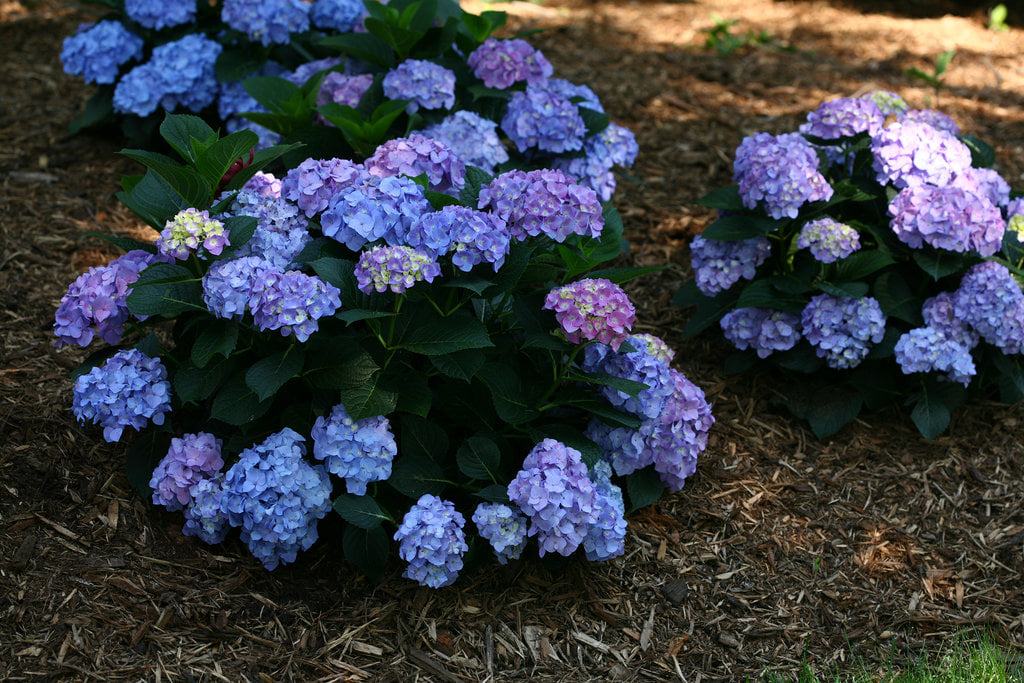
UMass Extension explains that aluminum in the flower tissue causes blue color. Most soils contain enough aluminum, but the plant cannot absorb it when the pH is high. Blue flowers appear in acidic soil, with a pH below 5.5.
University of Georgia Extension suggests dissolving one tablespoon of aluminum sulfate in one gallon of water. Drench the soil around the plant in March, April, and May. This method gives faster results than changing the pH slowly.
Be careful with the dose. UMass Extension warns that too much aluminum sulfate will injure plants. Only bigleaf and mountain hydrangeas respond. Other types will not turn blue.
6. Elemental or Wettable Sulfur
Sulfur lowers soil pH slowly. It is a good choice if you want to keep your soil acidic over the long term. It suits gardeners who prefer a gentler approach than aluminum sulfate.
NC State Extension says that to lower soil pH, you add sulfur. It also notes that changes take time. Even after you reach the target, soil may drift back to its natural pH.
University of Georgia Extension suggests broadcasting half a cup of wettable sulfur per 10 square feet and watering it in. This gradually shifts flower color from pink toward blue. Test the soil again after a few months.
Do not rush. Large pH changes are hard to hold. If your soil is very alkaline, you may do better growing hydrangeas in containers with acidic potting mix.
7. Ammonium Sulfate
Ammonium sulfate does two jobs. It supplies nitrogen, and it helps lower soil pH. That makes it useful for gardeners who want blue blooms and green leaves.
Washington State University Extension notes that ammonium sulfate can acidify the soil and enhance hydrangea bluing. Its fact sheet also explains that aluminum and soil pH work together to set flower color. Fertilizer is only one part of the picture.
Use it sparingly. Apply it in early spring at the rate on the label. Water it in well so it does not burn the roots.
I would not use this as your only feed. It works best as part of a plan that includes organic matter. Always confirm your pH with a soil test first.
ALSO READ: How to Revive Hydrangeas After Frost: Journey to Lush Summer and Fall Blooms
8. Dolomitic Lime (For Pink Flowers)
Lime is the opposite of sulfur. It raises soil pH, which locks up aluminum and pushes bigleaf hydrangeas toward pink. It also adds calcium and magnesium.
NC State Extension says that to raise soil pH, you add lime. Its experts note that a pH of 6 or more produces pink flowers. UMass Extension lists pink flowers for pH above 6.5, and mauve between 5.5 and 6.5.
University of Georgia Extension suggests one cup of dolomitic lime per 10 square feet, watered into the soil. It warns that the change might take a year to show in the flowers. Patience is part of the process.
Only use lime if your soil test shows you need it. Soil that is already near neutral may not need any. Oregon State University Extension notes that in neutral soils, with a pH of 6 to 7.5, hydrangeas tend to have red and pink blooms.
9. Water-Soluble or Liquid Fertilizer
A liquid fertilizer is your emergency tool. It acts fast. You mix it with water and apply it around the base of the plant.
Oregon State University Extension says that after hydrangeas form buds and begin to bloom, yellowing leaves in the center of the plant show a need for fast-acting fertilizer. A liquid feed can fix this quickly. The same source advises a fertilizer low in phosphate if you want blue and purple blooms.
Liquid feeds suit container hydrangeas well. Frequent watering washes nutrients out of pots, so potted plants often need more regular feeding. Follow the label closely and dilute as directed.
Use liquid fertilizer only when the plant shows signs of hunger. Do not use it as a routine weekly feed. A strong mix can burn the roots and damage the leaves.
10. Organic Mulch and Leaf Mold
Mulch may not look like a fertilizer, but it feeds the soil as it breaks down. Leaf mold, shredded bark, and pine straw all work. They also protect shallow hydrangea roots.
University of Georgia Extension recommends three to four inches of organic mulch, such as pine straw. It says you do not need to remove the mulch when you fertilize. Just water soon after to move the fertilizer into the soil.
UMass Extension notes that hydrangeas need about one inch of water per week, applied in a deep soak. Mulch helps the soil keep that moisture. It also reduces weeds and keeps roots cooler in summer.
Refresh the mulch each spring. Keep it a few inches away from the stems to prevent rot. For me, mulch is the easiest feeding habit to keep.
READ MORE ON: Ultimate Guide For Using Organic Mulch for Hydrangeas
When to Fertilize Hydrangeas
Timing is simple. Start in early spring, when new growth begins. Mississippi State University Extension suggests applying slow-release fertilizer in March in its region.
Oregon State University Extension notes that the active growth period for hydrangeas runs from March through September. It recommends feeding in spring and again in early fall for time-released products. Your climate may shift these dates.
Avoid heavy feeding late in summer. New growth can be damaged by early frost. Wait until the following spring for your main feeding.
How to Apply Fertilizer Safely
Good technique prevents most problems. These simple steps work for nearly every product above.
- Test your soil every two to three years.
- Follow the label rate exactly.
- Spread granules evenly under the plant’s canopy.
- Work it lightly into the top two to three inches of soil.
- Water well after you apply any dry fertilizer.
- Keep fertilizer off the leaves and stems.
Planting also matters. Mississippi State University Extension suggests digging the hole twice as wide as the root ball. Mix aged compost into the soil and plant at the same depth as in the pot.
Hydrangea Types and Their Needs
Not all hydrangeas need the same care. Bigleaf hydrangeas (Hydrangea macrophylla) are the most responsive to pH. University of Georgia Extension counts more than 500 known cultivars of this type.
Only bigleaf and mountain hydrangeas change color with soil pH, according to UMass Extension. Panicle, smooth, oakleaf, and climbing types are unaffected by pH. Oregon State University Extension adds that white hydrangeas are not pH sensitive either.
For these other types, UMass Extension suggests a general-purpose fertilizer at the package rate. Many need very little feeding. Start light and watch the plant.
Frequently Asked Questions
What is the best fertilizer for hydrangeas?
A balanced, slow-release fertilizer is the best choice for most gardeners. Compost and mulch add long-term support. Use special products only when you want to change flower color.
Can fertilizer change hydrangea color?
Not by itself. Color depends on soil pH and aluminum availability. Products like aluminum sulfate and sulfur lower pH, and lime raises it.
How often should I fertilize hydrangeas?
Most plants do well with one to two light feedings a year. Feed in spring, and add a second feeding in early fall if the plant needs it. Container plants may need more.
Why are my hydrangea leaves yellow?
Yellow leaves can mean hunger, overwatering, or poor drainage. Check the soil first. If the yellowing is in the center of the plant during bloom, a light liquid feed may help.
Can I overfeed hydrangeas?
Yes. Too much fertilizer can reduce flowering and burn the roots. When in doubt, apply less and test your soil.
Final Thoughts
Hydrangeas are forgiving plants. They reward a light hand with a lot of color. The best results come from healthy soil, steady moisture, and well-timed feeding.
Start with a soil test. Add compost and mulch each spring. Then choose one or two fertilizers from this list to match your goals.
If you want blue flowers, work on soil acidity. If you want pink, keep the pH higher. Whatever you choose, be patient. The blooms are worth the wait.
References
- UMass Amherst Extension. Growing Tips: Hydrangeas, Color and Fertilizing. https://www.umass.edu/agriculture-food-environment/home-lawn-garden/fact-sheets/growing-tips-hydrangeas-color-fertilizing
- Mississippi State University Extension Service. Hydrangeas for Mississippi Gardens (P2574). https://extension.msstate.edu/sites/default/files/document/2026-04/P2574_2026_web.pdf
- Oregon State University Extension Service. General Care for Hydrangeas. https://extension.oregonstate.edu/gardening/flowers-shrubs-trees/general-care-hydrangeas
- Washington State University Extension. How Are Hydrangea Flower Colors Determined? (FS309E). https://wpcdn.web.wsu.edu/wp-ecommerce/uploads/sites/2/product-3738-sku-FS309E.pdf
- NC State Extension. How to Change Hydrangea Color. https://wayne.ces.ncsu.edu/2025/06/how-to-change-hydrangea-color/
- University of Georgia Cooperative Extension (CAES Field Report). Hydrangea color and soil pH. https://fieldreport.caes.uga.edu/news/4542/
- U.S. Environmental Protection Agency. Composting at Home. https://www.epa.gov/recycle/composting-home

Tim M Dave is a gardening expert with a passion for houseplants, particularly cacti and succulents. With a degree in plant biology from the University of California, Berkeley, he has vast experience in gardening. Over the years, he has cultivated a vast collection of desert plants and learned a great deal about how to grow and care for these unique companions.