25 Native Louisiana Flowers (With Growing Details)
Louisiana grows things differently. Between the cypress-tupelo swamps, the coastal marshes, and the humid pine forests up north, this state hosts a wildflower scene that few places in America can match.
I remember the first time I paddled through a quiet bayou in spring and saw an entire bank glowing purple with Louisiana iris. It stopped me mid-stroke. That is the kind of moment native flowers give you here, again and again.
The Atchafalaya Basin alone spans roughly 833,000 acres, making it the largest river swamp in the United States, according to ecological surveys of the region. That single wetland supports an enormous share of the state’s native flora.
This guide walks through 25 of the most striking, historically significant, and ecologically important native flowers found across Louisiana.
Let’s explore the list.
25 Native Louisiana Flowers
1. Southern Magnolia
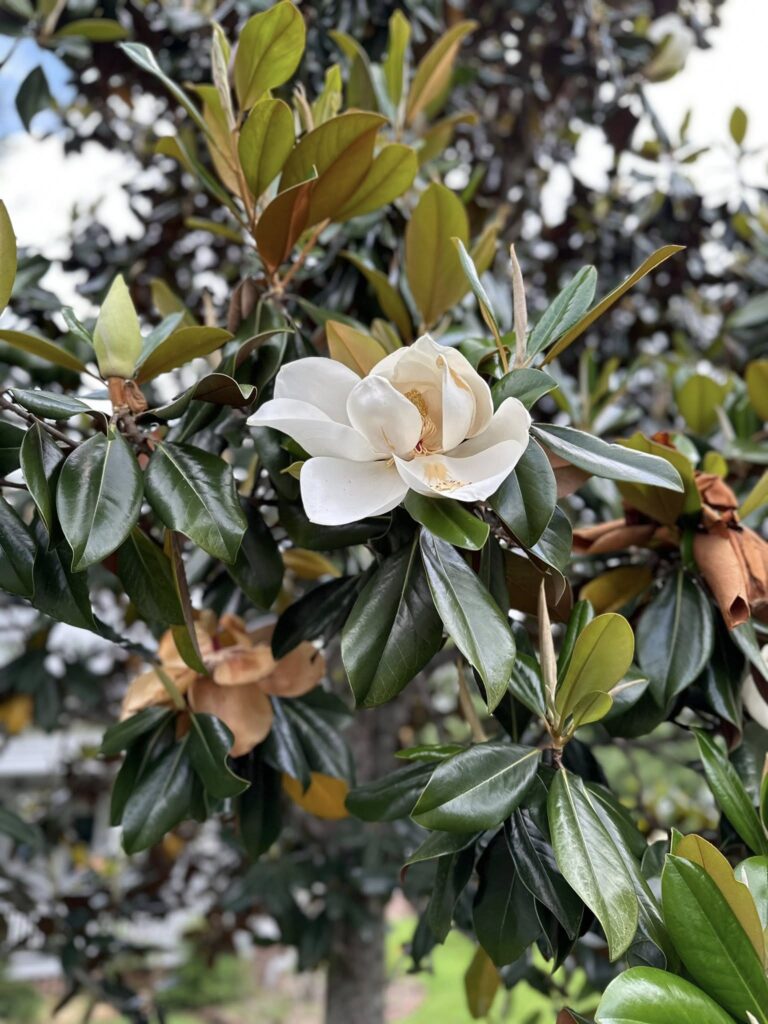
The southern magnolia (Magnolia grandiflora) has been Louisiana’s official state flower since it was signed into law on July 12, 1900, making it one of the oldest state flower designations in the country.
Its enormous white blooms can stretch nearly a foot across, releasing a heavy, lemon-and-vanilla fragrance that carries across entire yards on warm evenings. Magnolia flowers typically last only a few days before browning, yet the tree blooms in waves through late spring and summer.
Fossil evidence shows magnolia relatives existed on Earth more than 60 million years ago, predating bees. Their flowers evolved to be pollinated by beetles instead, which is why the petals feel thick and waxy rather than delicate.
I have always found something reassuring about a mature magnolia. It does not sway dramatically in storms the way younger trees do; it simply stands, evergreen and unmoved, through every Louisiana season.
2. Louisiana Iris
Louisiana iris (Iris giganticaerulea and four related native species) became the state’s official wildflower in 1990, decades after iris enthusiasts first tried to replace the magnolia entirely back in 1950.
These irises bloom in an unusually wide color range for a single wild species group, including deep blue-violet, red, yellow, and white, often within the same swamp or roadside ditch during April.
Louisiana is home to five native iris species found nowhere else in this combination, making the state a global center for iris diversity. Breeders worldwide use Louisiana natives to develop garden hybrids sold internationally.
They thrive in wet, boggy soil and even shallow standing water, which explains why bayou banks and marsh edges turn a rippling purple every spring across the southern half of the state.
ALSO READ: 20 Trees Native to Louisiana (With Growing Details)
3. American Lotus
American lotus (Nelumbo lutea) covers still backwaters and oxbow lakes with enormous, pale-yellow blooms that rise well above its equally massive, saucer-shaped leaves.
A single lotus leaf can reach two feet across, and the flowers themselves often stretch eight to ten inches wide, making this one of the largest native flowers found anywhere in North America.
Its seed pods, shaped like showerheads, dry on the stalk and rattle in the wind, scattering seeds that can remain viable in mud for remarkably long periods, sometimes for centuries under the right conditions.
You will spot American lotus in slow-moving Louisiana waterways from June through September, often alongside herons and turtles that use the broad leaf pads as resting platforms.
4. Cardinal Flower
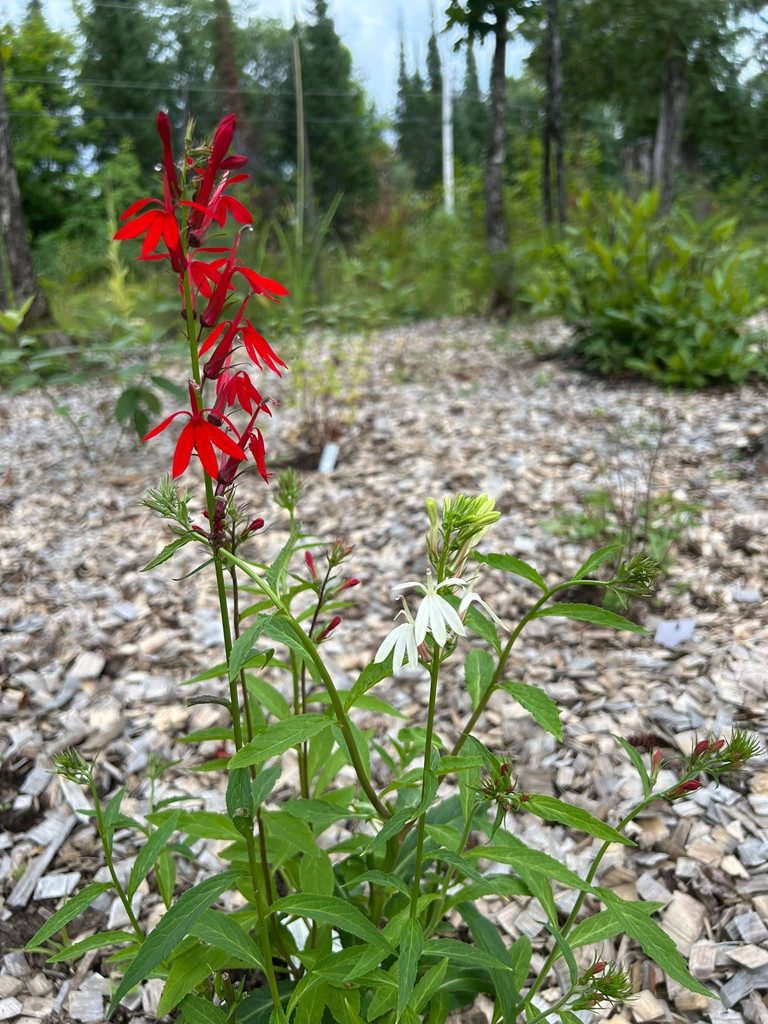
Cardinal flower (Lobelia cardinalis) produces brilliant scarlet spikes along stream banks and swamp edges throughout Louisiana, typically blooming from midsummer into early fall.
Its tubular red flowers are shaped specifically for hummingbird pollination, since the flower’s structure keeps nectar too deep for most insects to reach easily. Ruby-throated hummingbirds visit it constantly during migration season.
This plant prefers consistently moist, partly shaded soil, which makes it an excellent choice for rain gardens or the damp margins around backyard ponds across southern Louisiana.
5. Spider Lily
Louisiana hosts several native spider lily species (Hymenocallis), producing white, spidery blooms with long, thread-like petals radiating from a central cup, usually blooming from late spring into summer.
These flowers open at dusk and release a strong, sweet fragrance overnight, attracting sphinx moths as their primary pollinators. Daytime visitors often miss the plant’s true scent entirely.
Spider lilies grow well in moist woodlands, ditches, and swamp margins statewide, and gardeners increasingly plant them near water features for their striking nighttime display.
6. Swamp Rose Mallow
Swamp rose mallow (Hibiscus moscheutos and related species) produces some of the largest flowers of any native perennial in North America, occasionally reaching eight inches across in shades of white, pink, or deep rose.
A single plant can produce dozens of blooms across one summer, though each individual flower lasts only a single day before closing for good. New blooms open continuously to replace them.
Look for this hibiscus in marshes, roadside ditches, and pond edges throughout the coastal parishes from July through September, where bumblebees frequently disappear entirely inside its wide, open blooms.
7. Pickerelweed
Pickerelweed (Pontederia cordata) sends up spikes of soft violet-blue flowers directly from shallow water, forming dense colonies along the edges of bayous, ponds, and slow streams across the state.
This plant serves as an important nursery habitat for fish and amphibians, since its dense underwater stems shelter juvenile fish and provide egg-laying sites for native frogs.
It blooms from late spring through fall and tolerates both full sun and partial shade, making it a reliable, low-maintenance choice for wetland restoration projects across Louisiana.
8. Buttonbush
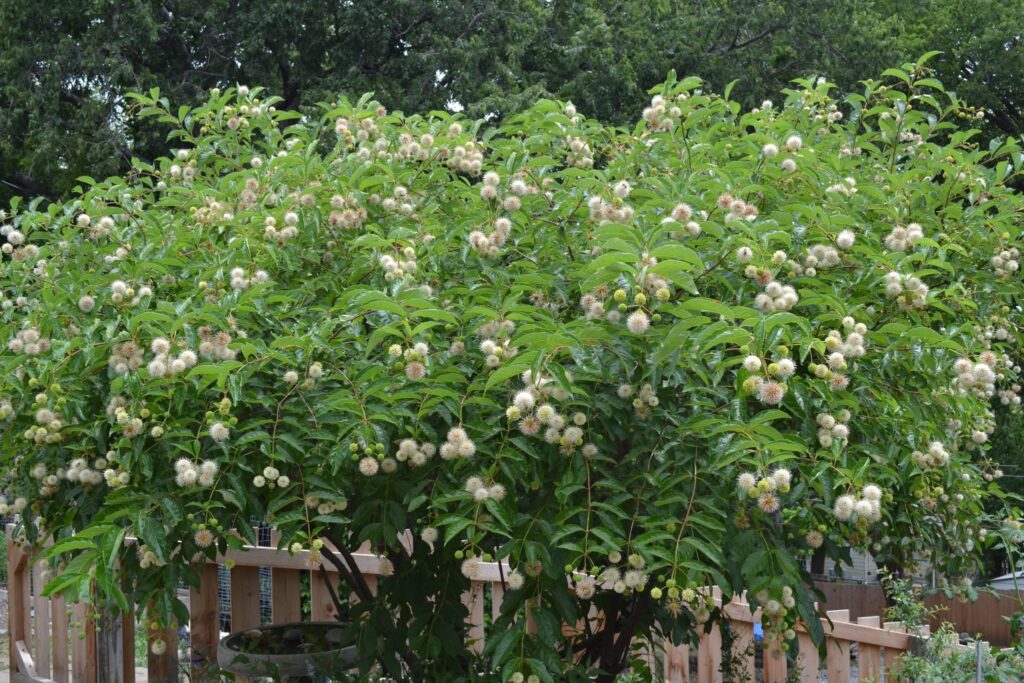
Buttonbush (Cephalanthus occidentalis) produces unmistakable, perfectly spherical white flower clusters that look almost artificial, ringing pond edges and swamp margins throughout the Atchafalaya Basin.
Its round flower heads attract an unusually wide range of pollinators, including butterflies, bees, and even hummingbirds, all drawn to the sweet nectar packed into each tightly clustered bloom.
This shrub tolerates standing water better than almost any other flowering native, which is why it dominates the shallow, swampy margins of so many Louisiana water bodies from June through August.
9. Coral Bean
Coral bean (Erythrina herbacea), known locally as mamou in Cajun French, produces tall, narrow spikes of tubular red flowers each spring before its leaves fully emerge.
Its bright red seeds are strikingly ornamental but genuinely toxic, so admire the seed pods without handling them carelessly, especially around children who might mistake them for candy.
Coral bean grows naturally on the sandy coastal ridges and chenier soils of southwest Louisiana, and hummingbirds returning north each spring rely heavily on its early nectar supply.
10. Dwarf Palmetto
Dwarf palmetto (Sabal minor) is the low, fan-leafed palm that carpets the understory of Louisiana’s bottomland forests, especially throughout the Atchafalaya Basin’s palmetto flats.
Its tall flower spikes rise well above the leaves each summer, producing small, creamy-white blossoms that later turn into dark, berry-like fruit important to wildlife through fall and winter.
This plant tolerates deep shade, seasonal flooding, and heavy clay soils better than almost any other Louisiana native, making it a defining feature of the state’s swamp understory.
ALSO READ: 25 Best Perennial Flowers for Zone 9 (With Details)
11. Trumpet Honeysuckle
Trumpet honeysuckle, also called coral honeysuckle (Lonicera sempervirens), produces clusters of red, tubular flowers that hummingbirds visit almost obsessively from spring through summer.
This native vine is frequently confused with invasive Japanese honeysuckle, but unlike its aggressive cousin, it does not smother trees or fences and behaves politely in home gardens.
It blooms most heavily in full sun and occasionally reblooms into fall, making it one of the more reliable, long-season nectar sources available to Louisiana gardeners.
12. Purple Passionflower
Purple passionflower, or maypop (Passiflora incarnata), produces one of the most elaborate blooms in the plant kingdom, with fringed purple filaments circling a intricate central structure.
It serves as the sole host plant for gulf fritillary caterpillars, meaning entire butterfly populations depend on this vine’s presence to complete their life cycle across the Gulf South.
Maypop spreads through underground runners and produces an edible, egg-shaped fruit by late summer, prized by foragers for its tart, tropical flavor throughout rural Louisiana.
ALSO READ: 25 Best Perennial Flowers for Zone 10 (With Details)
13. Butterfly Weed
Butterfly weed (Asclepias tuberosa) produces clusters of vivid orange blooms on stiff stems, standing out sharply against green summer foliage across sandy, well-drained sites statewide.
Monarch caterpillars can only eat milkweed species like this one, making butterfly weed essential to the monarch’s multigenerational migration route, which passes directly through Louisiana each fall.
This plant prefers dry, sandy soil, unlike many wetland natives on this list, and its deep taproot makes established plants remarkably resistant to Louisiana’s periodic droughts.
14. Swamp Milkweed
Swamp milkweed (Asclepias incarnata) favors the damp soils near ditches, ponds, and marsh edges throughout the state, producing soft pink to mauve flower clusters from early to midsummer.
It offers migrating monarchs a crucial wetland alternative to drier milkweed species, extending available habitat into low-lying areas that butterfly weed simply cannot tolerate.
Its light, vanilla-like fragrance draws swallowtails and native bees in large numbers, and the plant handles occasional flooding without any noticeable stress.
15. Black-Eyed Susan
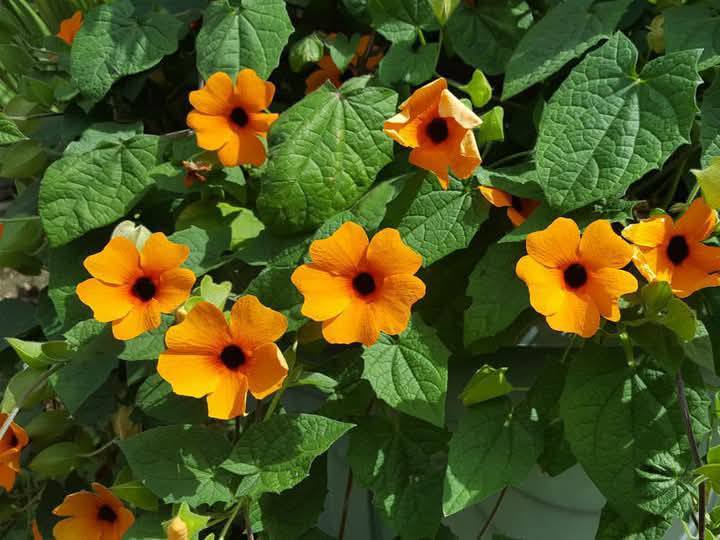
Black-eyed Susan (Rudbeckia hirta) produces bright golden-yellow petals surrounding a dark, dome-shaped center, blooming across roadsides, fields, and gardens statewide from late spring through fall.
This plant reseeds itself so readily that a handful of flowers can colonize an entire bed within two seasons, making it one of the easiest native wildflowers to establish from scratch.
It tolerates poor soil, drought, and general neglect better than almost any ornamental alternative, while still attracting bees, butterflies, and beneficial predatory insects consistently.
16. Purple Coneflower
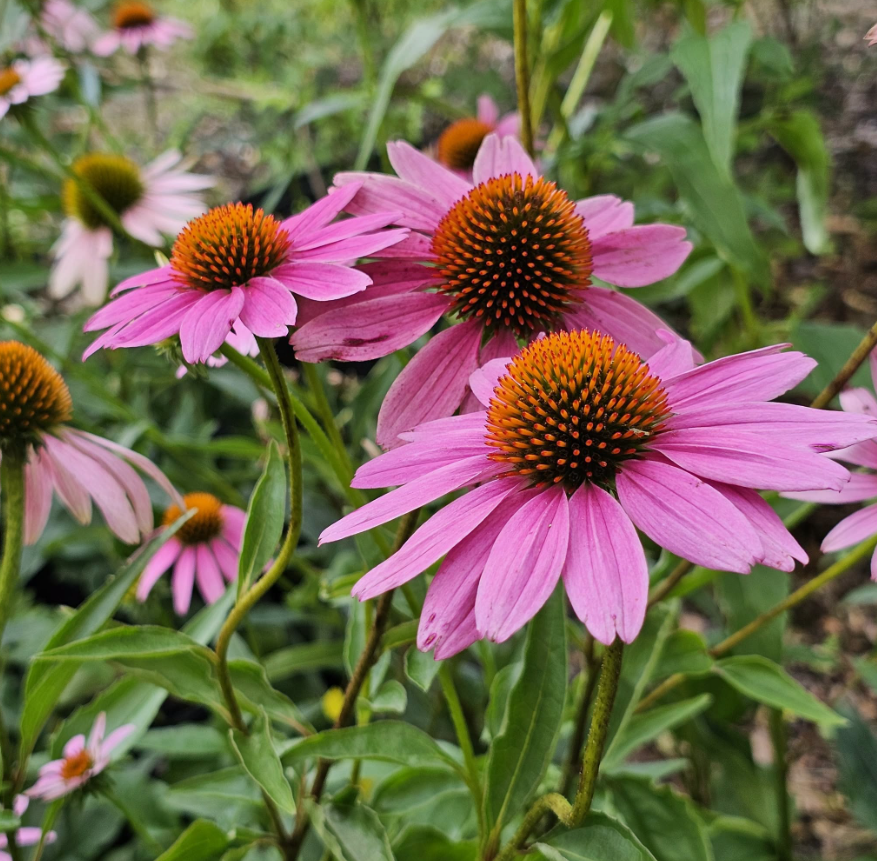
Purple coneflower (Echinacea purpurea) produces dusky-pink, drooping petals around a spiky, copper-toned center cone, blooming reliably from early summer through the first frost.
Its long bloom period makes it one of the most productive nectar sources available to Louisiana pollinators, since few other natives flower continuously across three or four full months.
Leave the seed heads standing through winter rather than deadheading everything. Goldfinches and other songbirds rely on those seeds during the leaner months when other food sources run short.
17. Blazing Star
Blazing star, or gayfeather (Liatris species), sends up tall purple flower spikes that open from the top downward, an unusual pattern that sets it apart from most other native wildflowers.
Several Liatris species grow naturally in Louisiana’s prairies and sandy woodlands, particularly in the state’s remaining longleaf pine savannas, which once covered vast stretches of the Gulf South.
Bees and butterflies swarm blazing star in late summer, and its dried flower spikes hold their shape well into winter, adding structure to naturalized beds long after the color fades.
18. Piedmont Azalea
Piedmont azalea (Rhododendron canescens) is one of Louisiana’s true native azaleas, producing fragrant pink to white blooms each spring before the shrub fully leafs out.
Unlike the imported Asian azaleas common in southern landscaping, this species is genuinely native to Louisiana’s woodlands, growing naturally in the moist, acidic soils of the Florida Parishes and northern pine forests.
Its blooms carry a strong, sweet, almost clove-like fragrance that fills entire wooded areas each March and April, drawing early-season bees out after a long winter.
19. Indian Pink
Indian pink (Spigelia marilandica) produces tubular red flowers that flare open into bright yellow, star-shaped tips, creating one of the more dramatic two-tone blooms in Louisiana’s woodlands.
Hummingbird researchers consistently rank this species among the most reliably visited native flowers in the Southeast, making it a favorite for shaded pollinator gardens throughout the state.
It grows in rich, moist woodland soil across northern Louisiana, blooming from May through June, and stays compact enough for smaller garden beds compared to taller woodland perennials.
20. Wild Columbine

Wild columbine (Aquilegia canadensis) produces delicate, nodding red and yellow flowers with long spurs that store nectar deep within each bloom, opening from March through May.
Only hummingbirds and a handful of long-tongued insects can reach that hidden nectar, making columbine one of the earliest and most important food sources for returning hummingbirds each spring.
It grows on rocky slopes, bluffs, and open woodlands in the northern parishes, tolerating partial shade better than most sun-loving natives found elsewhere on this list.
21. Jack-in-the-Pulpit
Jack-in-the-pulpit (Arisaema triphyllum) grows in shaded, moist bottomland forests across Louisiana, producing a curious, hooded green-and-purple flower structure that shelters a spike of tiny true flowers inside.
This plant can actually change sex from year to year, depending on how much energy it stored the previous season, functioning as male in leaner years and female when conditions are stronger.
By fall, it produces a tight cluster of bright red berries, standing out sharply against the darkening forest floor of the state’s hardwood bottomlands.
ALSO READ: 25 Best Perennial Flowers for Zone 8 (With Details)
22. Grass Pink Orchid
Grass pink orchid (Calopogon tuberosus) is one of Louisiana’s true native orchids, producing bright pink, upward-facing blooms in the state’s remaining wet pine savannas and bog habitats.
Unlike most orchids, its flower is not resupinate, meaning it does not twist during development, so the bloom’s fuzzy, pollen-mimicking lip sits on top rather than the bottom, tricking bees into landing.
These orchids depend heavily on fire-maintained pine savanna habitat, which has shrunk dramatically across the Gulf South, making sightings increasingly rare outside protected preserves.
23. Spiderwort
Spiderwort (Tradescantia species) produces three-petaled, deep blue-violet flowers that open in the morning and typically close by early afternoon, especially on hot Louisiana days.
Each individual flower lasts only a single day, though the plant produces new blooms continuously through its spring and early summer flowering period across fields and woodland edges.
Its grass-like foliage and clumping growth habit make it a popular choice for naturalized borders, and it tolerates both sun and partial shade with minimal care.
24. Turk’s Cap Lily
Turk’s cap lily (Lilium superbum) produces nodding, deep orange, strongly recurved blooms speckled with maroon, occasionally reaching several feet tall in the moist woodlands of northern Louisiana.
A single healthy stalk can carry more than a dozen flowers at once, creating a dramatic, chandelier-like display that peaks during July in the state’s cooler, wetter forest pockets.
It depends heavily on swallowtail butterflies for pollination, since the flower’s long floral tubes are precisely matched to their tongue length, much like other native lilies in the region.
25. Louisiana Phlox
Louisiana phlox (Phlox divaricata) carpets woodland floors each spring with soft lavender-blue blooms, often appearing alongside trillium and other early wildflowers across the northern parishes.
Its gentle, clove-like fragrance is strongest at dusk, when it attracts night-flying moths in addition to the bees and butterflies that visit throughout the day.
This phlox spreads gradually through creeping stems, forming loose, natural drifts that look effortless in a woodland garden, blooming from March through May before summer heat sets in.
Why Native Louisiana Flowers Belong in Every Garden
Native flowers also carry real ecological weight. Entomologist research popularized by Dr. Douglas Tallamy shows that native plants support far more caterpillar and pollinator species than introduced ornamentals, since local insects evolved alongside them over thousands of years.
Further, native blooms consistently outperform imported plants in Louisiana’s demanding climate.
They handle humidity and heavy rain without rotting. Louisiana receives 55 to 65 inches of rain annually in many parishes. Native species evolved to drain, flood, and dry out without missing a beat.
They feed local wildlife directly. Birds, bees, and butterflies across the state rely on specific native blooms for nectar, seeds, and larval host plants that non-native flowers simply cannot replace.
They need almost no chemical help. Once established, most natives resist Louisiana’s common pests and fungal pressures far better than ornamentals bred for other climates. Now, here is the full rundown.
Bringing These Flowers Into Your Own Garden
Planting Louisiana natives is one of the simplest ways to support local wildlife while working with, rather than against, the state’s heavy rainfall and humid summers.
Match the plant to your specific site. Wetland species like pickerelweed and buttonbush need consistently damp soil, while butterfly weed and blazing star prefer dry, well-drained ground.
Reach out to the LSU AgCenter or the Louisiana Native Plant Society before buying. They can point you toward nurseries that propagate true natives rather than similar-looking cultivars bred elsewhere.
Louisiana’s wildflowers have survived floods, hurricanes, and centuries of changing land use. Giving them space in your own yard helps keep that resilience alive for the wildlife that depends on them.
Frequently Asked Questions
What is Louisiana’s official state flower? The southern magnolia (Magnolia grandiflora) has held this title since 1900.
What is Louisiana’s official state wildflower? The Louisiana iris (Iris giganticaerulea and related native species) received this designation in 1990.
Are native Louisiana flowers difficult to grow? No. Most require far less water, fertilizer, and pest control than imported ornamentals, since they are already suited to the state’s humid, high-rainfall climate.
Can I collect wild native flowers from Louisiana’s swamps? It is best not to, especially in protected areas like the Atchafalaya Basin. Buy nursery-grown natives instead, or gather seed responsibly with permission from the landowner.

Tim M Dave is a gardening expert with a passion for houseplants, particularly cacti and succulents. With a degree in plant biology from the University of California, Berkeley, he has vast experience in gardening. Over the years, he has cultivated a vast collection of desert plants and learned a great deal about how to grow and care for these unique companions.