6 Types Of Lawn Mower Oil (And How They Work)
Grabbing “any old oil” for your mower is one of the fastest ways to shorten its life. I learned this the hard way years ago, after pouring leftover car oil into a push mower and watching it struggle to start every spring after.
Lawn mower engines are small, but they are also unforgiving. They run hotter, work harder relative to their size, and rarely have the filtration that car engines enjoy.
The oil you choose directly affects how well your engine is protected. Get it wrong, and you risk premature wear, hard starts, and even a seized engine.
This guide breaks down the six main types of lawn mower oil, when each one makes sense, and how to pick the right one for your climate, engine, and mowing habits.
Why Lawn Mower Oil Matters More Than You Think
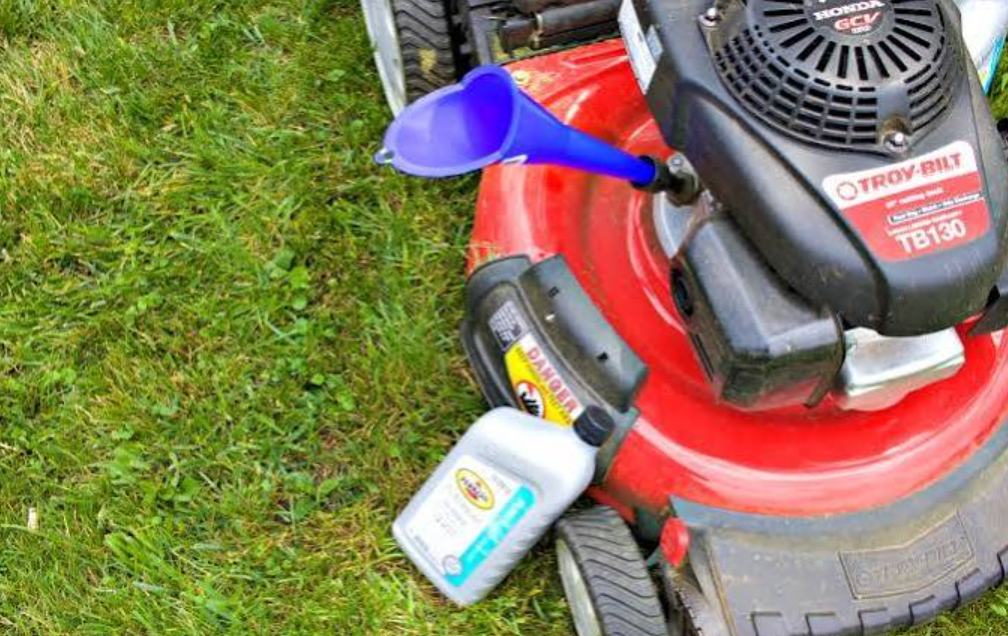
A mower engine does not just cut grass — it fights heat, dust, and constant friction every time it runs. Oil is the only thing standing between those moving metal parts and total wear.
Oil does three critical jobs inside your engine:
- Reduces friction between moving metal parts
- Carries heat away from the combustion chamber
- Traps dirt, dust, and combustion byproducts before they cause damage
Small engines like those in lawn mowers are also under federal environmental oversight. The U.S. Environmental Protection Agency has enforced multiple phases of emission standards for nonroad spark-ignition engines under 19 kilowatts, the exact category that covers most residential mowers, as detailed in EPA’s official rulemaking.
These standards exist because small engines, taken together, are a major contributor of hydrocarbon emissions in the United States, per EPA’s regulatory findings. Using the correct oil helps these engines run cleaner and meet the performance they were designed for.
Extension specialists at Alabama’s land-grant university note that premium oil improves engine operation, lubrication, and fuel economy compared to low-grade alternatives, according to Alabama Cooperative Extension guidance. That single choice at the parts counter really does matter.
ALSO READ: 20 Different Types of Lawn Mowers (Riding, Walk Behind, Tractors, Zero Turn, and More)
Quick Comparison: 6 Types Of Lawn Mower Oil
| Oil Type | Best For | Temperature Range |
| SAE 30 | Warm-weather push mowers | Above 40°F |
| SAE 10W-30 | Variable or cooler climates | 0°F to 100°F |
| SAE 5W-30 | Cold starts, spring/fall use | Below 40°F |
| Full Synthetic | High-use, extreme heat or cold | -20°F to 100°F+ |
| Synthetic 15W-50 (heavy-duty) | Commercial mowers, riding mowers | Wide range, high load |
| 2-Cycle (2-Stroke) Oil | Trimmers, older 2-stroke mowers | Mixed directly with fuel |
Now, let’s look at each one in detail.
Detergent vs. Non-Detergent Oil: A Quick Note
Before diving into the six main types, it helps to understand one more distinction that cuts across all of them: detergent versus non-detergent oil.
Detergent oil contains additives that actively suspend dirt, soot, and metal particles so they can be carried to the filter instead of settling on engine parts. Most modern small-engine oils, including everything on this list, are detergent formulas.
Non-detergent oil was common decades ago and is still sold for a narrow set of older engines that lack an oil filter. Using detergent oil in some of these older engines can loosen years of built-up sludge all at once, which then clogs the oil pathways.
If your mower is more than 20 years old, check the manual before assuming detergent oil is safe.
1. SAE 30 (Single-Grade Oil)
SAE 30 is the most commonly used oil in residential push mowers. It is a single-grade, or “straight-weight,” oil that keeps a consistent thickness across a narrow temperature band.
The “SAE” designation refers to the Society of Automotive Engineers, which sets viscosity classification standards for the whole oil industry.
This oil performs best in warm, stable weather, generally above 40°F. It clings well to hot metal surfaces and resists thinning out, so it holds its protective film even during long mowing sessions.
The tradeoff: SAE 30 thickens significantly in cold weather. Starting your mower on a chilly spring morning with SAE 30 in the crankcase can strain the starter and starve the engine of quick lubrication.
I’d only recommend it if you live somewhere with mild, predictable summers and store your mower for winter.
Most Briggs & Stratton engines, along with many other air-cooled small engines, still list SAE 30 as their standard recommendation for warm climates.
2. SAE 10W-30 (Multi-Grade Oil)
SAE 10W-30 is a multi-viscosity oil, meaning it behaves like a thinner “10-weight” oil when cold and a thicker “30-weight” oil once the engine warms up.
The “W” stands for winter, not weight, and refers to how the oil performs during cold starts. This makes 10W-30 far more forgiving across a range of temperatures than SAE 30.
Where it shines:
- Regions with unpredictable spring and fall temperatures
- Mowers used early in the morning when the air is still cool
- Newer engine models designed with tighter tolerances
Many newer riding mowers from brands like Toro and Husqvarna are engineered specifically around 10W-30’s flow characteristics.
The downside is a slightly thinner protective film at very high operating temperatures compared to straight SAE 30. In extreme summer heat, some users notice marginally more oil consumption.
Still, for most homeowners who mow across three or four seasons, 10W-30 offers the best overall balance.
3. SAE 5W-30
SAE 5W-30 pushes cold-weather performance even further than 10W-30. The “5W” rating means it flows more easily at lower starting temperatures, which matters if you mow early in spring or late into fall.
This oil is a smart choice if:
- You live somewhere with genuinely cold mornings
- You store your mower outdoors or in an unheated shed
- Your engine manufacturer specifically lists 5W-30 as an approved option
Not every small engine is rated for 5W-30, so always check your owner’s manual before switching. Using an unapproved grade can, in rare cases, void a manufacturer’s warranty.
I’ve found this grade particularly useful for early risers who like to beat the summer heat by mowing before 8 a.m.
4. Full Synthetic Oil
Full synthetic oil is chemically engineered rather than refined straight from crude. That manufacturing process removes impurities and produces a more uniform molecular structure.
The result is an oil that resists breakdown at high heat, flows better in cold starts, and generally lasts longer between changes than conventional oil.
Key benefits reported by small-engine oil manufacturers include:
- Stronger resistance to deposits and sludge
- Better protection during long, hot mowing sessions
- Smoother performance across extreme temperature swings
Independent lab testing referenced by small-engine oil producers has shown that inferior oils can leave heavy deposits capable of sticking engine valves, while quality synthetic oil kept the same test engine running clean.
The catch is price. Synthetic oil typically costs two to three times more per quart than conventional SAE 30 or 10W-30.
For a mower used once a week on a small suburban lawn, that premium may not be worth it. For commercial crews or anyone running equipment hard, all season long, the extra protection tends to pay for itself.
5. Heavy-Duty Synthetic 15W-50
This is the workhorse oil for commercial mowers, zero-turns, and equipment that runs for hours at a stretch. The wider viscosity spread (15 cold, 50 hot) gives it exceptional stability under sustained heat and heavy load.
Landscaping crews and anyone mowing large properties often prefer this grade because it:
- Maintains a thicker protective film during extended high-RPM use
- Handles high ambient temperatures without breaking down
- Reduces oil consumption in older or higher-mileage engines
This is not typically necessary for a homeowner mowing a quarter-acre lot once a week. It earns its keep on riding mowers, zero-turn units, and engines that log dozens of hours monthly.
If your mower runs for more than two or three hours at a time regularly, this grade is worth researching for your specific engine model.
6. 2-Cycle (2-Stroke) Oil
2-cycle oil is fundamentally different from the other five types on this list. Instead of sitting in a separate crankcase, it gets mixed directly into the gasoline.
This applies to older push mowers with 2-stroke engines, as well as trimmers, edgers, and some leaf blowers that share the same engine design.
Because the oil burns along with the fuel, using the wrong ratio causes real problems. Extension and manufacturer guidance generally points to a 50:1 fuel-to-oil ratio for most modern 2-stroke equipment, though some older models call for 40:1 or 32:1.
A quick reference for a one-gallon mix:
- 50:1 ratio → about 2.6 fluid ounces of oil
- 40:1 ratio → about 3.2 fluid ounces of oil
- 32:1 ratio → about 4 fluid ounces of oil
Never substitute standard 4-cycle motor oil in a 2-stroke mix. It lacks the additives designed to burn cleanly with fuel, and it will foul the spark plug and clog the exhaust port quickly.
Most modern residential lawn mowers have moved to 4-stroke engines, so this oil type mainly applies to trimmers and legacy mower models today.
ALSO READ: 10 Types of Lawn Mower Blades (And How They Work)
How To Choose The Right Oil For Your Mower
Start with the owner’s manual, every single time. Manufacturers test their engines against specific oil grades, and that recommendation should always override general advice, including this article.
If the manual is missing, here is a simple decision path:
- Check your climate. Warm and stable → SAE 30. Variable or cool mornings → 10W-30 or 5W-30.
- Check your engine type. Push mower with a crankcase → 4-cycle oil. Older trimmer-style engine → 2-cycle mix.
- Check your usage. Occasional weekend mowing → conventional oil is fine. Daily or commercial use → synthetic is worth the cost.
Cooperative Extension guidance recommends checking oil levels before every mow while the engine is cold, using the dipstick to confirm it sits between the fill lines, per University of Illinois Extension guidance.
How Often Should You Change Lawn Mower Oil?
For most homeowner mowers used lightly to moderately throughout the season, university extension guidance recommends changing the oil once per year.
If your mower has an hour meter and sees heavier use, follow the manufacturer’s hour-based interval instead of a calendar date. Many small engines call for a change every 25 to 50 hours of operation.
Skipping oil changes lets contaminants build up, which accelerates wear on pistons, rings, and bearings long before you notice a performance drop.
Signs Your Mower’s Oil Needs Attention
You do not have to wait for a scheduled change to check on your oil’s condition. A few warning signs are worth watching for between services.
Watch out for these red flags:
- Dark, gritty oil on the dipstick instead of a clear amber or light brown color
- A burning smell while mowing, which can mean oil is leaking onto a hot surface
- Harder-than-usual starts, especially on cool mornings
- Visible smoke from the exhaust, which may signal oil is burning inside the combustion chamber
- A milky or foamy appearance, which often points to water contamination
Any one of these on its own might be minor. Two or more together usually mean it is time to drain the oil immediately rather than waiting for the calendar.
I always keep a rag nearby when checking the dipstick. A clean wipe-and-recheck gives a far more accurate reading than judging the oil while it’s still coating the stick from the tank.
Don’t Forget Responsible Disposal
Used motor oil is not something to pour down a drain or dump in the yard. According to the EPA, the used oil from a single oil change can contaminate one million gallons of fresh water — roughly a year’s supply for 50 people, according to the U.S. EPA.
Used oil is also insoluble, slow to degrade, and can carry toxic heavy metals picked up during engine use, the EPA notes.
The good news: motor oil does not wear out chemically, it just gets dirty. Most auto parts stores and municipal recycling centers accept used oil at no cost, and it can be re-refined into new lubricant.
Frequently Asked Questions
Can I use car engine oil in my lawn mower? Technically, yes, if the viscosity grade matches what your manual recommends. But automotive oils are formulated for fuel economy in cooler, liquid-cooled engines, not the heat and load of an air-cooled mower engine.
Is synthetic oil really worth it for a mower? For light residential use, conventional oil performs perfectly well. For commercial or high-hour equipment, synthetic’s resistance to heat breakdown genuinely extends engine life.
What happens if I use the wrong oil grade? The engine may still run, but you risk harder cold starts, faster wear, or reduced lubrication during hot weather, depending on which direction you got it wrong.
Can I mix different oil types when topping off? Occasional topping off with a different conventional grade of the same type generally will not damage the engine, but it is best to fully drain and refill with a single consistent oil at your next scheduled change.
How do I know if my mower is 2-stroke or 4-stroke? A 4-stroke has a separate oil fill cap and dipstick. A 2-stroke has no dedicated oil reservoir because the oil is mixed straight into the fuel tank.
How much oil does a typical lawn mower need? Most residential push mowers hold between 15 and 20 fluid ounces, while riding mowers often need 48 to 64 ounces, depending on engine size. Always confirm the exact capacity in your owner’s manual before pouring, since overfilling can be just as damaging as running low.
Can old, unused oil go bad before it’s ever opened? Yes. Unopened conventional oil generally stays stable for about two to five years, while synthetic oil can last a bit longer. Once opened, exposure to air and moisture gradually degrades the additive package, so it’s best to use a bottle within a year of opening it.
Final Thoughts
Picking between these six types of lawn mower oil really comes down to three things: your climate, your engine’s design, and how hard you run your equipment.
Get those three factors right, match them to your owner’s manual, and your mower’s engine will reward you with years of reliable, smooth-running service.
A five-dollar difference in oil price is nothing compared to the cost of a new engine.
References
- U.S. EPA — Final Rule for Control of Emissions From Nonroad Spark-Ignition Engines and Equipment https://www.epa.gov/regulations-emissions-vehicles-and-engines/final-rule-control-emissions-nonroad-spark-ignition
- U.S. EPA — Final Rule for Phase 2 Emission Standards for New Nonroad Spark-Ignition Nonhandheld Engines At or Below 19 Kilowatts https://www.epa.gov/regulations-emissions-vehicles-and-engines/final-rule-phase-2-emission-standards-new-nonroad-0
- Alabama Cooperative Extension System — The 10 Steps of Lawn Mower Maintenance https://www.aces.edu/blog/topics/lawn-garden-urban/the-10-steps-of-lawn-mower-maintenance/
- University of Illinois Extension — Mower Maintenance https://extension.illinois.edu/lawns/mower-maintenance
- U.S. EPA — Managing, Reusing, and Recycling Used Oil https://www.epa.gov/recycle/managing-reusing-and-recycling-used-oil
- U.S. EPA — Managing Used Oil: Answers to Frequent Questions for Businesses https://www.epa.gov/hw/managing-used-oil-answers-frequent-questions-businesses
- Illinois Environmental Protection Agency — Used Oil https://epa.illinois.gov/topics/waste-management/waste-disposal/used-oil.html

Tim M Dave is a gardening expert with a passion for houseplants, particularly cacti and succulents. With a degree in plant biology from the University of California, Berkeley, he has vast experience in gardening. Over the years, he has cultivated a vast collection of desert plants and learned a great deal about how to grow and care for these unique companions.