10 Types of Lawn Mower Blades (And How They Work)
Most people focus on the mower itself. The blade quietly does the actual work, and it deserves far more attention than it usually gets.
I did not think much about blade types either, until a dull, mismatched blade left my lawn looking ragged and brown-tipped within days. That small lesson changed how I shop for mowers now.
Lawn care experts estimate that a dull blade tears grass rather than cutting it cleanly, and torn grass tips turn brown far faster than a clean cut would. That single detail explains a surprising amount of lawn stress people blame on watering or fertilizer instead.
There are roughly 80 million households in the United States that maintain a lawn, according to industry estimates tied to outdoor power equipment sales, and nearly all of them depend on some version of the blade types covered here.
This guide covers 10 types of lawn mower blades, grouped by how they cut and where they perform best. You will find everyday rotary designs, specialty options, and a couple of professional-grade blades most homeowners rarely encounter.
Let’s get into it.
How Lawn Mower Blades Are Generally Classified
Before the list, it helps to understand the basics. Blades are typically grouped by cutting mechanism, lift angle, and intended use.
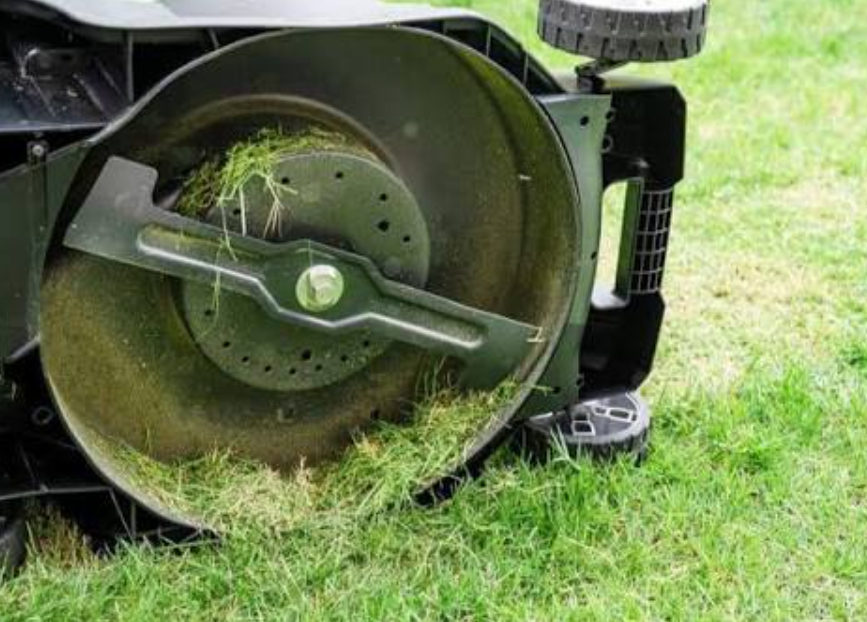
Most residential mowers use a single rotary blade, spinning horizontally beneath the deck at high speed. Professional turf equipment sometimes uses a reel or cylinder mechanism, cutting with a scissor-like motion instead.
Lift angle refers to how steeply the blade’s edges are bent upward. A higher lift angle pulls grass clippings up more forcefully, which affects both cutting quality and clipping discharge.
Material and thickness also matter, since a thicker, well-hardened steel blade holds its edge longer under regular use. Keeping these basics in mind makes the list ahead far easier to follow.
ALSO READ: 20 Different Types of Lawn Mowers (Riding, Walk Behind, Tractors, Zero Turn, and More)
Blade Materials: What Your Blade Is Actually Made Of
Most residential mower blades are made from carbon steel, chosen for its balance of affordability and reasonable edge retention. It sharpens easily, though it wears down faster than premium alternatives.
Higher-end blades often use hardened alloy steel, treated through heat processes that increase durability significantly. These blades resist bending and chipping far better when they strike rocks or debris hidden in tall grass.
Some commercial-grade blades even include a carbide-tipped edge, similar in concept to certain saw blades. This tipping holds a sharp edge considerably longer, though it comes at a noticeably higher price point.
Thickness matters just as much as the metal itself. A thicker blade resists warping under stress, which is exactly why commercial and heavy-duty blades tend to feel noticeably heavier in hand than standard residential ones.
Everyday Rotary Blades for Home Lawns
These four blade types cover the vast majority of residential mowing needs. Most homeowners will use at least one of these across their lawn’s lifetime.
1. Standard Blade (2-in-1 Blade)
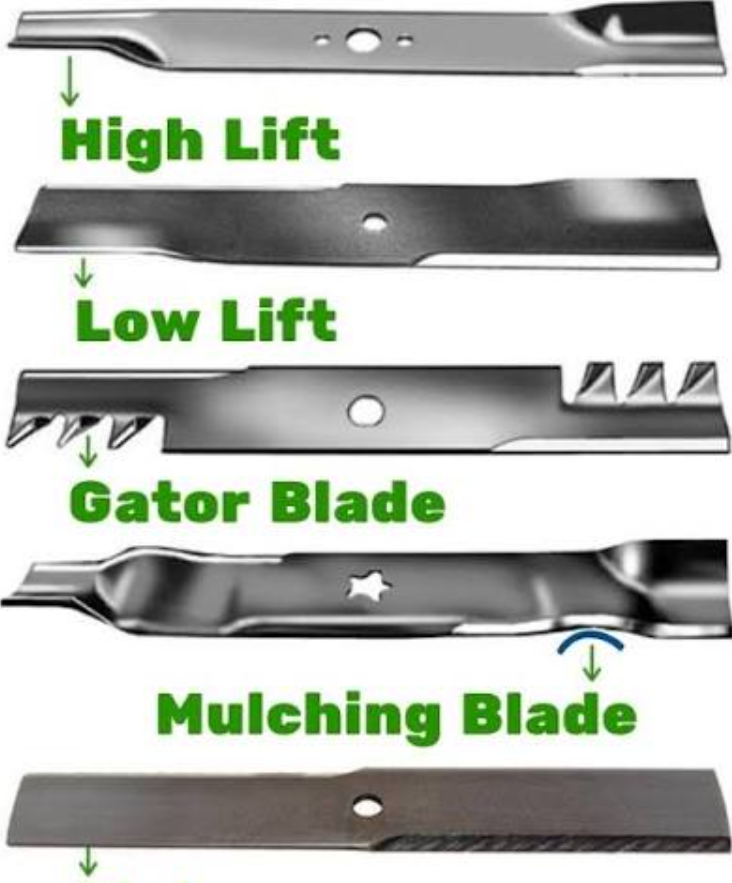
The standard blade, sometimes called a 2-in-1 blade, is the most common design fitted to residential rotary mowers. It has a simple, straight cutting edge with a moderate lift angle designed for general-purpose mowing.
This blade discharges clippings out the side of the deck rather than mulching or bagging them specifically. It works well for most typical lawns, especially when clippings are light enough to simply settle back into the grass.
2. Mulching Blade (3-in-1 Blade)
Mulching blades feature a more curved cutting edge with additional cutting surfaces along the blade’s length. This design chops clippings into smaller pieces before releasing them back onto the lawn.
These fine clippings decompose quickly, returning nitrogen and other nutrients directly to the soil. Many lawn care experts consider mulching blades one of the simplest ways to reduce fertilizer needs over a growing season.
3. High-Lift Blade
High-lift blades have a steeper wing angle, generating stronger upward airflow inside the mower deck. That extra lift pulls grass upright before cutting, resulting in a cleaner, more even trim.
This design also improves bagging performance, since the stronger airflow pushes clippings more forcefully into the collection bag. High-lift blades tend to draw slightly more engine power, which matters most on already underpowered mowers.
4. Low-Lift Blade
Low-lift blades use a gentler wing angle, producing less airflow and, as a result, less strain on the mower’s engine. They are common on mowers used in dry, sandy, or dusty conditions.
Reduced airflow means less dust and debris kicked up during mowing, which extends air filter life in dusty environments. Low-lift blades are not ideal for bagging, since weaker airflow struggles to push clippings fully into a collection bag.
Specialty Blades for Specific Mowing Needs
These blades solve particular problems, from thick grass to uneven terrain. They are less universal than the four above, but valuable for the right situation.
5. Gator Blade (Toothed Mulching Blade)
Gator blades take mulching a step further, using small, serrated teeth along the cutting edge rather than a smooth curve. Those teeth chop clippings into notably finer pieces than a standard mulching blade.
This finer mulch decomposes even faster, which is particularly useful on thick, fast-growing grass varieties. Many landscaping professionals favor gator blades specifically because they handle heavier, wetter grass without clumping as easily as standard mulching designs.
6. Bagging Blade (Lifted Blade)
Bagging blades are purpose-built with a pronounced lift angle, optimized specifically for pulling clippings up and into a rear or side collection bag. Their design prioritizes airflow over fine mulching.
They work best on lawns where clippings need full removal, such as before overseeding or during particularly heavy growth periods. These blades tend to leave larger clipping pieces, since fine mulching is not their primary design goal.
7. Double Blade System
Double blade systems stack two blades on a single mower spindle, often set at slightly different angles to maximize cutting and lifting power. This setup is common on wider commercial and zero-turn mower decks.
The added cutting surface handles thicker grass and larger areas more efficiently than a single blade alone. Maintenance requires extra care, since both blades need to be balanced and sharpened together to avoid uneven vibration.
8. Anti-Scalp Blade
Anti-scalp blades are shaped with a slightly modified profile designed to reduce the chance of the deck digging into uneven ground. They pair especially well with mowers featuring anti-scalp wheels or deck rollers.
This design helps prevent bald, scalped patches on lawns with rolling terrain or shallow dips. Homeowners dealing with bumpy yards often notice a meaningful difference in lawn evenness after switching to this blade type.
Professional and Alternative Blade Designs
These final two types step outside the standard rotary category entirely. They serve specific professional or performance-driven purposes.
9. Reel Blade (Cylinder Blade)
Reel blades consist of several curved blades mounted around a rotating cylinder, cutting grass against a fixed bottom blade in a scissor-like motion. This mechanism produces an exceptionally clean, precise cut.
Golf courses and sports fields commonly rely on reel blades to achieve the smooth, striped appearance seen on greens and pitches. This cutting style struggles with tall or thick grass, which is why it remains far less common on typical home lawns.
10. Heavy-Duty Commercial Blade
Heavy-duty commercial blades are forged from thicker, more durable steel than standard residential blades, built to withstand daily professional use. They often include reinforced centers to resist bending under repeated impact.
Landscaping crews mowing multiple properties daily rely on these blades for consistent performance without frequent replacement. They cost noticeably more than standard blades, though their extended lifespan often justifies the investment for heavy commercial use.
Common Blade Mounting Types and Why They Matter
Blades attach to a mower’s spindle in a few standard ways, and getting this wrong can make a replacement blade unusable. The most common design uses a center hole with a matching bolt pattern.
Some mowers use a star-shaped or D-shaped center hole instead, designed to lock the blade against the spindle without slipping during operation. Mixing up these designs is one of the most frequent mistakes first-time blade buyers make.
Blade length also varies depending on deck width, typically ranging from around 16 inches on small push mowers to over 60 inches on wide commercial decks. Always match the exact length listed in your owner’s manual, since even a slightly different size can affect balance and cutting overlap.
Double blade systems add another layer of complexity, since both blades must share compatible mounting specifications. Checking manufacturer part numbers directly remains the safest way to avoid an expensive mismatched purchase.
Quick Facts Worth Remembering
- A properly sharpened blade can reduce fuel consumption slightly, since the engine works less to force a dull edge through grass.
- Lawn care specialists generally recommend sharpening a mower blade once or twice per mowing season, depending on lawn size and soil grit.
- Mulching lawns with fine mulching or gator blades can return meaningful nitrogen to soil, reducing fertilizer needs over an entire season.
- Blade-related injuries remain a leading cause of mower-related emergency room visits, according to consumer safety monitoring agencies in the United States.
These figures highlight something easy to overlook. The blade is not just a spinning piece of metal, it directly shapes lawn health, fuel use, and safety together.
Choosing the right blade type, and maintaining it properly, genuinely changes how a lawn looks and feels throughout the growing season.
Beyond the numbers above, blade condition also affects how evenly a lawn dries after rainfall or watering. A clean cut allows moisture to move through grass blades more predictably than a torn, ragged edge does.
This might sound like a small detail, but lawn care specialists often point to blade sharpness as one of the most underrated factors in preventing fungal disease during humid weather.
Buying Tips: Matching the Blade to Your Lawn
Start with your mower’s deck size and mounting specifications, since blades are not universally interchangeable across brands and models. Check your owner’s manual before purchasing a replacement.
Think about how you handle clippings. Lawns where clippings stay on the grass benefit most from mulching or gator blades, while bagging blades suit lawns needing full clipping removal.
Consider your terrain honestly too. Bumpy or uneven yards benefit noticeably from anti-scalp blade designs, while flat, even lawns rarely need that extra feature.
Finally, weigh upfront cost against expected lifespan. A heavy-duty commercial blade costs more initially but often outlasts several standard blades under frequent use.
Blade Maintenance Tips That Extend Performance
Sharpen blades regularly, ideally every 20 to 25 hours of mowing time under normal conditions. A sharp blade cuts cleanly, reducing stress and disease risk across the lawn.
Balance the blade after every sharpening. An unbalanced blade creates vibration that can wear down the mower’s spindle and bearings prematurely.
Inspect blades for cracks, bends, or excessive wear before each mowing season begins. A damaged blade should always be replaced rather than repaired, since a failure during use can be genuinely dangerous.
Clean the blade and surrounding deck area after each use, particularly in wet or muddy conditions. Built-up debris accelerates rust and dulls the cutting edge faster than normal wear alone.
Signs Your Blade Needs Attention
Ragged, brown-tipped grass after mowing is usually the clearest sign of a dull blade. Clean cuts leave grass tips green and sharp-edged, not frayed or torn.
Unusual vibration while mowing often points to an unbalanced or bent blade. This vibration can worsen quickly, straining the spindle and engine mount over time if left unaddressed.
Visible nicks, chips, or a wavy, uneven cutting edge signal it may be time for a replacement rather than another sharpening. Repeatedly sharpening a badly damaged blade thins the metal and weakens its overall structure.
A sudden drop in mowing efficiency, where the mower seems to strain more than usual, can also indicate a dull or damaged blade working harder than it should.
A Word on Blade Safety
Mower blades spin at extremely high speeds, often exceeding 3,000 revolutions per minute on standard rotary mowers. That speed is exactly why blade-related injuries can be so severe.
Always disconnect the spark plug or remove the battery before inspecting or changing a blade. Accidental engine starts during blade maintenance remain a common cause of serious injury.
Wear thick gloves when handling blades, since even a stationary edge can cause deep cuts. Never test blade sharpness with a bare finger, no matter how tempting that quick check might feel.
Keep the mowing area clear of rocks, sticks, and debris before starting. These objects can become dangerous projectiles the moment they meet a spinning blade at full speed.
Frequently Asked Questions
How do I know which blade type my mower needs? Check your owner’s manual for the exact blade length, center hole size, and mounting style, since these details vary across brands and models.
Can I use a mulching blade on any rotary mower? Most rotary mowers can accept a mulching blade, provided the length and mounting specifications match the original blade exactly.
How often should lawn mower blades be replaced entirely? Most blades last several seasons with regular sharpening, though cracks, significant bending, or metal loss from repeated sharpening mean it is time for full replacement.
Is a gator blade better than a standard mulching blade? Gator blades generally produce finer mulch and handle thicker grass better, though standard mulching blades work perfectly well for typical, moderately growing lawns.
Do reel mower blades need sharpening the same way rotary blades do? Reel blades require a different sharpening process, often called backlapping, which aligns the cutting cylinder against the fixed bottom blade rather than grinding a single edge.
Can I sharpen a mower blade myself, or should I hire someone? Many homeowners sharpen blades themselves using a file, grinder, or specialized sharpening tool, provided they also balance the blade afterward. Those less comfortable with tools often prefer taking the blade to a local hardware store or small engine repair shop instead.
Does blade type affect how much noise a mower makes? Blade design has a smaller effect on noise than engine type, though high-lift blades moving more air can produce a slightly louder cutting sound than low-lift designs under similar conditions.
Final Thoughts
Ten blade types might seem excessive for something as simple as cutting grass. Yet each design solves a genuine, specific problem, whether that is fine mulching, heavy bagging, or handling uneven terrain.
A well-chosen blade, kept sharp and balanced, makes a visible difference in how healthy and even a lawn looks throughout the season. It is one of the simplest upgrades most homeowners overlook entirely.
I certainly overlooked it for years myself, until one ragged, brown-tipped lawn taught me otherwise. A small piece of metal, it turns out, carries more responsibility than it gets credit for.
Think about the last time your lawn looked less than perfect after mowing. There is a fair chance the blade itself, rather than the grass or the weather, deserved a closer look.
Take a look at your current blade, consider what your lawn actually needs, and choose accordingly. That small decision quietly shapes every mowing session that follows.
A sharp, well-matched blade will not make headlines, and it will not turn heads at a garden party. But it will make your lawn look consistently better, week after week, with far less effort than most people assume.
Some gardeners are content with a single standard blade for years. Others, especially those with larger or more demanding lawns, benefit from keeping a second specialty blade on hand for seasonal swaps.
Either approach is perfectly reasonable. What matters most is understanding why each design exists, so the choice feels intentional rather than accidental.
A little curiosity about something as ordinary as a mower blade can, in its own small way, make yard work feel less like a chore and more like a craft worth doing properly.
References
- Penn State Extension – Lawn Mower Maintenance and Repair: https://extension.psu.edu/lawn-mower-maintenance-and-repair
- University of Minnesota Extension – Mowing Your Lawn: https://extension.umn.edu/lawn-care/mowing-your-lawn
- U.S. Consumer Product Safety Commission – Lawn Mower Safety Guide: https://www.cpsc.gov/Safety-Education/Safety-Guides/Lawn-and-Garden/Lawn-Mowers
- Occupational Safety and Health Administration – Landscaping and Lawn Care Safety: https://www.osha.gov/lawn-care
- NC State Extension – Lawn Maintenance Calendar: https://content.ces.ncsu.edu/lawn-maintenance-calendar-for-cool-season-lawns-in-north-carolina
- Michigan State University Extension – Mowing Tips for a Healthy Lawn: https://www.canr.msu.edu/news/mowing_tips_for_a_healthy_lawn
- Clemson Cooperative Extension, Home and Garden Information Center – Lawn Mower Maintenance: https://hgic.clemson.edu/factsheet/lawn-mower-maintenance/

Tim M Dave is a gardening expert with a passion for houseplants, particularly cacti and succulents. With a degree in plant biology from the University of California, Berkeley, he has vast experience in gardening. Over the years, he has cultivated a vast collection of desert plants and learned a great deal about how to grow and care for these unique companions.