20 Different Types of Lawn Mowers (Riding, Walk Behind, Tractors, Zero Turn, and More)
A lawn mower seems like a simple tool. Yet the wrong choice can turn a quiet Saturday morning into a frustrating chore.
I have pushed a heavy gas mower up a slope more times than I would like to admit. The right machine changes everything about that experience.
There are roughly 80 million households in the United States that maintain a lawn, according to industry estimates tied to outdoor power equipment sales. That demand has shaped a surprisingly wide range of mower designs.
This guide covers 20 types of lawn mowers, grouped by how they work and where they perform best. You will find simple push models, ride-on machines, and a few specialty designs most homeowners never even knew existed.
I have tried to keep each entry practical. No jargon for its own sake, just what you need to know before buying or renting one.
Let’s get into it.
How Lawn Mowers Are Generally Classified
Before the list, it helps to understand the basic categories. Mowers are typically grouped by power source, cutting mechanism, and operating style.
Power sources include manual push power, gas engines, corded electricity, and rechargeable batteries. Each comes with tradeoffs in cost, noise, and maintenance.
Cutting mechanisms fall into two main types: rotary blades, which spin horizontally, and reel or cylinder blades, which cut with a scissor-like motion. Rotary designs dominate home lawns, while reel designs remain common on golf courses and formal lawns.
Operating style separates walk-behind models from riding machines, and increasingly, from fully autonomous robotic mowers. Keeping these categories in mind makes the list ahead much easier to follow.
ALSO READ: Beginner: How Often Should I Mow My Lawn?
Manual and Walk-Behind Mowers for Home Lawns
These are the mowers most homeowners actually use week to week. They range from simple manual tools to more advanced electric models.
1. Reel Mower
The reel mower uses a rotating cylinder of curved blades that cut grass with a clean, scissor-like motion. It requires no fuel or electricity, relying entirely on the push of the person operating it.
It works best on small, flat lawns with fine grass types, since it struggles with tall or thick growth. Many gardeners appreciate its near-silent operation and the noticeably clean cut it leaves behind on well-maintained turf.
2. Push Gas Mower
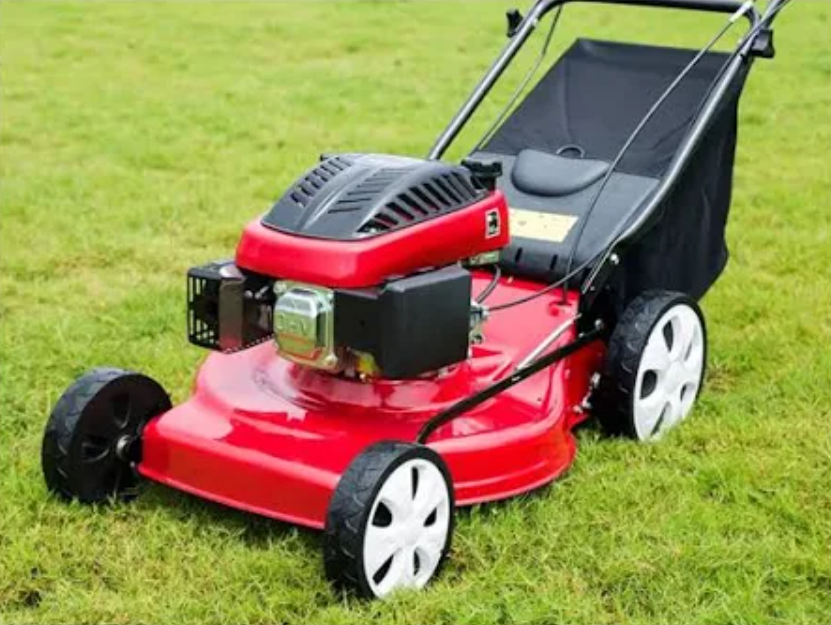
Push gas mowers rely on a small combustion engine to spin a rotary blade beneath the deck. They remain a popular, affordable choice for small to medium-sized yards without steep slopes.
The operator must push the entire machine forward, since there is no self-propulsion involved. Regular maintenance, including oil changes and blade sharpening, keeps these mowers running efficiently for many years.
3. Self-Propelled Mower
Self-propelled mowers use the engine to drive the wheels, reducing the physical effort needed from the operator. Most models let you adjust speed through a control handle near the grip.
This design suits medium to large lawns, especially those with gentle slopes or uneven terrain. It costs more upfront than a standard push mower, though many owners feel the reduced strain is well worth it.
4. Corded Electric Mower
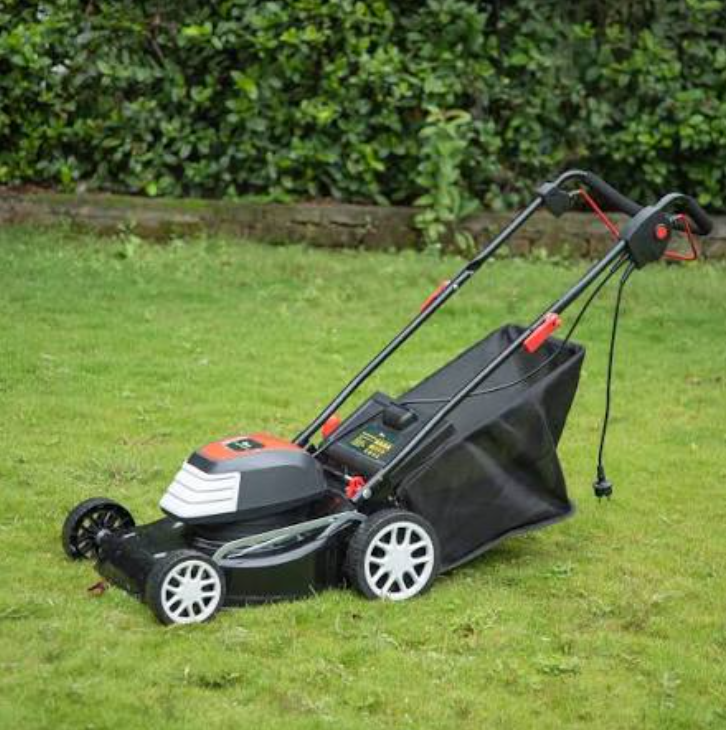
Corded electric mowers plug directly into a standard outlet, offering instant power without the need for gas or batteries. They tend to be lighter and quieter than gasoline alternatives.
The obvious limitation is the cord itself, which restricts range and requires careful maneuvering to avoid cutting through it. These mowers work best on small, easily accessible lawns close to the house.
5. Cordless Battery Mower
Cordless battery mowers have grown rapidly in popularity as lithium-ion battery technology has improved. They combine the convenience of electric power with the freedom of a gas mower.
Runtime depends heavily on battery capacity, typically covering a quarter-acre to half-acre lawn on a single charge. Many homeowners now prefer this option, since it eliminates gas fumes, pull cords, and extension cord hassles altogether.
6. Mulching Mower
Mulching mowers are designed to finely chop grass clippings and redistribute them back onto the lawn as natural fertilizer. Their deck shape recirculates clippings multiple times before releasing them.
This process returns nutrients to the soil, reducing the need for additional fertilizer over a growing season. Mulching also cuts down on yard waste, since clippings never need bagging or disposal.
7. Hover Mower
Hover mowers use a cushion of air, generated by the spinning blade itself, to float slightly above the ground rather than rolling on wheels. This design makes them remarkably easy to maneuver around tight corners and curves.
They work particularly well on uneven or sloped lawns, where wheeled mowers sometimes struggle for traction. Hover mowers remain more common in the United Kingdom and parts of Europe than in the United States.
ALSO READ: Find Out: Is it Illegal to Mow Your Lawn at Night?
Riding and Commercial-Grade Mowers
Larger properties often call for a ride-on machine. These mowers trade portability for speed, comfort, and the ability to handle significant acreage.
8. Riding Lawn Mower
Riding lawn mowers let the operator sit and steer, much like a small vehicle, making them ideal for yards larger than half an acre. They typically cut a wider swath than walk-behind models, saving considerable time.
Most riding mowers include a small storage or towing hitch for attachments like carts or aerators. They cost significantly more than push mowers but pay off quickly for anyone managing substantial acreage regularly.
9. Lawn Tractor
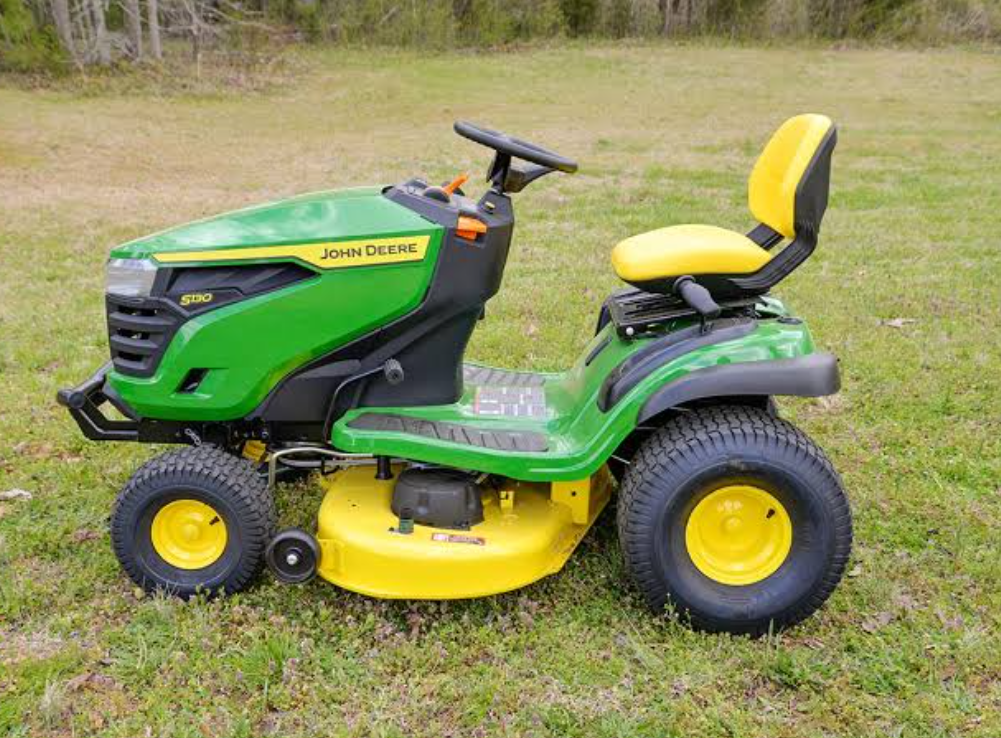
Lawn tractors are a specific type of riding mower built with a front-mounted engine and a more traditional steering wheel design. They are versatile enough to pull small trailers, spreaders, or dethatching attachments.
Lawn tractors tend to suit mid-sized properties, generally between half an acre and two acres. Their comfortable seating and attachment compatibility make them popular among suburban homeowners with larger yards.
10. Zero-Turn Mower
Zero-turn mowers use independent lever or joystick controls for each rear wheel, allowing the machine to pivot in place with remarkable precision. This design dramatically reduces the time spent maneuvering around obstacles like trees and flower beds.
Landscaping professionals frequently favor zero-turn mowers for their speed, sometimes cutting mowing time nearly in half compared to a standard lawn tractor. They do require a slight learning curve before operators feel fully comfortable with the controls.
11. Rear-Engine Riding Mower
Rear-engine riding mowers place the motor behind the seat rather than in front, resulting in a smaller, more compact frame. This makes them easier to store and slightly more affordable than full-sized lawn tractors.
They suit smaller properties that still benefit from a riding mower, generally under an acre in size. Their smaller cutting deck means more passes are needed compared to larger riding models, though storage convenience often outweighs that tradeoff.
12. Stand-On Commercial Mower
Stand-on mowers position the operator upright on a small platform rather than seated, offering a smaller footprint than traditional riding mowers. Landscaping crews often prefer them for transporting between multiple job sites efficiently.
The standing position allows for quicker mounting and dismounting, which matters when crews are servicing many properties in a single day. These mowers combine much of the speed of a zero-turn with a notably smaller storage footprint.
13. Cylinder Mower (Professional Reel Mower)
Cylinder mowers are the professional, engine-powered cousin of the manual reel mower, commonly used on golf courses and sports fields. Their multiple spinning blades create an exceptionally clean, low, and even cut.
Groundskeepers value cylinder mowers for producing the striped pattern often seen on golf greens and cricket pitches. They require more frequent blade maintenance than rotary mowers, since precision cutting depends on tightly calibrated blade alignment.
ALSO READ: 5 Things To Do With Grass Clippings (After Mowing Your Lawn)
Specialty and Heavy-Duty Mowers
Some mowing jobs go beyond a typical residential lawn. These specialty machines handle rough terrain, dense brush, and large-scale agricultural or municipal work.
14. Rotary Mower
Rotary mowers describe the broad category of machines using a single, horizontally spinning blade beneath the deck, the most common cutting mechanism across nearly all consumer mowers. Their design handles taller grass and uneven growth far better than reel-style cutting.
This mechanism appears across push mowers, riding mowers, and many commercial machines alike. Its versatility is exactly why rotary cutting dominates the residential mower market worldwide today.
15. Flail Mower
Flail mowers use small, hinged blades or hammers attached to a rotating drum, rather than a single rigid blade. This design allows them to safely handle rough terrain filled with rocks, stumps, or debris without damaging the machine.
They are commonly mounted on tractors and used for roadside verges, orchards, and overgrown fields. Because the blades pivot on impact, flail mowers are notably safer around debris than standard rotary blades, which can throw objects at high speed.
16. Sickle Bar Mower
Sickle bar mowers use a reciprocating row of triangular blades that move rapidly side to side, similar in principle to old-fashioned hand shears. This cutting style handles tall grass, hay, and dense vegetation exceptionally well.
They remain common in agricultural settings, particularly for cutting hay fields and pasture grass. Sickle bar mowers are usually towed behind tractors, and they require more careful maintenance since the many moving blade sections wear over time.
17. Brush Cutter Mower
Brush cutter mowers are heavy-duty machines built to clear thick weeds, saplings, and overgrown brush that standard mowers cannot handle safely. Their reinforced blades and powerful engines allow them to cut through vegetation far tougher than typical lawn grass.
They are often used for clearing vacant land, trails, or neglected properties before regular lawn maintenance can begin. Operators should always wear protective gear, since the dense material being cut can create unpredictable kickback.
Smart and Eco-Friendly Mowers
Technology has reshaped how many people think about mowing altogether. These newer categories focus on automation and reduced environmental impact.
18. Robotic Mower
Robotic mowers navigate a lawn autonomously, guided by boundary wires, GPS mapping, or increasingly, camera-based sensors. Once set up, they can mow on a regular schedule with little to no human involvement.
Sales of robotic mowers have grown significantly over the past decade, as battery technology and navigation software have both improved. Many models return automatically to a charging dock when battery levels run low, making them genuinely hands-off for busy homeowners.
19. Solar-Powered Mower
Solar-powered mowers use photovoltaic panels, either built into the mower itself or into its charging dock, to reduce or eliminate dependence on grid electricity. Most current models are robotic mowers with solar-assisted charging rather than fully solar-driven machines.
This design appeals strongly to environmentally conscious homeowners looking to reduce both emissions and electricity costs. Full solar power alone often is not enough on cloudy days, so most models still rely on a battery backup for consistent operation.
20. Hybrid Mower
Hybrid mowers combine a small gasoline engine with an electric motor, similar in concept to a hybrid car. The system automatically shifts between power sources to balance fuel efficiency and cutting power.
This design targets buyers wanting reduced fuel consumption without fully committing to battery-only operation. Hybrid mowers remain a smaller niche compared to pure gas or battery models, though interest continues to grow alongside broader hybrid vehicle adoption.
Quick Facts Worth Remembering
- Gasoline-powered lawn and garden equipment contributes a measurable share of small-engine emissions each year, a concern tracked by federal environmental agencies.
- Battery-powered mower sales have grown substantially over the past several years, driven largely by improvements in lithium-ion battery capacity.
- Zero-turn mowers can reduce mowing time by nearly 50 percent compared to standard lawn tractors on similarly sized properties, according to manufacturer performance data.
- Lawn mower-related injuries send tens of thousands of people to emergency rooms in the United States annually, according to consumer safety monitoring agencies.
These figures show just how much mower choice affects time, safety, and environmental impact together.
Beyond convenience, the type of mower used can also shape lawn health over time. Mulching mowers, for instance, return nutrients to soil that bagging mowers simply remove.
Choosing wisely is not just about comfort. It genuinely influences how much time, money, and effort a lawn demands over the years.
Buying Tips: Matching the Mower to Your Lawn
Start by measuring your yard, since size alone eliminates several options immediately. A small quarter-acre lawn rarely needs a riding mower, no matter how appealing one looks.
Consider your terrain honestly. Slopes, tree roots, and uneven ground all affect which mower type performs safely and efficiently.
Think about storage space too. A riding mower or lawn tractor needs a shed or garage bay, while a reel or push mower fits easily in a small closet or shed corner.
Finally, weigh ongoing costs against the upfront price. Gas mowers need fuel and regular tune-ups, while battery mowers require occasional battery replacement after several years of use.
Maintenance Tips That Extend a Mower’s Life
Sharpen blades at least once or twice per mowing season. A dull blade tears grass rather than cutting it cleanly, leaving lawns more vulnerable to disease.
Clean the underside of the deck regularly. Built-up grass clippings trap moisture, encouraging rust and reducing airflow needed for efficient mulching.
For gas mowers, change the oil and air filter according to the manufacturer’s schedule. Skipping this step is one of the most common reasons engines fail prematurely.
Battery mowers benefit from proper storage too. Keeping batteries at moderate temperatures, rather than in extreme heat or cold, meaningfully extends their usable lifespan.
A Word on Mower Safety
Lawn mowers feel routine, which is exactly why accidents happen. A rotary blade spinning at high speed can cause serious injury in an instant.
Always clear the lawn of rocks, sticks, and toys before mowing. These objects can become dangerous projectiles when struck by a spinning blade.
Keep children and pets well away from the mowing area, especially with riding mowers, which have larger blind spots than most drivers expect. Never allow a young child to ride along, even briefly.
Wear closed-toe shoes and appropriate eye protection, particularly with brush cutters and flail mowers that handle tougher vegetation. These small habits prevent the vast majority of common mowing injuries.
Frequently Asked Questions
What type of lawn mower is best for a small yard? A push reel mower, corded electric mower, or standard push gas mower usually suits small yards well, since they are lightweight and easy to store.
Are robotic mowers actually worth the cost? For homeowners with consistent, well-defined lawn boundaries and busy schedules, robotic mowers often justify their higher price through convenience and consistent mowing results.
What is the difference between a lawn tractor and a zero-turn mower? Lawn tractors use traditional steering and suit general-purpose mowing with attachments, while zero-turn mowers prioritize speed and maneuverability around obstacles, especially on larger, open lawns.
How often should I sharpen my mower blade? Most experts recommend sharpening a mower blade once or twice each mowing season, or sooner if you notice ragged, torn grass tips after cutting.
Do electric mowers cut as well as gas mowers? Modern battery-powered mowers have closed much of the performance gap, offering comparable cutting power for most residential lawns, though very large or thick lawns may still favor gas models.
Final Thoughts
Twenty mower types might seem like a lot for something as simple as cutting grass. Yet each design exists because lawns themselves vary so widely, in size, terrain, and purpose.
A tiny city lawn and a sprawling rural property genuinely need different tools. Matching the mower to the actual job saves time, money, and no small amount of physical strain.
I have come to appreciate how much a good mower choice quietly improves a weekend. The right machine turns a chore into something almost satisfying.
Every category on this list solves a slightly different problem, whether that is a tiny courtyard lawn or several acres of rolling pasture. There is real comfort in knowing an option exists for nearly any yard imaginable.
Take stock of your yard honestly, weigh the tradeoffs, and choose a mower that fits your life rather than simply the one that looks most impressive in a showroom.
References
- U.S. Environmental Protection Agency – Lawn and Garden Equipment: https://www.epa.gov/regulations-emissions-vehicles-and-engines/lawn-and-garden-equipment
- U.S. Consumer Product Safety Commission – Lawn Mower Safety Guide: https://www.cpsc.gov/Safety-Education/Safety-Guides/Lawn-and-Garden/Lawn-Mowers
- Occupational Safety and Health Administration – Landscaping and Lawn Care Safety: https://www.osha.gov/lawn-care
- Penn State Extension – Lawn Mower Maintenance and Repair: https://extension.psu.edu/lawn-mower-maintenance-and-repair
- University of Minnesota Extension – Mowing Your Lawn: https://extension.umn.edu/lawn-care/mowing-your-lawn
- NC State Extension – Lawn Maintenance Calendar: https://content.ces.ncsu.edu/lawn-maintenance-calendar-for-cool-season-lawns-in-north-carolina
- Michigan State University Extension – Mowing Tips for a Healthy Lawn: https://www.canr.msu.edu/news/mowing_tips_for_a_healthy_lawn

Tim M Dave is a gardening expert with a passion for houseplants, particularly cacti and succulents. With a degree in plant biology from the University of California, Berkeley, he has vast experience in gardening. Over the years, he has cultivated a vast collection of desert plants and learned a great deal about how to grow and care for these unique companions.