20 Georgia Native Shrubs (With Growing Details)
Georgia is one of the most botanically diverse states in the country. It holds roughly 100 distinct native plant communities, ranging from wet bottomlands to dry ridgetops, according to University of Georgia Extension.
That diversity means there is a native shrub suited to almost any yard condition you have, whether it is full sun, deep shade, clay, or sand.
This guide covers 20 shrubs native to Georgia, picked for a mix of ornamental appeal, wildlife value, and real-world toughness.
Why Native Shrubs Matter in Georgia Yards
Before the list, a quick reality check on why this matters.
Native shrubs survive Georgia’s climate swings. UGA horticulturists point out that the extreme cold snaps of December 1983 and January 1985 killed many introduced ornamentals, yet native species mostly came through unharmed because of cold hardiness built up over generations.
They support local wildlife. Birds, native bees, and butterflies depend on native plant chemistry in ways cultivated exotics cannot replace.
They ask less of you. Once established, most of these shrubs need no fertilizer, minimal watering, and little spraying.
Now, let’s get into the list.
1. Oakleaf Hydrangea (Hydrangea quercifolia)
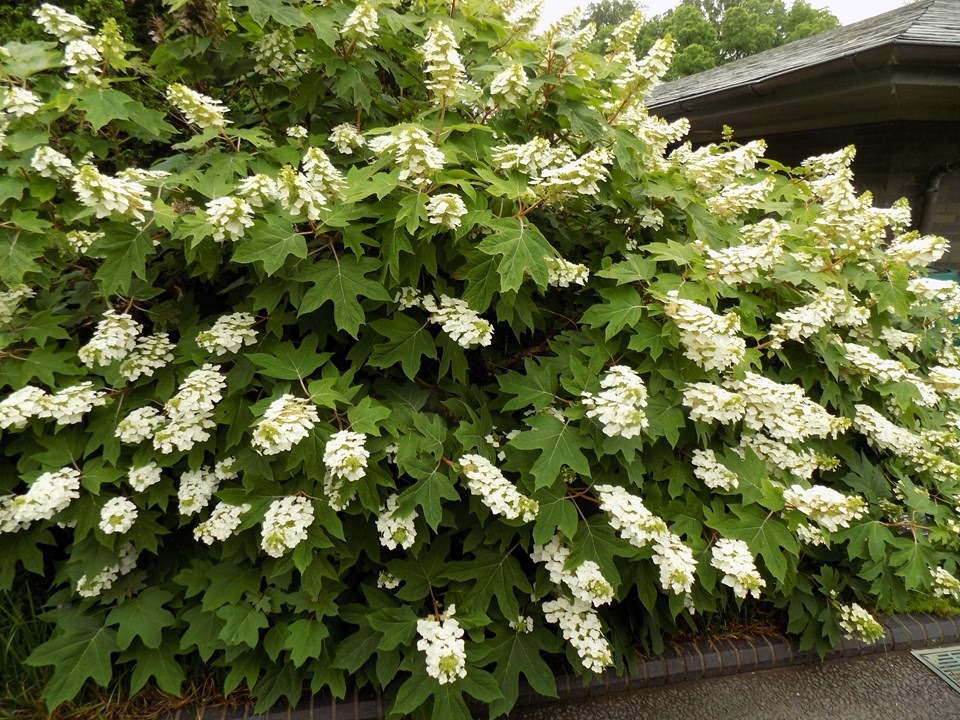
Oakleaf hydrangea is arguably Georgia’s signature native shrub, and it earns the reputation. Its large, oak-shaped leaves turn deep red-purple in autumn, and its cone-shaped flower clusters open creamy white in early summer before aging to a dusty pink.
Clemson Cooperative Extension notes this shrub typically reaches 6 to 8 feet tall, thrives in moist, well-drained soil, and works beautifully in woodland or shaded foundation plantings.
I planted one on the north side of my house years ago mostly for the foliage, and honestly the peeling winter bark turned out to be the bigger surprise. It gives the garden something to look at even in January.
Bees, syrphid flies, and honeybees are drawn to its small fertile flowers tucked among the showier sterile ones.
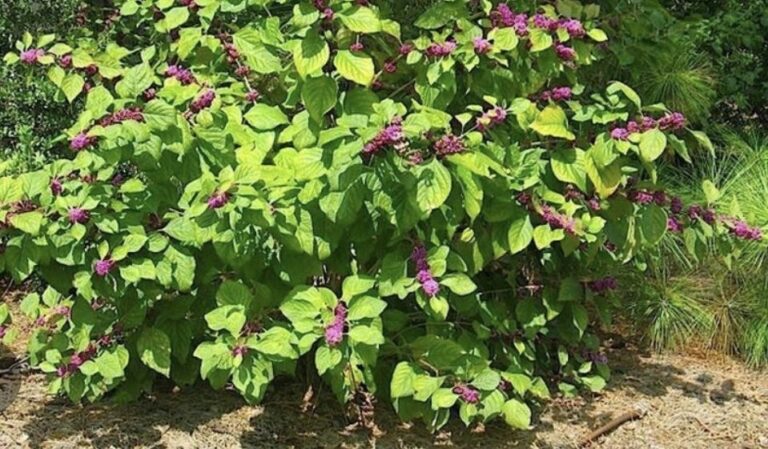
2. American Beautyberry (Callicarpa americana)
This one stops visitors mid-conversation every October. Clusters of bright magenta-purple berries wrap tightly around the stems, looking almost artificial against the green foliage.
North Carolina State Extension’s Plant Toolbox lists it as growing 3 to 8 feet tall and 3 to 6 feet wide, tolerant of nearly any well-drained soil, and best sited in full sun to part shade for maximum berry production.
Songbirds including cardinals, mockingbirds, and finches rely on those berries as a late-season food source. Some gardeners also crush the leaves, since they contain a compound shown in lab studies to repel mosquitoes.
Prune it hard in late winter. Flowers and fruit form on new growth, so a severe cutback each year actually improves next season’s display.
3. Sweetshrub / Carolina Allspice (Calycanthus floridus)
Sweetshrub gets its name honestly. The maroon, strap-petaled spring flowers give off a fruity, almost banana-like scent that varies noticeably from plant to plant.
This rounded shrub reaches 6 to 9 feet, prefers part shade, and handles Georgia’s heavy clay soils without complaint. It is a dependable choice for a woodland edge or a mixed shrub border.
My grandmother grew one by her back porch, and I still associate that smell with early May more than almost any other plant. That kind of sensory memory is exactly what native shrubs bring that mass-produced hybrids rarely do.
4. Virginia Sweetspire (Itea virginica)
Virginia sweetspire is a workhorse for wet spots. It naturally grows along stream banks and in bottomland areas, so it handles occasional standing water far better than most ornamental shrubs.
Expect a mounded habit around 3 to 5 feet tall, drooping white flower spikes in late spring, and brilliant red-to-burgundy fall color that rivals any burning bush.
It spreads gently by suckering, which makes it excellent for erosion control on slopes. Georgia Extension agents frequently recommend it as a native substitute for invasive burning bush.
5. Dwarf Fothergilla (Fothergilla gardenii)
Fothergilla is an underused gem. Its bottlebrush-shaped white flowers appear before the leaves in spring, followed by blue-green summer foliage that turns yellow, orange, and scarlet, sometimes all three on one plant, by fall.
This compact shrub stays around 2 to 3 feet tall, making it ideal for small garden beds, foundation plantings, or mass groupings where taller shrubs would overwhelm the space.
It tolerates both sun and part shade, though fall color intensifies with more sunlight.
6. Buttonbush (Cephalanthus occidentalis)
Buttonbush produces some of the strangest, most photogenic flowers in the native plant world. Its spherical white blooms look like tiny pincushions and pull in pollinators by the dozens.
Growing 6 to 12 feet tall, this shrub is built for wet feet. It thrives at pond edges, in rain gardens, and along ditches where few other ornamental shrubs survive.
Ducks and other waterfowl eat the seeds, and the flowers are a favorite of swallowtail butterflies through midsummer.
7. Winterberry Holly (Ilex verticillata)
Winterberry is a deciduous holly, which surprises a lot of first-time gardeners. It drops its leaves in fall, leaving bare stems packed with brilliant red berries that persist well into winter.
Mature plants reach 6 to 10 feet. Because it is dioecious, you need both a male and a female plant nearby for the females to produce berries, a detail nurseries can help you match correctly.
Those berries feed cardinals, robins, and cedar waxwings through the leanest months of the year, making this one of the better shrubs for winter wildlife support.
8. Inkberry Holly (Ilex glabra)
Inkberry is an evergreen alternative to boxwood that actually belongs here. USDA plant guide documentation describes it as forming dense, colonial thickets from tuberous rhizomes, with typical heights of 4.5 to 6.5 feet in the wild.
It handles wet, boggy soil as easily as average garden conditions, and its small black berries feed a range of songbirds through winter.
Cultivated varieties stay more compact than wild specimens, so check the tag if you want a tidy hedge rather than a naturalizing thicket.
9. Yaupon Holly (Ilex vomitoria)
Yaupon is one of only two plants native to North America known to naturally contain caffeine. Indigenous communities in the Southeast brewed its leaves into a ceremonial drink long before European contact.
As a landscape shrub, it grows 5 to 9 meters at full size in the wild, though nursery cultivars are often kept much smaller through pruning. It tolerates salt spray, drought, and poor soil better than almost any evergreen on this list.
Its small red berries persist through winter and support numerous bird species when other food sources run thin.
10. Mountain Laurel (Kalmia latifolia)
Mountain laurel is a north Georgia specialty. UGA Extension notes it is common in the mountains but rarely found in the Coastal Plain, since it needs cooler temperatures and acidic, well-drained soil to thrive.
Its late spring flowers open in tight clusters of pink-and-white cups, each bloom shaped almost like a tiny crown. Mature shrubs reach 7 to 15 feet given enough time and shade.
Site it in dappled woodland light rather than full sun, and avoid heavy, poorly drained clay if you can help it.
11. Flame Azalea (Rhododendron calendulaceum)
If you have ever hiked the Appalachian balds in late spring and seen orange fire seemingly growing out of the mountainside, that was flame azalea. It is one of the showiest native deciduous azaleas anywhere in the country.
Flowers range from yellow through orange to deep red, unscented but visually striking, on shrubs that reach 6 to 10 feet. It needs acidic soil, part shade, and consistent moisture to establish well.
This is a slower grower than many landscape shrubs, so patience pays off here more than with most entries on this list.
12. Piedmont Azalea (Rhododendron canescens)
Also called Piedmont or Florida pinxter azalea, this deciduous shrub covers itself in fragrant pink-to-white tubular flowers in early spring, often before the leaves fully expand.
It grows 6 to 10 feet tall, spreading by suckers to form loose colonies in the wild. This species is documented as native across Georgia’s Piedmont and Coastal Plain regions, thriving in the acidic, humus-rich soils of stream bluffs and open woods.
Plant it where you will walk past during bloom season. The fragrance carries surprisingly far on a still spring morning.
13. Spicebush (Lindera benzoin)
Spicebush is a quiet workhorse of the understory. Crush a leaf or twig and you get an immediate spicy, citrusy scent that explains the common name.
This shrub reaches 6 to 12 feet, tolerates deep shade better than most flowering shrubs, and produces small yellow flowers in early spring followed by red berries in fall.
It is also the host plant for the spicebush swallowtail butterfly, meaning a single shrub can support an entire generation of caterpillars each season.
14. American Elderberry (Sambucus canadensis)
Elderberry grows fast, blooms generously, and rewards you with fruit that has real culinary use. Flat-topped clusters of tiny white flowers appear in early summer, followed by clusters of small, dark purple berries by late summer.
Expect 5 to 12 feet of arching growth per season on established plants. It prefers moist soil and full sun to part shade, and it spreads readily, so give it room or plan to manage suckers.
Birds strip the berries quickly once they ripen, so if you want any for jelly or syrup, you will need to net the plant or beat the wildlife to it.
15. Southern Wax Myrtle (Morella cerifera)
Wax myrtle is one of the best fast-growing evergreen screens native to Georgia. It tolerates salt spray, drought, poor soil, and wet soil almost equally well, which explains its popularity along the coast.
Mature plants reach 10 to 20 feet, though regular pruning keeps it as a dense hedge closer to 8 feet. Its aromatic, waxy blue-gray berries were historically used to scent candles.
Female plants produce fruit that feeds species like yellow-rumped warblers through winter, a genuinely important food source in coastal habitats.
16. Sweet Pepperbush / Summersweet (Clethra alnifolia)
Summersweet blooms in July and August, a stretch when few native shrubs are flowering, and its fragrant white or pink spikes draw pollinators in noticeable numbers.
UGA Extension research specifically lists summersweet, also called clethra, among the go-to native shrubs recommended for Georgia landscapes. It grows 3 to 8 feet, tolerates wet soil, and handles shade better than most summer-blooming shrubs.
Bumblebees and honeybees crowd the flower spikes so thickly that the shrub practically hums on a warm afternoon.
17. Shrubby St. John’s Wort (Hypericum frondosum)
This compact, rounded shrub produces bright yellow flowers with prominent, showy stamens through early summer, giving it a fireworks-like appearance up close.
It stays a manageable 2 to 4 feet tall, handles poor and rocky soil, and needs very little supplemental water once established. That drought tolerance makes it a strong pick for hot, exposed spots where other flowering shrubs struggle.
Pollinators, especially native bees, visit it heavily for pollen, even though the flowers offer no nectar reward.
18. Witch Hazel (Hamamelis virginiana)
Witch hazel does something almost no other Georgia native shrub does: it blooms in late fall, sometimes into winter, with thin, ribbon-like yellow petals that curl in cold weather and unfurl again when it warms.
This large shrub or small tree reaches 15 to 20 feet, tolerates both sun and shade, and adapts to a wide range of soil types. Its bark and leaves have long been used in traditional astringent extracts.
I always find it a little startling to see flowers on a bare shrub in November. It is a genuine extension of the gardening season.
19. Florida Anise (Illicium floridanum)
Florida anise brings something rare to Georgia gardens: a broadleaf evergreen shrub that thrives in deep, wet shade where almost nothing else flowers well.
Its unusual star-shaped, maroon-red flowers appear in spring, and the crushed foliage releases a strong anise-like scent. Mature shrubs reach 6 to 10 feet, forming a dense, glossy screen over time.
It is native to the wet ravines and stream banks of south Georgia and the Coastal Plain, making it a natural fit for shaded, moisture-retentive garden pockets.
20. Red Chokeberry (Aronia arbutifolia)
Red chokeberry closes out this list as a genuine four-season performer. White spring flowers give way to glossy red berries that persist into winter, while the foliage turns brilliant red in fall before dropping.
This upright shrub grows 6 to 10 feet tall, tolerates wet or dry soil, and adapts to full sun or part shade with equal ease. It suckers modestly, forming loose colonies useful for naturalized borders.
The tart berries are technically edible and packed with antioxidants, though most gardeners leave them for the mockingbirds, robins, and cedar waxwings that strip the branches by midwinter.
Quick Comparison at a Glance
- Best for wet soil: Buttonbush, Virginia sweetspire, Florida anise, elderberry
- Best drought-tolerant picks: Wax myrtle, shrubby St. John’s wort, yaupon holly
- Best for deep shade: Spicebush, Florida anise, mountain laurel
- Best for winter interest: Winterberry holly, witch hazel, red chokeberry
- Best for pollinators: Summersweet, buttonbush, shrubby St. John’s wort
Frequently Asked Questions
What is the most popular native shrub in Georgia? Oakleaf hydrangea is widely considered the state’s signature native shrub, prized for its foliage, flowers, and winter bark.
Do native shrubs really need less maintenance? Yes, generally. Because they evolved alongside Georgia’s soil, rainfall, and temperature swings, established native shrubs typically need less fertilizer, water, and pest control than non-native ornamentals.
Can I plant native shrubs in heavy clay soil? Several on this list, including sweetshrub, spicebush, and Virginia sweetspire, tolerate Georgia’s clay-heavy soils well without amendment.
When is the best time to plant native shrubs in Georgia? Fall through early spring, while shrubs are dormant, is generally the best window. It gives roots time to establish before summer heat arrives.
Are native shrubs more affordable than imported ornamentals? Prices vary by nursery, but native shrubs often cost less over time. You save on the fertilizer, irrigation, and pest treatments that many exotic ornamentals require to stay healthy in Georgia’s climate.
Will native shrubs attract deer to my yard? Some will, since deer browse many native plants. Yaupon holly, wax myrtle, and shrubby St. John’s wort are generally left alone, while azaleas and elderberry tend to get nibbled more often.
Planting Tips Before You Start
- Match the shrub to your soil moisture first. Sun and shade matter, but Georgia’s clay and sand extremes trip up more new plantings than light levels do.
- Water deeply for the first two summers. Even drought-tolerant natives like wax myrtle need consistent moisture while their root systems establish.
- Skip the fertilizer at planting time. Most of these shrubs evolved in lean native soils and can actually be damaged by heavy feeding early on.
- Mulch generously, but keep it off the stems. A 2 to 3 inch layer holds moisture and moderates soil temperature without inviting rot at the base.
Final Thought
I keep coming back to the same conclusion every time I walk past a yard full of these plants: native shrubs do not just survive Georgia, they belong here. They were shaped by this exact soil, rainfall, and wildlife community over thousands of years, and it shows in how little fuss they demand once settled in.
Start with two or three from this list that fit your soil and light conditions. You will likely find, as I did, that the rest of the yard starts feeling incomplete without them.
References
- University of Georgia CAES, “Getting to Know Georgia’s Native Flora” — https://fieldreport.caes.uga.edu/news/getting-to-know-georgias-native-flora/
- UGA Cooperative Extension, Bulletin 987: “Native Plants for Georgia Part I: Trees, Shrubs and Woody Vines” — https://fieldreport.caes.uga.edu/publications/B987/native-plants-for-georgia-part-i-trees-shrubs-and-woody-vines/
- USDA NRCS PLANTS Database — https://plants.usda.gov
- USDA NRCS Plant Guide, Ilex glabra (Inkberry Holly) — https://plants.sc.egov.usda.gov/DocumentLibrary/plantguide/pdf/pg_ilgl.pdf
- Clemson Cooperative Extension, Home & Garden Information Center, “Native Hydrangeas” — https://hgic.clemson.edu/native-hydrangeas/
- North Carolina State University Extension Gardener Plant Toolbox, Callicarpa americana — https://plants.ces.ncsu.edu/plants/callicarpa-americana/
- US Forest Service, Fire Effects Information System (FEIS) — https://research.fs.usda.gov/feis

Tim M Dave is a gardening expert with a passion for houseplants, particularly cacti and succulents. With a degree in plant biology from the University of California, Berkeley, he has vast experience in gardening. Over the years, he has cultivated a vast collection of desert plants and learned a great deal about how to grow and care for these unique companions.