20 Nebraska Native Trees (With Growing Details)
Nebraska was only about 3% forested at the time of European settlement in the 1800s. Most of the state was open prairie, with trees clustered along rivers, streams, and the rugged bluffs of the east and Panhandle.
That history matters today. Native trees are adapted to Nebraska’s swings between brutal winters and scorching summers, plus its unpredictable rainfall and wind. Planting native species generally means less watering, less disease pressure, and stronger long-term survival than imported ornamentals.
Nebraska’s forest land has also grown. Federal inventories show forest acreage increasing by nearly 300,000 acres in recent decades, partly from conservation plantings and partly from eastern redcedar spreading into former grassland. That’s a mixed blessing, since redcedar expansion also threatens native prairie.
With that background, let’s get into the trees themselves.
1. Eastern Cottonwood (Populus deltoides)
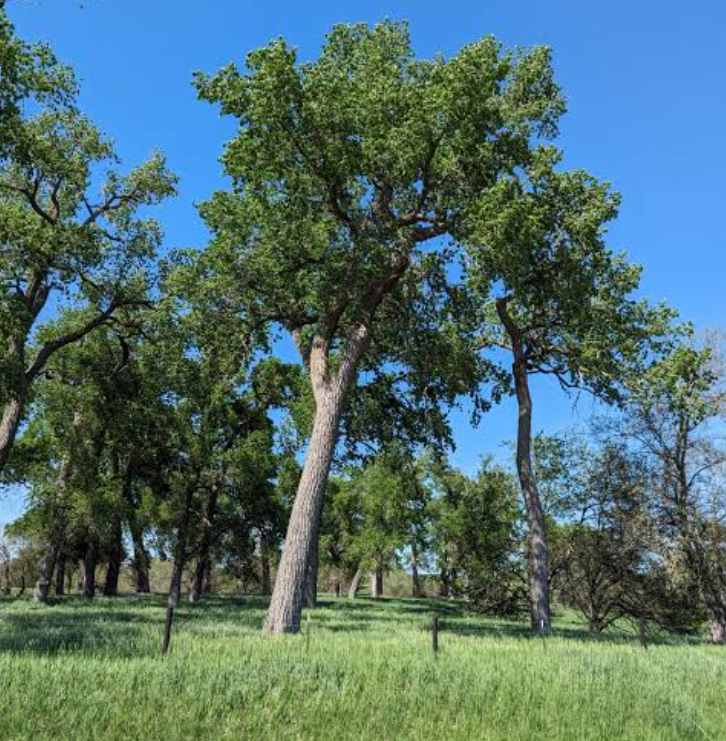
The cottonwood is Nebraska’s official state tree, a title it earned in 1972 after replacing the American elm. It grows fast, often adding several feet a year, and can reach heights of 80 to 100 feet along riverbanks.
You’ll find it almost everywhere water flows in Nebraska, especially along the Platte and Missouri Rivers. Its cottony seed fluff drifts through the air every spring, which locals either love or quietly grumble about.
Historically, this tree meant survival. Native American tribes used cottonwood for dugout canoes, tools, and medicinal tea, and pioneers relied on it for lumber when little else was available. Today it still supplies a large share of the timber processed in the state.
Cottonwood remains one of the most frequently harvested trees in Nebraska, alongside ponderosa pine and eastern redcedar.
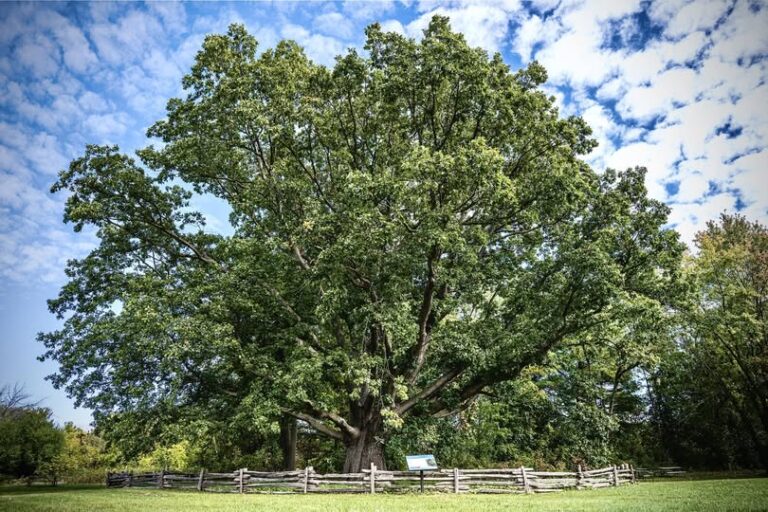
2. Bur Oak (Quercus macrocarpa)
Bur oak is arguably the toughest oak in North America, and Nebraska sits comfortably within its range. It handles drought, poor soil, and wide temperature swings better than almost any other hardwood in the state.
Mature trees can live for centuries. Some Nebraska oaks are believed to be over 400 years old, including the famous Wolf Oak at Ponca State Park, which reportedly sprouted around 1644.
Its acorns, some of the largest of any oak, feed deer, turkey, and squirrels through the winter. The thick, corky bark also gives it decent fire resistance, a trait that helped it survive on the prairie edge for generations.
If I had to recommend one shade tree for a Nebraska yard meant to outlast its owner, this would be it.
3. Northern Red Oak (Quercus rubra)
Red oak reaches its natural western range limit right here in Nebraska, mostly in the eastern third of the state. It grows faster than bur oak and produces a striking canopy of red and bronze foliage each fall.
This species prefers richer, well-drained soils, which is why it’s less common in the drier western counties. Where conditions suit it, though, it can climb to 60 or 70 feet.
Red oak wood is prized commercially for furniture and flooring, giving it value beyond the landscape. It’s also one of Nebraska’s seven native oak species, alongside bur, black, chinkapin, blackjack, and white oak.
4. Chinkapin Oak (Quercus muehlenbergii)
Chinkapin oak often grows on limestone bluffs and rocky slopes, particularly in southeastern Nebraska. Its leaves resemble chestnut leaves, with coarse, toothed edges that make it easy to identify.
It’s a smaller oak compared to bur or red oak, usually topping out around 40 to 50 feet, but it’s remarkably drought tolerant once established.
This species also reaches the edge of its natural range in Nebraska, which makes local populations ecologically significant. Losing them here would mean losing genetic diversity that doesn’t exist elsewhere in the species’ range.
5. Bitternut Hickory (Carya cordiformis)
Bitternut hickory grows in moist woodlands across eastern Nebraska, often alongside oaks and walnuts. It’s easy to spot thanks to bright yellow winter buds that stand out against gray bark.
This tree also happens to reach the natural limit of its range in Nebraska, similar to several other hardwoods on this list.
Wildlife loves it. Squirrels and songbirds regularly feed on the nuts, and the tree serves as a host plant for the luna moth, one of North America’s most striking insects.
Despite the name, the nuts are too bitter for most human consumption, but they play an important role in the food web.
6. Shagbark Hickory (Carya ovata)
Shagbark hickory earns its name from bark that peels away in long, curling strips, giving mature trunks a shaggy, almost unkempt appearance. It’s one of the more recognizable trees in eastern Nebraska’s hardwood forests.
Unlike its bitternut cousin, shagbark hickory produces genuinely sweet, edible nuts, historically gathered by both Native Americans and early settlers.
Growth is slow, often taking decades before a tree produces a meaningful nut crop. That patience pays off, though, since shagbark hickories can live well over a century in favorable conditions.
Like bitternut hickory, this species reaches its western range limit in Nebraska.
7. Green Ash (Fraxinus pennsylvanica)
Green ash was once one of the most abundant and widely planted trees in Nebraska, especially after Dutch elm disease wiped out so many American elms. It tolerates poor soil, wind, and drought better than most hardwoods.
That popularity has turned into a serious problem. The emerald ash borer, an invasive beetle, has arrived in Nebraska and could kill more than 40 million ash trees statewide in the coming years.
Because of this threat, Nebraska forestry experts no longer recommend planting native ash trees. It’s a hard call, given how important the species has been, but the science supports pausing new plantings until resistant options exist.
Existing green ash trees still deserve recognition here as a defining, if endangered, part of the state’s native tree heritage.
8. American Elm (Ulmus americana)
American elm shaped the look of small-town Nebraska for generations, lining Main Streets with its graceful, vase-shaped canopy. It was actually Nebraska’s original state tree before cottonwood replaced it in 1972.
Dutch elm disease devastated the species across the Midwest starting in the mid-1900s, and Nebraska was no exception. Many mature street elms were lost within a few decades.
Some disease-resistant elm cultivars have since been developed, giving the species a partial comeback in modern plantings. Wild American elms also persist in riparian forests along the state’s rivers.
Its native cousin, red or slippery elm, survives using an unusual layering strategy, sprouting new vertical shoots from spreading roots when canopy gaps open up light.
9. Hackberry (Celtis occidentalis)
Hackberry doesn’t get much glory, but it’s one of the most reliable native trees in Nebraska. It tolerates wind, drought, poor soil, and urban pollution better than almost anything else on this list.
Its warty, corky bark makes it easy to identify even from a distance. Small purple-black berries ripen in fall and become an important food source for birds through winter.
Fossilized hackberry seeds found in Cheyenne County suggest a grove there is tens of thousands of years old, a reminder of how long this species has anchored Nebraska’s plains.
I’d call it an underrated tree. It rarely gets planted on purpose, yet it thrives almost everywhere.
10. Black Walnut (Juglans nigra)
Black walnut grows in rich bottomland soils across eastern Nebraska, often reaching heights of 70 feet or more. Its wood is among the most valuable hardwood timber in North America, prized for furniture and gunstocks.
The tree produces a chemical called juglone, which suppresses many other plants growing nearby. Gardeners need to plan carefully around mature walnuts for this reason.
Its nuts, encased in a thick green husk, are edible and were harvested extensively by both Indigenous peoples and settlers. Squirrels remain the tree’s primary seed disperser today.
Black walnut also reaches its natural range limit within Nebraska’s borders, adding to the state’s collection of range-edge species.
11. Kentucky Coffeetree (Gymnocladus dioicus)
Kentucky coffeetree is one of Nebraska’s toughest native shade trees, tolerating extreme heat, cold, and poor soil with minimal complaint. It typically grows 50 to 70 feet tall with a broad, open canopy.
Its large, leathery seed pods give the tree its name. Early settlers reportedly roasted the seeds as a coffee substitute, though the raw seeds are actually toxic and require careful preparation.
Because it has few pest or disease problems, arborists increasingly recommend it as a low-maintenance replacement for ash trees lost to emerald ash borer.
Bare in winter for longer than most trees, it earned the nickname “the tree that fooled everyone,” since it looks dead well after other trees have already leafed out.
12. Eastern Redbud (Cercis canadensis)
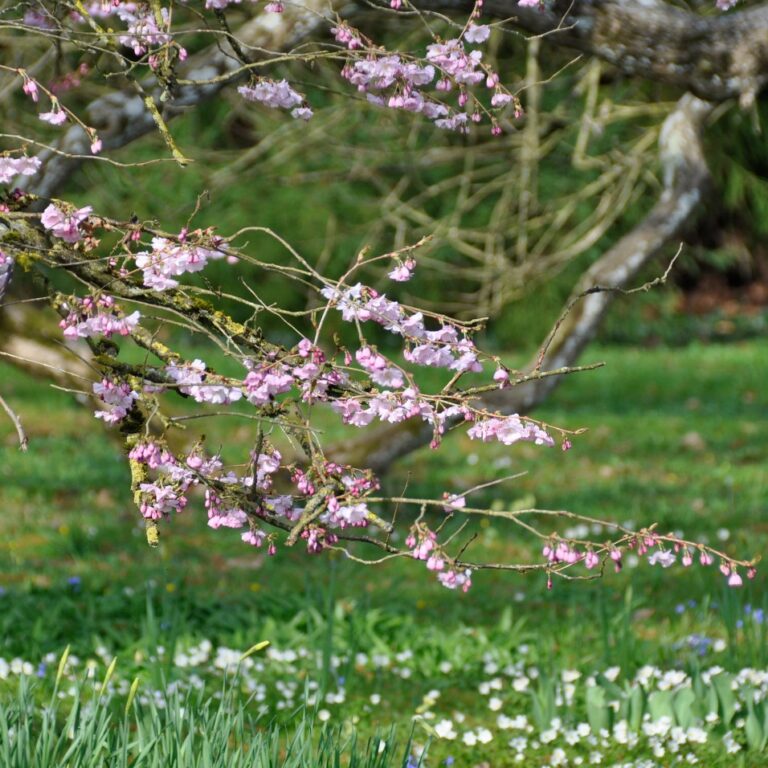
Eastern redbud is one of the first native trees to bloom each spring, covering its bare branches in clusters of pink-purple flowers before the leaves even appear. It’s a small understory tree, rarely exceeding 20 to 30 feet.
Beyond its beauty, redbud plays a real ecological role. It serves as an important early-season nectar source for bees, butterflies, and other pollinators emerging from winter dormancy.
This species does best in partial shade at the edge of woodlands, which describes much of its native habitat in southeastern Nebraska’s riparian forests.
I’ve always thought redbud is the tree that convinces skeptics that native species can be just as showy as imported ornamentals.
13. Northern Catalpa (Catalpa speciosa)
Northern catalpa stands out immediately, with enormous heart-shaped leaves and clusters of white, orchid-like flowers in early summer. It’s commonly planted today as a large ornamental shade tree in urban Nebraska.
The tree also serves practical conservation purposes, including plantings in mined-land reclamation projects and windbreak shelterbelts across the plains.
Long, bean-like seed pods follow the flowers, dangling from branches through fall and winter. Songbirds and squirrels feed on the seeds inside.
Catalpa flowers are genuinely fragrant, which makes early summer walks near mature specimens a small, pleasant surprise.
14. River Birch (Betula nigra)
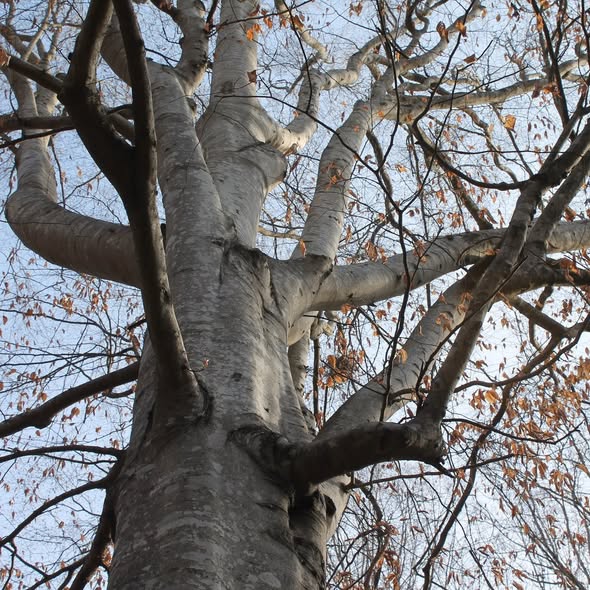
River birch is best known for its peeling, salmon-colored bark, which adds visual interest even in the dead of winter. It’s a fast-growing, medium-sized tree frequently used as a landscape choice in eastern Nebraska.
Unlike many birches, river birch tolerates heat and humidity reasonably well, which explains its popularity as far south and west as it reaches in Nebraska.
It naturally favors moist soils near streams and floodplains, true to its name. Multi-trunk specimens are especially common in cultivated settings.
Paper birch, a close boreal relative, also survives in isolated pockets of Nebraska, a holdover from the last ice age roughly 10,000 years ago.
15. Boxelder (Acer negundo)
Boxelder is a native maple, though it doesn’t look much like the classic sugar or red maple most people picture. Its compound leaves and rapid growth make it easy to mistake for an entirely different genus.
It grows aggressively in disturbed soils, floodplains, and riparian corridors throughout Nebraska, often as one of the first trees to colonize open ground.
While not particularly long-lived or structurally strong, boxelder provides quick shade and erosion control in places where slower-growing hardwoods struggle to establish.
The tree is also the primary host of the boxelder bug, a familiar, if mildly annoying, presence on Nebraska porches every fall.
16. Eastern Redcedar (Juniperus virginiana)
Eastern redcedar is Nebraska’s most abundant native conifer, and honestly, it’s a tree with a split reputation. It’s the predominant species in some forested areas and a common understory tree in mixed hardwood stands.
Without regular prairie fires to keep it in check, redcedar has aggressively expanded across grasslands in recent decades. Regeneration rates can reach roughly 60 saplings per acre, compared to about one cottonwood sapling per acre in the same forest land.
That expansion troubles ranchers and conservationists, since redcedar crowds out native grasses and increases wildfire fuel loads. Yet it also provides valuable winter cover and food for wildlife.
Some of Nebraska’s oldest known trees are Rocky Mountain junipers in the Wildcat Hills near Scottsbluff, estimated at over 800 years old.
17. Ponderosa Pine (Pinus ponderosa)
Ponderosa pine dominates the Pine Ridge region of northwestern Nebraska, marking the eastern edge of the Rocky Mountain pine forests. Its long needles and thick, puzzle-piece bark make it instantly recognizable.
This is one of the few true evergreen forests native to the state, giving the Panhandle a landscape that looks more like Wyoming or South Dakota than the eastern prairie.
Mature ponderosa pines tolerate drought and poor, rocky soil far better than most conifers, which explains their dominance in this drier western region.
Along with cottonwood and eastern redcedar, ponderosa pine ranks among the most frequently harvested trees in Nebraska’s working forests.
18. Quaking Aspen (Populus tremuloides)
Quaking aspen reaches Nebraska as a relic of the last ice age, surviving in cool, sheltered pockets alongside birch in the Panhandle and Niobrara Valley. Its leaves famously flutter in the slightest breeze, thanks to flattened leaf stalks.
This species also sits at the natural limit of its range within Nebraska, making local stands genetically distinct and worth protecting.
Aspens typically spread through root suckering rather than seed, forming dense clonal colonies. The most famous example anywhere is Utah’s “Pando” colony, estimated at roughly 80,000 years old.
Nebraska’s aspen groves aren’t nearly that ancient, but they represent a rare northern ecosystem holding on far south of its usual range.
19. Pawpaw (Asimina triloba)
Pawpaw might be the most surprising tree on this list. It produces North America’s largest native edible fruit, often compared in taste to a cross between banana and mango.
Found in scattered woodland pockets of southeastern Nebraska, pawpaw is also the sole host plant for the zebra swallowtail butterfly, making it ecologically irreplaceable for that species.
The fruit’s short shelf life keeps it out of most grocery stores, but farmers market prices can reach $15 to $20 per pound or higher when available.
I’ll admit this is the tree I’d most want to stumble across on a fall hike, purely for the novelty of tasting something so few Americans ever get to try.
20. Black Cherry (Prunus serotina)
Black cherry grows across much of eastern Nebraska in woodland edges and fencerows, recognizable by its dark, scaly bark that’s often compared to burnt potato chips. It’s a genuinely valuable timber species prized for furniture making.
Ecologically, it punches well above its weight. Black cherry serves as a host plant for more than 450 species of native butterflies and moths, including the eastern tiger swallowtail and viceroy.
Small white flower clusters appear in spring, followed by dark cherries that ripen in late summer. Birds strip them quickly, which helps spread the species naturally.
Its close relative, chokecherry, grows even more widely across the state and shares many of the same wildlife benefits on a smaller scale.
Choosing Native Trees for Your Own Nebraska Landscape
If you’re planting a tree in Nebraska, native species almost always make more sense than imported alternatives. They’re already adapted to the state’s droughts, winds, and temperature extremes.
Match the tree to your soil and moisture conditions first. Cottonwood and river birch want moisture near a stream or low spot, while bur oak and Kentucky coffeetree tolerate drier, tougher ground.
Avoid planting green ash entirely for now, given the ongoing emerald ash borer crisis. Kentucky coffeetree, bur oak, and hackberry all make solid substitutes with similar toughness.
Local resources make this easier than guessing on your own. The Nebraska Statewide Arboretum and Nebraska Forest Service both publish region-specific planting guides and even host native plant sales throughout the growing season.
Final Thoughts
Twenty trees barely scratch the surface of what grows across Nebraska, but they tell a fairly complete story. This is a state where eastern hardwoods, Rocky Mountain conifers, and a few ice-age holdouts somehow share the same borders.
That diversity exists on a surprisingly small footprint, just 3.2% forest cover, which makes every grove, windbreak, and river bottom forest genuinely worth protecting.
Whether you’re identifying trees on a hike or picking one for your backyard, I hope this list gives you a real starting point rooted in the actual native flora of the state, not just the trees that happen to be easy to find at a nursery.
References
- Nebraska Forest Service, University of Nebraska–Lincoln. “Deciduous Trees.” https://nfs.unl.edu/type-tree/deciduous
- Nebraska Game and Parks Commission. “Nebraska Plants.” https://outdoornebraska.gov/learn/nebraska-wildlife/nebraska-plants/
- Nebraska Game and Parks Commission. “Woodlands.” https://outdoornebraska.gov/learn/nebraska-habitat/woodlands/
- Nebraska Forest Service, University of Nebraska–Lincoln (DigitalCommons). “Nebraska’s Landscape Tree Information.” https://digitalcommons.unl.edu/neblandscapetree/21
- USDA Forest Service, Northern Research Station. “Nebraska’s Forests 2005,” Resource Bulletin NRS-27. https://www.nrs.fs.usda.gov/pubs/rb/rb_nrs27.pdf
- USDA Forest Service, Research and Development. “Nebraska’s Forests 2010.” https://research.fs.usda.gov/treesearch/42177
- Nebraska Statewide Arboretum, University of Nebraska–Lincoln. “Plants for Nebraska: Pollinator Strong Species Guide.” https://arboretum.unl.edu/file_download/inline/a774a697-9122-4d7c-aefa-807eaebacff7

Tim M Dave is a gardening expert with a passion for houseplants, particularly cacti and succulents. With a degree in plant biology from the University of California, Berkeley, he has vast experience in gardening. Over the years, he has cultivated a vast collection of desert plants and learned a great deal about how to grow and care for these unique companions.