30 Notable Tomato Plant Diseases (And How To Treat Them)
I have lost tomato plants to diseases I never even knew existed until I went looking for answers. It is a frustrating experience, watching a plant you nursed from a seedling turn yellow, wilt, or drop its fruit for no obvious reason.
Tomatoes are one of the most disease-prone vegetables you can grow, mainly because so many different fungi, bacteria, viruses, and nematodes have adapted specifically to attack them.
This guide walks through 30 tomato plant diseases, what causes each one, how to recognize it, and the treatment approach recommended by university extension services.
1. Early Blight
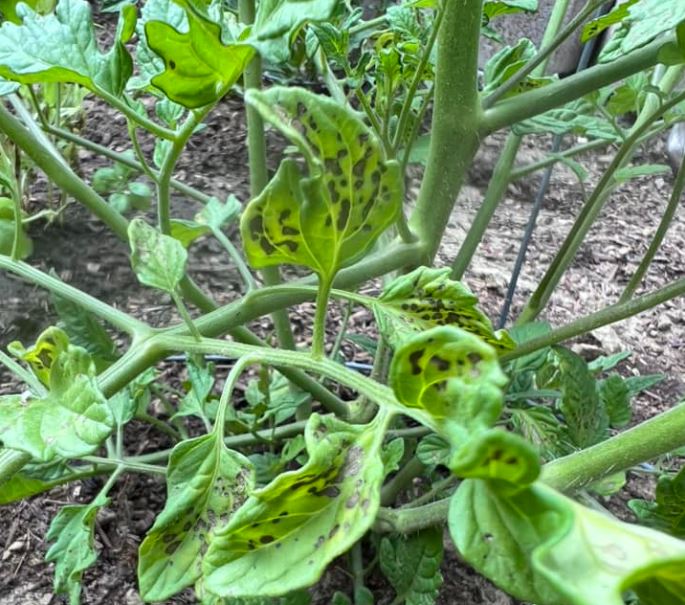
Early blight is probably the most common tomato disease home gardeners run into, and it shows up almost every single growing season in humid regions. The fungus survives comfortably in old plant debris and splashes up onto lower leaves the moment conditions turn warm and wet.
What makes it so persistent is that it does not need a fresh source of infection each year, since it can overwinter quietly in the soil and reappear right on schedule the following spring. Left unchecked, it works its way up the plant leaf by leaf, robbing the plant of the foliage it needs to ripen fruit properly.
Plants affected: Tomatoes of all ages, though older, stressed plants are hit hardest.
Causes: The fungus Alternaria solani thrives in warm, humid weather and spreads through splashing water and wind.
Symptoms: Dark, concentric target-like rings on older leaves, starting near the base of the plant, followed by yellowing and leaf drop.
Treatment: Remove infected lower leaves promptly, apply mulch to prevent soil splash onto foliage, and stake plants to improve airflow. Chlorothalonil or copper-based fungicides help protect healthy tissue once symptoms appear.
2. Late Blight
Late blight carries more historical weight than almost any other plant disease on earth, since this exact pathogen caused the Irish Potato Famine of the 1840s, a disaster that killed more than a million people and displaced nearly two million more in just five years.
On tomatoes today, it remains one of the fastest-moving and most destructive diseases a grower can face. Cool, wet weather lets the pathogen explode across a planting in a matter of days, and once it takes hold, entire fields have been known to suffer complete crop loss.
Because of how quickly it spreads, prevention and early fungicide application matter far more here than with almost any other disease on this list.
Plants affected: Tomatoes and potatoes, especially in cool, wet growing seasons.
Causes: The water mold Phytophthora infestans spreads rapidly during cool, damp weather, often carried by wind-blown spores.
Symptoms: Large, greasy-looking gray-green lesions on leaves and stems, followed by white fungal growth on the undersides of leaves in humid conditions, and firm brown blotches on fruit.
Treatment: Remove and destroy infected plants immediately, since there is no cure once established. Preventative fungicide programs using chlorothalonil or copper products, combined with resistant varieties, offer the best protection.
READ MORE ON: Understanding Tomato Blight: Types + Identification
3. Septoria Leaf Spot
Septoria leaf spot has a habit of sneaking up on gardeners late in the season, right around the time plants begin setting fruit. It typically starts low on the plant, near the soil line, where humidity sits the longest and splashing water carries spores up from the ground.
The spots themselves are small and numerous rather than large and dramatic, which is why many people mistake early infections for ordinary aging leaves. Left untreated, though, the disease steadily works its way up the plant, and heavily infected plants can lose most of their lower and middle foliage before harvest.
Plants affected: Tomato foliage, stems, and petioles; the fruit itself is not affected.
Causes: The fungus Septoria lycopersici infects lower leaves first, usually after fruit set, spreading through rain splash and overhead watering.
Symptoms: Numerous small, circular spots with dark borders and beige centers, often containing tiny black specks that are the fungus’s spore-producing bodies.
Treatment: Remove infected lower leaves and destroy fallen debris. Water at the soil line rather than overhead. Chlorothalonil, copper fungicide, or mancozeb applied at the first sign of infection help slow the spread.
4. Fusarium Wilt
Fusarium wilt is one of the more heartbreaking diseases to watch unfold, because by the time visible symptoms appear above ground, the fungus has usually already colonized a large portion of the plant’s internal water-conducting tissue.
It enters through the roots and then travels upward through the vascular system, clogging the very channels the plant relies on to move water to its leaves. Warm soil temperatures accelerate the disease considerably, which is why outbreaks tend to intensify during the hottest stretches of summer.
Because the fungus can persist in soil for years without a host plant, fields with a history of fusarium wilt often remain risky for tomatoes indefinitely.
Plants affected: Tomatoes grown in warm soil, especially in fields with a history of the disease.
Causes: Fusarium oxysporum f. sp. lycopersici infects roots and colonizes the plant’s vascular system, blocking water movement.
Symptoms: Yellowing that often starts on one side of the plant or one branch, wilting during the heat of the day, and brown discoloration inside the stem when cut open.
Treatment: There is no chemical cure once infection sets in. Plant resistant varieties (look for an “F” on seed labels), rotate crops away from tomato-family plants, and solarize soil in heavily infected beds.
ALSO READ: 7 Reasons Tomatoes are Dropping Off the Vine Prematurely (And How to Fix)
5. Verticillium Wilt
Verticillium wilt behaves a lot like its cousin fusarium wilt, since both fungi block the plant’s internal plumbing system, but this one tends to favor cooler soil temperatures rather than hot ones.
The fungus can survive in soil for many years without a host, patiently waiting for a susceptible tomato plant to come along. Because the two wilts look so similar from the outside, a lab diagnosis is often the only reliable way to tell them apart.
Once a garden bed becomes contaminated, growing tomatoes there again without resistant varieties usually leads to the same problem returning season after season.
Plants affected: Tomatoes grown in cooler soil conditions than those favoring fusarium wilt.
Causes: Verticillium dahliae and related species live in the soil and invade the roots, spreading through the plant’s vascular tissue.
Symptoms: V-shaped yellow lesions on lower leaves, wilting during the day with some recovery at night, and stunted overall growth.
Treatment: No cure exists once a plant is infected. Choose resistant varieties (look for a “V” on seed labels), rotate crops on a multi-year cycle, and remove infected plant debris at season’s end.
6. Gray Mold (Botrytis Blight)
Gray mold is the disease most likely to show up during a stretch of cool, cloudy, damp weather, especially in a greenhouse where air movement is naturally limited. The fungus is remarkably opportunistic, entering through the smallest wounds, dying flower parts, or pruning cuts.
What makes it particularly frustrating is how fast it spreads once conditions are right. A single infected flower can seed the entire surrounding canopy with spores within days. It can quickly turn a small infection into a fuzzy gray blanket across stems and fruit.
Plants affected: Tomatoes grown in greenhouses or humid, poorly ventilated conditions.
Causes: Botrytis cinerea thrives in cool, humid, poorly ventilated conditions and enters through wounds or dying tissue.
Symptoms: Fuzzy gray fungal growth on stems, leaves, and fruit, along with water-soaked lesions that expand quickly in humid weather.
Treatment: Improve air circulation and reduce humidity through proper spacing and ventilation. Remove infected plant parts promptly. Fungicides containing fenhexamid or iprodione can help in greenhouse settings.
7. Powdery Mildew
Powdery mildew on tomatoes behaves a little differently than the version many gardeners know from squash or cucumbers, since it does not necessarily need free water on the leaf surface to spread. Warm days followed by humid nights are enough to trigger an outbreak, which is why it often appears during the transitional weeks of late summer.
The dusty white coating is unmistakable once you know what to look for, and while it rarely kills a tomato plant outright, a heavy infection can noticeably reduce photosynthesis and slow fruit development.
Plants affected: Tomato foliage, particularly under warm, dry daytime conditions with humid nights.
Causes: Leveillula taurica and related fungi produce airborne spores that germinate on leaf surfaces in warm, dry weather.
Symptoms: White, powdery patches on the upper and lower leaf surfaces, sometimes accompanied by yellowing directly beneath the affected areas.
Treatment: Apply sulfur-based or potassium bicarbonate fungicides at the first sign of infection. Improve airflow through proper spacing and pruning. Avoid excess nitrogen fertilizer, which encourages dense, susceptible foliage.
ALSO READ: Understand Why Tomatoes Split on The Vine (And What to Do)
8. Southern Blight
Southern blight is a disease that reveals itself in an almost eerie way, with a distinctive white, thread-like fungal growth spreading across the stem right at the soil line. The fungus survives between seasons as small, seed-like structures called sclerotia, which can persist in soil for years and germinate whenever conditions turn warm and humid enough.
Because the infection girdles the stem so close to the ground, an affected plant can go from looking perfectly healthy to completely collapsed within just a few days once the disease takes hold.
Plants affected: Tomatoes grown in warm, humid climates with a history of the disease in the soil.
Causes: The fungus Sclerotium rolfsii survives in soil as sclerotia and thrives in high humidity and warm temperatures between 85 and 95 degrees Fahrenheit.
Symptoms: White, cottony fungal growth at the base of the stem, small round tan sclerotia resembling mustard seeds, and sudden wilting as the stem is girdled.
Treatment: Control is difficult once sclerotia numbers build up in soil. Deep plowing to bury sclerotia, crop rotation away from susceptible plants, and removing infected debris all help reduce future outbreaks.
9. Fusarium Crown and Root Rot
Fusarium crown and root rot is a close relative of fusarium wilt, but it behaves differently enough to deserve its own place on this list. Rather than spreading gradually through one side of the plant, this disease attacks the base of the stem and root system directly, often causing a much faster collapse.
It tends to favor cooler soil temperatures than the classic wilt disease, which means it can show up early in the season before the weather has fully warmed. Seedlings and young transplants are especially vulnerable, since their root systems have not yet developed enough mass to withstand a significant infection.
Plants affected: Tomatoes in cooler soil, often in greenhouse or early-season plantings.
Causes: Fusarium oxysporum f. sp. radicis-lycopersici infects the crown and root system, particularly in cooler soil than classic fusarium wilt prefers.
Symptoms: Brown, sunken lesions at the stem base near the soil line, wilting, and a general decline that can progress to plant death.
Treatment: Use resistant varieties where available, avoid overwatering, disinfect tools and containers between uses, and rotate soil or growing media in greenhouse settings.
10. Anthracnose
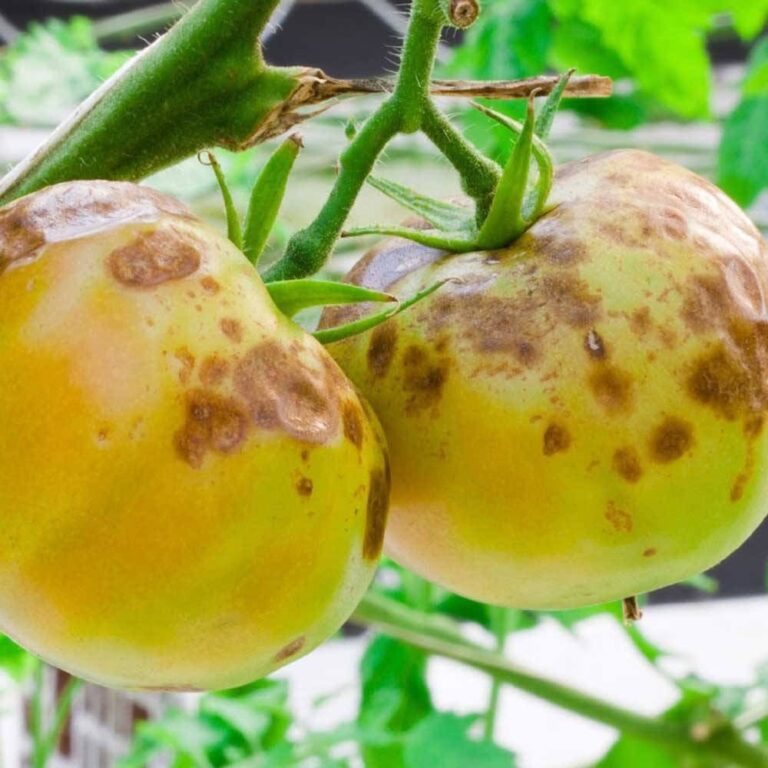
Anthracnose has a frustrating habit of staying completely invisible until the fruit is nearly ready to pick, which is exactly when a grower least wants to discover a problem. The fungus can infect green fruit without showing any symptoms at all, then wait quietly until the tomato ripens before the telltale sunken spots finally appear.
Wet weather close to harvest dramatically increases infection rates, since the spores need moisture on the fruit surface to germinate and spread from one tomato to the next.
Plants affected: Ripe and overripe tomato fruit, particularly in wet, humid conditions near harvest.
Causes: Colletotrichum species infect ripening fruit, especially during wet weather near harvest time.
Symptoms: Small, sunken, water-soaked circular spots on ripe fruit that enlarge and develop dark centers with concentric rings.
Treatment: Harvest fruit promptly as it ripens, avoid overhead irrigation, and rotate crops. Fungicide applications timed just before fruit ripening can reduce infection in high-risk, humid seasons.
11. Leaf Mold
Leaf mold is largely a greenhouse problem, since the enclosed, humid environment those structures create is exactly what this fungus needs to thrive. Outdoors, where air circulates more freely and humidity drops overnight, the disease rarely gets a strong enough foothold to cause serious damage.
Inside a greenhouse, though, it can spread rapidly across the lower and middle canopy, and growers who rely on overhead watering tend to see the worst outbreaks, since standing moisture on the leaf surface is what allows the spores to germinate.
Plants affected: Tomatoes grown in greenhouses or high tunnels with high humidity.
Causes: Cladosporium fulvum (also known as Passalora fulva) thrives in high humidity, particularly in enclosed growing structures.
Symptoms: Pale yellow spots on the upper leaf surface with an olive-green to grayish-purple velvety fungal growth on the underside.
Treatment: Increase ventilation and reduce humidity below 85 percent where possible. Space plants properly and avoid overhead watering. Resistant varieties and chlorothalonil-based fungicides both help manage outbreaks.
ALSO READ: 10 Reasons Tomato Flowers Are Not Setting Fruit (And What to Do)
12. Damping-Off
Damping-off is a disease that almost exclusively targets the most vulnerable stage of a tomato’s life, the first few weeks after germination. Several different soil-dwelling fungi can cause it, and they all take advantage of cool, overly wet growing media where young roots and stems have not yet developed the strength to resist infection.
A seedling tray that looks perfectly fine one day can show entire rows of collapsed stems the next morning, which is part of why this disease feels so sudden and discouraging to new gardeners starting plants from seed.
Plants affected: Tomato seedlings, both in trays and direct-seeded beds.
Causes: Soil-borne fungi including Pythium, Rhizoctonia, and Fusarium species attack seeds and young seedlings in cool, overly wet conditions.
Symptoms: Seeds that fail to emerge, or seedlings that collapse at the soil line shortly after sprouting, with a thin, water-soaked stem.
Treatment: Use sterile seed-starting mix, avoid overwatering, ensure good drainage and airflow, and consider a light fungicide seed treatment for high-value plantings.
13. Sclerotinia White Mold
Sclerotinia white mold is closely related to southern blight in how it survives between seasons, relying on hardy resting structures buried in the soil, though this fungus generally prefers cooler, wetter conditions rather than the heat southern blight favors.
It often gets its start on dying flower petals that fall and lodge in the crook of a stem, giving the fungus an easy entry point into otherwise healthy tissue. From there, it spreads through the stem tissue itself, and an infected branch or main stem can wilt and collapse well before the rest of the plant shows any sign of trouble.
Plants affected: Tomato stems and fruit in cool, moist growing conditions.
Causes: Sclerotinia sclerotiorum infects through dying flower tissue and spreads into stems during cool, wet weather.
Symptoms: Water-soaked lesions on stems that develop white, cottony fungal growth, followed by wilting of everything above the infection point.
Treatment: Remove and destroy infected plant material immediately. Improve air circulation, avoid excess nitrogen, and rotate away from susceptible crops like beans and lettuce for at least two years.
14. Buckeye Rot
Buckeye rot is essentially a soil-contact disease, and it almost never shows up on fruit that stays elevated off the ground on a well-staked or caged plant. The pathogen lives in the soil and needs direct or near-direct contact with the fruit surface to establish an infection.
This is why sprawling, unstaked tomato plants see this problem far more often than trellised ones. Once it takes hold, the distinctive concentric ring pattern on the fruit gives the disease its name, since the pattern resembles the marking on a buckeye seed.
Plants affected: Tomato fruit that touches or sits close to wet soil.
Causes: Phytophthora nicotianae and related water molds infect fruit that contacts wet soil.
Symptoms: Brown, concentric-ringed lesions on fruit, typically on the side touching or nearest the ground.
Treatment: Stake or cage plants to keep fruit off the soil, apply mulch as a physical barrier, and improve drainage in low-lying garden beds.
ALSO READ: 8 Reasons Your Tomatoes Are Too Small (And How to Make the Fruit Bigger)
15. Gray Leaf Spot
Gray leaf spot tends to fly under the radar compared to early blight and septoria leaf spot, but in warm, humid regions it can be just as damaging over the course of a season. The fungus favors extended periods of leaf wetness, so gardens with poor airflow or frequent overhead watering see the heaviest pressure.
Symptoms often start subtly, with small spots that are easy to dismiss, but the disease can defoliate a plant from the bottom up if it goes unmanaged through a wet summer.
Plants affected: Tomato foliage in warm, humid climates, particularly in the southeastern United States.
Causes: Stemphylium species thrive in warm, humid conditions with extended periods of leaf wetness.
Symptoms: Small, angular, grayish-brown spots on leaves that may crack and fall out, leaving a shot-hole appearance.
Treatment: Remove infected foliage, avoid overhead watering, and apply chlorothalonil or copper-based fungicides during extended wet periods.
16. Corky Root Rot
Corky root rot develops slowly and quietly, which makes it one of the harder diseases on this list to catch early. Rather than causing dramatic wilting or obvious leaf spots, it gradually reduces the root system’s ability to absorb water and nutrients.
The first sign many growers notice is simply a plant that never quite reaches its expected size. Because the fungus builds up in soil that has grown tomatoes repeatedly without rotation, long-term garden beds and high tunnels are the most common places to encounter it.
Plants affected: Tomatoes grown in the same soil for multiple consecutive seasons.
Causes: The fungus Pyrenochaeta lycopersici builds up in soil planted with tomatoes repeatedly without rotation.
Symptoms: Roots develop dark, corky, cracked lesions, and the overall root system becomes stunted, leading to reduced plant vigor and smaller fruit.
Treatment: Rotate tomatoes with unrelated crops for at least three years, use resistant rootstocks for grafted plants, and improve soil organic matter to support healthy root growth.
17. Alternaria (Black Mold) Fruit Rot
Black mold fruit rot is largely an opportunist, taking advantage of damage that has already happened to the fruit rather than attacking perfectly healthy tissue outright. Cracks from irregular watering, insect feeding wounds, and sunscald patches all give the fungus an easy entry point.
Once established, the rot spreads quickly through the flesh, and a fruit that looked fine the day before can be a sunken, blackened mess by the time it is picked.
Plants affected: Ripe tomato fruit, especially those with existing wounds or sunscald damage.
Causes: Alternaria alternata infects through existing wounds, cracks, or sunscald damage on ripening fruit.
Symptoms: Sunken, black, leathery lesions on fruit, often centered around a crack or wound, with visible dark fungal growth.
Treatment: Prevent fruit cracking through consistent watering, protect fruit from sunscald with adequate foliage cover, and harvest promptly once ripe.
ALSO READ: Understanding Tomato Catfacing: Causes + Prevention Measures
18. Bacterial Wilt
Bacterial wilt is one of the most feared diseases among tomato growers in warm climates, and for good reason. The bacterium behind it can infect more than 400 different plant species and survives in soil for years even without a host present.
It enters through root wounds, sometimes created by cultivation or even by root-knot nematodes feeding nearby. Once inside, it multiplies rapidly within the plant’s water-conducting tissue until the vessels are completely blocked.
The speed of collapse is what makes this disease so alarming, since a plant can look completely healthy in the morning and be wilted beyond recovery by evening.
Plants affected: Tomatoes in warm, humid regions with a history of the disease.
Causes: Ralstonia solanacearum survives in soil for years and enters through root wounds from transplanting, cultivation, or nematode damage.
Symptoms: Sudden wilting of the entire plant despite adequate soil moisture, with no yellowing beforehand; cut stems show a milky bacterial ooze when placed in water.
Treatment: There is no cure once infected. Remove and destroy infected plants immediately, avoid planting tomatoes in contaminated soil for several years, and use resistant rootstocks for grafted transplants where the disease is a known problem.
19. Bacterial Spot
Bacterial spot spreads with remarkable efficiency whenever wind and rain combine, since both the wind and the water droplets themselves carry the bacteria from plant to plant across a garden or field in a short period of time.
It tends to arrive on contaminated seed or infected transplants, then explodes into a full outbreak the moment a storm rolls through during the growing season.
Unlike many fungal diseases, bacterial spot has no fungicide that reliably controls it, which makes prevention through clean seed and careful watering practices especially important.
Plants affected: Tomato leaves, stems, and fruit, especially following wind-driven rain.
Causes: Xanthomonas species spread through wind-driven rain, splashing water, and contaminated seed or transplants.
Symptoms: Small, dark, water-soaked spots on leaves and stems that may have a yellow halo, along with raised, scabby spots on fruit.
Treatment: Use certified disease-free seed and transplants, avoid overhead watering, and apply copper-based bactericides preventatively during wet weather, though effectiveness is limited once infection is established.
ALSO READ: Why Are My Tomatoes Not Turning Red? What to Do
20. Bacterial Speck
Bacterial speck shows a strong preference for cool, damp conditions, which means it tends to cause the most trouble early in the growing season before summer heat sets in. It looks similar enough to bacterial spot that many gardeners confuse the two.
However, speck lesions are generally smaller and more numerous. The bacteria overwinter easily on infected seed and crop debris, giving them a reliable way to reappear year after year in gardens that do not rotate their tomato beds.
Plants affected: Tomato foliage and fruit, particularly during cool, wet spring weather.
Causes: Pseudomonas syringae pv. tomato thrives in cool, wet spring weather and spreads through contaminated seed and splashing water.
Symptoms: Tiny, dark brown to black specks on leaves, stems, and fruit, often surrounded by a narrow yellow halo.
Treatment: Use disease-free seed, rotate crops, avoid working around wet plants, and apply copper-based sprays as a preventative measure during cool, damp weather.
21. Bacterial Canker
Bacterial canker has a distinctive way of announcing itself, since it frequently affects only one side of a leaf or one section of the plant while the rest looks perfectly normal. The bacteria can travel systemically through the plant’s vascular tissue once established.
This disease is particularly concerning for anyone saving their own tomato seed, since the bacteria are seed-borne and can silently carry the infection into next year’s crop.
Plants affected: Tomatoes at any growth stage, with symptoms often appearing unevenly across the plant.
Causes: Clavibacter michiganensis spreads through contaminated seed, tools, and plant-to-plant contact, entering through wounds.
Symptoms: Wilting and browning on one side of leaves or stems, dark streaks (cankers) on stems, and small fruit lesions with a distinctive white halo known as “bird’s-eye spot.”
Treatment: There is no cure. Remove and destroy infected plants, disinfect tools and stakes between uses, and use certified disease-free seed to prevent introduction.
22. Pith Necrosis
Pith necrosis has an ironic twist to it, since it often shows up hardest on the healthiest, most vigorously growing plants rather than weak or stressed ones. Cool, wet spring conditions combined with heavy nitrogen fertilization create exactly the lush, tender growth this bacterial disease favors.
Adventitious roots sometimes erupt along the main stem as the plant tries to compensate for the damage happening inside. The encouraging part is that many plants actually outgrow the problem once summer heat arrives and growth naturally slows down.
Plants affected: Vigorously growing tomato plants, particularly early in cool spring weather.
Causes: Various bacteria, often associated with excess nitrogen and cool, wet spring conditions, infect the pith tissue inside the main stem.
Symptoms: Browning and collapse progressing up the main stem, wilting of upper foliage, and sometimes adventitious roots erupting from the stem.
Treatment: Avoid excess nitrogen fertilization, improve drainage, and be patient. Many plants recover on their own as warmer weather slows rapid, tender growth.
ALSO READ: Tomato Companion: Can you Plant Tomatoes and Peppers Together?
23. Tomato Spotted Wilt Virus (TSWV)
Tomato spotted wilt virus is one of the most economically damaging viral diseases tomato growers face anywhere in the world, and it has been expanding into cooler regions where it was once rarely seen.
The virus itself cannot travel from plant to plant on its own; it needs thrips, tiny insects that feed on plant tissue, to carry it from an infected source to a healthy plant.
Making matters more difficult, resistance-breaking strains of the virus have recently been found on tomato varieties that were bred specifically to resist it, which means even resistant cultivars are no longer a guaranteed solution in every region.
Plants affected: Tomatoes and more than 1,000 other plant species, spread primarily by thrips.
Causes: A virus vectored by thrips, which pick up the pathogen from infected plants and transmit it while feeding on healthy ones.
Symptoms: Bronzing of young leaves, dark ringspots on foliage and fruit, stunted growth, and tip dieback in severely affected plants.
Treatment: There is no cure once infected; remove and destroy symptomatic plants immediately. Use resistant varieties, reflective mulch to deter thrips, and manage weeds that can harbor both the virus and its insect vector.
24. Tomato Yellow Leaf Curl Virus (TYLCV)
Tomato yellow leaf curl virus is considered one of the most damaging tomato pathogens on the planet, particularly across tropical, subtropical, and Mediterranean growing regions. It relies entirely on a single insect vector, the silverleaf whitefly, to move from plant to plant, which means controlling the insect is really the only practical way to control the disease itself.
Young plants infected early in their development often become so stunted and bushy that growers describe the resulting growth pattern as “bonsai-like.” Once established in a region, the virus becomes a serious ongoing threat to local tomato production for years to come.
Plants affected: Tomatoes in warm climates, spread exclusively by the silverleaf whitefly.
Causes: Transmitted exclusively by the silverleaf whitefly (Bemisia tabaci), which acquires the virus from infected plants.
Symptoms: Severe stunting, upward-curling and crumpled leaves, yellowing along leaf margins, and flowers that wither and drop before setting fruit.
Treatment: No cure exists. Use resistant varieties where available, control whitefly populations with insecticidal soap or systemic insecticides, and use floating row covers or reflective mulch to reduce whitefly landings.
ALSO READ: Tomato Wilting: How Do You Save Dying Tomato Plant
25. Tobacco Mosaic Virus / Tomato Mosaic Virus (TMV/ToMV)
These two closely related viruses are unusual among tomato pathogens because they do not need an insect to spread at all. Simply brushing against an infected plant while pruning, or handling healthy plants after touching tobacco products, can transfer the virus from one plant to the next.
The viruses are also remarkably stable, able to survive on tools, stakes, and even clothing for extended periods, which makes strict sanitation one of the few genuinely effective defenses available.
Plants affected: Tomato foliage and fruit, spread mechanically through contact and tools.
Causes: Spread through mechanical contact, contaminated tools, hands, and infected seed; tobacco products can also carry the virus.
Symptoms: Mottled light and dark green patterns on leaves, leaf curling and distortion, and uneven fruit ripening.
Treatment: No cure exists. Wash hands and disinfect tools between handling plants, avoid smoking or handling tobacco near plants, and choose resistant varieties where available.
26. Cucumber Mosaic Virus (CMV)
Cucumber mosaic virus has one of the broadest host ranges of any plant virus, which means it can jump into a tomato planting from dozens of other nearby crops or even common weeds.
Aphids pick up the virus after feeding for just a few seconds on an infected plant, then carry it directly into a healthy tomato with their very next bite. Because aphids move so quickly through a garden, an outbreak can appear scattered and random rather than spreading in a predictable pattern from one obvious source.
Plants affected: Tomatoes and a wide range of other garden vegetables, spread by aphids.
Causes: Spread by aphids, which acquire the virus quickly from infected plants and transmit it to healthy ones within seconds of feeding.
Symptoms: Fern-like leaf distortion, mottled yellow and green foliage, stunted growth, and small, misshapen fruit.
Treatment: No cure exists. Control aphid populations with insecticidal soap or reflective mulch, remove nearby weeds that can host the virus, and remove infected plants promptly to reduce spread.
ALSO READ: 10+ Reasons Tomato Plant Leaves are Turning Brown (And Curling)
27. Curly Top Virus
Curly top virus has a strong regional signature, since it depends entirely on the beet leafhopper, an insect that thrives in dry, arid landscapes rather than humid ones.
Gardens in the western United States, particularly those near rangeland or dry weedy areas where the leafhopper breeds, see this disease far more often than gardens in wetter climates.
Infected plants decline with striking speed, often within a week or two of symptoms first appearing, which leaves very little time to intervene once an infection is confirmed.
Plants affected: Tomatoes in dry, western growing regions, spread by the beet leafhopper.
Causes: Transmitted by the beet leafhopper, an insect common in dry, arid regions of the western United States.
Symptoms: Upward leaf curling, thickened and brittle foliage, purple leaf veins, and rapid overall plant stunting and decline.
Treatment: No cure exists. Remove infected plants promptly, use fine mesh row covers to exclude leafhoppers, and avoid planting near weedy, dry areas where the insect vector breeds.
28. Tomato Brown Rugose Fruit Virus (ToBRFV)
Tomato brown rugose fruit virus is one of the newer diseases on this list. It has quickly become one of the most concerning for commercial growers because it can overcome resistance genes that once reliably protected tomatoes against related mosaic viruses.
The virus spreads with alarming ease, surviving on seed, tools, hands, and even clothing, and it can persist in greenhouse structures between crops if sanitation is not strict. Regulatory agencies now treat it as a serious quarantine-level concern given how quickly it has moved through greenhouse and field operations once introduced.
Plants affected: Tomatoes and peppers, an emerging threat first detected in the United States in recent years.
Causes: A highly stable, mechanically transmitted virus spread through contaminated seed, tools, hands, and plant-to-plant contact.
Symptoms: Mottled and blistered leaves, brown rugose (wrinkled) patches on ripening fruit, and irregular fruit ripening and discoloration.
Treatment: No cure exists. Use certified virus-free seed, disinfect tools and greenhouse surfaces thoroughly between crops, and remove and destroy infected plants immediately to prevent further spread.
29. Root-Knot Nematode
Root-knot nematodes are microscopic worms rather than fungi, bacteria, or viruses, but the damage they cause is every bit as serious as any pathogen on this list. They burrow directly into root tissue and trigger the plant to form swollen galls around them, which permanently disrupt the root’s ability to take up water and nutrients efficiently.
What makes them especially troublesome is their relationship with other diseases, since the wounds they create in root tissue often give bacterial pathogens like bacterial wilt an easier path into the plant. Sandy soils in warm climates tend to see the heaviest nematode pressure of any growing conditions.
Plants affected: Tomato roots in warm, sandy soils, particularly in repeated plantings.
Causes: Microscopic worms in the genus Meloidogyne live in soil and infect roots directly, particularly in warm, sandy conditions.
Symptoms: Stunted, discolored plants with visible knots or galls on the roots when dug up; affected plants may wilt during hot afternoons.
Treatment: Plant resistant varieties carrying the Mi resistance gene, rotate with non-host crops like corn or grains, use marigold trap crops, and solarize soil in heavily infested beds.
30. Blossom End Rot
Blossom end rot is a little different from everything else on this list, since it is not caused by a living pathogen at all but by a physiological imbalance inside the plant itself. It develops when a fruit cannot draw in enough calcium during its rapid growth phase, usually because watering has been inconsistent or because the plant’s roots were disturbed at a critical moment.
Because it is so often mistaken for a disease, it earns a spot on nearly every tomato problem list, and understanding the real cause is what prevents gardeners from wasting money on fungicides that will never fix it.
Plants affected: Developing fruit, particularly during periods of inconsistent watering.
Causes: A physiological disorder caused by calcium deficiency in developing fruit, usually triggered by inconsistent watering rather than a true lack of calcium in the soil.
Symptoms: A flat, dark, leathery, sunken patch at the blossom end (bottom) of the fruit, often starting small and expanding as the fruit ripens.
Treatment: Maintain consistent, even soil moisture through mulching and regular watering. Avoid excess nitrogen fertilizer, and test soil pH, since calcium uptake is impaired in overly acidic soil.
READ MORE ON: Blossom End Rot: Why are My Tomatoes Rotting on the Vine?
Why Tomatoes Get Sick So Easily
Tomatoes belong to the nightshade family, a group of plants that happens to be a magnet for soil-borne fungi, bacteria, and viruses. Their soft stems, dense foliage, and heavy fruit load all create the kind of humid, crowded conditions that pathogens love.
The scale of the problem is genuinely global. Late blight alone is estimated to cause worldwide losses exceeding $5 billion annually across potato and tomato crops combined, and in especially bad outbreaks it can wipe out an entire tomato planting in a matter of days.
Bacterial wilt, a separate disease, is capable of infecting more than 400 different plant species. That is exactly why prevention and early identification matter so much. Once several of these diseases take hold, there is no cure, only damage control.
How To Keep Your Tomato Plants Healthy
- Rotate your beds every year. Many of the fungi and bacteria on this list survive in soil for years. Moving tomatoes to a new spot, or a different container mix, breaks that cycle.
- Water at the base, not overhead. Wet foliage is exactly what most fungal and bacterial diseases need to spread. Drip irrigation or a soaker hose keeps leaves dry and cuts infection risk significantly.
- Stake or cage every plant. Keeping foliage and fruit off the ground reduces soil-borne infections like buckeye rot, southern blight, and several bacterial diseases.
- Buy resistant varieties. Seed packets often list resistance codes such as V, F, N, T, or TSWV. These letters tell you exactly which diseases that variety can shrug off.
- Control your insects. Thrips, whiteflies, aphids, and leafhoppers carry several of the viral diseases on this list. Managing these pests indirectly protects against the viruses they spread.
- Clean up at the end of the season. Removing and destroying plant debris, rather than composting it, prevents many pathogens from overwintering and reinfecting next year’s crop.
The Real Cost Of Tomato Disease
The financial stakes here are enormous. Late blight and its related control costs are estimated to exceed $5 billion annually worldwide across tomato and potato production combined, and severe outbreaks have caused total crop loss on individual farms.
Bacterial wilt is just as concerning from a global perspective, since the pathogen behind it is known to infect more than 400 plant species and can persist in soil for years even without a host crop present.
Newer threats are adding to the pressure. Tomato brown rugose fruit virus has spread rapidly through commercial greenhouse operations since it was first identified, prompting regulatory agencies to treat it as a serious emerging concern for the industry.
I say this from experience: catching a disease in its first week is dramatically cheaper and easier than dealing with it after it has spread through half your garden. A few minutes of inspection each morning genuinely pays for itself.
Frequently Asked Questions
What is the most common tomato disease? Early blight and septoria leaf spot are the two most frequently reported diseases in home gardens, largely because both fungi survive easily in soil and plant debris between seasons.
Can I save a tomato plant with bacterial wilt? No. Once bacterial wilt sets in, there is no effective treatment. The best step is to remove and destroy the plant immediately to protect nearby healthy plants and reduce soil contamination.
Is blossom end rot contagious? No. It is a calcium-related physiological disorder, not an infection, so it will not spread from a fruit or plant showing symptoms to a neighboring plant.
How do I tell a fungal disease from a viral one? Fungal diseases usually show visible spots, lesions, or fuzzy growth on leaves and stems. Viral diseases more often cause distorted, mottled, or curled leaves without visible fungal growth, and they typically need an insect vector to spread.
Final Thoughts
Tomatoes reward patience, but they also demand attention. With 30 different diseases capable of striking a single plant, staying observant through the growing season is the single best defense any gardener has.
The growers who consistently bring in a strong harvest are usually the ones who walk their rows often, act quickly on early symptoms, and rotate their beds without exception. I hope this guide helps you spot trouble early and keep your tomato plants thriving all season long.
References
- Clemson University HGIC — Tomato Diseases & Disorders: https://hgic.clemson.edu/factsheet/tomato-diseases-disorders/
- University of Maryland Extension — Key to Common Problems of Tomatoes: https://extension.umd.edu/resource/key-common-problems-tomatoes
- Oklahoma State University Extension — Common Diseases of Tomatoes: Diseases Caused by Fungi: https://extension.okstate.edu/fact-sheets/common-diseases-of-tomatoes-part-i-diseases-caused-by-fungi
- Mississippi State University Extension — Common Diseases of Tomatoes: https://extension.msstate.edu/publications/common-diseases-tomatoes
- University of Florida IFAS Extension — Disease Control for Florida Tomatoes: https://edis.ifas.ufl.edu/publication/VH056/pdf
- Virginia Tech Cooperative Extension — Late Blight of Tomato and Potato: https://www.pubs.ext.vt.edu/ANR/ANR-6/ANR-6.html
- UC Statewide IPM Program (University of California) — Tomato Yellow Leaf Curl: https://ipm.ucanr.edu/agriculture/tomato/tomato-yellow-leaf-curl/

Tim M Dave is a gardening expert with a passion for houseplants, particularly cacti and succulents. With a degree in plant biology from the University of California, Berkeley, he has vast experience in gardening. Over the years, he has cultivated a vast collection of desert plants and learned a great deal about how to grow and care for these unique companions.