35 Purple Vegetables You Should Know (With Pictures, and Nutrition Facts Explained)
Purple vegetables are not just a pretty plate decoration. They carry anthocyanins, the plant pigments responsible for that rich violet, indigo, and blue-red shading. These compounds are also linked to strong antioxidant activity in the body.
Research published in Nutrients (2025) confirms that anthocyanin-rich purple fruits and vegetables such as blueberries, purple sweet potatoes, and red cabbage are increasingly recognized for their health-promoting properties.
That same study notes that among purple foods, the highest anthocyanin content is found in red cabbage, black carrots, purple potatoes, and blueberries.
This guide walks through 35 purple vegetables, with nutrition details, flavor description, cooking guidance, and a few personal impressions from my own kitchen.
Why Purple Vegetables Deserve a Spot on Your Plate
Most of us grew up hearing “eat your greens.” Purple vegetables rarely got the same spotlight, and that always felt unfair to me.
Yet the numbers tell a serious story. According to the Centers for Disease Control and Prevention, only 9.3% of adults ate the recommended amount of vegetables in a national survey, while 12.2% met fruit recommendations. That is a low bar being missed by the vast majority of people.
Adding color variety, purple included, is one practical way to close that gap. A colorful plate is simply easier to enjoy than a monotone one.
Quick fact: Purple carrots are not a modern invention. Purdue University Extension notes that carrots come in many varieties and colors, including white, yellow, dark red, purple, and orange, and that purple and red carrots contain more anthocyanin and lycopene, antioxidants linked to lower risks for certain cancers.
Now, let’s get into the full list.
Root and Tuber Purple Vegetables
Roots and tubers make up some of the most colorful purple vegetables on this list. Many of them hide their violet secret underground until you slice them open.
1. Purple Sweet Potato
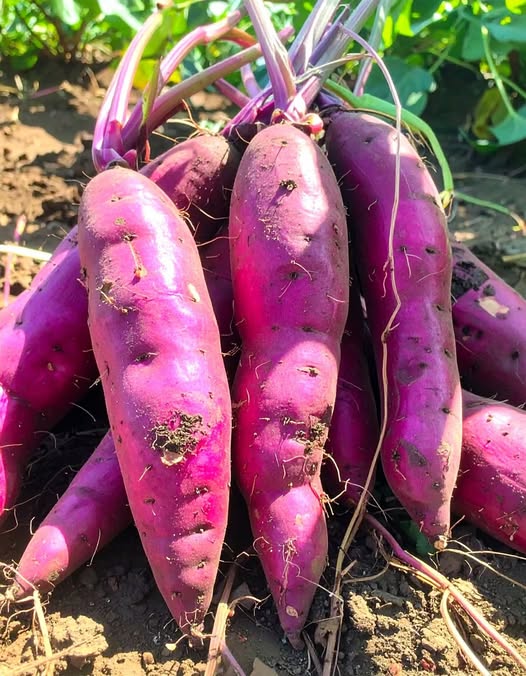
This is the vegetable that started my obsession. The University of California notes that a cup of cooked purple sweet potato contains about 500 mg of anthocyanin, just shy of the 600 mg found in a cup of blueberries.
That is a genuinely impressive number for a root vegetable. I like roasting these whole, then splitting them open just to admire the color before eating.
Two varieties dominate the market: Okinawan sweet potato, with a pale tan skin and vivid purple flesh, and Stokes Purple, which is purple both inside and out. Both hold their color well through baking, though boiling can leach some pigment into the water.
Texture-wise, purple sweet potato is drier and starchier than the orange kind, which makes it excellent mashed, fried into chips, or blended into smoothies for natural color. In Hawaii and the Philippines, it shows up in poi-style dishes and desserts, not just savory sides.
ALSO READ: 25 Types of Sweet Potatoes (With Pictures, and Flavor Explained)
2. Purple Potato (Purple Majesty, Vitelotte)
Purple potatoes hold their color even after cooking, unlike some produce that fades. Their skin and flesh both carry anthocyanins, though concentration varies by variety.
Purple Majesty is the common American variety, with a deep, almost uniform purple flesh. Vitelotte, sometimes called French Fingerling or Blue France, is an older French heirloom with a denser, more waxy texture and a slightly nutty taste.
I have made mashed potatoes with these before, and the result looks closer to lavender pudding than a dinner side. Roasting or frying preserves the color best; boiling tends to mute it toward gray-blue.
Nutritionally, purple potatoes carry a similar calorie and carbohydrate profile to standard potatoes, but with meaningfully more antioxidant activity thanks to the added pigment layer just under the skin.
3. Purple Carrot
Purple carrots are actually the original carrot color. Washington State University Extension explains that when people first domesticated carrots, the earliest types bred and eaten by humans were purple and yellowish, not orange.
Orange carrots came centuries later through selective breeding. So technically, purple carrots are the ancestors, not the novelty.
Flavor-wise, purple carrots taste slightly earthier and more peppery than orange ones, with a touch of bitterness near the skin. Many varieties are purple only on the outside, with orange or yellow flesh hiding underneath, which makes for a striking cross-section when sliced.
I usually eat these raw in salads, since the color bleeds into cooking water and can turn an entire pot of soup a murky shade. Juicing is another popular way to use them without losing pigment.
ALSO READ: 40 Types of Carrots (With Pictures and Growing Tips)
4. Black Carrot
Black carrots are a darker cousin of the purple carrot, with anthocyanin concentrations that can run even higher. They are popular in South Asian cooking and juicing.
In Turkey, black carrots are fermented into a tangy, salty drink called şalgam, which has a strong, almost medicinal flavor that takes some getting used to. In North India, they are pressed into a fermented drink called kanji, often spiced with mustard seed.
Raw black carrot has a slightly musky, mineral-forward taste compared to the sweeter orange varieties. Because the pigment sits so close to the surface, even light peeling removes a noticeable amount of color.
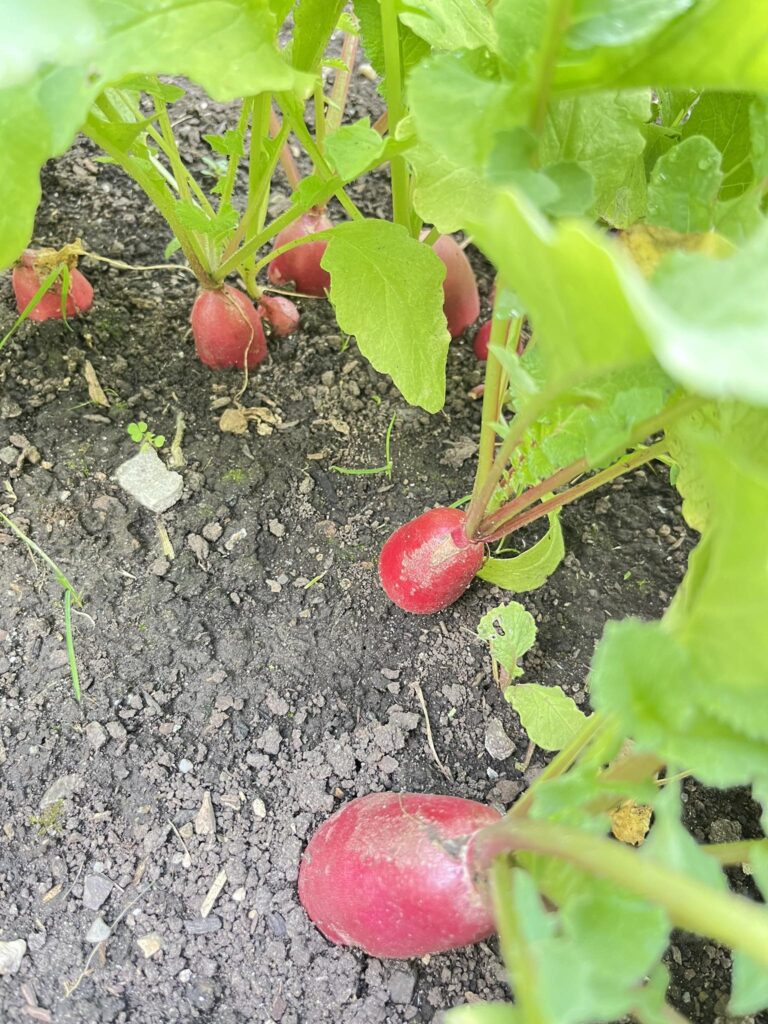
5. Purple Radish
Purple radish varieties, sometimes called Purple Plum radishes, bring a peppery crunch along with their color. The skin holds most of the pigment.
They are milder than standard red radishes, with a gentler bite that works well thinly sliced over avocado toast or tossed into a crisp salad. Roasting mellows the peppery edge even further and brings out a subtle sweetness.
I like slicing these paper-thin with a mandoline so the purple ring around the edge stays visible on the plate. It is a small presentation trick that makes a simple salad look far more intentional.
6. Purple Daikon
A less common sight in Western markets, purple daikon offers the same mild, crisp bite as white daikon with an eye-catching purple ring near the skin.
It is popular in Korean and Japanese pickling traditions, where the natural color adds visual contrast to fermented side dishes. Quick-pickled in rice vinegar and a touch of sugar, it turns a pale pink that looks beautiful next to grilled meats.
Raw, it has a clean, slightly peppery crunch, similar to standard daikon but with a touch more sweetness near the core.
7. Purple Turnip
Many turnip varieties naturally show a purple shoulder where the root was exposed to sunlight above the soil line. It is a small but charming detail.
The classic American “purple top” turnip is the most familiar example, sold widely in grocery stores with a two-tone root: white below, purple above. The flesh itself stays white regardless of the skin color.
Turnips like this work well roasted alongside root vegetables, mashed with butter, or shredded raw into a slaw. The purple skin adds visual interest even though most of the anthocyanin content stays external.
8. Purple Yam (Ube)
Ube is beloved across Filipino desserts and drinks. Its flesh ranges from lavender to a deep, almost grape-like purple, and it has a naturally sweet, nutty flavor.
It is often confused with taro, but ube has a distinctly sweeter, vanilla-like undertone that makes it a natural fit for desserts. Ube halaya, a thick jam-like spread, and ube ice cream are two of its most famous uses.
Cooking ube low and slow, usually by boiling or steaming whole, brings out its natural starchiness without breaking down the color. It has become something of a global dessert trend in recent years, showing up in cakes, lattes, and even doughnuts.
9. Purple Salsify
Salsify is already an underrated root vegetable, and the purple-skinned variety adds visual interest to what is otherwise a plain, oyster-flavored root.
Its nickname, “oyster plant,” comes from a subtle briny note in the flavor once cooked. The flesh discolors quickly once peeled, so cooks typically drop it into acidulated water right away to keep it from browning.
It is more common in European markets than American ones. Roasted, mashed, or added to soups, purple salsify brings a mild, slightly sweet flavor that pairs well with butter and herbs.
10. Purple Shallot
Certain shallot varieties develop a purplish-red skin with pale purple rings inside. They are milder than red onions but carry a similar pigment profile.
Southeast Asian cuisines rely heavily on purple shallots, particularly for crispy fried shallots used as a garnish across Thai, Vietnamese, and Indonesian dishes. Their higher sugar content makes them caramelize beautifully.
Compared to standard onions, shallots have a gentler, slightly sweet flavor with less sharpness, which is part of why they show up so often in dressings and delicate sauces.
Purple Brassicas (Cabbage Family Vegetables)
The cabbage family produces some of the most anthocyanin-dense vegetables available. This group alone could make up a rainbow garden.
11. Purple (Red) Cabbage
Purple cabbage is arguably the most recognizable purple vegetable in any supermarket. It is also one of the richest sources of anthocyanins among common vegetables, according to the Nutrients review cited earlier.
It shows up in coleslaw, German-style braised red cabbage with apples and vinegar, and fermented into a striking magenta sauerkraut. Raw, it has a firmer, crunchier bite than green cabbage, with a slightly peppery edge.
A fun kitchen fact: the pigment in purple cabbage acts as a natural pH indicator, shifting toward pink in acidic environments like vinegar and toward blue-green in alkaline ones like baking soda. I have used shredded red cabbage water as a homemade science demonstration with kids, and it works every time.
ALSO READ: 35 Types of Cabbage Explained (With Pictures, and Care Tips)
12. Purple Cauliflower
Purple cauliflower gets its striking hue from a natural genetic trait, not from dye or breeding tricks unrelated to nature. Healthline notes that purple cauliflower contains anthocyanins thanks to a genetic mutation that gives it an intense purple hue, and that it may offer anti-inflammatory benefits.
Raw, it tastes almost identical to white cauliflower, maybe slightly nuttier. Roasting caramelizes the edges and deepens the color rather than fading it, which is why I avoid boiling this one entirely.
It makes a strong addition to a raw vegetable platter, where the contrast against white cauliflower and green broccoli catches the eye immediately.
13. Purple Sprouting Broccoli
This heirloom-style broccoli produces tender purple spears in late winter and early spring. The color often fades slightly once cooked, but the flavor stays sweet and nutty.
Unlike standard broccoli, which produces one large central head, purple sprouting broccoli sends out many smaller spears over several weeks, meaning it is harvested by hand a little at a time. It is especially popular in British home gardens and farmers markets.
A quick steam or sauté with garlic and lemon is usually all it needs. Overcooking dulls both the color and the delicate sweetness that makes this variety worth seeking out.
14. Purple Brussels Sprouts
Miniature and mighty, purple Brussels sprouts roast beautifully, developing crispy outer leaves that hold onto much of their deep color.
The “Red Bull” variety is one of the more common purple cultivars, slightly sweeter than standard green Brussels sprouts once roasted. High heat caramelizes the outer leaves while the interior stays tender.
I toss mine in olive oil, salt, and a splash of balsamic vinegar before roasting at high heat. The vinegar’s acidity actually helps the purple color hold rather than fade.
15. Purple Kohlrabi
Kohlrabi already looks like something from another planet. The purple-skinned version adds even more drama, with crisp, pale flesh hiding beneath a violet outer layer.
It is a staple in German and Central European cooking, often eaten raw with a sprinkle of salt, shredded into slaws, or roasted alongside other root vegetables. The flavor sits somewhere between broccoli stem and mild cabbage.
Peeling away the tough purple skin is necessary before eating, since it is fibrous and not particularly pleasant raw. The pale flesh underneath stays crisp and slightly sweet.
16. Purple Bok Choy
Purple pak choi varieties bring a striking contrast between their white stems and deep purple leaves. They cook quickly and work well in stir-fries.
Because the leaves are more delicate than the stems, a quick high-heat stir-fry with garlic and soy sauce is the most common preparation, keeping the greens tender without turning them mushy. Extended cooking causes the purple color to fade toward olive green.
I like adding these near the very end of a stir-fry so the color and crunch both survive the heat.
17. Purple Mustard Greens
Purple mustard greens carry a peppery bite along with their reddish-purple leaf color. They are common in Asian and Southern cooking styles alike.
In Southern U.S. kitchens, they are often braised low and slow with smoked pork for hours, which mellows the mustard’s natural sharpness into something rich and savory. In Chinese and Japanese cooking, younger leaves are pickled or eaten raw in salads for a spicier bite.
Raw, the flavor is genuinely sharp, closer to horseradish than lettuce. Cooking tames that intensity considerably.
18. Purple Mizuna
This delicate Japanese green sometimes appears in a red-purple form, adding a mild mustard flavor and a soft frilled texture to salad mixes.
It is frequently grown as a microgreen, harvested within a few weeks of planting while the leaves are still small and tender. At that stage, the flavor is mild enough to eat by the handful without much preparation.
Mature leaves develop a slightly stronger peppery bite, closer to arugula, and work well wilted briefly into stir-fries or soups.
19. Radicchio (Purple Chicory)
Radicchio is technically a leaf chicory, but its wine-red and purple coloring earns it a firm place on any purple vegetable list. It has a distinct bitter edge that mellows when grilled.
Chioggia radicchio, round and cabbage-like, is the most common variety in U.S. grocery stores. Treviso radicchio, more elongated and slightly milder, is prized in Italian cooking for risottos and grilled antipasti.
Grilling or roasting caramelizes radicchio’s natural sugars and tempers the bitterness dramatically, turning a sharp raw ingredient into something almost sweet and smoky. Paired with balsamic vinegar and a hard cheese, it becomes a genuinely elegant side dish.
20. Purple Endive
Certain endive varieties develop a violet blush along their leaf edges, especially when grown in cooler conditions.
Belgian endive, the tightly furled variety most people know, is traditionally grown in complete darkness to keep the leaves pale, but exposure to light during the final growing stage can trigger a purple tint at the tips. That slight color shift also brings a touch more bitterness.
Raw, it works well in salads with something sweet, like apple or pear, to balance the bitter edge. Braising softens both the texture and the flavor considerably.
Purple Nightshades and Fruiting Vegetables
This group includes some of the most widely eaten purple vegetables worldwide, even though botanically a few are technically fruits.
21. Eggplant (Aubergine)
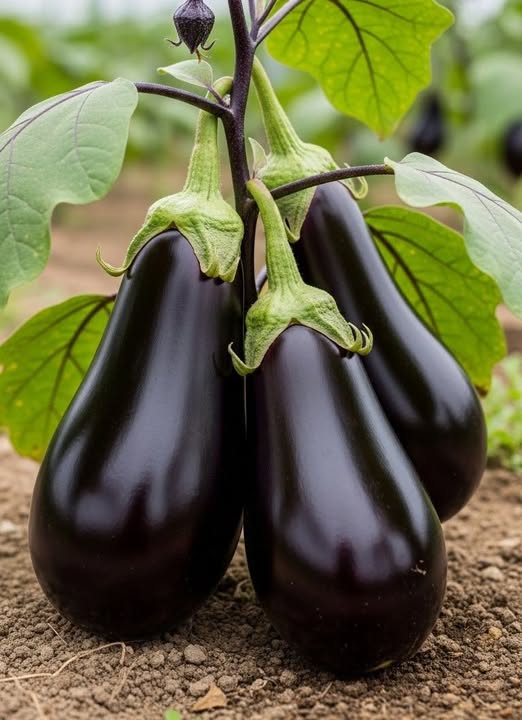
Eggplant may be the single most globally consumed purple vegetable. Its purple skin contains nasunin, a specific anthocyanin compound.
One nutrition guide explains that eggplant is a nutrient-dense package of fiber, antioxidants, and essential vitamins, supporting heart, brain, and digestive health. Another source adds that nasunin, the potent pigment concentrated in the purple peel, helps protect cell membranes from oxidative stress by scavenging free radicals and chelating excess iron.
I always keep the skin on when I cook eggplant now, simply because that is where most of the color and antioxidant punch lives. Globe eggplant, the large, teardrop-shaped kind most common in U.S. stores, has a slightly bitter edge that many cooks reduce by salting the sliced flesh before cooking.
Italian and Japanese eggplant varieties tend to be smaller, sweeter, and less bitter, requiring no salting step at all. Eggplant shows up in dishes as different as Greek moussaka, Middle Eastern baba ghanoush, Italian eggplant parmesan, and French ratatouille, a testament to how well its spongy texture absorbs surrounding flavors.
22. Purple Bell Pepper
Purple bell peppers start green and can ripen through purple before finishing red or staying purple depending on the variety. They taste slightly sweeter than green peppers.
The color shift happens as the pepper matures on the vine, with chlorophyll breaking down and anthocyanins building up in its place. Harvested at the purple stage, the flesh is crisp with a mild, slightly grassy sweetness that sits between green and fully ripe red peppers.
Raw, sliced thin, purple bell pepper adds crunch and color to a vegetable platter or salad. Cooking tends to fade the purple toward a duller green-brown, so I usually save these for raw preparations.
23. Purple Beauty Pepper
A specific heirloom pepper variety, Purple Beauty produces glossy, deep purple fruit with thick, sweet flesh. It is a favorite among home gardeners for its color alone.
Unlike thinner-walled peppers, Purple Beauty has a meaty, blocky shape that holds up well to stuffing and roasting. The flavor is notably sweet once fully ripened, with almost no bitterness even in the raw stage.
Gardeners often grow this variety specifically for its ornamental appeal, since the deep purple fruit stands out dramatically against green foliage in a vegetable bed.
24. Purple Tomatillo
Less common than the standard green tomatillo, the purple variety adds a fruitier, slightly sweeter note to salsas and sauces.
Like its green counterpart, it grows inside a papery husk that needs to be removed before cooking. The tartness that defines tomatillo salsa is still present, but purple varieties tend to round that sharpness out with a touch more natural sweetness.
Roasting or charring purple tomatillos before blending into salsa deepens both the color and flavor, producing a darker, richer salsa verde than the standard green version.
25. Purple Okra
Purple okra, sometimes called Red Burgundy okra, keeps its ridged shape while showing off a deep maroon-purple pod. The color often softens when cooked.
It is a favorite in Southern home gardens, partly because the purple pods are easier to spot among green foliage during harvest, and partly for the visual contrast they bring to a dish like gumbo or fried okra. Once cooked, the color typically shifts toward green, similar to purple green beans.
Texture and flavor stay essentially identical to green okra, so the appeal here is almost entirely visual and garden-friendly rather than a distinct culinary difference.
Purple Alliums and Legumes
Onions and beans might not be the first plants you picture as purple, but several varieties earn their place here.
26. Purple (Red) Onion
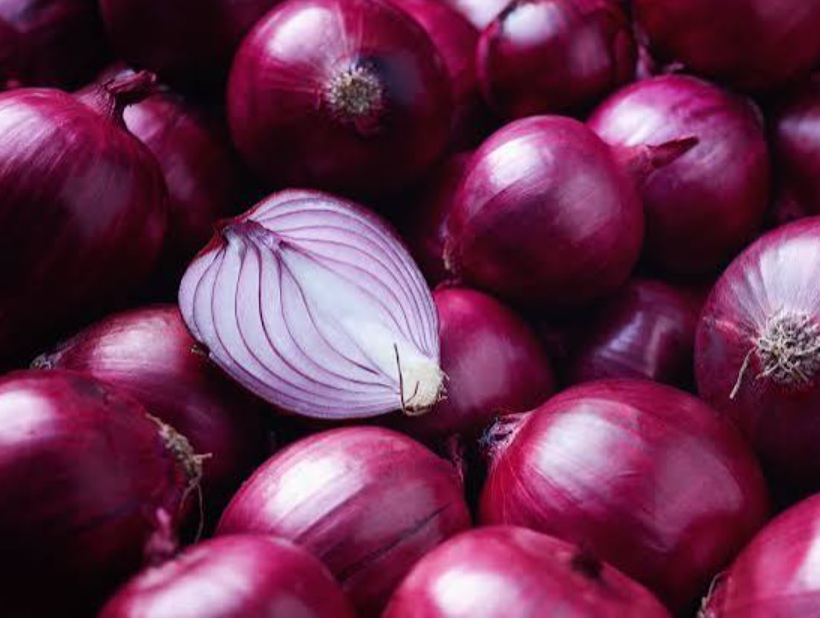
Purple onion, commonly called red onion, is a kitchen staple worldwide. A university-backed nutrition source lists red onions among vegetables rich in anthocyanins, alongside red cabbage and purple cauliflower.
Raw, it has a sharper bite than yellow onion, which makes it a favorite for salsas, salads, and sandwich toppings where a bit of crunch and color matter. Quick-pickling red onion in vinegar, sugar, and salt transforms it into a bright pink, tangy condiment within about thirty minutes.
Cooking mellows its sharpness considerably, and caramelizing draws out a natural sweetness that is easy to underestimate if you only ever eat it raw.
READ MORE ON: 21 Major Types of Onions: (Yellow, Red, White, and More Other Varieties)
27. Purple Garlic
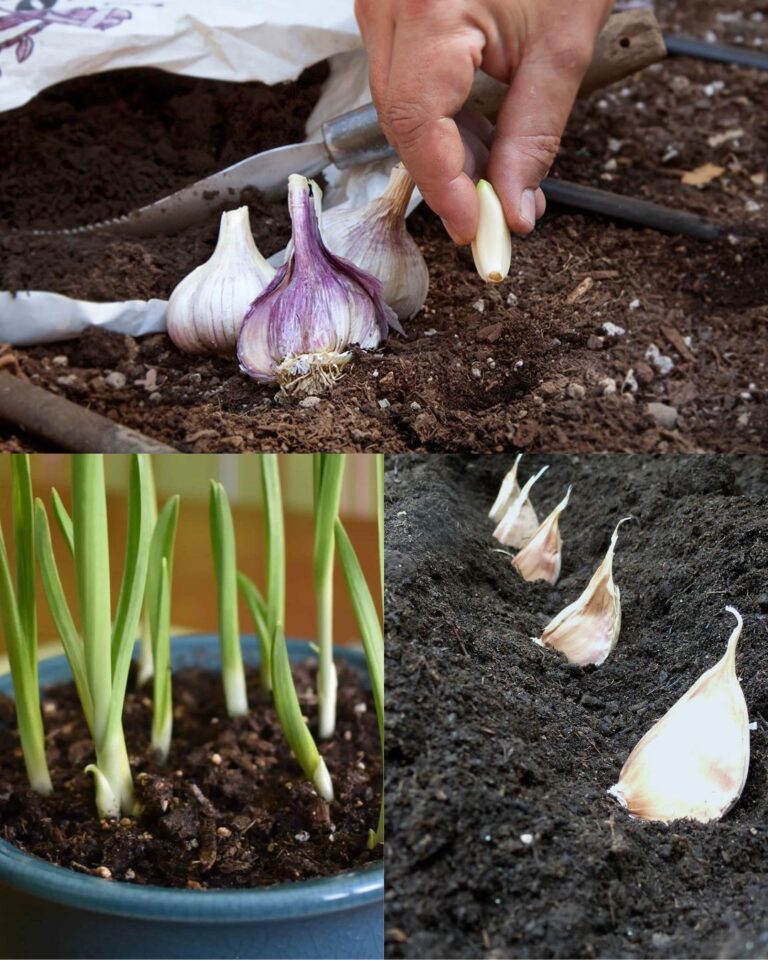
Purple-streaked garlic varieties, such as Chinese Purple or Purple Stripe garlic, show violet marks along the outer bulb wrapper. They tend to have a bolder, spicier flavor than standard white garlic.
Purple Stripe types are considered some of the most flavorful garlic varieties by many growers, with a rich, complex taste that intensifies when roasted. The cloves are often fewer in number but larger than standard supermarket garlic.
Roasting whole purple garlic bulbs mellows the sharp bite into a sweet, spreadable paste, which works wonderfully mashed into potatoes or spread on bread.
READ MORE ON: 15 Types of Garlic Explained: Variety, Flavor, and Uses
28. Purple Scallion (Purple Spring Onion)
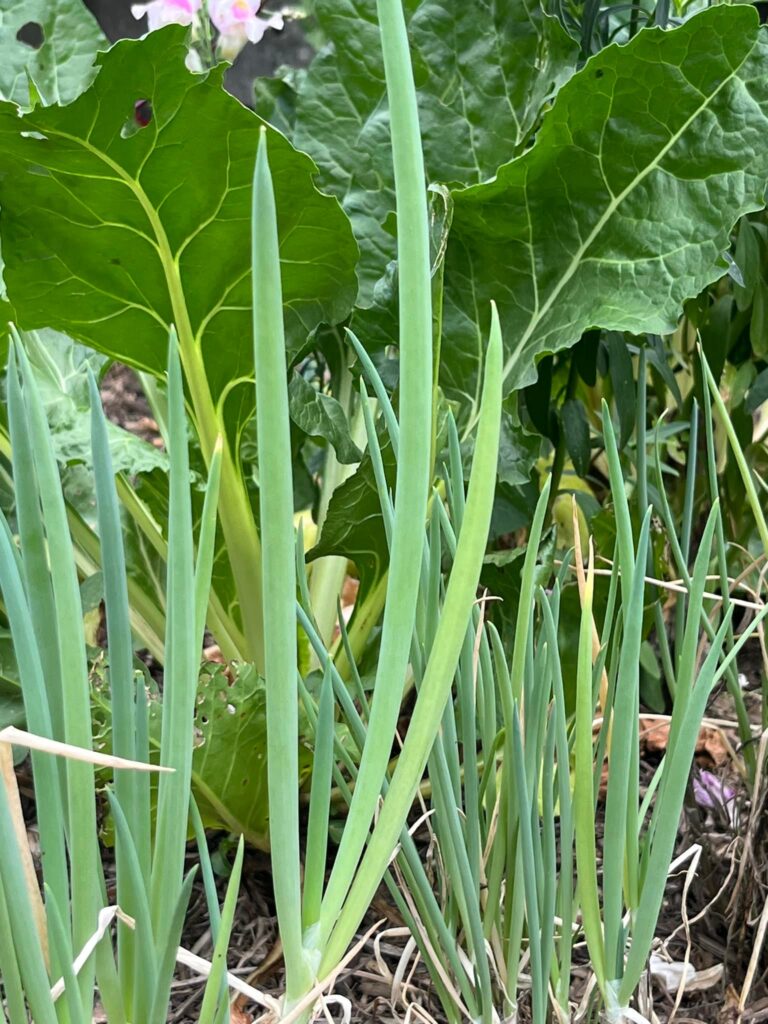
Some scallion varieties develop a purplish-red base near the root, adding color to salads and garnishes without changing much in flavor.
The purple coloring is usually most visible right at the bulb, fading into the standard green as it moves up the stalk. Flavor-wise, these behave almost identically to regular green onions, with the same mild, slightly sharp bite.
They work well as a finishing garnish over soups, noodles, or grain bowls, where the small flash of purple adds visual interest without altering the dish’s overall flavor.
29. Purple Pole Beans
Purple pole beans, like the Trionfo Violetto variety, are a garden favorite because they are easy to spot against green foliage. They typically turn green once cooked, though.
This color-shifting quirk happens because the anthocyanin pigment breaks down with heat, revealing the chlorophyll green underneath. Home gardeners often love these anyway simply because the deep purple pods make harvesting faster and more satisfying.
Eaten raw or very lightly blanched, purple beans keep their color and add a striking contrast to a raw vegetable platter or quick salad.
30. Purple Hull Peas
A Southern U.S. staple, purple hull peas grow inside pods with a striking purple-pink shell, even though the peas inside are usually cream-colored or pale green.
They are typically harvested while still slightly immature, shelled by hand, and simmered slowly with smoked meat, onion, and a touch of seasoning until tender. Freezing well, they are also a popular pantry staple stocked up during peak summer harvest season.
The pods themselves are usually not eaten, since the real prize is the tender pea inside, but the vivid purple shell makes the harvesting and shelling process far more visually rewarding than plain green pea pods.
Other Notable Purple Vegetables
A handful of purple vegetables do not fit neatly into the categories above, but they are too interesting to leave out.
31. Purple Asparagus
Purple asparagus contains more sugar and less fiber than green asparagus, which is why some people find it slightly sweeter and more tender raw.
Originally developed in Italy, with the Violetto d’Albenga variety among the best known, purple asparagus spears tend to be slightly thinner than standard green ones. That extra sweetness makes them genuinely enjoyable shaved raw into a salad, something I would not usually attempt with tougher green stalks.
Cooking, even briefly, causes much of the purple to fade toward green, so quick blanching or eating it raw is the best way to preserve both the color and the more delicate flavor.
32. Purple Artichoke
Certain artichoke varieties, including some Italian heirlooms, display deep violet-tinged outer leaves. They are often more tender than their green counterparts.
The Violetto di Toscana and similar Italian purple varieties are prized for smaller, more tender chokes and a slightly nuttier flavor compared to the large green globe artichokes common in U.S. stores. Many purple varieties can even be eaten raw when very young, shaved thin into salads.
Steaming or braising whole remains the most common preparation, served simply with melted butter or a lemon vinaigrette for dipping each leaf.
33. Purple Corn
Purple corn, widely used in Peruvian cooking for the drink chicha morada, carries one of the highest anthocyanin concentrations of any corn variety.
The pigment sits mainly in the kernel’s outer pericarp layer rather than distributed throughout, which is why boiling whole purple corn cobs turns the cooking water a deep magenta almost immediately. Beyond the popular chicha morada drink, Peruvian cooks also use it in mazamorra morada, a thick, spiced dessert pudding.
It is rarely eaten straight off the cob the way sweet corn is, since the kernels are starchier and tougher, better suited to being simmered down into liquid or paste form.
34. Purple Orach (Mountain Spinach)
Orach is an old-world leafy green that produces a stunning magenta-purple variety. It cooks down similarly to spinach and works well in soups.
It has been cultivated since ancient times, predating spinach’s widespread popularity in much of Europe, and it self-seeds readily once established in a garden bed. Raw young leaves add a striking color pop to salads, though the color fades toward green with any real cooking time.
Because it wilts down significantly, a large handful of raw orach cooks down to only a small serving, much like spinach does.
35. Purple Amaranth Greens
Purple amaranth leaves, sometimes called Chinese spinach, bring a bold reddish-purple color to stir-fries and are a common vegetable across South Asian and African cuisines.
In Indian cooking, it appears as thotakura, often sautéed simply with garlic, chili, and a touch of oil. In parts of Africa and the Caribbean, the leaves are cooked down into hearty stews, sometimes alongside the plant’s edible grain-like seeds, which are a separate nutritional staple in their own right.
The flavor carries a mild earthiness, slightly more mineral-forward than standard spinach, and the leaves soften quickly once they hit a hot pan.
The Reason Behind the Purple Color
Every vegetable on this list owes its shade to anthocyanins, a class of flavonoid pigments. But the science is more layered than “purple equals healthy.”
A 2019 study in Molecules examined five purple-reddish vegetables directly. Researchers found that vegetable consumption has been positively associated with the prevention of several degenerative diseases.
Interestingly, not every purple vegetable is equal in antioxidant strength. The Nutrients review makes an important caution: some purple-hued vegetables such as eggplants and red onions have lower antioxidant effects, likely because anthocyanins are mainly concentrated in their skins, with the inner flesh differing significantly in content and color.
That detail changed how I prepare vegetables at home. Peeling away the skin often means peeling away much of the benefit.
Another point worth noting: color alone can be misleading. The same review warns that many heirloom tomato varieties labeled as purple or black actually lack anthocyanins entirely, despite their appearance.
Health Benefits Backed by Research
I want to be careful here. No single vegetable is a cure for anything, and I am not going to pretend purple vegetables are magic. But the research on anthocyanins is genuinely encouraging.
Antioxidant support. Anthocyanins neutralize free radicals, which are unstable molecules linked to cellular aging and chronic disease risk.
Anti-inflammatory activity. A 2023 study evaluated anthocyanins from purple cabbage, purple sweet potato, purple corn, and gynura bicolor. It found that anthocyanins from all four purple vegetables could effectively trap harmful glycation byproducts, with purple cabbage showing the strongest inhibitory effect against processes tied to chronic disease.
Heart and metabolic health. Purdue University Extension confirms that purple and red carrots’ anthocyanin and lycopene content has been linked to lower risks for certain cancers, alongside general cardiovascular support.
Exercise recovery. This one surprised me. The Nutrients review explains that anthocyanin-rich purple foods are being studied for their ability to modulate redox balance, reduce exercise-induced oxidative stress and inflammation, and support recovery through antioxidant pathways.
None of this replaces medical advice, of course. But it does make a strong case for stocking more purple produce in the fridge.
How to Cook Purple Vegetables Without Losing Their Color
I learned this the hard way after boiling purple cauliflower into a sad shade of gray. A few lessons stuck with me since.
Keep the skin on when possible. Since anthocyanins concentrate near the surface, peeling removes much of the color and the benefit along with it.
Add acid. A splash of lemon juice or vinegar helps purple vegetables hold their color better during cooking, especially cabbage.
Avoid long boiling. High heat and prolonged water contact leach anthocyanins out into the cooking liquid. Steaming or roasting preserves color more reliably.
Eat some raw. Slaws, salads, and quick pickles keep the pigment fully intact since there is no heat involved at all.
How to Shop for and Store Purple Vegetables
Buying purple produce is not always as simple as grabbing whatever looks purple. A few practical tips have saved me money and disappointment over the years.
Check for firmness, not just color. A bright purple eggplant that feels spongy or soft is already past its best. Firm skin usually means fresher flesh underneath.
Look at the stem end. For eggplant and peppers, a green, fresh-looking stem is a good sign. A dry, brown, or shriveled stem usually means the vegetable sat around too long.
Store root vegetables in a cool, dark spot. Purple potatoes, carrots, and radishes last longer in a pantry or fridge crisper drawer than on an open counter, since light and warmth speed up spoilage.
Refrigerate leafy purple greens quickly. Purple bok choy, mustard greens, and amaranth wilt fast. Wrapping them loosely in a damp paper towel inside a bag helps them stay crisp for several extra days.
Buy in season when you can. Purple sprouting broccoli, for example, is best in late winter. Purple asparagus peaks in spring. Seasonal produce tends to carry a stronger natural color and better flavor.
I have made the mistake of buying purple cauliflower out of season more than once. It always tasted flatter and lost its color faster during cooking compared to the in-season version.
Common Questions About Purple Vegetables
A few questions come up again and again whenever I talk about purple vegetables with friends or family. Here are honest answers to the ones I hear most.
Is purple food coloring added to these vegetables? No. The color comes entirely from natural pigments called anthocyanins, which the plant produces on its own. Nothing is injected or sprayed on.
Do purple vegetables taste different from their standard-colored counterparts? Sometimes, yes. Purple carrots and purple sweet potatoes tend to taste slightly earthier or more mineral-forward. Purple cauliflower and purple bell peppers, on the other hand, taste almost identical to their white or green versions.
Does cooking destroy the anthocyanins? Heat reduces anthocyanin content somewhat, especially with prolonged boiling. Steaming, roasting, or quick sautéing preserves far more color and antioxidant content than boiling in a large pot of water.
Are purple vegetables more expensive than regular ones? Often, yes, particularly heirloom varieties like purple cauliflower or purple asparagus. This usually comes down to lower farming yields rather than any added nutritional processing.
Can I grow purple vegetables in a home garden? Absolutely. Purple carrots, purple beans, and purple kohlrabi are relatively easy for home gardeners, and many seed companies now carry heirloom purple varieties specifically for that purpose.
Which purple vegetable has the most health research behind it? Purple cabbage and purple sweet potato currently have the largest body of published research, based on the studies referenced throughout this article. That does not mean the others lack benefits, only that they have been studied less extensively so far.
Final Thoughts
Thirty-five vegetables is a long list, and I doubt anyone eats through all of them regularly. That is not really the point.
The bigger takeaway, for me, is that color diversity on a plate usually signals nutrient diversity too. Purple vegetables fill a gap that green, orange, and red produce simply cannot cover on their own.
Given that fewer than one in ten adults meet vegetable intake recommendations, adding even two or three purple vegetables from this list into a weekly routine is a small, realistic step. Start with eggplant, red cabbage, or purple sweet potato. They are the easiest to find and the easiest to love.
References
- USDA FoodData Central – Official U.S. government nutrient database for vegetables, including eggplant and root vegetables. https://fdc.nal.usda.gov/
- National Institutes of Health (NIH), National Library of Medicine – “Anthocyanin-Rich Purple Plant Foods: Bioavailability, Antioxidant Mechanisms, and Functional Roles in Redox Regulation and Exercise Recovery,” Nutrients, 2025. https://pmc.ncbi.nlm.nih.gov/articles/PMC12348956/
- National Institutes of Health (NIH), National Library of Medicine – “Phytochemical Characterization of Five Edible Purple-Reddish Vegetables: Anthocyanins, Flavonoids, and Phenolic Acid Derivatives,” Molecules, 2019. https://www.ncbi.nlm.nih.gov/pmc/articles/PMC6514853/
- Centers for Disease Control and Prevention (CDC) – “Only 1 in 10 Adults Get Enough Fruits or Vegetables.” https://archive.cdc.gov/www_cdc_gov/nccdphp/dnpao/division-information/media-tools/adults-fruits-vegetables.html
- University of California – “Why Purple Sweet Potatoes Belong on Your Holiday Table,” UC Cooperative Extension. https://www.universityofcalifornia.edu/news/why-purple-sweet-potatoes-belong-your-holiday-table
- Purdue University Extension (Fulton County) – “Carrots” nutrition fact sheet. https://www.extension.purdue.edu/county/fulton/_docs/carrots.pdf
- Washington State University Extension – “Why Are Carrots Orange?” Ask Dr. Universe. https://askdruniverse.wsu.edu/2020/04/17/why-are-carrots-orange/

Tim M Dave is a gardening expert with a passion for houseplants, particularly cacti and succulents. With a degree in plant biology from the University of California, Berkeley, he has vast experience in gardening. Over the years, he has cultivated a vast collection of desert plants and learned a great deal about how to grow and care for these unique companions.