25 Types of Sweet Potatoes (With Pictures, and Flavor Explained)
There are far more sweet potatoes in this world than the orange ones sitting in your grocery cart. I learned this the hard way after buying what I thought was a “regular” sweet potato and ending up with a dry, starchy root that barely resembled the sweet, custardy roots I grew up eating.
That mix-up sent me down a rabbit hole. What I found was a vegetable with dozens of named cultivars, each bred for a specific soil type, climate, or dinner table.
This guide walks through 25 distinct types of sweet potatoes. I have grouped them by flesh color and use, so you can find the right one whether you are shopping, gardening, or just satisfying curiosity.
Orange-Fleshed Sweet Potatoes (The Grocery Store Classics)
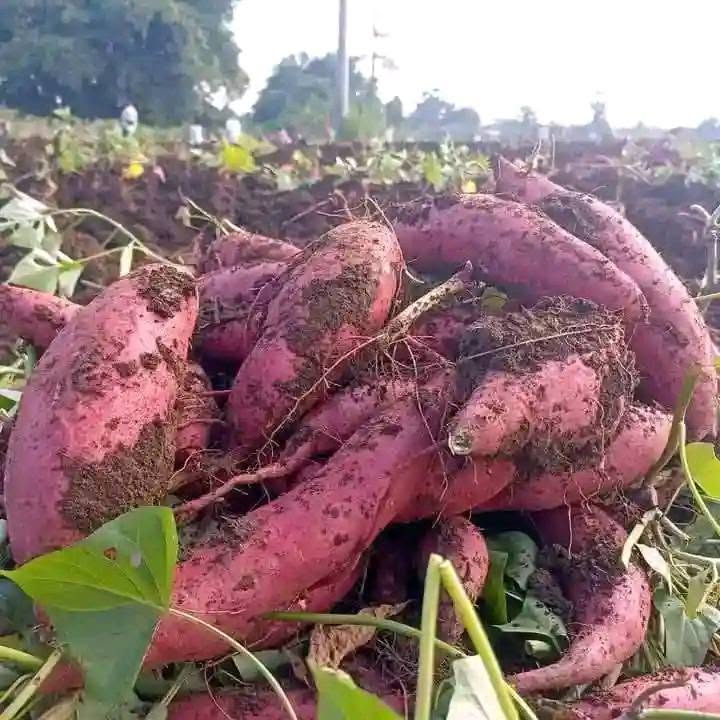
These are the moist, sugary varieties most people picture when they hear “sweet potato.” They turn soft and syrupy when baked, largely because they convert more of their starch into natural sugar during cooking.
Orange varieties dominate U.S. commercial production, and for good reason. They yield well, ship well, and appeal to the broadest range of palates, which is why grocery shelves are stacked with them almost year-round.
1. Beauregard
Beauregard is the variety that changed American sweet potato farming. ARS scientist John T. Gentry traveled through Louisiana in the 1940s, collecting seed stock from local farmers, and that material eventually became the parent line for the Beauregard cultivar released decades later.
It has copper-red skin, deep orange flesh, and a high sugar content. Beauregard remains one of the most widely grown varieties in the entire United States, and it is often the first sweet potato home cooks think of when planning a holiday casserole.
The roots tend to be large and elongated, with a smooth surface that makes peeling easy. Because of its reliable yield and adaptability across different soil types, Beauregard became the backbone of commercial sweet potato farming for decades before Covington took over as the leading variety in North Carolina.
I like Beauregard because it cooks quickly and evenly, which makes it forgiving for anyone still learning how to bake a sweet potato properly. Even a slightly underbaked Beauregard still turns out soft and sweet, which is more than I can say for some of the drier varieties on this list.
2. Covington
Covington is arguably the biggest success story in modern sweet potato breeding. Released in 2005 by North Carolina State University’s Craig Yencho and Ken Pecota, it just marked its 20th anniversary and now accounts for nearly 90% of all sweetpotatoes grown in North Carolina and about 20% of total U.S. acreage.
It has rose-colored skin and smooth, orange flesh. Farmers love it for its uniform shape, strong yield, and long shelf life, and it has become a preferred variety for wholesalers, retailers, and even European buyers.
What sets Covington apart from older varieties is consistency. The roots tend to come out of the ground looking nearly identical in shape and size, which matters enormously to packers who need uniform product for supermarket bins and export crates.
Consumer taste panels have consistently rated Covington highly for its flavor and texture, which explains why it has held its top spot for two decades in an industry that usually cycles through new releases every few years. Breeders are already working on the next generation of Covington-style roots, aiming to add resistance to the guava root-knot nematode while keeping the same flavor and shelf performance growers depend on.
3. Jewel
Jewel is a slightly older cousin of Beauregard, known for its coppery skin and bright orange interior. It stores exceptionally well, which is why it shows up in supermarkets almost year-round, long after the fall harvest season has passed.
Before Beauregard and Covington rose to prominence, Jewel was one of the standard commercial varieties across the southeastern United States. Its thick skin protects the root during shipping, reducing bruising and extending shelf life in ways that softer-skinned varieties cannot match.
I find Jewel roots a bit less sweet than Beauregard but more reliable for baking evenly, since the flesh tends to hold its shape a touch better under high oven heat. It also mashes smoothly, making it a solid choice for pies and casseroles where texture matters as much as sweetness.
4. Garnet
Garnet has darker, brownish-red skin and a moist, vivid orange flesh. It is often confused with Jewel, but Garnet tends to be sweeter and softer once cooked, with a texture that borders on custardy when roasted at high heat.
This is the variety many people mistakenly call a “yam” at the grocery store, largely because its deep color and soft texture match what most Americans expect from a Thanksgiving side dish. Garnet is especially popular on the West Coast, where it often outsells other varieties.
Garnet also holds up well in soups and stews, since its flesh softens without turning to mush the way some sweeter varieties can. If you are roasting wedges for a crispy exterior, Garnet caramelizes beautifully thanks to its high natural sugar content.
ALSO READ: 21 Major Types of Onions: (Yellow, Red, White, and More Other Varieties)
5. Georgia Jet
Georgia Jet is prized by home gardeners for one reason: speed. It matures faster than most varieties, often ready for harvest in as little as 90 days, making it a favorite in northern states with shorter growing seasons.
The flesh is deep orange and very sweet, with a soft texture after roasting. Because it matures quickly, Georgia Jet is frequently recommended in extension guides for gardeners in regions where frost arrives early.
Despite its speed, Georgia Jet does not sacrifice much in flavor compared to slower-maturing commercial varieties. Many gardeners consider it one of the best entry points for growing sweet potatoes outside the traditional Southern growing belt.
6. O’Henry
O’Henry looks like a Beauregard that lost its color. It has tan to white skin, but the flesh inside is a light cream, not orange, which often surprises first-time buyers expecting the usual orange interior.
Despite the pale color, it has a sweet flavor similar to its orange relatives, and it bakes up smooth and creamy. O’Henry is actually a natural sport, or genetic mutation, of Beauregard, which explains why the two share such similar growth habits and flavor profiles.
Because of its lighter color, O’Henry works nicely in dishes where you want sweet potato flavor without the strong orange hue, such as pale soups or purees where visual contrast matters.
7. Centennial
Centennial was one of the first sweet potatoes bred specifically for home gardens rather than industrial farming. It has carrot-orange flesh, moderate sweetness, and notable clay-soil tolerance, which makes it forgiving for less experienced gardeners.
Released decades ago, Centennial remains popular in regions with heavier, less-than-ideal soil, since many other varieties struggle to form uniform roots in dense clay. Its tapered shape and smooth skin also make it easy to wash and peel.
The flavor is milder than Beauregard or Garnet, which some cooks actually prefer for savory dishes where they do not want the sweetness to overpower other ingredients.
8. Hannah
Hannah is a newer release with pale yellow skin and cream-colored flesh that turns slightly translucent when baked. It has a milder sweetness than orange types, closer to a traditional potato in texture but with a subtle honeyed finish.
Hannah was developed with disease resistance in mind, giving commercial growers another option beyond the dominant orange varieties. Its lighter flesh color also appeals to shoppers looking for something different from the usual bright orange roots.
Because it is drier than Beauregard or Garnet, Hannah tends to hold its shape better when cubed and roasted, making it a good option for sheet-pan vegetable medleys.
9. Vardaman
Vardaman is a compact, bush-type variety, meaning it does not send out the long sprawling vines typical of most sweet potatoes. This makes it ideal for small gardens, raised beds, or even large containers on a patio.
Its flesh is golden orange, and the roots mature relatively quickly compared to standard vining varieties. Vardaman was developed specifically with space-constrained gardeners in mind, and it remains one of the most recommended bush varieties in extension gardening guides.
The flavor is sweet and smooth, similar to Beauregard, so gardeners do not have to sacrifice taste for the sake of a smaller footprint in the yard.
10. Evangeline
Evangeline was introduced commercially in 2009 and is still grown on a fairly limited scale, mostly around St. Martinville, Louisiana. It has rosy skin, deep orange, moist flesh, and a nutty undertone that many bakers favor for pies.
Because production remains limited, Evangeline is typically sold through mail-order seed companies or at local farmers markets rather than large grocery chains. That scarcity has actually made it something of a specialty item among sweet potato enthusiasts.
The roots tend to be small to medium in size with a naturally sweet, nutty flavor that holds up well whether boiled, baked, or mashed into a pie filling.
ALSO READ: 50 Different Types of Mushrooms (Edible, Medicinal, and Wild Varieties)
11. Bonita
Bonita stands out because its skin is tan to light pink, while the flesh is a soft, buttery yellow rather than orange. It is drier and less sweet than Beauregard, appealing to people who want a more potato-like texture with a hint of sweetness.
Interestingly, Bonita was not bred by a university program, but growers rely on certified seed stock from breeding programs like NC State’s to keep the variety’s genetics clean and productive. This has helped Bonita maintain consistent quality despite its unofficial origins.
Bonita has also seen renewed interest recently as more shoppers and chefs rediscover white-fleshed sweet potatoes, which were once far more common in American kitchens before orange varieties took over the market.
12. Diane
Diane is a lesser-known Louisiana variety with rose-colored skin and deep orange, moist flesh. It performs well in humid growing regions and holds its shape nicely when boiled or mashed, unlike some softer varieties that can turn watery.
Diane was bred with Southern growing conditions in mind, which is why it tends to perform best in states with long, humid summers similar to its native Louisiana. Home cooks in the region often favor it for traditional dishes like candied sweet potatoes.
Its balanced sweetness makes it versatile enough for both savory and dessert preparations without overwhelming other flavors in a dish.
13. Bayou Belle
Bayou Belle is a modern release aimed at disease resistance without sacrificing flavor. The roots are smooth, orange-fleshed, and slightly sweeter than Covington, with good storage life that rivals some of the more established commercial varieties.
Breeders developed Bayou Belle in response to growing pest pressure in traditional sweet potato growing regions, giving farmers another resistant option beyond Covington and Orleans. It has slowly gained ground among commercial growers looking to diversify their fields.
Its flavor profile leans slightly sweeter than Covington, which has made it popular with home cooks who prioritize taste over the uniform shape that commercial buyers often demand.
14. Orleans
Orleans is a newer Louisiana State University release bred to resist common soil pests. It closely resembles Beauregard in appearance and taste but offers improved yield consistency for commercial growers dealing with nematode pressure.
LSU AgCenter developed Orleans as part of an ongoing effort to give Louisiana farmers alternatives that hold up better against regional pest and disease pressures than older heirloom varieties. It has become a steady performer in state variety trials.
For home cooks, Orleans tastes similar enough to Beauregard that most people would not notice a difference at the dinner table, which speaks to how well breeders have preserved flavor while improving the plant’s resilience.
15. Nancy Hall
Nancy Hall is a heritage variety from the early 20th century, still grown by home gardeners who want a taste of history. The flesh is a pale yellow-orange, and it becomes very soft and almost custard-like when baked.
Before modern breeding programs introduced Beauregard and Covington, Nancy Hall was among the most widely planted sweet potatoes in the South. Its old-fashioned sweetness and soft texture earned it a loyal following that persists among heirloom seed savers today.
Because it is rarely grown commercially anymore, finding Nancy Hall usually means either growing it yourself or seeking it out at a specialty farmers market.
ALSO READ: 35 Types of Spinach Worth Growing (With Pictures, and Care Tips)
16. Bush Porto Rico
This is one of the oldest documented American sweet potato varieties, dating back over a century. It has copper skin, orange to light red flesh, and a compact vine, similar to Vardaman, that suits smaller plots.
Bush Porto Rico descended from the original Porto Rico variety, which was once a dominant sweet potato across the American South before more disease-resistant modern cultivars replaced it in commercial fields. The bush form was selected specifically for gardeners with limited space.
Its flavor is sweet and moist, closer to Beauregard than to the drier varieties on this list, making it a solid all-purpose choice for home gardeners who want heirloom character without sacrificing taste.
Purple-Fleshed Sweet Potatoes (Antioxidant-Rich and Striking)
Purple sweet potatoes owe their color to anthocyanins, the same pigment family found in blueberries and red cabbage. They tend to be drier and starchier than orange varieties, with a flavor profile that leans earthy rather than syrupy sweet.
Consumer studies have found mixed reactions to this group. A North Carolina taste-testing study noted that the vanilla-like aroma and slightly bitter, umami undertone of some purple varieties can be off-putting to shoppers used to sweeter orange roots. Even so, demand for these varieties keeps growing, particularly among home bakers chasing that vivid violet color for pies and baked goods.
17. Stokes Purple
Stokes Purple has deep lavender skin and an intensely purple interior. It is drier than orange types, with a slightly earthy, less sugary flavor, and it holds its color beautifully in baked goods, which is a big part of its appeal for dessert makers.
The variety originated in North Carolina and has become the most recognizable purple sweet potato in American grocery stores, often marketed specifically under its own name rather than a generic “purple sweet potato” label.
Because it is drier than orange varieties, Stokes Purple works best roasted or mashed with a bit of added fat, such as butter or coconut milk, to bring out its natural richness without drying it further.
18. Okinawan Sweet Potato
Also called “purple yam” in some markets, Okinawan sweet potatoes have tan or light skin but a stunning violet-purple flesh once cut open. They originate from Japan’s Okinawa region and are common in Hawaiian and Japanese cooking, especially in purple sweet potato pie and ice cream.
The contrast between the plain-looking skin and the vivid purple interior often catches first-time buyers off guard, which is part of why this variety has become something of a novelty item in mainland U.S. grocery stores.
Okinawan sweet potatoes carry a naturally sweet, slightly nutty flavor with less moisture than orange varieties, which is why they hold their shape so well in baked desserts and steamed dishes.
19. Murasaki
Murasaki, meaning “purple” in Japanese, actually has purple skin but creamy white flesh, which surprises people expecting purple on the inside. It has a firm, dry texture and a mild, nutty sweetness that intensifies when roasted.
This naming mismatch trips up a lot of shoppers, since Murasaki is frequently confused with the deep-purple-fleshed Okinawan variety despite looking nearly identical on the outside. The easiest way to tell them apart is to cut one open.
Murasaki’s dry, dense texture makes it a favorite for roasting, since it develops a slightly crisp, caramelized exterior while staying firm rather than mushy inside.
20. Carolina Ruby
Carolina Ruby is a specialty variety with deep purple-red skin and a purple-streaked interior. It is less common commercially but valued for its striking presentation on restaurant plates, where chefs often showcase it sliced thin to highlight the marbled color pattern.
Because it is grown on a smaller scale than mainstream purple varieties, Carolina Ruby tends to appear more often at specialty markets and farm-to-table restaurants than in standard grocery store bins.
Its flavor sits somewhere between the earthy Stokes Purple and the sweeter orange varieties, giving it a balanced taste that works well in both savory and dessert applications.
ALSO READ: 55 Types of Pumpkins (Identification, With Pictures)
White and Yellow-Fleshed Sweet Potatoes (Firmer and Less Sweet)
These varieties are drier, less sugary, and firmer once cooked, closer in texture to a standard baking potato. They tend to hold their shape under high heat, which makes them well suited to frying and roasting rather than mashing.
21. Japanese Sweet Potato (Satsumaimo)
Despite the name confusion with Murasaki, the true Japanese sweet potato has reddish-purple skin and pale yellow-white flesh. It is drier and nuttier than orange varieties, with a chestnut-like flavor that intensifies with roasting.
Known as satsumaimo in Japan, this variety is a staple in Japanese street food, often roasted whole over hot stones and sold by vendors during the colder months. Its dense, starchy texture makes it filling in a way orange varieties rarely match.
Because it holds its shape so well, satsumaimo is a popular choice for tempura, where the firm flesh fries up crisp on the outside while staying tender within.
22. White Sweet Potato
Sometimes labeled simply “White,” this type has beige to white skin and flesh. It is starchy, mildly sweet, and popular in West African, Caribbean, and Southern U.S. cooking, especially for frying.
In many West African and Caribbean cuisines, white sweet potatoes are treated more like a starchy staple food than a sweet side dish, often boiled, fried, or pounded rather than baked with sugar and spice the way orange varieties are in American cooking.
Its firmer texture and milder sweetness make it a versatile substitute in recipes that call for regular potatoes, without the strong sweetness that orange varieties bring to a dish.
23. Sumor
Sumor is a light-skinned, cream-fleshed variety used mostly for processing into fries and chips because of its firmer, drier texture that holds up well to high heat.
Commercial food processors favor Sumor specifically because its lower moisture content means less oil absorption during frying, which translates into a crispier finished product compared to moist orange varieties.
While it is less common on home dinner tables, Sumor shows up frequently in packaged sweet potato fries and chips found in grocery store freezer sections.
24. Boniato (Cuban Sweet Potato)
Boniato is a Caribbean staple with irregular, reddish-purple to cream skin and off-white flesh. It is drier and less sweet than American varieties, with a chestnut-like flavor prized in Cuban and Puerto Rican dishes.
Unlike the smooth, uniform roots bred for American commercial farming, Boniato often grows in irregular, knobby shapes, which is simply part of its character rather than a sign of poor quality. It is a common ingredient in Cuban stews and fritters.
Because of its dry, dense texture, Boniato holds up especially well when fried or boiled, rarely turning mushy the way moister orange varieties can.
25. Burgundy
Burgundy sweet potatoes have deep wine-red skin and pale yellow flesh. They are a newer specialty type used mostly for their eye-catching color contrast in roasted vegetable dishes.
This variety has not achieved wide commercial distribution, making it more of a farmers market or specialty grower find than something you would expect to see in a standard supermarket produce aisle.
Its flavor is mild and slightly sweet, similar to Bonita, which means the biggest draw for most cooks is really its striking appearance rather than a dramatically different taste.
Why Are There So Many Sweet Potato Varieties?
Sweet potatoes belong to the morning glory family, Convolvulaceae. They are not related to true yams, which come from a completely different plant family called Dioscoreaceae and are rarely sold in American grocery stores.
Most of what Americans call “yams” at the supermarket are actually soft, moist-fleshed sweet potato varieties. True yams need a long, tropical growing season and are mainly found in specialty markets rather than mainstream grocery chains.
Breeders keep creating new varieties for good reason. Farmers need roots that resist nematodes and disease. Home gardeners in cooler regions need shorter maturity windows. Chefs want specific textures for pies, fries, or roasting.
North Carolina alone produces more sweet potatoes than any other U.S. state. In 2024, the state harvested 86,500 acres, generating over $254.5 million in farm value from roughly 350 commercial growers.
That single fact tells you how seriously this crop is taken. North Carolina has actually held the nation’s top production rank since 1971, a streak of more than 50 years that few crops in any state can claim.
California and Mississippi round out the top three producing states, though each has a very different climate and soil profile. That variation across regions is exactly why breeders keep releasing new cultivars instead of settling on one “best” variety.
Nationally, sweet potato yields have climbed steadily as well. Average yields rose from about 145 hundredweight per acre in 2000 to roughly 219 hundredweight per acre by 2014, a jump of more than 3 percent per year, largely thanks to improved genetics and cultivation methods.
Prices followed a similar upward trend, climbing more than 50 percent between 2000 and 2014 as demand grew both domestically and abroad.
Nutrition Facts That Make Sweet Potatoes Worth Growing
I always tell people that sweet potatoes deserve more credit than they get. The numbers back this up clearly.
A single baked sweet potato, skin on, delivers roughly 1,403 micrograms RAE of vitamin A — well over 150% of the recommended daily value for most adults.
Per 100 grams, baked sweet potato provides about 90 calories, roughly 21 grams of carbohydrates, and around 3 to 4 grams of fiber. That is a lot of nutrition for very little cost.
Beta-carotene absorption improves with a bit of fat. Pairing your roasted sweet potato with olive oil, butter, or nuts can boost carotenoid uptake several times over compared to eating it plain.
Orange-fleshed varieties carry the most beta-carotene, while purple types bring anthocyanins, the antioxidant group linked to reduced inflammation in several nutrition studies.
How Sweet Potato Types Compare at a Glance
| Category | Texture | Sweetness | Best For |
| Orange-fleshed (Beauregard, Covington, Jewel) | Moist, soft | High | Baking, casseroles, mashing |
| Purple-fleshed (Stokes Purple, Okinawan) | Dry, dense | Low to moderate | Pies, chips, striking presentation |
| White/Yellow-fleshed (Japanese, Boniato) | Firm, dry | Low | Roasting, frying, savory dishes |
A Quick Word on Growing Your Own
If you garden, maturity time matters more than flavor when picking a variety. Most sweet potatoes need 90 to 120 days from transplanting to harvest, and cooler climates should stick to early-maturing types like Georgia Jet or Vardaman.
Soil matters too. Sweet potatoes want loose, well-drained, fertile ground. Heavy clay soil favors clay-tolerant varieties such as Centennial over more delicate types.
I have found that starting with a proven commercial variety, like Beauregard or Covington, gives new gardeners the best odds of a good first harvest.
How to Store Sweet Potatoes Properly
One mistake I made for years was refrigerating sweet potatoes like regular potatoes. That is actually the wrong move.
Sweet potatoes should never be refrigerated unless they are already cooked. Temperatures below 55°F damage the roots’ cell structure, destroy flavor, and can leave them tasting bitter once cooked.
Instead, store raw sweet potatoes in a cool, dry, well-ventilated space, ideally between 55°F and 60°F. Under those conditions, they can last several weeks, sometimes months, without sprouting or softening.
Curing freshly harvested roots also matters. A short period of high humidity and warmth right after harvest helps the skin heal and toughens the roots for longer storage, a step commercial growers rarely skip.
Choosing the Right Variety for Your Kitchen
If you want the sweetest, softest result for a pie or casserole, reach for Garnet, Beauregard, or Evangeline. Their high sugar content and moisture make them nearly self-basting in the oven.
If you are frying or roasting for a firmer bite, Japanese sweet potato, Boniato, or Sumor will hold their shape far better than a moist orange variety.
For a striking side dish or dessert with a dramatic color change, Stokes Purple or Okinawan sweet potato deliver a vivid, photogenic result that orange varieties simply cannot match.
Frequently Asked Questions
What is the sweetest type of sweet potato? Garnet and Beauregard are generally considered among the sweetest, thanks to their high natural sugar content and moist texture once baked.
Are purple sweet potatoes healthier than orange ones? They offer different benefits. Orange varieties are richer in beta-carotene, while purple varieties bring more anthocyanin antioxidants. Both are nutritious in their own way.
Is a yam the same as a sweet potato? No. True yams belong to a completely different plant family and are rarely found outside specialty markets. Most “yams” sold in U.S. grocery stores are actually moist-fleshed sweet potato varieties.
Which sweet potato variety is best for fries? Firmer, drier types like Sumor, Japanese sweet potato, or Boniato hold their shape better under high heat, making them better suited for frying than the moist orange varieties.
Why do sweet potatoes taste sweeter after baking than after boiling? Baking activates an enzyme called beta-amylase, which breaks starches down into maltose, a natural sugar. Research shows total sugar content can rise dramatically after baking, which is why a baked sweet potato tastes noticeably sweeter than a boiled one, even from the exact same root.
Can I grow more than one sweet potato variety in the same garden bed? Yes, and many home gardeners do exactly that. Just keep an eye on vine spread, since some varieties, like Beauregard, produce long sprawling vines, while bush types like Vardaman or Bush Porto Rico stay compact and can be planted closer together.
Final Thoughts
Twenty-five varieties might sound like overkill for one root vegetable, but each one earns its place on this list. Some were bred to survive pests. Others were bred purely for color or flavor.
Next time you are at a farmers market and see a sweet potato that looks unfamiliar, I would encourage you to buy it. That small curiosity is exactly how I learned how varied — and genuinely interesting — this humble vegetable really is.
Whether you end up growing Vardaman in a backyard container, baking a Beauregard for Sunday dinner, or slicing into a violet Okinawan root just to see the color, you are taking part in a crop with real agricultural history behind it. Few vegetables offer this much variety while staying this affordable and easy to cook.
References
- Utah State University Extension — How to Grow Sweet Potatoes in Your Garden: https://extension.usu.edu/yardandgarden/research/sweet-potatoes-in-the-garden
- University of Georgia Cooperative Extension — Home Garden Sweet Potatoes: https://site.extension.uga.edu/colquittag/files/2023/10/sweet-potatoes.pdf
- Washington State University Extension — Growing Guide: Sweetpotato Varieties: https://vegetables.wsu.edu/sweetpotato-varieties/
- Oklahoma State University Extension — Sweet Potato Production: https://extension.okstate.edu/fact-sheets/sweet-potato-production
- USDA National Agricultural Statistics Service — North Carolina Annual Statistical Bulletins: https://www.nass.usda.gov/Statistics_by_State/North_Carolina/Publications/Annual_Statistical_Bulletin/index.php
- North Carolina State University, College of Agriculture and Life Sciences — 20 Years to Grow on: Future-proofing NC State’s Covington Sweetpotato: https://cals.ncsu.edu/news/future-proof-covington-sweetpotato
- USDA Economic Research Service — U.S. Sweet Potato Production Surges: https://ers.usda.gov/media/17105/commodity-highlight-sweet-potatoes.pdf?v=35139

Tim M Dave is a gardening expert with a passion for houseplants, particularly cacti and succulents. With a degree in plant biology from the University of California, Berkeley, he has vast experience in gardening. Over the years, he has cultivated a vast collection of desert plants and learned a great deal about how to grow and care for these unique companions.