21 Major Types of Onions: (Yellow, Red, White, and More Other Varieties)
Onions sit in nearly every kitchen on earth. Yet most of us grab whatever bag is closest at the grocery store, without giving much thought to which variety actually suits the dish.
I’ve made that mistake myself more times than I’d like to admit. A sharp red onion in a slow-cooked stew can throw off the whole pot.
This guide walks through 21 popular types of onions, their flavor profiles, and where each one truly shines. By the end, you’ll know exactly which onion to reach for.
Onions belong to the Allium family, alongside garlic, leeks, and chives. Global onion production has grown steadily, and the United States alone produced roughly 77.14 million hundredweight (cwt) of onions in 2024, according to USDA data.
That’s a massive volume of a single vegetable. It tells you something about how central onions are to global cuisine.
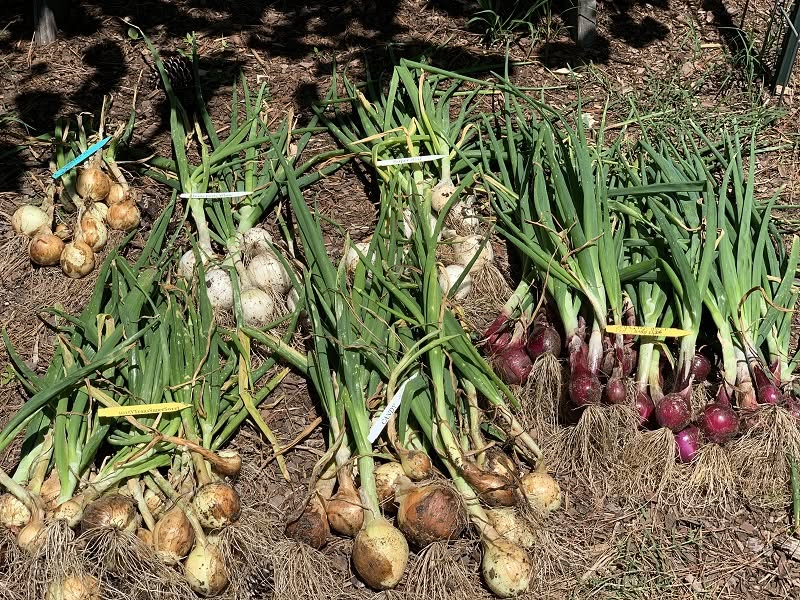
Let’s dig into the varieties.
1. Yellow Onion
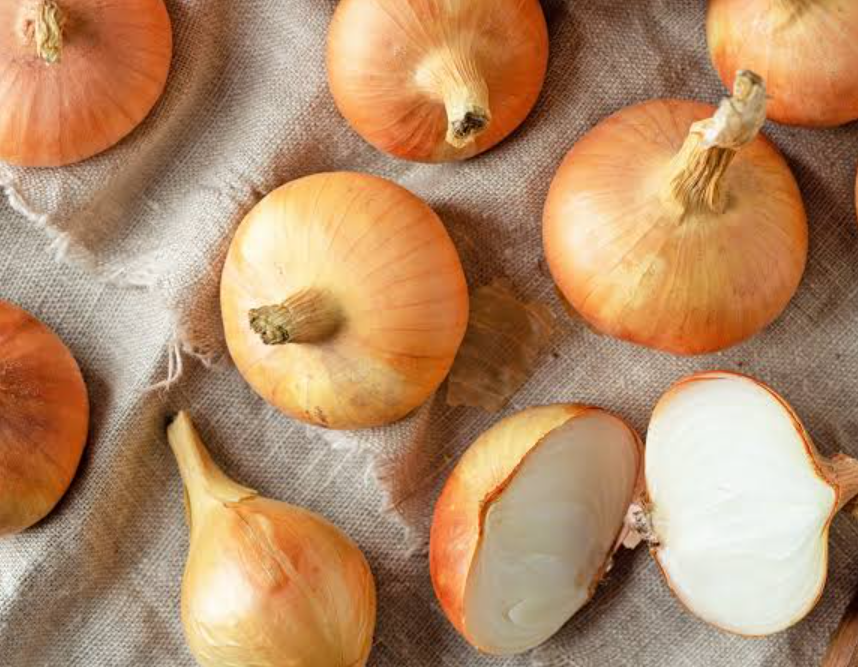
Yellow onions are the workhorse of the kitchen. Their papery golden skin hides a pale, slightly greenish flesh underneath.
They carry a strong, pungent bite when raw. Cooking mellows that sharpness into a deep, savory sweetness.
Mississippi State University Extension notes that yellow onions are a go-to, versatile choice, ideal for soups, stews, sauces, and roasts. If you’re unsure which onion a recipe needs, yellow is almost always safe.
I keep a bag of these in my pantry at all times. They caramelize beautifully and form the base of countless dishes.
2. White Onion
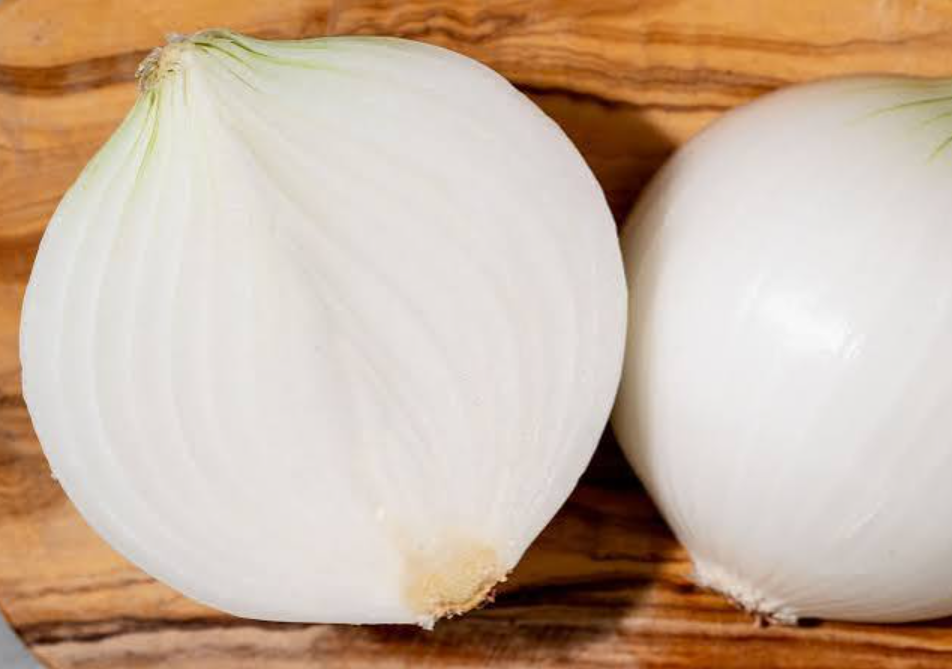
White onions have a crisp, clean bite with thin, papery white skin. They’re sharper than yellow onions but less sweet than red ones.
University of Illinois Extension explains that white onions are slightly milder and more crisp than yellow onions, and they’re commonly eaten raw in Mexican dishes like pico de gallo and tacos.
Their crunch holds up well in salsas and salads. I reach for white onions whenever a recipe calls for raw, fresh flavor without overwhelming sharpness.
3. Red Onion
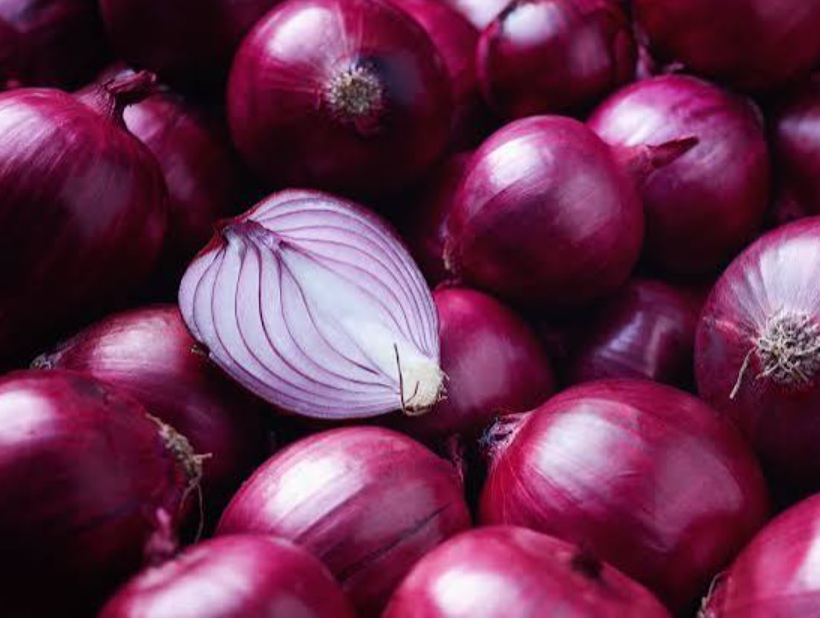
Red onions bring color and a sharp, peppery punch to any dish. Their deep purple-red skin makes them instantly recognizable on a cutting board.
Mississippi State University Extension describes red onions as having a very sharp and pungent flavor, best eaten raw in salads, sandwiches, burgers, and guacamole.
They also pickle wonderfully. A quick vinegar soak softens the bite and turns them a beautiful bright pink.
ALSO READ: 50 Different Types of Mushrooms (Edible, Medicinal, and Wild Varieties)
4. Sweet Onion (Vidalia)
Sweet onions carry noticeably less sulfur than standard onions, which is why they taste sweet rather than sharp. Vidalia onions, grown only in a protected region of Georgia, are the most famous example.
University of Georgia Cooperative Extension notes the Vidalia industry has grown to approximately 10,000 acres under federal marketing order protection.
These onions are fantastic raw, grilled, or baked whole with a bit of butter. Their low pungency makes them a favorite for onion rings too.
5. Walla Walla Onion
Named after the valley in Washington State, Walla Walla onions are prized for their exceptional sweetness and high water content.
University of Maine Cooperative Extension lists Walla Wallas among the common types of sweet onions, alongside Vidalias and Mauis.
Because they hold so much moisture, they don’t store as long as other onions. Use them soon after buying for the best flavor.
6. Maui Onion
Grown on the volcanic soil of Maui, Hawaii, this onion is another classic sweet variety. Its mineral-rich growing conditions give it a distinctly mild, almost fruity taste.
Maui onions rarely make you tear up while slicing. That’s a small but genuinely delightful bonus if you cook often.
They work beautifully in fresh salsas, burgers, and salads where you want sweetness without any harsh aftertaste.
7. Texas Sweet Onion (1015)
The Texas 1015 got its name from its ideal October 15th planting date. It’s a short-day onion bred specifically for the mild Texas climate.
Its flavor sits close to Vidalia and Walla Walla onions: sweet, juicy, and low in pungency. Texas 1015s are excellent sliced thick for burgers or battered for onion rings.
I find them a great substitute whenever Vidalias are out of season.
ALSO READ: 15 Easy Vegetables to Plant in Early Spring: Get a Head Start on the Growing Season
8. Spanish Onion
Despite the name, Spanish onions are grown widely across the United States and Europe. They’re large, mild yellow-brown onions with a milder bite than standard yellow onions.
Their size makes them practical for slicing into thick rings or roasting whole. They also caramelize well, though with a slightly less intense sweetness than true sweet onion varieties.
Spanish onions are a solid middle-ground choice between pungent cooking onions and dedicated sweet onions.
9. Bermuda Onion
Bermuda onions are flatter and milder than standard globe onions, with a light yellow or white skin. They were historically among the first sweet onion varieties introduced to the American South.
University of Georgia Cooperative Extension notes that early Vidalia varieties came through Bermuda and were thus referred to as Bermuda onions.
Today, true Bermuda onions are less common commercially, but their genetic legacy lives on in modern sweet onion breeding.
10. Cipollini Onion
Cipollini onions are small, flat, disc-shaped, and distinctly Italian in origin. Their compact size and high sugar content make them ideal for whole roasting.
University of Maine Cooperative Extension lists cipollini onions among common types of white onions, prized for their delicate texture.
I love tossing these whole in a roasting pan with olive oil. They caramelize into tender, glossy bites that need almost no extra seasoning.
ALSO READ: 15 Types of Garlic Explained: Variety, Flavor, and Uses
11. Pearl Onion
Pearl onions are tiny, marble-sized bulbs harvested young before they fully mature. They’re common in creamed onion dishes, stews, and cocktail garnishes.
Their small size means a shorter cooking time and a milder flavor overall. Frozen pearl onions are a genuine time-saver during busy holiday cooking.
They’re also the classic garnish in a proper Gibson cocktail, floating quietly at the bottom of the glass.
12. Shallot
Shallots grow in clusters like garlic but taste like a delicate cross between onion and garlic. Their flavor is subtler, sweeter, and less overpowering than a regular onion.
University of Illinois Extension describes shallots as mild in flavor, warning that they shouldn’t be overcooked or they’ll turn bitter.
French cuisine leans heavily on shallots for vinaigrettes and pan sauces. A little goes a long way, so use them sparingly.
13. Green Onion (Scallion)
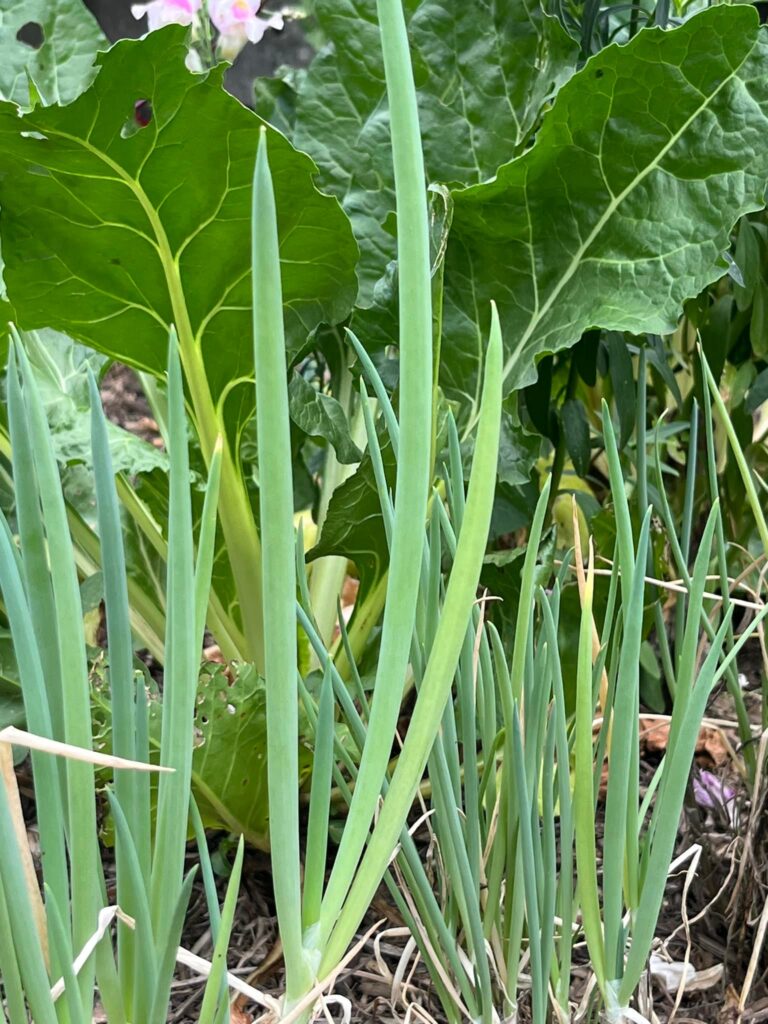
Green onions, or scallions, feature a long green top and a small, mild white bulb. They’re harvested before the bulb has a chance to swell.
University of Maine Cooperative Extension describes them as having long, slender, green tops and a small white bulb, with a fresh, mild flavor throughout.
I chop both the white and green parts for garnishing soups, stir-fries, and baked potatoes. Almost nothing goes to waste with these.
14. Spring Onion
Spring onions look similar to scallions but have a slightly larger, more developed bulb. They sit somewhere between a scallion and a mature onion in terms of pungency.
They’re harvested earlier in the growing season, which is where the name comes from. Their flavor is fresher and grassier than a fully mature bulb onion.
Grilled whole, spring onions develop a smoky sweetness that’s genuinely worth trying at least once.
15. Leek
Leeks look nothing like a typical onion, with their long, cylindrical white and green stalks. Their flavor is much milder and sweeter, with a subtle earthiness.
University of Illinois Extension groups leeks within the broader allium family, alongside scallions, shallots, and garlic.
Leeks form the backbone of classic potato-leek soup. Be sure to wash them thoroughly, since dirt often hides between their tight, layered leaves.
16. Egyptian Walking Onion
Also called the tree onion, this unusual variety produces small bulbils at the top of its stalk instead of seeds. Over time, the plant literally “walks” across a garden as those bulbils fall and take root.
It’s more a novelty for home gardeners than a grocery-store staple. Both the bulbs and the topsets are edible, with a flavor close to a standard scallion.
Gardeners often grow these as a perennial, low-maintenance onion source.
17. Torpedo Onion (Tropea)
Named after the Italian coastal town of Tropea, this onion is instantly recognizable by its elongated, torpedo-like shape and vivid red-purple color.
Its flavor is sweeter and less aggressive than a standard red onion. Italians often eat it raw, thinly sliced over salads or bruschetta.
I find its shape makes for uniquely attractive presentation on a cheese board or antipasto platter.
18. Pickling Onion
Pickling onions are small, uniform bulbs specifically grown for brining. Their compact, consistent size means they pickle evenly and hold their shape in the jar.
They’re often a specific small cultivar of yellow or white onion, harvested young. British “pickled onions” served alongside a ploughman’s lunch are a classic use case.
The tangy crunch pairs surprisingly well with sharp cheddar cheese.
19. Boiling Onion
Boiling onions are slightly larger than pearl onions but still small compared to a standard cooking onion. They’re a staple in creamed onion casseroles and beef stew.
Their mild sweetness holds up well through long simmering. Unlike larger onions, they don’t need chopping, which speeds up prep considerably.
I always keep a bag of frozen boiling onions on hand for last-minute stews.
20. Chive
Chives are the slenderest member of the onion family, grown for their hollow green stalks rather than a bulb. Their flavor is delicate, grassy, and only faintly oniony.
They’re almost always used raw as a garnish, since heat destroys much of their subtle flavor quickly. A sprinkle over baked potatoes or scrambled eggs adds a fresh finish.
Fresh chives are one of the easiest herbs to grow on a windowsill, even for beginners.
21. Ramps (Wild Onion)
Ramps, also called wild leeks, grow naturally in forested areas of eastern North America. They have broad green leaves and a small white-to-purple bulb.
Their flavor is intense: a mix of strong onion and pungent garlic. Foraged ramps have a short spring season, which drives their popularity among chefs.
Because wild populations regenerate slowly, sustainable harvesting matters here. Many foragers now cut only the leaves and leave the bulb intact.
Why Onion Variety Actually Matters
Choosing the right onion isn’t just a chef’s obsession. It genuinely changes the final taste, texture, and appearance of a dish.
A sharp yellow onion in a raw salsa can overpower delicate ingredients. A sweet Vidalia in a long-simmered stew might disappear into blandness.
Sulfur compound levels drive most of the flavor differences between varieties. Milder, sweeter onions simply contain less sulfur than pungent cooking onions.
Nutritional Value Worth Knowing
Onions aren’t just flavor boosters. They carry real nutritional weight too.
They’re a good source of vitamin C, dietary fiber, and folic acid, according to the National Onion Association’s research summary of onion health studies. Onions also contain no fat and are low in sodium.
Onions are especially notable for quercetin, a flavonoid antioxidant concentrated in the outer layers. Research published on PubMed Central has linked quercetin-rich onion extract to improved endothelial function and cardiovascular benefits in healthy adults.
Other clinical research has connected quercetin-rich onion consumption to potential improvements in blood pressure and visceral fat markers, though most study samples remain relatively small.
I find that detail reassuring. A humble vegetable that makes nearly every dish better also happens to support heart health.
How Onions Are Grown: A Quick Note
Onion varieties aren’t randomly distributed across farms. Their growth depends heavily on day length, meaning how many hours of daylight a region gets during the growing season.
Oregon State University’s Agricultural Sciences program classifies onions into short-day, intermediate-day, and long-day types, each suited to a different latitude band across the United States.
Short-day onions, like Vidalias, grow in southern states. Long-day onions thrive further north, where summer daylight hours stretch longer.
This explains why certain sweet onions, like Vidalia and Texas 1015, are geographically protected. Growing conditions genuinely change the final flavor.
Onion Production by the Numbers
The scale of commercial onion farming might surprise you. Washington, California, and Oregon together lead U.S. production, contributing the bulk of the national supply.
According to USDA’s National Agricultural Statistics Service, Idaho onions were valued at $205 million in a recent reporting year, up 25 percent from the year before. Washington’s onion crop alone was valued at $477 million.
That’s a striking figure for a single vegetable grown across just a handful of states. It underscores how much commercial weight sits behind something as ordinary as a kitchen onion.
Quick Comparison: Picking the Right Onion
Here’s a short mental checklist I use myself.
- For raw dishes (salsa, salad, sandwich): reach for red, white, or sweet onions.
- For long, slow cooking (stews, braises, caramelizing): yellow or Spanish onions hold up best.
- For delicate sauces and dressings: shallots are the gentler choice.
- For garnish: green onions, chives, or spring onion tops work well.
How to Store Different Onion Types
Storage life varies quite a bit between varieties, and I learned this the hard way after losing a bag of Walla Wallas to soft spots within a week.
Pungent storage onions like yellow, white, and Spanish onions keep well for weeks in a cool, dark, well-ventilated spot. Avoid the refrigerator, since moisture speeds up spoilage.
Sweet onions such as Vidalia, Walla Walla, Maui, and Texas 1015 have higher water content and lower sulfur levels. That same quality that makes them mild also makes them spoil faster.
Store sweet onions individually, wrapped or spaced apart, ideally in the refrigerator’s crisper drawer. Touching bulbs can spread rot from one to the next surprisingly quickly.
Green onions, scallions, and chives should go straight into the fridge, either wrapped loosely in a damp paper towel or standing upright in a small glass of water like fresh flowers.
Leeks last longest when left unwashed and untrimmed, wrapped loosely in plastic inside the refrigerator. Wash them only right before cooking.
A Brief History of the Onion
Onions have traveled a long road to reach modern kitchens. Early European settlers brought their native varieties to the American Northeast, where the temperate climate suited them well.
Warmer-climate varieties from Spain and Italy later made their way into the American South. Those Mediterranean bulbs, arriving through Bermuda, eventually became the foundation for today’s sweet onion industry.
That single migration path explains why so many sweet onion names trace back to Mediterranean and Southern European origins. Flavor genetics really do carry geographic history with them.
Understanding that background gave me a new appreciation for something I used to take completely for granted. Every onion variety on a grocery shelf carries centuries of agricultural selection behind it.
Onions and Everyday Cooking Chemistry
Ever wonder why chopping an onion makes you cry? It comes down to a chemical reaction, not just fumes.
When you cut into an onion, damaged cells release an enzyme that reacts with sulfur compounds already present in the bulb. That reaction produces a volatile gas, which irritates the eyes on contact.
Milder, sweeter onions produce far less of that gas. That’s a genuine, chemistry-backed reason sweet onions cause noticeably less tearing at the cutting board.
Chilling an onion before slicing slows the enzyme reaction slightly, which helps too. It’s a small kitchen trick, but it works better than people expect.
Frequently Asked Questions
What is the mildest type of onion? Sweet onions like Vidalia, Walla Walla, and Maui onions carry the lowest sulfur content, making them the mildest options available.
Which onion is best for caramelizing? Yellow onions are the classic choice, thanks to their higher sugar content and sturdy structure that holds up during long, slow cooking.
Are red onions healthier than yellow onions? Red onions contain additional anthocyanin antioxidants from their pigment, but both varieties share similar core nutrients like vitamin C and fiber.
Can I substitute shallots for onions? Yes, in smaller quantities. Shallots are more concentrated and sweeter, so use roughly half the amount a recipe calls for in regular onion.
Final Thoughts
Twenty-one onion varieties might feel like a lot to remember. But once you understand the basic families, sweet, pungent, mild, and aromatic, choosing the right one becomes second nature.
Next time you’re at the grocery store, take an extra moment before grabbing that familiar yellow bag. The right onion really can transform an ordinary dish into something memorable.
I’ve certainly changed how I cook since paying closer attention to this. It’s a small habit that pays off in a surprisingly big way.
References
- USDA National Agricultural Statistics Service, Northwest Regional Field Office. 2024 Onion Utilized Production Up 6 Percent from Previous Year in the Pacific Northwest. https://data.nass.usda.gov/Statistics_by_State/Idaho/Publications/Census_Press_Releases/2025/VEG02.pdf
- USDA Economic Research Service. Vegetables and Pulses Outlook. https://ers.usda.gov/sites/default/files/_laserfiche/outlooks/113612/VGS-377.pdf
- University of Georgia Cooperative Extension, College of Agricultural and Environmental Sciences. Vidalia Onion Production Guide. https://fieldreport.caes.uga.edu/publications/B1198/onion-production-guide/
- Mississippi State University Extension Service. Understanding the Different Types of Onions. https://extension.msstate.edu/blogs/extension-for-real-life/understanding-the-different-types-onions
- University of Illinois Extension. The Ultimate Onion Guide. https://extension.illinois.edu/blogs/simply-nutritious-quick-and-delicious/2025-04-18-ultimate-onion-guide
- Oregon State University, College of Agricultural Sciences. Types of Onions and Varieties. https://agsci.oregonstate.edu/mes/sustainable-onion-production/types-onions-and-varieties
- National Institutes of Health, National Center for Biotechnology Information (PubMed Central). Chronic Intake of Onion Extract Containing Quercetin Improved Postprandial Endothelial Dysfunction in Healthy Men. https://pubmed.ncbi.nlm.nih.gov/23885989/

Tim M Dave is a gardening expert with a passion for houseplants, particularly cacti and succulents. With a degree in plant biology from the University of California, Berkeley, he has vast experience in gardening. Over the years, he has cultivated a vast collection of desert plants and learned a great deal about how to grow and care for these unique companions.