15 Types of Garlic Explained: Variety, Flavor, and Uses
If you have only ever bought the plain white bulb from the supermarket, I have good news. You have barely scratched the surface of what garlic can offer. There are hundreds of named garlic cultivars in the world, and they all fall under a handful of distinct types, each with its own flavor, clove count, and uses.
I have grown, cooked with, and researched garlic long enough to know that not all bulbs are created equal. Some are fiery and built for roasting. Others are sweet, mellow, and made for eating raw. A few, like elephant garlic, are not even true garlic at all.
This guide breaks down 15 types of garlic, from the classic hardneck and softneck horticultural groups to specialty forms like black garlic and solo garlic..
The 15 Types of Garlic at a Glance
Garlic (Allium sativum) belongs to the amaryllis family and is grown worldwide, with roughly one million hectares (2.5 million acres) producing about 10 million metric tons of garlic globally each year, according to United Nations Food and Agriculture Organization data cited by the USDA Agricultural Research Service.
Botanically, garlic splits into two main subspecies: hardneck (Allium sativum var. ophioscorodon) and softneck (Allium sativum var. sativum). Within these two groups, horticulturists recognize 11 distinct horticultural groups, and I have added four popular culinary types that shoppers and cooks search for most.
Here are the 15 types covered in this article:
- Porcelain (hardneck)
- Rocambole (hardneck)
- Purple Stripe (hardneck)
- Marbled Purple Stripe (hardneck)
- Glazed Purple Stripe (hardneck)
- Creole (hardneck)
- Asiatic (hardneck)
- Turban (hardneck)
- Silverskin (softneck)
- Artichoke (softneck)
- Middle Eastern (softneck)
- Elephant Garlic
- Solo (Pearl) Garlic
- Black Garlic
- Green (Spring) Garlic
Hardneck vs. Softneck: The Foundation of Every Garlic Type
Before diving into each variety, it helps to understand the two parent groups.
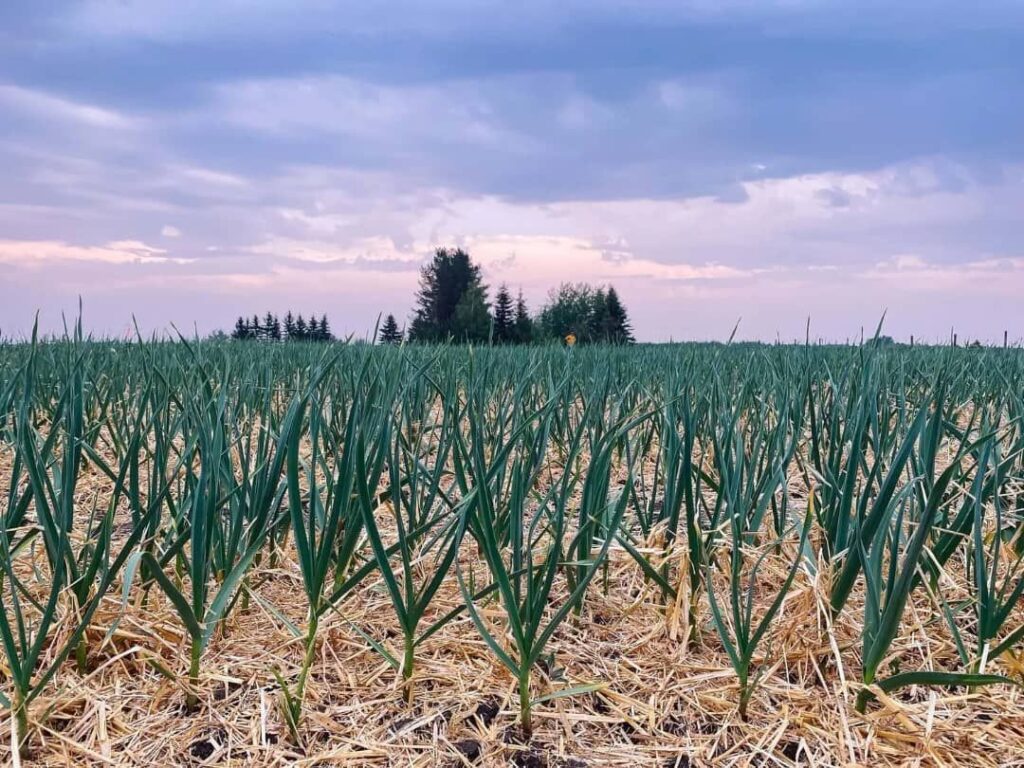
Hardneck garlic produces a stiff central flower stalk called a scape. According to the University of Wisconsin–Madison’s horticulture extension, hardneck types typically have four to twelve cloves arranged in a single circle around that woody stalk, and they generally do not store as long as softneck bulbs.
Softneck garlic does not send up a reliable flower stalk, which is why its stems stay pliable enough to braid. The Missouri Botanical Garden notes that softneck bulbs commonly contain 12 to 20 cloves, arranged in overlapping layers rather than a single ring.
I find this distinction useful shorthand. If a recipe calls for bold, punchy flavor, reach for hardneck. If you want a bulb that will still be good in the pantry next spring, softneck is the safer bet.
The 8 Hardneck Garlic Types
1. Porcelain Garlic
Porcelain garlic produces some of the largest bulbs of any hardneck type, often exceeding three inches across. Each bulb usually holds just four to six oversized cloves, wrapped in a smooth, shiny white skin.
I have always liked Porcelain for roasting because the cloves are so large that peeling feels almost effortless. Some research suggests Porcelain types carry the highest concentration of allicin, the sulfur compound responsible for garlic’s characteristic pungency and much of its therapeutic reputation.
Popular cultivars include Music, German White, and Georgian Fire. Porcelain garlic tolerates cold northern winters extremely well, which is part of why it dominates seed-garlic catalogs across Canada and the northern United States.
2. Rocambole Garlic
Ask any serious cook which garlic tastes best, and Rocambole often wins the debate. It has a rich, full, classic garlic flavor that many chefs consider unmatched by other types.
The bulbs form six to eleven plump cloves that peel easily, a small mercy for anyone who cooks often. Unfortunately, Rocambole is also the most demanding to grow. It needs real winter cold and struggles badly in warm southern climates.
Storage is its weak point too. Most Rocambole bulbs begin to soften and lose quality within three to four months of harvest, so this is a type to use quickly rather than stockpile.
3. Purple Stripe Garlic
True to its name, Purple Stripe garlic wears bold purple streaks and blotches across both the bulb wrapper and individual clove skins. It is often described as the most visually striking garlic type.
Flavor-wise, Purple Stripe strikes a nice balance. It starts sweet, then finishes with a spicy kick that intensifies when roasted. Bulbs typically contain eight to twelve cloves and store a little longer than Rocambole, usually five to six months.
Persian Star and Chesnok Red both belong to this group, and Chesnok Red in particular is prized for keeping its flavor intact even after long cooking times.
4. Marbled Purple Stripe Garlic
This is a close cousin of standard Purple Stripe, distinguished by a marbled, almost brushstroke pattern instead of clean stripes. Bulbs tend to be large but hold fewer cloves, usually four to seven.
Marbled Purple Stripe garlic is known for a hot, assertive flavor that holds up well in slow-cooked dishes. Metechi, one of the hottest garlic cultivars grown, falls into this category and is a favorite among gardeners who want serious heat.
5. Glazed Purple Stripe Garlic
Glazed Purple Stripe bulbs have a shiny, almost lacquered wrapper that catches the light differently than other purple-striped types. The flavor is noticeably milder and sweeter than its Marbled or standard Purple Stripe relatives.
Bulbs usually yield eight to twelve cloves. I appreciate this type for everyday cooking precisely because it will not overpower a dish the way Creole or Asiatic garlic can.
6. Creole Garlic
Creole garlic traces its roots to Spain and was carried to the Americas centuries ago, eventually becoming a fixture in Southern and Cajun kitchens. The cloves are usually reddish-brown or copper colored, with eight to twelve cloves per bulb.
What sets Creole apart is heat combined with excellent storage. Unlike most hardnecks, Creole types can keep for six to nine months under proper conditions, which is unusual for a variety this spicy. It also handles hot, humid summers better than almost any other hardneck.
7. Asiatic Garlic
Asiatic garlic hails from East Asia and is known for cloves that are intensely hot raw but turn surprisingly sweet once cooked. Bulbs contain anywhere from four to ten cloves depending on the cultivar.
This type bolts weakly compared to true hardnecks, meaning it sometimes behaves more like a softneck depending on growing conditions. Korean Red and other Asiatic cultivars are popular for pickling and stir-frying because the heat mellows so dramatically with heat.
8. Turban Garlic
Turban garlic gets its name from the swirled, turban-like shape of its scape. It is typically the first garlic type to mature in the growing season, often ready for harvest weeks ahead of other hardnecks.
The flavor raw is sharp and hot, but it softens considerably once cooked. Storage is short, usually three to five months, so Turban garlic is best used soon after curing rather than saved for winter.
ALSO READ: Month-by-Month Timeline: How Long Does Garlic Take to Grow?
The 3 Softneck Garlic Types
9. Silverskin Garlic
Silverskin is the garlic you are most likely to see hanging in braided ropes at a farmers market. It has thin, silvery-white wrappers and produces the highest clove count of any type, sometimes 20 or more per bulb.
Storage is Silverskin’s superpower. Properly cured bulbs can last nine months to a full year, longer than almost any other garlic type available. This is also the variety most commonly sold in supermarkets because it ships and stores so reliably.
10. Artichoke Garlic
Artichoke garlic gets its name from the overlapping, layered clove arrangement that resembles an artichoke’s petals. It is the most widely cultivated garlic type on Earth, forming the backbone of commercial garlic production in California and the Mediterranean.
Flavor is mild and mellow compared to hardneck types, which makes it approachable for people who find raw garlic too aggressive. California Early and California Late are the most recognizable Artichoke cultivars, and both are staples of grocery store garlic bins.
11. Middle Eastern Garlic
Middle Eastern garlic is a lesser-known softneck group, valued for a rich, warm flavor that suits the cuisines it is named after. It shares the softneck trait of storing well, typically six to nine months.
This type is less commonly available through mainstream retailers, so I would recommend checking specialty seed-garlic catalogs if you want to grow it yourself.
The 4 Specialty and Culinary Garlic Types
12. Elephant Garlic
Here is a fact that surprises most people: elephant garlic is not actually garlic. According to Utah State University Extension, it belongs to Allium ampeloprasum, making it a close relative of the leek rather than true garlic.
Bulbs are enormous, sometimes weighing close to a pound, with only four to six giant cloves. The flavor is much milder and slightly sweet, closer to a mellow onion than sharp garlic. Elephant garlic also stores poorly compared to true garlic types, so it is best used within a few months of harvest.
13. Solo (Pearl) Garlic
Solo garlic, sometimes called pearl garlic or single-clove garlic, forms one round clove instead of dividing into multiple segments. It is most common in cooler high-altitude regions, including parts of Yunnan, China.
Because there is no papery inner skin to peel between cloves, solo garlic is exceptionally easy to prepare. The flavor is sweet and mild, and whole bulbs roast beautifully since there is nothing to separate first.
14. Black Garlic
Black garlic is not a separate botanical variety at all. It is any type of garlic, most often Artichoke or Silverskin, transformed through weeks of controlled heat and humidity fermentation.
The result is a soft, jet-black clove with a flavor closer to balsamic vinegar or tamarind than raw garlic. It carries no sharp bite whatsoever. Chefs use it to add deep umami richness to sauces, marinades, and glazes without any of the pungency people associate with raw cloves.
15. Green (Spring) Garlic
Green garlic is simply garlic harvested young, before the bulb has fully divided into cloves and while the plant still looks like a slender scallion. It has a delicate, fresh flavor that sits between garlic and green onion.
Because it is harvested early, green garlic has almost no shelf life and should be used within a week or two. I love tossing it into spring risottos or sautéing it lightly, since the flavor is far gentler than mature garlic.
ALSO READ: The Easy Way: How to Grow Garlic From Clove
Some Facts about Garlic Worth Knowing
A few figures stand out from the research, and I think they help put garlic’s global scale into perspective.
- Global production: About one million hectares of garlic produce roughly 10 million metric tons worldwide each year, based on FAO data referenced by USDA ARS.
- China’s dominance: China accounts for over 60 percent of the world’s garlic planting area and more than 70 percent of total global production, according to a peer-reviewed study published through the National Institutes of Health’s PubMed Central archive.
- Yield per clove: Utah State University Extension reports that each planted clove typically produces one bulb, and each bulb yields 10 to 15 cloves at harvest under good growing conditions.
- Hardiness range: North Carolina State University’s Extension Plant Toolbox lists garlic as hardy across USDA zones 4a through 9b, which explains why so many different types can be grown across such a wide range of climates.
How to Choose the Right Garlic Type for You
If you are cooking, not gardening, the decision is simpler than it looks.
For everyday meals, reach for Artichoke or Silverskin softneck garlic. It is mild, widely available, and stores for months without special care.
For bold roasting or a dish that needs real depth, Porcelain or Rocambole hardneck types deliver the strongest, most complex flavor.
For sauces, glazes, and umami-heavy cooking, black garlic is worth seeking out at a specialty grocer. A little goes a long way.
For gardeners in cold climates, hardneck types like Porcelain and Purple Stripe are more reliable than softnecks, which prefer milder winters.
Frequently Asked Questions
What is the healthiest type of garlic? Porcelain hardneck garlic is often cited for carrying the highest allicin levels, the compound linked to garlic’s antioxidant and antimicrobial properties. That said, all true garlic types contain beneficial organosulfur compounds, so the “healthiest” choice often comes down to how much of it you actually enjoy eating.
Is elephant garlic actually garlic? No. Despite the name, elephant garlic is a variety of leek, not a true garlic. It shares a genus with garlic but belongs to a different species, which is why its flavor is so much milder.
Which garlic type lasts the longest in storage? Silverskin softneck garlic wins here, often keeping for nine months to a year when cured and stored properly in a cool, dry, dark spot with good airflow.
Why does black garlic taste sweet instead of sharp? The fermentation process breaks down the sharp-tasting sulfur compounds in raw garlic and converts natural sugars, producing the soft, sweet, umami-rich flavor black garlic is known for.
Can I plant garlic bought from the grocery store? You can, but university extension programs generally advise against it. Grocery store bulbs are often softneck varieties bred for shelf life rather than your local climate, and some are treated with sprout inhibitors that reduce germination success.
A Brief Note on Garlic’s History
Garlic is not a modern crop. The USDA Agricultural Research Service traces its cultivation back roughly 5,000 years, with clear evidence of use by Egyptian, Indian, and Babylonian cultures in the ancient world.
It still grows wild today only in a narrow band of Central Asia, centered around Kyrgyzstan, Tajikistan, Turkmenistan, and Uzbekistan.
What strikes me most about that history is how little garlic itself has changed. Because it is propagated from cloves rather than seed, the varieties we grow today are essentially clones passed down through thousands of years of farmers selecting and replanting their favorite bulbs.
Modern seed-garlic breeding only became possible in the 1980s, which means most of the diversity described in this guide predates written history.
Final Thoughts
Garlic looks simple sitting in a mesh bag at the store, but behind that plain white bulb sits thousands of years of cultivation and genuine botanical diversity.
I hope walking through these 15 types of garlic gives you a reason to try something beyond the supermarket default next time you are planning a meal or planting a fall garden bed.
Once you taste the difference between a mellow Artichoke clove and a fiery Marbled Purple Stripe, it is hard to go back to thinking of garlic as just one thing.
References
- Simon, P. W. (2020). The Origins and Distribution of Garlic: How Many Garlics Are There? USDA Agricultural Research Service, Vegetable Crops Research Unit. https://www.ars.usda.gov/midwest-area/madison-wi/vegetable-crops-research/docs/simon-garlic-origins
- USDA Natural Resources Conservation Service. Allium sativum L., Plant Profile. USDA Plants Database. https://plants.usda.gov/plant-profile/ALSA2
- North Carolina State University Extension. Allium sativum (Clove of Garlic, Cultivated Garlic, Garlic, Serpent Garlic). NC State Extension Gardener Plant Toolbox. https://plants.ces.ncsu.edu/plants/allium-sativum/
- Mahr, S., & Mortenson, L. Garlic, Allium sativum. University of Wisconsin–Madison, Wisconsin Horticulture Division of Extension. https://hort.extension.wisc.edu/articles/garlic-allium-sativum/
- Missouri Botanical Garden. Allium sativum. Plant Finder. http://www.missouribotanicalgarden.org/PlantFinder/PlantFinderDetails.aspx?taxonid=257077&isprofile=1&basic=garlic
- Han, H., Sha, R., Dai, J., Wang, Z., Mao, J., & Cai, M. (2024). Garlic Origin Traceability and Identification Based on Fusion of Multi-Source Heterogeneous Spectral Information. Foods, 13(7), 1016. National Institutes of Health, PubMed Central. https://www.ncbi.nlm.nih.gov/pmc/articles/PMC11012206/
- Drost, D. (2020). How to Grow Garlic in Your Garden. Utah State University Extension. https://extension.usu.edu/yardandgarden/research/garlic-in-the-garden

Tim M Dave is a gardening expert with a passion for houseplants, particularly cacti and succulents. With a degree in plant biology from the University of California, Berkeley, he has vast experience in gardening. Over the years, he has cultivated a vast collection of desert plants and learned a great deal about how to grow and care for these unique companions.