30 Companion Plants for Kale (And the Science Behind Every Pairing)
I still remember the first summer my kale leaves turned into a lace-like mess of tiny shotgun holes almost overnight. Flea beetles had moved in, and nothing in my seed packets had warned me that kale rarely does its best growing when left completely on its own.
If you remember only one thing, remember this. Onions, garlic, chives, and other alliums are the most consistently recommended companions for kale, since their strong scent helps mask the plant from pests that hunt by smell.
Dill, nasturtiums, and other flowering herbs round out a strong companion plan by attracting the ladybugs, lacewings, and parasitic wasps that keep aphid and caterpillar populations in check naturally.
This guide walks through 30 companion plants for kale.
Why Companion Planting Works for Kale
Kale belongs to the Brassica family, a group prized for its cold hardiness but also targeted by a predictable set of pests. According to the Utah State University Extension, flea beetles are strong fliers that move into gardens from neighboring fields and weedy borders, and they attack Brassica crops including kale with particular enthusiasm.
The University of Minnesota Extension notes that flea beetle damage is common from May through early June, and gardeners typically consider spraying once leaf area loss reaches 10 to 20 percent. Diamondback moth populations become a genuine concern once 50 percent of plants show at least five larvae each, according to the same research.
Companion planting will not eliminate these pests, but it genuinely reduces the pressure through several mechanisms.
- It confuses pests by scent. Cabbage moths and other pests locate kale using its distinct odor. Aromatic neighbors interrupt that signal.
- It uses trap crops. Certain Brassica relatives are more attractive to flea beetles than kale itself, drawing pests away from your main harvest.
- It attracts natural predators. Flowering herbs recruit ladybugs, lacewings, and parasitic wasps that feed on aphids and caterpillar eggs.
- It makes efficient use of space. Kale grows upright and slowly, leaving room for shorter, faster crops to fill the bed underneath it.
According to West Virginia University Extension, kale grows best with a soil pH between 6.0 and 6.5, and nitrogen deficiency often shows up as yellowing or distorted leaves. Choosing companions with compatible nutrient needs matters just as much as choosing companions for pest control.
The NC State Extension service also points out that kale produces its best yields and flavor in early spring or fall, which means the right companion plan should account for a plant that has a genuine seasonal rhythm, not one that grows the same way all year round.
The 30 Best Companion Plants for Kale
Here is the complete list, organized by category so you can plan a bed with a clear purpose behind every plant you choose.
Alliums — The Scent-Masking Family
Alliums share a common defense mechanism. Their sulfur compounds interrupt the scent trails that cabbage moths, aphids, and flea beetles rely on to find kale in the first place.
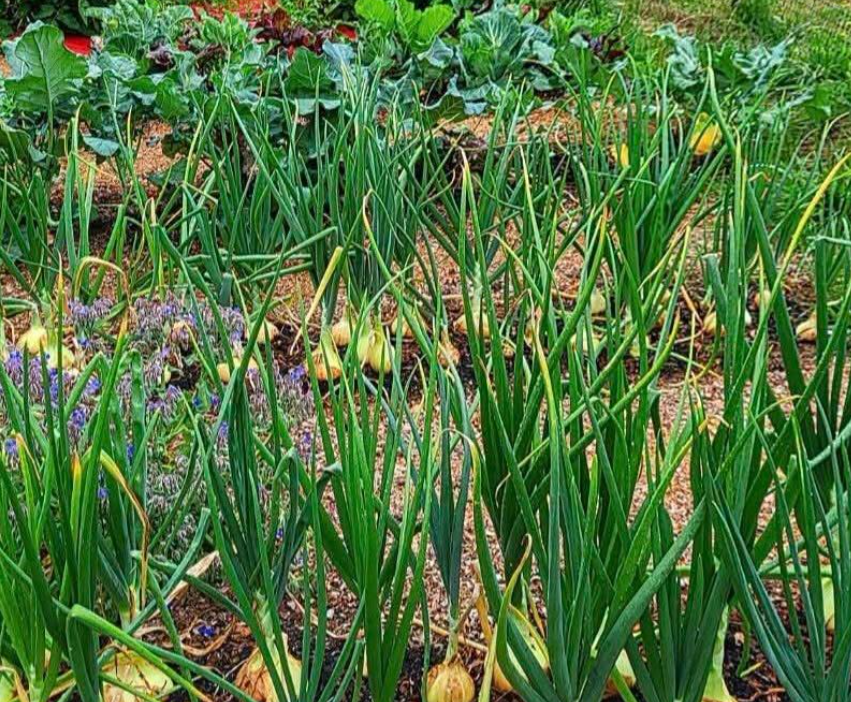
1. Onions
Onions release a strong sulfur scent that can help confuse pests searching for kale by smell. They also grow at a modest, unhurried pace that will not compete aggressively with kale’s own root system.
I plant a row of onions between every two rows of kale, mostly because it is such a low-effort way to add a genuine layer of pest confusion to the bed.
Onions occupy relatively little horizontal space, so tucking them along kale rows rarely costs you much growing room.
2. Garlic
Garlic works through the same scent-masking mechanism as onions, with the added benefit of mild antifungal properties in the surrounding soil.
Since garlic is usually planted in autumn, it will already be established by the time spring kale transplants go into the ground, giving overlapping protection from the very start of the season.
Garlic requires very little ongoing maintenance, which makes it an easy addition even for gardeners short on time.
3. Chives
Chives are compact and simple to tuck directly along kale rows without disturbing the surrounding soil or roots.
Their light onion scent adds a further layer of pest confusion, and their purple flowers, once mature, draw in pollinators and other beneficial insects.
Chives are perennial in most climates, so a single planting continues protecting your kale bed for years without any replanting effort.
4. Leeks
Leeks bring the same pungent, pest-confusing aroma as onions and garlic, but they grow more slowly, which matches kale’s own patient growing rhythm nicely.
Because leeks tolerate cool soil better than most alliums, they are a strong choice for very early spring plantings alongside kale.
Their upright growth habit also means they will not shade kale’s broad leaves as they mature side by side.
5. Shallots
Shallots offer protective benefits similar to onions but mature faster, giving you an earlier harvest from the same bed.
Their smaller bulb size means they take up less root space, so more shallots fit along a kale row without crowding either crop.
A useful rule of thumb is to scatter one allium plant for every two or three kale plants, rather than following a strict grid pattern.
Aromatic Herbs — Natural Pest Deterrents
Herbs work through the same principle throughout the vegetable garden: strong scent compounds interrupt the chemical signals pests rely on to locate their next meal.
6. Dill
Dill, while still young and leafy, attracts ladybugs and parasitic wasps that feed heavily on aphids and caterpillar eggs found on kale leaves.
Its fine, feathery foliage does not compete significantly for light with kale’s much broader leaves growing nearby.
Harvest or remove dill before it flowers, since a bolted, flowering dill plant behaves very differently from a young one and can hinder germination in the surrounding soil.
7. Rosemary
Rosemary’s strong, woody scent is known to deter cabbage moths, one of the more persistent pests that trouble kale throughout the growing season.
Because rosemary is a perennial shrub, it becomes a permanent fixture at the edge of the garden rather than something replanted each year.
I keep mine along the sunniest border of my kale bed, where it thrives with minimal watering and requires almost no attention.
8. Sage
Sage works in a similar way to rosemary, releasing essential oils that many flying pests find genuinely unpleasant.
Beyond pest deterrence, sage is drought-tolerant once established, meaning it will not compete heavily with kale for water during dry spells.
I trim mine back hard each spring, which keeps it from sprawling over nearby kale rows as the season progresses.
9. Thyme
Thyme stays low to the ground, so it will never shade kale the way a taller herb could.
Its aromatic oils disrupt the scent trails that pests rely on, while its dense, spreading growth doubles as a living mulch that helps retain soil moisture.
I let thyme spread along the path edges of my raised beds, where it tolerates occasional foot traffic without much complaint.
10. Oregano
Oregano’s strong, pungent scent can help mask the presence of kale from pests that hunt primarily by smell.
As a low, spreading perennial, oregano also helps shade the soil around the base of nearby kale plants, supporting moisture retention during warmer weeks.
Once established, oregano needs very little care, making it a practical, long-term border plant around a kale bed.
Flowering Companions — Recruiting Beneficial Insects
Flowers do not repel pests directly so much as they recruit an army of natural predators that keep aphid and caterpillar populations from spiraling out of control.
11. Nasturtiums
Nasturtiums act as a trap crop, drawing aphids toward themselves and away from the more valuable kale leaves nearby.
They are also edible, with a peppery bite that works nicely in salads, which is a pleasant bonus once they have done their job in the garden.
Let a few nasturtiums sacrifice themselves to aphids each season rather than removing them at the first sign of pest activity, since that is precisely the point of a trap crop.
12. Marigolds
Marigolds reliably attract pollinators and several predatory insects, even though some of their more dramatic pest-repelling reputation does not fully hold up under closer research scrutiny.
Certain marigold varieties can also suppress harmful soil nematodes over time, though this benefit typically requires a full season of dense planting before it becomes noticeable.
I still plant marigolds every year along my kale bed, mostly because they are cheerful, low-maintenance, and genuinely bring in more helpful insects than harmful ones.
13. Calendula
Calendula draws in hoverflies and ladybugs, both of which feed heavily on the aphids that commonly trouble kale.
It blooms for an extended stretch of the season, which means the beneficial insects it attracts stick around consistently rather than in a single short burst.
I scatter calendula seed along the edges of my kale bed each spring, since it self-seeds readily and often returns unprompted the following year.
14. Sweet Alyssum
Sweet alyssum is a low, spreading flower that attracts hoverflies in large numbers, and hoverfly larvae are voracious aphid predators.
Its tight, ground-hugging growth habit also helps suppress small weeds that might otherwise compete with kale for nutrients and moisture.
Sweet alyssum blooms almost continuously from early summer through the first frost, so its benefit does not fade partway through the season.
15. Borage
Borage attracts a wide range of pollinators and predatory insects, and its blue, star-shaped flowers keep blooming for weeks at a stretch.
Some gardeners report that borage improves the general vigor of nearby vegetables, though this claim is more anecdotal than proven through controlled research.
I let borage self-seed at the edges of my garden, since it tends to return reliably year after year with almost no effort on my part.
16. Yarrow
Yarrow attracts ladybugs, lacewings, and parasitic wasps, three of the most effective natural predators against the aphids and small caterpillars that trouble kale.
It is also remarkably drought-tolerant and requires almost no care once established, making it a low-effort addition to any companion planting plan.
I think of this entire flowering group as a support system rather than a direct defense. None of them will single-handedly stop an infestation, but together they build a garden that hosts more good insects than bad ones.
Legumes — Natural Soil Builders
Legumes work through bacteria living in their root nodules, which convert nitrogen from the air into a form plants can use directly. Kale, a notably nitrogen-hungry crop, benefits significantly from growing nearby.
17. Peas
Peas fix nitrogen in the soil, feeding the kale growing beside them without requiring any additional fertilizer.
Both crops share a similar cool-season growing window, so their needs line up nicely across the early part of the season.
Peas climb, which means a simple trellis lets you grow them vertically along one edge of the kale bed without giving up valuable ground space.
18. Bush Beans
Bush beans offer the same nitrogen-fixing benefit as peas, though they grow later in the season once the weather has properly warmed.
This makes them a natural follow-on crop once early kale has been harvested from a section of the bed.
Their low, compact growth habit means they will not compete heavily for light with any kale still growing nearby.
Trap Crop Brassicas — Sacrificial Pest Magnets
Certain Brassica relatives are simply more attractive to flea beetles than kale, which makes them useful sacrificial plantings rather than direct competitors.
19. Radishes
Radishes are considered one of the most effective trap crops for flea beetles, according to Utah State University Extension research on vegetable pest management.
Planting radishes about two to four weeks before your main kale crop allows the radishes to mature and become genuinely attractive to flea beetles by the time kale seedlings emerge.
Radishes also mature quickly, so this trap-crop strategy does not cost you much bed space in the long run.
20. Mustard Greens
Mustard greens belong to a group of “spicier” Brassicas that flea beetles find more attractive than kale itself, according to the University of Minnesota Extension.
Planting a border of mustard around a kale bed pulls flea beetle pressure away from the main crop, reducing the shotgun-style leaf damage that these pests are known for.
I treat mustard as an expendable border crop, checking it regularly and accepting some damage there as the price of protecting the kale.
21. Arugula
Arugula, like mustard, is part of the same group of spicy Brassicas that flea beetles prefer over kale.
Because arugula grows quickly and can be harvested young, it offers a genuine kitchen bonus even while serving its trap-crop role in the garden.
Research summarized by the University of Minnesota Extension found that using a diverse mix of these spicier trap crops together works better than relying on a single species alone.
Root and Other Vegetables
These companions round out a kale bed by using different root depths and different growth habits, so nothing goes to waste.
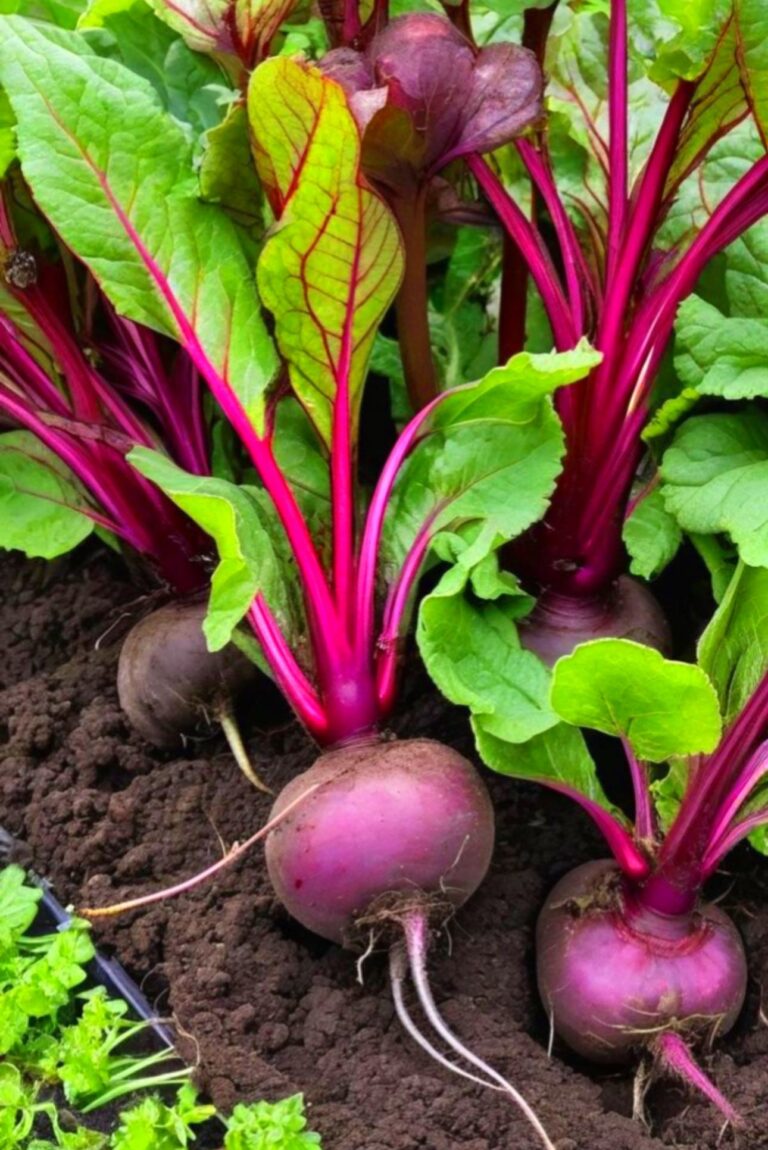
22. Beets
Beets grow a modest taproot that occupies a different soil layer than kale’s fibrous root system, which limits direct competition between the two.
Both crops tolerate similar cool-season conditions, making bed planning between them fairly straightforward.
I plant beets along the edges of a kale bed, where their compact size does not interfere with the kale’s larger footprint as it matures.
23. Carrots
Carrots take considerably longer to mature than most kale varieties, allowing the two crops to share a bed in succession without one crowding the other.
Their deep taproot draws water and nutrients from a different soil layer than kale’s shallower roots, making efficient use of the full soil profile.
I sow carrots between young kale transplants early in the season, giving the slow-germinating carrot seed time to establish before kale’s canopy fills in.
24. Celery
Celery shares kale’s preference for consistent moisture and fertile, well-drained soil, which simplifies irrigation planning when the two are grown together.
Its upright growth habit leaves the surrounding soil open, which suits a Brassica like kale that benefits from good airflow around its base.
Celery is a heavier feeder, so keep soil nutrition topped up if you are growing a full bed of both crops together.
25. Cucumbers
Cucumbers grow later in the season than kale, allowing a spring kale harvest to finish well before cucumber vines need the space to spread out.
Their sprawling vines can also provide a bit of ground shade that helps keep soil temperatures more moderate as summer heat arrives.
This pairing works best as a succession planting, since cucumbers need considerably warmer soil than kale tolerates at germination.
Leafy Greens — Compatible Cool-Season Growers
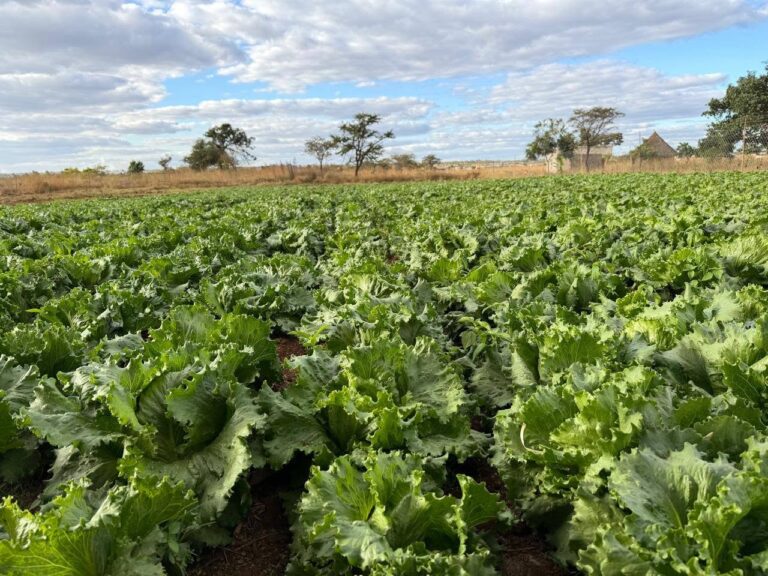
Leafy greens share kale’s general preference for cool weather and consistent moisture, which makes bed planning between them remarkably simple.
26. Lettuce
Lettuce matures quickly and stays shallow-rooted, so it does not compete significantly with kale’s deeper, more established root system.
Both crops thrive in similar light and moisture conditions, which means a shared watering schedule works well for both.
I interplant lettuce between young kale transplants, harvesting the lettuce well before the kale needs the full width of the bed.
27. Spinach
Spinach shares kale’s appetite for cool weather and nitrogen-rich soil, making the two natural companions in an early spring planting.
Because spinach matures faster than kale, it provides an early harvest from ground that the kale will eventually take over as it grows larger.
I sow spinach around the base of young kale seedlings, where the spinach acts almost like a living mulch until it is ready to pick.
28. Swiss Chard
Swiss chard grows well beside kale without significant competition for nutrients, and it tolerates heat noticeably better than many other leafy greens.
This makes chard a useful companion for extending a harvest of tender greens into the warmer months once kale itself has slowed down.
I use chard as a border plant, since its colorful stems add visual interest to what can otherwise be a fairly uniform bed of green.
Additional Beneficial Companions
29. Cilantro
Young cilantro attracts many of the same beneficial predatory insects as dill, adding another layer of natural pest management around the kale bed.
Because cilantro bolts quickly in warm weather, harvest it for the kitchen while it remains young and leafy, before it shifts from helpful neighbor to competitive one.
I grow cilantro in small, successive plantings throughout spring, which keeps a steady supply of young, beneficial plants near the kale at all times.
30. Sunflowers
Sunflowers grow tall and quickly, providing pollinator activity and a modest amount of afternoon shade that can help kale through unexpectedly hot spells.
Beyond their physical structure, sunflowers attract a wide range of beneficial insects that spill over into the surrounding kale bed.
Plant sunflowers along the northern or eastern edge of a kale bed, spaced widely enough that their roots do not compete heavily with kale’s own root zone.
Plants to Avoid Near Kale
Not every neighbor helps. A few plants can genuinely work against a healthy kale harvest, so it is worth a brief mention.
- Strawberries can share certain soil-borne diseases with Brassica crops, and repeated close planting increases the risk of a buildup over time.
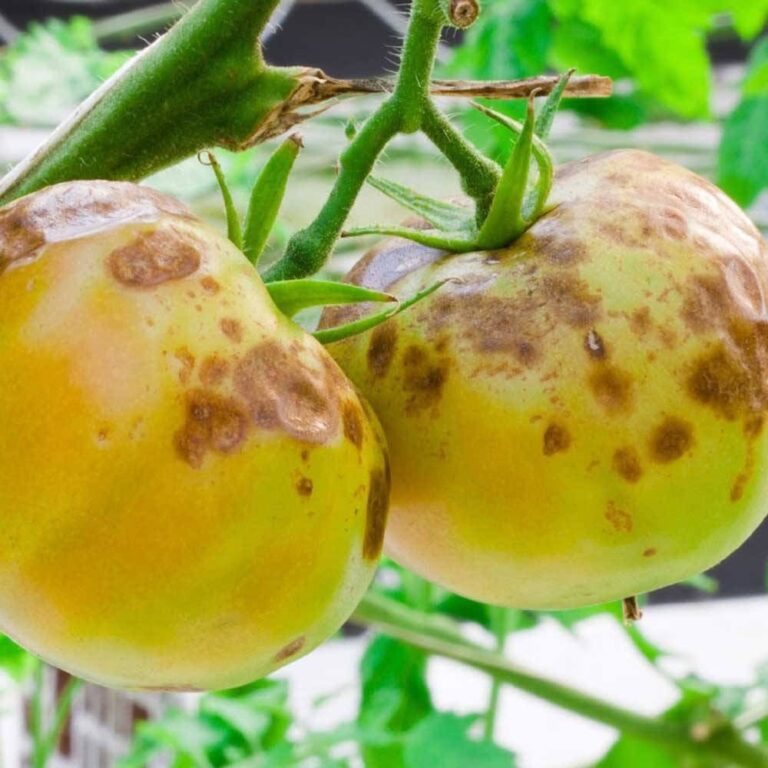
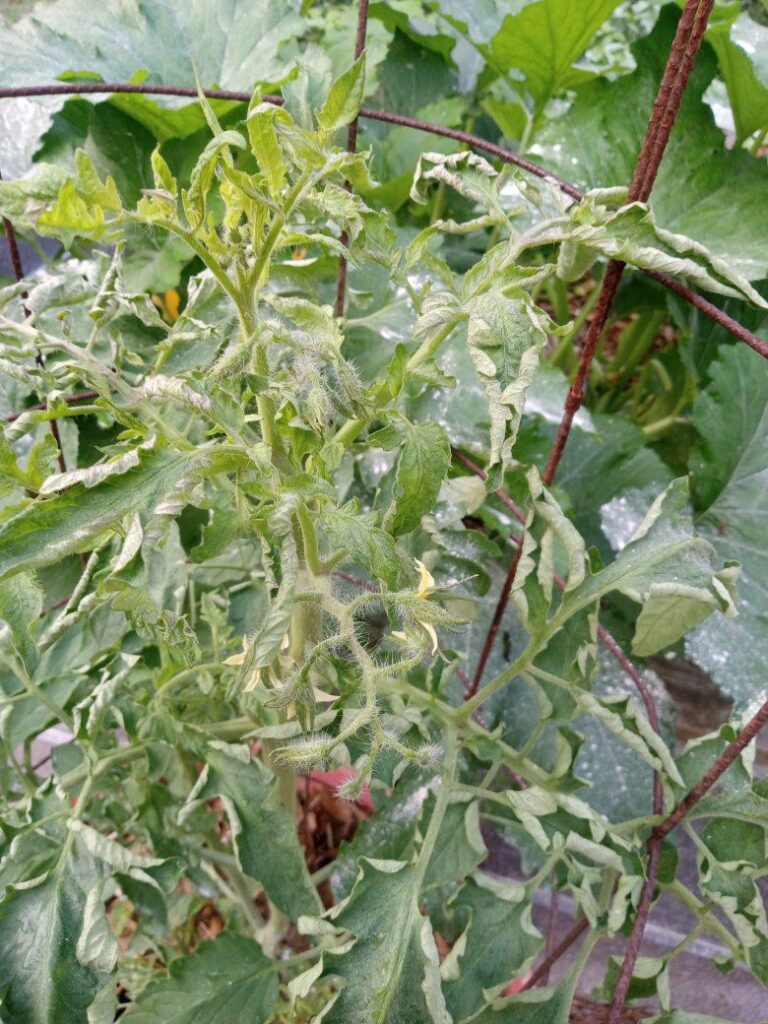
- Tomatoes compete for many of the same soil nutrients kale needs and generally perform better in a separate part of the garden.
- Fennel is broadly antagonistic to most garden neighbors, kale included, due to the allelopathic compounds it releases into the soil.
ALSO READ: 30 Different Types of Kale: Variety With Pictures Explained
Common Mistakes Gardeners Make
I have made most of these mistakes myself over the years, so treat this as a shortcut around a few wasted seasons.
Planting all Brassicas in the same bed every year. Kale, cabbage, and broccoli share pests and diseases. Rotating them to different beds each year prevents these problems from building up in the soil.
Ignoring trap crops once they attract pests. Mustard and radishes planted as trap crops need periodic removal or treatment once flea beetles gather, or the pests will eventually spread to your kale anyway.
Skipping soil testing. Kale is a heavy feeder, and nutrient deficiencies show up quickly as yellowing or distorted leaves. A basic soil test resolves most of these issues before they start.
Overcrowding the bed. Poor airflow around kale leaves increases the risk of fungal issues, so give companions enough room to reach their mature size.
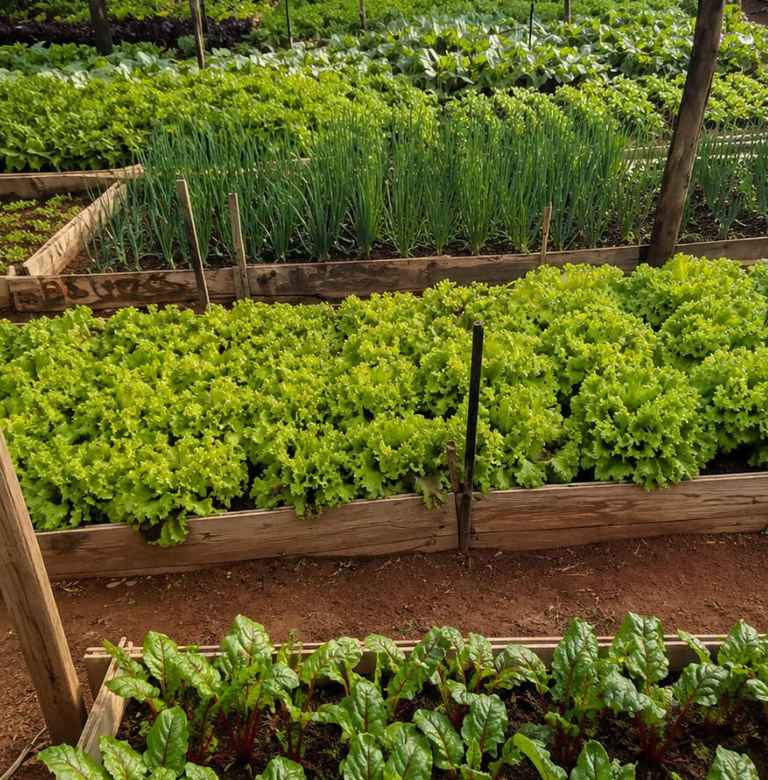
A Simple Layout to Try This Season
I prefer to keep this practical rather than theoretical. Here is a layout that has worked reliably in my own raised beds.
- Border rows: Chives, onions, or leeks along the outer edge of the bed.
- Trap crop border: A row of radishes or mustard greens planted two to three weeks before the kale.
- Interplanted rows: Kale alternated with lettuce, spinach, or beets.
- Flower accents: Calendula or nasturtiums tucked into corners to draw in beneficial insects.
This kind of layout does not demand extra space. It simply asks you to think about what goes where, rather than growing kale in an isolated row with nothing around it.
Timing matters just as much as placement. Sow your trap crops two to four weeks before your kale seedlings go in, so they are already established and attractive to flea beetles by the time your main crop arrives.
ALSO READ: From Seed to Harvest: How to Grow Kale at Home – Complete Guide
Frequently Asked Questions
What is the best companion plant for kale? Onions and other alliums are generally considered the most effective, since their strong scent helps mask kale from pests that hunt by smell.
Do trap crops really protect kale from flea beetles? Yes, when planted correctly. Utah State University Extension research recommends planting trap crops like radishes two to four weeks ahead of the main crop, so they are large and attractive by the time flea beetles arrive.
Can I plant kale near tomatoes? It is best to keep some distance between the two, since both are heavy feeders competing for similar soil nutrients, and they rarely benefit each other directly.
How close should companion plants be to kale? Most companions can be planted directly in the same row or in an adjacent row a few inches away. Taller plants like sunflowers should sit far enough back that they do not block morning sun entirely.
Is it fine to plant kale and other Brassicas together? Occasional interplanting within a season is fine, but avoid growing kale, cabbage, and broccoli in the exact same soil year after year, since they share pests and diseases that build up over time.
Do marigolds really help protect kale? Marigolds are more valuable as pollinator and beneficial-insect attractors than as a direct pest repellent. They are worth planting, but should not be relied upon as a sole line of defense.
Does companion planting eliminate the need for pest monitoring? No. Companion planting reduces pest pressure, but regular monitoring for flea beetle damage and caterpillar activity remains an important part of a healthy kale bed.
Final Thoughts
Companion planting will not solve every problem in a kale bed, and I will not pretend otherwise. But after testing many of these pairings across several seasons, I can say the difference is real and worth the modest extra planning it takes.
Start small. Pick three or four companions from this list, watch how your kale responds this season, and build a fuller plan from there.
Gardening rewards patience more than perfection. You do not need all 30 plants in a single bed to see a noticeable improvement. Even a simple pairing of onions and a radish trap crop alongside your kale rows will show you, within one season, why so many growers rely on this approach.
References
- Utah State University Extension — Flea Beetles on Vegetables https://extension.usu.edu/planthealth/research/flea-beetles-vegetables
- University of Minnesota Extension — Common Insects in Vegetable Crops https://extension.umn.edu/vegetables/common-insects-vegetable-crops
- West Virginia University Extension — Growing Kale in West Virginia https://extension.wvu.edu/lawn-gardening-pests/gardening/wv-garden-guide/growing-kale-in-west-virginia
- NC State Extension — Kale https://content.ces.ncsu.edu/kale
- Ohio State University Extension — Kale: An Easy-to-Grow and Tasty Vegetable https://extension.osu.edu/today/kale-easy-grow-and-tasty-vegetable
- University of Vermont Extension — Flea Beetles Management https://www.uvm.edu/vtvegandberry/factsheets/fleabeetle.html
- University of Delaware Cooperative Extension — Kale https://www.udel.edu/academics/colleges/canr/cooperative-extension/fact-sheets/kale/

Tim M Dave is a gardening expert with a passion for houseplants, particularly cacti and succulents. With a degree in plant biology from the University of California, Berkeley, he has vast experience in gardening. Over the years, he has cultivated a vast collection of desert plants and learned a great deal about how to grow and care for these unique companions.