30 Best Companion Plants for Zucchini (And Those to Avoid)
I have grown zucchini for years, and I learned the hard way that a lonely zucchini bed invites trouble. Squash bugs move in fast. Cucumber beetles follow close behind. Pollination struggles when there are no flowers nearby to pull bees in.
Once I started pairing my zucchini with the right neighbors, everything changed. Fruit set improved. Pest damage dropped. The whole bed simply looked healthier.
This guide covers 30 companion plants for zucchini, grouped by the job each one does in the garden.
Why Companion Planting Actually Matters for Zucchini
Zucchini (Cucurbita pepo) is not a low-maintenance crop, despite its reputation for taking over gardens. It needs consistent pollinator visits, protection from a short list of stubborn pests, and enough space to spread its broad leaves.
Squash and zucchini flowers depend entirely on insect pollination. Wind cannot do this job. According to the University of Florida’s Entomology and Nematology Department, five visits from a male squash bee produce significantly larger fruit than a single visit, and flowers that receive multiple pollinator visits consistently set bigger fruit than those visited only once.
That single fact explains why so many entries on this list are flowers, not vegetables. More blooms nearby mean more bees stopping by your zucchini too.
Pests are the second challenge. Cucumber beetles and squash bugs are the main offenders, and they are notoriously hard to control without heavy spraying. Rutgers Cooperative Extension has run field trials proving that trap crops can reduce insecticide use while still protecting the main crop.
A more attractive perimeter planting pulls pests away from the center of the field, which lets growers focus control efforts, and costs, on the trap crop instead of the cash crop.
Finally, there is space and soil health. Zucchini’s big leaves shade the ground, which is useful, but it also means neighboring plants need to be chosen with some care.
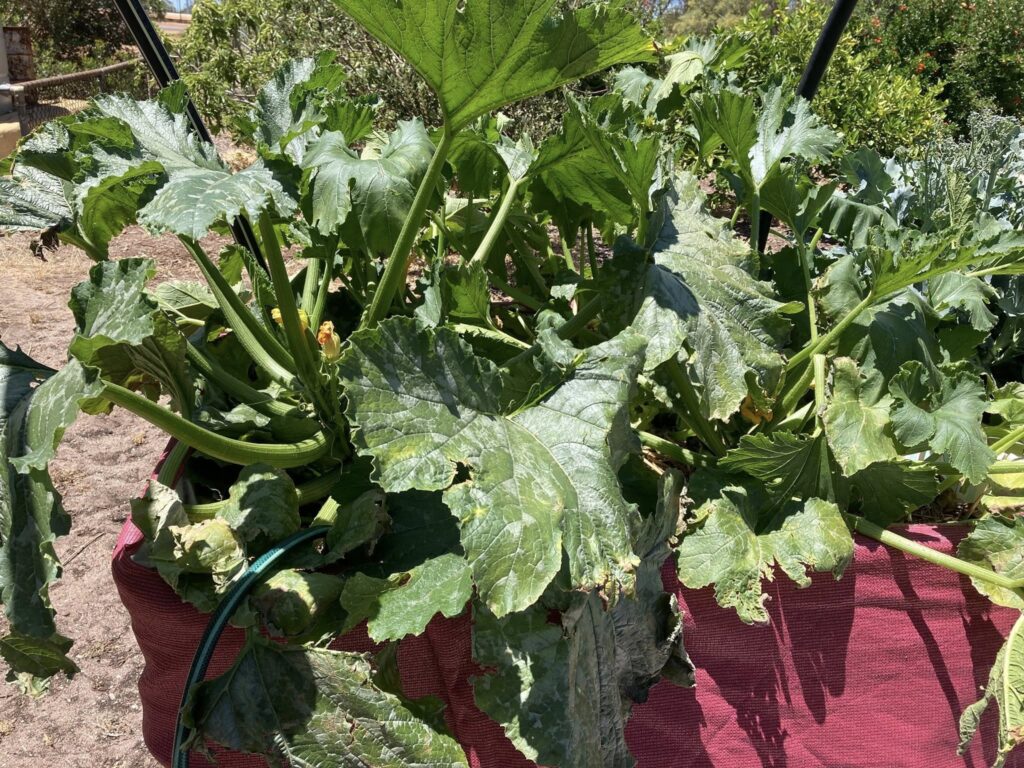
Quick-Glance List: 30 Companion Plants for Zucchini
Here is the quick-glance list before we go deep into each one:
- Flowers: Nasturtium, Marigold, Borage, Calendula, Zinnia, Sunflower, Cosmos, Bee Balm, Sweet Alyssum, Yarrow
- Herbs: Dill, Cilantro, Parsley, Oregano, Chives, Catnip, Thyme, Mint, Tansy
- Vegetables: Corn, Pole Beans, Bush Beans, Radish, Peas, Lettuce, Spinach, Beets, Onion, Garlic
- Cover and grain crops: Buckwheat
That is 30. Now let’s look at why each one earns its spot.
Flowering Companions for Zucchini
Flowers do the heaviest lifting for zucchini. They pull in pollinators and, in several documented cases, they also confuse or trap pests.
1. Nasturtium
Nasturtium is often called a pest repellent, but that framing is not quite accurate. It works better as a trap crop.
Aphids, squash bugs, and cucumber beetles are drawn to nasturtium foliage, sometimes more strongly than to your zucchini. Plant a border of nasturtium a short distance from your zucchini bed, and let it absorb the damage instead.
An Arizona Cooperative Extension review of an Iowa State University study found that nasturtiums reduced squash bug populations when interplanted with zucchini. The same study found that marigolds planted around zucchini significantly reduced damage from squash bugs and striped cucumber beetle as well.
2. Marigold
Marigold is probably the most recommended companion plant in the world, and some of that reputation is deserved.
The same Iowa State research found marigolds planted around zucchini significantly reduced damage from squash bugs and striped cucumber beetles. Below ground, French and African marigold roots release compounds that are toxic to root-knot nematodes.
One caution worth noting: the nematode benefit is strongest when marigolds are grown as a cover crop and tilled into the soil, not simply planted alongside your zucchini for one season.
3. Borage
Borage is a bee magnet. Its blue, star-shaped flowers produce nectar almost continuously through the season, which keeps pollinators returning to the same bed your zucchini sits in.
Gardeners have long claimed borage improves the flavor and vigor of nearby crops. That specific claim is anecdotal, but the pollinator traffic it generates is real and easy to observe.
4. Calendula
Calendula’s strong scent and bright color pull in hoverflies and ladybugs, two of the most effective natural predators of aphids.
It also blooms early and continues through most of the growing season, which gives your garden a steady flower supply even before zucchini blossoms open.
5. Zinnia
Zinnias are simple to grow from seed and bloom heavily in full sun, the same conditions zucchini prefers.
Their flat, open flower shape makes nectar easy to reach for bees, butterflies, and hoverflies. Planting a row of zinnias at the edge of your zucchini patch gives pollinators a reason to linger nearby.
6. Sunflower
Sunflowers serve two roles. Tall varieties can provide afternoon shade during heat waves, which helps in hot climates where summer stress can reduce pollination.
They also work as a trap crop for stink bugs and aphids. In cooler growing zones, place sunflowers on the north side of your bed so the shadow falls away from your zucchini rather than across it.
7. Cosmos
Cosmos flowers attract a wide range of beneficial insects, including parasitic wasps that prey on caterpillars and beetle larvae.
Penn State Extension lists aster-family flowers, which includes cosmos, among the recommended pollinator plants for cucurbit beds. They are low-maintenance and self-seed readily.
8. Bee Balm
Bee balm, also called monarda, draws bumblebees and hummingbirds in large numbers. It has a strong minty scent that some gardeners believe deters aphids, though the evidence for this remains anecdotal.
What is not anecdotal is the pollinator traffic. A patch of blooming bee balm near your zucchini keeps beneficial insects active in the area throughout the day.
9. Sweet Alyssum
Sweet alyssum is a low, spreading flower that works as living ground cover under taller plants.
The Arizona Extension review noted that alyssum plantings resulted in more hoverfly larvae and fewer aphids in nearby crops. Hoverfly larvae are voracious aphid predators, which makes this a genuinely useful pairing.
10. Yarrow
Yarrow attracts predatory insects like ladybugs, lacewings, and parasitic wasps. It is drought-tolerant and requires little care once established.
Its flat flower clusters make an easy landing pad for small beneficial insects, giving your zucchini patch a built-in pest-control team.
Herb Companions for Zucchini
Herbs bring scent-based confusion into the mix, along with their own share of pollinator appeal.
11. Dill
Dill’s small yellow flowers attract predatory wasps and ladybugs. The Arizona Extension review found dill flowers were highly successful in reducing damage when paired with vulnerable crops, largely by drawing in natural predators.
Let a few dill plants go to flower near your zucchini rather than harvesting all of it for the kitchen.
12. Cilantro (Coriander)
Cilantro behaves much like dill once it bolts and flowers. Its umbrella-shaped blooms are a favorite of hoverflies and tiny parasitic wasps.
Penn State Extension specifically recommends carrot-family plants, including cilantro, dill, and fennel, for supporting pollinators around squash beds.
13. Parsley
Parsley flowers late in its life cycle, but when it does, it draws in the same beneficial wasp species that help control caterpillars and aphids.
Letting a portion of your parsley bolt is a small trade for the pest control it provides.
14. Oregano
Oregano spreads low and thick, forming a dense mat that shades soil and suppresses weeds, similar in function to zucchini’s own leaves.
Its strong aroma is thought to mask the scent of nearby vegetables from some pests, though this effect is more folklore than confirmed science.
15. Chives
Chives release a mild onion-like scent that can help deter aphids from settling on nearby plants.
Their purple flowers also attract bees, adding another small pollinator draw to the bed.
16. Catnip
Catnip has a long-standing reputation for repelling squash bugs and cucumber beetles. That said, university extension entomologists, including specialists at New Mexico State University, note this claim is largely anecdotal and not backed by rigorous field trials.
I still grow it at the edge of my garden. It costs little to try, and cats seem to appreciate it even if the beetles do not care.
17. Thyme
Thyme forms a low, woody mat that tolerates dry soil well. Its tiny flowers attract bees and predatory wasps, adding another layer of pollinator support.
It also works as a living mulch along garden paths, keeping weeds down without competing heavily with zucchini roots.
18. Mint
Mint’s strong scent is often credited with repelling ants and aphids. The catch is that mint spreads aggressively through underground runners and can overwhelm a garden bed within a single season.
Always grow mint in a container sunk into the soil, or in a separate pot placed near your zucchini, rather than planting it directly in the ground.
19. Tansy
Tansy has a traditional reputation as a squash bug deterrent, similar to catnip. The scientific backing is thin, but it does attract beneficial insects and adds structure to a pollinator border.
Handle tansy with some caution. It can be mildly toxic if ingested in large amounts, so keep it away from areas where pets or children graze.
Vegetable Companions for Zucchini
Vegetables bring practical benefits: nitrogen, structure, and efficient use of space.
20. Corn
Corn is one-third of the traditional Three Sisters planting system, developed by Indigenous farmers in North America. Cornell Cooperative Extension notes this method has been used in the region for at least 700 years, based on archaeological findings.
In this system, the cornstalks give beans a trellis, the beans support corn against high winds while fixing nitrogen in the soil, and the squash leaves shade the ground to help retain moisture and limit weeds.
Modern research backs the wisdom behind it. Cornell agronomist Jane Mt. Pleasant’s field studies found that while each individual crop yields somewhat less per plant when intercropped, the combined harvest per acre outproduces growing any single crop alone, with notably higher protein output per acre than a monoculture planting.
21. Pole Beans
Pole beans climb corn stalks and fix atmospheric nitrogen in the soil through bacteria living in their root nodules. This nitrogen becomes available to nearby zucchini as the plants grow and the root nodules break down.
Bush beans fix a smaller but still useful amount of nitrogen, roughly 60 to 100 pounds per acre per season, while climbing pole beans can fix up to 200 pounds per acre, according to agricultural extension research on legume nitrogen fixation.
22. Bush Beans
If you lack the vertical space or corn stalks for pole beans, bush beans offer a compact alternative. They still contribute nitrogen to the soil, just at a lower rate than their climbing cousins.
Keep bush beans a reasonable distance from zucchini’s spreading vines so both crops get enough light.
23. Radish
Radish grows fast, often reaching harvest in three to four weeks. Gardeners use it as a trap crop for squash vine borers and cucumber beetles, planting radishes at the base of young zucchini plants to intercept early-season pests.
It also serves as a row marker, since radish seedlings sprout well before slower zucchini seeds show any growth above soil.
24. Peas
Peas thrive in cool weather, which means they finish their growing cycle before zucchini needs the space. Plant peas early in spring, and by the time your zucchini vines spread out, the peas will have already fixed nitrogen into the soil and finished producing.
This succession approach lets you get two harvests from the same patch of ground in a single season.
25. Lettuce
Lettuce grows well in the partial shade cast by young zucchini plants before the leaves fully spread. It matures quickly, so you can harvest a full crop of lettuce before your zucchini vines take over the space.
This pairing uses garden space efficiently rather than providing pest control, but efficient space use is a real benefit on its own.
26. Spinach
Spinach works similarly to lettuce. It prefers cooler soil and light shade, both of which are available early in the zucchini growing cycle.
Interplanting spinach between young zucchini rows keeps soil covered and productive while the zucchini establishes itself.
27. Beets
Beets tolerate the light shade zucchini leaves eventually cast, and their compact root systems do not compete heavily with zucchini’s wider-spreading roots.
They are a low-drama companion. Beets do not repel pests or boost pollination, but they coexist well and make efficient use of bed space.
28. Onion
Onion’s strong sulfur-based scent is thought to confuse pests that rely on smell to locate host plants, including some aphids and cucumber beetles.
Keep onions away from any beans in the same bed, since beans and onions do not get along due to onion’s mild allelopathic effects. Zucchini itself tolerates onion neighbors well.
29. Garlic
Garlic shares onion’s pest-masking properties and has some documented antifungal activity in the surrounding soil.
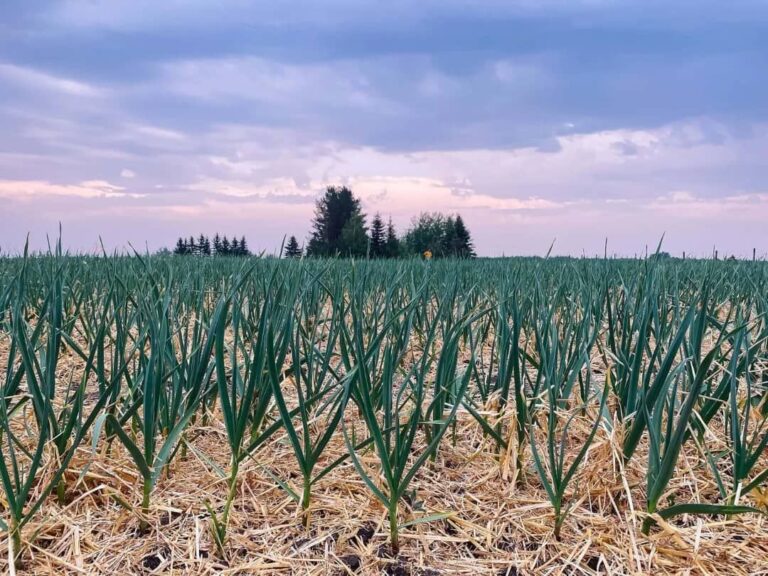
Plant garlic in fall for a summer harvest, timed so the bulbs are ready to pull right as your zucchini vines start needing the extra room.
Cover Crop Companion for Zucchini
30. Buckwheat
Buckwheat is fast-growing and flowers within about four to six weeks of planting, making it one of the quickest ways to attract pollinators to a new garden bed.
It also works as a living mulch, suppressing weeds and adding organic matter when tilled under after flowering. Many organic growers plant a buckwheat strip near cucurbit beds specifically to support bee activity during peak bloom.
Plants to Avoid Growing Near Zucchini
Not every plant makes a good neighbor. A few are worth keeping at a distance.
Potatoes compete heavily for nutrients and can attract some of the same beetle pests. Fennel releases compounds that slow the growth of many nearby vegetables.
Pumpkins and other winter squash should be spaced well apart from zucchini to reduce cross-pollination concerns for seed savers, and to limit shared pest pressure between related cucurbits.
My Recommended Planting Layout
I like to think of a zucchini bed in three rings.
- Center: One or two zucchini plants, given plenty of room to spread.
- Inner ring: Nasturtium or radish as a trap crop, plus bush beans for nitrogen.
- Outer ring: A pollinator strip of marigold, borage, zinnia, and dill, with buckwheat or sweet alyssum filling any gaps.
This layout mirrors the logic behind Rutgers’ perimeter trap crop trials, where pests were pulled toward the edges and away from the main crop, cutting the need for spraying in the center of the field.
READ MORE ON: Plant Once, Harvest All Summer: How to Grow Zucchini the Right Way
Soil and Moisture Benefits Worth Mentioning
Zucchini’s broad leaves are not just decorative. University of Minnesota Extension research found that soil shaded by squash foliage retained 20 to 30 percent more moisture than comparable bare soil during dry summer stretches.
That means many of the companions on this list, especially low-growing herbs and lettuce, benefit from the shade zucchini itself provides, not the other way around. It is a two-way relationship.
Frequently Asked Questions
What is the single best companion plant for zucchini? Nasturtium and marigold are the two most consistently useful choices, backed by university-reviewed field research on pest reduction around zucchini plants.
Can I plant too many companions around one zucchini plant? Yes. Zucchini needs airflow and full sun. Crowding the base with too many companions can raise humidity around the leaves and increase the risk of powdery mildew.
Do companion plants really improve zucchini yield? The clearest, most measurable benefit is improved pollination through increased bee activity, which directly affects fruit set and fruit size, based on University of Florida pollination research.
Is companion planting a substitute for pest control? No. Extension entomologists are clear that companion planting reduces pressure and supports natural predators, but it does not eliminate the need for scouting, row covers, or other integrated pest management steps during heavy infestations.
Final Thoughts
I will admit that not every companion plant on this list carries the same weight of evidence. Some, like marigold and nasturtium, have real field trial data behind them. Others, like catnip and tansy, remain garden tradition more than proven science.
Either way, a diverse bed beats a lonely one. Mixing flowers, herbs, and a few well-chosen vegetables around your zucchini gives pollinators a reason to visit, gives pests somewhere else to go, and gives your soil a bit of a break. That combination is hard to beat.
References
- University of Florida IFAS Extension — Pollination of Cucurbita spp. (Squash and Pumpkin) Crops in Florida: https://edis.ifas.ufl.edu/publication/IN1311/pdf
- University of Arizona Cooperative Extension, Yavapai County — The Art of Companion Planting: https://extension.arizona.edu/sites/extension.arizona.edu/files/attachment/CompanionPlantingApr2023.pdf
- Rutgers Cooperative Extension, Organic Agriculture Program — Perimeter Planting for Insect Pest Management: https://extension.rutgers.edu/organic/perimeter-planting
- Colorado State University Extension — Cucumbers, Pumpkins, Squash and Melons: https://extension.colostate.edu/topic-areas/yard-garden/cucumbers-pumpkins-squash-and-melons-7-609/
- University of Maryland Extension — Growing Summer Squash (Zucchini) in a Home Garden: https://extension.umd.edu/resource/growing-summer-squash-zucchini-home-garden
- USDA National Agricultural Library — The Three Sisters: https://www.nal.usda.gov/collections/stories/three-sisters
- Cornell Cooperative Extension, Onondaga County — Three Sisters: https://cceonondaga.org/resources/three-sisters

Tim M Dave is a gardening expert with a passion for houseplants, particularly cacti and succulents. With a degree in plant biology from the University of California, Berkeley, he has vast experience in gardening. Over the years, he has cultivated a vast collection of desert plants and learned a great deal about how to grow and care for these unique companions.