25 Indiana Native Flowers (With Growing Details)
Indiana was once a patchwork of tallgrass prairie, dense hardwood forest, and marshy wetlands. Walk through most of the state today, and you’d hardly know it.
That’s not an exaggeration. According to the Indiana Natural Resources Foundation, the state has lost 80% of its forests, 90% of its wetlands, and a staggering 99.9% of its original prairie since European settlement. Numbers like that are hard to sit with quietly.
I grew up thinking cornfields were just “how Indiana looks.” It wasn’t until I saw a restored prairie remnant, thick with compass plant and blazing star, that I understood how much had actually disappeared.
That loss is exactly why home gardens matter more than people assume. Every native flower planted in a backyard is a small patch of that original identity, brought back.
Here are 25 native flowers worth planting, whether you’re working with prairie remnant soil, a shaded woodlot, or a low, damp corner of the yard.
Now, the list.
25 Indiana Native Flowers
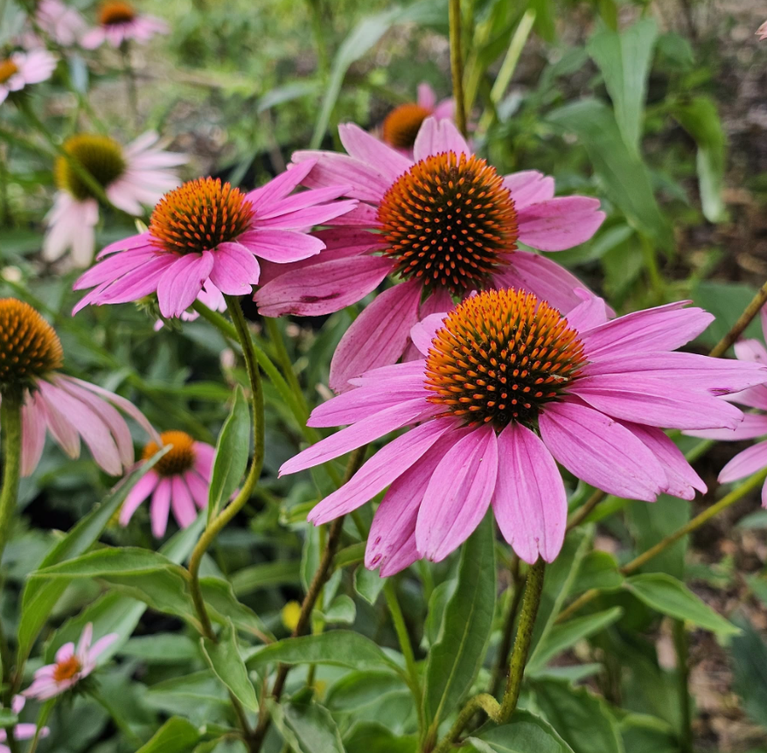
1. Purple Coneflower (Echinacea purpurea)
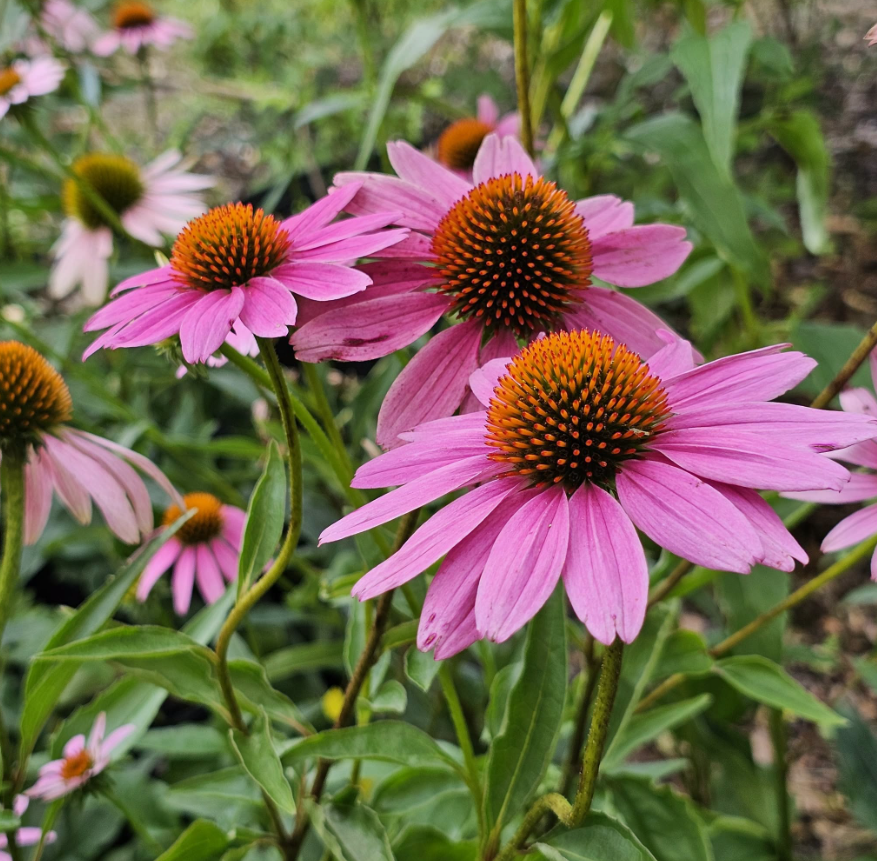
Purple coneflower is one of the most recognizable prairie flowers in the Midwest, with drooping pink-purple petals surrounding a spiky orange cone. It blooms from June through August.
Bees and butterflies visit constantly during bloom, while goldfinches strip the seed heads clean once autumn arrives.
It handles poor, rocky, or clay-heavy soil without complaint, which makes it well-suited to much of Indiana’s glacial till.
Leave the dried seed heads standing through winter rather than deadheading them in fall.
2. Black-Eyed Susan (Rudbeckia hirta)
Black-eyed Susan brings cheerful golden-yellow blooms with dark centers from June through October, one of the longest bloom windows on this list.
It’s short-lived as an individual plant but self-seeds so reliably that established patches persist for years without replanting.
Full sun and average, well-drained soil are all it really needs, and it tolerates drought better than most flowering perennials.
I recommend it constantly to first-time native gardeners because it’s nearly impossible to kill by accident.
ALSO READ: 20 Indiana Native Shrubs (With Growing Details)
3. Butterfly Weed (Asclepias tuberosa)
Butterfly weed produces bold clusters of orange flowers from late spring into summer, standing out sharply against green prairie grasses.
As a milkweed species, it’s a required host plant for monarch caterpillars, which cannot complete their life cycle on any other type of plant.
It prefers dry, well-drained soil and resents overly wet or rich garden beds, unlike some other milkweed species.
Its deep taproot makes it drought-resistant but also means it dislikes being transplanted once established.
4. Common Milkweed (Asclepias syriaca)
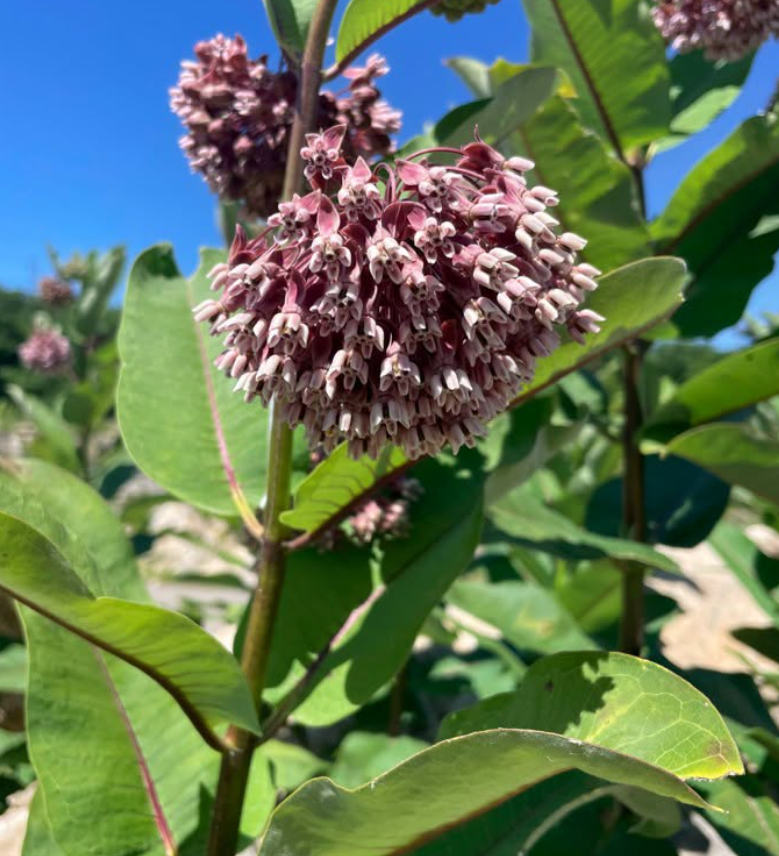
Common milkweed produces round clusters of fragrant pink flowers in early summer, followed by the textured seed pods that split open each fall.
Monarch butterfly populations have declined sharply over recent decades, and milkweed loss across the Midwest is considered a major contributing factor.
It spreads via underground rhizomes, so it’s best suited to naturalized areas or larger meadow plantings rather than tight garden borders.
Full sun and average soil conditions suit it well across most of Indiana.
5. Swamp Milkweed (Asclepias incarnata)
Swamp milkweed clumps neatly rather than spreading aggressively, making it a far better fit for cultivated garden beds than its common cousin.
Its pink to mauve flower clusters bloom from midsummer into early fall, drawing monarchs, swallowtails, and a wide range of native bees.
As the name implies, it favors consistently moist to wet soil, making it a strong choice for rain gardens or low-lying yard sections.
Once established, it tolerates brief dry spells better than most people expect.
6. Wild Bergamot (Monarda fistulosa)
Wild bergamot produces lavender, spiky blooms with a distinct minty fragrance, flowering through mid to late summer across Indiana meadows and roadsides.
Bees, butterflies, and hummingbirds all visit it regularly, making it one of the more dependable pollinator plants available.
It tolerates poor, dry soil and full sun to partial shade, which makes it forgiving for gardeners still learning what their yard conditions actually are.
Good airflow around plants helps prevent the powdery mildew that sometimes appears in humid weather.
7. Compass Plant (Silphium laciniatum)

Compass plant is a true icon of the tallgrass prairie, growing up to nine feet tall with large, deeply lobed leaves and bright yellow, sunflower-like blooms in mid to late summer.
Its name comes from a habit of orienting its leaves north-south to reduce midday sun exposure, an adaptation early prairie travelers reportedly used for navigation.
It develops an extremely deep taproot, sometimes over ten feet, which explains its remarkable drought tolerance once mature.
Give it space and patience; it can take a few years to flower but rewards gardeners for decades afterward.
8. Cup Plant (Silphium perfoliatum)
Cup plant gets its name from the way its opposite leaves fuse around the stem, forming small cups that collect rainwater after storms.
Bright yellow flowers bloom from midsummer into early fall, drawing bees, butterflies, and goldfinches that later feed on the seed heads.
Those water-holding leaf cups also provide drinking spots for birds and beneficial insects, an unusual dual function for a garden flower.
It grows quite tall and spreads over time, so it’s best planted toward the back of larger beds or in naturalized areas.
ALSO READ: 25 Native Indiana Trees (Identification, With Growing Details)
9. Prairie Blazing Star (Liatris pycnostachya)
Prairie blazing star sends up tall, dense purple flower spikes in mid to late summer, blooming from the top down rather than bottom up like most spike flowers.
It’s a favorite nectar source for monarch butterflies during their late-summer migration south, alongside a wide range of native bee species.
It prefers full sun and moist to average soil, and it holds up well in Indiana’s clay-based prairie remnant soils.
Plant it in groups of three or more for the fullest visual and pollinator impact.
10. Rattlesnake Master (Eryngium yuccifolium)
Rattlesnake master looks unlike almost anything else on this list, with spiky, yucca-like foliage and round, greenish-white flower clusters in mid to late summer.
Despite its unusual appearance, it’s an excellent pollinator plant, attracting a wide range of native bees, wasps, and beetles rarely seen on more common garden flowers.
It thrives in dry, well-drained prairie soil and full sun, and its long taproot makes it highly drought-tolerant once established.
It adds striking textural contrast when planted alongside softer, more traditional-looking prairie flowers.
11. Wild Blue Indigo (Baptisia australis)
Wild blue indigo produces tall spikes of blue-purple, pea-like flowers in late spring, resembling a native alternative to garden lupines.
Its dense, shrub-like form and blue-green foliage remain attractive well after the bloom period ends, offering structure through the rest of the season.
It’s a host plant for several butterfly species and attracts bumblebees in particular, which are strong enough to trigger its specialized flower structure.
Once established, its deep root system makes it extremely drought-tolerant and long-lived, sometimes for decades.
12. New England Aster (Symphyotrichum novae-angliae)

New England aster closes out the Indiana growing season with purple-pink daisy-like blooms from September into October.
This late timing makes it a critical nectar source for monarchs migrating south and bees stocking up before winter dormancy.
It can reach four feet tall, so place it toward the back of a bed, or cut it back by half in early summer to encourage bushier, sturdier growth.
Full sun and consistently moist soil bring out its fullest bloom.
13. Smooth Blue Aster (Symphyotrichum laeve)
Smooth blue aster offers soft blue-purple blooms in September and October, a slightly more compact and refined alternative to New England aster.
Its smooth, slightly waxy leaves distinguish it from other native asters and give it a tidy appearance in garden settings.
It tolerates dry soil better than many aster species, making it a solid choice for less irrigated parts of an Indiana yard.
Late-season bees and butterflies rely on it heavily as autumn nectar sources become scarce.
14. Joe-Pye Weed (Eutrochium purpureum)
Joe-Pye weed is a towering perennial, often reaching five to seven feet, topped with dusty pink-mauve flower clusters from midsummer into early fall.
Its size demands attention, but its ecological value matters more. Swallowtail butterflies in particular treat it as a favorite nectar stop.
It prefers moist soil and grows especially well near pond edges, stream banks, or low spots that collect rainwater after storms.
Give it plenty of room; it isn’t suited to tightly spaced, formal garden borders.
15. Cardinal Flower (Lobelia cardinalis)
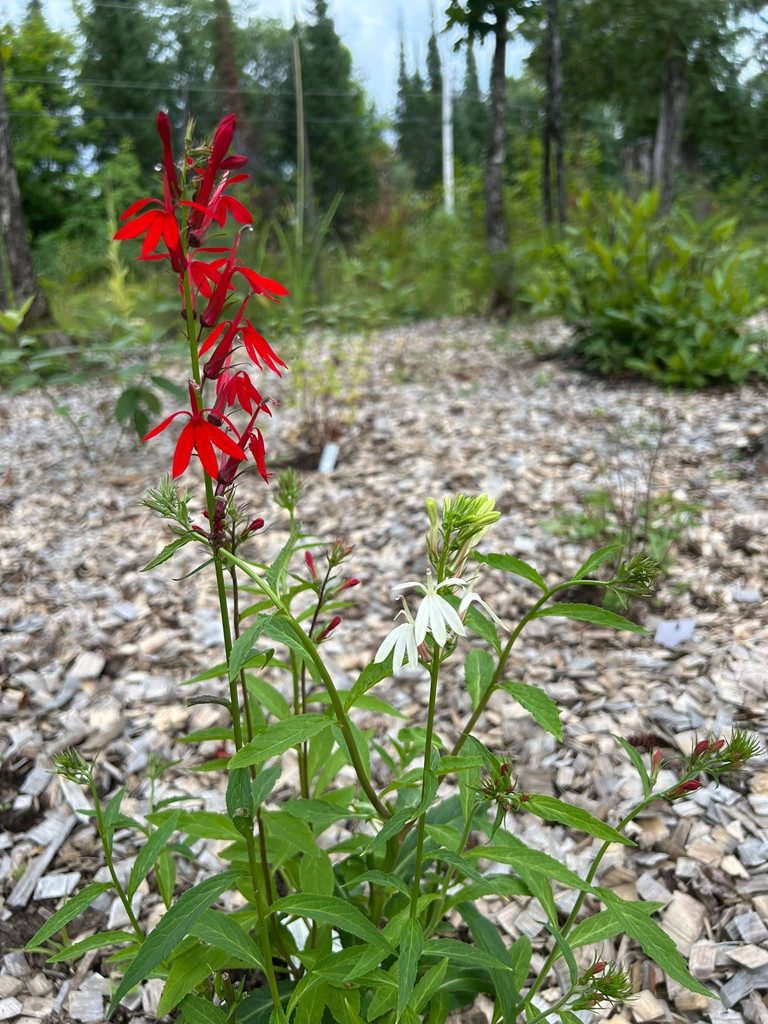
Cardinal flower produces tall spikes of vivid red, tubular blooms in late summer, one of the truest reds found among native wildflowers.
Hummingbirds are its primary pollinator, drawn specifically to the red color and tube shape that matches their long beaks perfectly.
It grows best in moist to wet soil, thriving along streambanks, in rain gardens, or near backyard water features.
As a short-lived perennial, it benefits from letting a few seed heads drop naturally each fall.
16. Great Blue Lobelia (Lobelia siphilitica)
Great blue lobelia offers striking violet-blue flower spikes in late summer and early fall, closely related to cardinal flower but different in color and pollinator preference.
Bumblebees are its main pollinators, strong enough to push into the tubular flowers that smaller insects can’t access.
It shares cardinal flower’s love of moist soil, making the two an attractive, complementary pairing near wet garden areas.
It tolerates partial shade better than most flowering perennials on this list.
17. Foxglove Beardtongue (Penstemon digitalis)
Foxglove beardtongue produces white, tubular flowers with faint purple throat markings in late spring and early summer.
It’s a favorite of native bees, particularly bumblebees, which push into the tubular blooms in search of nectar.
Unlike many prairie natives, it tolerates a wide range of soil types, from dry to average moisture, and adapts to both sun and light shade.
Its dark-leaved cultivar, ‘Husker Red,’ adds ornamental appeal while retaining the same wildlife value.
18. Wild Columbine (Aquilegia canadensis)

Wild columbine’s red and yellow nodding blooms bring architectural elegance to Indiana woodland edges each spring, appearing on thin, wiry stems.
Ruby-throated hummingbirds time part of their spring migration around columbine bloom, using it as an early nectar source after their long flight north.
It favors rocky, well-drained soil and partial shade, often self-seeding into cracks where little else manages to grow.
Deadheading spent flowers can extend the bloom period slightly into early summer.
19. Virginia Bluebells (Mertensia virginica)
Virginia bluebells carpet shaded Indiana woodland floors with blue-purple, bell-shaped flowers each April, one of the most photographed spring ephemerals in the Midwest.
They emerge, bloom, and disappear entirely by early summer, a natural cycle rather than a sign of plant failure.
Early bumblebees rely on them as a critical food source when few other flowers have opened yet for the season.
Plant them beneath deciduous trees, where they get full spring sun before leaf canopies close overhead.

20. Prairie Trillium (Trillium recurvatum)
Prairie trillium is one of Indiana’s most distinctive spring wildflowers, with mottled leaves and deep maroon, upright petals blooming in April.
Unlike some trillium species, it tolerates slightly drier woodland soil, which suits many of Indiana’s oak-hickory forest understories.
It’s extremely slow-growing, sometimes taking years to reach flowering size from seed, which is part of why undisturbed woodlands matter so much for its survival.
Deer browsing can be a significant threat, so protection may be necessary in high-pressure areas.
21. Dutchman’s Breeches (Dicentra cucullaria)
Dutchman’s breeches earns its name from small, white, pantaloon-shaped flowers that dangle along arching stems each April.
It’s pollinated almost exclusively by early bumblebee queens strong enough to pry open the unusually shaped blooms.
Like other spring ephemerals, it blooms briefly on the woodland floor before going fully dormant by early summer.
It requires rich, undisturbed woodland soil and does best left alone once established rather than divided or moved.
22. Trout Lily (Erythronium americanum)
Trout lily takes its name from mottled, brown-and-green leaves resembling the markings of a brook trout.
Its small yellow flowers appear for a brief window in early spring before the plant retreats underground for the rest of the year.
It can take several years to reach flowering maturity from seed, so mature colonies represent long-undisturbed woodland conditions.
Ants assist in dispersing its seeds, a relationship shared by several other spring woodland wildflowers.
23. Ohio Spiderwort (Tradescantia ohiensis)
Ohio spiderwort produces three-petaled blue-purple flowers that typically open in the morning and close by early afternoon, especially on hot days.
It blooms over an extended period from late spring through summer, offering a steady, if fleeting, nectar source for native bees.
It tolerates both prairie-style dry soil and slightly richer garden conditions, making it fairly adaptable across Indiana’s varied landscapes.
Cutting plants back by half in midsummer after the first bloom flush often encourages a second round of flowers.
24. Culver’s Root (Veronicastrum virginicum)
Culver’s root produces tall, elegant white flower spikes from mid to late summer, standing out with a slightly architectural, candelabra-like form.
It’s considered one of Tallamy’s identified keystone genera for supporting specialist pollinators, drawing a wide range of native bees and beneficial wasps.
It prefers moist, rich soil and full sun, thriving particularly well in prairie-style plantings and along the edges of rain gardens.
Its strong, upright stems rarely need staking, even at heights of four to six feet.
25. Marsh Marigold (Caltha palustris)

Marsh marigold brings glossy, buttercup-yellow flowers to Indiana’s wet meadows and stream edges as early as March in milder years.
Its heart-shaped, deep green foliage stays attractive even after the short bloom period ends for the season.
Early native bees depend on it as one of the first significant nectar sources available after winter, making it disproportionately valuable despite its brief flowering window.
It requires consistently soggy or shallow standing water and won’t tolerate extended dry conditions.
Why Indiana Gardeners Should Plant Native Flowers
A few quick reasons to grow wildflowers.
- They’re built for Indiana’s weather. Humid summers, clay-heavy soil, and cold winters are simply normal conditions for these plants, not obstacles.
- They rebuild lost habitat. With prairie cover down to a fraction of a percent of its original range, even a small native bed helps replace what large-scale agriculture removed.
- They need far less maintenance. Established native plants rarely require fertilizer, pesticides, or supplemental watering once their root systems mature.
- They feed pollinators that non-natives often ignore. Many imported ornamentals offer nectar but little else. Native flowers provide food, shelter, and egg-laying sites all at once.
How to Start a Native Flower Garden in Indiana
Starting doesn’t require converting an entire yard overnight.
Assess your site honestly. Note whether it’s dry or wet, sunny or shaded, before choosing plants from this list. Matching site conditions correctly is the single biggest predictor of success.
Buy from native-focused nurseries. The Indiana Native Plant Society’s plant finder tool lists species verified as true Indiana natives, helping you avoid cultivars with reduced wildlife value.
Start with a small bed. Even 50 to 100 square feet of native plantings can noticeably increase pollinator activity within a single growing season.
Be patient with woodland species. Spring ephemerals like trillium and Dutchman’s breeches can take years to establish fully. Judge success over seasons, not weeks.
Final Thoughts
Indiana’s prairies are almost entirely gone, its wetlands reduced to a sliver of their original extent, and its forests fragmented across the state. That history is sobering, but it isn’t the end of the story.
I’ve watched a single native bed, planted with just a handful of these 25 flowers, fill with bees and butterflies within its second summer. It’s a small act, but it’s a real one.
None of this requires a farm-sized property or a professional landscaper. A few square feet of well-chosen natives along a fence line or garden border can genuinely shift what shows up in a yard, from monarch caterpillars on milkweed to goldfinches stripping coneflower seed heads in October.
Whichever flowers you choose from this list, you’re planting something that genuinely belongs in Indiana soil, restoring a small piece of a landscape the state has spent two centuries losing.

Tim M Dave is a gardening expert with a passion for houseplants, particularly cacti and succulents. With a degree in plant biology from the University of California, Berkeley, he has vast experience in gardening. Over the years, he has cultivated a vast collection of desert plants and learned a great deal about how to grow and care for these unique companions.