25 Native Indiana Trees (Identification, With Growing Details)
Indiana holds 4.8 million acres of forestland, covering about 21% of the state’s total land base. That might surprise anyone picturing endless cornfields when they think of Indiana, but the hilly southern counties tell a very different story.
I grew up thinking Indiana was flat and mostly farmland, until I hiked through Hoosier National Forest and realized how wrong that picture was. The oak-hickory ridges down there feel more like Kentucky than the Midwest most people imagine.
Indiana’s forests house 90 different tree species, shaped heavily by the last ice age. Glaciers flattened the northern two-thirds of the state, while the unglaciated south kept its rugged hills and deep forest cover intact.
This guide covers the 25 native trees you’re most likely to encounter, whether you’re walking a trail in Brown County, planting a shade tree in Indianapolis, or identifying species along the Ohio River bottoms.
Why Native Trees Matter in Indiana
Native trees are adapted to Indiana’s soil, climate, and seasonal swings in ways that imported ornamentals simply cannot match. They handle the state’s humid summers, cold winters, and clay-heavy soils without the constant babying non-native species often require.
Indiana’s forests are overwhelmingly hardwood, with oak and hickory alone occupying 60% of all forest land in the state. That single detail explains why so many of the trees on this list belong to those two families.
Planting native species also supports local wildlife directly. Birds, deer, and pollinators throughout Indiana evolved alongside these specific trees, relying on their seeds, nuts, and foliage in ways non-native trees can’t replicate.
With that groundwork laid, let’s walk through the 25 trees that define Indiana’s forests.
1. Tulip Tree (Liriodendron tulipifera)
Tulip tree, Indiana’s official state tree, is one of the tallest hardwoods in eastern North America. Mature specimens regularly exceed 100 feet, with arrow-straight trunks that made them a favorite among early settlers building cabins and barns.
Its distinctive leaves have four lobes and a flat or notched tip, giving them an almost squared-off silhouette unlike any other native species. Greenish-yellow, tulip-shaped flowers bloom high in the canopy each May, often going unnoticed simply because they’re so far overhead.
This tree grows remarkably fast for a hardwood, sometimes adding two feet of height per year in its early decades. Yellow-poplar, its other common name, has historically produced some of the largest growing-stock volumes of any species across Indiana’s forests.
I always point tulip trees out to visitors first. Once you learn that leaf shape, you’ll start spotting it everywhere across the state.
2. White Oak (Quercus alba)
White oak is the backbone of Indiana’s forests, anchoring the white oak/red oak/hickory forest type that dominates the state’s woodlands. This single forest type occupies roughly 72% of all Indiana forest land, more than any other combination statewide.
The tree’s rounded, finger-like leaf lobes distinguish it immediately from the sharper, bristle-tipped lobes of red oaks. Its bark is pale gray and scaly, and its acorns mature in a single growing season, making them sweeter and more palatable to wildlife than red oak acorns.
White oak can live for several centuries, often reaching 80 to 100 feet with a broad, sturdy crown. Its dense, rot-resistant wood has long been prized for barrel-making, flooring, and furniture across the Midwest.
3. Northern Red Oak (Quercus rubra)
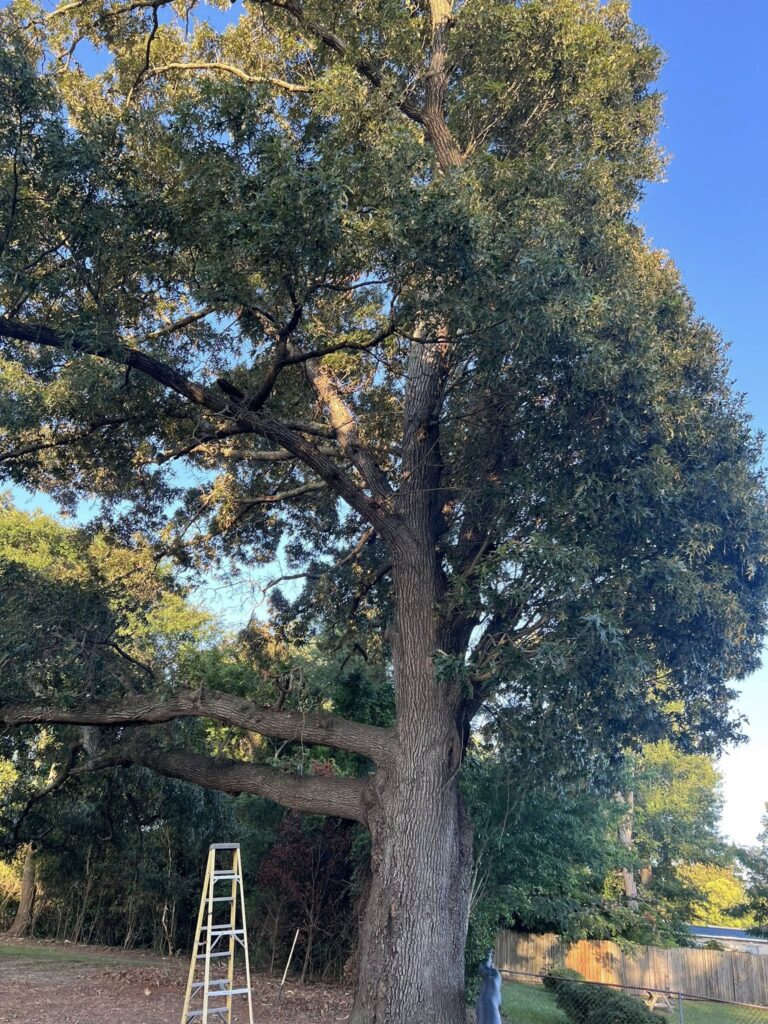
Northern red oak grows faster than white oak and produces some of the highest-value lumber among Indiana’s native hardwoods. Historical inventories show red oak carrying nearly a billion cubic feet of growing stock statewide, among the largest volumes of any species.
Its leaves feature sharp, pointed lobes tipped with tiny bristles, a quick way to separate it from the rounded white oak family. The bark develops shiny vertical stripes as the tree matures, almost resembling ski tracks running down the trunk.
Red oak acorns take two years to mature and carry a notably bitter taste, but wildlife still depend heavily on this fall mast crop. Deer, turkey, and squirrels across Indiana rely on red oak acorns to survive lean winter months.
4. Shagbark Hickory (Carya ovata)
Shagbark hickory earns its name from long strips of gray bark that peel away from the trunk in dramatic curls. Mature trees develop such a shaggy, unkempt look that they’re nearly impossible to mistake for any other Indiana species.
This tree produces some of the sweetest, most edible nuts among native hickories, and foragers compete with squirrels every autumn for the harvest. Shagbark hickory grows slowly, often taking 40 years before it begins producing a reliable nut crop.
Its wood is famously used for smoking meat, giving Midwestern barbecue its distinctive flavor profile. Shagbark hickory can live well past 200 years, standing as one of the longest-lived trees in Indiana’s oak-hickory forests.
5. Shellbark Hickory (Carya laciniosa)
Shellbark hickory closely resembles its shagbark cousin but grows larger nuts and typically prefers wetter, richer bottomland soils. It’s less common statewide, making it a rewarding find for anyone serious about tree identification.
This species produces the largest nuts of any native hickory in North America, encased in a notably thick husk. Its compound leaves usually carry seven leaflets, one more than the typical shagbark hickory leaf.
Shellbark hickory can reach 100 feet in ideal bottomland conditions, towering well above many surrounding hardwoods. Wildlife favor its nuts heavily, though the tough husk requires more effort to crack open than other hickory species.
6. Sugar Maple (Acer saccharum)
Sugar maple lights up Indiana’s forests each October with brilliant orange, red, and gold foliage that draws leaf-peepers from across the Midwest. It thrives in the state’s rich, moist soils, particularly across northern and central Indiana.
This species can be tapped for syrup, and Indiana maintains a modest but genuine maple syrup tradition, especially in the state’s northern counties. Its classic five-lobed leaf shape and opposite branching pattern make it one of the easiest trees for beginners to identify.
Sugar maple grows slowly but can live for over 300 years, developing a dense, rounded canopy that provides deep summer shade. Along with beech and birch, it forms one of Indiana’s defining northern forest types.
7. Silver Maple (Acer saccharinum)
Silver maple grows remarkably fast, often adding several feet of height annually under good conditions. That rapid growth makes it a popular quick-shade choice, though its wood is notably weaker than sugar maple’s.
Its deeply cut leaves flash silver on the underside whenever wind stirs the canopy, which is exactly where the tree’s common name comes from. You’ll frequently spot silver maple lining Indiana’s riverbanks, floodplains, and low-lying wet areas.
Because its branches are brittle, silver maple is more prone to storm damage as it matures. Many arborists recommend planting it away from structures, favoring naturalized wet areas instead.
8. Black Walnut (Juglans nigra)
Black walnut ranks among Indiana’s most valuable timber species, prized worldwide for its rich, dark heartwood used in furniture, veneer, and gunstocks. Indiana lumber buyers and mills actively seek out quality black walnut logs, often paying premium prices.
This tree releases juglone from its roots, a natural chemical that suppresses nearby plant growth, including tomatoes and other garden vegetables. Indiana gardeners often learn this lesson the hard way after planting too close to a mature walnut.
Black walnut leaves are compound, sometimes carrying over 20 leaflets per stem, and they release a sharp, spicy scent when crushed. Its hard-shelled nuts stain hands and driveways a stubborn brown each fall across the state.
9. American Beech (Fagus grandifolia)
American beech forms dense, shade-tolerant stands throughout Indiana’s older forests, often growing alongside sugar maple in the classic maple/beech/birch forest type. Its smooth, gray bark stays remarkably unmarked for decades, unlike the rougher bark of most hardwoods.
This tree holds onto its papery, tan leaves well into winter, a trait called marcescence that makes beech easy to spot even in the coldest months. Its small, triangular nuts, called beechnuts, provide critical food for squirrels, deer, and turkey.
American beech can live for several centuries, developing a smooth, elephant-hide trunk that’s sadly become a popular canvas for carved initials. Beech bark disease has affected populations in parts of the eastern United States, making healthy Indiana stands increasingly valuable.
10. Black Cherry (Prunus serotina)
Black cherry produces fragrant white flower clusters each spring, followed by small dark fruits that birds strip from branches within days of ripening. This tree grows throughout Indiana, from fencerows and forest edges to mature woodland understories.
Its wood is highly valued for furniture making, prized for a warm reddish tone that deepens beautifully with age. Mature bark develops a rough, scaly texture often compared to burnt potato chips, a helpful identification clue in winter.
Black cherry fruit, while tart when eaten raw, has long been used in jellies, wines, and traditional remedies throughout the Midwest. The tree’s leaves and bark contain compounds that are toxic to livestock, something Indiana farmers learn to watch for carefully.
11. American Sycamore (Platanus occidentalis)
American sycamore is one of the largest native trees found in Indiana, with river-bottom trunks sometimes exceeding six feet in diameter. Its mottled, peeling bark reveals a striking patchwork of white, tan, and gray beneath the outer layer.
This species thrives in wet soils and commonly lines Indiana’s rivers, streams, and floodplains statewide. Hollow sycamore trunks historically offered shelter to wildlife and, in some documented cases, early Indiana settlers themselves.
Sycamore leaves are broad and maple-like but noticeably larger, sometimes stretching close to a foot across. Ball-shaped seed clusters hang from bare branches through winter, giving the tree its old nickname, buttonwood.
12. Eastern Cottonwood (Populus deltoides)
Eastern cottonwood is among the fastest-growing native trees in North America, capable of adding several feet of height in a single season near Indiana’s rivers. Its triangular leaves flutter constantly, even in the lightest breeze.
This tree favors moist, disturbed soils, making it common along the Wabash and White River corridors. Female trees release clouds of cottony seeds each spring, creating a snow-like drift along roadsides and yards throughout central Indiana.
Despite the seasonal mess, cottonwood provides fast shade and effective erosion control on disturbed riverbanks. Its rapid growth made it a practical choice for early windbreaks across Indiana’s more exposed agricultural regions.
13. Green Ash (Fraxinus pennsylvanica)
Green ash was once among the most widely planted street and yard trees across Indiana, valued for tolerating tough urban soils and compacted conditions. That popularity, unfortunately, made recent losses especially devastating statewide.
The invasive emerald ash borer has killed the vast majority of Indiana’s mature ash trees since first being detected in the state in 2004. Entire neighborhoods and woodlots have lost their ash canopy as a direct result of this beetle’s spread.
Compound leaves with seven to nine leaflets distinguish green ash from most other Indiana hardwoods. Foresters and researchers continue working on resistant strains and biological controls, hoping to preserve remaining specimens across the state.
14. American Elm (Ulmus americana)
American elm once formed graceful, vase-shaped canopies over countless Indiana streets before Dutch elm disease devastated the species throughout the 20th century. Disease-resistant cultivars have since renewed interest in planting it again statewide.
The tree’s leaves are asymmetrical at the base, a small but reliable identification detail botanists rely on. Elm wood resists splitting, which historically made it valuable for wagon wheel hubs and tool handles across rural Indiana.
Surviving mature elms are treasured landmarks in many Indiana towns today. Ongoing breeding programs continue developing resistant strains, aiming to bring this once-dominant shade tree back into wider use.
15. Bur Oak (Quercus macrocarpa)
Bur oak produces the largest acorns of any native Indiana oak, capped with a distinctive shaggy, fringed cup unlike any other species in the state. It tolerates prairie-edge conditions better than most oaks, a legacy of Indiana’s former oak savanna landscapes.
Its thick, corky bark provides excellent fire resistance, which historically allowed bur oak to dominate transition zones between prairie and forest. Old specimens can live for several centuries, developing massive, wide-spreading canopies.
Bur oak grows slowly but rewards patience with remarkable longevity and structural strength. It remains a favorite shade tree for large Indiana properties precisely because of its imposing, long-lived form.
16. Pin Oak (Quercus palustris)
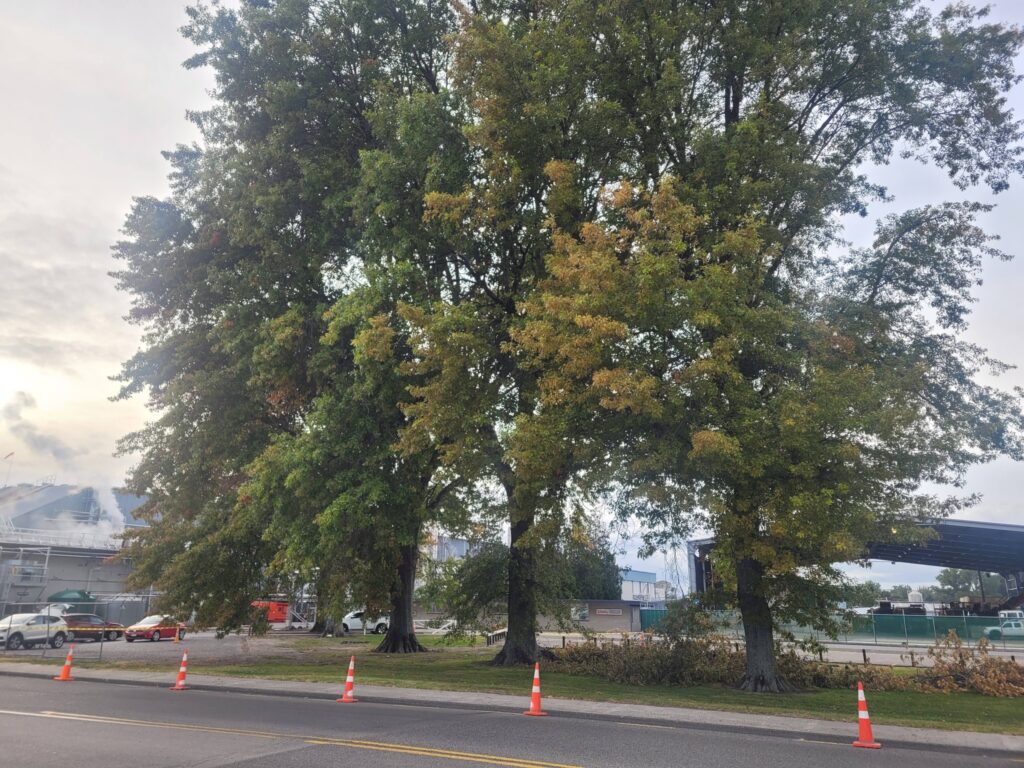
Pin oak is easy to identify thanks to its distinctive branching habit, with upper limbs pointing upward, middle branches growing horizontally, and lower limbs drooping toward the ground. This pyramidal shape sets it apart from every other Indiana oak.
This species tolerates wet, poorly drained soils better than most oaks, which explains its frequent appearance in Indiana floodplains and low-lying urban landscapes. City planners across the state have long favored pin oak for street plantings for the same reason.
Pin oak leaves feature deep, sharply pointed lobes and turn a rich russet-red each autumn. Its acorns are small but abundant, supporting substantial wildlife populations throughout fall and early winter.
17. Sassafras (Sassafras albidum)
Sassafras stands out immediately thanks to its three distinct leaf shapes appearing on the same tree: oval, mitten-shaped, and three-lobed. Crushing a twig releases a scent remarkably similar to root beer, a fun and reliable field identification test.
Historically, sassafras roots flavored root beer itself before safety concerns changed commercial recipes decades ago. The tree still holds cultural significance in Indiana folk traditions and old-fashioned herbal remedies passed down through generations.
Sassafras spreads through root suckers, often forming small thickets rather than standing as a single isolated tree. Its fall foliage turns brilliant shades of orange, yellow, and scarlet, sometimes displaying all three colors on one specimen.
18. Eastern Redbud (Cercis canadensis)
Eastern redbud signals spring’s arrival across Indiana, often blooming before most other trees have even leafed out. Its magenta-pink flowers cluster directly on bare branches and even along the trunk itself, a trait called cauliflory.
This small understory tree rarely exceeds 30 feet, making it a manageable and popular choice for home landscaping throughout the state. Heart-shaped leaves follow the spring blooms, creating a soft, rounded canopy through summer months.
Redbud tolerates partial shade well, which is why it thrives naturally at woodland edges rather than in fully open sun. Its relatively short lifespan of 50 to 75 years still anchors a landscape for an entire generation of homeowners.
19. Flowering Dogwood (Cornus florida)
Flowering dogwood lights up Indiana’s understory each April with clusters of white, occasionally pink, bracts that seem to glow against still-bare spring woods. This small tree rarely grows taller than 25 to 30 feet, fitting comfortably into most home landscapes.
Its bark develops a distinctive blocky, alligator-hide texture as it ages, a helpful winter identification clue when flowers and leaves are absent. In fall, dogwood produces clusters of red berries that songbirds and small mammals depend on heavily.
Indiana forests have faced pressure from dogwood anthracnose, a fungal disease that’s reduced populations in parts of the eastern United States. Healthy, disease-free specimens remain treasured for their reliable spring display and rich burgundy fall foliage.
20. Black Locust (Robinia pseudoacacia)
Black locust is a fast-growing legume tree, meaning its roots fix nitrogen and actively enrich the surrounding soil. Sharp, prickly stipules line its stems, making young saplings easy to identify at a glance.
Fragrant white flower clusters bloom in late spring, attracting bees and producing a prized, mild honey harvested by beekeepers across Indiana. The tree’s extremely dense, rot-resistant wood has long been favored for fence posts throughout rural parts of the state.
Black locust spreads aggressively through root suckers and can colonize disturbed ground quickly. That vigor makes it a common sight along old fields, roadsides, and reclaimed mining land throughout southern Indiana.
21. Bald Cypress (Taxodium distichum)
Bald cypress reaches its northernmost natural range in Indiana’s southwestern wetlands, particularly around the famous Hovey Lake and Cypress Swamp areas. Its knobby “knees” protruding from the water are one of the most unusual sights in the entire state’s flora.
This conifer is deciduous, unlike most needle-bearing trees, dropping its soft, feathery foliage each fall despite looking evergreen through summer. Bald cypress can live for well over a thousand years in ideal swamp conditions, making it one of the longest-lived species in North America.
Indiana’s small pockets of native bald cypress represent a genuinely rare ecological treasure this far north. Conservation areas around the Wabash lowlands protect some of the last remaining stands in the entire Midwest.
22. Yellow Buckeye (Aesculus flava)
Yellow buckeye grows primarily in southern Indiana’s rich, hilly woodlands, often alongside beech and sugar maple. Its palmate leaves, arranged in clusters of five leaflets, make it easy to distinguish from surrounding hardwoods.
This tree produces smooth, shiny brown nuts encased in a leathery husk, historically carried in pockets as good-luck charms across parts of the Midwest. Despite the tradition, the nuts are mildly toxic and unsafe for human consumption without careful processing.
Yellow buckeye can reach 80 feet in ideal conditions, developing pale yellow spring flower clusters that stand out against the surrounding green canopy. It remains most common in the unglaciated hill country of southern Indiana.
23. Kentucky Coffeetree (Gymnocladus dioicus)
Kentucky coffeetree is one of Indiana’s more unusual native species, with a bold, coarse silhouette that stands out clearly even in winter. Its large, doubly compound leaves can stretch three feet long, among the biggest of any tree native to North America.
This species produces thick, leathery seed pods containing hard seeds once roasted as a coffee substitute by early settlers, hence the common name. The raw seeds and pods are toxic, though roasting neutralizes the harmful compounds involved.
Kentucky coffeetree grows slowly and tolerates urban conditions remarkably well, making it an increasingly popular street tree choice across Indiana cities. Its stark, rugged winter form has earned it a devoted following among tree enthusiasts statewide.
24. Persimmon (Diospyros virginiana)
Common persimmon produces small orange fruit that’s shockingly astringent when unripe but turns sweet and almost date-like after the season’s first hard frost. Indiana foragers know exactly when to time their harvest each autumn.
This tree’s bark is distinctively blocky, broken into small, dark rectangular plates resembling alligator skin. It’s a reliable winter identification trait when leaves and fruit have already dropped from the branches.
Persimmon wood is extremely hard and was historically used for golf club heads before synthetic materials replaced it. Wildlife across Indiana, particularly opossums, deer, and raccoons, rely heavily on the fruit crop each fall.
25. Pawpaw (Asimina triloba)
Pawpaw produces the largest edible fruit native to North America, with a custardy texture and tropical, banana-mango flavor that surprises most first-time tasters. It grows as an understory tree throughout Indiana’s shaded bottomlands and forest edges.
This species belongs to a mostly tropical plant family, making it a genuine botanical oddity this far north in the Midwest. Its large, drooping leaves give pawpaw thickets a distinctly lush, almost jungle-like appearance through the summer months.
Pawpaw fruit ripens in September and spoils quickly, which is exactly why it rarely appears in grocery stores. Indiana festivals now celebrate the harvest each fall, drawing curious foragers eager to try this uniquely native fruit.
Final Thoughts
Indiana’s 25 native trees range from towering canopy giants like tulip tree and sycamore to small understory specialists like redbud and pawpaw. Oak and hickory alone account for 60% of all forest land statewide, but the diversity of maples, wetland species, and fruiting trees ensures something is blooming, coloring, or fruiting across Indiana nearly every month of the year.
Learning these 25 trees changes how you experience Indiana’s landscape entirely. Once you can name what’s growing along a trail or standing in your own backyard, the whole state starts to feel more familiar, almost personal.
Start with the trees closest to home, then work your way south toward the ridges of Hoosier National Forest and the swamps near the Ohio River. Before long, you’ll be identifying shagbark hickory bark and bur oak acorns without breaking your stride.
References
- Indiana Department of Natural Resources, Forest Facts — https://www.in.gov/dnr/forestry/forest-facts/
- Indiana Department of Natural Resources, Indiana’s Forests 2008 Resource Bulletin — https://www.in.gov/dnr/forestry/files/fo-IN_Forests_2008.pdf
- USDA Forest Service, Indiana Forests 2013 (NRS-107) — https://www.fs.usda.gov/nrs/pubs/rb/rb_nrs107.pdf
- USDA Forest Service, 2021 Indiana Forest Health Highlights — https://fs.usda.gov/foresthealth/docs/fhh/IN_FHH_2021.pdf
- USDA Forest Service, 2007 Indiana Forest Health Highlights — https://fs.usda.gov/foresthealth/docs/fhh/IN_FHH_2007.pdf
- Indiana Department of Natural Resources, Classified Forests Systemwide Report — https://www.in.gov/dnr/forestry/files/fo-classified_systemwide_2018-2022.pdf
- Purdue University (Sally Weeks & Dr. George Parker), Native Trees of Indiana, hosted via City of Lafayette, IN — https://www.lafayette.in.gov/DocumentCenter/View/3965/Native-Trees-of-Indiana

Tim M Dave is a gardening expert with a passion for houseplants, particularly cacti and succulents. With a degree in plant biology from the University of California, Berkeley, he has vast experience in gardening. Over the years, he has cultivated a vast collection of desert plants and learned a great deal about how to grow and care for these unique companions.