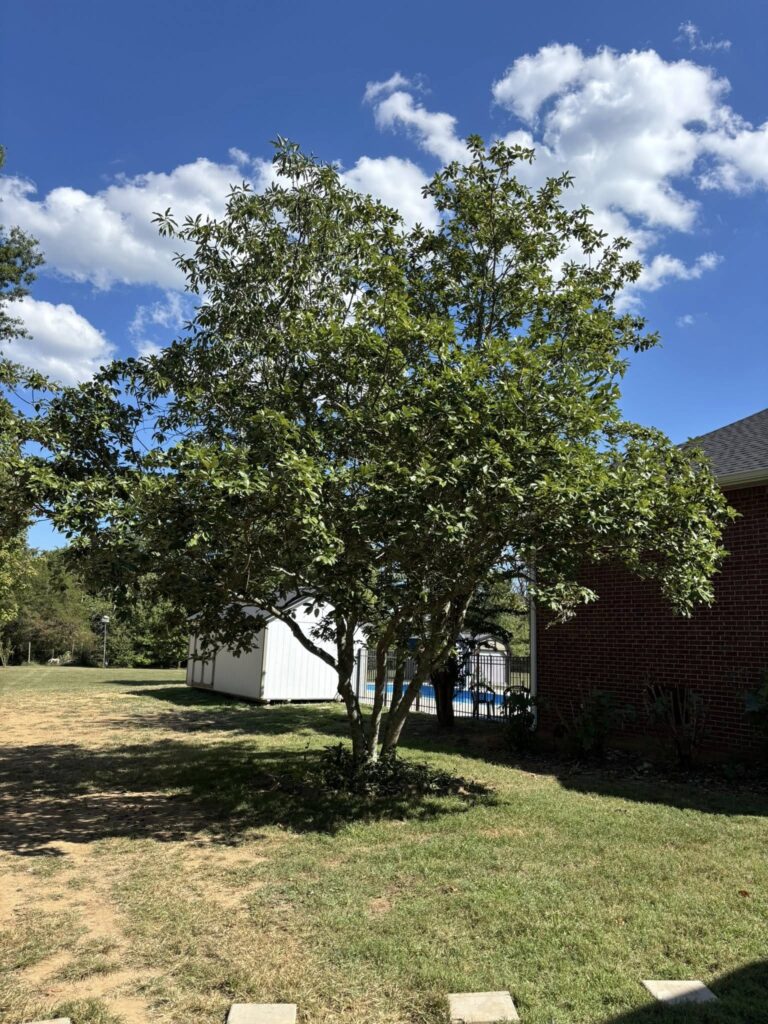
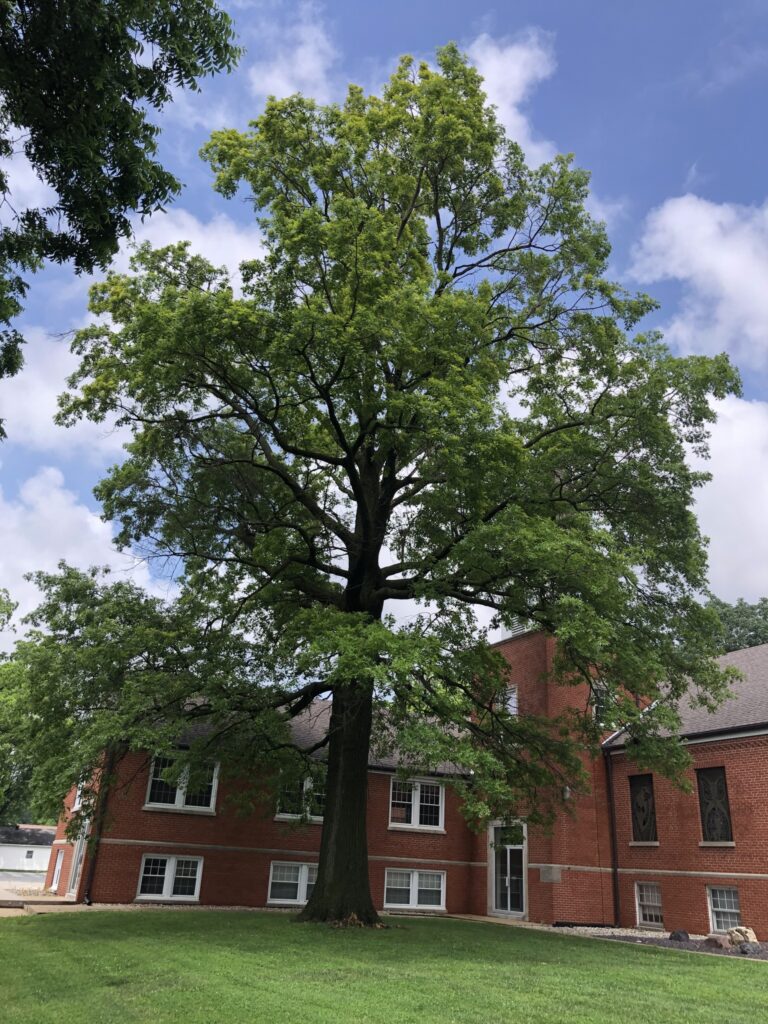
Tulip Poplar Trees Pros and Cons: Everything You Need to Know Before Planting
If you have ever stood beneath a towering tulip poplar in full bloom, you already understand the appeal. The sheer height, the distinctive leaves, the golden-orange flowers — it is a tree that commands attention.
But like any large landscape tree, the tulip poplar comes with real trade-offs that you should weigh carefully.
The Pros of Tulip Poplar Trees
Tulip poplar comes with the following benefits:
1. Exceptional Growth Rate
One of the most immediately useful qualities of the tulip poplar is how fast it grows. Most specimens add 2 to 3 feet of height per year under good conditions. For homeowners wanting quick shade or a windbreak, few native trees can match this pace.
Within a decade, a young sapling can become a substantial tree. This makes the tulip poplar especially practical for new construction sites where the landscape feels bare and exposed.
2. Stunning Ornamental Beauty
The tulip poplar earns its place in any landscape through visual interest across all four seasons.
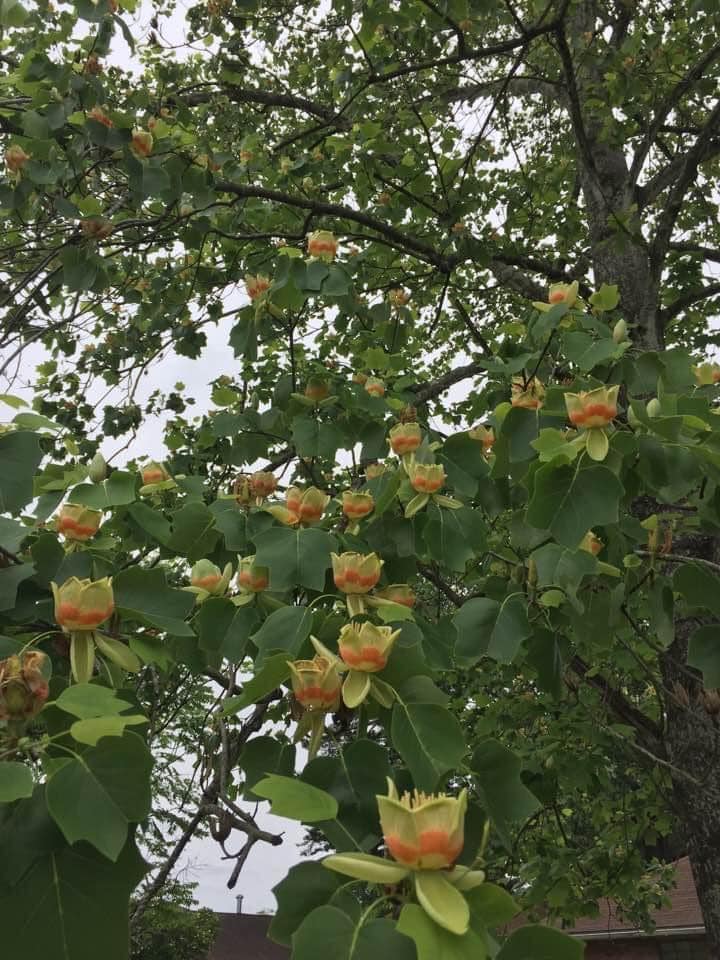
- Spring: Large, tulip-shaped flowers appear in shades of yellow-green with a vivid orange band near the base. They are truly unlike any other bloom in the temperate forest.
- Summer: The broad, distinctive leaves form a dense canopy that provides deep, cooling shade.
- Autumn: Foliage turns a clean, bright golden yellow — one of the more reliable fall colors among large hardwoods.
- Winter: The tall, straight silhouette and furrowed bark add architectural interest to the bare landscape.
Few trees offer this much visual variety across the calendar year.
3. Outstanding Wildlife Value
The tulip poplar is a genuine ecological workhorse. It is one of the most important nectar-producing trees in eastern North America.
Honeybees and native bees visit the flowers in enormous numbers. Beekeepers in Appalachia have long valued the tulip poplar as a primary nectar source for spring honey production. Ruby-throated hummingbirds also feed from the flowers, as do several species of butterflies.
In autumn and winter, the seeds are eaten by finches, cardinals, squirrels, and rabbits. White-tailed deer browse the young foliage and twigs. The tree supports an impressively wide range of wildlife for a single species.
4. Valuable Native Species
The tulip poplar is native to eastern North America, which matters more than many people realize. Native trees support local food webs in ways that exotic species simply cannot.
Research from the University of Delaware, led by entomologist Doug Tallamy, has demonstrated that native trees support exponentially more caterpillar species — and therefore more bird life — than non-native ornamentals.
The tulip poplar ranks among the top trees for caterpillar diversity, supporting over 20 species of Lepidoptera larvae.
Choosing native plants like the tulip poplar contributes meaningfully to local biodiversity.
5. Superior Timber Quality
For those managing a woodlot or rural property, the tulip poplar’s wood is a significant economic and practical asset. Yellow poplar lumber is among the most commercially important hardwoods in the United States.
The wood is lightweight, straight-grained, easy to work, and takes paint and stain well. It is used extensively in:
- Cabinet and furniture making (often as a secondary wood for drawer backs and frames)
- Interior trim and millwork
- Musical instruments, particularly guitar bodies
- Pulpwood and paper production
- Pallets and crates
The fast growth rate means that timber-quality logs can be harvested within 30 to 40 years on productive sites — a relatively short rotation for a hardwood.
6. Excellent Carbon Sequestration
Because it grows so quickly and reaches such large sizes, the tulip poplar stores substantial amounts of carbon.
Large tulip poplars are among the highest biomass trees in eastern North American forests, contributing significantly to carbon sequestration in forest ecosystems.
This makes it a particularly valuable species in the context of reforestation and climate-smart forestry programs.
7. Adaptability to a Wide Range of Conditions
The tulip poplar is broadly adaptable. It grows well across USDA hardiness zones 4 through 9, which covers most of the eastern United States and parts of Canada. It tolerates both humid southeastern summers and cold northeastern winters.
Additionally, it performs best in moist, well-drained loamy soils, but it is reasonably tolerant of a variety of soil types, provided drainage is adequate. It is not particularly drought-tolerant, but established trees handle moderate dry spells with reasonable resilience.
8. Low Susceptibility to Serious Pests and Diseases
Compared to many large landscape trees, the tulip poplar is relatively resistant to the most damaging pests and diseases. There is no equivalent of emerald ash borer, Dutch elm disease, or chestnut blight for this species — at least not currently.
Occasional issues include tulip tree aphids (which produce sticky honeydew), sooty mold, and some susceptibility to verticillium wilt in poorly drained soils.
But for the most part, the tulip poplar grows without the level of disease management concern that plagues many other species.
The Cons of Tulip Poplar Trees
The following are drawbacks of tulip poplars.
1. Very Large Mature Size
The tulip poplar’s fast growth is both a gift and a challenge. At maturity, most trees reach 70 to 90 feet in height, with some forest specimens exceeding 150 feet. The spread can reach 40 to 50 feet.
This size is magnificent in a rural landscape or large park. In a typical suburban yard, it can become overwhelming. Roots can extend far from the trunk, interfering with foundations, sidewalks, driveways, and underground utilities if the tree is planted too close to structures.
Before planting, it is essential to confirm that the available space can accommodate the tree’s full mature dimensions. Many homeowners underestimate how large the tulip poplar will eventually become.
2. Messy Leaf and Flower Drop
One of the most common complaints from homeowners with tulip poplars is the cleanup required. The tree drops material throughout the growing season:
- Spring: Flower petals and sepals litter the ground after blooming
- Summer: Aphid-induced honeydew and sooty mold can coat surfaces beneath the canopy
- Autumn: Large leaves fall in quantity and must be raked or mulched
- Year-round: Small twigs and branches drop, especially during wind events
If you have a pool, paved entertaining area, or formal garden directly beneath the canopy, expect regular maintenance. This is not a low-maintenance tree for small, manicured spaces.
3. Brittle Wood and Storm Damage Risk
For all its vigor, the tulip poplar’s wood is considered moderately brittle compared to oaks, hickories, and other hardwoods. During ice storms, high winds, or heavy snow events, large branches can break and fall.
This is a serious consideration when planting near homes, outbuildings, parked vehicles, or high-traffic areas. A falling limb from a 90-foot tulip poplar can cause significant property damage or personal injury.
Professional arborists generally recommend regular structural pruning to reduce storm damage risk, particularly for trees growing in close proximity to structures. This adds an ongoing cost to tree ownership.
4. Drought Stress and Leaf Drop
The tulip poplar is not drought-tolerant. During extended dry periods, it responds by dropping leaves prematurely — a stress response that can alarm homeowners unfamiliar with the behavior.
This mid-season leaf drop is generally not fatal to an otherwise healthy tree, but it is visually unsightly and adds to cleanup. Young trees are especially vulnerable and typically require supplemental irrigation during their first two to three years after planting.
In regions experiencing more frequent drought cycles due to shifting climate patterns, this sensitivity is worth factoring into planting decisions.
5. Aphid Infestations and Sticky Honeydew
Tulip tree aphids (Illinoia liriodendri) are a persistent nuisance. Large colonies can form on the undersides of leaves during summer, producing copious amounts of honeydew — a sticky, sugary substance that drops onto anything below the canopy.
Cars, furniture, decks, and pathways can become coated with this residue, which subsequently develops a black sooty mold coating. While the infestation rarely kills the tree, it is genuinely unpleasant and can be difficult to manage on tall specimens where spraying is impractical.
Natural predators like ladybugs and lacewings help keep populations in check, but outbreaks are common and can last for weeks.
6. Shallow, Competitive Root System
The tulip poplar develops a moderately shallow root system that spreads widely in search of moisture. These surface roots can be highly competitive, suppressing grass growth and making it difficult to establish other plantings beneath the canopy.
The roots can also crack or lift sidewalks and pavement if the tree is planted in confined spaces, such as street tree pits or narrow planting strips.
Over time, roots may also become exposed at the soil surface, creating mowing challenges and tripping hazards in maintained lawn areas.
7. Not Suitable for Small Landscapes
This point is worth stating directly. The tulip poplar is a forest tree. It evolved to grow in rich, moist bottomlands and forested slopes where it can reach its full potential without constraint.
Forcing it into a small suburban lot often results in a tree that eventually becomes a liability — one that requires expensive professional pruning, poses storm damage risk, and overwhelms the available space.
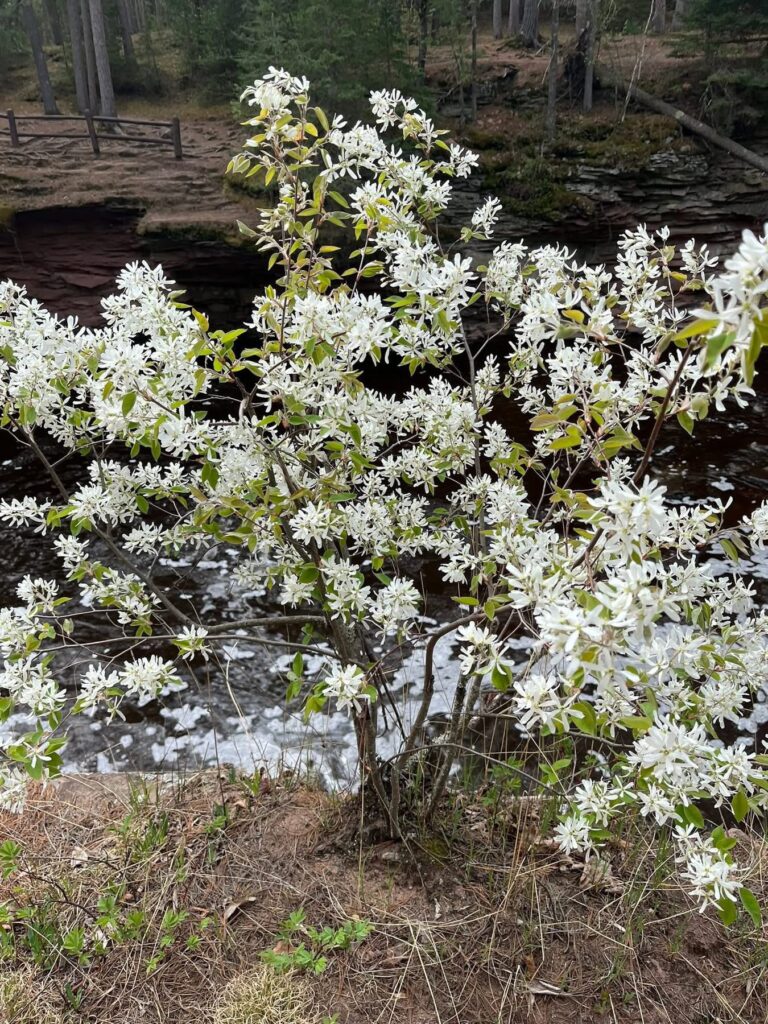
For small properties, there are better-suited native alternatives such as serviceberry (Amelanchier spp.), redbud (Cercis canadensis), or native dogwood (Cornus florida).
8. Late to Flower and Not Always Visible
For all the beauty of the tulip poplar’s flowers, there is a practical limitation: the blooms appear high in the canopy, often 30 to 50 feet above the ground, and are not easy to appreciate from below. The flowers are produced after the leaves have already expanded, which further reduces their visibility.
On young, smaller trees, the flowers are more visible and genuinely spectacular. But on a mature 80-foot specimen, the ornamental floral display is largely experienced by birds, bees, and anyone with a drone — not by the person standing in the yard.
Is the Tulip Poplar the Right Tree for You?
The honest answer depends almost entirely on your site conditions and your expectations.
The tulip poplar is an excellent choice if:
- You have a large property with ample space — at least 30 feet from structures, utilities, and other trees
- You want a fast-growing shade tree or windbreak on a new property
- You are restoring a woodland, naturalized area, or forested hillside
- You are a beekeeper or prioritize wildlife habitat
- You are managing timber land and want a commercially valuable, fast-growing hardwood
- You live in USDA Zones 4–9 with reasonably moist soils
The tulip poplar is probably not the right choice if:
- Your yard is small or constrained by buildings, utilities, or paving
- You park vehicles regularly beneath where the tree would grow
- You want a low-maintenance, litter-free tree
- Your soil is consistently dry or poorly drained
- You want flowers you can actually see and enjoy up close from the ground
Care Tips for Healthy Tulip Poplars
If you have decided to plant or already have a tulip poplar, a few care practices will help it thrive and minimize problems.
Planting
Choose a location with full sun and moist, well-drained soil. Dig a wide, shallow hole — wider than deep — and avoid planting in compacted or poorly drained areas. Do not plant within 30 feet of structures or underground utilities.
Watering
Water deeply and regularly during the first two to three years. During drought, even established trees benefit from deep irrigation every one to two weeks.
Mulching
Apply a 3- to 4-inch layer of organic mulch in a ring around the base of the tree, keeping mulch away from the trunk. This retains moisture, moderates soil temperature, and suppresses competing vegetation.
Pruning
Structural pruning during the first several years helps develop a strong central leader and reduces storm damage risk. Remove dead, crossing, and weak branches.
Always hire a certified arborist for work on mature specimens — this is not a tree for DIY climbing.
Fertilizing
Fertilizing is generally not necessary for trees planted in good native soil. Excessive nitrogen fertilization encourages overly rapid growth that can increase storm vulnerability.
Final Verdict
The tulip poplar is, in many respects, one of the finest native trees in eastern North America. It grows fast, lives long, supports wildlife richly, produces beautiful timber, and offers genuine seasonal beauty. For the right site and the right purpose, it is hard to beat.
But it is not a tree to plant carelessly. Its size, its surface roots, its brittle wood, and its seasonal messiness make it a poor fit for small or constrained spaces. Respect its scale and it will reward you for generations. Underestimate it and you will face costly consequences down the road.
If I were advising a friend planting a new rural property, the tulip poplar would be near the top of my list. If that friend had a half-acre suburban lot with a pool and a driveway, I would steer them toward something smaller.
Know your site. Know your tree. The tulip poplar, planted wisely, is nothing short of magnificent.
References
- NC State Extension — Tulip Poplar (Liriodendron tulipifera) North Carolina State University Cooperative Extension, Plants for Gardeners Database. https://plants.ces.ncsu.edu/plants/liriodendron-tulipifera/
- USDA Forest Service — Fire Effects Information System (FEIS): Liriodendron tulipifera Rocky Mountain Research Station, USDA Forest Service. https://www.fs.usda.gov/database/feis/plants/tree/liitul/all.html
- University of Florida IFAS Extension — Liriodendron tulipifera: Tuliptree Environmental Horticulture Department, University of Florida IFAS Extension (Publication ST-371). https://edis.ifas.ufl.edu/publication/ST371
- USDA Forest Service — Silvics of North America: Liriodendron tulipifera L. (Yellow-Poplar) Agriculture Handbook 654, USDA Forest Service. https://www.srs.fs.usda.gov/pubs/misc/ag_654/volume_2/liriodendron/tulipifera.htm

Tim M Dave is a gardening expert with a passion for houseplants, particularly cacti and succulents. With a degree in plant biology from the University of California, Berkeley, he has vast experience in gardening. Over the years, he has cultivated a vast collection of desert plants and learned a great deal about how to grow and care for these unique companions.