20 Indiana Native Shrubs (With Growing Details)
I have lost count of the number of Indiana front yards I have passed with the exact same three shrubs: a boxwood hedge, a burning bush by the porch, and a Japanese barberry mound near the mailbox. None of it is native. None of it does much for the birds overhead.
Indiana’s plant diversity is bigger than most gardeners realize. The Indiana Department of Natural Resources reports that the state is home to more than 2,000 species of vascular plants, with roughly 25 percent classified as non-native.
Indiana native shrubs do more, and they ask for less. This guide covers 20 Indiana native shrubs, with growing details and wildlife values.
The 20 Native Shrubs of Indiana
1. American Hazelnut (Corylus americana)
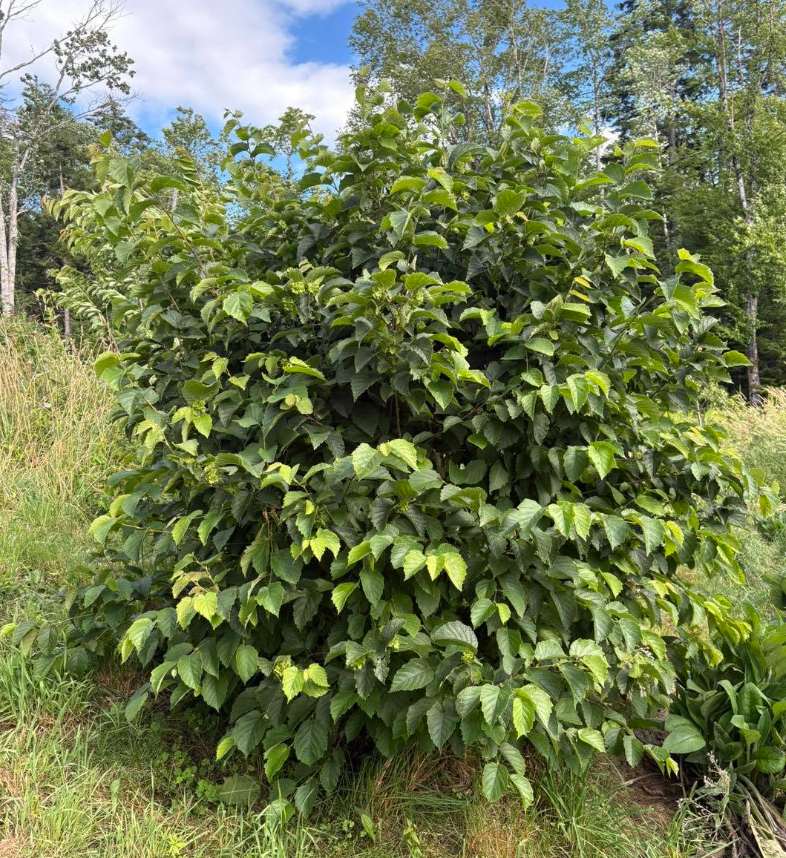
American hazelnut is one of the most familiar understory shrubs across Indiana woodlands and field edges. It forms dense, multi-stemmed thickets, typically 10 to 16 feet tall, with soft catkins that appear before the leaves each spring.
Wildlife activity around this shrub runs steady through the year. Squirrels, blue jays, and woodpeckers compete for the edible nuts each autumn, and deer browse the twigs through the leaner winter months.
Purdue’s fall color guide lists its autumn foliage as variable, ranging from yellow to reddish tones depending on the individual plant and season.
It tolerates part shade to full sun and adapts to dry or medium soils, which explains why it shows up so often along fence rows and woodland margins statewide.
2. Pagoda Dogwood (Cornus alternifolia)
Pagoda dogwood earns its name from its distinctive tiered, horizontal branching pattern, which genuinely does resemble a small pagoda once the shrub matures. It grows 15 to 25 feet tall, making it one of the larger native dogwoods on this list.
Off-white flower clusters bloom in late spring, followed by blue-black berries that ripen through summer. Fall color runs an eye-catching mix of red, purple, and yellow on the same plant.
It prefers part shade and consistently moist, well-drained soil, making it a strong choice for a woodland garden edge rather than a sunny, exposed yard.
Songbirds move through this shrub constantly once the berries ripen, and its layered branching structure offers genuine nesting cover as well.
3. Grey Dogwood (Cornus racemosa)
Grey dogwood is a workhorse native shrub, documented across Indiana’s woodland edges and old fields, reaching 10 to 15 feet tall. White flower clusters bloom in spring, followed by white berries that birds strip quickly each fall.
Purdue Extension’s pollinator publication lists it as a bee specialist host and a larval host for the summer azure butterfly, adding real ecological weight beyond its ornamental value.
It tolerates full sun to part shade and thrives in wet-mesic to dry-mesic soils, giving it more flexibility than many showier native shrubs.
Left alone, it spreads into loose thickets, which makes it better suited to naturalized borders or wildlife plantings than a tightly manicured bed.
4. Silky Dogwood (Cornus amomum)
Silky dogwood gets its name from the fine hairs on the undersides of its leaves, which give the foliage a soft, silky texture when you run a hand across it. It grows 6 to 12 feet tall and favors consistently moist ground.
White flower clusters bloom in summer, and the shrub is documented as both a bee specialist plant and a host for the summer azure butterfly, according to Purdue’s pollinator research.
It performs particularly well along stream banks, pond edges, and low-lying rain garden beds where standing water occasionally collects after storms.
Full sun to part shade suits it best, and it works well planted alongside buttonbush or other wetland-tolerant natives for a cohesive, moisture-loving planting.
5. Buttonbush (Cephalanthus occidentalis)
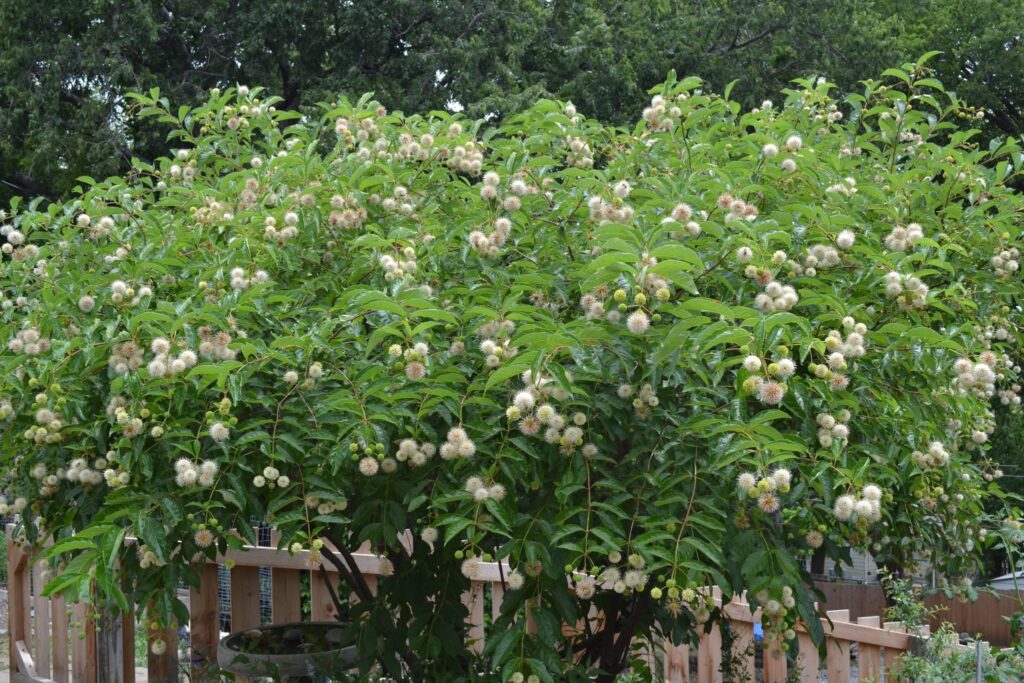
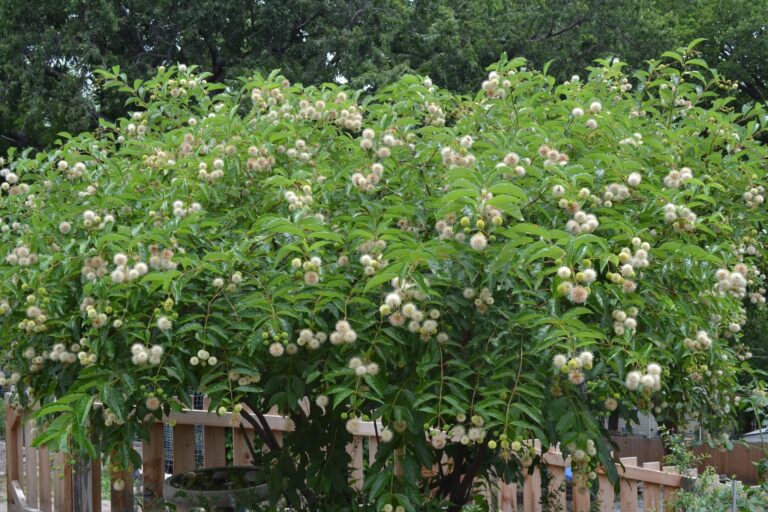
Buttonbush produces one of the most unusual flowers among Indiana’s native shrubs: perfectly round, pincushion-like white flower balls that bloom through summer with a distinctly sweet scent.
It is built for wet feet, tolerating standing water for extended periods, and typically reaches 6 to 12 feet tall. Rain gardens, pond margins, and swampy corners all suit it well.
Purdue’s pollinator table flags buttonbush as attractive to bees, butterflies, moths, and wasps alike, making it one of the more broadly useful pollinator plants on this entire list.
A soggy, frustrating low spot in the yard is exactly the kind of place where buttonbush turns a drainage problem into a genuine wildlife feature.
6. Ninebark (Physocarpus opulifolius)
Ninebark gets its name from bark that peels away in several thin layers, adding subtle texture to the shrub once winter strips the leaves. Clusters of white to pinkish flowers appear in spring and summer, resembling spirea blooms on arching stems.
Purdue Extension lists it as reaching 5 to 9 feet tall, tolerating a wide range of soil conditions from dry to medium-wet ground, and performing reliably even in compacted or poor soil.
Native ninebark, distinct from the many purple-leaved cultivars sold commercially, supports bees, beetles, and butterflies according to Purdue’s pollinator research.
It works well as a specimen plant, a hedgerow, or for erosion control on slopes, offering real multi-season interest from spring flowers through peeling winter bark.
7. American Elderberry (Sambucus canadensis)
Elderberry might be the single best shrub in Indiana for attracting late-summer bird activity. Large, flat clusters of white flowers bloom in summer, giving way to heavy clusters of dark purple berries by late August.
It grows 5 to 12 feet tall, spreading into loose thickets, with yellowish fall color that is subtle compared to its dramatic summer fruiting display.
It prefers moist, rich soil in full sun to part shade and establishes quickly. I have seen a single elderberry planting fill an entire yard corner within two or three growing seasons.
Fruit is edible when cooked and carries a long history of use in syrups, wines, and jams throughout the Midwest, though raw berries and other plant parts should be avoided.
8. Spicebush (Lindera benzoin)
Spicebush is one of the earliest bloomers in the Indiana woodland understory, producing small yellow-green flowers in spring, well before the shrub leafs out for the season. Crushing a leaf releases a distinctly spicy, citrus-like scent.
It grows 6 to 12 feet tall and handles part shade to full shade, which explains why it is so common along Indiana’s wooded stream banks and moist bottomlands.
Purdue’s pollinator research identifies it as a host plant for the eastern tiger, black, and spicebush swallowtail butterflies, making it one of the more ecologically valuable shrubs statewide.
Fall foliage turns a bright, clean yellow, and female plants produce small red drupes that songbirds seek out before winter sets in.
9. New Jersey Tea (Ceanothus americanus)
New Jersey tea is a compact, formal-looking shrub, growing just 1 to 3 feet tall, with fragrant white flower clusters that bloom through summer and draw a steady stream of pollinators.
Purdue’s pollinator table notes it hosts both the summer azure and mottled duskywing butterflies, and it is flagged as a genuine pollinator magnet in field observations.
It is genuinely drought tolerant, thriving in dry-mesic to dry soil where showier shrubs would struggle, and it works as a low, informal hedge without demanding regular trimming.
Historically, the dried leaves were brewed as a caffeine-free tea substitute, particularly during periods when imported tea was scarce or boycotted.
10. Black Chokeberry (Aronia melanocarpa)
Black chokeberry produces white spring flowers followed by shiny black berries that are intensely tart raw but have become popular in juices and jams for their high antioxidant content.
Purdue’s fall color list puts its mature height at 3 to 6 feet, with a reliable yellow-orange fall display that holds up well compared to many native shrubs.
It hosts the coral hairstreak butterfly, according to Purdue’s pollinator research, and tolerates soil moisture ranging from wet to medium without much complaint.
For a low-maintenance shrub border with genuine multi-season interest, black chokeberry consistently earns its space in an Indiana native planting.
11. Nannyberry Viburnum (Viburnum lentago)
Nannyberry is a viburnum that can pass for a small tree, reaching 14 to 16 feet according to Purdue’s fall color guide, with glossy dark green leaves and creamy white flower clusters in spring.
By fall it produces blue-black fruit that persists well into winter, offering a genuine food source for robins and cedar waxwings once other options have thinned out.
It tolerates a wide range of light conditions, from full sun to fairly deep shade, and adapts to both moist and average garden soils.
Its dense, upright form makes it a strong choice for a native hedge or a woodland-edge planting, with variable fall color running through burgundy and red tones.
12. Blackhaw Viburnum (Viburnum prunifolium)
Blackhaw viburnum grows 12 to 15 feet tall, often multi-stemmed, with white flower clusters blooming in spring followed by blue-black, waxy fruit each fall.
It tolerates dry, rocky soil better than most viburnums on this list, which makes it a dependable choice for a slope or an area with inconsistent watering.
The fruit is edible and was historically used in preserves, though birds and small mammals typically claim it first once it fully ripens.
Full sun to partial shade brings out the densest form and heaviest flowering, and it works well as a natural hedge or a woodland-edge specimen.
13. Arrowwood Viburnum (Viburnum dentatum)
Arrowwood viburnum grows 3 to 9 feet tall, with white flower clusters blooming in summer and a naturally rounded, dense habit that fills space efficiently in a mixed border.
Purdue’s pollinator research lists it as a host for the Henry’s elfin butterfly, adding a specific ecological value beyond its general pollinator appeal.
It tolerates full sun to shade and a wide range of soil moisture, from wet-mesic to dry-mesic conditions, making it one of the more adaptable viburnums for Indiana yards.
Straight, slender young stems were historically used by Native American communities for arrow shafts, which is where the common name comes from.
14. American Cranberrybush Viburnum (Viburnum trilobum)
Not related to true cranberries, this native viburnum earns its common name from bright red, tart berries that resemble the real thing and persist on the shrub through much of winter.
Purdue’s fall color list puts its height at 8 to 12 feet, with a purplish-red fall display that ranks among the more dramatic native shrub colors on this entire list.
It grows best in moist, slightly acidic soil, though it tolerates typical garden conditions reasonably well once established, and full sun brings the heaviest fruit set.
Cedar waxwings, grosbeaks, and squirrels are frequent visitors to the berries, particularly once other food sources have grown scarce by midwinter.
15. Bottlebrush Buckeye (Aesculus parviflora)
Bottlebrush buckeye is one of the more dramatic native shrubs on this list, producing tall, upright flower spikes in summer that genuinely resemble a bottlebrush, covered in small white blooms.
It grows 6 to 12 feet tall with a broad, spreading habit and reliable golden-yellow fall color, according to Purdue’s fall color research from the Purdue Arboretum.
It adapts well to full sun or partial shade, with morning sun and afternoon shade generally producing the strongest bloom display and healthiest foliage.
Butterflies and hummingbirds visit the flower spikes steadily through their bloom period, making this a genuinely useful pollinator shrub as well as an ornamental one.
16. Sweetshrub (Calycanthus floridus)
Sweetshrub produces unusual maroon, strap-petaled flowers in spring that carry a distinct fruity fragrance, often compared to a mix of banana and strawberry by gardeners who grow it.
It reaches 6 to 10 feet tall and displays a reliable yellow fall color, according to Purdue’s native shrub research, making it a genuine multi-season performer.
It adapts to full sun or partial shade and tolerates a range of soil conditions, though it performs best with consistent moisture rather than prolonged drought stress.
The unusual bloom timing and fragrance make it a genuine conversation piece, best planted somewhere visitors will brush past and notice the scent.
17. Dwarf Fothergilla (Fothergilla gardenii)
Dwarf fothergilla is a compact native shrub, staying just 2 to 3 feet tall, with white, bottlebrush-shaped flower spikes in spring that bloom before the leaves fully emerge.
Fall color is genuinely spectacular, running through yellow, orange, and red simultaneously on the same plant, according to Purdue’s fall color research from the campus arboretum.
It adapts to full sun or partial shade and performs best with consistently moist, well-drained soil rather than dry or compacted ground.
Its small size makes it a strong fit for foundation plantings or smaller garden beds where larger native shrubs would quickly overwhelm the space.
18. Common Witch-Hazel (Hamamelis virginiana)
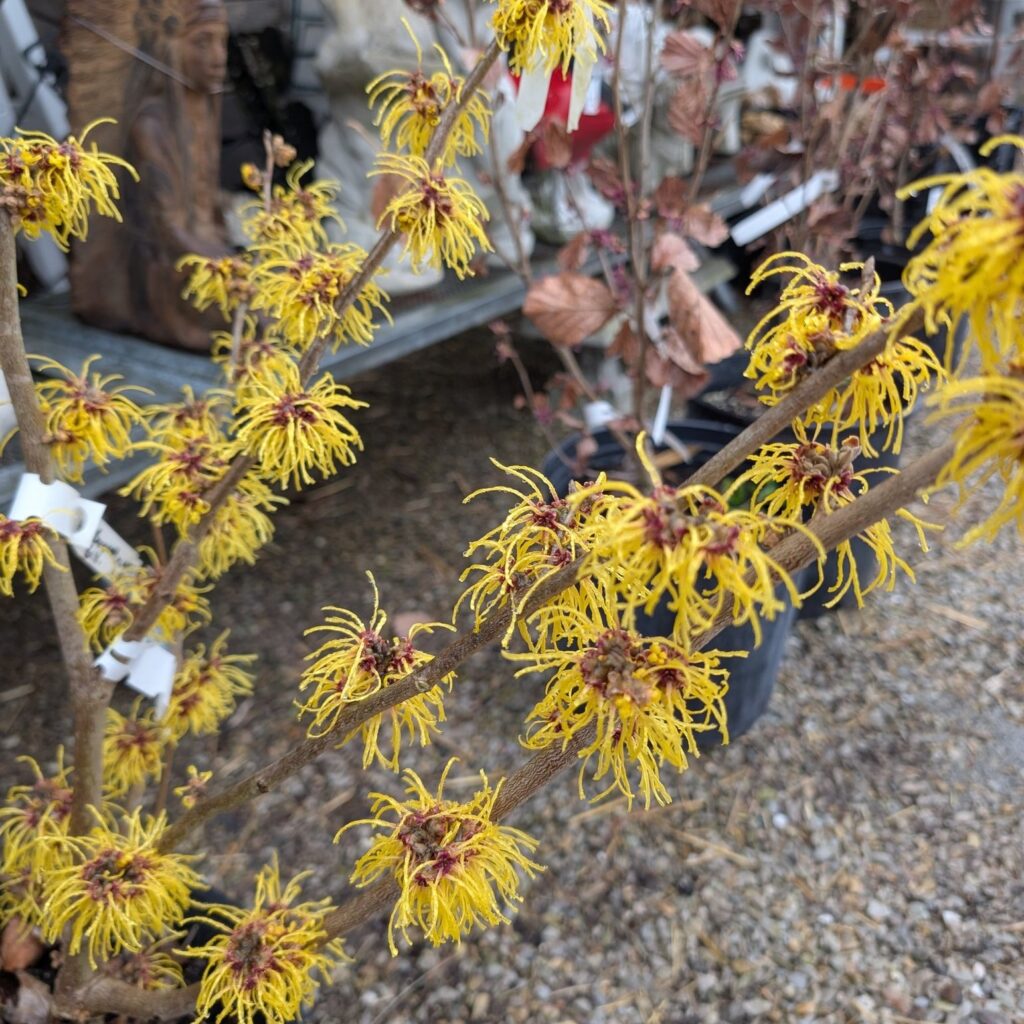
Witch-hazel is the oddball of Indiana’s native shrub lineup: it blooms in fall, well after nearly every other native shrub has gone dormant, with thin, spidery yellow petals that seem to defy the coming cold.
Purdue’s fall color guide lists it at 15 to 20 feet tall, favoring partial shade and rich, well-drained woodland soil typical of Indiana’s forested areas.
Late-season pollinators, including certain cold-tolerant moths, rely on witch-hazel as one of the last nectar sources of the year, making its odd timing ecologically valuable rather than just curious.
A related species, vernal witchhazel, blooms even earlier in late winter and stays smaller at 6 to 10 feet, if a more compact option is preferred.
19. Leatherwood (Dirca palustris)
Leatherwood is a quiet, shade-loving native shrub that Purdue’s fall color guide specifically flags as needing shade, unlike most other shrubs on this list, which tolerate a broader range of light.
It grows 4 to 6 feet tall, with unusually flexible, leathery stems that give the plant its common name. Small yellow flowers appear in early spring before the leaves emerge.
Fall color runs a soft yellow, and the shrub’s understated, layered branching habit makes it a natural fit for a shaded woodland garden rather than a sunny border.
It is genuinely uncommon in cultivation compared to other native shrubs, which makes it a distinctive choice for gardeners looking for something beyond the usual native shrub lineup.
20. Coralberry (Symphoricarpos orbiculatus)
Coralberry closes out this list with one of the more understated but genuinely useful native shrubs, producing small white summer flowers followed by clusters of pinkish-red berries that persist into winter.
Purdue’s pollinator research documents it as attractive to bees, beetles, butterflies, and flies, giving it broad appeal across multiple pollinator groups in a single planting.
It grows 3 to 6 feet tall and tolerates full sun to full shade, along with a range of soil conditions, making it one of the more adaptable shrubs on this entire list.
It spreads by suckering into loose colonies over time, which makes it well suited to slopes, naturalized borders, and erosion control projects rather than a tightly contained garden bed.
Quick Comparison: Height, Sun, and Soil Moisture
| Shrub | Height | Sun Needs | Soil Moisture |
| American Hazelnut | 10–16 ft | Part sun–full sun | Dry–medium |
| Pagoda Dogwood | 15–25 ft | Part shade | Medium |
| Grey Dogwood | 10–15 ft | Full sun–part shade | Dry–medium |
| Silky Dogwood | 6–12 ft | Full sun–part shade | Medium–wet |
| Buttonbush | 6–12 ft | Full sun–part sun | Wet |
| Ninebark | 5–9 ft | Full sun | Dry–medium |
| American Elderberry | 5–12 ft | Full sun–part shade | Medium–wet |
| Spicebush | 6–12 ft | Part shade–shade | Medium |
| New Jersey Tea | 1–3 ft | Full sun | Dry |
| Black Chokeberry | 3–6 ft | Full sun–part shade | Wet–medium |
| Nannyberry Viburnum | 14–16 ft | Full sun–shade | Medium |
| Blackhaw Viburnum | 12–15 ft | Full sun–part shade | Dry–medium |
| Arrowwood Viburnum | 3–9 ft | Full sun–shade | Wet–dry |
| American Cranberrybush | 8–12 ft | Full sun | Medium–wet |
| Bottlebrush Buckeye | 6–12 ft | Full sun–part shade | Medium |
| Sweetshrub | 6–10 ft | Full sun–part shade | Medium |
| Dwarf Fothergilla | 2–3 ft | Full sun–part shade | Medium |
| Common Witch-Hazel | 15–20 ft | Part shade | Medium |
| Leatherwood | 4–6 ft | Shade | Medium |
| Coralberry | 3–6 ft | Full sun–full shade | Dry–medium |
Frequently Asked Questions
What is the best native shrub for a wet Indiana yard? Buttonbush and silky dogwood both tolerate standing or saturated soil well and are commonly recommended for rain gardens and low-lying planting areas.
Which native shrub attracts the most pollinators in Indiana? Buttonbush and New Jersey tea both rank as documented pollinator magnets, drawing bees, butterflies, and other insects across a long bloom window.
Are there native shrub alternatives to burning bush or barberry? Yes. Dwarf fothergilla and black chokeberry both offer strong fall color as native substitutes, while ninebark and arrowwood viburnum work well as taller screening options.
Do Indiana native shrubs need fertilizer? Generally, no. Most of the shrubs on this list are adapted to Indiana’s native soil conditions and tend to grow weak or leggy with heavy fertilization.
Final Thoughts
Twenty shrubs cannot capture everything Indiana’s native flora has to offer, but this list is a solid starting point for a backyard border, a shaded woodland edge, or a larger restoration project. Pick two or three species suited to your soil and light, and build outward from there.
What stood out most while researching this piece is how often the least manicured shrubs turn out to be the most valuable ecologically. A coralberry thicket is not going to win a landscaping award, but the birds working through it in February clearly do not mind.
References
- Purdue University, Indiana Yard and Garden – Native Shrubs For Fall Color: https://www.purdue.edu/hla/sites/yardandgarden/native-shrubs-for-fall-color/
- Purdue Extension Entomology – Recommended Indiana-native Plants for Attracting Pollinators (POL-6): https://extension.entm.purdue.edu/publications/POL-6/POL-6.html
- Purdue Extension, Marion County – Invasive Species in Indiana Resources: https://extension.purdue.edu/news/county/marion/2021/08/Invasive-Species-In-Indiana-Resources.html
- Indiana Department of Natural Resources – Pollinator Habitat Development and Enhancement: https://www.in.gov/dnr/fish-and-wildlife/wildlife-resources/pollinator-conservation/pollinator-habitat-development-and-enhancement
- Indiana Department of Natural Resources, Division of Nature Preserves – Invasive Plant Species: https://www.in.gov/dnr/nature-preserves/heritage-data-center/invasive-plant-species
- Indiana Department of Natural Resources, Division of Forestry – Native Trees of Indiana (PDF): https://www.in.gov/dnr/forestry/files/Fo-NativeTreesofIndiana0606.pdf
- USDA Natural Resources Conservation Service – Indiana State Office: https://www.nrcs.usda.gov/state-offices/indiana

Tim M Dave is a gardening expert with a passion for houseplants, particularly cacti and succulents. With a degree in plant biology from the University of California, Berkeley, he has vast experience in gardening. Over the years, he has cultivated a vast collection of desert plants and learned a great deal about how to grow and care for these unique companions.