15 Common Pothos Problems (And How To Solve Them Fast)
My first pothos came from a coworker’s cutting in a jam jar. It sat on a shelf, mostly ignored, and somehow thrived anyway. That’s the plant’s whole reputation — and it’s mostly deserved.
Pothos genuinely is one of the most forgiving houseplants around. Horticulturists often call it the plant that builds people’s confidence with indoor gardening, precisely because it tolerates so many small mistakes.
But “forgiving” isn’t the same as “immune to problems.” Yellow leaves, leggy vines, and the occasional pest still show up, usually tracing back to one or two small habits rather than anything serious.
Here’s a detail worth knowing upfront: this genus contains about 15 recognized species, native to regions stretching from Southeast Asia to the Solomon Islands and into the western Pacific. Most houseplants sold as “pothos,” though, are a single species — Epipremnum aureum — so the advice here applies to nearly every pothos you’ll encounter.
READ MORE: 15 Types of Pothos: Variety Identification and Pictures
Part of the confusion around pothos care comes from mistaken identity. Several look-alike plants get sold under the same name, including satin pothos (Scindapsus pictus), which isn’t a true pothos at all and is notably fussier about watering and pests.
True pothos, meanwhile, is remarkably adaptable. It’s been used in air-quality research for its ability to filter certain indoor pollutants, and it tolerates everything from bright rooms to dim office corners with minimal complaint.
That resilience is exactly why problems, when they do appear, tend to catch owners off guard. A plant that’s survived months of inconsistent care suddenly develops yellow leaves or a pest infestation, and it’s not always obvious why.
This guide walks through the 15 problems gardeners run into most, with clear, practical fixes. Let’s get started.
1. Yellow Leaves From Overwatering
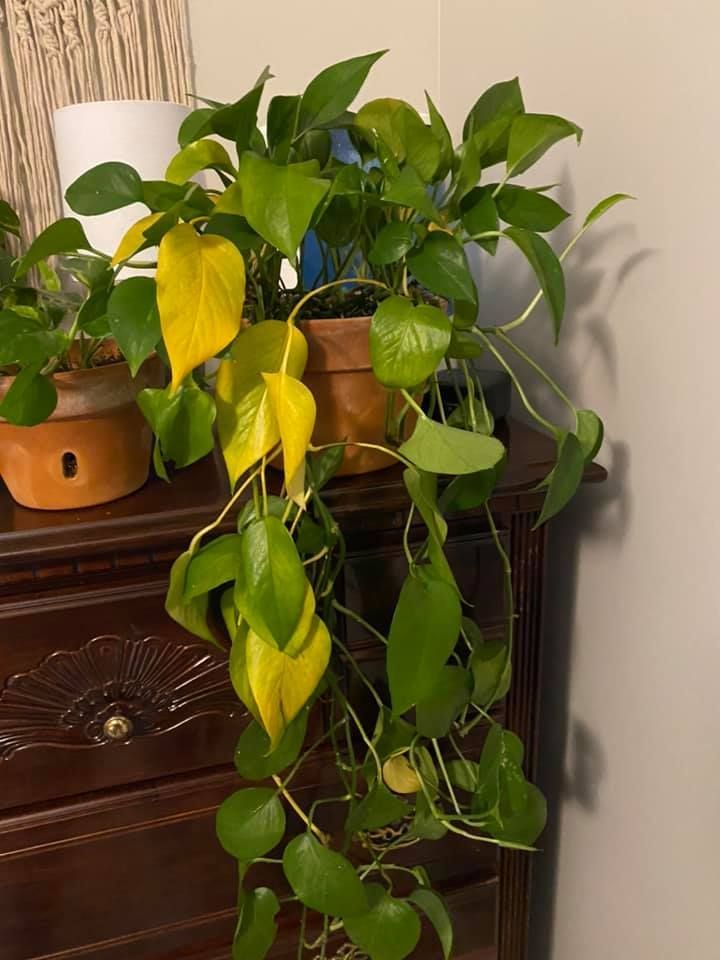
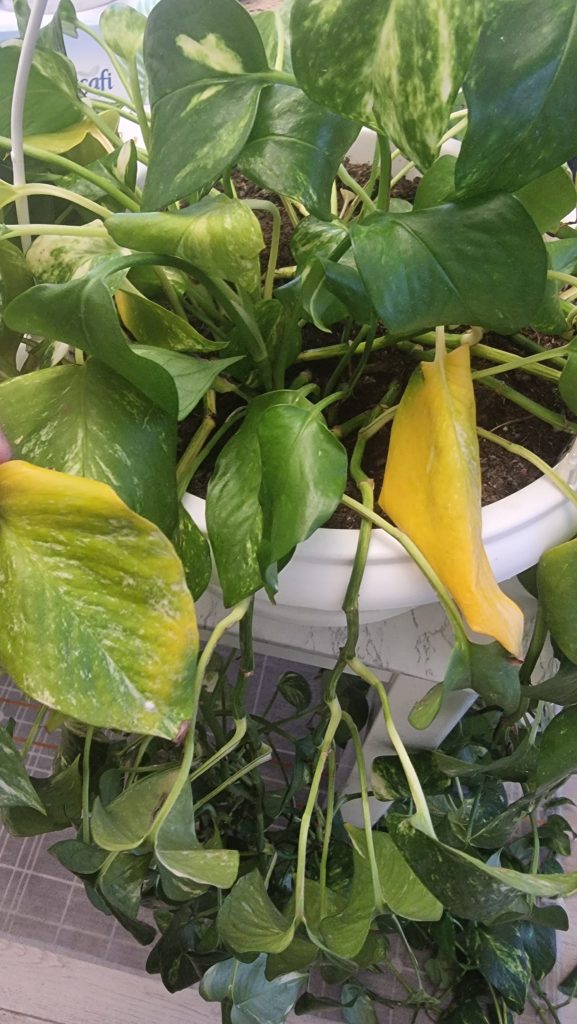
This is, without question, the most common pothos complaint. Continuous damp soil promotes rotting roots, and yellowing is usually the plant’s first visible cry for help.
How to tell: Yellowing that starts low on the vine and spreads upward, especially paired with soil that feels wet several inches down, points squarely at overwatering.
The fix: Let the soil dry out before watering again. Check moisture roughly two inches deep rather than judging by the surface alone, since the top layer often dries faster than the root zone underneath.
READ MORE: 9 Reasons Your Pothos Leaves are Turning Yellow + How to Fix
2. Root Rot
Left unaddressed, chronic overwatering progresses into root rot — a genuinely serious problem that can kill the plant if ignored too long.
Signs to check: Remove the plant from its pot. Healthy pothos roots are firm and pale. Rotten roots are dark, mushy, and often smell sour.
The fix: Trim away all blackened or soft roots with a clean, sterilized blade. Repot into fresh, well-draining potting mix using a container with drainage holes. Using a well-draining soil mix and proper watering practices helps prevent root rot from recurring.
Wash the old pot with hot, soapy water before reusing it, since rot-causing organisms can linger on the surface. If a large portion of the root system was lost, expect the plant to recover slowly while it rebuilds what’s missing.
Pothos is unusually forgiving here compared to many houseplants. Even a plant that’s lost most of its roots can often be saved by taking healthy stem cuttings and rooting them fresh in water or soil.
ALSO READ: Understanding Overwatered Pothos: Signs + How to Save The Plant
3. Black Spots On Leaves
Small black or dark brown spots scattered across otherwise healthy-looking foliage almost always point back to one specific habit: consistently soggy soil.
The fix: Black spots on the leaves are an indication that the soil has been kept too wet. Cut back on watering frequency immediately and check that the pot drains properly. Spots that have already formed won’t disappear, but new growth should come in clean once watering is corrected.
4. Drooping, Limp Vines
A pothos that suddenly looks deflated, with vines hanging noticeably lower than usual, is almost always asking for water — this is one of the clearest signals the plant gives.
The fix: Soak the soil thoroughly until water drains from the bottom of the pot. Recovery tends to be fast; vines often perk back up within a few hours, making this one of the more satisfying houseplant fixes to witness.
A word of caution: Don’t confuse this with drooping caused by overwatering, which looks similar but comes with wet, heavy soil rather than dry soil. Always check moisture before reaching for the watering can.
5. Leggy Vines With Sparse Leaves
Long, bare stretches of vine between leaves, especially paired with smaller-than-normal leaves, signal one thing: the plant isn’t getting enough light.
Why it happens: In bright indirect light, pothos grows dense with closely spaced leaves and bold variegation. In low light, vines stretch out long and thin as they search for a stronger light source.
The fix: Move the plant closer to a bright window with filtered or indirect light. Trim leggy vines back to just above a leaf node to encourage bushier regrowth from that point.
READ MORE ON: 10 Proven Ways to Make Pothos Fuller: Tips for Thick, Lush Growth
6. Loss Of Variegation
Variegated pothos varieties sometimes produce new leaves that come in almost entirely green, losing the white, cream, or yellow patterning that made them attractive in the first place.
Why it happens: Low light can cause loss of variegation, since the plant relies more heavily on solid green (chlorophyll-rich) tissue to photosynthesize efficiently when light is limited.
The fix: Increase light exposure gradually. Prune back fully green, reverted vines at their base, since they tend to grow faster and can crowd out the more delicate variegated portions over time.
7. Brown, Scorched Patches On Leaves
Dry, brown patches with a crisp texture, usually appearing after a plant is moved to a much brighter spot, point to sunburn rather than disease or pests.
Why it happens: Plant reactions to changing light exposure aren’t usually immediate — but sudden exposure to direct sun much brighter than what the plant was accustomed to causes real damage. Sunburned leaves tend to turn more brown than yellow and suffer dry patches from desiccation.
The fix: Move the plant out of direct sun and into bright, indirect light instead. When relocating a plant to a sunnier spot intentionally, transition it gradually over one to two weeks rather than all at once.
8. Curling Leaves
Leaves that curl inward or look slightly cupped are typically responding to stress from watering or environmental swings rather than a specific disease.
Common triggers:
- Underwatering combined with low humidity
- Sudden cold drafts near doors or windows
- Recent repotting shock
The fix: Check soil moisture first, since this is the most frequent cause. If watering seems fine, consider whether the plant sits near a draft, air vent, or frequently opened door, and relocate it if so.
9. No New Growth (Stalled Plant)
A pothos that stops producing new leaves for months isn’t necessarily dying. Growth naturally slows during low-light seasons and often picks back up once conditions improve.
The fix: During spring and summer, a diluted, balanced houseplant fertilizer applied every other month supports steady new growth. Yellow leaves are often caused by overwatering or low fertility, so if yellowing accompanies stalled growth, feeding may help alongside a watering adjustment.
10. Small, Underwhelming Leaves
New leaves emerging noticeably smaller than the plant’s older growth usually share the same root cause as legginess: insufficient light reaching the plant.
The fix: Relocate the plant to a brighter spot with filtered sunlight. Mature pothos leaves, given enough light and space to climb, can grow dramatically larger than their juvenile counterparts — a detail many indoor growers never actually see, since houseplants are typically kept in their smaller, juvenile growth phase.
11. Mealybugs
Small, white, cotton-like masses tucked into leaf joints, the undersides of leaves, or even around the roots are the clearest sign of a mealybug infestation.
Why they matter: Mealybugs are soft-bodied insects with piercing-sucking mouthparts, and a single female can produce well over a hundred eggs inside a protective waxy sac, which is why infestations can escalate quickly if ignored.
The fix: Dab visible clusters with a cotton swab soaked in rubbing alcohol. For broader infestations, insecticidal soap applied weekly for two to three weeks usually clears the problem. Severely infested plants sometimes recover faster if discarded and restarted from clean cuttings instead.
12. Scale Insects
Small, bark-colored, immobile bumps along stems and leaf undersides, often accompanied by a sticky residue, indicate scale rather than a natural part of the plant’s texture.
The fix: Scale can be difficult to control once established, since the waxy covering protects it from many contact treatments. Light infestations respond to scraping the bumps off gently and wiping the area with rubbing alcohol. For persistent, heavy infestations, it is often better to discard the plant and start over with clean plants or cuttings rather than fight a losing battle.
13. Spider Mites
Fine, barely visible webbing between leaves, paired with tiny pale speckling across the foliage, signals spider mites rather than a nutritional issue.
Why they appear: These pests thrive in dry indoor air, particularly during winter months when heating systems drop household humidity significantly.
The fix: Spider mites can easily be controlled with thorough cleaning and frequent applications of insecticidal soap. Rinsing the plant under lukewarm water first helps dislodge much of the existing population before treatment begins.
14. Bacterial Or Fungal Leaf Spot
Dark, water-soaked lesions with a yellow halo, or leaf spots that spread and merge together, point toward a bacterial or fungal disease rather than a simple environmental issue.
Why it spreads: Bacterial disease symptoms on houseplants range from watery leaf spots to total collapse of affected tissue, and these pathogens travel easily through splashing water during overhead watering.
The fix: Remove and discard affected leaves promptly using clean, sterilized pruning tools. Water at the soil line instead of overhead, and isolate the affected plant from other houseplants while it recovers. Severe, unresponsive cases sometimes require discarding the plant entirely to protect the rest of a collection.
15. The Plant Never Flowers
New pothos owners sometimes wonder why their plant, despite years of healthy growth, never produces a single flower — and the honest answer is that it almost never will indoors.
Why it happens: Pothos only flowers in its mature growth phase, which occurs after years of climbing high into a forest canopy in its native habitat. Indoor plants are kept in their juvenile phase, kept compact through pruning, and essentially never reach the conditions needed to trigger flowering.
The fix: There isn’t one, and that’s perfectly normal. Pothos is grown entirely for its foliage, not its blooms, so a flowerless plant is a healthy plant, not a failing one.
Interestingly, when pothos does flower in botanical gardens or its native habitat, the bloom itself isn’t especially showy. A cream-colored spathe wraps around a central spadix, similar in structure to a peace lily flower, but it’s rare enough that most professional growers never see it either.
A Quick Word On Safety
Pothos looks harmless, but every part of the plant is mildly toxic if chewed or ingested. It contains calcium oxalate crystals, which can cause mouth irritation, digestive upset, and skin irritation in both people and pets. Keep it out of reach of curious children and animals.
ALSO READ: Pothos Cultivation: History, Care and Common Problems
Symptom-To-Solution Chart
| Symptom | Likely Cause | Quick Fix |
| Yellow leaves, low on vine | Overwatering | Let soil dry, improve drainage |
| Mushy, dark roots | Root rot | Trim rot, repot in fresh mix |
| Black spots on leaves | Chronically wet soil | Reduce watering frequency |
| Sudden drooping | Underwatering | Soak thoroughly and drain |
| Long bare stems | Too little light | Move to brighter spot, prune |
| Solid green new leaves | Loss of variegation | Increase light, prune reverts |
| Brown crispy patches | Sunburn | Move out of direct sun |
| Cottony white clusters | Mealybugs | Alcohol swab + soap spray |
| Fine webbing, speckling | Spider mites | Rinse + insecticidal soap |
| Watery, dark lesions | Bacterial/fungal spot | Remove leaves, water at soil line |
Frequently Asked Questions
How often should I water a pothos?
There’s no universal weekly schedule, since pot size, light, and season all change how quickly soil dries. Check the top two inches of soil with your finger and water only once it feels dry. Expect to water less often through winter months.
Why does my pothos have both yellow and brown leaves at the same time?
This usually reflects two separate issues rather than one cause. Yellowing often points to overwatering, while brown, crispy patches typically trace back to sun exposure or low humidity. Treat each symptom separately rather than assuming a single fix will resolve both.
Is it normal for a pothos to drop older leaves?
Yes, occasional yellowing and dropping of older, lower leaves is a normal part of the plant’s growth cycle. Widespread or rapid leaf loss across the whole vine, though, usually signals a care issue worth investigating.
Can pothos grow in low light?
Pothos tolerates low light better than most houseplants, which is part of its popularity. That said, medium to bright indirect light produces denser growth, larger leaves, and better-defined variegation than a dim corner ever will.
Should I mist my pothos for humidity?
Misting gives only a brief, short-lived humidity boost and does little for long-term plant health. A humidifier, pebble tray, or simply grouping plants together works far better for maintaining consistent humidity around the foliage.
Final Thoughts
Nearly every pothos problem comes down to one of three things: too much water, too little light, or a pest that snuck in unnoticed. Once you know which one you’re dealing with, the fix is usually quick and the plant bounces back fast.
Check the soil before watering, keep the plant in bright but indirect light, and don’t panic over the occasional yellow leaf. Pothos has survived worse than a missed watering — mine has certainly seen its share of neglect — and with a little attention, yours will keep trailing beautifully for years to come.
References
- Clemson Cooperative Extension, Home & Garden Information Center — How to Grow Pothos Indoors (Epipremnum spp.): Care, Cultivars, and Common Problems
- University of Wisconsin–Madison, Wisconsin Horticulture Extension — Pothos, Epipremnum aureum
- South Dakota State University Extension — Pothos (Devil’s Ivy, Golden Pothos): House Plant How-To
- University of Florida, IFAS Extension — Mealybugs
- University of Florida, IFAS Extension — Pothos (Epipremnum aureum) Diseases: Identification and Control in Commercial Greenhouse Production
- University of Maryland Extension — Bacterial Leaf Spots on Indoor Plants
- NC State Extension Gardener Plant Toolbox — Epipremnum aureum (Pothos)

Tim M Dave is a gardening expert with a passion for houseplants, particularly cacti and succulents. With a degree in plant biology from the University of California, Berkeley, he has vast experience in gardening. Over the years, he has cultivated a vast collection of desert plants and learned a great deal about how to grow and care for these unique companions.