25 Best Potted Trees to Grow in Georgia (With Pictures)
Georgia gardeners have it good, and I say that as someone who has watched friends up north fight frost pockets while we’re still harvesting figs in October.
Most of the state sits comfortably in USDA hardiness zones 7b through 8b, with the coast dipping into 9a. That long, mild season means container trees don’t just survive here — they genuinely thrive.
Growing trees in pots isn’t a compromise. It’s a strategy. You get to move a tender citrus indoors before a hard freeze, control soil quality on a patio with terrible clay, and still enjoy real fruit, real shade, and real flowers on a balcony.
This guide walks through 25 potted trees suited to Georgia’s climate, whether you’re gardening in Atlanta’s zone 8a or Savannah’s warmer 9a.
Why Container Trees Make Sense in Georgia
Georgia’s growing season runs long. Atlanta typically sees its last frost in late March and first frost in early November, giving container trees close to eight months of active growth outdoors.
That warmth is a double-edged sword. Summers push past 90°F regularly, which means containers dry out fast and need more frequent watering than in-ground plants.
The upside is enormous. A tree in a pot on wheels can dodge a surprise cold snap, avoid Georgia’s notoriously heavy red clay, and still deliver fruit, fragrance, or shade within a couple of seasons.
The 25 Best Potted Trees for Georgia Gardens
1. Meyer Lemon
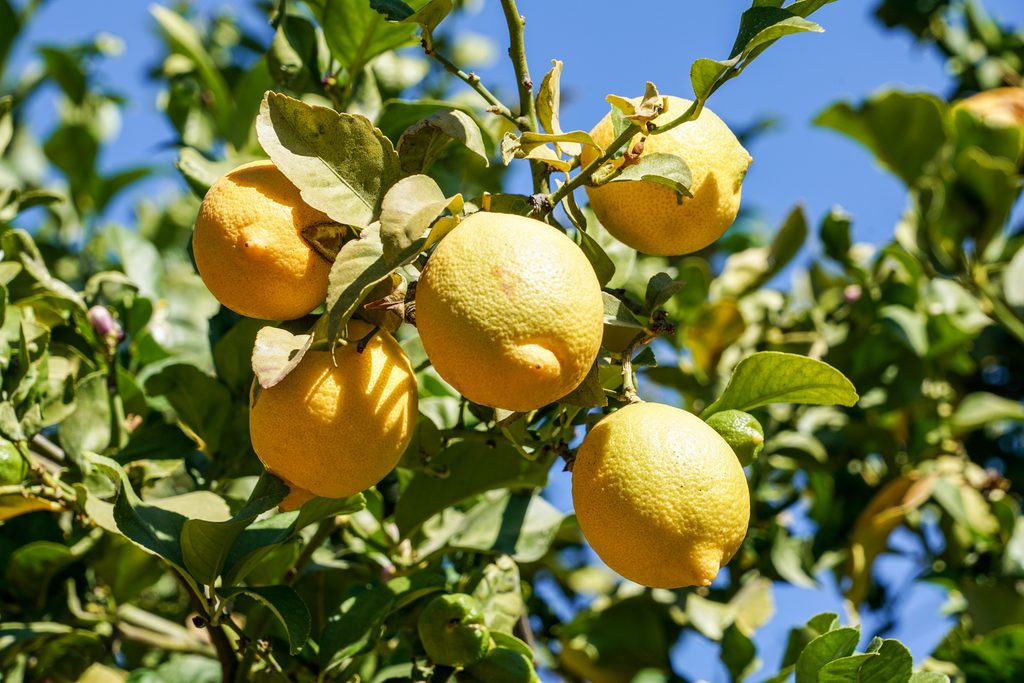
The Meyer lemon is probably the single most popular potted citrus in the South, and for good reason. It’s a natural cross between a lemon and a mandarin orange, so the fruit is sweeter and less acidic than what you’d buy at the store.
It thrives in a container because it stays compact, usually topping out around 6 to 8 feet, and it tolerates the light pruning needed to keep it patio-sized. Mississippi State Extension notes it’s “incredibly productive, often flowering and fruiting multiple times throughout the year,” which matches what most Georgia growers report.
I’ll admit a soft spot for this one. There’s something genuinely satisfying about picking a lemon off your own porch tree in December while your neighbors are buying them in a mesh bag. Give it 6 to 8 hours of sun and well-draining citrus mix, and it rewards you generously.
ALSO READ: 25 Trees Native to Georgia (With Growing Details)
2. Kumquat
Kumquats are the toughest citrus you can grow in Georgia, cold-hardy enough that some gardeners in protected North Georgia spots grow them in the ground. In a pot, they’re nearly foolproof.
The fruit is small, oval, and eaten skin-on, which surprises people the first time they try it. The peel is actually the sweet part, while the flesh carries the tartness, a flavor reversal that makes for a great party trick with guests.
Because kumquat trees stay naturally small and shrubby, they don’t demand much repotting. A 15-gallon container will comfortably house a mature plant for years, according to extension guidance on container citrus sizing.
3. Key Lime
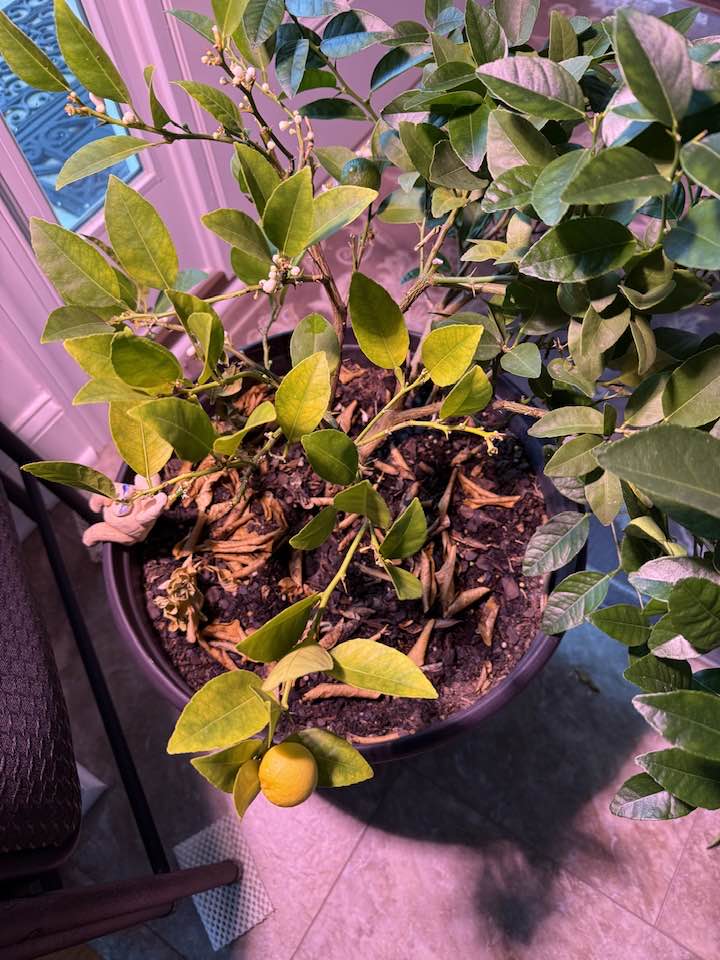
Key lime trees bring a genuinely tropical feel to a Georgia patio, though they’re the least cold-tolerant tree on this list. That’s precisely why growing it in a pot, rather than the ground, makes sense here.
The tree produces small, intensely aromatic limes that outclass anything sold in supermarkets. It flowers repeatedly through the warm months, filling a porch with a sweet citrus scent that I find more pleasant than any candle.
Winter is non-negotiable for this one. Once nighttime temperatures threaten the mid-40s, the tree needs to come indoors near a bright, south-facing window, ideally kept between 55°F and 65°F as Clemson HGIC recommends for container citrus overwintering.
4. Satsuma Mandarin
Satsuma has become something of a Georgia success story in recent years. UGA Extension reports that as of 2022, roughly 75% of Georgia’s 3,300 acres of commercial citrus were planted in satsumas, prized for their cold-hardiness and easy-peel fruit.
That same cold-hardiness makes it an excellent potted tree for home gardeners further north than commercial groves would risk. It handles brief dips below freezing better than most citrus, giving a bit more margin for error.
Fruit ripens in early November, right as the rest of the garden is winding down, which gives it a nice seasonal role. I like that it fills the gap between summer harvests and holiday citrus displays almost perfectly.
5. Japanese Maple
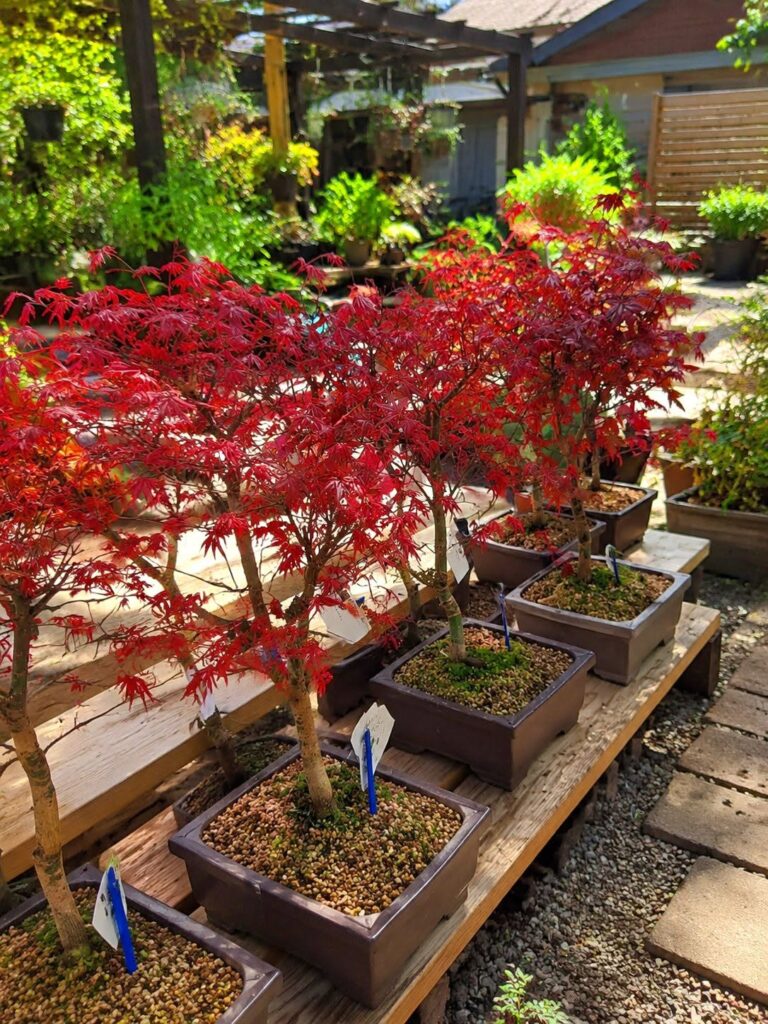
Few trees reward container growing quite like the Japanese maple. Its naturally shallow, fibrous root system adapts well to pot life, and dwarf cultivars like ‘Bloodgood’ or ‘Crimson Queen’ rarely need more than a 20-inch container.
The foliage is the whole appeal here — deeply lobed leaves in reds, oranges, and greens that shift dramatically through the seasons. Fall color in Georgia’s mild autumns can stretch on for weeks longer than in colder states.
What surprises new growers is how much personality these trees develop. Every branch curves differently, and after a couple of years of light pruning, you end up with something that looks sculpted rather than simply planted.
6. Dwarf Crape Myrtle
Crape myrtle is practically the unofficial tree of the South, and dwarf varieties like ‘Pocomoke’ or ‘Chickasaw’ bring that same summer-long flower show to a container. Blooms in white, pink, red, or lavender last from June through September.
It’s also remarkably drought-tolerant once established, which matters in a container that heats up fast under a Georgia sun. Established crape myrtles handle the occasional missed watering far better than most flowering trees.
Bark interest is the underrated bonus. Mature specimens develop mottled, peeling bark that adds visual texture even in winter, when the branches are bare and the flowers are long gone.
7. Southern Magnolia (‘Little Gem’)
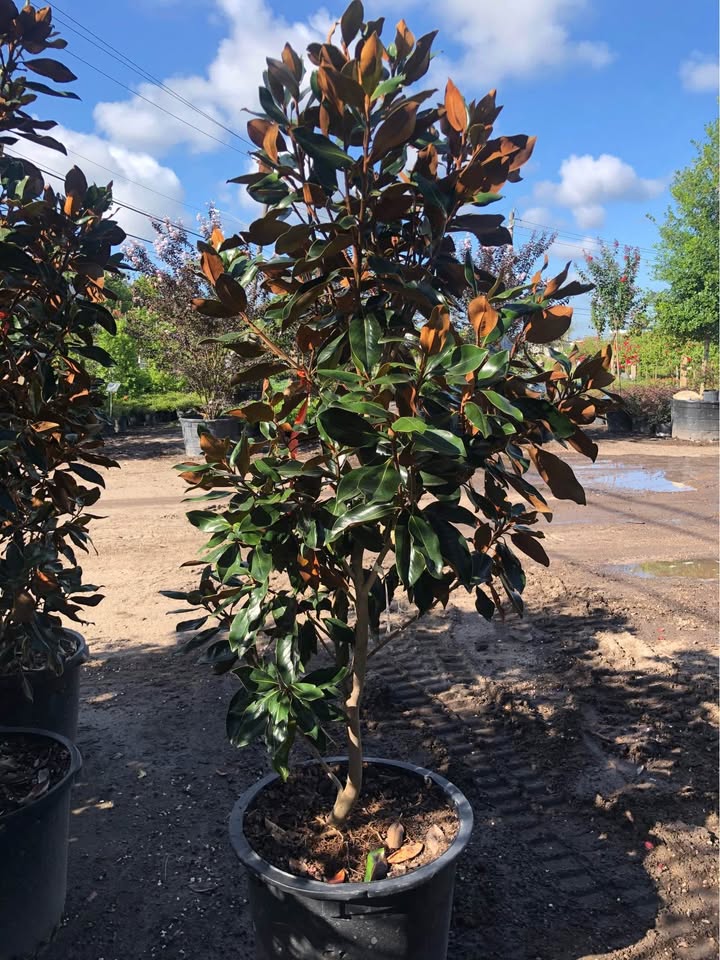
‘Little Gem’ is the compact cousin of Georgia’s iconic Southern magnolia, bred specifically to fit smaller spaces without losing the classic glossy foliage and creamy, fragrant blooms.
It’s evergreen year-round, which matters a lot for container gardeners who want structure in winter rather than a bare pot. The dark green leaves have a rusty underside that catches light beautifully when the wind moves through them.
Give it a large, heavy container since mature specimens can reach 20 feet even in a dwarfed form. I’d choose a sturdy ceramic or wood planter here, both for stability and because this tree deserves a container that matches its presence.
8. Dwarf Alberta Spruce
For anyone wanting a formal, symmetrical evergreen without the size of a full spruce, this dwarf conifer delivers a tidy, conical shape that barely needs pruning to hold its form.
It grows slowly, often just 2 to 4 inches a year, which is actually an advantage in a container since it won’t outgrow its pot quickly. That slow pace also means less frequent repotting hassle.
The one real challenge in Georgia is summer heat combined with reflected warmth from a patio surface. Afternoon shade helps prevent the needle scorch that this spruce is prone to when baked all day in direct southern exposure.
9. Boxwood Topiary
Boxwood trained into a standard or ball shape brings formal, classic structure to an entryway, and it tolerates Georgia’s clay-adjacent container mixes better than most broadleaf evergreens.
It’s slow-growing and dense, which means a well-shaped boxwood topiary can look essentially unchanged year to year with just seasonal trimming. That predictability appeals to gardeners who want low drama.
Watch drainage carefully, since boxwood roots are notoriously sensitive to soggy conditions. A pot with generous drainage holes and a fast-draining mix will prevent the root rot that ends most boxwood failures.
10. Japanese Holly
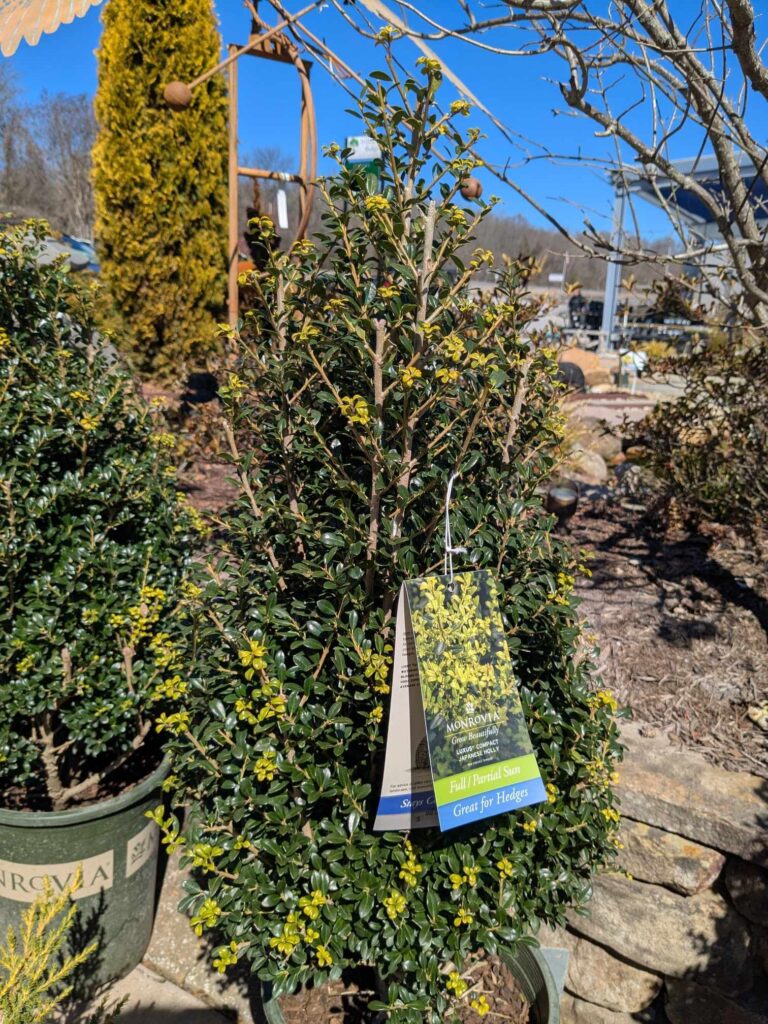
Japanese holly mimics the look of boxwood but with a bit more tolerance for Georgia’s heat and humidity swings. Its small, rounded leaves shear into tight formal shapes or looser natural mounds equally well.
It stays evergreen through winter, giving year-round structure to a porch or entry container arrangement. Unlike American holly, it lacks the sharp-pointed leaves, making it friendlier around kids and pets.
It handles both sun and partial shade, which gives some flexibility if your patio shifts light through the day. That adaptability makes it a forgiving choice for a first-time container tree grower.
11. Nellie Stevens Holly
Nellie Stevens is a hybrid holly bred for density and speed, often used as a living privacy screen in Georgia landscapes. In a large container, it works as a tall, narrow accent tree instead.
The deep green, glossy foliage stays attractive all year, and female plants produce bright red berries in winter that draw songbirds. That seasonal color is a genuine bonus when most of the garden has gone dormant.
Because it grows fast, expect to repot every couple of years into a progressively larger container. Left unchecked, it can eventually outgrow all but the largest patio planters, so plan on regular pruning to control height.
12. Wax Myrtle
Wax myrtle is a native Southern evergreen that handles Georgia’s heat, humidity, and even coastal salt spray without complaint. It’s one of the most low-maintenance choices on this entire list.
Its aromatic, narrow leaves release a spicy fragrance when brushed or crushed, which makes it a pleasant choice near a seating area. Small waxy berries follow in fall, another draw for local birds.
It tolerates poor, sandy soil naturally, so a container mix doesn’t need to be especially rich. This is a tree that genuinely prefers to be left alone rather than fussed over.
13. Loropetalum
Loropetalum, sometimes called Chinese fringe flower, brings burgundy foliage and spidery pink or red blooms that stand out against Georgia’s typically green landscape palette. Tree-form standards are increasingly common at Southern nurseries.
It flowers most heavily in spring but often reblooms sporadically through summer, giving repeated color rather than a single show. The dark foliage alone earns its keep even between bloom cycles.
It handles Georgia’s acidic clay soils well, which is a rare compliment for a plant, since most ornamentals struggle with our native ground conditions. That same tolerance carries over nicely into a well-drained container mix.
14. Camellia Japonica
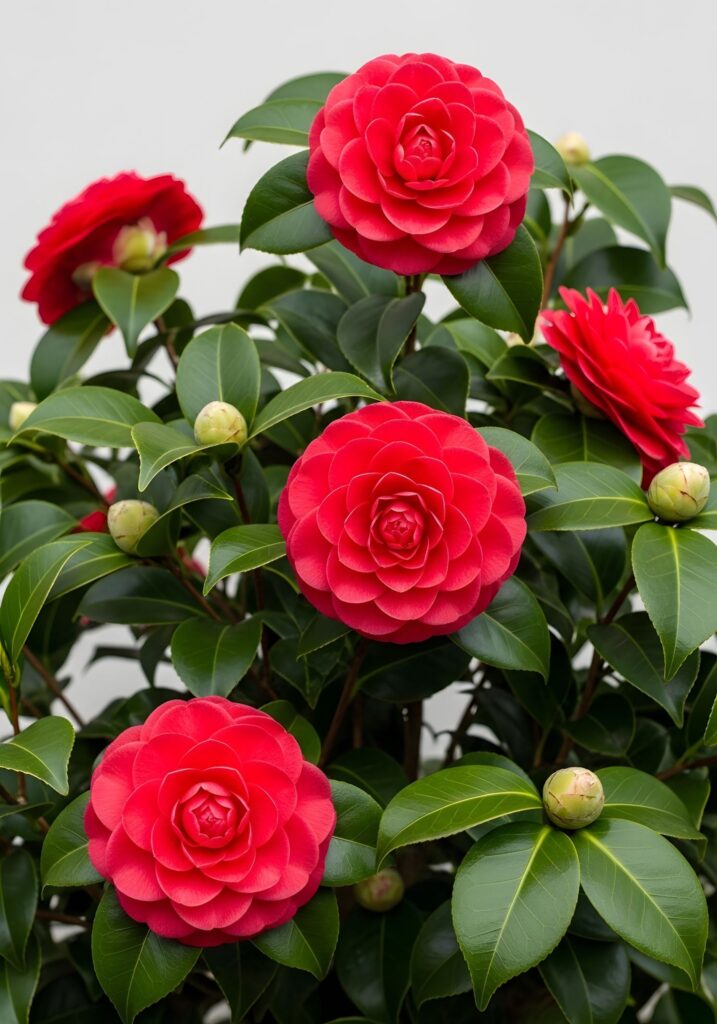
Camellia japonica is a Southern classic, prized for glossy evergreen leaves and rose-like blooms that appear in the dead of winter when almost nothing else in the garden is flowering.
Tree-form camellias trained on a single trunk fit beautifully into a large decorative pot near an entrance. Blooms range from pure white to deep red, often with a ruffled, layered petal structure.
It prefers partial shade, which actually simplifies container placement on a shaded porch where sun-loving trees would struggle. Consistent moisture matters more than sunlight for this particular tree’s success.
15. Sasanqua Camellia
Sasanqua camellia is the earlier-blooming cousin of camellia japonica, flowering from fall into early winter rather than deep winter. It also tolerates more direct sun, which widens where you can place it.
The blooms are generally smaller and more delicate, with a more open, single-petal form compared to the fuller japonica flowers. Some gardeners prefer that simpler look for a more naturalistic feel.
It grows a bit faster than japonica types too, filling out a container more quickly. For gardeners who want quicker payoff, sasanqua is often the better starting choice.
16. Fig Tree (‘Brown Turkey’ or ‘Celeste’)
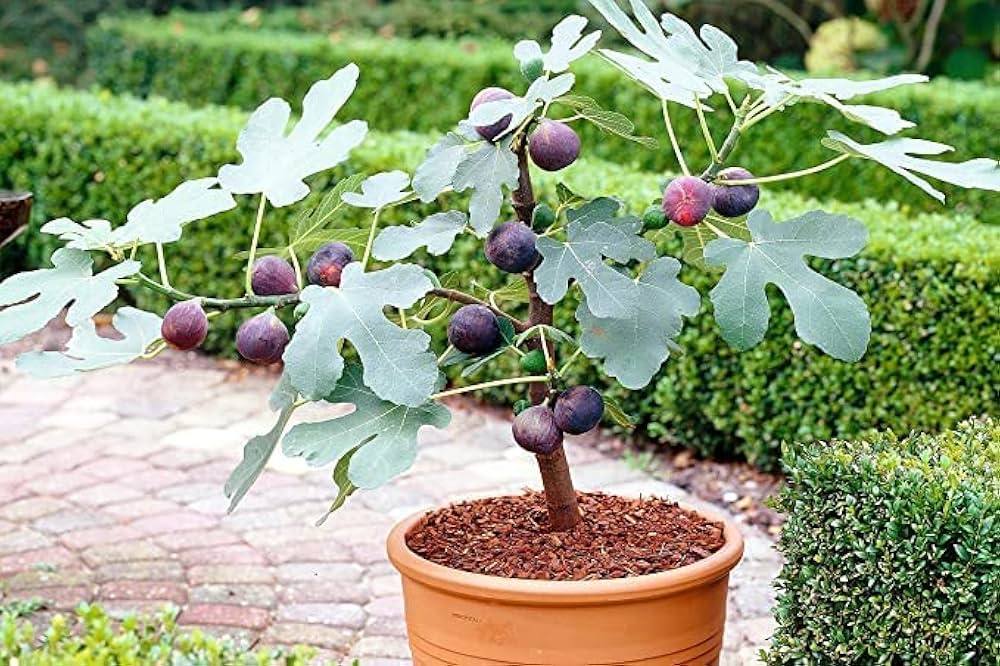
Fig trees have quietly become one of the most rewarding potted fruit trees for Georgia backyards. ‘Brown Turkey’ and ‘Celeste’ are the two most reliable varieties for our climate and both fruit well in containers.
Figs are remarkably forgiving of neglect, tolerating uneven watering and less-than-ideal soil better than most fruiting trees. That resilience makes them a smart pick for gardeners who travel or forget to water occasionally.
The real payoff comes in mid-to-late summer, when the tree produces a genuinely heavy crop of sweet, jammy fruit. I’ve never met anyone disappointed by their first homegrown fig harvest.
17. Pomegranate
Pomegranate trees bring a Mediterranean feel to a Georgia patio, with glossy leaves, brilliant orange-red flowers in early summer, and the signature jewel-toned fruit by fall.
Dwarf varieties like ‘Nana’ stay compact enough for a mid-sized container, rarely exceeding 4 feet, while still producing full-sized fruit on standard varieties given a larger pot.
It’s genuinely drought-tolerant once established, another plus during Georgia’s hot, occasionally dry summer stretches. Just don’t overwater, since pomegranate roots dislike sitting in soggy container soil.
18. Olive Tree
Olive trees have become a trendy container choice across the Southeast, valued more for their silvery, textured foliage than for a realistic home fruit harvest in most of Georgia.
They demand excellent drainage and full sun, conditions a container can control more precisely than open ground with clay soil underneath. A gritty, fast-draining potting mix is essential for long-term success.
Winter protection matters here since olives can suffer damage below the mid-20s. In North Georgia especially, plan to move the container indoors or into a garage during hard freezes.
19. Rosemary Standard
A rosemary trained into a tree, or “standard,” form turns a common kitchen herb into a striking, fragrant centerpiece for a sunny patio. It’s essentially a topiary made from something you can also cook with.
It thrives in the same hot, well-drained conditions that make Georgia summers hard on other plants. Poor soil and infrequent watering actually suit rosemary better than rich, moist container mix.
The needle-like foliage releases a strong pine-and-citrus scent whenever brushed against, making it a lovely choice near a seating area or doorway where people naturally pass close by.
20. Bay Laurel
Bay laurel is the source of the dried bay leaves used in cooking, but the living tree is a handsome, dense evergreen well suited to formal container arrangements. It clips into cones, spirals, or standards easily.
It tolerates Georgia’s humidity better than many Mediterranean herbs, though it does appreciate some afternoon shade during the hottest summer stretches. That flexibility makes placement easier than with true sun-worshippers like olive.
Harvesting your own bay leaves is a small but genuine pleasure, and fresh leaves carry noticeably more flavor than the dried, store-bought version most cooks are used to.
ALSO READ: 20 Georgia Native Shrubs (With Growing Details)
21. Gardenia Tree
Gardenia trained as a standard brings one of the most fragrant blooms in Southern gardening to container height, right where you’ll actually smell it while sitting on a porch.
The creamy white, waxy flowers appear through late spring and summer, and the glossy dark green foliage stays attractive even when the tree isn’t in bloom. It’s a two-season plant in that sense.
Gardenias can be finicky about consistent moisture and slightly acidic soil. A container actually helps here, since you control the soil pH and drainage far more precisely than in unpredictable garden beds.
22. Banana Shrub (Michelia figo)
Despite the name, this isn’t a banana at all — it’s a member of the magnolia family, named for flowers that smell remarkably like ripe bananas. It’s a lesser-known gem among Georgia gardeners.
The tree stays naturally compact and dense, with small, creamy-yellow blooms tucked among glossy evergreen leaves in spring. The fragrance carries surprisingly far for how modest the flowers look.
It handles partial shade well, another point in its favor for gardeners with a covered porch or tree-shaded patio where full-sun trees would struggle to perform.
23. Dwarf Yaupon Holly
Dwarf yaupon holly is a Southeastern native that tolerates nearly anything Georgia throws at it, from drought to heavy clay runoff to salt spray near the coast. It shears into tight, formal balls or cones effortlessly.
It’s naturally low-maintenance, rarely needing fertilizer or pest treatment once established. That native toughness makes it one of the most forgiving choices for gardeners newer to container tree care.
Its fine-textured, small evergreen leaves give it a refined look that works equally well flanking a formal entrance or softening a modern patio design.
24. Redbud (‘Ruby Falls’)
‘Ruby Falls’ is a dwarf, weeping redbud cultivar that condenses the beloved Eastern redbud‘s spring show into a container-friendly size, typically staying under 6 feet tall with a cascading form.
Magenta-pink flowers cover bare branches in early spring before the heart-shaped, deep purple leaves emerge. It’s one of the earliest signs of spring in Georgia gardens, native varieties included.
The weeping habit gives it real sculptural interest even after the flowers fade, unlike many spring bloomers that go visually flat for the rest of the year once the show is over.
25. Norfolk Island Pine
Norfolk Island pine brings a distinctive, symmetrical, almost tropical conifer look to a Georgia patio through the warm months. It’s often sold as a “living Christmas tree” for its naturally tiered branch structure.
It cannot tolerate frost, which makes it strictly a container tree in Georgia rather than a landscape option, even in the warmest coastal zones. Plan on moving it indoors well before the first freeze.
Indoors, it prefers bright, indirect light and steady humidity, conditions a bathroom or sunroom often provides better than a typical living room. Treated well, it can live for decades in the same pot.
A Quick Note on Zones
Georgia isn’t one climate — it’s several stacked on top of each other. North Georgia mountains dip into zone 7a, while the coastal plain and barrier islands reach zone 9a.
If you garden in Blairsville or Dahlonega, treat your potted trees a little more cautiously in winter. If you’re in Brunswick or Savannah, you can push a few of these trees further than the average Georgia gardener would dare.
I’d always recommend checking your specific zip code against the official USDA map before committing to anything borderline tender, like citrus.
Basic Care Rules That Apply Across the Board
A few principles hold true no matter which of these 25 trees ends up on your patio. Drainage matters more than almost anything else. Georgia’s heavy rain events can drown container roots fast if water has nowhere to escape.
Repotting every two to three years keeps root systems healthy, following the same wider-container guidance extension services give for citrus: move up roughly 2 inches in diameter rather than jumping to something drastically larger.
Fertilize lightly and often during the growing season rather than heavily and rarely. Container soil leaches nutrients faster than garden beds, since regular watering washes them through the pot.
Why This Matters Beyond Your Own Patio
There’s a bigger picture here too. Urban trees, even container ones scaled up across a neighborhood, genuinely add up. The U.S. Forest Service found that Atlanta’s tree canopy alone produces about $13.5 million annually in energy savings and $6.27 million in avoided stormwater runoff each year.
That’s not a reason to feel guilty about wanting a pretty lemon tree on your deck, but it’s a nice reminder that every tree, potted or planted, plays a small role in a much larger system.
I’ll be honest: my own patio started with one reluctant Meyer lemon a friend talked me into. Three years and four pots later, I understand the appeal completely. Georgia’s climate genuinely makes this hobby easy to fall into.
Frequently Asked Questions
Can citrus trees survive Georgia winters in pots?
Yes, if you bring them indoors or into a garage before temperatures drop into the mid-30s, especially for tender types like key lime.
What size pot do most trees on this list need?
Most start comfortably in a 15-gallon container and eventually need something in the 18- to 36-inch diameter range as they mature.
Do potted trees need more water than in-ground trees?
Generally yes, especially during Georgia’s hot summer months, since containers dry out faster than garden soil.
References
- USDA Plant Hardiness Zone Map — https://planthardiness.ars.usda.gov
- UGA Cooperative Extension, “Growing Citrus in the Coastal and Southern Areas of Georgia” — https://fieldreport.caes.uga.edu/?p=27897
- UGA Cooperative Extension, “Georgia Citrus Varieties Report” — https://fieldreport.caes.uga.edu/publications/C1275
- University of Florida IFAS Extension, “Make the Holiday Season Bright with Patio Citrus” — https://nwdistrict.ifas.ufl.edu/hort/2018/01/04/make-the-holiday-season-bright-with-patio-citrus
- Mississippi State University Extension, “Use Containers to Keep Citrus Growing All Year” — https://extension.msstate.edu/news/southern-gardening/2025/use-containers-keep-citrus-growing-all-year
- Clemson Cooperative Extension HGIC, “Container Citrus Production” — https://hgic.clemson.edu/factsheet/container-citrus-production/
- USDA Forest Service, National Urban and Community Forestry Advisory Council Annual Report — https://www.fs.usda.gov/sites/default/files/2019-06/2017-nucfac-annual-report.pdf

Tim M Dave is a gardening expert with a passion for houseplants, particularly cacti and succulents. With a degree in plant biology from the University of California, Berkeley, he has vast experience in gardening. Over the years, he has cultivated a vast collection of desert plants and learned a great deal about how to grow and care for these unique companions.