30 Types of Apple Trees (Different Varieties, With Growing Details)
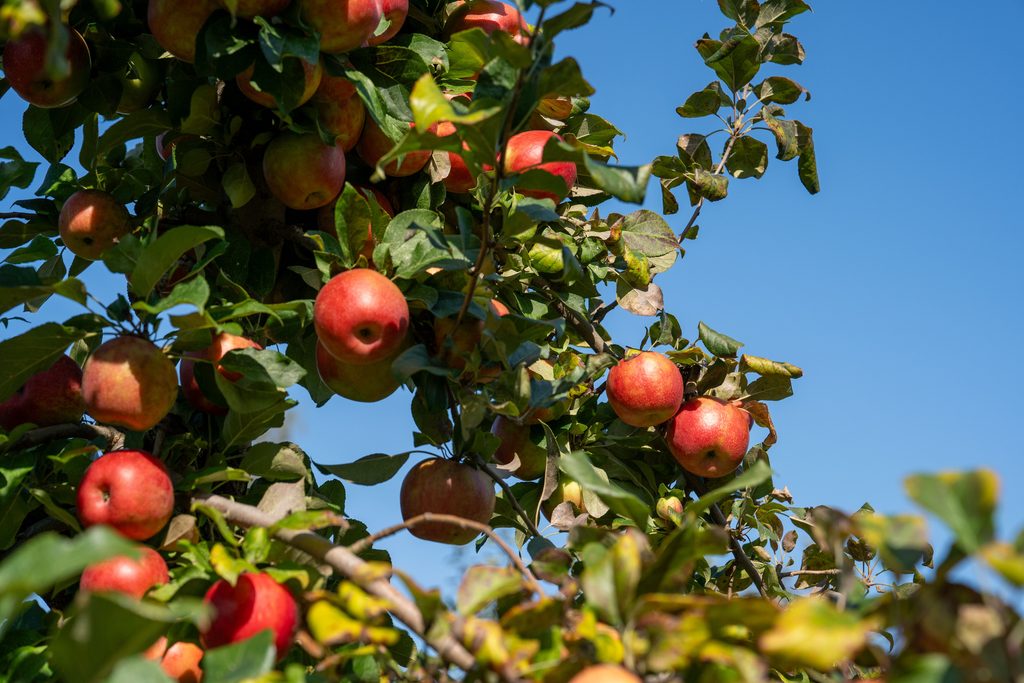
Apples are not a single fruit. They are a family of thousands of distinct personalities, each with its own flavor, texture, and story. I still remember biting into my first Honeycrisp and wondering why every apple didn’t taste that alive.
If you are choosing a tree for your backyard, or simply trying to understand what you are buying at the grocery store, this guide breaks down 30 of the most important apple tree varieties grown today.
Fast fact: growers in the United States alone cultivate over 2,500 apple varieties, and worldwide that number climbs past 7,500, according to Utah State University Extension. Most of us, however, only ever encounter a few dozen of them at the store.
How Apple Varieties Are Classified
Before we get to the list, it helps to understand a few basics. Apple “varieties” that occur naturally are different from “cultivars,” which are propagated through grafting rather than seed, as Washington State University’s tree fruit program explains. Nearly every apple tree sold commercially today is a cultivar.
Hardiness zones matter a lot. The USDA Plant Hardiness Zone Map, based on 30-year average winter lows, determines which apple trees will actually survive in your region, according to North Dakota State University Extension. Most apple trees need a cold winter to set fruit properly.
One more thing I wish someone had told me earlier: most apple trees cannot pollinate themselves. You typically need two different varieties blooming at the same time nearby, or your tree may flower beautifully and still produce little fruit.
With that groundwork laid, here are 30 apple tree types worth knowing.
1. Honeycrisp
Honeycrisp is the apple that changed the industry. Bred by the University of Minnesota, it exploded in popularity for its shattering crispness and balanced sweet-tart flavor. It’s now one of the top two best-selling apple varieties in the United States by storage volume.
The tree itself is finicky. It demands well-drained soil and consistent care, and it is notably susceptible to certain nutritional disorders like bitter pit. Growers in USDA zones 3 through 6 tend to have the best results.
Despite the extra effort, home gardeners still love it. The payoff in flavor is worth the fuss, in my opinion, and few apples snap quite like a chilled Honeycrisp.
2. Gala
Gala originated in New Zealand and has become the single most planted apple variety in the U.S. today, accounting for roughly 17% of the national apple market, per USApple industry data. It’s mild, sweet, and easy to like.
The tree is a reliable early-to-mid-season producer and adapts well across USDA zones 4-9. Gala trees also tend to bear fruit earlier in their life than many other cultivars, which appeals to impatient home growers.
Best use: fresh eating, kids’ lunchboxes, and light baking where you don’t want too much tartness competing with sugar or spice.
3. Fuji
Fuji apples come from Japan, originally crossed from Red Delicious and Ralls Genet. They are known for exceptional sweetness and a dense, juicy bite that holds up in storage far longer than most varieties.
Fuji trees need a longer growing season than many cultivars, so they perform best in USDA zones 5-8 with warm autumns. Patience pays off, though, since Fuji is one of the latest-ripening popular apples, usually harvested in October.
Home bakers may find Fuji a touch too sweet for pies without added acidity. As a snacking apple, though, it’s hard to beat.
4. Red Delicious
Once the most iconic apple in America, Red Delicious remains widely planted, particularly in Washington State. Its deep red skin and mildly sweet flesh made it a lunchbox staple for generations.
Here’s something surprising: Red Delicious has more than 40 distinct strains currently sold commercially, according to University of Missouri Extension. Some strains are far better than others in color, crispness, and shelf life.
Critics note the texture can turn mealy if stored too long. Still, the tree is hardy, productive, and forgiving for beginner growers in zones 4-8.
5. Golden Delicious
Golden Delicious is not related to Red Delicious despite the shared name. It has thin, pale-yellow skin and a honeyed, mild flavor that works well both raw and cooked.
This variety is a workhorse in the kitchen. It holds its shape reasonably well when baked and doesn’t brown as quickly as some other apples once sliced, which makes it popular for fruit trays and salads.
The tree tolerates a wider range of climates than many cultivars, thriving in zones 5-8, and it’s often used as a pollinator for other apple varieties nearby.
6. Granny Smith
Bright green and famously tart, Granny Smith originated in Australia in the 1860s from a chance seedling. It remains one of the top five apple varieties by U.S. production volume today.
Its firm, acidic flesh is ideal for pies and baking, since it holds structure under heat far better than sweeter apples. Many professional bakers reach for Granny Smith specifically for this reason.
The tree needs a long, warm growing season, making zones 6-9 the sweet spot. In colder regions, fruit may not ripen fully before frost.
7. Pink Lady (Cripps Pink)
Pink Lady, technically the cultivar name Cripps Pink, was developed in Australia by crossing Golden Delicious and Lady Williams. It has a distinctive pink-blushed skin and a crisp, sweet-tart flavor with a wine-like finish.
This apple ripens very late in the season, sometimes into November, which means it needs a long, frost-free autumn. Zones 6-9 work best.
I find Pink Lady one of the more complex-tasting apples on this list. It’s not just sweet or just tart; it carries a genuine depth that pairs beautifully with sharp cheese.
8. McIntosh
McIntosh, or “Mac,” is a Canadian heirloom apple discovered in 1811. It has soft, aromatic flesh with a tart edge and a tendency to break down quickly, which actually works in its favor for sauces.
This is the apple I’d choose for homemade applesauce, hands down. It cooks down fast into a smooth, fragrant sauce without needing much added sugar.
McIntosh trees are cold-hardy, thriving well into USDA zone 3, making them a favorite across the northern United States and Canada.
ALSO READ: 17 Fruit Trees for Zone 9 (Identification, With Details)
9. Braeburn
Braeburn hails from New Zealand and offers a complex flavor profile with notes of spice alongside sweetness and tartness. Its dense flesh holds up well both fresh and cooked.
The tree performs best in zones 5-9 and needs a moderately long season to develop its full flavor. It’s a dual-purpose apple, equally at home in a lunchbox or a pie dish.
Braeburn has lost some market share to newer varieties like Envy and Honeycrisp, but loyal fans still seek it out for its balanced, layered taste.
10. Jonagold
Jonagold is a cross between Jonathan and Golden Delicious, combining tartness with rich sweetness. The result is a large, juicy apple with excellent flavor for both eating and baking.
One catch: Jonagold is a triploid variety, meaning it cannot pollinate other apple trees effectively. You’ll need two other compatible varieties nearby rather than relying on this one alone.
Zones 5-8 suit Jonagold well. Its size and flavor make it a favorite at farmers markets, even if it’s less common in supermarkets.
11. Empire
Empire is a cross between McIntosh and Red Delicious, bred at Cornell University’s agricultural experiment station in Geneva, New York. It combines McIntosh’s tang with a firmer, crisper bite.
This apple is a genuinely good all-rounder. It’s sweet enough for snacking, firm enough for salads, and tart enough to hold its own in a pie.
Empire trees do well in zones 4-7 and are considered relatively easy to grow, with decent disease tolerance compared to some older heirlooms.
12. Cortland
Cortland, another McIntosh relative, was developed at Cornell in the early 1900s. Its claim to fame is that the flesh resists browning longer than most apples once cut, thanks to lower enzymatic activity.
That trait makes it popular for fruit salads and party trays where sliced apples need to sit out. The flavor is tart-sweet with soft, tender flesh similar to its McIntosh parent.
Cortland trees are cold-hardy and suited to zones 3-7, making them a solid choice for northern gardeners.
13. Jazz
Jazz is a cross between Braeburn and Royal Gala, developed in New Zealand and now grown widely under trademark and license. It’s dense, crisp, and notably sweet with a slight tang.
The tree tends to be a strong, consistent producer, and the fruit stores exceptionally well, often staying crisp for months in proper cold storage.
Jazz has become one of the fastest-growing branded apples worldwide. For home growers, availability of trees may be more limited due to licensing restrictions in some regions.
14. Envy
Envy is a cross between Braeburn and Royal Gala, similar parentage to Jazz but bred separately in New Zealand. It’s known for slow browning, sweet flavor, and a satisfying crunch.
Commercial production of Envy has grown quickly enough that USApple now tracks it as its own reporting category rather than lumping it under “other varieties.”
The tree suits zones 5-8. Because Envy is trademarked, home gardeners may find fewer nursery sources than for older, open varieties.
15. Cosmic Crisp
Cosmic Crisp was developed by Washington State University, crossing Honeycrisp with Enterprise. It debuted commercially in 2019 and has quickly become a major player, with storage volumes climbing sharply year over year.
It’s built to last: Cosmic Crisp can reportedly hold its crisp texture in cold storage for up to a year, longer than most other apples.
The name comes from the star-like white dots (lenticels) scattered across the deep red skin. Zones 5-8 are typically recommended for home planting.
16. Ambrosia
Ambrosia was discovered as a chance seedling in a British Columbia orchard in the 1990s. It has a low-acid, honey-sweet flavor with a soft floral note that makes it approachable even for people who dislike tart apples.
The flesh browns slowly once cut, similar to Cortland, which makes it convenient for packed lunches.
Ambrosia trees do well in zones 5-8. It’s a newer variety, so nursery availability has grown steadily but isn’t yet as widespread as older cultivars.
17. SweeTango
SweeTango is a University of Minnesota cross between Honeycrisp and Zestar!, aiming to combine Honeycrisp’s crunch with earlier ripening. The flavor leans sweet with a candy-like edge and hints of citrus.
This apple ripens in late summer, well before most Honeycrisp trees, which appeals to growers in shorter-season climates.
Zones 3-7 are appropriate, reflecting its Minnesota breeding heritage aimed at cold hardiness.
ALSO READ: 17 Best Fruit Trees for Zone 8 (With Care Tips)
18. Winesap
Winesap is a true American heirloom, dating back to colonial times. As the name suggests, it has a wine-like, tangy sweetness with dense, firm flesh that holds up remarkably well in storage and cider production.
It remains a favorite for hard cider makers because of its balanced acidity and sugar content. Fresh eating is good too, though the flavor is bolder than mild modern varieties.
The tree does best in zones 5-8 and has a long history of reliability in Mid-Atlantic and Southern orchards.
19. Rome (Rome Beauty)
Rome, sometimes called Rome Beauty, was discovered in Ohio in the early 1800s. It’s a classic baking apple, prized for holding its shape completely when cooked, rather than turning to mush.
The raw flavor is mild and slightly bland compared to newer varieties, which is exactly why it shines in baked dishes where texture matters more than fresh-eating sweetness.
Rome trees suit zones 5-8 and remain a traditional choice for baked whole apples and classic pies.
20. Northern Spy
Northern Spy is another American heirloom, originating in New York in the early 1800s. It has a tart, complex flavor that many bakers consider the gold standard for pie apples, alongside a very firm texture.
The tree is notoriously slow to bear fruit, sometimes taking eight to ten years to produce a full crop, which has caused it to fall out of commercial favor despite its excellent flavor.
Cold-hardy to zone 4, Northern Spy remains a cult favorite among heirloom orchard enthusiasts and cider makers.
21. Gravenstein
Gravenstein is a European heirloom apple, believed to date back to the 1600s, that became closely associated with early California agriculture. It has a tart, aromatic flavor ideal for sauce and cider.
The fruit doesn’t store especially well and ripens unevenly on the tree, meaning it often needs multiple harvest passes rather than one clean picking.
Zones 5-8 work best. Despite the extra harvesting effort, Gravenstein remains beloved for its old-fashioned, intensely apple-forward taste.
22. Jonathan
Jonathan is a 19th-century American heirloom with bright red skin and a tangy, spicy-sweet flavor. It was once one of the most widely grown apples in the country before newer cultivars took over.
The tree is moderately disease-prone, particularly to fire blight, so growers in humid regions should watch closely for symptoms.
Zones 5-8 suit Jonathan well. It remains popular for cider, applesauce, and old-fashioned baking recipes passed down through generations.
23. Ida Red
Ida Red, developed in the 1930s in Idaho, is a cross between Jonathan and Wagener. It’s notably tart with a hint of sweetness and a texture firm enough for baking and storage.
This apple keeps exceptionally well, often lasting months in cold storage without significant quality loss, which made it popular with home canners and long-term storage growers.
The tree tolerates zones 4-8 and produces reliably once established, making it a practical choice for a self-sufficient backyard orchard.
24. Opal
Opal is a Czech-bred cross between Golden Delicious and Topaz, notable for its naturally slow-browning flesh and bright yellow skin. It’s sweet with a light crunch, closer in flavor to Golden Delicious than most tart apples.
Because Opal resists browning without any additives, it has become popular for pre-sliced apple snack packs sold commercially.
Zones 5-8 are typical for planting. It’s a newer variety, so tree availability at local nurseries can vary by region.
25. Pristine
Pristine is a disease-resistant apple developed through Purdue, Rutgers, and Illinois breeding programs (the PRI cooperative). It ripens very early, often by late July, with a crisp, refreshing, mildly tart flavor.
Extension experts frequently recommend Pristine to home growers who want to avoid heavy fungicide spraying, since it shows strong natural resistance to apple scab.
The tree suits zones 5-8 and is a smart pick for organic or low-spray backyard orchards.
26. Liberty
Liberty is another scab-resistant apple, bred at Cornell’s Geneva station specifically to reduce the need for fungicide in home orchards. The flavor is tart-sweet, similar to a slightly milder McIntosh.
Disease resistance is the whole point of this variety. Extension programs across the Pacific Northwest and Northeast regularly list it among top choices for pesticide-conscious gardeners.
Zones 4-7 are ideal. It’s a dependable, low-maintenance tree for anyone new to growing apples at home.
ALSO READ: 17 Best Fruit Trees for Zone 7 (With Care Tips)
27. Arkansas Black
Arkansas Black is a late-19th-century heirloom known for its nearly black-purple skin and remarkably firm, dense flesh. Fresh off the tree, it’s quite hard and tart, mellowing into a sweeter, more complex flavor after weeks in storage.
This is genuinely one of the best-keeping apples in existence, with some growers reporting good quality after six months or more of cold storage.
The tree thrives in zones 6-9 and remains a favorite among Southern heirloom orchard growers.
28. Newtown Pippin
Newtown Pippin is one of the oldest American apple varieties, dating to colonial New York in the early 1700s. It has a tangy, slightly effervescent flavor that historically made it a favorite for cider and even for export to England.
The fruit stores well and improves in flavor after a few weeks of aging, developing more complexity than it has straight off the tree.
Zones 5-9 suit this variety. It remains a favorite among craft cider producers seeking historical, high-acid apples.
29. Ornamental Crabapple
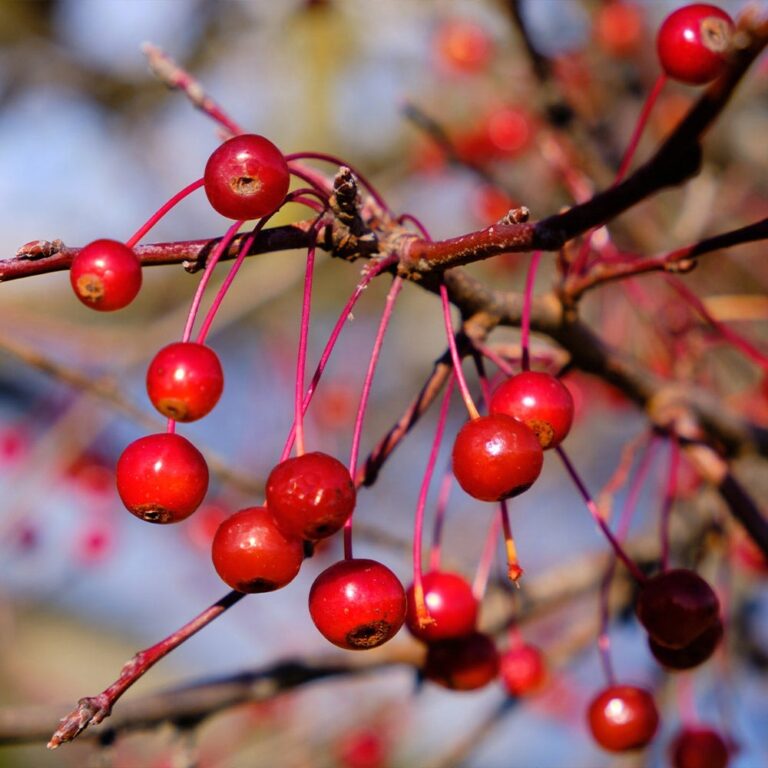
Not every apple tree is grown for fruit you’d want to eat raw. Ornamental crabapples produce small, tart fruit, generally under two inches, and are planted mainly for their spectacular spring blossoms and compact size.
Many crabapple varieties also serve a practical purpose: they’re excellent pollinator partners for full-size apple trees, since they bloom prolifically and over an extended window.
Crabapples are remarkably cold-hardy, with many varieties surviving comfortably in zone 3, making them useful even where standard apple trees struggle.
30. Haralson
Haralson is a cold-hardy apple developed by the University of Minnesota in 1922, bred specifically to survive brutal northern winters. It has a firm, tart flavor well suited to baking and cider.
The tree is remarkably hardy, tolerating conditions down to USDA zone 3, and remains a staple variety across Minnesota, Wisconsin, and the Dakotas.
This is proof that regional breeding programs matter. Since 1878, the University of Minnesota alone has released 29 apple varieties aimed at surviving harsh Midwestern winters.
Quick Comparison: Choosing the Right Apple Tree
If you’re overwhelmed by 30 options, narrow it down by purpose first. For fresh eating, consider Honeycrisp, Gala, or Ambrosia. For baking, Granny Smith, Rome, or Northern Spy hold their shape best.
For cold climates (zone 3-4), lean toward Haralson, McIntosh, Cortland, or SweeTango. For low-spray or organic growing, Liberty and Pristine offer real disease resistance backed by university research.
For cider making, Winesap, Gravenstein, and Newtown Pippin bring the acidity and complexity that cider needs. Whatever you choose, plant at least two compatible varieties nearby for reliable pollination.
Why Apple Variety Matters More Than You Think
It’s easy to assume “an apple is an apple.” But the differences in sugar content, acidity, texture, and storage life across these 30 varieties are genuinely dramatic, not just marketing spin.
Washington State alone produces more than 60% of the nation’s apple crop and grows the vast majority of the country’s organic apples, according to Northwest Horticultural Council data sourced from USDA figures. Yet even within that single state, growers cultivate dozens of distinct varieties, each suited to a different purpose and palate.
Understanding these differences turns a routine grocery trip, or a backyard planting decision, into something more intentional. The right apple for a pie is rarely the right apple for a lunchbox, and now you know why.
Frequently Asked Questions
How many apple varieties exist in the world? Over 7,500 apple varieties are grown worldwide, with more than 2,500 grown commercially in the United States alone, according to Utah State University Extension.
Do apple trees need another tree nearby to produce fruit? Yes, in almost all cases. Most apple varieties cannot self-pollinate and need a different, compatible variety blooming nearby, as North Dakota State University Extension confirms.
Which apple variety is best for beginners? Gala and Liberty are both known for being relatively forgiving, disease-tolerant, and reliable producers for first-time home orchardists.
Which apple is best for pies? Granny Smith, Rome, and Northern Spy are widely recommended by extension horticulturists for their firm texture and tart-forward flavor after baking.
References
- Utah State University Extension. Apple Production and Variety Recommendations for the Utah Home Garden. https://extension.usu.edu/yardandgarden/research/apple-production-and-variety-recommendations-for-the-utah-home-garden
- University of Minnesota. All University of Minnesota Apple Varieties. Minnesota Hardy. https://mnhardy.umn.edu/apples/varieties
- North Dakota State University Agriculture. From Orchard to Table: Apples! https://www.ndsu.edu/agriculture/extension/publications/orchard-table-apples
- University of Missouri Extension. Apple Cultivars and Their Uses. https://extension.missouri.edu/publications/g6022
- Washington State University Tree Fruit. Varieties. https://treefruit.wsu.edu/varieties-breeding/cultivar-guide/
- USDA Economic Research Service. U.S. Apple Production, by State. https://ers.usda.gov/data-products/charts-of-note/chart-detail?chartId=75112
- USDA Agricultural Research Service. List of Accessions in the USDA Apple Collection, Plant Genetic Resources Unit, Geneva, NY. https://www.ars.usda.gov/northeast-area/geneva-ny/plant-genetic-resources-unit-pgru/apple-collection/apple-accession-list/

Tim M Dave is a gardening expert with a passion for houseplants, particularly cacti and succulents. With a degree in plant biology from the University of California, Berkeley, he has vast experience in gardening. Over the years, he has cultivated a vast collection of desert plants and learned a great deal about how to grow and care for these unique companions.