45 Native North Carolina Flowers (With Growing Details)
I have driven from the Blue Ridge Parkway down to the Outer Banks more times than I can count, and every stretch of that trip shows a completely different set of wildflowers. Few states pack this much botanical variety into one place.
North Carolina is home to more than 4,000 native plant species, according to the NC Native Plant Society, spread across mountains, piedmont, sandhills, and coastal plain regions. That range is part of why botanists consider this one of the most biodiverse states in the eastern United States.
This guide covers 45 native flowers you can genuinely find across the state.
Let’s get into the list.
45 Native North Carolina Flowers
1. Flowering Dogwood (Cornus florida)
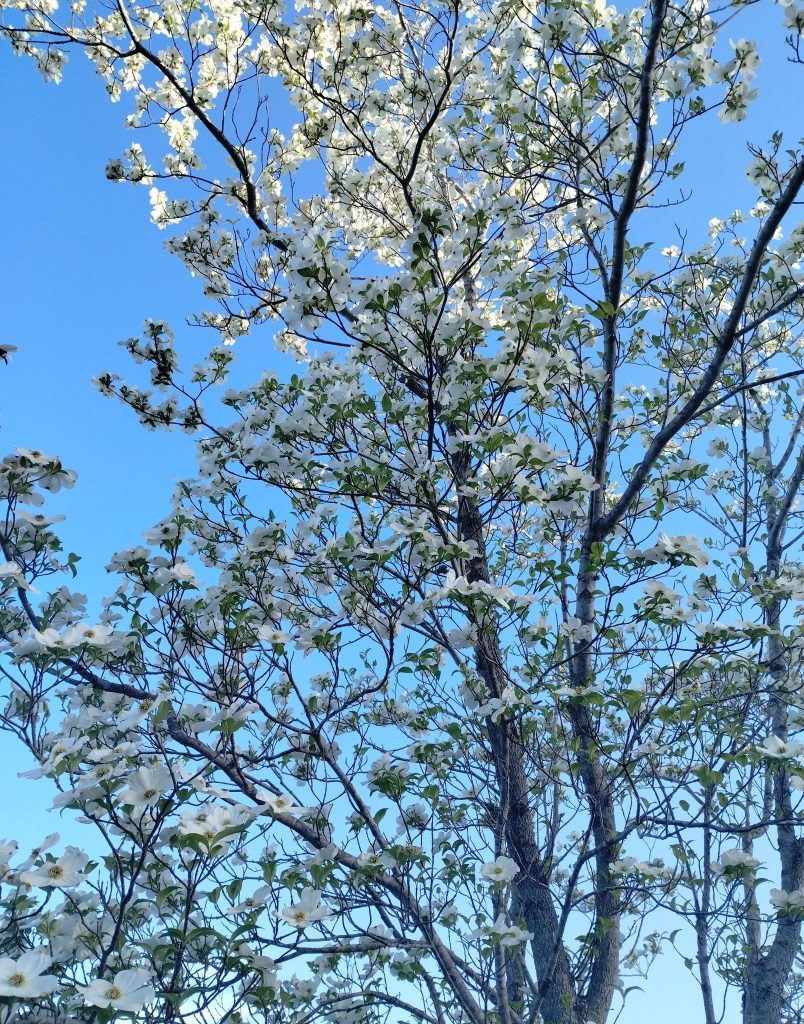
North Carolina’s official state flower has held that title since 1941, chosen because it grows abundantly across the entire state. What most people call the flower petals are actually four white or pink bracts surrounding a tiny cluster of true flowers at the center.
This tree rarely grows taller than 30 to 40 feet, and it blooms in early spring before most hardwood trees leaf out fully. The world’s largest known flowering dogwood grows right here, in Sampson County.
By fall, the tree produces bright red berries that birds rely on heavily. Its autumn foliage turns deep red and maroon, giving it a second visual season most flowering trees cannot match.
2. Carolina Lily (Lilium michauxii)
Carolina lily produces nodding, orange-spotted flowers with strongly recurved petals, similar in shape to a Turk’s cap lily but generally smaller and more delicate. It grows in dry woodlands and forest edges throughout the piedmont and mountains.
Bloom time runs from July through August, often in scattered single stems rather than dense colonies. Finding one usually feels like a small, private discovery on a summer hike.
It prefers well-drained, slightly acidic soil and partial shade, making it a good indicator of healthy, undisturbed woodland habitat.
3. Venus Flytrap (Dionaea muscipula)
Few plants in the world are as strange as the Venus flytrap, and its entire native range is limited to a small area within about a 90-mile radius of Wilmington, North Carolina. It genuinely exists nowhere else naturally on Earth.
Its white flowers bloom on a tall stalk held well above the trap leaves, likely an adaptation to keep pollinating insects separate from prey-catching insects. That detail always strikes me as remarkably clever evolution.
It grows in nutrient-poor, boggy soil and supplements its diet by catching insects, which explains the traps most people recognize immediately. Habitat loss has made wild populations increasingly rare.
4. Trailing Arbutus (Epigaea repens)
Trailing arbutus creeps low along the forest floor, producing small, pale pink, intensely fragrant flowers in early spring. Its evergreen leaves stay leathery and tough through the winter months.
It blooms from March through May in acidic, sandy woodland soil, often under pines or oaks. The fragrance is disproportionately strong for such a small flower, and I always notice it before I actually spot the plant.
Because it depends on specific soil fungi to thrive, it transplants poorly and should always be left undisturbed in the wild.
5. Mountain Laurel (Kalmia latifolia)
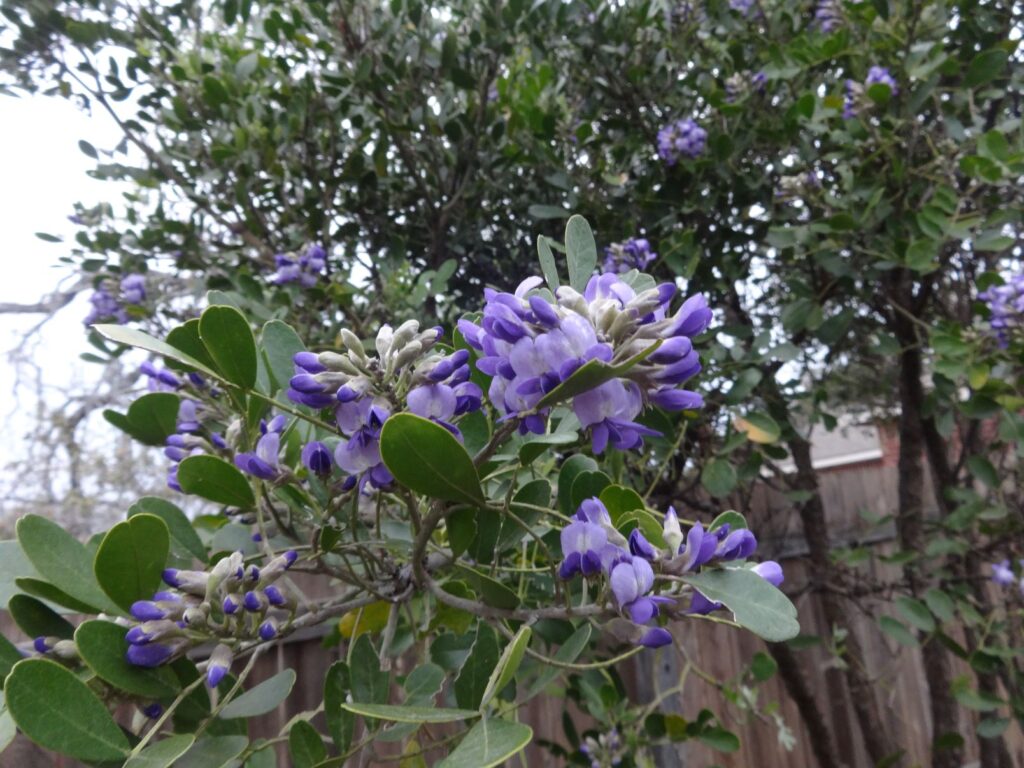
Mountain laurel forms dense evergreen thickets across the Appalachian slopes, producing clusters of pink and white cup-shaped flowers each spring. Locals sometimes call these thickets “laurel hells” because they can be nearly impossible to walk through.
Each individual flower has a spring-loaded mechanism that flings pollen onto visiting insects, a detail worth watching closely if you catch a bloom at the right moment. It blooms from May through June depending on elevation.
The entire plant is toxic if ingested, a fact worth knowing if you have pets or livestock nearby.
ALSO READ: 20 North Carolina Native Shrubs (With Growing Details)
6. Catawba Rhododendron (Rhododendron catawbiense)
Catawba rhododendron paints entire mountain balds purple-pink each June, and places like Roan Mountain draw thousands of visitors specifically for this bloom. It is one of the most dramatic wildflower displays in the entire Southeast.
It grows as a large evergreen shrub, often reaching 6 to 10 feet, thriving at higher elevations where cooler temperatures persist through summer. Bloom timing shifts later at higher elevations, stretching the viewing season by several weeks.
Because it needs acidic, well-drained mountain soil, it rarely does well outside its native high-elevation range.
7. Flame Azalea (Rhododendron calendulaceum)
Flame azalea produces some of the most vivid orange and yellow blooms found anywhere in Appalachian forests. Unlike Catawba rhododendron, it drops its leaves in winter, making its spring bloom feel like a sudden burst of color from bare branches.
It blooms from May through June, often alongside mountain laurel and rhododendron in mixed forest understory. The color intensity varies naturally from plant to plant, ranging from soft yellow to deep, fiery orange.
Craggy Gardens and other high-elevation sites along the Blue Ridge Parkway are known destinations for viewing this species at peak bloom.
8. Large-Flowered Trillium (Trillium grandiflorum)
Large-flowered trillium blankets rich mountain forest floors each spring with three-petaled white blooms that slowly fade to pink with age. Large colonies can carpet an entire hillside during peak bloom in April and May.
It takes years to reach flowering maturity from seed, so mature colonies represent decades of undisturbed forest growth. Picking or transplanting wild trillium severely damages that slow-building population.
Its bloom window closes once the forest canopy fully leafs out and blocks the sunlight it depends on.
9. Bloodroot (Sanguinaria canadensis)
Bloodroot opens pure white, many-petaled flowers for only a few days each April before petals drop. Its name comes from the reddish-orange sap inside the root, historically used as a natural dye by Native American communities.
It grows in rich, shaded woodland soil, often alongside trillium and other spring ephemerals. That sap is mildly toxic, so it deserves careful, respectful handling rather than casual picking.
Its brief bloom window makes early spring woodland walks worth timing carefully.
10. Wild Columbine (Aquilegia canadensis)
Wild columbine produces red and yellow flowers with distinctive backward-curving spurs that hold nectar deep inside. Hummingbirds arrive almost as soon as it opens each spring.
It favors rocky outcrops and partially shaded slopes, often growing where soil looks too poor for most other flowering plants. Bloom time runs from April through June across most of the state.
Its nodding, bell-shaped blooms bring real character to woodland edges and rock gardens alike.
11. Jack-in-the-Pulpit (Arisaema triphyllum)
Jack-in-the-pulpit produces a hooded, striped spathe curling protectively over a central spadix, giving it one of the strangest silhouettes among native woodland flowers. It blooms from April through June in moist, shaded forest soil.
Interestingly, individual plants can switch sex from year to year based on stored energy reserves, favoring female flowers when resources are strong. That flexibility is a genuinely unusual trait in the plant world.
By fall, it produces a cluster of bright red berries that birds eat, though the plant is toxic to humans if consumed.
12. Pink Lady’s Slipper (Cypripedium acaule)
Pink lady’s slipper is one of North Carolina’s most recognizable native orchids, producing a single pouch-shaped pink bloom on a leafless stalk. It grows in acidic, well-drained forest soil, often under pines.
This orchid depends entirely on a specific soil fungus to germinate and grow, which is why it almost never survives being dug up and transplanted. Bloom time runs from April through June depending on elevation.
Seeing one in the wild remains a genuine highlight of any spring hike through mixed pine-hardwood forest.
ALSO READ: 26 North Carolina Native Trees (With Growing Details)
13. Fire Pink (Silene virginica)
Fire pink produces brilliant red, star-shaped flowers with deeply notched petals that stand out sharply against green forest understory. It blooms from April through June along rocky slopes and open woodland edges.
Hummingbirds are its primary pollinator, drawn in by the deep red color and tubular flower shape. Bees, by contrast, rarely visit it, since red is a color they struggle to perceive well.
It tolerates dry, rocky soil better than most showy wildflowers, making it a hardy choice for naturalized rock gardens.
14. Black-Eyed Susan (Rudbeckia hirta)
Black-eyed Susan brings a familiar golden-yellow bloom with a dark brown center to roadsides, meadows, and prairies across every region of North Carolina. It thrives in disturbed soil where competition from other plants is lower.
As a short-lived perennial or biennial, it reseeds generously, which makes it a favorite for quick habitat restoration projects. Bloom season stretches from June through September.
Bees and butterflies visit constantly throughout that long window, making it one of the most pollinator-friendly natives on this list.
15. Purple Coneflower (Echinacea purpurea)
Purple coneflower produces drooping pink-purple petals around a spiky, copper-colored center that pollinators return to again and again. It tolerates drought exceptionally well once established.
Goldfinches often perch directly on the seed heads in late summer and fall, feeding long after the petals have dropped. That late-season activity extends the flower’s usefulness well past its visual bloom.
It grows well in full sun and average soil, blooming from June through August across most of the state.
16. Butterfly Milkweed (Asclepias tuberosa)
Butterfly milkweed produces bright orange flower clusters that stand out immediately in dry, sunny meadows. Unlike most milkweed species, its sap runs clear rather than milky.
Monarch caterpillars depend on milkweed species to survive, and documented monarch population declines over recent decades make every planted patch genuinely valuable. It blooms from June through August.
It tolerates poor, sandy soil well, making it an easy addition to a low-maintenance native pollinator garden.
17. Common Milkweed (Asclepias syriaca)
Common milkweed produces dusty pink flower clusters with a sweet fragrance that carries well on a warm evening. It spreads through underground rhizomes, sometimes aggressively in smaller garden beds.
Monarchs lay eggs almost exclusively on milkweed leaves, making this species a critical host plant across its entire native range. Losing milkweed to development remains one of the documented pressures on monarch populations.
It blooms from June through August and tolerates a wide range of soil conditions.
18. Cardinal Flower (Lobelia cardinalis)
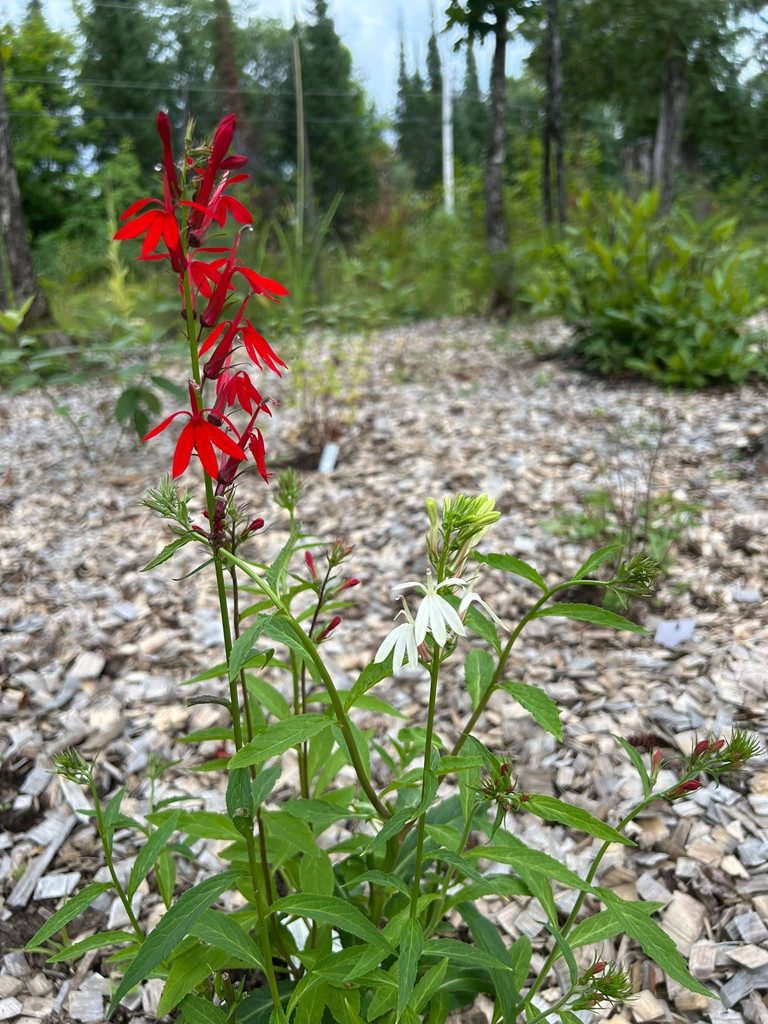
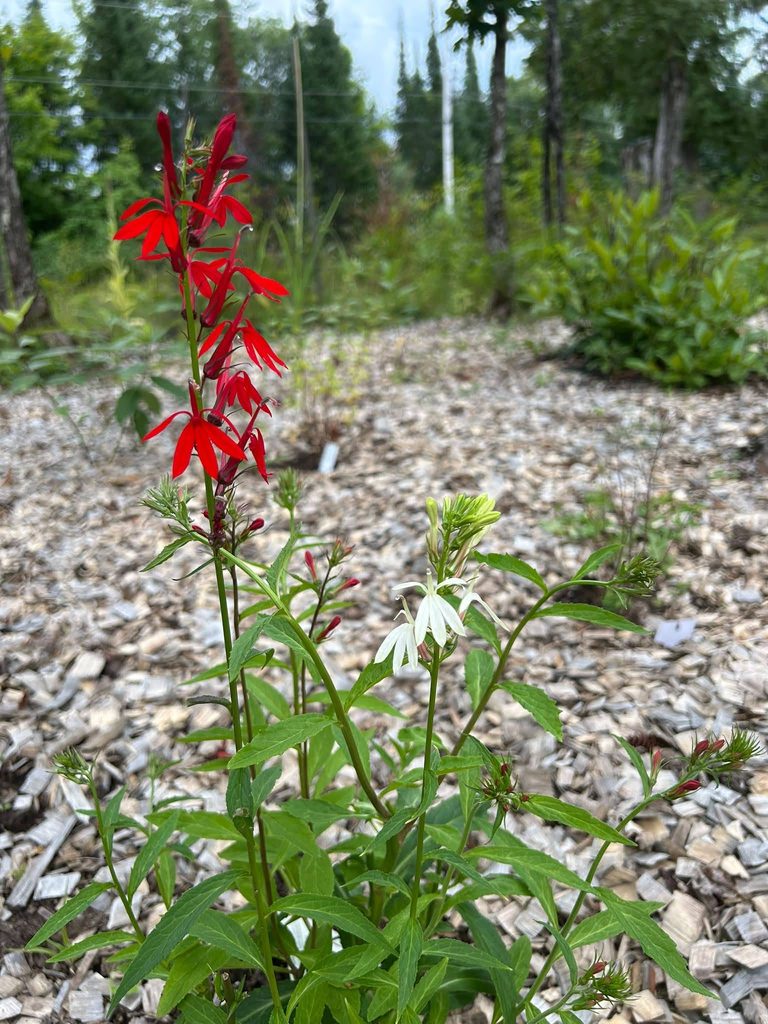
Cardinal flower produces intensely red blooms along a tall spike, typically 2 to 4 feet high, growing best along stream banks and consistently moist ground. Hummingbirds visit almost exclusively, drawn by the deep tubular shape.
It blooms from July through September and needs reliably damp soil to thrive, making it a strong choice for rain gardens or pond edges. Bees rarely bother with it, a sign of just how specialized its pollination strategy really is.
Its color intensity makes it one of the most striking native flowers found near North Carolina’s streams and wetlands.
19. Joe-Pye Weed (Eutrochium purpureum)
Joe-Pye weed grows tall, often reaching 5 to 7 feet, producing large dusty pink flower clusters that pollinators find irresistible. It thrives in moist meadows, ditches, and woodland edges across the state.
Butterflies, especially swallowtails, gather on this plant in noticeable numbers during peak bloom from July through September. Watching a single Joe-Pye weed patch on a summer afternoon can feel like observing a small butterfly sanctuary.
It tolerates wetter soil than most tall perennials, making it useful for rain gardens and low-lying areas.
20. New England Aster (Symphyotrichum novae-angliae)
New England aster provides purple, daisy-like blooms with bright yellow centers right up until the first hard frost. Its late bloom window, from August through October, fills a critical nectar gap for bees and migrating butterflies.
It can grow leggy without companion plants nearby, so pairing it with grasses or shorter perennials keeps a garden bed looking balanced. Full sun and average soil suit it well.
Few native flowers offer this much reliable color so late into the season.
21. Wild Bergamot (Monarda fistulosa)
Wild bergamot, also known as bee balm, produces shaggy lavender flower heads with a sharp, minty fragrance when leaves are crushed. Bees, butterflies, and hummingbird moths all visit heavily during its bloom window.
It blooms from July through September in average to dry soil under full sun. Native communities historically used it as a medicinal herb, a history that predates any modern garden use.
Its long bloom period and heavy pollinator traffic make it a strong anchor plant for any native flower bed.
22. Butterfly Pea (Clitoria mariana)
Butterfly pea produces striking blue-purple flowers shaped somewhat like a pea blossom, growing as a low, sprawling vine along woodland edges and dry meadows. It blooms from June through August across the piedmont and coastal plain.
As a legume, it fixes nitrogen in the soil, quietly benefiting neighboring plants over time. That trait made native legumes valuable to historic ecosystems long before the underlying chemistry was understood.
It tolerates dry, sandy soil well, thriving where richer garden plants often struggle.
23. Purple Passionflower / Maypop (Passiflora incarnata)
Purple passionflower produces one of the most intricate blooms of any native North American plant, with a fringed purple corona surrounding a complex central structure. It blooms from June through September along fence lines and open, sunny edges.
It is the host plant for the gulf fritillary butterfly, whose caterpillars feed exclusively on its leaves. By late summer, it produces an edible fruit called a maypop, which gives the plant its common nickname.
It spreads vigorously by root, so gardeners should plant it where some spreading is welcome.
24. Turk’s Cap Lily (Lilium superbum)
Turk’s cap lily produces large, strongly recurved orange-red petals covered in dark spots, growing on tall stems that can reach 6 to 8 feet in ideal conditions. It blooms from July through August in moist meadows and stream edges.
A single mature plant can produce dozens of flowers in a good year, creating a genuinely impressive display. Swallowtail butterflies and hummingbirds both visit it regularly.
It prefers consistently moist, rich soil, distinguishing it from the drier habitat favored by Carolina lily.
25. Spider Lily (Hymenocallis occidentalis)
Spider lily produces white, spidery-looking flowers with long, thin petals radiating outward from a central cup. It grows in moist woodlands and along stream banks, mostly in the piedmont and coastal plain.
Bloom time runs from late summer into early fall, making it a somewhat later bloomer than many woodland natives. Its unusual shape draws attention even from a distance.
It prefers consistently damp, rich soil and tolerates partial shade well.
26. Swamp Rose Mallow (Hibiscus moscheutos)
Swamp rose mallow produces enormous flowers, sometimes 6 to 8 inches across, in shades of white and pink with a deep red center. It grows in marshes, wet ditches, and coastal wetlands throughout eastern North Carolina.
Bloom time runs from July through September, and each individual flower lasts only a single day before closing for good. That short lifespan makes a blooming patch feel genuinely fleeting.
It tolerates wet, even standing water conditions better than almost any other flower on this list.
27. Blue Flag Iris (Iris versicolor)
Blue flag iris grows in marshes and pond edges, producing blue-purple flowers marked with yellow and white patterns near the base of each petal. Those markings act as visual guides directing bees toward the nectar reward.
It blooms from May through July and spreads through rhizomes in consistently wet soil. Its resemblance to garden iris varieties often surprises people who assume it must be a cultivated escapee.
It works well along the edge of a rain garden or natural pond in wetter regions of the state.
28. Purple Pitcher Plant (Sarracenia purpurea)
Purple pitcher plant is a carnivorous native found in the boggy, nutrient-poor soils of the coastal plain, alongside the Venus flytrap. Its tube-shaped leaves fill partially with rainwater and digestive enzymes that trap insects.
Its flower is a nodding, deep red-purple bloom held on a separate stalk above the traps, blooming from April through May. That separation likely helps protect pollinators from becoming prey themselves.
Habitat loss from wetland drainage has made wild populations increasingly limited across its native range.
ALSO READ: 25 Trees Native to South Carolina (With Growing Details)
29. Roundleaf Sundew (Drosera rotundifolia)
Roundleaf sundew is another carnivorous native, covered in sticky, dew-like droplets on small round leaves that trap and digest insects. It produces tiny white flowers on a thin stalk held above the leaves.
It grows in the same nutrient-poor bogs favored by pitcher plants and Venus flytraps, making North Carolina’s coastal plain a genuine hotspot for carnivorous plant diversity. Bloom time runs from June through August.
Its small size means it is easy to overlook, but worth searching for on any bog walk.
30. Indian Pink (Spigelia marilandica)
Indian pink produces tubular red flowers that open into a bright yellow star at the tip, a color combination that few other native flowers can match. Hummingbirds visit it constantly during its bloom window.
It blooms from May through July in rich, partially shaded woodland soil across the piedmont and mountains. Despite its brightness, it remains somewhat underused in native gardens compared to more common choices.
It tolerates a range of soil conditions as long as some shade is available during peak summer heat.
31. Wild Geranium (Geranium maculatum)
Wild geranium, also called cranesbill, produces soft pink-purple flowers with five rounded petals across shaded woodland floors each spring. It blooms from April through June, overlapping with other spring ephemerals.
Its seed pods split open explosively when ripe, flinging seeds several feet from the parent plant. That mechanism helps the species colonize new patches of suitable habitat over time.
It tolerates a range of soil types and spreads slowly, making it a reliable, low-maintenance shade garden choice.
32. Foamflower (Tiarella cordifolia)
Foamflower produces delicate, foamy-looking spikes of small white flowers above heart-shaped, often mottled leaves. It grows in rich, moist woodland soil, frequently forming dense ground-covering colonies.
Bloom time runs from April through May, and its low, spreading habit makes it a favorite for shaded native garden borders. Bees visit it steadily despite the small individual flower size.
It tolerates deeper shade better than many spring wildflowers, extending its usefulness into darker forest understory areas.
33. Wood Betony (Pedicularis canadensis)
Wood betony, also called lousewort, produces unusual yellow and reddish tubular flowers clustered tightly at the top of a low, fern-like plant. It grows in dry to moist woodlands and open meadows.
It is a partial parasite, tapping into the roots of nearby grasses for extra nutrients while still photosynthesizing on its own. That dual strategy is uncommon among native wildflowers.
Bloom time runs from April through May, making it one of the more distinctive early spring bloomers in mixed woodland habitat.
34. Trout Lily (Erythronium americanum)
Trout lily gets its name from mottled leaves that resemble the coloring of a brown trout’s back. It produces a single nodding yellow flower per mature plant, blooming from March through April.
Large colonies can take years to develop, since individual plants often stay non-flowering for several seasons before reaching maturity. Spotting a full bloom often means finding an old, undisturbed woodland patch.
It thrives in rich, moist forest soil and disappears completely by early summer, following the same ephemeral pattern as trillium and bloodroot.
35. Bluets (Houstonia caerulea)
Bluets produce tiny, four-petaled pale blue flowers with yellow centers, often carpeting lawns, meadows, and woodland edges in dense colonies. Their small size belies how much visual impact a full patch can create.
Bloom time runs from March through June, and they tolerate mowed or disturbed ground far better than most native flowers. That toughness makes them a common, welcome sight across the entire state.
They prefer moist, slightly acidic soil and partial sun, though they tolerate a fairly wide range of conditions.
36. Spotted Wintergreen (Chimaphila maculata)
Spotted wintergreen produces small, nodding white to pink flowers above evergreen leaves marked with distinctive white striping along the veins. It grows in dry, acidic woodland soil, often under pines.
Bloom time runs from June through July, and the evergreen foliage remains attractive year-round even outside bloom season. That extended visual interest makes it a favorite among woodland garden enthusiasts.
It depends on specific soil fungi for healthy growth, much like several other woodland natives on this list.
37. Galax (Galax urceolata)
Galax produces tall, narrow spikes of small white flowers above glossy, heart-shaped evergreen leaves that turn deep bronze in winter. It grows densely across mountain slopes, often forming extensive ground-covering colonies.
Bloom time runs from May through July, and the leaves are commercially harvested for floral arrangements across the Southeast. That harvest pressure has raised conservation concerns in some heavily collected areas.
It thrives in acidic, well-drained mountain soil under partial to deep shade.
38. Oconee Bells (Shortia galacifolia)
Oconee bells is one of the rarest and most celebrated native flowers in the entire Southeast, found in only a handful of counties along the North Carolina and South Carolina border. Its white, bell-shaped flowers with fringed petal edges bloom in March and April.
Botanist Andre Michaux collected it in the 1780s, but the exact location was lost for nearly a century before it was rediscovered growing along the Catawba River. That history alone makes it a genuinely fascinating find.
It grows in cool, moist stream banks under deep shade, and its extremely limited range makes conservation efforts especially important.
39. Yellow Lady’s Slipper (Cypripedium parviflorum)
Yellow lady’s slipper produces a bright yellow pouch-shaped bloom, twisted maroon side petals framing the flower distinctly. It grows in rich, moist woodland soil, often on limestone-influenced ground in the mountains.
It blooms from April through June and, like its pink cousin, depends on a specific soil fungus for successful germination. That dependency is why wild specimens should never be dug up.
Finding one in bloom remains a genuine highlight for wildflower enthusiasts hiking western North Carolina trails.
40. Rue Anemone (Thalictrum thalictroides)
Rue anemone produces delicate white to pale pink flowers on thin, wiry stems above finely divided foliage. It blooms from March through May in rich, well-drained woodland soil.
Its small size and understated color make it easy to overlook, yet it often blankets forest floors in surprising numbers during peak bloom. Bees visit it steadily despite the modest bloom size.
It goes fully dormant by early summer, following the same ephemeral pattern common among spring woodland natives.
41. Virginia Bluebells (Mertensia virginica)
Virginia bluebells produce clusters of pink buds that open into soft blue, bell-shaped flowers, creating a striking two-tone effect on a single plant. It grows in rich, moist floodplain soil, often along river bottoms.
Bloom time runs from March through May, and large colonies can create sweeping blue carpets in the right habitat. That combination of color and scale makes it one of the more photographed spring ephemerals in the state.
It goes dormant by early summer, so garden companions should fill the space it leaves behind.
42. Wild Ginger (Asarum canadense)
Wild ginger produces an unusual, dark reddish-brown flower that grows low to the ground, often hidden beneath its own heart-shaped leaves. Most people walk right past it without ever noticing the bloom at all.
Its flower shape and low position likely evolved to attract ground-dwelling insects like beetles and flies rather than typical pollinators. That strategy sets it apart from most showier natives on this list.
It grows in rich, shaded woodland soil and blooms from April through May across the piedmont and mountains.
43. American Wisteria (Wisteria frutescens)
American wisteria produces fragrant purple-blue flower clusters, similar in appearance to the invasive Asian wisteria species but considerably less aggressive in growth habit. It blooms from April through June along woodland edges and stream banks.
Choosing this native species over its invasive Asian relative genuinely matters for regional ecosystems, since the invasive version can smother native trees and shrubs. Nurseries increasingly stock the native form as awareness grows.
It tolerates full sun to partial shade and works well trained on a sturdy trellis or fence.
44. Coral Honeysuckle (Lonicera sempervirens)
Coral honeysuckle produces tubular red-orange flowers in clusters, blooming from April through September in one of the longest bloom windows on this entire list. Hummingbirds visit it constantly throughout that stretch.
Unlike invasive Japanese honeysuckle, this native vine grows in a more restrained, well-behaved manner, making it a safe choice for home gardens. It rarely becomes the aggressive tangle its invasive cousin is known for.
It tolerates full sun to partial shade and adapts well to trellises, fences, or natural woodland edges.
45. Goldenrod (Solidago species)
Goldenrod closes out this list as one of the most important late-season nectar sources across the entire state. Its bright yellow flower clusters bloom from August through October, right when many pollinators most need the fuel.
North Carolina hosts numerous native goldenrod species, each adapted to slightly different habitats, from dry meadows to moist woodland edges. Despite its reputation, goldenrod rarely causes allergies, since its pollen is too heavy to travel far on wind.
It supports an enormous range of bees, butterflies, and beneficial insects, making it one of the most ecologically valuable natives on this entire list.
Why North Carolina’s Native Flowers Deserve Attention
Native flowers support the exact pollinators, birds, and insects that evolved alongside them over thousands of years. Non-native ornamentals rarely offer the same ecological return, no matter how attractive they look in a garden bed.
The stakes here are real. Roughly one in seven plant species in North Carolina is considered rare, and 26 species are federally listed as threatened or endangered. Every native flower still blooming in the wild is part of a system under real pressure.
Final Thoughts
Few states offer this kind of range in a single afternoon’s drive, from carnivorous bog plants near Wilmington to rhododendron-covered balds along the Blue Ridge Parkway. That diversity is not an accident. It reflects thousands of years of plants adapting precisely to North Carolina’s varied soil, elevation, and climate.
With more than 4,000 native species statewide and roughly one in seven considered rare, these flowers deserve more than a passing glance on a hike. Planting even a handful of them in a home garden gives real support to pollinators that increasingly have nowhere else to turn.
Next time you are out on a trail anywhere in this state, slow down and look closely. North Carolina’s wildest beauty rarely announces itself loudly, but it is almost always blooming somewhere nearby.

Tim M Dave is a gardening expert with a passion for houseplants, particularly cacti and succulents. With a degree in plant biology from the University of California, Berkeley, he has vast experience in gardening. Over the years, he has cultivated a vast collection of desert plants and learned a great deal about how to grow and care for these unique companions.