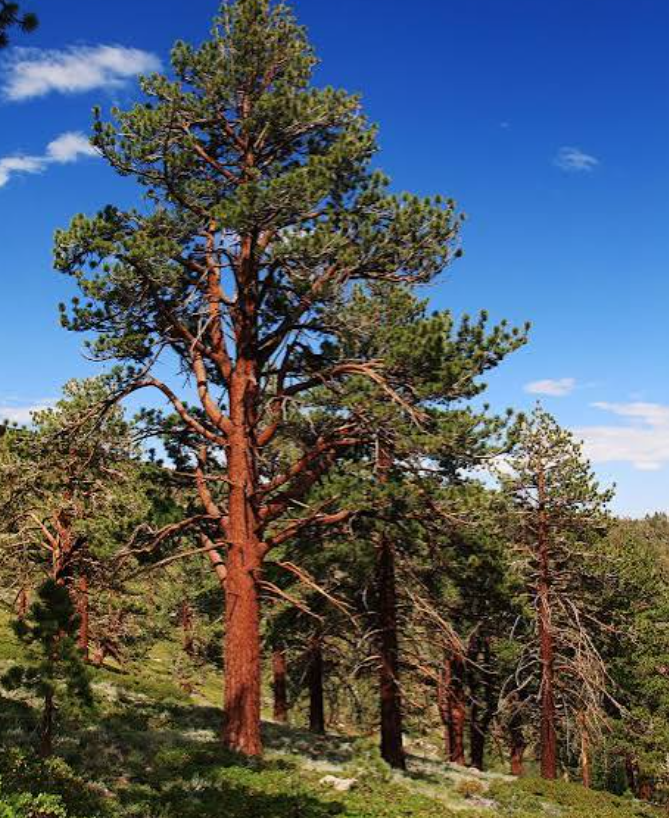
25 Trees Native to South Carolina (With Growing Details)
South Carolina wears its trees like a badge of honor. I have walked under live oaks dripping with Spanish moss and stood beside cypress knees rising out of black swamp water, and both moments left the same quiet impression: this state grows trees that feel almost prehistoric.
That impression is not just poetic. Forests cover 66 percent of South Carolina, amounting to roughly 12.8 million acres of woodland, according to the U.S. Forest Service. Few states pack this much botanical variety into one landscape, from mountain coves to blackwater swamps.
This guide walks through 25 trees native to South Carolina. Each one has earned its place here through centuries of adaptation to sandy coastal soil, red Piedmont clay, or cool Blue Ridge slopes.
Why South Carolina’s Native Trees Matter
Native trees are not just pretty. They support local wildlife, resist regional pests better than imported species, and need less maintenance once established.
Congaree National Park, near Columbia, offers proof of what undisturbed native forest can achieve. Its old-growth canopy averages over 100 feet, and the park holds the tallest known living examples of several species anywhere in the country, according to the National Park Service.
That kind of growth does not happen with landscaping shortcuts. It happens because the trees are exactly suited to the soil, water, and climate they evolved in.
Let’s look at the 25 species that define South Carolina’s forests, coast to mountains.
1. Southern Live Oak (Quercus virginiana)
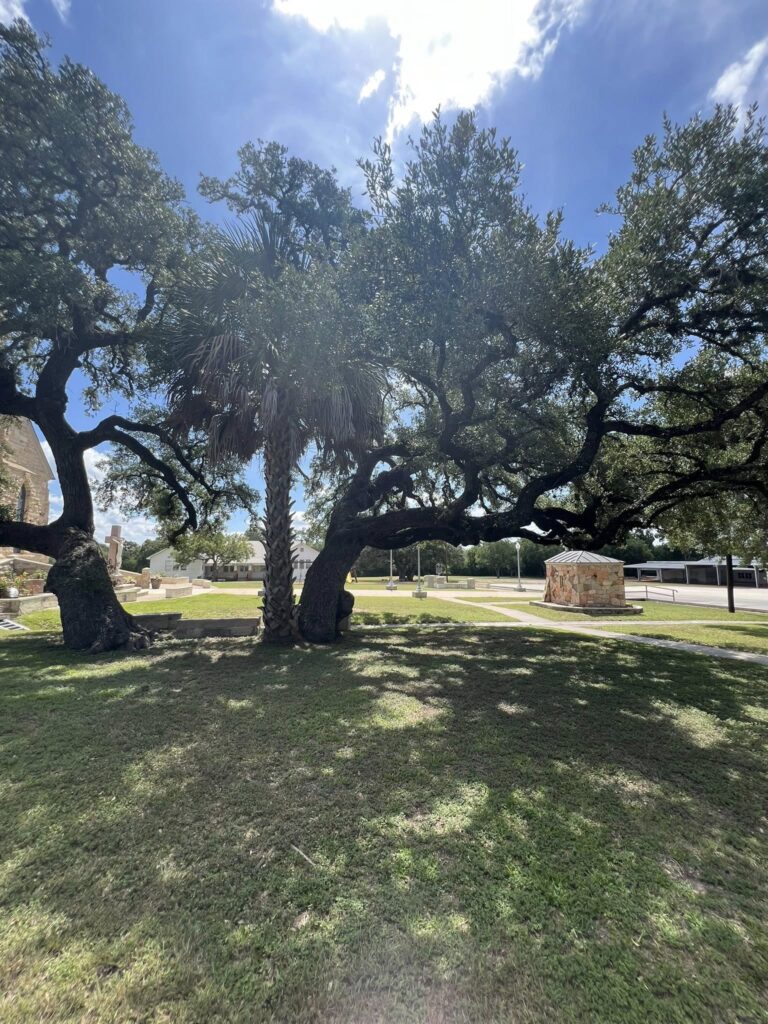
The live oak is the tree most people picture when they think of the Lowcountry. Its sprawling limbs often stretch wider than the tree is tall, and mature specimens can spread more than 100 feet across.
This oak keeps its leaves through winter, which is why it is called “live.” That evergreen habit sets it apart from most other oaks native to the region.
You will find it lining historic avenues in Charleston and Beaufort, often draped in Spanish moss. It thrives in sandy coastal soil and tolerates salt spray better than almost any other hardwood here.
Live oaks can live for centuries. Some specimens along the South Carolina coast are believed to be 300 to 500 years old, having survived hurricanes that toppled younger, less sturdy trees.
2. Bald Cypress (Taxodium distichum)
Bald cypress defines South Carolina’s swamps. It is a deciduous conifer, meaning it drops its needles every fall, which surprises people who expect all cone-bearing trees to stay green year-round.
Its most recognizable feature is the “knee,” a woody knob that pokes up from the water around the base. Botanists still debate their exact purpose, though oxygen supply to submerged roots is the leading theory.
At Congaree National Park, bald cypress trees have circumferences exceeding 26 feet. Some specimens along South Carolina’s blackwater rivers are estimated to be over 1,000 years old.
I find something almost humbling about a tree that has stood in the same swamp since before European contact. Few living things in this state carry that kind of history.
3. Loblolly Pine (Pinus taeda)
Loblolly pine is the backbone of South Carolina’s timber economy. It is the most common forest type in the state, dominating what foresters call the loblolly-shortleaf pine group, according to the South Carolina Forestry Commission.
This pine grows fast, often gaining two to three feet a year in good soil. That speed makes it the preferred choice for commercial forestry and pulpwood production statewide.
Despite its commercial reputation, loblolly pine also produces genuine giants. Congaree National Park’s champion loblolly stands 167 feet tall, ranking among the tallest of its species ever recorded.
Look for its long, twisted needles bundled in groups of three and its thick, dark bark broken into irregular plates.
4. Longleaf Pine (Pinus palustris)
Longleaf pine once covered vast stretches of the Southeast, an ecosystem historians estimate at around 90 million acres before European settlement. Fire suppression and heavy logging reduced that range dramatically over the past two centuries.
South Carolina is actively restoring longleaf pine savannas today. These open, grassy woodlands support species found almost nowhere else, including the red-cockaded woodpecker and gopher tortoise.
Longleaf pine needles can reach 18 inches long, the longest of any pine native to the eastern United States. Young trees spend their first years in a “grass stage,” looking more like a tuft of grass than a tree while building a deep taproot.
Fire is not the enemy of this species; it is the reason the species exists. Longleaf pine actually depends on periodic burning to clear competitors and trigger seed release.
5. Sabal Palmetto (Sabal palmetto)
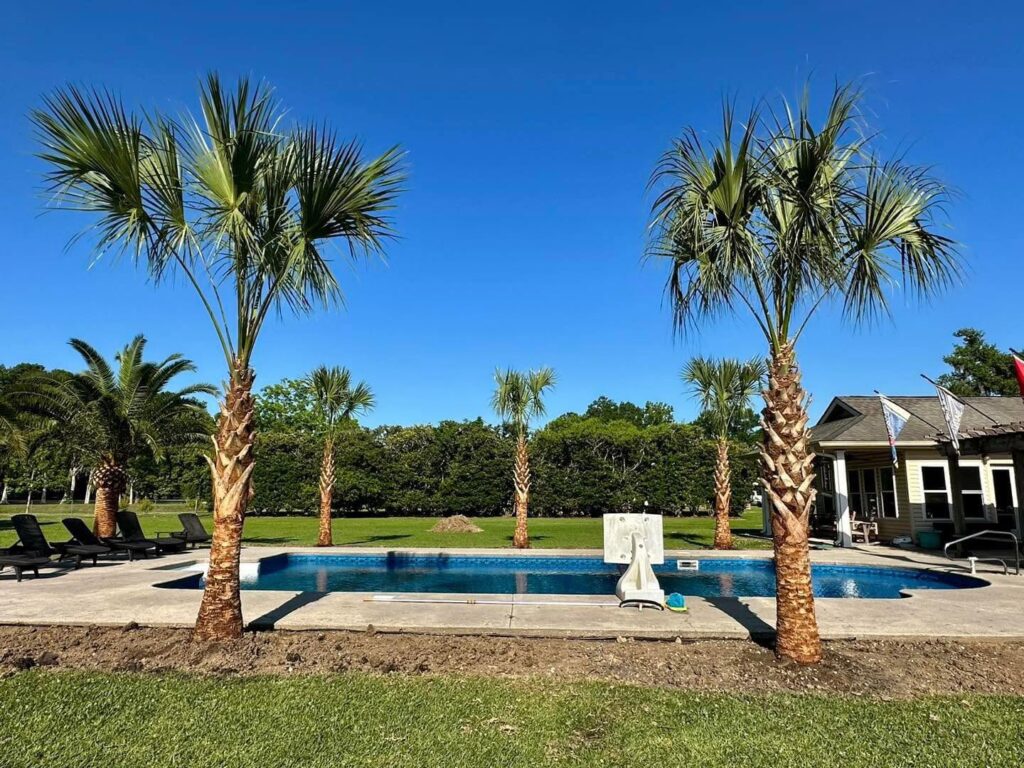
The sabal palmetto is South Carolina’s official state tree, and it appears right on the state flag. That symbolism goes back to the Revolutionary War, when palmetto logs at Fort Moultrie absorbed British cannonballs instead of shattering.
This palm grows almost exclusively in the coastal plain, tolerating salt, sand, and flooding that would kill most hardwoods. Its fan-shaped fronds and fibrous trunk give it a tropical look that feels distinct from the rest of the state’s forests.
Palmettos grow slowly, sometimes taking decades to develop a visible trunk, since early growth happens mostly underground. Once established, though, they are remarkably tough against coastal storms.
Walk along Charleston’s Battery or Myrtle Beach’s dunes and you are almost guaranteed to see one standing firm against the wind.
6. Flowering Dogwood (Cornus florida)
Flowering dogwood is one of the most beloved understory trees in South Carolina, prized for its white spring blooms that appear before most other trees have leafed out. Those “petals” are actually modified leaf bracts, not true flower petals.
This tree rarely grows taller than 25 to 30 feet, making it a natural fit for smaller yards and shaded woodland edges. It grows best under the partial canopy of taller oaks and pines.
Fall brings a second show, with bright red berries that songbirds rely on heavily during migration season. The foliage itself turns a deep reddish-purple.
Dogwood anthracnose, a fungal disease, has damaged populations in the western part of the state. Clemson Extension notes mortality from the disease has ranged from 5 to 50 percent in some affected counties.
7. Eastern Redbud (Cercis canadensis)
Eastern redbud announces spring earlier than almost any other native tree. Clusters of small pink-purple flowers erupt directly from bare branches and even the trunk itself, weeks before the heart-shaped leaves appear.
It is a small understory tree, typically reaching 20 to 30 feet, and it adapts well to both sun and partial shade. That flexibility makes it a favorite for home landscapes across the Piedmont and coastal plain alike.
Redbud seed pods look almost like small pea pods, a fitting resemblance since the tree belongs to the legume family. Wildlife, including bees and hummingbirds, depend on its early blooms when few other nectar sources are available.
I always notice redbuds first each spring, scattered like pink smoke along highway tree lines before anything else has woken up.
8. Southern Magnolia (Magnolia grandiflora)
Southern magnolia is instantly recognizable, with glossy evergreen leaves and enormous white flowers that can span up to 12 inches across. Few native trees produce blooms of that size anywhere in North America.
The flowers carry a strong, sweet fragrance that many people associate immediately with the American South. They bloom mainly in late spring and continue sporadically through summer.
This tree grows naturally in the coastal plain and lower Piedmont, favoring moist, well-drained soil. Mature specimens can reach 60 to 80 feet, with a dense, pyramidal canopy.
Its seed pods, cone-shaped structures that split open to reveal bright red seeds, attract squirrels and birds heavily in early fall.
9. Sweetgum (Liquidambar styraciflua)
Sweetgum is easy to identify by its star-shaped leaves and the spiky seed balls that fall by the thousands each autumn, much to the frustration of anyone raking a yard nearby. Despite the mess, this tree earns its keep in other ways.
Fall color is where sweetgum truly shines, producing a mix of yellow, orange, maroon, and purple often on the same tree at once. Clemson horticulturists rank it among the state’s most dependable trees for autumn color.
At Congaree National Park, a champion sweetgum reaches 157 feet, making it one of the tallest known specimens of its species in the country. That height is a testament to how well this tree performs in rich floodplain soil.
Sweetgum wood is also commercially valuable, used in furniture, veneer, and pulpwood production throughout the state.
10. American Sycamore (Platanus occidentalis)
American sycamore stands out for its bark, which peels away in patches to reveal a mottled pattern of white, gray, and green underneath. No other native tree in South Carolina has bark quite like it.
This species grows along riverbanks and bottomlands, often reaching massive proportions given enough time and water. Trunk diameters exceeding four feet are not unusual in mature floodplain specimens.
Sycamore leaves resemble maple leaves at first glance, though they tend to be larger and slightly fuzzier underneath. Small, ball-shaped seed clusters hang from the branches through winter.
Its extensive root system also helps stabilize riverbanks, which is one reason conservationists often favor it for erosion control projects along South Carolina’s waterways.
11. Water Tupelo (Nyssa aquatica)
Water tupelo thrives in standing water, something few trees can tolerate for extended periods. Its swollen, buttressed trunk base is a direct adaptation, giving the tree stability in soft, saturated swamp soil.
This species grows alongside bald cypress in South Carolina’s blackwater swamps and river floodplains. Together, these two trees form the signature look of the state’s wetland forests.
Water tupelo produces small, plum-like fruit that wildlife, including wood ducks and other waterfowl, rely on for food. Beekeepers also prize the tree, since tupelo honey is a well-known specialty product from these swamp forests.
Congaree National Park lists water tupelo among its champion tree species, a reflection of the exceptional growing conditions found in that floodplain ecosystem.
12. Black Tupelo / Blackgum (Nyssa sylvatica)
Black tupelo, often called blackgum, is one of the earliest trees to change color each fall, sometimes turning brilliant red as early as late August. That early color shift makes it easy to spot from a distance in mixed forests.
Unlike its water-loving cousin, blackgum tolerates a much wider range of soil conditions, from wet bottomlands to drier upland slopes. This adaptability lets it grow across nearly every region of South Carolina.
Its fruit, small dark blue-black berries, ripens in fall and provides a critical food source for migrating birds, including robins and thrushes. Bears also feed heavily on blackgum fruit where the two overlap.
Clemson Extension lists blackgum among its top recommendations for reliable native fall color, alongside sourwood and sassafras.
13. Shagbark Hickory (Carya ovata)
Shagbark hickory earns its name from bark that peels away in long, curling strips, giving mature trunks a shaggy, almost unkempt appearance. It is one of the easiest native trees in the state to identify by bark alone.
This hickory grows primarily in the Piedmont and mountain regions, favoring rich, well-drained upland soil. It can live for well over 200 years under good conditions.
Hickory nuts are an important wildlife food source, feeding squirrels, deer, and wild turkey through fall and winter. Historically, they were also a staple food source for Indigenous communities across the Southeast.
Fall foliage turns a rich golden yellow, and Clemson horticulturists note that hickories, along with oaks, dominate the fall color palette across much of the state’s forested acreage.
14. White Oak (Quercus alba)
White oak is one of the most valuable hardwoods native to South Carolina, prized for furniture, flooring, and traditionally for whiskey barrels. Its wood is dense, strong, and resistant to rot.
This oak grows slowly but lives long, with some specimens surviving 300 years or more. Its rounded, lobed leaves turn a deep wine-red in autumn, distinct from the browner tones of many other oaks.
White oak acorns are considered “sweet” compared to other oak species, meaning they contain fewer bitter tannins. That makes them a preferred food source for deer, turkey, and black bear.
You will find white oak scattered through the Piedmont and mountains, usually mixed with hickory in what foresters call oak-hickory forest, the second most common forest type statewide.
15. Southern Red Oak (Quercus falcata)
Southern red oak grows well in the drier, sandier soils where many other oaks struggle. Its deeply lobed leaves, often described as bell-shaped, help distinguish it from similar red oak species.
This tree adapts to a wide elevation range, appearing in both the coastal plain and the Piedmont. It tends to grow straighter and taller than white oak, often reaching 70 to 80 feet in good conditions.
Acorns from southern red oak take two years to mature, a trait shared among most oaks in the “red oak” group rather than the “white oak” group. Wildlife still rely on them heavily once they ripen.
Its wood is used for lumber, flooring, and pallets, contributing to South Carolina’s broader hardwood timber economy.
16. American Beech (Fagus grandifolia)
American beech is instantly recognizable by its smooth, gray bark, which stays remarkably unblemished even on very old trees. That smoothness, unfortunately, also makes it a magnet for carved initials in public parks.
This species prefers rich, moist soil in the Piedmont and mountain regions, often forming dense stands with limited undergrowth beneath its shade. Beech leaves are papery and sometimes persist on branches through winter, a trait called marcescence.
Beechnuts, small triangular nuts inside spiny husks, are an important food source for wildlife, including black bear, deer, and wild turkey. Historically, entire forest ecosystems depended on mast years when beechnut production spiked.
Beech bark disease has become a growing concern in parts of the Southeast, and forestry agencies continue monitoring its spread through native beech populations.
17. Tulip Tree / Yellow Poplar (Liriodendron tulipifera)
Tulip tree, sometimes called yellow poplar, is one of the tallest hardwoods native to eastern North America. In favorable conditions, it can exceed 150 feet, rivaling many conifers in sheer height.
Its flowers resemble tulips, with a greenish-yellow color and an orange band near the base of each petal. Despite the size and beauty of the tree, the blooms often go unnoticed high in the canopy.
This species grows fast and straight, which made it historically valuable for ship masts and, today, for furniture and construction lumber. It thrives in the rich, moist soil of the Piedmont and mountain regions.
Fall color turns a clean golden yellow, and the tree’s distinctive four-lobed leaves make it one of the easiest hardwoods in the state to identify at a glance.
18. River Birch (Betula nigra)
River birch is the only birch native to South Carolina’s warmer, lower elevations, since most birch species prefer cooler northern climates. It grows naturally along riverbanks, streams, and floodplains throughout the state.
Its peeling, salmon-pink to reddish-brown bark curls away in papery layers, giving the tree ornamental appeal even in winter when leaves are gone. That bark texture makes it a popular choice for home landscaping too.
This tree tolerates wet, poorly drained soil far better than most hardwoods, which explains its natural preference for streamside habitats. It also grows quickly, often gaining several feet a year when young.
River birch supports a wide range of insect life, which in turn makes it valuable for songbirds that feed on caterpillars during nesting season.
19. American Holly (Ilex opaca)
American holly is one of the few native evergreen hardwoods in South Carolina, keeping its spiny, glossy leaves through the coldest months. That evergreen habit makes it a familiar sight in winter landscapes statewide.
Only female trees produce the bright red berries associated with holiday decorating, and they need a nearby male tree for pollination. Birds depend on those berries as a late-winter food source when other options run low.
This species grows well as an understory tree beneath taller pines and oaks, tolerating shade better than many native hardwoods. It rarely exceeds 40 to 50 feet in height.
Congaree National Park lists American holly among the understory species growing beneath its towering champion trees, forming part of that forest’s layered canopy structure.
20. Eastern Redcedar (Juniperus virginiana)
Eastern redcedar is technically a juniper, not a true cedar, though the common name has stuck for centuries. It is one of the most adaptable native conifers in South Carolina, tolerating poor soil, drought, and full sun better than almost any other tree on this list.
Its aromatic, reddish heartwood has long been prized for cedar chests, closets, and pencils, thanks to natural oils that repel moths and insects. That same aroma is unmistakable when the wood is cut or crushed.
This tree often colonizes abandoned fields and roadsides first, acting as what ecologists call a pioneer species. Over time, taller hardwoods and pines typically grow up around it and eventually shade it out.
Female trees produce small, blue, berry-like cones that are actually a favorite winter food for cedar waxwings and other songbirds.
21. Sourwood (Oxydendrum arboreum)
Sourwood produces some of the most reliable and vivid fall color of any native tree in South Carolina, turning deep shades of red and burgundy well before many other species change. Clemson Extension counts it among the state’s top choices for autumn display.
In summer, sourwood produces long, drooping clusters of small white flowers that resemble lily-of-the-valley blooms. Bees favor these flowers heavily, and sourwood honey is a distinct regional specialty.
This tree grows mainly in the Piedmont and mountain regions, favoring acidic, well-drained soil on slopes and ridges. It rarely grows very large, typically staying under 50 feet.
Its common name comes from the sour taste of its leaves, which were historically chewed to relieve thirst on long walks through the woods.
22. Common Persimmon (Diospyros virginiana)
Common persimmon produces orange fruit that turns sweet only after a hard frost, a quirk that has confused many first-time foragers who bite into an unripe one. Once properly ripened, the fruit is genuinely delicious.
This tree grows across the entire state, from sandy coastal soils to rocky Piedmont slopes, showing remarkable tolerance for varied growing conditions. It often appears along old field edges and forest margins.
At Congaree National Park, a champion persimmon reaches 127 feet, an extraordinary height for a species usually associated with modest, scrubby growth in drier settings.
Wildlife, including deer, raccoons, and opossums, rely heavily on persimmon fruit each fall, making it an important part of the forest food web.
23. Sassafras (Sassafras albidum)
Sassafras is easy to identify by its irregular leaf shapes, sometimes producing oval leaves, mitten-shaped leaves, and three-lobed leaves all on the same branch. That variability alone makes it a favorite for teaching tree identification.
Historically, its roots were used to flavor root beer and traditional teas, though modern research raised safety concerns about safrole, a compound found in the plant. Commercial root beer today uses artificial flavoring instead.
This tree grows quickly in disturbed soil and forest edges throughout the Piedmont and coastal plain. Its fall color ranges from yellow to deep orange-red, another reason Clemson lists it among the state’s best trees for autumn interest.
Birds favor its small blue fruit, which ripens on distinctive red stalks in late summer.
24. Two-Winged Silverbell (Halesia diptera)
Two-winged silverbell is a smaller understory tree, prized for the thousands of white, bell-shaped flowers that cover its branches each spring. Clemson horticulturists describe mature specimens as looking almost snow-covered during peak bloom.
This species grows naturally in moist bottomlands and along stream banks, often found within the Clemson Experimental Forest and similar habitats statewide. It rarely exceeds 30 feet in height, making it well suited to smaller landscapes.
Its seed pods have two papery wings, which is how the tree earned its common name. Those wings help the seeds disperse further from the parent tree when caught by wind.
I think this tree deserves more attention than it gets. Its spring bloom rivals dogwood, yet far fewer people plant it.
25. Black Walnut (Juglans nigra)
Black walnut is one of the most valuable native hardwoods in South Carolina, with dark, richly grained wood long prized for furniture and gunstocks. Mature, straight-trunked specimens can fetch high prices from specialty lumber buyers.
This tree produces a compound called juglone, which suppresses the growth of many other plants nearby. Gardeners planting near a mature black walnut often find certain vegetables and ornamentals struggle to survive within its root zone.
Black walnut grows best in rich, moist bottomland soil, and it is one of the species found in the Clemson Experimental Forest’s lowland areas alongside hackberry and green ash. It favors deep, fertile soil over sandy or compacted ground.
Its round, green-husked nuts ripen in fall, and squirrels bury them by the hundreds, unintentionally planting new trees across the landscape each year.
Where to See These Trees for Yourself
Congaree National Park remains the single best place to see South Carolina’s native trees at their most impressive. Its old-growth bottomland forest holds champion specimens of loblolly pine, sweetgum, cherrybark oak, and several others discussed above.
The Francis Marion and Sumter National Forests, covering roughly 560,000 acres combined, offer another excellent cross-section of the state’s native tree diversity. These public lands span coastal plain, sandhills, and mountain terrain.
For home gardeners, Clemson Extension’s Carolina Yards program maintains a searchable native plant database. It is a practical starting point for choosing species suited to your specific region and soil type.
Final Thoughts
Twenty-five trees cannot capture everything growing across South Carolina’s 12.8 million forested acres, but this list covers the species most likely to shape your understanding of the state’s natural character. From salt-tolerant palmettos to swamp-dwelling cypress, each tree tells a story about the environment it calls home.
I would encourage anyone curious about these species to visit Congaree National Park at least once. Standing beneath a 167-foot loblolly pine has a way of putting the whole conversation about “native trees” into sharper, more humbling perspective.
References
- U.S. Forest Service, Research and Development – South Carolina’s Forests, 2021: https://research.fs.usda.gov/treesearch/69996
- South Carolina Forestry Commission – Forests of South Carolina, 2017 Resource Update: https://www.scfc.gov/wp-content/uploads/2021/07/scfia17.pdf
- National Park Service – Congaree National Park: https://www.nps.gov/cong/index.htm
- U.S. Geological Survey – Ecology of Congaree National Park: https://www.usgs.gov/geology-and-ecology-of-national-parks/ecology-congaree-national-park
- Clemson University, Home & Garden Information Center – An Introduction to Native Plants for SC Landscapes: https://hgic.clemson.edu/factsheet/an-introduction-to-native-plants-for-sc-landscapes/
- Clemson University, Home & Garden Information Center – Favorite Native Shrubs and Trees: https://hgic.clemson.edu/favorite-native-shrubs-and-trees/
- USDA Natural Resources Conservation Service – PLANTS Database: https://plants.usda.gov

Tim M Dave is a gardening expert with a passion for houseplants, particularly cacti and succulents. With a degree in plant biology from the University of California, Berkeley, he has vast experience in gardening. Over the years, he has cultivated a vast collection of desert plants and learned a great deal about how to grow and care for these unique companions.