20 North Carolina Native Shrubs (With Growing Details)
North Carolina is home to more than 3,900 native plant species, according to the USDA PLANTS Database, and shrubs make up a significant share of that number.
These plants evolved alongside the state’s insects, birds, and mammals over thousands of years, which is exactly why they support so much more wildlife than imported hedges and hybrids.
Consider one number that genuinely surprised me the first time I read it: researchers estimate that 6,000 to 10,000 caterpillars are needed to successfully raise a single nest of chickadees.
Native shrubs host far more caterpillar species than non-native ornamentals, which means a yard full of native shrubs is doing real work every single spring, whether you notice it or not.
Non-native landscape staples like Bradford pear and Chinese privet have escaped cultivation across the state and now displace the plants local wildlife actually depends on. Native shrubs reverse that trend, often while asking for less water, less fertilizer, and less spraying than the alternatives.
The 20 Native Shrubs of North Carolina
1. Spicebush (Lindera benzoin)
Spicebush grows across all three regions of North Carolina, typically reaching 6 to 12 feet in moist woodlands and along stream banks. Small yellow flowers appear in very early spring, well before the leaves emerge, when almost nothing else is blooming.
Scratch a stem and you get an immediate wintergreen scent, which is where the name comes from. The shrub is dioecious, meaning male and female flowers grow on separate plants, so you need at least one of each nearby if you want the females to set fruit.
Spicebush is a larval host for two swallowtail butterfly species, and its red late-summer berries are an important food source for migrating songbirds. Fall foliage turns a clean, bright yellow.
2. American Beautyberry (Callicarpa americana)
Beautyberry is impossible to mistake for anything else once the fruit ripens. Clusters of magenta berries wrap tightly around the stems in early fall, a color that genuinely has no close match among other native shrubs in the Southeast.
This shrub grows 3 to 6 feet tall and adapts its shape depending on light. In full sun it stays compact and dense; in shade it grows looser and more open. Small, less showy flowers appear before the fruit and draw in native sweat bees and other small pollinators.
Beautyberry benefits from an annual hard pruning in late winter, cutting the whole plant back to about 2 feet. That pruning pushes vigorous new growth, which in turn produces more flowers and fruit for the following fall.
3. Possumhaw Viburnum (Viburnum nudum)
Possumhaw viburnum puts on one of the more dramatic color shows among North Carolina native shrubs. White spring flowers give way to berry clusters that shift from green to pink to blue to a deep purplish blue, often all visible on the same cluster at once.
It grows up to 12 feet tall and wide, prefers sunny spots with moist, acidic, well-drained soil, and works well in rain gardens or wetland-adjacent plantings. Its wavy-edged leaves add texture even before the berries appear.
Fall brings burgundy and wine-red foliage that pairs beautifully with any remaining fruit clusters. Multiple bird species rely on the berries as a fall and early winter food source.
4. Highbush Blueberry (Vaccinium corymbosum)
Highbush blueberry, often sold locally as rabbiteye blueberry, grows 6 to 12 feet tall and produces small, bell-shaped white flowers in early spring. It requires distinctly acidic soil, so a soil test before planting is genuinely worth doing.
A specialist native bee, the southeastern blueberry bee, times its entire life cycle around this shrub’s bloom period and often nests in the ground within a couple of miles of the plants it visits.
Fall color can be spectacular, sometimes not peaking until close to Thanksgiving, with reds, burgundies, and oranges that persist into December. Expect birds to claim most of the fruit before you do.
5. Serviceberry (Amelanchier species)

Serviceberry is one of the earliest native shrubs to flower each year, producing white blossoms that unfortunately bloom around the same time as the more visually dramatic flowering dogwood. That timing overlap is likely why serviceberry gets less attention than it deserves.
Depending on species, serviceberry ranges from tree-like forms to smaller, shrubbier types better suited to a residential planting bed. All produce small, sweet, dark purple fruit in late spring that ripens fast and disappears even faster once birds find it.
Fall foliage turns yellow, orange, or burgundy. The berries are edible for humans too, with a flavor often compared to a cross between a cherry and a blueberry, seeds and all.
6. Carolina Sweetshrub (Calycanthus floridus)
Also called eastern sweetshrub, this native produces deep maroon to reddish-brown flowers in spring that carry a strong, fruity fragrance, strong enough that people once dried the flowers and bark for potpourri. The shrub reaches 6 to 9 feet tall with an equal spread.
Federal wildflower records note that sweetshrub tolerates a wide range of soil, light, and moisture conditions, from partial shade to full sun and moist to well-drained ground. It requires very little pruning beyond light shaping right after flowering.
Plant it near a porch, patio, or walkway where the fragrance can actually be appreciated up close. Fall foliage turns a warm, bright yellow, and the urn-shaped seed capsules persist into winter.
7. Virginia Sweetspire (Itea virginica)
Virginia sweetspire produces arching branches lined with fragrant, drooping white flower spikes in late spring. It grows 5 to 6 feet tall and tolerates an unusually wide range of soil types, from consistently wet to average garden conditions.
This shrub occurs naturally in all three of North Carolina’s regions, which makes it one of the more dependable choices regardless of where in the state you garden. It also tolerates part shade better than many flowering shrubs.
Fall color runs deep red to burgundy and tends to linger longer than most native shrubs manage, often holding color well into late fall.
8. Common Buttonbush (Cephalanthus occidentalis)
Buttonbush is unmistakable once it flowers: round, spiky, pincushion-like white blooms appear in mid to late summer, a shape genuinely unlike any other native shrub on this list. It grows 6 to 12 feet tall and is found in all three regions of the state.
This is the shrub for the wettest spot in the yard, the edge of a pond, a rain garden, or a low area that floods after storms. Most ornamental shrubs rot in those conditions; buttonbush thrives there instead.
Bees and butterflies swarm the flowers in large numbers, and the seeds that follow feed ducks and other waterfowl, which is why wetland restoration projects plant it so often.
9. Sweet Pepperbush (Clethra alnifolia)
Sweet pepperbush, also called summersweet, produces upright spikes of intensely fragrant white flowers in mid to late summer, a season when relatively few other native shrubs are still blooming. It grows 3 to 5 feet tall.
This species is native mainly to the eastern piedmont and coastal plain, and it tolerates wet soil and shade better than most flowering native shrubs, making it a strong choice for a low, damp corner of the yard.
Bees and butterflies are drawn heavily to the late-summer bloom, and the plant’s tolerance for both sun and part shade gives it real flexibility in garden design.
10. Dwarf Fothergilla (Fothergilla gardenii)
Dwarf fothergilla is a compact coastal plain native, staying under 3 feet tall in most landscapes. In spring, it produces bottlebrush-shaped white flower spikes before the leaves fully emerge, with a light honey scent.
Fall is really where this shrub earns its keep. The blue-green summer foliage transforms into a mix of yellow, orange, and red, sometimes all three colors on the same branch at the same time.
It prefers moist, acidic, well-drained soil and full sun to part shade. Because of its small mature size, it fits well into foundation plantings where larger native shrubs would eventually crowd the space.
11. Inkberry Holly (Ilex glabra)
Inkberry is an evergreen holly native mainly to the eastern piedmont and coastal plain, often used as a native substitute for non-native boxwood. It grows 4 to 6 feet tall with small, dark, glossy leaves and inconspicuous flowers.
Female plants produce small black berries in fall that persist into winter, feeding a range of birds when other food sources have thinned out. A male plant nearby is necessary for fruit production.
Inkberry naturally occurs in wet, boggy habitats alongside species like sweetbay magnolia and highbush blueberry, so it tolerates poorly drained soil far better than most broadleaf evergreens.
12. Winterberry Holly (Ilex verticillata)
Winterberry is a deciduous holly, meaning it drops its leaves entirely in fall, which makes the bright red berries that follow even more striking against bare stems. It grows across all three regions of North Carolina and reaches 6 to 10 feet tall.
Like inkberry, winterberry is dioecious. Plant at least one male for every three to five female plants to guarantee fruit set, and place the male within a reasonable distance since pollination relies on insects, not wind.
The berries persist through much of winter and are a genuine lifeline for robins, cedar waxwings, and other birds during the leanest part of the year.
13. Yaupon Holly (Ilex vomitoria)
Yaupon holly is native specifically to North Carolina’s coastal plain, where it tolerates salt spray, drought, and poor sandy soil better than almost any other broadleaf evergreen on this list. It grows 10 to 20 feet tall, though dwarf cultivars stay much smaller.
Red berries appear on female plants in fall and often persist deep into winter, providing food for songbirds when little else remains. The small, leathery leaves have historically been used to brew a caffeinated tea by Indigenous peoples of the Southeast.
Because of its salt and drought tolerance, yaupon holly is a dependable choice for coastal landscaping projects where many other shrubs struggle to establish.
14. Wax Myrtle (Morella cerifera)
Wax myrtle is a fast-growing, semi-evergreen shrub native to the eastern piedmont and coastal plain, tolerant of wet soil, dry soil, and salt exposure with equal ease. It typically reaches 10 to 20 feet tall, though dwarf cultivars stay much more compact.
Aromatic, waxy blue-gray berries form on female plants in fall and were historically boiled down to make bayberry candles. The foliage itself carries a distinct, pleasant fragrance when crushed.
Wax myrtle’s genuine wildlife value and adaptability to difficult urban and coastal soils make it one of the more practical screening shrubs available to North Carolina gardeners.
15. Catawba Rhododendron (Rhododendron catawbiense)
Catawba rhododendron is the signature evergreen shrub of North Carolina’s mountains, forming dense thickets on slopes throughout the Blue Ridge. It reaches 6 to 15 feet tall and produces large, showy purple-pink flower clusters in late May and June.
The Blue Ridge Parkway alone documents over 1,400 species of vascular plants within its boundaries, and Catawba rhododendron is one of the most visually iconic among them, drawing visitors from across the country during peak bloom.
This shrub needs acidic, well-drained mountain soil and struggles badly in North Carolina’s alkaline piedmont clay without significant amendment. Its evergreen foliage also provides valuable winter cover for wildlife.
16. Mountain Laurel (Kalmia latifolia)
Mountain laurel grows alongside Catawba rhododendron across the North Carolina mountains, sometimes forming such dense thickets that early settlers called them “laurel hells” for how difficult they were to walk through. It grows 4 to over 20 feet tall in ideal conditions.
Star-shaped flowers bloom in late May through July, ranging from white to pink to red depending on the individual plant and local soil conditions. The evergreen leaves are smaller and glossier than rhododendron leaves, which helps distinguish the two at a glance.
Every part of mountain laurel is toxic if ingested, a fact worth keeping in mind around livestock or curious pets, even though the flower display remains one of the finest in the southern Appalachians.
17. Flame Azalea (Rhododendron calendulaceum)
Flame azalea is a deciduous native azalea found on grassy balds and open slopes throughout the North Carolina mountains, blooming in colors that range from pale yellow to deep orange to scarlet red. It grows 4 to 8 feet tall.
Bloom color actually shifts with soil acidity, which means two flame azaleas growing just a short distance apart can display noticeably different colors. This variability is part of what makes the species so popular with wildflower photographers each June.
It prefers the same acidic, well-drained mountain soil that mountain laurel and Catawba rhododendron favor, and blooms slightly ahead of most rhododendrons, extending the flowering season when planted together.
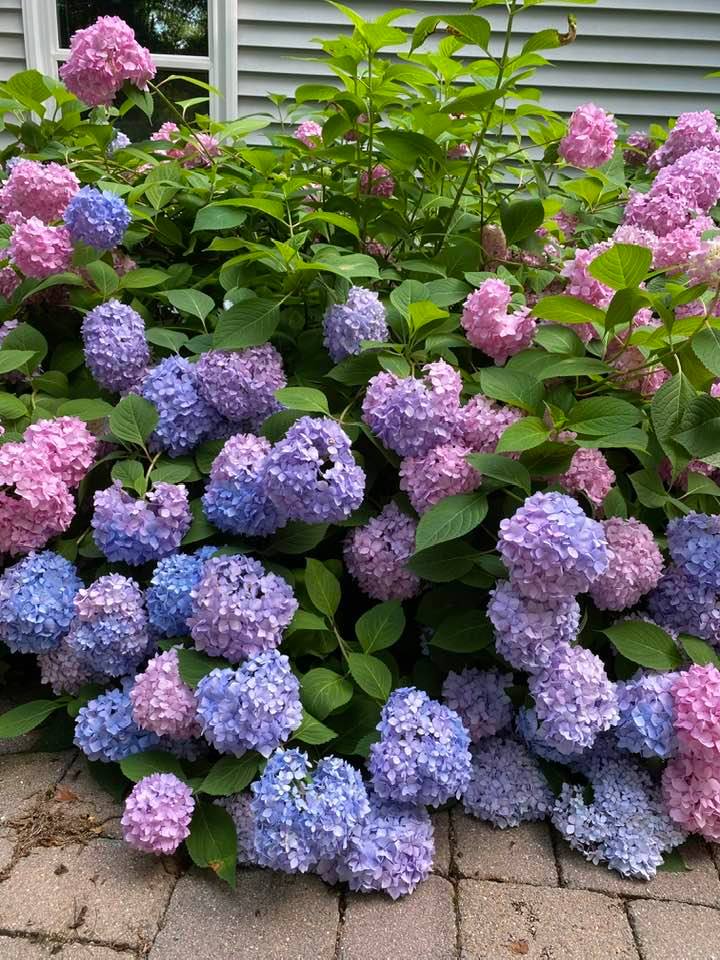
18. Oakleaf Hydrangea (Hydrangea quercifolia)
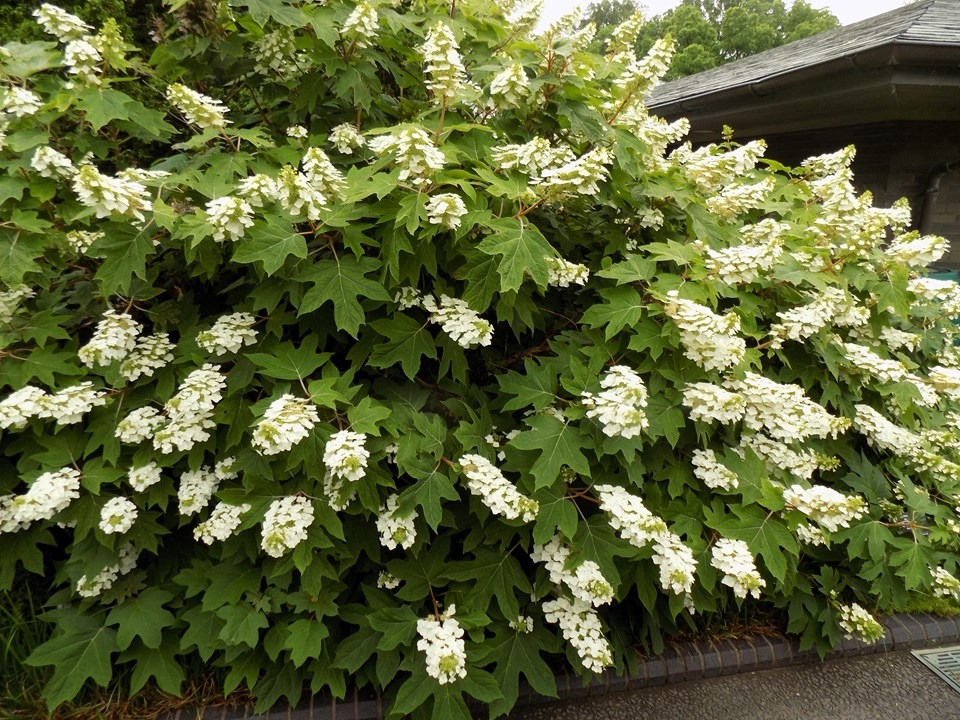
Oakleaf hydrangea grows natively across the piedmont and coastal plain, reaching 8 to 12 feet tall with large, deeply lobed leaves that genuinely resemble oak foliage. Elongated white flower panicles bloom in early summer and slowly fade to a soft pink as they age.
It performs best with some afternoon shade, particularly in the hotter parts of the piedmont and coastal plain, and tolerates a range of soil types once established. Peeling, cinnamon-colored bark adds noticeable winter interest.
Fall color is genuinely one of the best of any native shrub in the state, shifting through deep burgundy, purple, and orange, often holding those colors for weeks.
19. Arrowwood Viburnum (Viburnum dentatum)
Arrowwood viburnum grows in all three regions of North Carolina, typically reaching 6 to 10 feet tall with a dense, rounded form. Flat clusters of white flowers bloom in late spring, followed by blue-black fruit in fall.
The straight, young stems were reportedly used by Native Americans for arrow shafts, which is where the common name comes from. The shrub tolerates clay soil, occasional drought, and brief flooding with equal resilience.
Birds rely heavily on the fall fruit, and the shrub’s adaptability makes it one of the more forgiving native choices for a foundation planting or an informal hedge.
20. Black Chokeberry (Aronia melanocarpa)
Black chokeberry produces white spring flowers followed by dark purple-black berries loaded with antioxidants, though the raw fruit is tart enough that most people prefer it processed into jam or juice. The shrub grows 3 to 6 feet tall and adapts to wet or average soil without complaint.
Fall color turns a deep, glossy red that genuinely rivals the invasive burning bush it is frequently recommended to replace in North Carolina landscape designs. Dwarf cultivars are available for smaller garden spaces, particularly useful in coastal and urban plantings.
The persistent winter berries feed grouse, robins, and cedar waxwings well after most other food sources have been picked clean.
How to Choose the Right Shrub for Your Region
Start with your region of North Carolina, then refine by soil moisture and sunlight. A shrub native to the mountains will usually resent piedmont clay, and a coastal specialist may not survive a hard mountain winter.
For the coastal plain: yaupon holly, wax myrtle, and inkberry handle salt spray and sandy soil well. For the piedmont: arrowwood viburnum, spicebush, and oakleaf hydrangea are dependable, adaptable choices. For the mountains: mountain laurel, Catawba rhododendron, and flame azalea reward the extra care their acidic soil requirements demand.
If you are unsure which ecoregion you fall into, North Carolina State Extension divides the state into three broad zones: the coastal plain, the piedmont, and the Blue Ridge mountains, each aligning with distinct soil and climate conditions that determine which natives will genuinely thrive.
A Note on Planting Season and Establishment
Fall planting is generally the strongest option for North Carolina native shrubs, since cooler air reduces transplant stress while the soil remains warm enough for root growth to continue. Spring planting works as a solid second choice, particularly in the mountains where fall frost can arrive earlier than expected.
Avoid planting new native shrubs during the peak heat of a piedmont or coastal summer whenever you can help it. Young root systems struggle to keep pace with water demand once daytime temperatures climb into the 90s, and even drought-tolerant species like beautyberry benefit from a full season to settle in before facing that kind of stress.
Buy the smallest reasonable container size your budget allows, particularly for slower-establishing species like mountain laurel. Smaller shrubs often catch up in size within just a few years, since less of their energy goes toward recovering from transplant shock.
Final Thoughts
I have watched a young possumhaw viburnum go from a single stick in the ground to a genuine wildlife magnet within three growing seasons, and that kind of payoff is hard to get from anything imported. North Carolina’s native shrub palette is large enough that almost any yard in the state, coastal, piedmont, or mountain, has a real option waiting.
Start with two or three species suited to your specific region and site conditions, then build outward from there. The plants on this list have already spent thousands of years learning how to thrive in North Carolina. Let them do what they already know how to do.
References
- NC State Extension, North Carolina Extension Gardener Handbook – Chapter 12: Native Plants: https://content.ces.ncsu.edu/extension-gardener-handbook/12-native-plants
- N.C. Cooperative Extension, Brunswick County Center – Native Trees, Shrubs, and Grasses for Urban Coastal Landscapes: https://brunswick.ces.ncsu.edu/environment-natural-resources/native-trees-shrubs-and-grasses-coastal-nc-landscapes/
- NC State University, College of Agriculture and Life Sciences – 5 Wildlife-Friendly Native Shrubs To Plant: https://cals.ncsu.edu/news/5-wildlife-friendly-north-carolina-native-shrubs-to-plant/
- National Park Service, Blue Ridge Parkway – Plants: https://home.nps.gov/blri/learn/nature/plants.htm
- U.S. Department of Agriculture, Forest Service, Celebrating Wildflowers – Plant of the Week: Eastern Sweetshrub (Calycanthus floridus): https://www.fs.usda.gov/wildflowers/plant-of-the-week/calycanthus_floridus.shtml
- U.S. Fish and Wildlife Service – Species Profile: Virginia Sweetspire (Itea virginica): https://www.fws.gov/species/virginia-sweetspire-itea-virginica
- U.S. Fish and Wildlife Service – Species Profile: Highbush Blueberry (Vaccinium corymbosum): https://www.fws.gov/species/highbush-blueberry-vaccinium-corymbosum

Tim M Dave is a gardening expert with a passion for houseplants, particularly cacti and succulents. With a degree in plant biology from the University of California, Berkeley, he has vast experience in gardening. Over the years, he has cultivated a vast collection of desert plants and learned a great deal about how to grow and care for these unique companions.