25 Flowers That Don’t Need Direct Sun (With Pictures)
I used to think a shady yard meant giving up on flowers altogether. Then I planted a few impatiens under an old oak tree and watched them bloom nonstop through summer. That one small experiment changed how I garden entirely.
The truth is, plenty of flowers actually prefer shade over blazing sun. Some even scorch or wilt when exposed to too much direct light. If your yard is shaded by trees, fences, or buildings, you’re not out of options — you just need the right plants.
According to university extension research, full shade means less than two to four hours of direct sunlight daily, while partial shade allows four to six hours. Knowing this distinction matters more than most gardeners realize.
This guide lists 25 flowers that genuinely thrive without much sun, along with care details for each.
Understanding Shade Before You Plant
Not all shade is equal, and this trips up more gardeners than you’d expect. Dappled shade, filtered through tree leaves, differs greatly from deep shade beneath a covered porch with almost no ambient light.
Most flowering shade plants prefer partial or dappled shade rather than deep, total darkness. True deep shade limits your options significantly, since even shade-tolerant plants need some indirect light to bloom.
Watch your specific spot for a full day before choosing plants. That small effort prevents the frustration of watching flowers struggle in conditions they weren’t suited for.
1. Impatiens
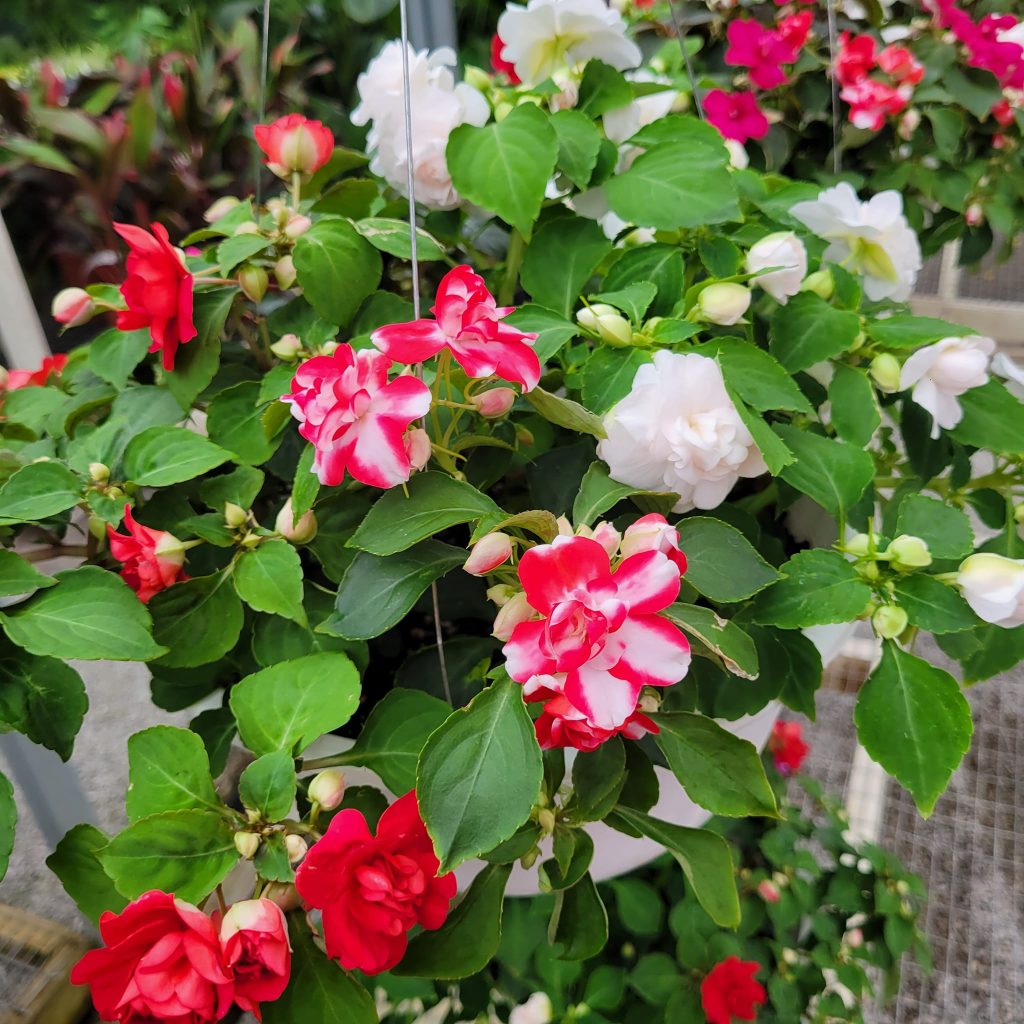
Impatiens are widely considered the classic shade flower, and for good reason. They bloom continuously from spring until the first frost, filling shaded beds with color when little else will. I’ve never met a gardener disappointed by their reliability.
North Carolina State University Extension notes that impatiens perform best in part shade to full shade, and too much sun can actually scorch their leaves. That’s the opposite of most flowering plants, which makes them a genuine shade specialist.
Care Requirements
Impatiens need consistently moist, well-drained soil rich in organic matter. They’re sensitive to heat and dry spells, wilting quickly if neglected. Water regularly, especially during warmer months, to keep them looking their best.
Plant impatiens beneath trees, along shaded walkways, or in window boxes on covered porches. Mass plantings create a carpet of continuous color that few other shade flowers can match.
2. Begonia
Begonias, particularly wax and tuberous varieties, offer glossy foliage alongside steady blooms in shaded spots. They handle humidity remarkably well, which makes them dependable across many climates. Their compact habit also suits small or awkward shady corners.
University of Illinois Extension specifically recommends begonias for shaded containers on decks, porches, and doorsteps where sun rarely reaches.
Care Requirements
Give begonias partial to full shade and well-drained soil that stays lightly moist. Avoid overwatering, since begonias are prone to root rot in soggy conditions. Feed lightly during the growing season for continuous blooms.
Use begonias in hanging baskets, window boxes, or as edging along shaded pathways. They combine beautifully with hostas and ferns for layered texture.
3. Torenia (Wishbone Flower)
Torenia produces small, trumpet-shaped flowers in purple, blue, or pink that hold up impressively well in humid, shaded conditions. Unlike many bright bloomers, it rarely suffers fungal problems even in damp, low-light beds.
Its unusual name comes from the wishbone-shaped stamens inside each flower, a small detail I always point out to garden visitors.
Care Requirements
Plant torenia in partial to full shade with consistently moist, well-drained soil. It’s not particularly drought-tolerant, so regular watering matters here. Light fertilizing supports steady blooming through the season.
Use torenia beneath tree canopies or in shaded hanging baskets where its cascading habit can spill over naturally. It pairs well with begonias for layered color.
4. Fuchsia

Fuchsias produce dangling, bicolor flowers that hummingbirds find irresistible, and they genuinely dislike hot, direct sun. Cooler, shaded conditions actually extend their blooming period significantly compared to sunnier spots.
I’ve found fuchsias particularly rewarding on covered porches, where their pendulous blooms catch the light beautifully without ever facing harsh exposure.
Care Requirements
Give fuchsias partial to full shade with rich, consistently moist, well-drained soil. They dislike extreme heat, so afternoon shade is essential in warmer regions. Regular watering and occasional feeding keep blooms coming.
Hang fuchsia baskets on shaded porches or patios where their drooping flowers can be appreciated from below. They also work well in shaded container groupings.
5. Astilbe
Astilbe produces feathery plume-like flower spikes in pink, red, white, or lavender that add striking texture to shaded beds. It’s a genuine perennial favorite among gardeners dealing with moist, low-light conditions.
Its fern-like foliage remains attractive even after blooming ends, giving your shade garden structure through multiple seasons.
ALSO READ: 55 Flowers That Grow in Shade (With Growing Details)
Care Requirements
Plant astilbe in partial to full shade with consistently moist, humus-rich soil. It struggles in dry conditions, so regular watering is essential, especially during summer. Divide clumps every few years to maintain vigor.
Use astilbe near shaded water features or in woodland-style borders where moisture naturally collects. It pairs beautifully with hosta and ferns for contrasting textures.
6. Bleeding Heart
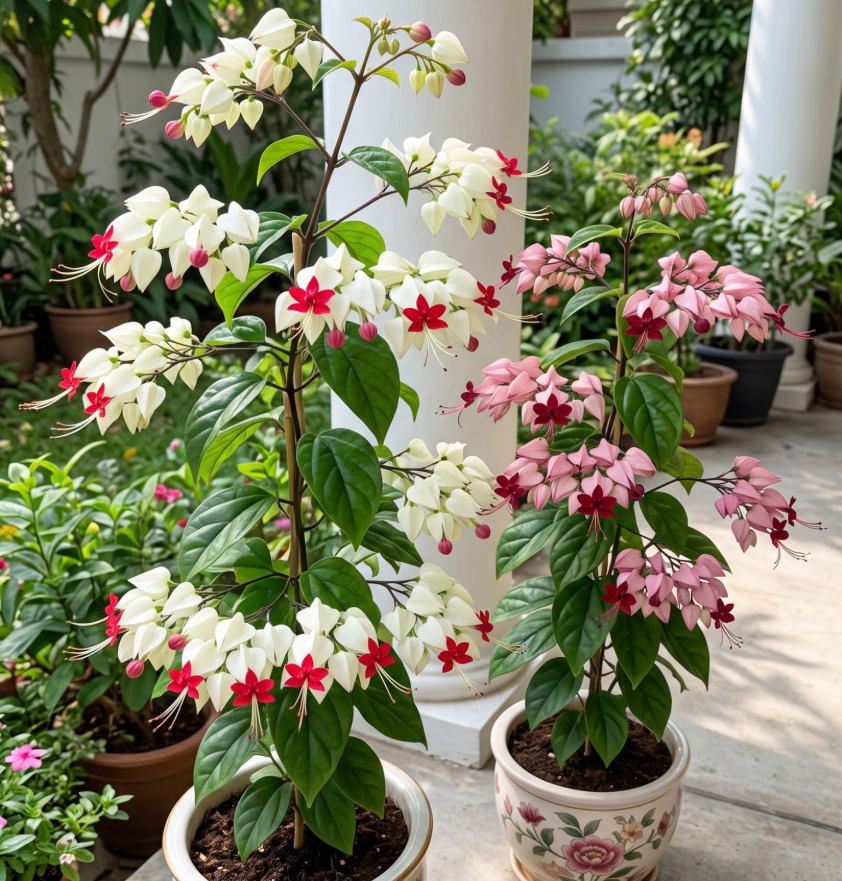
Bleeding heart produces distinctive heart-shaped pink or white flowers dangling from arching stems, a genuinely romantic addition to any shaded bed. It’s one of the earliest perennials to bloom, often flowering before many trees fully leaf out.
The plant typically goes dormant by mid-summer, so plan companion plants to fill the space it leaves behind.
Care Requirements
Give bleeding heart partial to full shade with rich, moist, well-drained soil. It prefers cooler conditions and may struggle in extreme summer heat. Avoid disturbing the roots once established, since they resent transplanting.
Plant bleeding heart in woodland gardens or beneath deciduous trees where spring sunlight filters through before leaves emerge. Combine with hosta to hide its summer dormancy.
7. Hellebore (Lenten Rose)
Hellebores bloom in late winter and early spring, often pushing through light snow in cooler climates. Their nodding flowers in white, pink, purple, or green bring color to shaded gardens when almost nothing else dares to flower.
I genuinely look forward to hellebores each year precisely because they bloom so early, breaking up the dull grays of late winter.
Care Requirements
Plant hellebores in partial to full shade with well-drained, slightly alkaline soil. They’re remarkably drought-tolerant once established and require minimal fertilizing. Remove old, tattered foliage in late winter before new blooms emerge.
Use hellebores beneath deciduous trees or along shaded foundation plantings where their winter blooms remain visible from indoor windows. They naturalize well over time.
8. Columbine
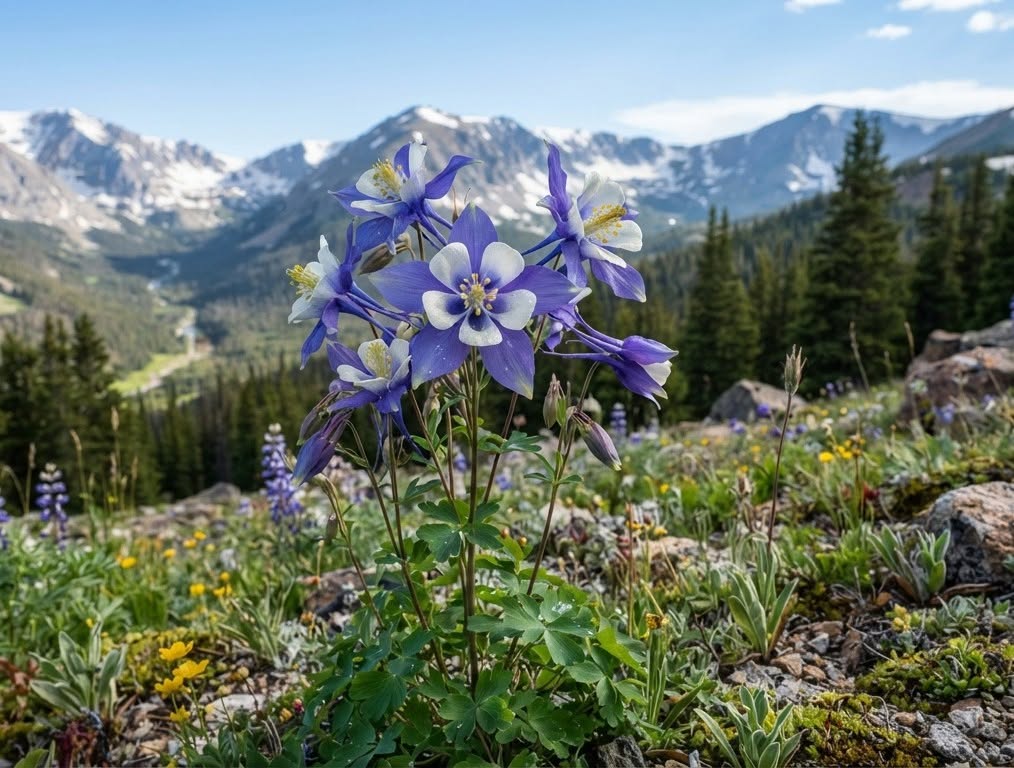
Columbine produces delicate, spurred flowers in red, purple, yellow, or bicolor combinations that attract hummingbirds reliably. It tolerates partial shade exceptionally well, often self-seeding to create informal colonies over the years.
Its airy, nodding blooms bring a wildflower charm that feels less structured than many traditional garden flowers.
Care Requirements
Give columbine partial shade and well-drained soil with moderate moisture. It tolerates brief dry spells once established but appreciates consistent watering during bloom. Deadhead spent flowers to extend the blooming period.
Plant columbine in woodland borders or naturalized cottage-style beds where its self-seeding habit can spread freely. It combines nicely with ferns and hosta.
9. Foxglove
Foxglove’s tall, tubular flower spikes in purple, pink, white, or yellow bring dramatic vertical interest to shaded borders. Bees regularly visit the bell-shaped blooms, making it a valuable pollinator plant even in low-light conditions.
Note that all parts of foxglove are toxic if ingested, so it’s worth avoiding in gardens frequented by small children or pets.
Care Requirements
Plant foxglove in partial shade with rich, moist, well-drained soil. It typically behaves as a biennial, blooming in its second year before setting seed. Stake taller varieties in exposed, windy locations.
Use foxglove toward the back of shaded borders where its height adds structure. It pairs beautifully with hosta and astilbe for layered woodland charm.
ALSO READ: 17 Herbs That Grow Well in Shade (With Growing Details)
10. Primrose
Primroses produce cheerful, rounded flower clusters in nearly every color, blooming reliably in cool, shaded spring conditions. They’re among the earliest perennials to flower, often appearing while frost is still a possibility.
Their compact size makes them ideal for small shaded spaces where larger perennials simply wouldn’t fit.
Care Requirements
Give primrose partial shade and consistently moist, rich soil. They dislike hot, dry conditions, so afternoon shade is essential in warmer climates. Divide clumps every few years to maintain vigorous blooming.
Plant primrose along shaded pathway edges or in woodland rock gardens where their early blooms can be appreciated up close. They also work well in shaded containers.
11. Violet
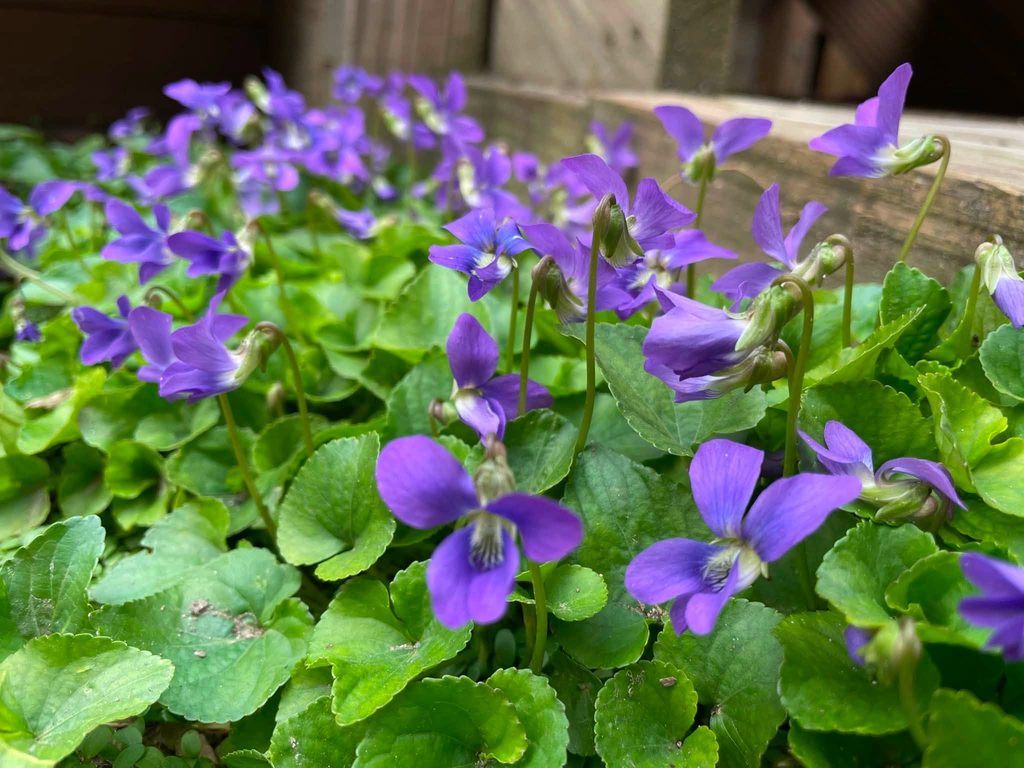
Violets spread low and dense, producing small purple, white, or bicolor flowers that thrive in dappled woodland shade. Many gardeners overlook them, but their understated charm and toughness make them genuinely valuable ground cover.
They’re also edible, and I’ve candied violet flowers for cake decoration more than once.
Care Requirements
Plant violets in partial to full shade with moist, well-drained, humus-rich soil. They tolerate a wide range of conditions and require minimal maintenance once established. Divide occasionally to prevent overcrowding.
Use violets as ground cover beneath shrubs or trees where their spreading habit fills gaps naturally. They also naturalize well in woodland garden settings.
12. Lungwort (Pulmonaria)
Lungwort produces small, funnel-shaped flowers that often shift from pink to blue as they mature on the same plant. Its spotted, silvery foliage adds visual interest even after blooming ends, which extends its garden value considerably.
It’s one of the earliest bloomers in shaded beds, often flowering alongside hellebore in late winter.
Care Requirements
Plant lungwort in partial to full shade with moist, well-drained, organically rich soil. It tolerates dry shade better than many perennials once fully established. Divide clumps every few years for continued vigor.
Use lungwort as an early-season ground cover beneath deciduous trees. Its mottled foliage pairs beautifully with hosta and fern textures.
13. Foamflower (Tiarella)
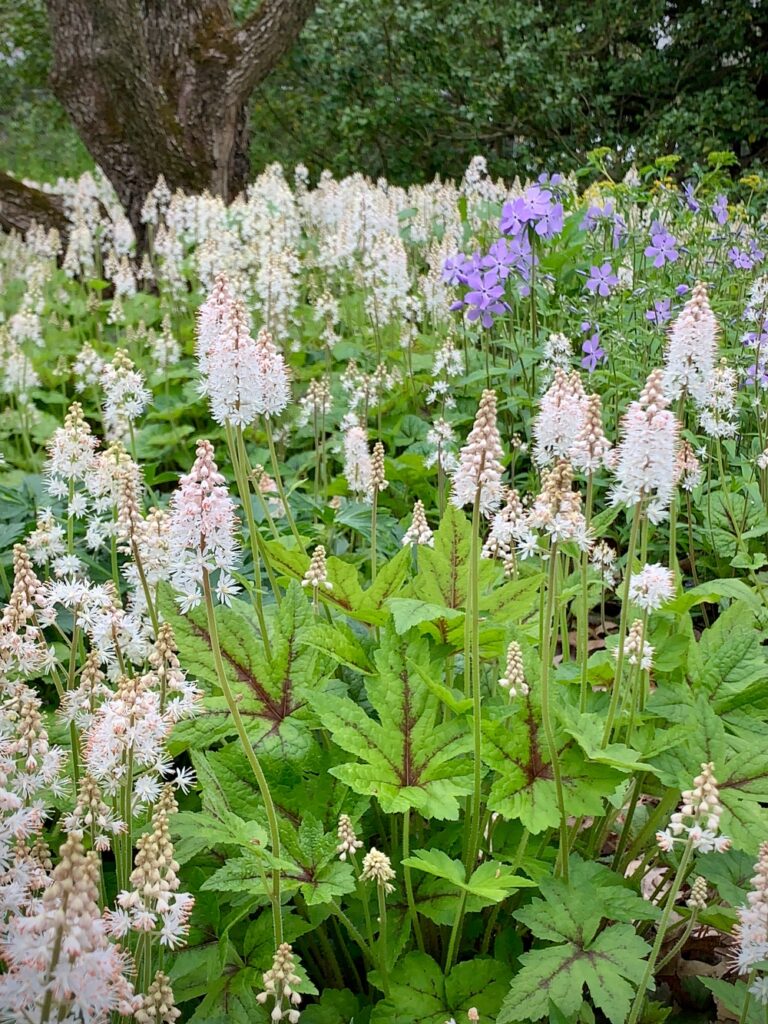
Foamflower produces delicate, star-shaped white or pink flower spikes atop attractive lobed foliage. As a native woodland perennial, it’s naturally adapted to the dappled shade found beneath forest canopies throughout much of the country.
University of Vermont Extension specifically highlights foamflower as a native option for gardeners seeking shade-friendly, low-maintenance perennials.
Care Requirements
Give foamflower partial to full shade with moist, well-drained, humus-rich soil. It spreads gradually via rhizomes, forming an attractive ground cover over time. Water regularly during dry spells to maintain healthy foliage.
Plant foamflower as ground cover in native woodland gardens or beneath shrubs. It combines well with ferns for a naturalized, textured look.
14. Coral Bells (Heuchera)
Coral bells offer both colorful foliage and delicate, airy flower spikes that rise above rounded leaves in shades of red, orange, purple, or gold. The foliage alone provides months of color, while the summer blooms attract hummingbirds reliably.
Breeders have developed hundreds of cultivars, giving shade gardeners nearly unlimited color combinations to choose from.
Care Requirements
Plant coral bells in partial to full shade with well-drained, slightly acidic soil. They dislike soggy conditions, so good drainage is essential. Divide clumps every few years to maintain healthy growth.
Use coral bells as border plants or foliage accents in mixed shade beds. Their colorful leaves complement green-leafed hosta and ferns beautifully.
15. Toad Lily
Toad lily produces unusual, orchid-like spotted flowers in purple and white during late summer and fall, a season when many shade perennials have already finished blooming. Its arching stems bring welcome late-season interest to woodland gardens.
I find its unusual bloom timing genuinely useful for extending color into autumn when options grow thin.
Care Requirements
Plant toad lily in partial to full shade with consistently moist, rich, well-drained soil. It prefers cooler, humid conditions and struggles in hot, dry exposure. Mulch around the base to retain soil moisture.
Use toad lily toward the front of shaded borders where its unusual blooms can be examined closely. It extends color into fall alongside late-blooming hostas.
16. Lobelia
Lobelia produces masses of small, vivid blue, purple, or white flowers that create a cloud-like carpet of color in shaded containers and beds. Its compact, mounding habit fills gaps quickly without overwhelming neighboring plants.
Extension gardeners often list lobelia among the most reliable shade annuals for consistent color from spring through fall.
Care Requirements
Plant lobelia in partial shade with consistently moist, well-drained soil. It dislikes hot, dry conditions and may decline in extreme summer heat. Trim back mid-season if plants become leggy to encourage renewed blooming.
Use lobelia in shaded hanging baskets or as edging along garden borders. Its trailing varieties look especially attractive cascading over container edges.
17. Browallia
Browallia, sometimes called bush violet, produces star-shaped blue or white flowers that bloom continuously in shaded containers and beds. It’s genuinely one of the few annuals that flowers just as enthusiastically in shade as many others do in full sun.
Its compact, mounding shape makes it a natural fit for small shaded spaces or mixed container plantings.
Care Requirements
Plant browallia in partial to full shade with consistently moist, well-drained soil. It benefits from regular light feeding to sustain continuous blooming. Pinch back occasionally to encourage fuller, bushier growth.
Use browallia in shaded window boxes or mixed containers alongside impatiens and begonias. Its blue tones add welcome contrast to warmer-colored shade flowers.
18. Cyclamen
Cyclamen produces distinctive, upswept petals in pink, white, or red above attractively marbled heart-shaped leaves. Hardy varieties bloom in fall or winter, filling a gap when most shade perennials have gone dormant.
Its unusual, almost butterfly-like flower shape makes it instantly recognizable in any shaded bed.
Care Requirements
Plant hardy cyclamen in partial to full shade with well-drained, humus-rich soil. It prefers drier conditions during summer dormancy and more moisture during active fall growth. Avoid disturbing tubers once established.
Use cyclamen beneath deciduous trees where fall and winter light filters through bare branches. It naturalizes well in woodland rock gardens over time.
19. Japanese Anemone
Japanese anemone produces simple, elegant flowers in white or pink atop tall, wiry stems that sway gracefully in the breeze. It blooms in late summer and fall, extending color in shaded borders well past when many other perennials have finished.
I appreciate how its understated beauty adds movement to an otherwise still, shaded corner of the garden.
Care Requirements
Plant Japanese anemone in partial shade with moist, well-drained, rich soil. It spreads gradually via rhizomes and can become vigorous once established. Divide occasionally if it outgrows its allotted space.
Use Japanese anemone toward the back of shaded perennial borders where its height provides late-season structure. It pairs well with toad lily for extended fall color.
20. Monkshood
Monkshood produces tall spikes of hooded, deep purple or blue flowers resembling a medieval monk’s hood, hence its name. It tolerates partial shade well and adds dramatic vertical structure to woodland-style beds.
Like foxglove, monkshood is toxic if ingested, so caution is warranted around children and pets.
Care Requirements
Plant monkshood in partial shade with moist, rich, well-drained soil. It prefers cooler climates and consistent moisture throughout the growing season. Stake taller varieties to prevent flopping in wind or rain.
Use monkshood at the back of shaded perennial borders for late-summer vertical interest. It combines well with astilbe and Japanese anemone.
21. Jack-in-the-Pulpit
Jack-in-the-pulpit is a native woodland perennial with an unmistakable hooded flower structure that fascinates almost everyone who sees it for the first time. It’s naturally adapted to forest floor conditions, making it exceptionally well suited to deep, moist shade.
Its bright red berry cluster in fall adds a second season of interest after the unusual spring bloom fades.
Care Requirements
Plant jack-in-the-pulpit in partial to full shade with consistently moist, rich, well-drained soil. It thrives in woodland conditions similar to its native habitat. Avoid disturbing the tuber once planted, since it resents transplanting.
Use jack-in-the-pulpit in native woodland gardens alongside trillium and ferns. It’s a genuine conversation piece for shaded native plant collections.
22. Trillium
Trillium is a native spring ephemeral producing simple, three-petaled flowers in white, pink, or deep red. It’s slow to establish but rewards patient gardeners with an authentic, native woodland aesthetic that few cultivated flowers can replicate.
Because it’s protected in some regions, always source trillium from reputable native plant nurseries rather than wild-collected stock.
Care Requirements
Plant trillium in partial to full shade with consistently moist, humus-rich, well-drained soil. It requires undisturbed conditions and patience, often taking years to bloom from seed. Avoid moving established plants once settled.
Use trillium in native woodland gardens beneath deciduous trees where spring light filters through before leaves emerge fully. It naturalizes slowly but beautifully over time.
23. Bergenia (Pigsqueak)
Bergenia produces clusters of pink or white flowers on sturdy stems above large, glossy, leathery leaves. Its bold foliage remains attractive through much of the year, even when the plant isn’t actively flowering.
The unusual squeaking sound its leaves make when rubbed together gives it the charming nickname “pigsqueak.”
Care Requirements
Plant bergenia in partial to full shade with well-drained, moderately fertile soil. It’s fairly drought-tolerant once established and requires minimal maintenance. Remove damaged leaves in early spring to tidy the plant’s appearance.
Use bergenia as a bold-textured border plant or ground cover in shaded rock gardens. Its large leaves contrast nicely with finer-textured ferns and astilbe.
24. Lily of the Valley
Lily of the valley produces small, bell-shaped white flowers with an unmistakably sweet fragrance that fills shaded gardens each spring. It spreads readily via underground rhizomes, forming dense, fragrant colonies over just a few seasons.
Note that all parts of the plant are toxic if ingested, so plant it thoughtfully in gardens visited by young children.
Care Requirements
Plant lily of the valley in partial to full shade with moist, well-drained, organically rich soil. It tolerates a wide range of conditions and needs minimal care once established. Divide occasionally if spreading becomes too aggressive.
Use lily of the valley as fragrant ground cover beneath trees or along shaded walkways. Its spring fragrance makes it ideal near windows, doors, or outdoor seating areas.
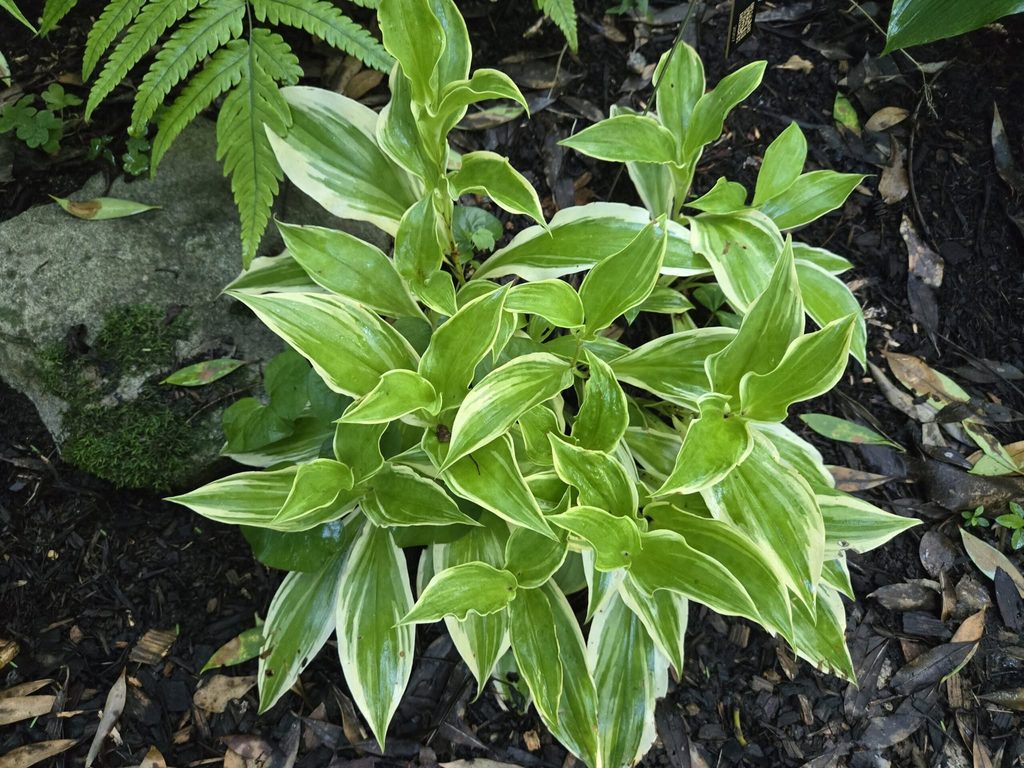
25. Hosta
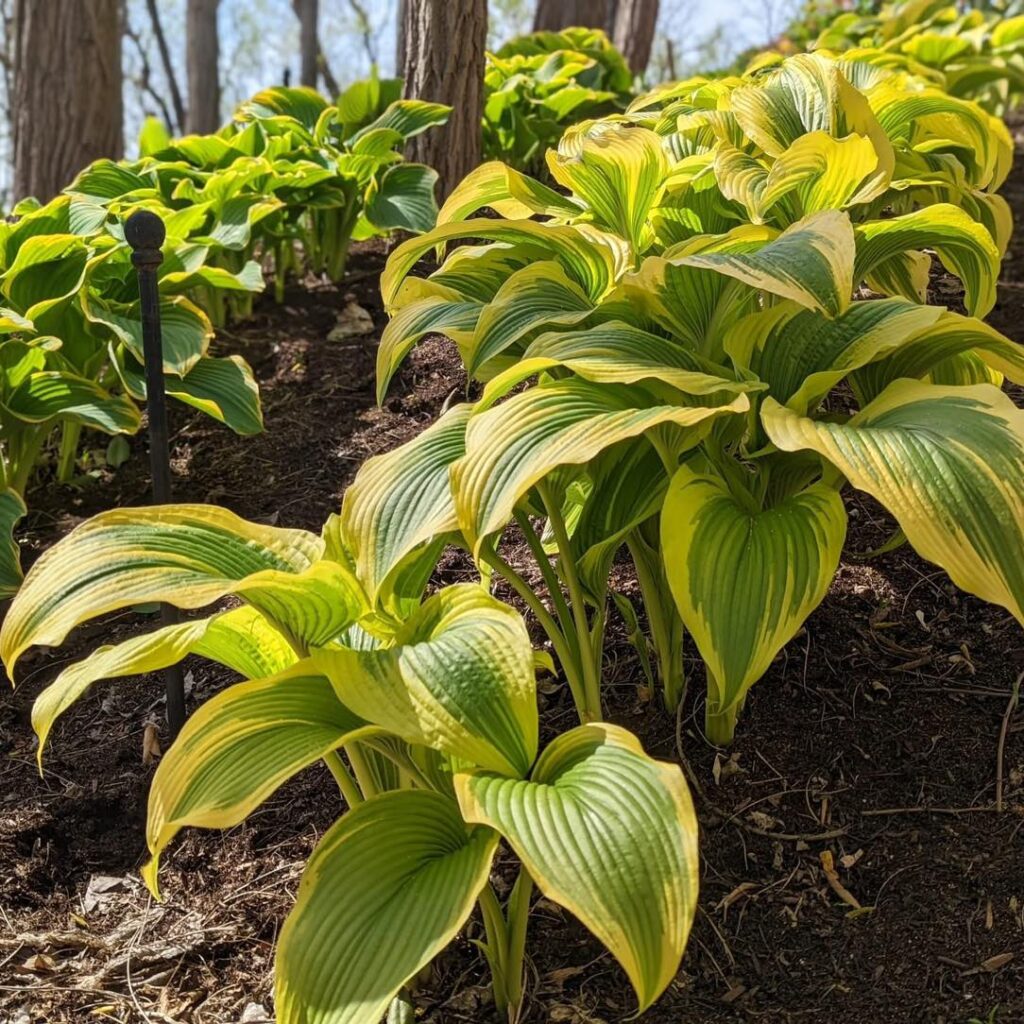
Hosta is grown primarily for its dramatic foliage, but many varieties also produce attractive trumpet or bell-shaped flowers in white, lavender, or purple. NC State Extension notes that hostas perform best in dappled shade or full shade, since direct sun often scorches their leaves.
With over 2,000 cultivars available, hosta offers more variety in leaf color, size, and texture than almost any other shade perennial.
Care Requirements
Plant hosta in partial to full shade with moist, slightly acidic, well-drained soil. Blue-leaved varieties generally need deeper shade than green-leaved types to avoid leaf burn. Divide clumps every three to five years to maintain healthy growth.
Mass hosta beneath trees or along shaded borders for reliable structure and texture. Combine with impatiens or begonia for added flower color throughout the season.
Designing a Cohesive Shade Garden
Once you’ve chosen your flowers, think about bloom sequence across seasons. Hellebore and lungwort open in late winter, columbine and bleeding heart carry spring, while toad lily and Japanese anemone extend interest into fall.
Layer heights thoughtfully too. Taller plants like foxglove and monkshood belong toward the back, while primrose, violet, and lily of the valley work well as front-border fillers.
Finally, don’t underestimate soil moisture management. Most shade flowers prefer consistently moist, organically rich soil, so mulching helps retain that moisture through dry stretches.
Final Thoughts
A shaded garden isn’t a limitation — it’s simply a different kind of opportunity. I’ve come to genuinely prefer the softer, more textured look shade gardens offer compared to sun-drenched beds.
These 25 flowers prove that low light doesn’t mean low color. With thoughtful planning, even the darkest corner of your yard can become one of its most rewarding features.
References
- University of Vermont Extension — “Plants for Shade Gardens”: https://www.uvm.edu/extension/news/plants-shade-gardens
- University of Illinois Extension — “Great Annuals for the Shade”: https://extension.illinois.edu/news-releases/university-illinois-extension-master-gardener-qa-great-annuals-shade
- University of Tennessee Extension — “Annual and Perennial Flower Shade Gardening in Tennessee”: https://utia.tennessee.edu/publications/wp-content/uploads/sites/269/2023/10/pb1585.pdf
- NC State Extension Gardener Plant Toolbox — Impatiens walleriana: https://plants.ces.ncsu.edu/plants/all/impatiens-walleriana/
- NC State Extension Gardener Plant Toolbox — Hosta: https://plants.ces.ncsu.edu/plants/all/hosta/
- Clemson University HGIC — “Plants for Shade” Factsheet: https://hgic.clemson.edu/factsheet/plants-for-shade
- USDA Natural Resources Conservation Service — PLANTS Database: https://plants.usda.gov/

Tim M Dave is a gardening expert with a passion for houseplants, particularly cacti and succulents. With a degree in plant biology from the University of California, Berkeley, he has vast experience in gardening. Over the years, he has cultivated a vast collection of desert plants and learned a great deal about how to grow and care for these unique companions.