25 Washington State Native Flowers (With Growing Details)
The Washington Flora Checklist, maintained by the Burke Museum’s herbarium, currently recognizes 2,664 native plant taxa across the state. That is a staggering figure for one corner of the country.
The Washington Native Plant Society, founded in 1976, has spent nearly five decades cataloguing and protecting this flora. Their work, along with the University of Washington Herbarium’s archive of more than 57,000 native plant photographs, makes Washington one of the best-documented wildflower states in America.
This guide narrows that vast list down to 25 native flowers, with details on where they grow, when they bloom, and why they matter to the ecosystem around it.
Let’s get into it.
25 Washington State Native Flowers
1. Coast Rhododendron
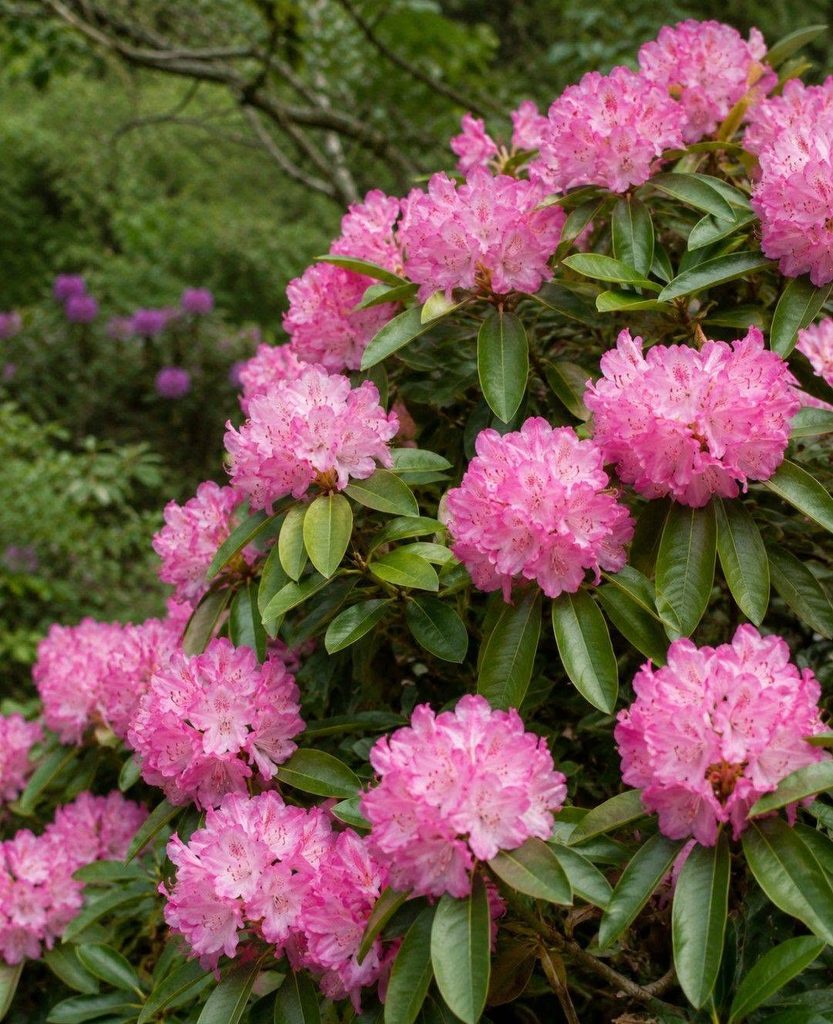
This is Washington’s official state flower, and the story behind it is genuinely charming. Women across the state voted for it in 1892, before they even had the right to vote in general elections.
The Washington State Legislature made it official in 1959, choosing Rhododendron macrophyllum specifically over other rhododendron varieties.
You will find it blooming pink to rose-purple from May through June, mostly in coastal forests and lower Cascade slopes. It prefers shade and acidic soil under a tall canopy.
Some wild specimens in old-growth forest are estimated to be over a century old. That kind of longevity earns respect.
2. Common Camas
Camas fields turn entire meadows into shallow blue lakes each spring. It is one of the most photographed native blooms in the Puget Sound prairies.
Indigenous communities across the Pacific Northwest relied on camas bulbs as a staple food source for thousands of years. The bulbs were pit-roasted and traded widely.
Look for six-petaled, star-shaped blue-purple flowers on tall, slender stems between April and June. South Puget Sound prairies remain the best viewing spots.
Be careful, though. Camas grows alongside death camas, a toxic lookalike, so identification matters if foraging ever crosses your mind.
3. Western Trillium
Few flowers announce spring in the Pacific Northwest quite like the trillium. Its three white petals sit atop three broad leaves, a design so symmetrical it looks almost engineered.
The petals age into a soft pink or purple before the plant fades back for the year. This shift alone makes it worth a return visit to the same trail.
Western trillium favors moist, shaded forest floors and blooms from March to May. Olympic Peninsula trails are especially reliable for spotting it.
One personal note: picking this flower can seriously damage the plant. It can take years to recover, so admiring it in place is always the better choice.
4. Indian Paintbrush
Paintbrush is less a flower and more a burst of color. What looks like red or orange petals are actually bracts, modified leaves surrounding a much smaller true flower.
It thrives in meadows, open slopes, and roadsides across the state, and it is genuinely difficult to grow in a home garden. That is because it is hemiparasitic, tapping into the roots of neighboring plants for nutrients.
Bloom season runs from June through August at higher elevations, peaking in places like Mount Rainier and the Columbia River Gorge.
Hummingbirds are drawn to it constantly, which makes it a rewarding flower to watch rather than just photograph.
ALSO READ: 25 Trees Native to Washington State (With Growing Details)
5. Broadleaf Lupine
Lupine fields are one of the signature sights of a Washington alpine summer. Tall spikes of blue-purple flowers rise above distinctive palm-shaped leaves.
Alpine and subalpine meadows in Mount Rainier, North Cascades, and Olympic National Park all host dense lupine stands from July into August.
As a legume, lupine fixes nitrogen in the soil, quietly improving conditions for the plants growing around it. It is not just decorative; it is doing ecological work.
It is also a host plant for several native butterfly species, which adds another reason to leave it undisturbed on a hike.
6. Arrowleaf Balsamroot
Balsamroot is the flower that turns eastern Washington’s hillsides gold every spring. Its large, daisy-like yellow blooms sit above arrow-shaped leaves close to the ground.
Palouse Falls State Park and Steptoe Butte are two of the most reliable viewing spots, with peak bloom typically hitting late April into early May.
The plant has deep taproots, sometimes reaching several feet down, which lets it survive the dry, exposed conditions of shrub-steppe terrain.
Indigenous peoples historically used the roots, seeds, and young shoots as food, making balsamroot both a visual and cultural landmark of the region.
7. Western Columbine
Western columbine has one of the more unusual silhouettes among Washington wildflowers. Red and yellow petals curve backward into distinct spurs, giving it a shape that almost looks like a small dancer mid-spin.
I have always thought it looks like a fairy dress, and I am clearly not the only one who has made that comparison over the years.
It grows in moist forests, streambanks, and open woods, blooming from late spring through summer depending on elevation.
Hummingbirds and long-tongued insects are its primary pollinators, drawn by nectar tucked deep inside those curved spurs.
8. Columbia Tiger Lily
This lily produces striking orange-red flowers with dark spots, and the petals curl backward in a way that makes each bloom look almost too dramatic to be real.
It is native to open woodlands and clearings throughout western and central Washington, typically flowering in June and July.
Multiple blooms can appear on a single stem, each one nodding downward rather than facing skyward like more common garden lilies.
Deer tend to avoid it, which has made it a quietly popular choice for native plant gardens seeking color without constant browsing damage.
9. Chocolate Lily
Also called checker lily or mission bells, this flower earns its nickname from deep maroon-brown petals mottled with a checkered pattern. It is subtle, almost moody, compared to brighter native blooms.
It favors grassy meadows and open woodlands at lower elevations, blooming from March through May.
The flower reportedly carries a faint chocolate-like scent, though it is subtle enough that you often need to get quite close to notice it.
Because it grows from a small bulb and spreads slowly, established chocolate lily patches can indicate an area of relatively undisturbed native habitat.
10. Fireweed
Fireweed earns its name honestly. It is often the first plant to recolonize burned or disturbed land, sending up tall spikes of magenta-pink flowers within a single growing season.
It blooms from July through September, thriving in clearings, roadsides, and areas recovering from wildfire or logging.
A single plant can produce thousands of tiny, wind-borne seeds, which explains how quickly it colonizes new ground after a disturbance.
Beekeepers value it highly, since fireweed nectar produces a light, distinctly flavored honey that is sold commercially across the Pacific Northwest.
11. Skunk Cabbage
Western skunk cabbage is unmistakable, both visually and otherwise. A bright yellow, hood-shaped bract wraps around a central flower spike, appearing in wet, swampy ground while snow may still linger nearby.
It blooms remarkably early, often from February through April, making it one of the first native flowers to emerge each year.
The smell is exactly what the name suggests. It attracts flies and beetles for pollination rather than bees, which prefer sweeter scents.
Despite the odor, it plays an important early-season role for pollinators emerging from winter with few other food sources available.
ALSO READ: 15 Best Flowers for Pollinators: (Bees, Butterflies, Moths, Hummingbirds and More)
12. Pacific Bleeding Heart
This shade-loving perennial produces clusters of pink, heart-shaped flowers dangling from arching stems. It is one of the more delicate-looking natives on this list.
Moist forests and streambanks across western Washington suit it well, with blooms typically running from April through July.
Fern-like foliage gives it textural interest even after flowering finishes, which is part of why it has become popular in native shade gardens.
Ants play an important role in its seed dispersal, carrying seeds back to their nests and inadvertently planting new bleeding heart colonies.
13. Tall Oregon Grape
Despite the name, this is not a grape at all. It is a broadleaf evergreen shrub with holly-like leaves and clusters of small, bright yellow flowers.
Blooms appear in early spring, generally March through May, followed by dark blue berries later in the season that resemble small grapes.
It grows well in both sun and shade across forests and woodland edges, which makes it one of the more adaptable natives on this list.
Birds rely heavily on the berries, and the inner bark has a long history of use in traditional dye-making due to its bright yellow pigment.
14. Shooting Star
Shooting star flowers have a distinctive reflexed shape, with pink to magenta petals swept backward away from a pointed yellow center. The design genuinely resembles a small comet streaking downward.
It grows in moist meadows and open slopes, often at mid to higher elevations, blooming from April through June depending on snowmelt timing.
Bumblebees are its main pollinators, using a technique called buzz pollination to shake pollen loose from the flower’s tightly packed anthers.
Because it depends on consistent moisture, shooting star populations can serve as a rough indicator of healthy wetland or seep habitat nearby.
15. Fairy Slipper Orchid
Also known as calypso orchid, this is one of Washington’s smallest and most delicate native flowers. A single pink-purple bloom sits atop a slender stem barely a few inches tall.
It grows in shaded, mossy conifer forests, typically flowering from April through June before disappearing entirely until the next spring.
Each plant produces only one leaf and one flower per season, and it does not tolerate transplanting or disturbance well at all.
Finding one on a forest floor feels a little like finding a coin on the sidewalk. It is small, easy to miss, and oddly satisfying when you do.
16. Avalanche Lily
True to its name, this flower often blooms right at the edge of receding snowbanks in subalpine meadows. White, nodding petals with a yellow center appear almost as soon as the ground is exposed.
Mount Rainier and the North Cascades offer some of the best displays, generally from June through August depending on snowpack conditions that year.
Because bloom timing follows snowmelt so closely, avalanche lily fields have become a useful visual marker for tracking seasonal changes at high elevation.
Large meadows can bloom almost in unison, creating sweeping white carpets that are genuinely worth planning a hike around.
ALSO READ: 15 Stunning Climbing Vines with Purple Flowers: Hidden Gems That Will Transform Any Garden
17. Beargrass
Beargrass is not a grass at all, but a member of the lily family. It sends up a tall, dense cluster of small cream-white flowers atop a stalk rising from a base of grass-like leaves.
It typically blooms in subalpine meadows from June through August, though individual plants may only flower once every several years.
Mountain goats and deer graze on the foliage, and Indigenous weavers have historically used the tough leaves in basket-making across the region.
Its irregular blooming pattern means some years produce spectacular mass flowering across entire hillsides, while other years show comparatively little.
18. Nootka Rose
This is Washington’s native wild rose, producing single, five-petaled pink flowers with a bright yellow center. It is simpler in structure than most cultivated roses, but no less appealing.
It grows along forest edges, streambanks, and coastal thickets, blooming from May through July across most of the state.
Bright red rose hips follow the flowers in fall, providing an important food source for birds heading into winter.
Because it tolerates a wide range of soil and light conditions, Nootka rose is frequently recommended for native hedgerows and pollinator gardens.
19. Yellow Bell
Yellow bell, or Fritillaria pudica, produces small, nodding, bell-shaped yellow flowers on short stems. It is easy to overlook, but rewarding once you know what to look for.
It blooms early, generally March through May, in grassy slopes and open woodlands, particularly in eastern Washington’s shrub-steppe regions.
The bulbs were historically harvested and eaten by Indigenous communities, sometimes compared in taste and texture to rice.
Because the flower fades quickly after blooming, catching it in season requires slightly better timing than some of the longer-blooming natives on this list.
20. Wild Ginger
Despite the name, wild ginger is unrelated to culinary ginger, though its rhizomes do carry a similar spicy scent when crushed. Heart-shaped leaves cover the forest floor in dense mats.
Its unusual maroon-brown flowers hide beneath the foliage at ground level, blooming from April through June in shaded, moist forests.
This low placement is intentional. The flowers are pollinated primarily by ground-dwelling insects like beetles and flies rather than typical aerial pollinators.
It spreads slowly as a groundcover, making established patches a sign of long-term forest stability rather than recent disturbance.
21. Twinflower
Twinflower produces small, paired, bell-shaped pink flowers on thin, wiry stems that trail across the forest floor. Each stem consistently splits into two blooms, which is exactly where the name comes from.
It favors cool, mossy conifer forests, blooming from June through August across much of western and northern Washington.
The flowers carry a light, sweet fragrance, noticeable mainly when you kneel close enough to the forest floor to actually smell it.
Botanist Carl Linnaeus reportedly considered it a personal favorite, and it remains closely associated with his legacy in botanical history today.
22. Cascade Penstemon
Cascade penstemon produces tubular, deep blue-purple flowers clustered along upright stems. It stands out sharply against the grays and greens of rocky alpine terrain.
It grows on rocky slopes and subalpine meadows, mainly in the Cascade Range, blooming from June through August.
Its tubular shape is specifically suited to bumblebees and hummingbirds, both of which can access the nectar tucked deep inside each flower.
Because it tolerates thin, rocky soil so well, it has become a popular choice for xeriscaping and native rock gardens in recent years.
23. Broadleaf Stonecrop
This low-growing succulent produces flat clusters of star-shaped yellow flowers atop fleshy, rounded leaves. It thrives in conditions that would kill most other flowering natives outright.
Rocky outcrops, cliffs, and dry open slopes suit it well, with blooming typically running from May through July.
Its succulent leaves store water efficiently, letting it survive on thin soil pockets in full sun where competition from other plants is minimal.
Butterflies and native bees visit it regularly, making it a surprisingly valuable pollinator plant despite its unassuming, low-to-the-ground appearance.
24. Rose Checkermallow
Rose checkermallow produces magenta-pink flowers on stems that can reach up to three feet tall. It is one of the more cheerful-looking natives found in Washington’s prairie remnants.
It grows in prairies, grasslands, and forest edges, generally blooming through the summer months before dying back for the winter.
Plants develop substantial foliage early in the season, then shift energy into flowering once temperatures warm consistently.
Because native prairie habitat has declined significantly across the Puget Sound region, checkermallow populations are considered a useful marker of remaining prairie quality.
25. Wild Hyacinth
Also called large-flowered triteleia, wild hyacinth produces pale to deep blue, bell-shaped flowers arranged in an umbel at the top of each stem. It is a genuine standout among the state’s native lily-family members.
It typically blooms from April through July, often found in grassy areas and among sagebrush in drier parts of the state.
The bulbs were historically an important food source, sometimes prepared similarly to camas by Indigenous communities across the region.
Its clean blue coloring and upright form have made it an increasingly popular choice among native plant gardeners seeking low-maintenance color.
Final Thoughts
Twenty-five flowers barely scratch the surface of what Washington actually holds. Out of 2,664 native plant taxa, this list represents less than one percent of the state’s total wild flora.
Still, these are the flowers most likely to stop you mid-hike, or make you kneel down on a forest trail just to get a closer look.
If you plan to grow any of these at home, always source seeds or starts from a native plant nursery rather than digging from the wild. Wild populations, especially slow-growing woodland species, do not recover quickly from disturbance.
Washington earned the nickname “Evergreen State” for its trees, but honestly, its wildflowers make just as strong a case.
Sources referenced: Washington Flora Checklist (Burke Museum Herbarium), Washington Native Plant Society, Washington State Legislature state symbols archive, WSU Extension native plant database.

Tim M Dave is a gardening expert with a passion for houseplants, particularly cacti and succulents. With a degree in plant biology from the University of California, Berkeley, he has vast experience in gardening. Over the years, he has cultivated a vast collection of desert plants and learned a great deal about how to grow and care for these unique companions.