25 Types of Papaya (With Growing Details)
Papaya has a flavor I’ve never quite been able to describe to someone who hasn’t tried it. Somewhere between melon, mango, and a hint of something floral, with that peppery bite from the black seeds. It’s one of those fruits that rewards curiosity.
What surprises most people is just how much variation exists within a single fruit type. This guide covers 25 types of papaya plants, from tiny backyard-friendly cultivars to massive Mexican varieties that can weigh more than a bowling ball.
Whether you’re planning a home orchard in a warm climate or simply want to understand what you’re buying at the grocery store, this breakdown covers flavor, size, disease resistance, and growing zone for each type.
Papaya Basics Before the List
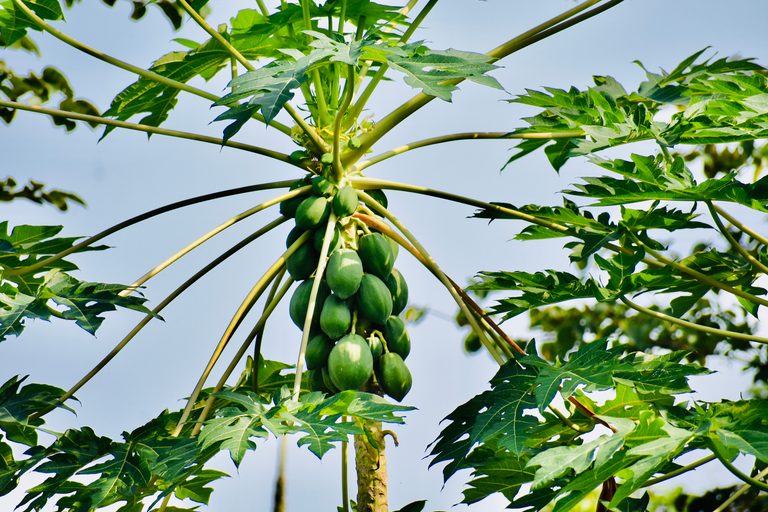
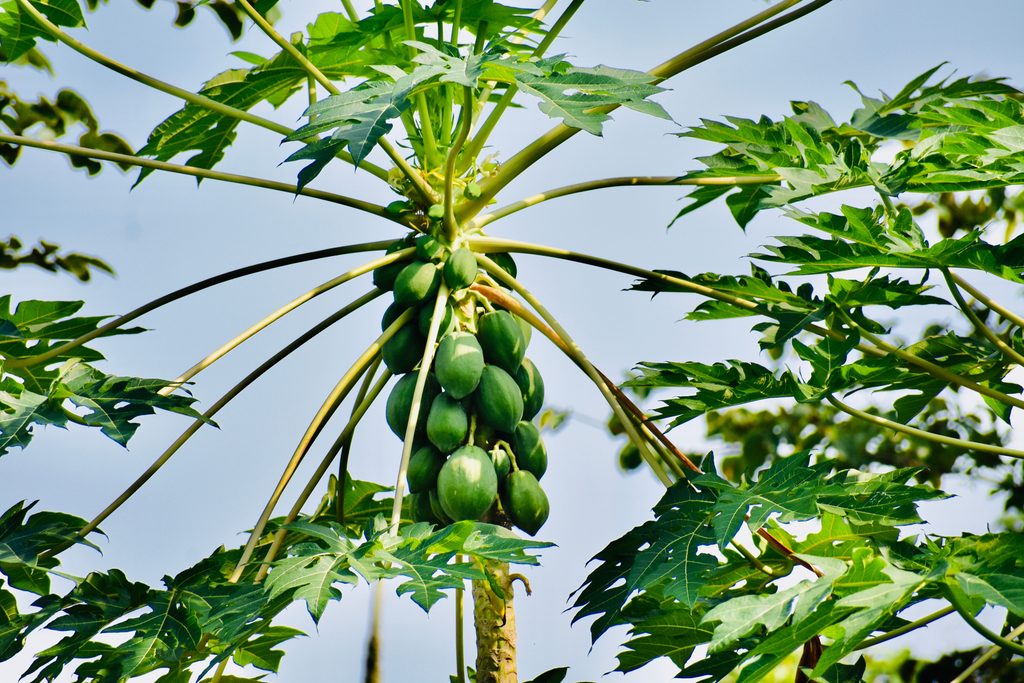
Papaya, botanically Carica papaya, isn’t actually a tree in the traditional sense. It’s a fast-growing, herbaceous plant that can reach over 10 feet tall and often bears fruit while still quite young, according to horticulture research summarized by SFGate Home Guides.
Climate is non-negotiable. Papaya plants are not cold tolerant and suffer damage or death below 31°F, according to University of Florida IFAS Extension. Most varieties thrive only in USDA hardiness zones 9B through 11.
One more quirk worth knowing: papaya is a polygamous species, meaning individual plants can be male, female, or hermaphrodite (bisexual). Only female and hermaphrodite plants reliably produce fruit, so nurseries generally sell the latter two types.
With that in mind, here are 25 papaya types worth knowing.
1. Solo (Original Hawaiian Type)
Solo is the foundational papaya group that shaped nearly every modern Hawaiian variety on this list. It was developed in Hawaii in the early 1900s and remains the reference point for what most people picture as a classic papaya.
The original Solo plants produced relatively few, small fruits, but decades of selective breeding have vastly improved yield and fruit quality since then, according to SFGate Home Guides horticulture reporting.
Nearly every modern “Solo-type” papaya traces back to this line. If you see “Solo” on a seed packet today, it usually refers to this broader genetic family rather than one single variety.
2. Kapoho Solo
Kapoho Solo is a pear-shaped, high-sugar papaya with greenish-yellow skin that ripens to full yellow. The flesh is deep yellow with a pleasant peach-melon flavor, according to the Hawaii Papaya Industry Association.
For decades, Kapoho Solo was the standard commercial variety grown across Hawaii’s Puna district, prized for its sweetness and manageable size for both markets and home kitchens.
Its major weakness is vulnerability to papaya ringspot virus, a disease that devastated much of Hawaii’s Kapoho acreage in the 1990s, prompting the development of resistant hybrids.
3. Sunrise (Strawberry Papaya)
Sunrise, nicknamed “strawberry papaya,” has freckled greenish-yellow skin that turns yellow at ripeness, with dramatic red-orange flesh inside. It was developed by researchers at the University of Hawaii.
The flavor leans sweeter and slightly more intense than yellow-fleshed types, which has made it a favorite for fresh eating and for the striking color it adds to fruit platters.
Like Kapoho Solo, original Sunrise plants remained susceptible to ringspot virus until breeders developed the resistant SunUp version discussed next.
4. SunUp
SunUp is a genetically engineered version of Sunrise, developed specifically to resist papaya ringspot virus (PRSV). It retains the same red-orange flesh and strawberry-like flavor as its parent variety.
This variety played a critical role in saving Hawaii’s papaya industry. After ringspot virus devastated Puna district crops in the early 1990s, SunUp’s resistance helped growers replant with confidence.
SunUp is also one of the parent lines used to breed ‘UH Rainbow’, arguably the most important papaya hybrid developed in the last three decades.
5. UH Rainbow
Rainbow is an F1 hybrid created by crossing yellow-fleshed Kapoho Solo with red-fleshed SunUp, developed jointly by Cornell University and the University of Hawaii starting in 1984 and commercialized in 1998.
This variety single-handedly revived commercial papaya production in Puna, according to the Hawaii Papaya Industry Association, after ringspot virus had crippled the region’s growers throughout the 1990s.
Because Rainbow is a hybrid, seeds saved from its fruit won’t reliably breed true or retain virus resistance, so growers typically buy fresh seed rather than replanting from harvested fruit.
6. Kamiya (Laie Gold)
Kamiya, also marketed as Laie Gold, is grown almost exclusively on the island of Oahu. It’s notably rounder and larger than typical Solo-type papayas, setting it apart visually from most Hawaiian varieties.
The flavor profile is sweet and mellow, appealing to consumers who want a larger single fruit rather than the smaller, individual-serving Solo types common elsewhere in Hawaii.
Its more limited growing region makes Kamiya less widely available outside Hawaii compared to Rainbow or Sunrise, keeping it something of a regional specialty.
7. Waimanalo
Waimanalo is a Solo-type variety recommended by University of Hawaii Cooperative Extension for home gardeners, alongside Sunset, Kapoho Solo, and Sunrise. It produces medium-sized, high-quality fruit suited to backyard growing.
This cultivar was specifically bred for reliable home garden performance, prioritizing manageable plant size and consistent fruiting over the large-scale commercial traits bred into some export varieties.
It remains a solid choice for beginner growers in tropical or subtropical backyard settings looking for dependable yields without heavy management.
8. Sunset
Sunset is another Solo-type variety recommended for home gardens by University of Hawaii Cooperative Extension. It shares the compact size and sweet flavor typical of the Solo lineage, with attractive orange-red flesh.
Home gardeners in Hawaii have grown Sunset for generations as a reliable, easy-care papaya, particularly in cooler upland regions where fruit quality can otherwise suffer.
Its manageable plant height also makes it easier to manage and harvest than some of the taller commercial varieties grown for export.
9. Line 8
Line 8 is a lesser-known cultivar listed among home garden options by University of Hawaii Cooperative Extension, alongside Higgins and Wilder. It’s less commonly available commercially but remains part of Hawaii’s cultivated papaya heritage.
Details on this variety are sparser than for major commercial types, reflecting its status as more of a heritage or specialty home-garden selection than a widely distributed export cultivar.
Gardeners interested in preserving traditional Hawaiian papaya diversity sometimes seek out heirloom lines like this one specifically for that reason.
ALSO READ: 17 Fruit Trees for Zone 10 (With Growing Details)
10. Higgins
Higgins is a home-garden papaya cultivar recommended by University of Hawaii Cooperative Extension for backyard growers. Like Line 8 and Wilder, it represents part of Hawaii’s broader, lesser-documented cultivar diversity.
These heritage cultivars tend to circulate informally among home gardeners and local nurseries rather than through large commercial seed distribution networks.
If you’re growing papaya purely for personal use in Hawaii or a similarly warm climate, cultivars like Higgins offer variety beyond the handful of names found in grocery stores.
11. Wilder
Wilder rounds out the trio of lesser-known home garden cultivars listed by University of Hawaii Cooperative Extension. It shares the general growing requirements of other Solo-type papayas: full sun, well-drained soil, and warm temperatures.
Fruit from Wilder tends to remain within the size and sweetness range typical of Solo varieties, making it a reasonable substitute where more famous cultivars aren’t available.
Its main appeal lies in local availability and adaptation to specific Hawaiian growing conditions developed over generations of informal selection.
12. Maradol
Maradol is a Mexican and Caribbean variety, and it’s the papaya most commonly found in mainland U.S. grocery stores, according to University of Florida IFAS Extension. It’s notably larger than Hawaiian Solo types.
The flesh is a deep salmon-orange color, sweet, and firmer than many Solo-type papayas, which helps it survive shipping over longer distances without excessive bruising or softening.
A single Maradol fruit can weigh several pounds, far exceeding the compact, single-serving size typical of Hawaiian varieties, making it a practical choice for larger households or commercial slicing.
13. Red Lady
Red Lady is a hybrid variety originating from Thailand, recognized for its bright red-orange skin tone and sweet, juicy flesh. It has become one of the most widely planted commercial papayas globally.
This variety is specifically bred for high yield and resistance to ringspot virus, making it attractive for growers in regions where the disease poses an ongoing threat to production.
University of Florida IFAS Extension lists Red Lady among the important commercial varieties grown in the United States today, alongside Maradol and Tainung No. 1.
14. Tainung No. 1
Tainung No. 1 is a Taiwanese hybrid variety recognized by University of Florida IFAS Extension as an important commercial type grown in the United States. It’s known for vigorous growth and solid disease tolerance.
The fruit tends to be medium to large, with orange-red flesh and a balanced sweet flavor suited to both fresh eating and commercial processing.
Its combination of productivity and adaptability has made it popular across multiple tropical growing regions beyond its origin in Taiwan.
15. Dwarf Solo
Dwarf Solo is a compact variant within the Solo lineage, bred to stay smaller and more manageable than standard Solo-type plants, according to SFGate Home Guides horticulture reporting.
This is a smart pick for small yards or container growing, since the reduced plant height makes covering or moving the plant during cold snaps far more practical than with full-sized papaya varieties.
Fruit size and flavor remain broadly similar to other Solo types, offering the same pear-shaped, sweet orange flesh in a more space-efficient plant.
16. CO 1 (Coimbatore 1)
CO 1 is one of several papaya varieties developed by Tamil Nadu Agricultural University in India, part of a numbered breeding series aimed at improving yield and table quality across Indian growing regions.
Indian breeding programs have historically focused on both fresh-eating quality and papain extraction, since papaya latex is commercially valuable for meat tenderizers and other enzyme-based products.
CO 1 and its related lines remain primarily grown within South Asian markets rather than being widely exported internationally.
17. CO 3
CO 3 is a gynodioecious variety, meaning it produces both bisexual and female flowers, developed by Tamil Nadu Agricultural University specifically for table consumption rather than dual-purpose industrial use.
This trait matters practically: gynodioecious varieties tend to set fruit more reliably in home gardens since growers don’t need to worry as much about isolating or identifying separate male plants.
It represents part of a broader Indian breeding effort to standardize papaya quality and yield across diverse regional growing conditions.
18. CO 2
CO 2 is a dual-purpose papaya variety from Tamil Nadu Agricultural University, bred for both table consumption and papain production, the enzyme extracted from unripe papaya latex used in food and pharmaceutical industries.
Dual-purpose varieties like this one hold particular value for commercial growers who want flexibility to sell either fresh fruit or raw latex depending on market demand.
Papain extraction remains a significant agricultural industry in parts of India, and varieties bred for this purpose differ somewhat from those optimized purely for eating quality.
19. Surya
Surya is another gynodioecious variety from Tamil Nadu Agricultural University, developed specifically for table purposes. It’s recognized as one of the more reliable fresh-eating cultivars within India’s papaya breeding program.
Like CO 3, its flower structure supports more consistent fruit-setting in home garden conditions, an important trait for smaller-scale growers without commercial pollination management.
Surya remains popular in South Indian home gardens for its dependable production and quality suited to local culinary traditions.
ALSO READ: 17 Fruit Trees for Zone 9 (Identification, With Details)
20. Coorg Honey Dew
Coorg Honey Dew is a papaya variety developed in India, named for its notably sweet, honey-like flavor profile that distinguishes it from more standard commercial cultivars listed in Tamil Nadu Agricultural University’s variety guide.
Its flavor makes it especially popular for fresh eating rather than industrial processing, appealing to growers focused on premium fresh-market quality.
This variety reflects the broader diversity within Indian papaya breeding, which has produced numerous regionally adapted cultivars beyond the handful commonly known internationally.
21. Cariflora
Cariflora is recognized for its high yield and notably long shelf life, qualities that make it attractive to commercial growers who need fruit to withstand transport and extended time on store shelves.
Its combination of productivity and durability has positioned it as a popular commercial choice in regions prioritizing logistics and post-harvest quality over specialty flavor traits.
Growers weighing shelf life against flavor intensity often find Cariflora a reasonable middle ground for commercial-scale production.
22. Golden/Formosa Type Papayas
Formosa-type papayas, sometimes marketed under names referencing their golden skin, are large, elongated hybrids originally developed in Taiwan. They share genetic roots with Tainung varieties.
These are among the largest commercially available papayas, often significantly bigger than Hawaiian Solo types, with firm, sweet, deep-orange flesh suited to slicing and export.
Their size and durability make Formosa-type papayas common in international export markets, including much of the fruit sold in North American and European grocery chains.
23. Waimanalo X (Hybrid Improvements)
Beyond the original Waimanalo cultivar, ongoing breeding programs at the University of Hawaii have produced improved hybrid derivatives aimed at boosting disease resistance while preserving the original’s home-garden-friendly size.
These improved lines typically retain the sweet, manageable characteristics that made Waimanalo popular, while incorporating better tolerance to regional pests and diseases identified through continued extension research.
Availability of these improved lines can vary by growing season and region, so checking with local extension offices remains the best way to source current recommendations.
24. Zhufeng (Research Cultivar)
Zhufeng is a papaya variety studied in recent genomic research for its distinct traits, including high yield, oval-shaped fruit, and orange-red flesh when fully mature, according to comparative pangenome research on papaya diversity.
This cultivar isn’t widely available commercially but represents the kind of genetic diversity researchers study to understand yield potential, fruit color, and morphology differences across papaya germplasm worldwide.
Its inclusion here highlights how much untapped diversity still exists within Carica papaya, beyond the well-known commercial names most consumers recognize.
25. T3/T5 (Research Cultivars)
T3 and T5 are additional papaya varieties documented in recent genomic diversity research, each showing distinct fruit shapes and flesh colors ranging from yellow to orange-yellow, with T5 notably producing elongated, multi-edged fruit.
These research-focused cultivars aren’t sold commercially but illustrate the wide morphological range possible within the species, information that breeders use to develop future commercial hybrids.
Papaya breeding is far from finished. Ongoing genomic research continues to map traits like these for potential use in developing hardier, better-yielding varieties down the road.
Choosing the Right Papaya for Your Garden or Kitchen
If you’re a home gardener in a warm climate, Solo-type varieties like Waimanalo, Sunset, or Dwarf Solo offer manageable size and reliable fruiting without overwhelming a small yard.
If ringspot virus is a known problem in your area, disease-resistant hybrids like UH Rainbow, SunUp, or Red Lady provide meaningfully better odds of a successful harvest than older, unresistant cultivars.
For sheer size and shelf life, commercial types like Maradol, Tainung No. 1, and Formosa-type papayas deliver the large, sturdy fruit typically found at grocery stores rather than farmers markets.
ALSO READ: 17 Best Fruit Trees for Zone 8 (With Care Tips)
Growing Requirements Worth Knowing
Papaya plants grow and fruit best when temperatures stay between 70°F and 90°F, with root growth slowing noticeably below 60°F, according to University of Florida IFAS Extension.
Full sun and well-drained soil are essential across nearly every variety on this list, according to University of Hawaii Cooperative Extension. Poor drainage quickly leads to root rot in this fast-growing but delicate plant.
Most papaya plants reach fruit-bearing maturity remarkably fast, producing ripe fruit within 8 to 12 months of planting, a pace few other tropical fruit trees can match.
Frequently Asked Questions
What is the most common papaya sold in U.S. grocery stores? Maradol, a large Mexican and Caribbean variety, is the papaya most commonly found in mainland U.S. supermarkets, according to University of Florida IFAS Extension.
Why was Rainbow papaya developed? Rainbow was bred by Cornell University and the University of Hawaii to resist papaya ringspot virus, which had devastated Hawaii’s Puna district papaya crops in the early 1990s.
Can papaya grow in a cold climate? No. Papaya plants are damaged or killed below 31°F and grow best only in USDA hardiness zones 9B through 11, per UF/IFAS Extension.
Do all papaya plants need a second plant nearby to produce fruit? Not necessarily. Since papaya can be female, male, or hermaphrodite, hermaphrodite plants can self-pollinate, though many growers still keep multiple plants for reliable, heavier yields.
References
- University of Florida IFAS Extension. Papaya Growing in the Florida Home Landscape. Ask IFAS, HS11/MG054. https://ask.ifas.ufl.edu/publication/MG054
- University of Florida IFAS Extension. Papaya. UF/IFAS Gardening Solutions. https://gardeningsolutions.ifas.ufl.edu/plants/edibles/fruits/papaya/
- University of Hawaii at Manoa, College of Tropical Agriculture and Human Resources (CTAHR). ‘UH Rainbow’ Papaya. https://www.ctahr.hawaii.edu/oc/freepubs/pdf/nph-1.pdf
- University of Hawaii at Manoa, CTAHR. Optimizing Germination of Papaya Seeds. Fruits and Nuts F&N-8. https://www.ctahr.hawaii.edu/oc/freepubs/pdf/f_n-8.pdf
- University of Hawaii at Manoa, CTAHR, Cooperative Extension Service. Papaya Home Garden Guide. https://gms.ctahr.hawaii.edu/gs/handler/getmedia.ashx?moid=3084&dt=3&g=12
- Tamil Nadu Agricultural University (TNAU) Agritech Portal. Horticulture: Fruits: Papaya. https://agritech.tnau.ac.in/horticulture/horti_fruits_papaya.html
- University of Georgia. 10+ Papaya Types to Boost Fruit Production. Black Atlantic. https://blackatlantic.uga.edu/10-papaya-types-to-boost-fruit-production

Tim M Dave is a gardening expert with a passion for houseplants, particularly cacti and succulents. With a degree in plant biology from the University of California, Berkeley, he has vast experience in gardening. Over the years, he has cultivated a vast collection of desert plants and learned a great deal about how to grow and care for these unique companions.