70 Types of Hoya Plants (Wax Plant Varieties With Pictures)
Hoya belongs to the dogbane family, Apocynaceae, in the same subfamily as milkweed. Botanists disagree on the exact species count, but the range is wide and growing every year.
Researchers estimate the genus contains somewhere between 350 and 450 species, with some counts pushing past 500 published names once synonyms are included. One taxonomic checklist accepted 363 species as valid after reviewing over 560 published names.
The Apocynaceae family as a whole includes roughly 5,000 species across 376 genera, making Hoya just one branch of a very large tree. Borneo alone is estimated to hold 60 to 70 Hoya species, making it one of the genus’s richest hotspots along with New Guinea and the Philippines.
China records around 38 to 40 native Hoya species, most concentrated in the southwestern provinces.
This guide walks through 70 types of Hoya plants, grouped by leaf style, bloom, and growth habit, so you can find the ones that match your space and your patience level.
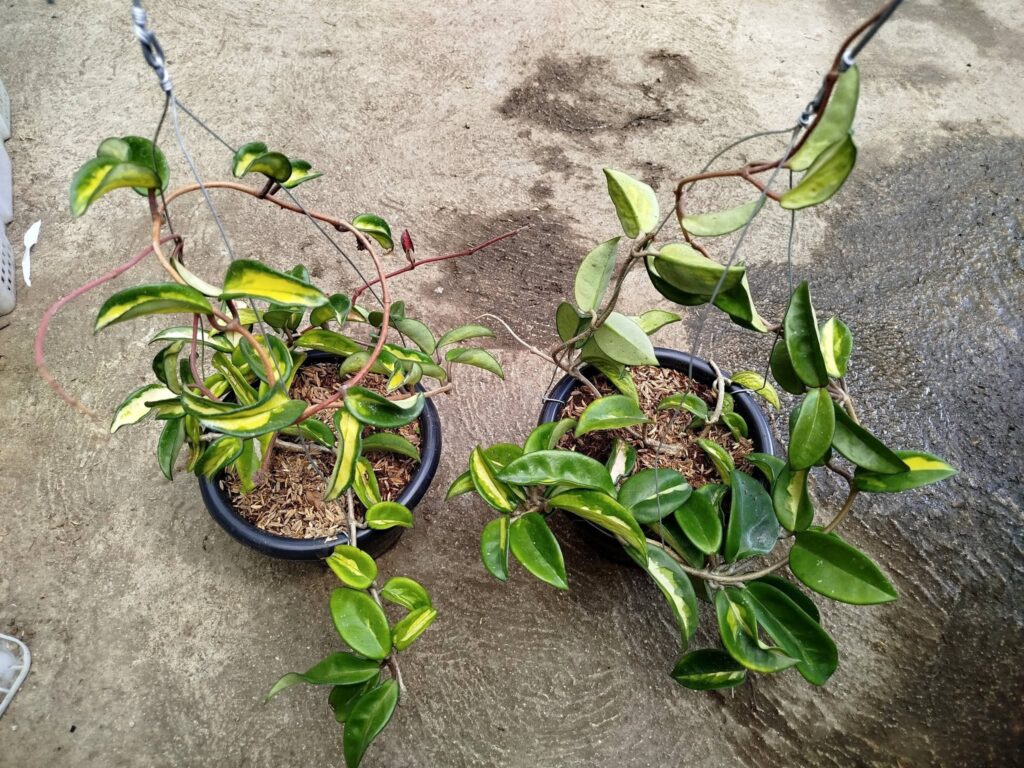
Why Hoyas Are Called “Wax Plants”
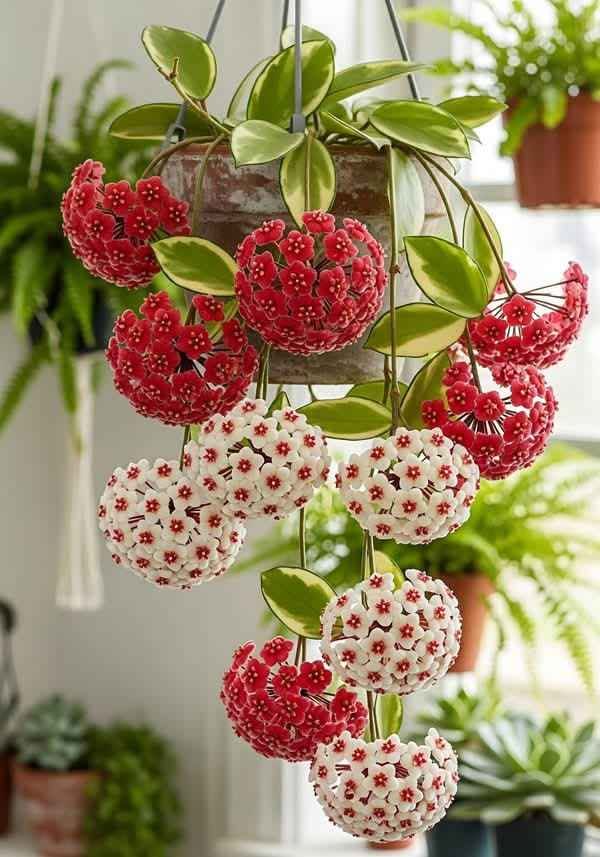
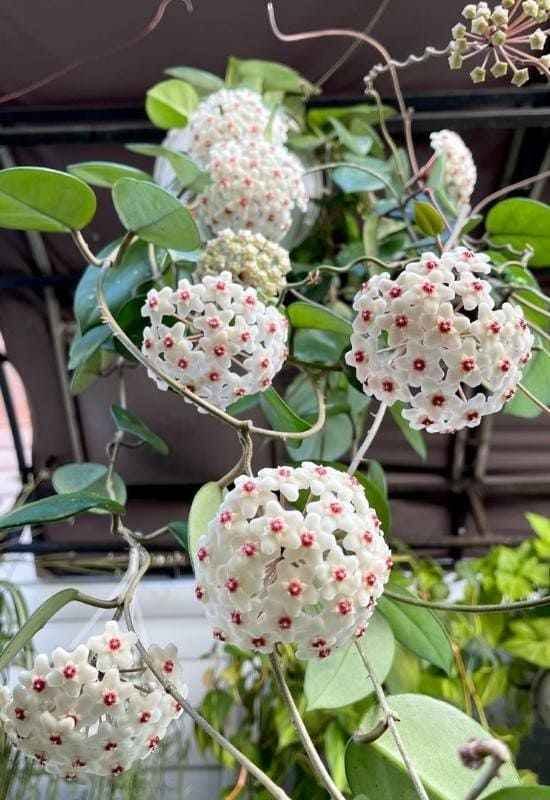
The common name comes straight from the flowers. Hoya blooms have a glossy, almost artificial texture, which is why growers nicknamed them wax plants or porcelain flowers.
Most flowers form in umbels, meaning many small blossoms radiate from a single point like a firework. Each cluster grows from a permanent stalk called a spur, and that same spur can rebloom for years if you leave it untouched.
Many hoyas also produce nectar, sometimes in surprising quantities, which is part of what makes their scent so noticeable in the evening.
Let’s dive into the list of hoya plants.
Classic and Beginner-Friendly Hoyas
These are the hoyas most likely to survive a first-time owner’s mistakes. They tolerate a bit of neglect, adjust to average indoor humidity, and still reward you with steady growth.
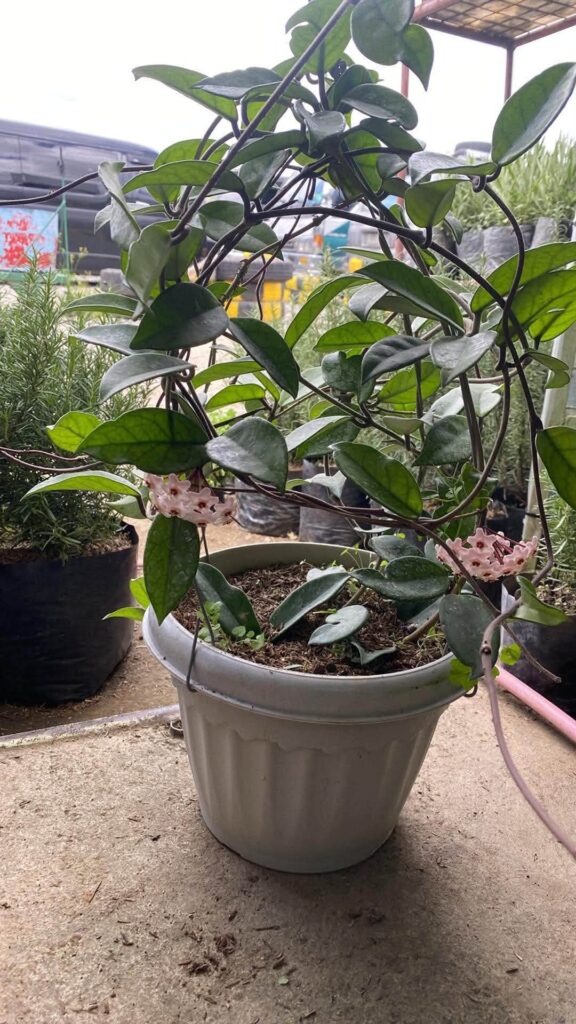
1. Hoya carnosa
This is the plant that started it all for most collectors. Its leathery, oval leaves grow on twining vines that can stretch several feet once established.
Given bright, indirect light, it produces rounded clusters of pink-and-white flowers with a soft evening fragrance. It also happens to be one of the most forgiving hoyas around, tolerating missed waterings without much complaint.
2. Hoya kerrii
Known worldwide for its heart-shaped leaves, this species is often sold as a single leaf in a small pot around Valentine’s Day. That single leaf will survive for years, but it will not grow into a vine on its own.
For an actual climbing plant, you need a cutting that includes a node and stem section. Given time, it develops the same thick, glossy heart-shaped leaves along a proper vine, eventually producing clusters of star-shaped flowers.
3. Hoya obovata
Rounded, thick leaves are the signature trait here, sometimes marked with faint reddish spotting when grown in strong light. The foliage has a pleasantly plump, almost padded feel between your fingers.
It is a vigorous grower once settled, and with bright light it tends to flower more reliably than many other beginner species. New growers often pick this one specifically because it forgives inconsistent watering.
4. Hoya australis
Native to parts of Australia and the Pacific islands, this climber produces glossy, deep green leaves and clusters of intensely fragrant white flowers. The scent tends to carry further than many other hoyas.
It grows quickly under good light and appreciates a sturdy support to climb. Because it is naturally vigorous, it also tolerates the occasional pruning without setback.
5. Hoya pubicalyx
Dark green leaves speckled with silver give this species a distinctive, almost splattered-paint appearance. It is also one of the faster growers in the genus, producing long trailing stems in a single season.
Its flowers lean toward deep burgundy and pink tones, arriving in generous clusters once the plant matures. Many growers recommend it as a second hoya, since it forgives more mistakes than most flowering houseplants.
6. Hoya carnosa ‘Compacta’
Better known as Hindu Rope, this cultivar twists its leaves into a tight, curled rope-like pattern along the stem. The effect looks almost sculptural rather than typically leafy.
Growth is noticeably slower than the standard Hoya carnosa, so patience matters here. The reward is a dense, textural plant that still produces the same fragrant flower clusters when mature.
7. Hoya carnosa ‘Krimson Queen’
Creamy white margins wrap around each green leaf, with new growth often emerging in a soft pink blush before settling into its mature coloring. It is one of the more popular variegated cultivars for good reason.
Bright light keeps the variegation crisp and prevents the plant from reverting to solid green. Flowering habits match the standard carnosa, including the same fragrant, waxy blooms.
8. Hoya carnosa ‘Krimson Princess’
This cultivar mirrors its Krimson Queen sibling but flips the variegation pattern, placing cream tones toward the center of the leaf instead of the edges. Side by side, the two make an interesting comparison.
Care requirements stay identical to other carnosa types. Expect slower growth than the fully green form, since variegated tissue produces less chlorophyll for energy.
9. Hoya carnosa ‘Tricolor’
Green, pink, and cream tones combine on each leaf, making this one of the most photographed cultivars in the entire genus. The pink shading tends to intensify under strong, direct morning light.
Growth is moderate, and the plant benefits from consistent light exposure to maintain its coloring. Left in dim conditions for too long, the pink tones can fade toward plain green.
10. Hoya linearis
Thin, fuzzy leaves dangle from long, trailing stems, giving this species a soft, string-like appearance that looks striking in a hanging basket. The texture alone sets it apart from thicker-leaved hoyas.
It prefers slightly cooler temperatures and higher humidity than many other varieties on this list. In return, mature plants produce small clusters of fragrant white flowers along the trailing vines.
ALSO READ: Tips for Lush, Blooming Hoya Plants: How to Grow and Care for These Beauties
Variegated Hoyas
Variegation adds streaks or patches of white, cream, or pink to the leaf. These types tend to grow slower than their solid green counterparts, since variegated tissue does less photosynthetic work, but they bring striking color to any shelf.
11. Hoya carnosa ‘Variegata’
A classic cream-edged variegation wraps around otherwise typical carnosa foliage. It climbs and flowers much like the standard species, just at a somewhat slower pace.
Strong, consistent light is essential here. Without it, the cream margins can gradually shrink back toward solid green over several growing seasons.
12. Hoya pubicalyx ‘Splash’
Silvery speckles scatter across dark green leaves in an irregular, almost hand-painted pattern. No two leaves look quite identical, which adds to its appeal among collectors.
Growth speed stays closer to the standard pubicalyx than to slower variegated types, making this an easier variegated option for less patient growers. Flower color follows the same deep burgundy tones as the parent species.
13. Hoya macrophylla ‘Variegata’
Broad, generously sized leaves carry soft yellow-cream margins along their edges. The overall leaf size makes the variegation especially noticeable compared to smaller-leaved cultivars.
This variety appreciates slightly more humidity than average to keep its larger leaves from crisping at the tips. Once established, it becomes a substantial, eye-catching climber.
14. Hoya sigillatis
Silver spots scatter across slightly fuzzy, elongated leaves, giving the plant a soft, dusted appearance. It is often grouped with variegated types even though its pattern comes from natural pigmentation rather than true variegation.
It grows at a modest pace and prefers stable humidity. Many collectors value it as much for its texture as for its coloring.
15. Hoya carnosa ‘Rubra’
Green and cream leaf tones pair with a noticeably reddish stem, which stands out against the foliage. The red coloring tends to deepen under brighter light conditions.
Care matches the standard carnosa closely. It rewards consistent light with both crisper variegation and more visible stem color.
16. Hoya carnosa ‘Chelsea’
Wavy, gently curled leaf edges give this cultivar a rippled texture, paired with light variegation along the margins. The curling effect becomes more pronounced as the plant matures.
Growth is slow but steady, and the twisted leaf shape makes it a popular choice for growers who already own a standard carnosa and want something visually different.
17. Hoya kentiana ‘Variegated’
Narrow, pointed leaves carry crisp cream stripes along their edges, creating a slender, almost grass-like silhouette when the vine trails downward. The coloring holds up well under bright light.
This variety tends to stay more compact than broader-leaved hoyas, making it a good fit for smaller hanging pots. Flowers, when they appear, are small but fragrant.
18. Hoya wayetii ‘Variegata’
Slim, pointed leaves take on a pink-tinted blush along their variegated margins, especially under strong light. The coloring shifts subtly with the seasons as light intensity changes.
It trails readily, making it a natural fit for a hanging basket. Growth stays moderate, neither especially fast nor frustratingly slow.
19. Hoya lacunosa ‘Variegata’
Small, compact leaves carry a subtle cream patterning that is easy to miss at first glance but becomes more obvious as the plant fills out. It keeps the same bushy, dense growth habit as the standard species.
Fragrance remains a highlight here, since the variegated form still produces the same cinnamon-scented flower clusters as its solid green parent.
20. Hoya serpens ‘Variegata’
This tiny-leaved variety stays remarkably compact, forming a dense mat of small, patterned foliage that works well in a shallow dish or small hanging pot. Growth is slow but consistent.
Because the leaves are so small, the variegation shows up as fine speckling rather than broad patches. It is a favorite among growers who collect miniature hoyas specifically.
ALSO READ: 25 Best Plants for Hanging Baskets: Identification With Pictures
Fragrant Hoyas
If scent matters to you, this category will not disappoint. Most hoya fragrance peaks in the evening, which lines up with when nectar production tends to rise.
21. Hoya odorata
The name says it all. This species produces a scent many growers describe as sweet and clean, without the heaviness some other fragrant hoyas carry.
Leaves are moderately thick and glossy, and the plant climbs at a manageable pace. It is often recommended to anyone building a fragrance-focused collection.
22. Hoya bella
A compact, naturally hanging variety, this species produces flat-topped clusters of white flowers with deep purple centers. The contrast between the two colors makes each bloom stand out sharply.
It prefers slightly more consistent humidity than some other hoyas and does best in a hanging pot where its arching stems can drape freely. The fragrance is noticeable but not overwhelming.
23. Hoya multiflora
Also called the shooting star hoya, this species produces reflexed, backward-curving petals that genuinely resemble tiny comets streaking outward from the flower cluster. Clusters can hold twenty five to forty individual blooms at once.
Unlike many hoyas, it tends to flower somewhat continuously rather than in isolated bursts. The scent is light but pleasant, most noticeable when several blooms open together.
24. Hoya lacunosa
Small, cinnamon-scented flowers cover this compact, bushy plant when it blooms, often in surprising quantity for such a modest-sized species. The scent has a warm, spiced quality that many find distinctive.
It stays naturally compact without much pruning, making it a good choice for smaller spaces. Growth is steady rather than fast.
25. Hoya finlaysonii
Thick, glossy leaves pair with a rich, honey-like fragrance that intensifies as the flowers mature. The leaf surface has a notably polished sheen compared to many other species.
It grows as a moderate climber and benefits from a support structure once the vines lengthen. Flower clusters tend to be dense and long-lasting.
26. Hoya caudata
Fuzzy, elongated leaves give this species a soft, textured look, paired with a gentle evening fragrance. The foliage often develops darker mottling under brighter light.
It appreciates slightly higher humidity than average and rewards consistent care with steady, if unhurried, growth.
27. Hoya archboldiana
Large, dramatic blooms make this one of the more visually striking fragrant hoyas, with flower clusters that command attention even before you notice the scent. The perfume is strong and carries well across a room.
Given its size potential, this species benefits from sturdy support and plenty of room to climb. Patience pays off once mature flowering begins.
28. Hoya imperialis
Among the largest-flowered hoyas in cultivation, individual blooms can reach several inches across, making this a favorite for growers who want a genuine showpiece. The scale alone sets it apart from smaller-flowered species.
It needs more space than compact varieties and grows best with a trellis or moss pole for support. The fragrance matches the flower size, filling a room once blooms open fully.
29. Hoya wallichii
Long, narrow leaves hang from slender stems, paired with a gentle, sweet aroma that is less intense than some showier fragrant species. It has a quieter, more understated appeal.
Growth is moderate, and the plant does well in a hanging arrangement where its slim foliage can trail naturally.
30. Hoya nummularioides
Many experienced collectors consider this among the most fragrant hoyas available, with a scent often compared to citrus blended with something sweet. Its small, slightly velvety leaves add another layer of appeal.
It grows as a delicate trailer and prefers stable humidity to keep its fine foliage looking its best. Once it blooms, the fragrance tends to be the plant’s defining feature.
Fuzzy and Textured-Leaf Hoyas
These varieties bring tactile interest to a collection. Their leaves have a soft, almost velvet-like surface that feels noticeably different from the typical glossy, waxy hoya leaf.
31. Hoya mathilde
Compact, softly textured leaves give this species a matte finish rather than the typical hoya shine. It stays relatively small, which suits collectors working with limited shelf space.
Growth is slow and steady, and the plant rewards patience with dense, tidy foliage over time.
32. Hoya mindorensis
Fuzzy foliage pairs with bright orange-red flowers that stand out sharply against the muted leaf color. The bloom color alone makes this species popular among growers chasing something different from the usual pink and white palette.
It appreciates warm, humid conditions similar to its native Philippine habitat, and rewards consistent care with vivid, memorable blooms.
33. Hoya serpens
Tiny, dense, slightly hairy leaves form a slow, mat-forming vine that works well trailing over the edge of a pot. The overall look is delicate and fine-textured compared to larger-leaved hoyas.
Growth is unhurried, so this species suits growers who enjoy watching a plant develop gradually rather than quickly.
34. Hoya curtisii
This miniature creeping hoya produces silver-speckled, textured leaves on wiry stems that stay close to the soil or trail lightly over a pot’s edge. Its small scale makes it ideal for terrariums or tight shelf spaces.
It grows slowly but steadily, and its compact habit means it rarely needs pruning to stay tidy.
35. Hoya camphorifolia
Leaves release a faint camphor-like scent when brushed or gently crushed, adding a sensory element beyond the usual visual appeal. The foliage itself has a slightly leathery, textured feel.
It grows as a moderate climber and benefits from consistent light to keep its aromatic quality noticeable.
36. Hoya pachyclada
Thick, pale, succulent-like leaves arrange themselves in neat, almost architectural rows along upright stems. The overall silhouette looks more structured than the sprawling vines typical of other hoyas.
Because of its succulent nature, it tolerates drying out between waterings especially well, making it forgiving for growers prone to forgetting a watering day.
37. Hoya tsangii
Narrow, slightly fuzzy leaves grow along a slow-developing vine, giving this species a quiet, understated texture. It is less commonly seen than some other fuzzy-leaved types, which adds to its appeal for collectors.
Growth requires patience, but the reward is a distinctive textured plant that stands apart from more common hoya varieties.
38. Hoya cinnamomifolia
Dark green leaves with lighter veining give this species a striking contrast pattern, paired with a leathery, substantial feel to each leaf. The veining becomes more pronounced as the plant matures.
It grows at a moderate pace and holds up well once established, tolerating a range of indoor conditions without much fuss.
39. Hoya davidcummingii
Small, rounded leaves carry a soft sheen rather than a fully glossy finish, giving the plant a gentle, muted appearance. It stays fairly compact compared to larger-leaved relatives.
Growth is slow, so this species suits patient collectors more than those looking for a quick-filling hanging basket.
40. Hoya erythrina
Reddish new growth is the standout feature here, gradually maturing into textured green foliage as each leaf ages. The color transition gives the plant an ever-changing appearance throughout its growth cycle.
It grows at a manageable pace and does well with bright, consistent light to encourage that vivid red new growth.
Rare and Collector’s Hoyas
These are the hoyas that spark bidding wars in online plant groups. Many are slow to propagate, which keeps supply limited and demand consistently high.
41. Hoya lauterbachii
Long, hanging vines carry large, waxy flower clusters that make quite an impression once the plant matures enough to bloom. Its scale alone sets it apart from more modest collector species.
It needs patience and space, since both the vines and flower clusters can grow substantially larger than typical hoya proportions.
42. Hoya macgillivrayi
Huge, deep red flowers can span several inches across, making this one of the most dramatic blooms in the entire genus. Collectors often chase this species specifically for its flower size and color.
Growth takes time, and blooming maturity can take years, but the eventual payoff is considered well worth the wait by those who have grown it successfully.
43. Hoya megalaster
Dark, near-black flowers give this species an almost mysterious, dramatic quality that few other hoyas can match. The unusual coloring is the main draw for serious collectors.
It requires the same patience as other rare species on this list, with slow growth leading toward an eventual, striking bloom.
44. Hoya onychoides
Unusual claw-shaped corona lobes give each bloom a slightly alien, sculptural appearance compared to the more familiar star-shaped hoya flower. The structure alone makes it a conversation piece.
Growth conditions mirror other tropical hoya species, favoring warmth, humidity, and bright but indirect light.
45. Hoya burtoniae
Thick, glossy leaves sit on a relatively compact growth habit, making this species more manageable in size than some other rare finds. Its foliage alone offers visual interest even before flowering begins.
It grows steadily under good care, rewarding attentive collectors with dense, healthy foliage over time.
46. Hoya polyneura
Nicknamed the fishtail hoya, this species has narrow leaves marked with fan-like, visible veining that resembles the tail of a fish. The pattern is distinctive enough to identify at a glance.
It prefers slightly cooler conditions than many tropical hoyas and benefits from consistent humidity to keep its delicate leaf pattern looking sharp.
47. Hoya engleriana
Among the smallest-leaved hoyas in cultivation, this species has tiny, succulent foliage that clusters densely along thin stems. Its miniature scale makes it a favorite for small containers and terrariums.
Growth is slow, in keeping with its succulent nature, and it tolerates drying out between waterings well.
48. Hoya incrassata
Chunky, upright leaves store water much like a true succulent, giving this species a noticeably different silhouette compared to trailing, vining hoya types. It stands rather than sprawls.
It handles infrequent watering comfortably and suits growers who prefer sturdier, more architectural plant shapes.
49. Hoya globulosa
Round flower clusters carry a distinct citrus-like scent that sets this species apart from other rare hoyas on the list. The rounded bloom shape is also visually distinctive.
Growth is moderate, and the plant rewards bright, consistent light with more reliable flowering.
50. Hoya imbricata
Shield-shaped leaves press flat against bark or a mounting surface, a growth habit tied to its wild relationship with ants that shelter beneath the leaves. It is one of the more unusual growth patterns in the entire genus.
Growing it typically requires mounting on bark or a similar surface rather than a standard pot, which makes it a favorite among more experienced collectors.
Trailing and Hanging Hoyas
These varieties look their best in a hanging basket or on a high shelf, where their vines can cascade freely without needing a climbing support.
51. Hoya retusa
Thin, grass-like leaves grow along long, trailing stems, giving this species an unusual silhouette compared to broader-leaved hoyas. From a distance, it can almost be mistaken for a different type of plant entirely.
It tolerates bright light well and stays relatively low-maintenance once established in a hanging pot.
52. Hoya wayetii
Pointed leaves blush a deep purple-red under bright light, adding seasonal color shifts to its trailing habit. The coloring becomes more vivid the more direct light the plant receives.
Growth is steady and the vines lengthen readily, making this a satisfying choice for anyone who wants visible progress in a hanging basket.
53. Hoya krohniana
Heart-shaped, silver-speckled leaves trail gracefully from this compact species, combining an appealing leaf shape with eye-catching patterning. The speckling varies from plant to plant, adding individuality to each specimen.
It stays fairly manageable in size and suits smaller hanging containers well.
54. Hoya callistophylla
Deep green leaves carry striking pale vein patterns that stand out sharply against the darker background color. The contrast is bold enough to make this species instantly recognizable.
It prefers slightly higher humidity and grows at a moderate pace, rewarding consistent care with increasingly dramatic leaf patterning.
55. Hoya heuschkeliana
Twin-leaved pairs grow along a delicate hanging vine, creating a neat, symmetrical appearance as the plant matures. The paired growth pattern is part of what makes it visually distinct.
Growth is gentle rather than vigorous, suiting growers who prefer a slower-developing hanging plant.
56. Hoya shepherdii
Extremely long, narrow leaves resemble thin ribbons cascading downward, making this one of the more dramatic trailing hoyas in terms of sheer length. A mature specimen can create quite a striking curtain effect.
It tolerates a range of light conditions and grows steadily once established in a hanging position.
57. Hoya coronaria
Thick, fragrant flowers form on a lightly trailing vine, combining scent with a cascading growth habit. The blooms have a notably waxy, substantial texture even by hoya standards.
It appreciates warm, humid conditions and rewards patient growers with fragrant, long-lasting flower clusters.
58. Hoya vitellinoides
Light green leaves display darker vein contrast, creating a subtle but attractive pattern that becomes more visible under bright light. The coloring has a fresh, almost luminous quality.
Growth is moderate, and the trailing stems fill out a hanging pot nicely over time.
59. Hoya cumingiana
Small, glossy leaves suit compact hanging displays, staying tidy without overwhelming a shelf or small space. Its manageable size makes it a practical option for growers with limited room.
It grows at a comfortable pace and handles typical indoor conditions without much difficulty.
60. Hoya diversifolia
A coastal-growing species in its native range, this hoya develops thick, sun-tolerant leaves suited to brighter conditions than many other trailing types. It handles more direct light than most hoyas without scorching easily.
Growth is steady, and its sturdier leaves make it somewhat more forgiving of inconsistent watering.
Unique Leaf Shape Hoyas
This final group is for anyone who wants a plant that instantly starts a conversation, thanks to leaves that look nothing like the typical hoya silhouette.
61. Hoya latifolia
One of the largest-leaved hoyas in the genus, with individual leaves reaching up to 25 centimeters in length. The sheer scale of the foliage makes this species stand out immediately next to smaller-leaved types.
It needs more space than compact hoyas and benefits from sturdy support as it matures into a substantial climbing plant.
62. Hoya obscura
Elongated, pointed leaves carry a subtle sheen that catches the light differently depending on the angle. The shape is narrower and more tapered than many common hoya varieties.
Growth is moderate, and the plant adapts reasonably well to typical indoor light levels.
63. Hoya parasitica
Broad, textured leaves pair with clustered blooms that form in generous groups once the plant matures. The leaf texture has a slightly rougher feel compared to the smoother varieties earlier in this list.
It grows steadily and tolerates a range of humidity levels without much complaint.
64. Hoya pottsii
This species has a long history of traditional use in parts of Asia, where its leaves were valued in folk practices for treating minor injuries. Botanically, it remains an important reference species for researchers studying the genus.
As a houseplant, it grows at a manageable pace and produces the clustered, waxy flowers typical of the genus.
65. Hoya rigida
Stiff, upright leaves hold their shape firmly rather than draping or trailing, giving this species a more structured silhouette than many of its relatives. The rigidity is noticeable even in younger plants.
Growth is steady, and its firmer leaf structure makes it somewhat more resistant to accidental damage during handling.
66. Hoya siariae
Elegant, elongated foliage arches gracefully from the stem, giving this species a refined, almost sculptural appearance. It is less commonly seen than many mainstream hoyas, which adds to its collector appeal.
Care needs align closely with other tropical hoya species, favoring warmth and bright, indirect light.
67. Hoya thomsonii
Broad leaves carry a slightly ruffled edge, setting this species apart from the smoother-margined foliage typical of the genus. The texture adds visual interest even before any flowers appear.
Growth is moderate, and the plant develops a full, textured appearance over time with consistent care.
68. Hoya fungii
A lesser-known species with narrow, pointed leaves, this hoya rarely appears in mainstream nurseries, making it a genuine find for dedicated collectors. Its relative rarity is part of its appeal.
Growth patterns follow typical hoya expectations, with steady development given warm, humid, bright conditions.
69. Hoya limoniaca
Leaves release a faint citrus scent when crushed or gently brushed, adding a sensory layer beyond the plant’s visual appeal. The scent is subtle rather than strong.
It grows at a moderate pace and suits growers who enjoy small sensory details in their plant collection.
70. Hoya meliflua
Honey-scented blooms pair with smooth, oval leaves, rounding out this list with a species that appeals to both sight and smell. The fragrance has a warm, sweet quality reminiscent of its name.
Growth is manageable, and the plant rewards consistent light with reliable, fragrant flowering once mature.
How to Choose the Right Hoya for Your Space
Before jumping into the full list, it helps to think about what you actually need from a plant. Not every hoya suits every home.
- If your space gets limited direct sun, look for tougher, adaptable types like Hoya carnosa or Hoya pubicalyx. They handle lower light better than most, though flowering may slow down.
- If you have a small shelf or desk, compact growers such as Hoya curtisii, Hoya serpens, or Hoya lacunosa stay tidy without needing a trellis.
- If fragrance is your priority, aim for the scented group later in this guide. Evening bloomers like Hoya nummularioides fill a room with scent once mature.
- If you want visual drama, the rare and collector’s category has bold flower colors and unusual textures that stand out from typical houseplants.
Keep this in mind as you read through the list. A plant that thrives in a friend’s bright greenhouse may struggle on a dim apartment shelf, so match the hoya to your actual conditions, not just the photo.
A Brief History of the Hoya Name
The genus was named after Thomas Hoy, a gardener who managed the greenhouses at Syon House in England during the late 1700s. Scottish botanist Robert Brown formally described the genus in 1810, after collecting specimens during an expedition to Western Australia.
Brown gathered thousands of plant specimens on that journey, and hoyas were only a small part of that collection. Even so, the genus he named went on to become one of the most collected houseplant families in the world, centuries later.
Today, most hoyas sold commercially trace back to just a handful of species. The other hundreds documented in this genus remain scattered across botanical gardens, private collections, and their native forests in Asia, Australia, and the Pacific islands.
Basic Care Tips That Apply to Almost Every Hoya
Regardless of which of these 70 types you choose, most hoyas share the same core needs. This consistency is actually good news for collectors.
- Light: Bright, indirect light works best. A spot near an east, south, or west-facing window is usually ideal.
- Water: Let the soil dry out before watering again. Hoyas store water in their thick leaves, so they tolerate dry spells far better than soggy roots.
- Soil: A chunky mix of potting soil, orchid bark, and perlite drains fast while still holding some moisture.
- Humidity: Most hoyas do fine at typical indoor humidity levels, generally between 40 and 60 percent.
- Potting: Hoyas actually flower better when slightly rootbound. Avoid jumping to a much larger pot too soon.
- Patience: Some species take years to produce their first bloom. Once buds form, avoid moving the plant, since sudden changes in light or temperature can cause bud drop.
Propagating New Hoya Plants
Stem cuttings are the most reliable way to multiply almost any hoya on this list. The process is simple once you know the basics.
Choose a healthy stem with at least one or two nodes, since roots form at these points. Avoid cutting through a spur, as that section may keep producing flowers for years.
Remove the lower leaves from the cutting, then place the node into water, moist sphagnum moss, or a light, airy propagation mix.
Be patient. Some hoyas root within a couple of weeks, while fuzzier, more delicate types like Hoya linearis can take considerably longer to establish.
Watch for adventitious roots along the stem itself. Many hoyas naturally grow small roots at the nodes, and higher humidity encourages these to develop faster.
Pests and Common Problems
Hoyas are fairly resistant plants, but a few issues show up often enough to mention.
Mealybugs are the most frequent pest. These small, cotton-like insects tend to hide at leaf joints and the undersides of leaves. A cotton swab dipped in isopropyl alcohol, or a horticultural soap spray, usually clears them out.
Root rot develops from prolonged soil moisture, especially in oversized pots. Since hoyas are largely epiphytic in the wild, their roots expect airflow, not standing water.
Bud blast, where formed flower buds suddenly drop, is typically caused by a sudden change in light, temperature, or plant position. Once buds appear, resist the urge to rearrange your shelf.
Slow growth is often normal rather than a sign of trouble. Many hoya species grow gradually by nature, particularly the thicker-leaved, more succulent types.
Frequently Asked Questions
How many types of Hoya plants exist in total? Estimates vary, but researchers generally place the number between 350 and 450 accepted species, with over 500 published names once synonyms are included.
Which Hoya is easiest for beginners? Hoya carnosa is widely considered the most forgiving option, thanks to its tolerance for varied light and watering schedules.
Do all hoyas smell fragrant? No. Fragrance varies significantly by species. Hoya nummularioides, Hoya odorata, and Hoya lacunosa are among those best known for strong scent, while many others have little to no smell.
How long does it take for a Hoya to bloom? This depends heavily on species, light exposure, and plant maturity. Some hoyas bloom within a year or two, while others may take several years to produce their first flower cluster.
Are hoyas toxic to pets? Hoyas are generally considered to have low toxicity, but sap can cause mild irritation. It is still wise to keep any houseplant out of reach of curious pets.
Can Hoya plants grow in low light? Most hoyas survive in low light but rarely flower under those conditions. For strong, healthy growth and consistent blooming, bright indirect light remains the better choice.
What is the difference between a Hoya species and a Hoya cultivar? A species is a naturally occurring plant found in the wild, such as Hoya carnosa or Hoya kerrii. A cultivar is a selectively bred or naturally occurring variation of that species, such as Hoya carnosa ‘Krimson Princess’, chosen for a specific trait like variegation or leaf shape.
Final Thoughts
Seventy types is really just a starting point. With hundreds of accepted species and thousands of named cultivars in circulation, this genus rewards curiosity more than almost any other houseplant family I have grown.
Start with one or two easy species, get comfortable with their rhythm, and let the collection grow from there. That is exactly how most hoya enthusiasts end up with a windowsill full of vines.
If there is one lesson worth carrying forward, it is this: hoyas reward attention more than intervention. Resist the urge to fuss over them constantly, give them steady light and a well-drained pot, and let time do the rest of the work.
Whether you end up with a single Hoya carnosa or a shelf lined with a dozen rare finds, the appeal of this genus rarely fades. Each new leaf, each unfurling bloom, feels like a small, quiet win worth waiting for.
References
- Pennsylvania State University Extension – Hoyas as Houseplants. https://extension.psu.edu/hoyas-as-houseplants
- University of Florida IFAS Gardening Solutions – Hoya. https://gardeningsolutions.ifas.ufl.edu/plants/houseplants/hoya/
- Iowa State University Extension and Outreach – All About Hoyas. https://yardandgarden.extension.iastate.edu/how-to/all-about-hoyas
- North Carolina State University Extension – Hoya carnosa Plant Toolbox. https://plants.ces.ncsu.edu/plants/hoya-carnosa/
- Clemson University Home & Garden Information Center – Indoor Plants: Waxflowers (Hoya). https://hgic.clemson.edu/factsheet/indoor-plants-waxflowers-hoya/
- National Institutes of Health, National Center for Biotechnology Information – Two New Species of Hoya R.Br. (Apocynaceae, Asclepiadoideae) from Borneo. https://www.ncbi.nlm.nih.gov/pmc/articles/PMC4547025/
- National Institutes of Health, National Center for Biotechnology Information – Hoya pyrifolia (Apocynaceae), a New Species from South-Western Yunnan, China. https://www.ncbi.nlm.nih.gov/pmc/articles/PMC7979681/

Tim M Dave is a gardening expert with a passion for houseplants, particularly cacti and succulents. With a degree in plant biology from the University of California, Berkeley, he has vast experience in gardening. Over the years, he has cultivated a vast collection of desert plants and learned a great deal about how to grow and care for these unique companions.